
Loudspeaker unit
a loudspeaker and unit technology, applied in the direction of transducer details, electrical transducers, instruments, etc., can solve the problems of safety, ergonomics and comfort problems, inability to provide an effective personal sound cocoon for each individual passenger, and use of headphones, so as to eliminate any asymmetries and maximize the efficiency of the loudspeaker
Patent Information
- Authority / Receiving Office
- US · United States
- Patent Type
- Applications(United States)
- Current Assignee / Owner
- Publication Date
- 2021-06-03
Smart Images
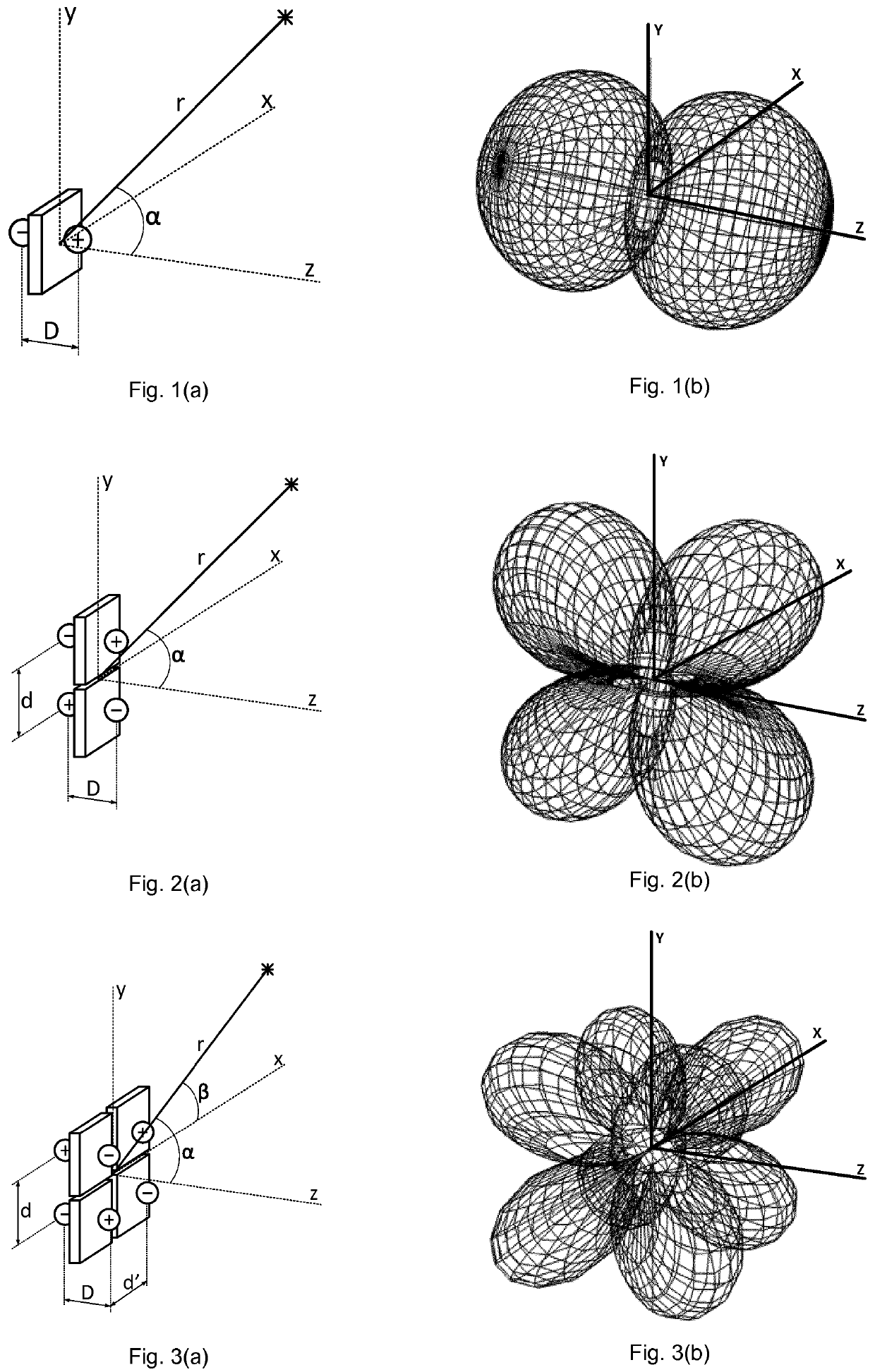
Figure 1 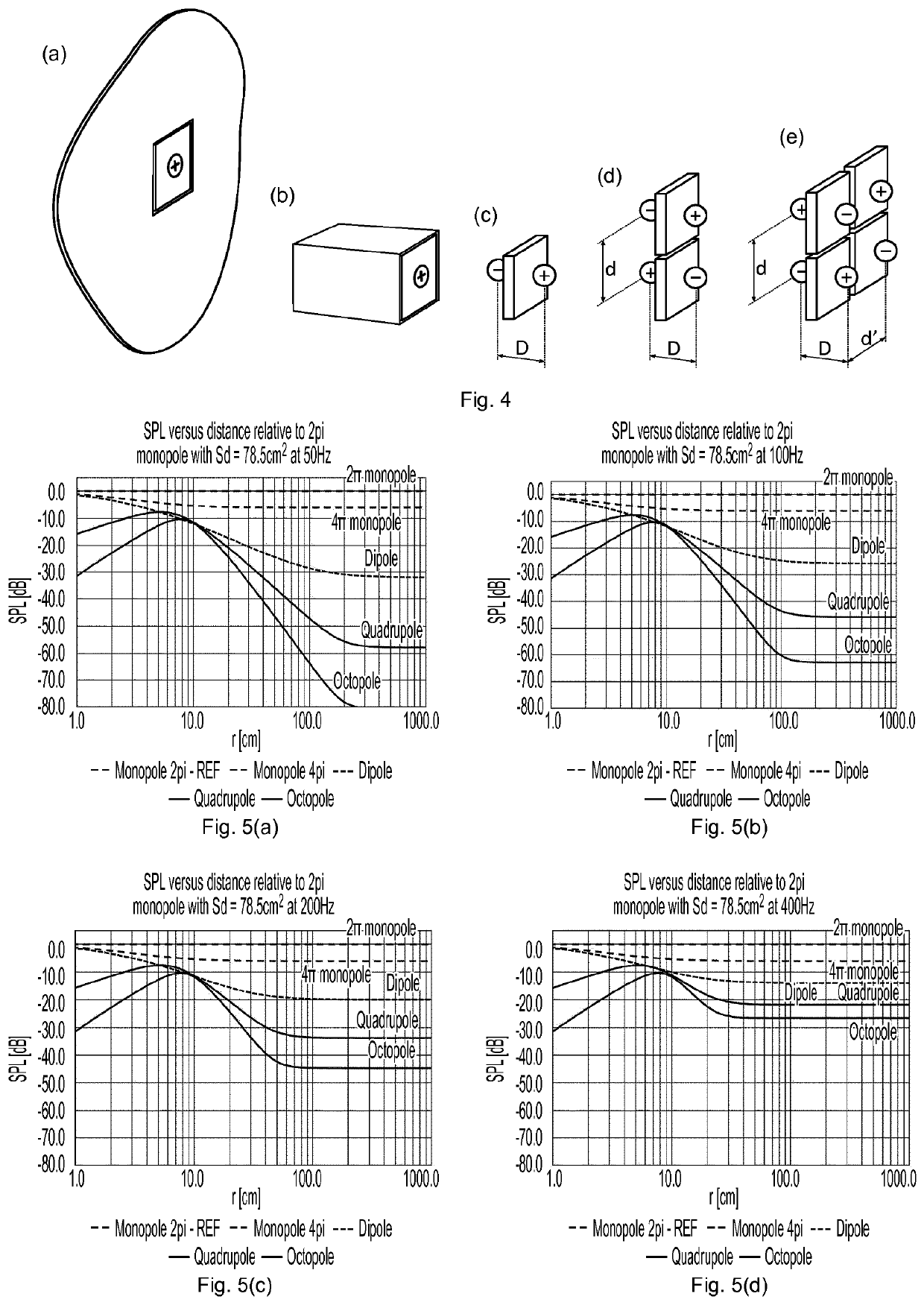
Figure 2 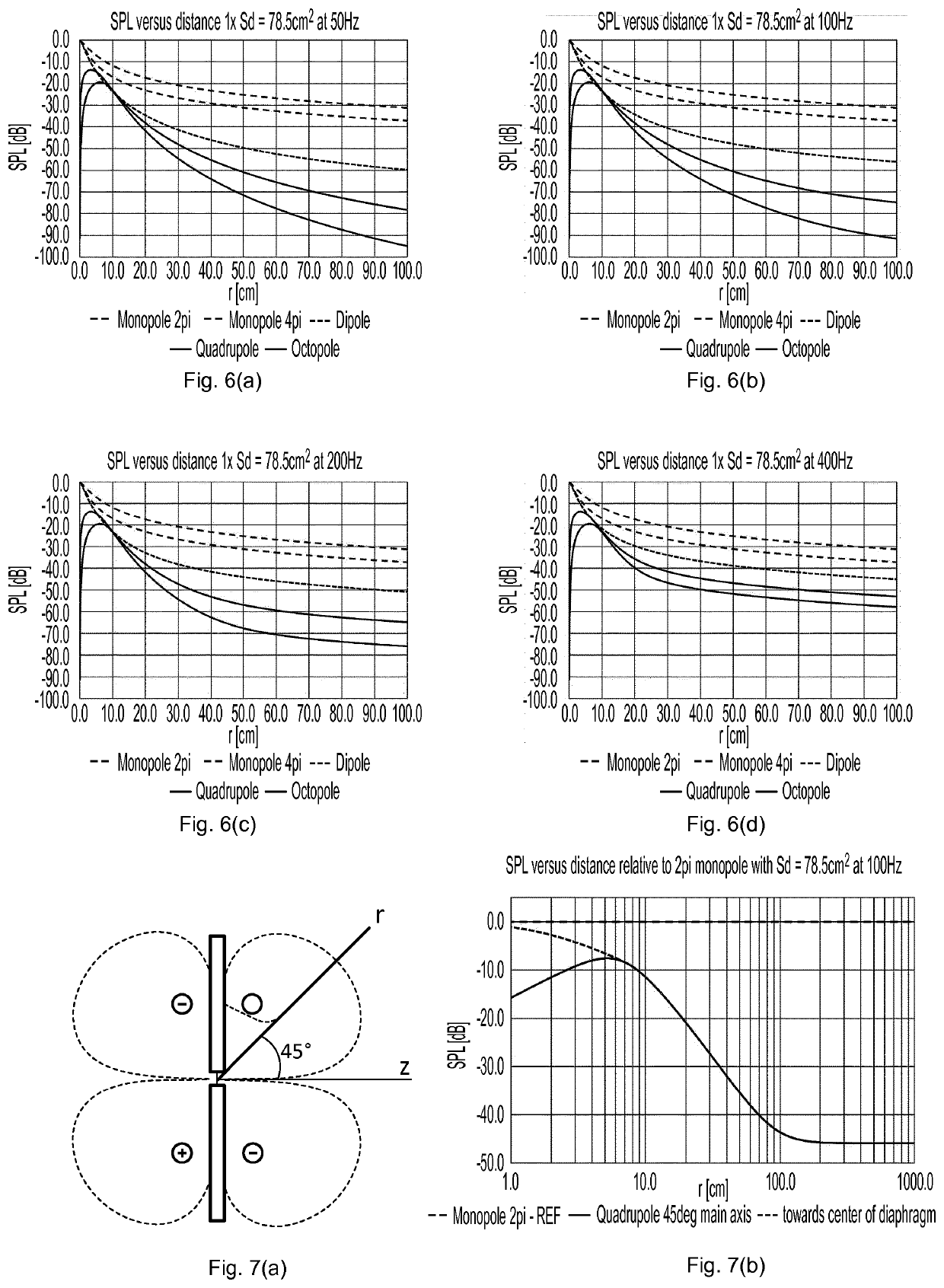
Figure 3
Abstract
Description
[0001] This application claims priority from GB1805523.6 filed 4 Apr. 2018, the contents and elements of which are herein incorporated by reference for all purposes.FIELD OF THE INVENTION
[0002] The present invention relates to a loudspeaker unit, a seat assembly that includes the loudspeaker unit, and a vehicle having a plurality of the seat assemblies.BACKGROUND
[0003] Among the frequencies in the audible spectrum, lower frequencies are the ones that tend to carry most well over larger distances and are the ones difficult to keep inside a room. For example, nuisance from neighboring loud music has mostly a low frequency spectrum. “Low” frequencies can also be referred to as “bass” frequencies and these terms may be used interchangeably throughout this document.
[0004] Many cars today are equipped with a main audio system, which typically consist of a central user interface console with internal or external audio amplifiers, and one or more loudspeakers placed in the doors. This type of a...
Examples
examples implementing first aspect
of the Invention
[0268]FIG. 8 is a schematic view of a loudspeaker unit 101 for producing sound at bass frequencies according to the first aspect of the invention.
[0269]The loudspeaker unit 101 includes an array of n diaphragms 110 (features relating to an individual diaphragm are labelled with the suffix “-1”, “-2”, “-3” . . . “-n”). Each diaphragm has a first radiating surface 112, and a second radiating surface 114, wherein the first radiating surface 112 and the second radiating surface 114 are located on opposite faces of the diaphragm.
[0270]The loudspeaker unit 101 also includes a frame 130, wherein each diaphragm 110 in the array is suspended from the frame 130 via one or more suspension elements 132 such that the first radiating surfaces 112 are facing in a first (“forwards”) direction F and the second radiating surfaces 114 are facing in an opposite (“backwards”) second direction B, wherein the frame 130 is configured to allow sound produced by the first radiating surfaces 1...
examples implementing second aspect
of the Invention
[0351]FIG. 24 is a schematic view of a loudspeaker unit 201 for producing sound at bass frequencies according to the second aspect of the invention.
[0352]The loudspeaker unit 201 includes an array of n diaphragms 210 (features relating to an individual diaphragm are labelled with the suffix “-1”, “-2”, “-3” . . . “-n”). Each diaphragm has a first radiating surface 212, and a second radiating surface 214, wherein the first radiating surface 212 and the second radiating surface 214 are located on opposite faces of the diaphragm.
[0353]The loudspeaker unit 201 also includes a frame 230, wherein each diaphragm 210 in the array is suspended from the frame 230 via one or more suspension elements 232 such that sound produced by the first radiating surfaces 212 is allowed to propagate out from the loudspeaker unit 201.
[0354]As depicted in FIG. 24, that the first radiating surfaces 112 are facing in a first (“forwards”) direction F and the second radiating surfaces 114 are fac...
examples implementing third aspect
of the Invention
[0399]FIG. 33 is a schematic view of a loudspeaker unit 301 for producing sound at bass frequencies according to the third aspect of the invention.
[0400]The loudspeaker unit 301 includes an array of n diaphragms 310 (features relating to an individual diaphragm are labelled with the suffix “-1”, . . . “-n”). Each diaphragm has a first radiating surface 312, and a second radiating surface 314, wherein the first radiating surface 312 and the second radiating surface 314 are located on opposite faces of the diaphragm.
[0401]The loudspeaker unit 301 also includes a frame 330, wherein each diaphragm 310 in the array is suspended from the frame 330 via one or more suspension elements 332 such that sound produced by the first radiating surfaces 312 is allowed to propagate out from the loudspeaker unit 301.
[0402]As depicted in FIG. 33, that the first radiating surfaces 312 are facing in a first (“forwards”) direction F and the second radiating surfaces 314 are facing in an op...