
Compounds with Anti-tumor activity against cancer cells bearing her2 exon 21 insertions
a technology of her2 exon 21 and compound, which is applied in the field of molecular biology and medicine, can solve the problems of not being able to identify the most common variants of her2 exon 21 and not being able to target them specifically, so as to reduce tumor size or burden, reduce tumor-associated pain, and reduce cancer-associated pathology
Patent Information
- Authority / Receiving Office
- US · United States
- Patent Type
- Applications(United States)
- Current Assignee / Owner
- Publication Date
- 2022-06-09
Smart Images
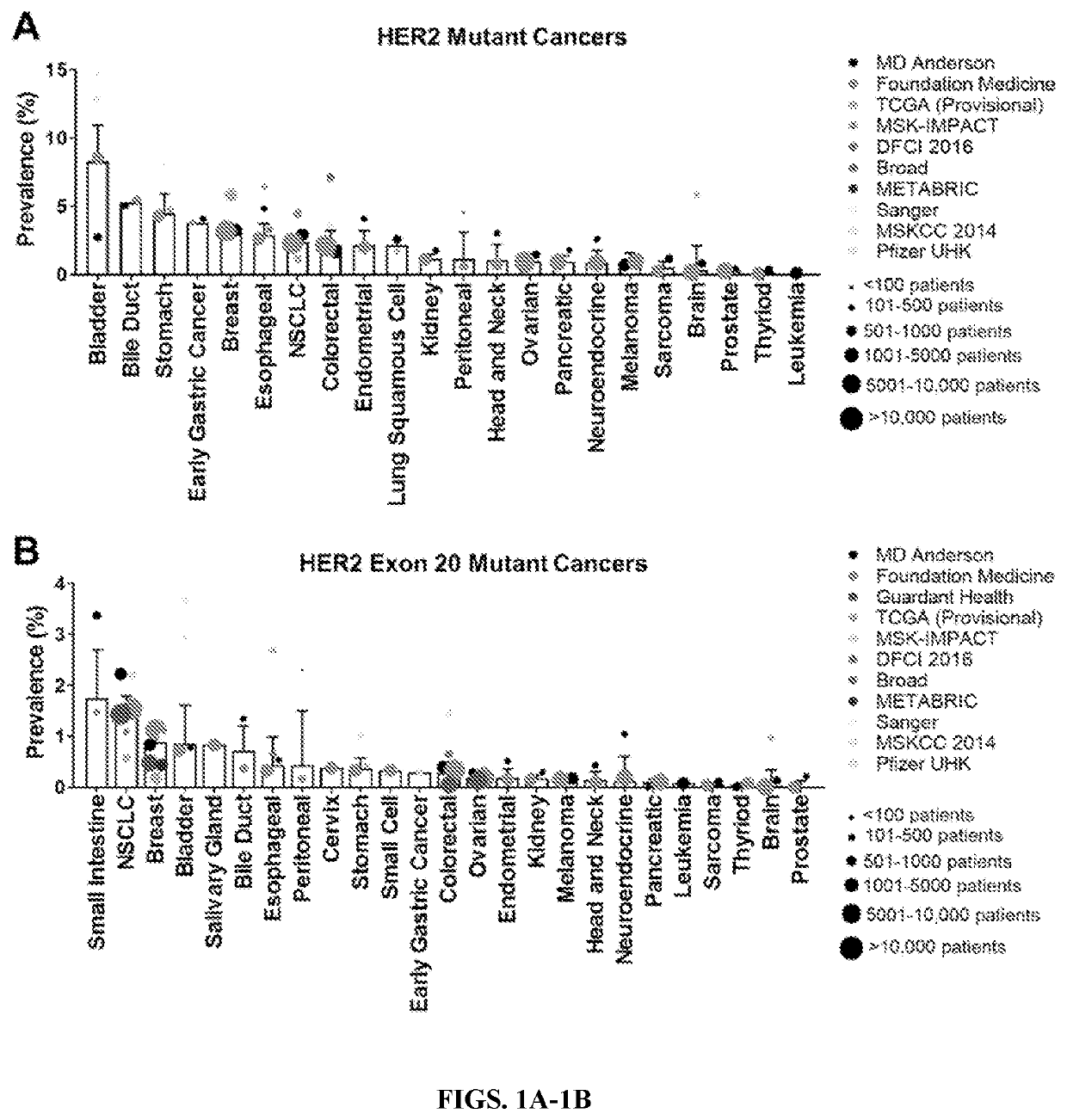
Figure 1 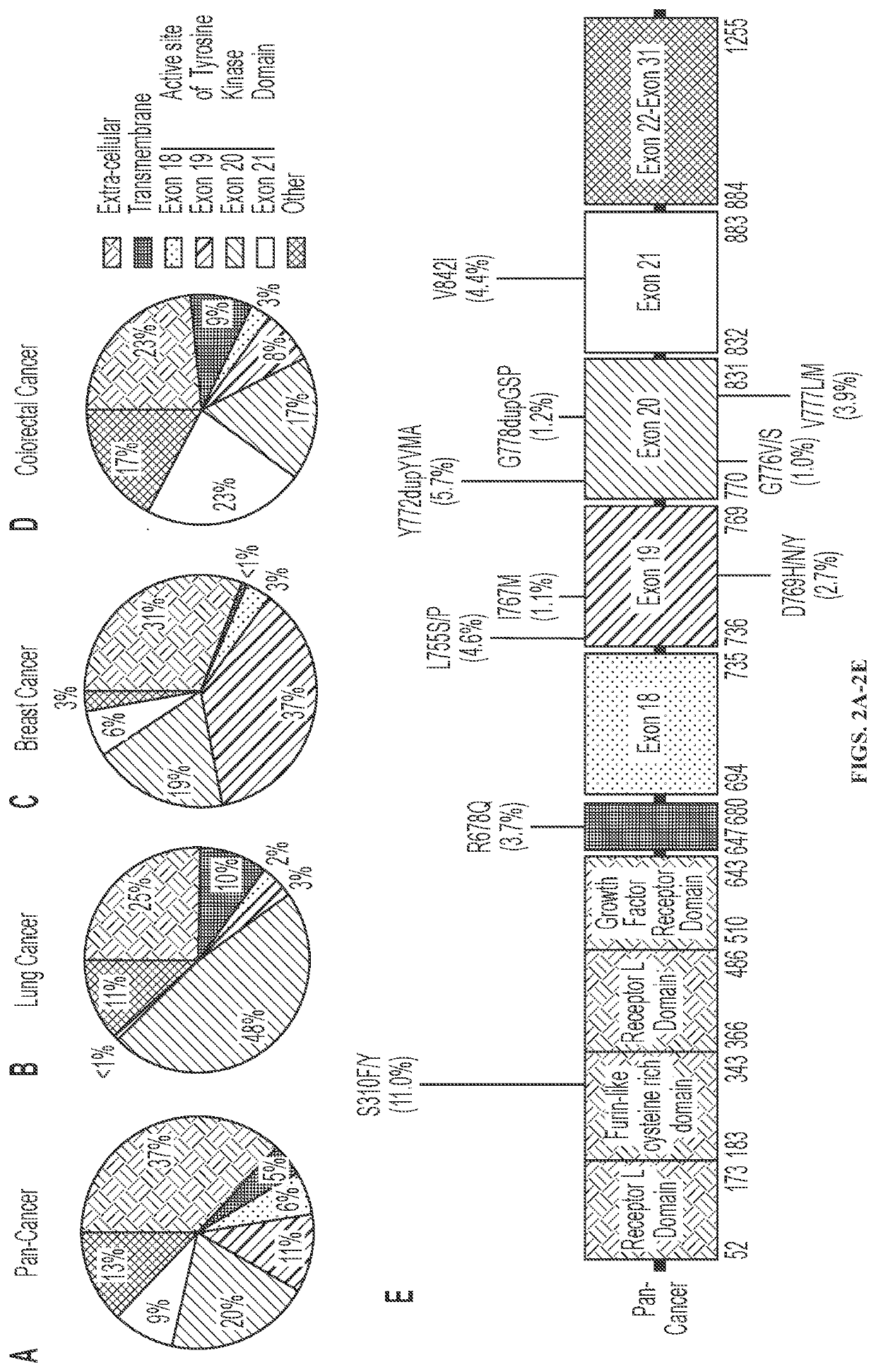
Figure 2 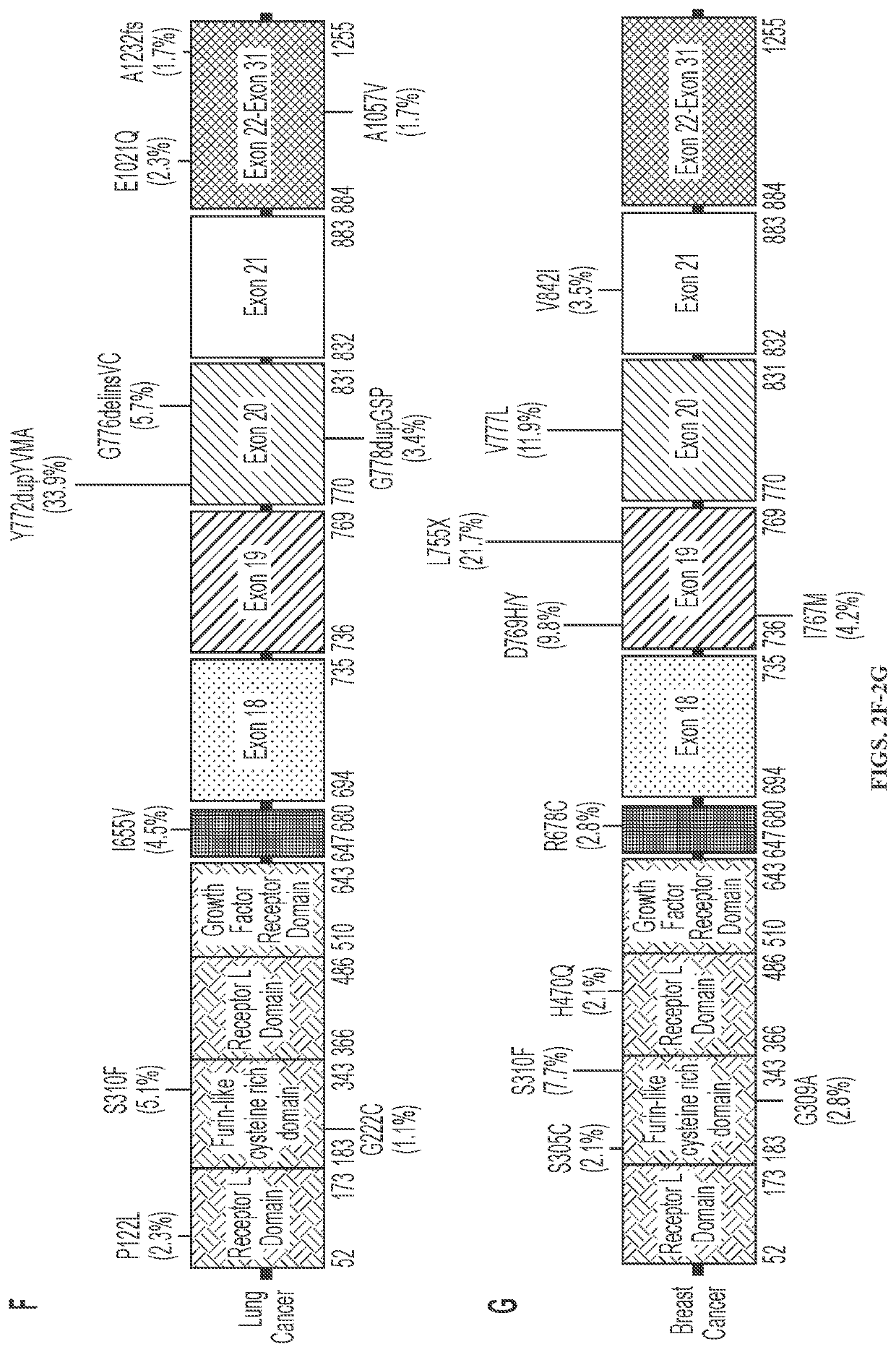
Figure 3
Abstract
Description
[0001] This application claims the benefit of United States Provisional Patent Application No. 62 / 826,758, filed Mar. 29, 2019, the entirety of which is incorporated herein by reference.
[0002] This invention was made with government support under grant number CA190628 awarded by the National Institutes of Health. The government has certain rights in the invention.BACKGROUND1. Field
[0003] The present invention relates generally to the field of molecular biology and medicine. More particularly, it concerns methods of treating patients with HER2 exon 21 mutations.2. Description of Related Art
[0004] Erb-b2 receptor tyrosine kinase 2 (ERBB2) also known as human epidermal growth factor receptor 2 (HER2) amplifications occur in many cancer types and targeted agents such as trastuzumab, pertuzumab, trastuzumab emtansine (T-DM1), lapatinib, and neratinib have been shown to improve clinical outcomes compared to chemotherapy alone (Vogel et al., 2002). Activating mutations of ERBB2 (HER2) have bee...
Examples
example 1
ation of Drugs for Cancer Cells with HER2 Exon 21 Mutations
[0121]HER2 mutations occur most frequently in cancers of the bladder, stomach, and bile duct: To understand the diversity of HER2 mutations across cancer types, several databases were queried including cohorts from cBioPortal, MD Anderson Cancer Center, and Foundation Medicine, and a cfDNA cohort from Guardant Health. Across all databases, all non-synonymous HER2 mutations were analyzed within 25 different cancer types (Table 2). The weighted average frequency for HER2 mutations was calculated. Similar to what was observed in the AACR GENIE database (Meric-Bernstam et al., 2018), HER2 mutations occurred most frequently in bladder (8.3%), bile duct (5.3%), and stomach (4.5%) cancers (FIG. 1A); and HER2 exon 20 mutations occurred most frequently in cancers of the small intestine (1.8%), lung (1.5%), and breast (0.9%) (FIG. 1B).
[0122]HER2 mutations occur most frequently in the tyrosine kinase domain of HER2 and mutational hotsp...
example 2
and Methods
[0134]Analysis of HER2 mutation prevalence and variant frequency: To determine the frequencies of each HER2 mutation reported in databases from MD Anderson Cancer Center, cBioPortal, Foundation Medicine, or Guardant Health, each database was queried individually, then frequencies were weighted by the total number of patients in each database and are reported as weighted averages. To determine the frequency of HER2 mutations across cancer types in cBioPortal, all non-overlapping studies were selected and exported. For overlapping studies, only the largest dataset was used. To determine HER2 mutation frequencies at MD Anderson Cancer Center, the Institute for Personalized Cancer Therapy database was queried for all HER2 mutations independent of cancer type. To determine the frequency of HER2 exon 20 mutations from Foundation Medicine, de-identified data of the number of patients with HER2 deletions, frame shifts, insertions, and point mutation were tabulated, and cancer typ...