
Adaptive omni-modal radio apparatus and methods
a radio apparatus and omni-modal technology, applied in the field of frequency and protocol agile, wireless communication devices, can solve the problems of low market competitiveness, product and method concepts, and high specializedness of listed patents, and achieve the most business and profit-making potential, easy and convenient identification, and lowest possible cost
Patent Information
- Authority / Receiving Office
- US · United States
- Patent Type
- Patents(United States)
- Current Assignee / Owner
- Publication Date
- 2005-08-23
- Estimated Expiration
- Not applicable · inactive patent
Smart Images
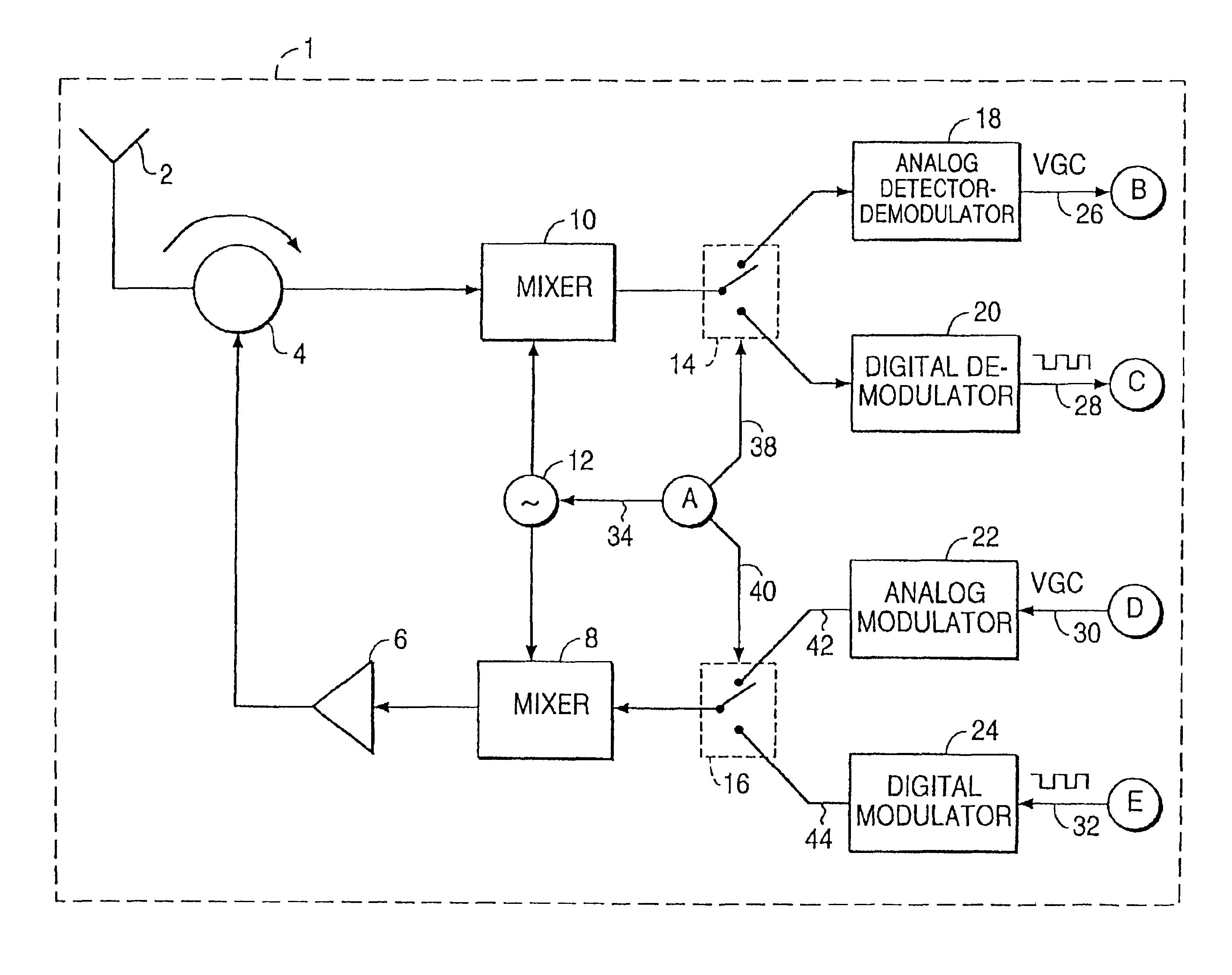
Figure 1 
Figure 2 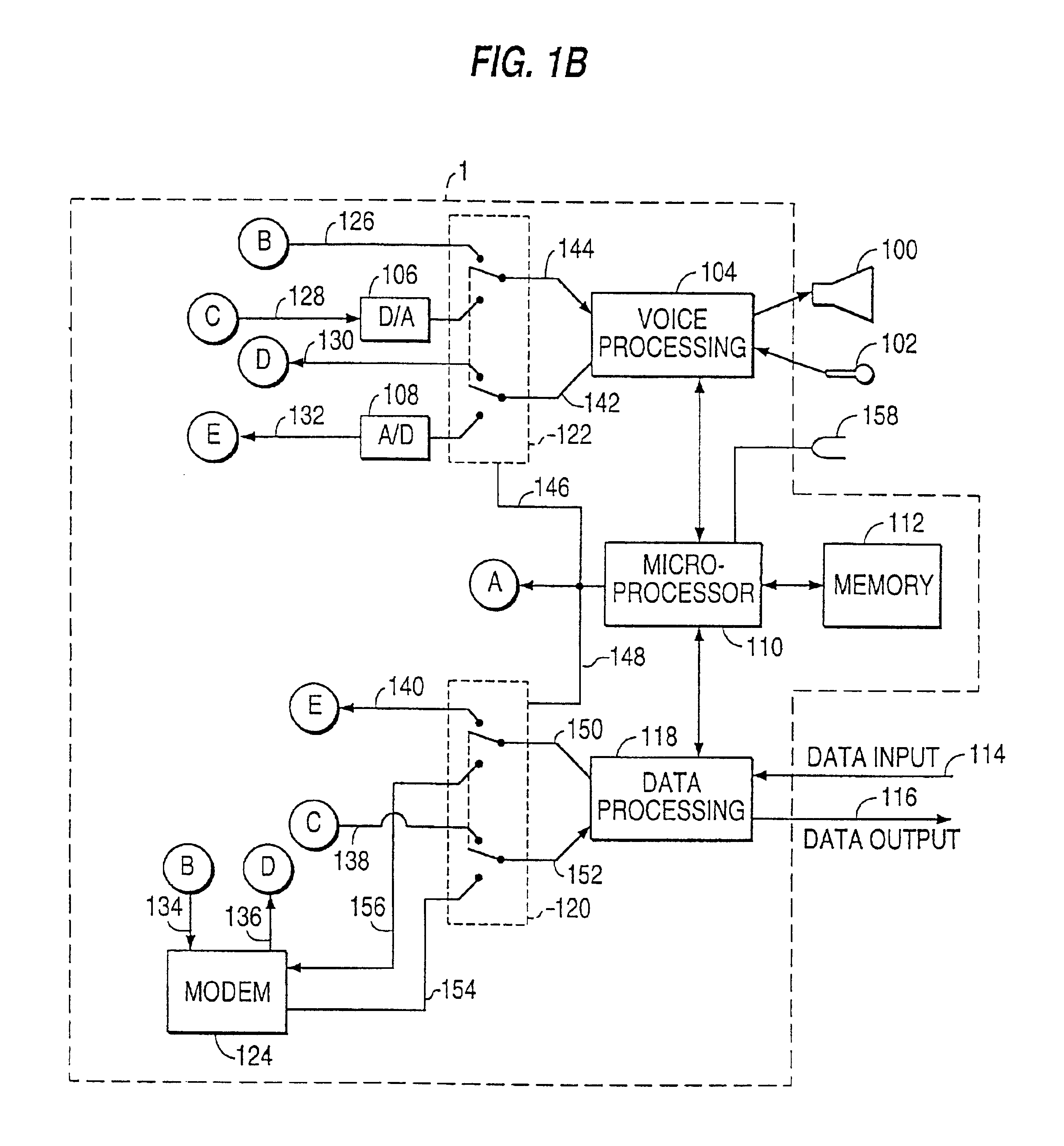
Figure 3
Abstract
Description
[0001] This application is a division of U.S. application Ser. No. 09 / 149,292, filed Sep. 9, 1998, now U.S. Pat. No. 6,134,453, which is a division of application Ser. No. 08 / 707,262, filed Sep. 4, 1996, now U.S. Pat. No. 5,854,985; which is a continuation of application Ser. No. 08 / 167,003, filed Dec. 15, 1993, abandoned.BACKGROUND OF THE INVENTION
[0002] This invention relates generally to frequency and protocol agile, wireless communication devices and systems adapted to enable voice and / or data transmission to occur using a variety of different radio frequencies, transmission protocols and radio infrastructures.
[0003] Many communication industry experts believe that a personal information revolution has begun that will have as dramatic an impact as did the rise of personal computers in the 1980's. Such experts are predicting that the personal computer will become truly “personal” by allowing virtually instant access to information anytime or anywhere. There exists no consensus, howe...
Examples
Embodiment Construction
[0039]A preferred embodiment of a standardized radio processing circuit 1 is shown in FIGS. 1A and 1B. The standardized radio processing circuit 1, shown in FIGS. 1A and 1B taken together, may be implemented on a single VLSI chip or on a set of VLSI chips making up a chipset. As will be seen, this chip or chipset provides a standard building block which can be used to make a plurality of consumer products that provide data transmission capability. As will be seen later with reference to FIGS. 2 through 8, by adding minimal external components to the standardized circuit 1, a wide variety of products can be produced. Also, as will be seen, the standardized circuit 1 can be advantageously implemented on a removable card with a standardized interface connector or connectors, so that it can then be selectively inserted into and removed from a variety of devices to provide the devices with radio information transmission capability.
[0040]In terms of the preferred functional and operationa...