
Gas-selective permeable membrane and method of manufacturing thereof
Patent Information
- Authority / Receiving Office
- US · United States
- Current Assignee / Owner
- Publication Date
- 2006-11-28
- Estimated Expiration
- Not applicable · inactive patent
Smart Images
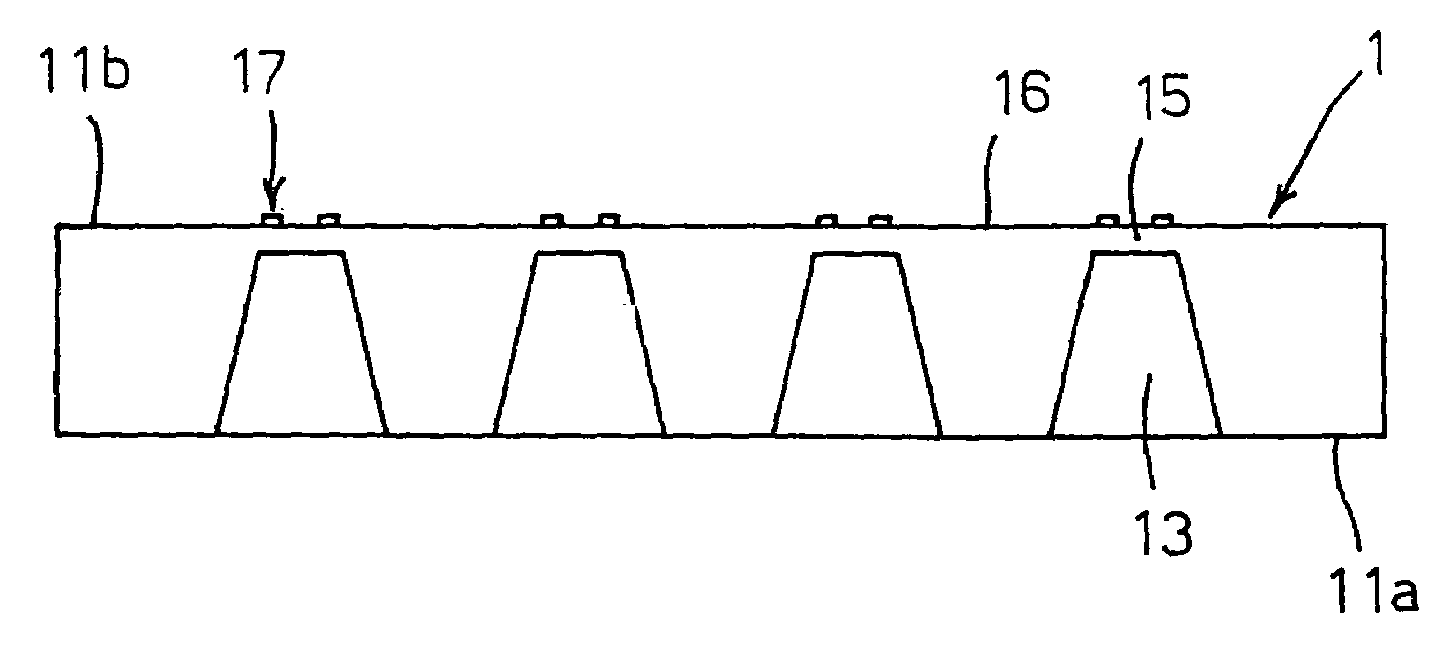
Figure 1 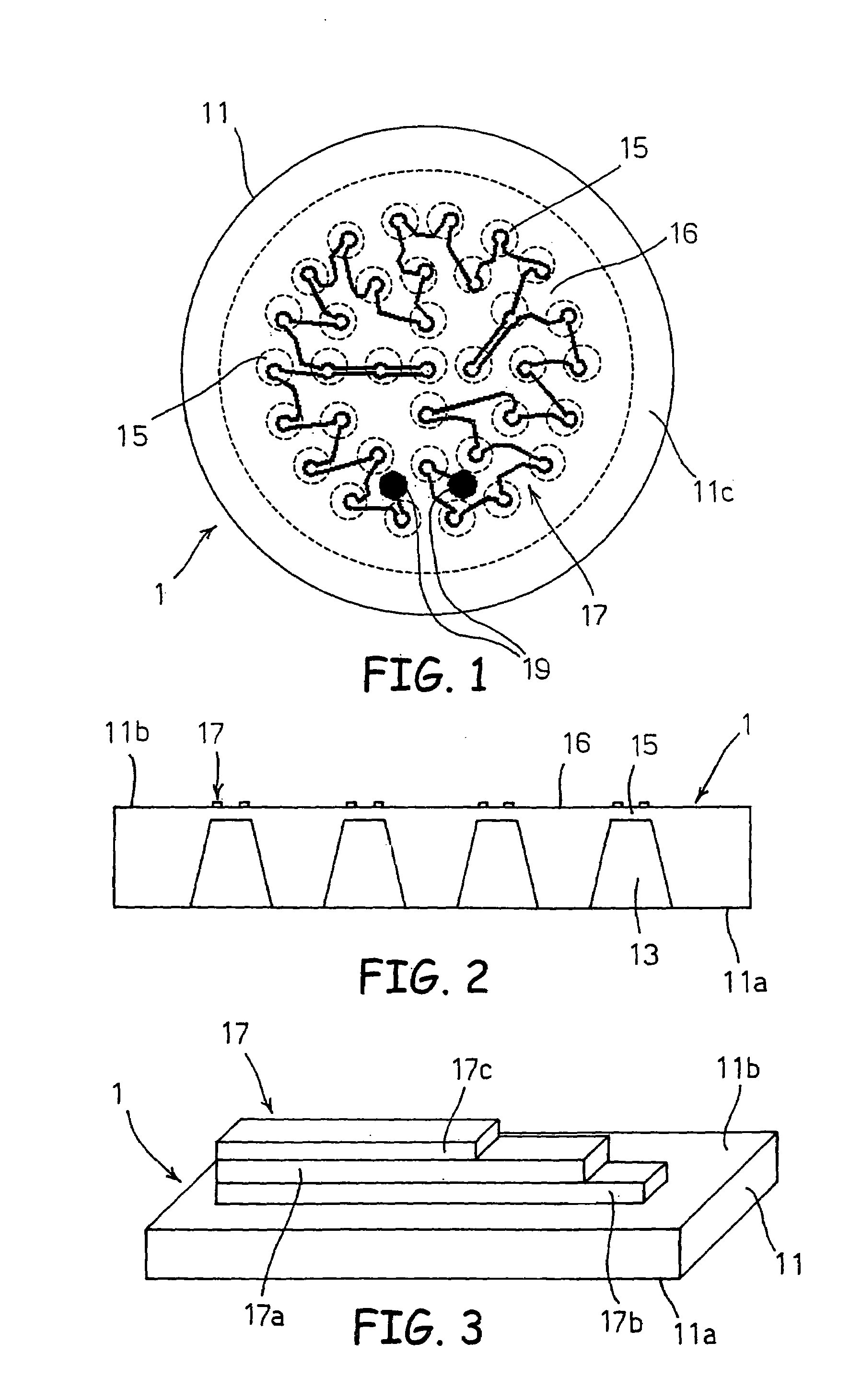
Figure 2 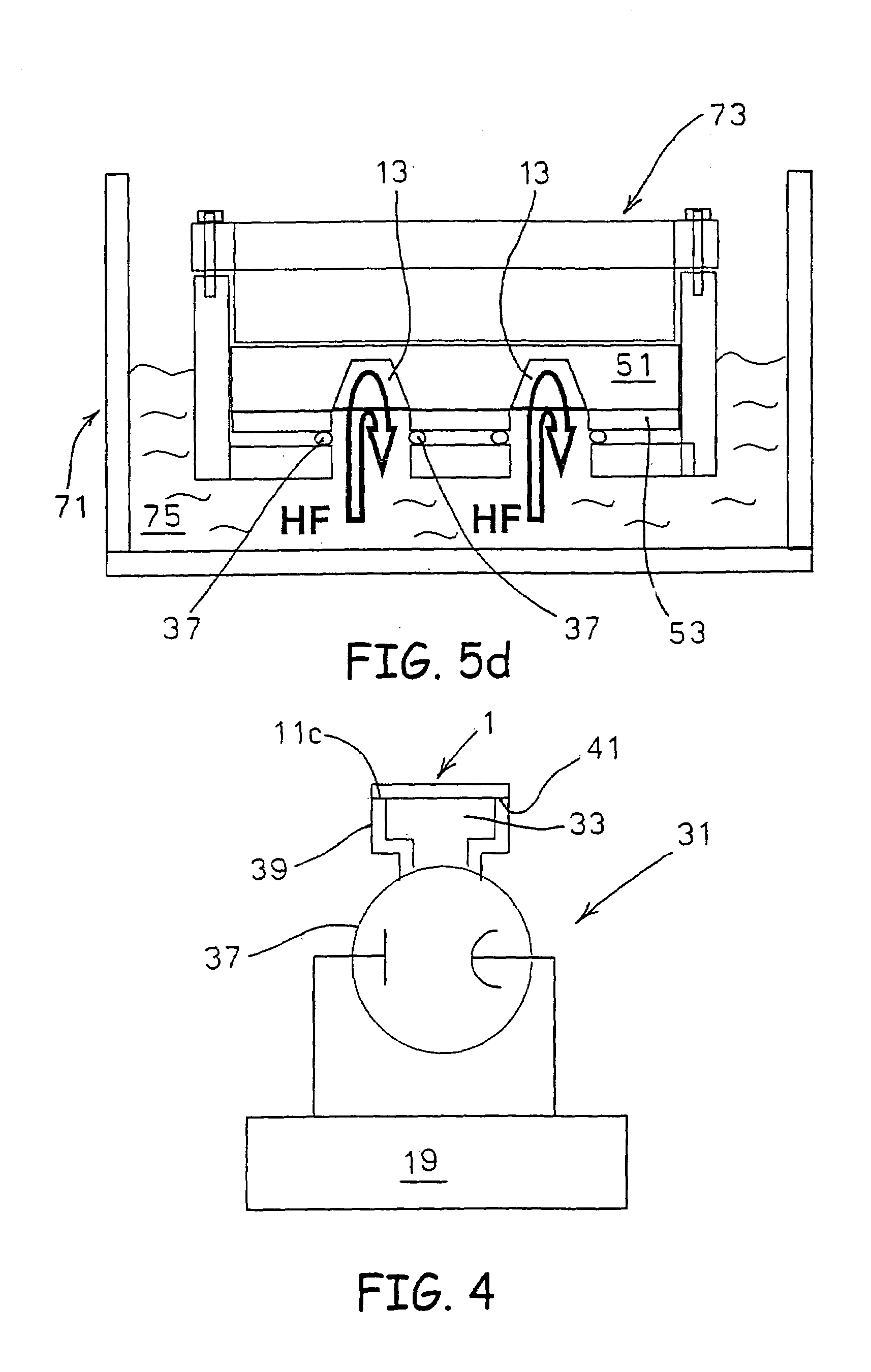
Figure 3
Abstract
Description
[0001] This application claims Paris Convention priority of Italian application no. TO2003A000032 filed on Jan. 24, 2003.BACKGROUND FO THE INVENTION
[0002] The present invention relates to a gas-selective permeable membrane, particularly for leak detectors, and to the method for its manufacturing.
[0003] In the field of leak detection in ducts, tanks etc., the use of apparatuses known as “leak detectors” is widespread. Such apparatuses generally comprise a vacuum-tight chamber equipped with a selective membrane through which only a predetermined gas can flow into the chamber, when the pressure inside the chamber is made significantly lower than the outside pressure.
[0004] The membranes of the known leak detectors are generally made of quartz or glass with high silica content. Such membranes are permeable to helium if they are brought to a suitable temperature, typically at least 300° C. Use of such membranes has become particularly popular also because helium is a harmless, inert gas that...
Examples
Embodiment Construction
[0026]Referring to FIGS. 1 and 2, there is shown a membrane 1 according to the invention, comprising a body 11 in which dead cavities 13 are formed, which define an equal number of reduced thickness areas 15 on membrane 1.
[0027]Body 11 of membrane 1 preferably consists of a sheet-like disc and it is made of a material selectively permeable to gases.
[0028]For example, quartz, glass with high silica content and palladium are materials selectively permeable to gases.
[0029]If membrane 1 is used for detecting helium, the material used for producing the membrane will preferably be quartz or glass with high silica content. In such case, the thickness of membrane 1 will preferably be in the range 800 to 900 μm, and reduced thickness areas 15 will be about 10 μm thick.
[0030]Cavities 13 are preferably circular and have in axial direction an outward-flaring conical cross section. Moreover, said cavities 13 will preferably be formed on a same face 11a of membrane 1.
[0031]Heating means 17 are pr...