
Synchronized atrial anti-tachy pacing system and method
a synchronized atrial and anti-tachy pacing technology, applied in the direction of electrotherapy, heart stimulators, therapy, etc., can solve the problems of inability to resume synchronized pacing, inability to control ventricular pacing, and inability to maintain synchronized pacing
Patent Information
- Authority / Receiving Office
- US · United States
- Patent Type
- Patents(United States)
- Current Assignee / Owner
- Publication Date
- 2007-01-09
- Estimated Expiration
- Not applicable · inactive patent
Smart Images
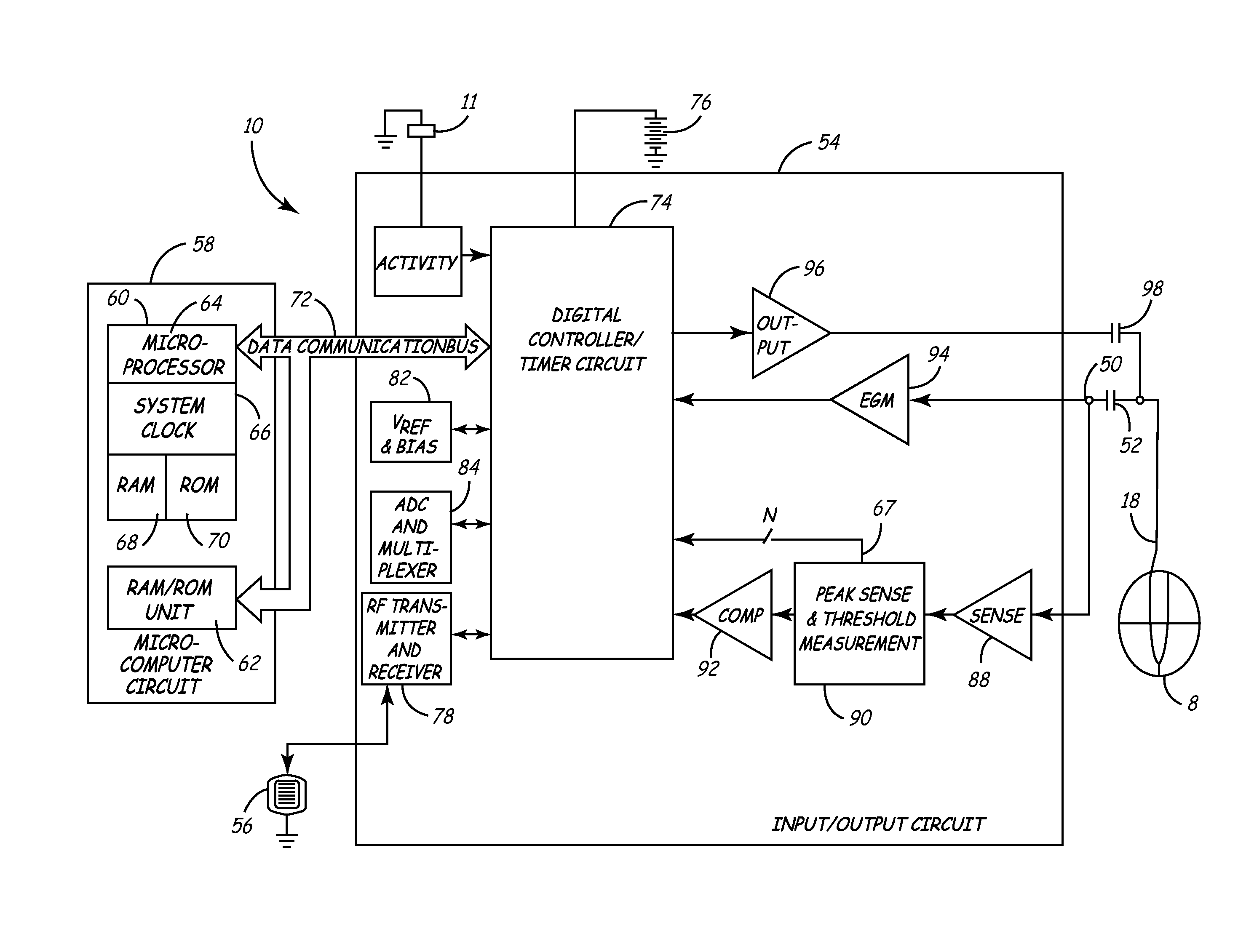
Figure 1 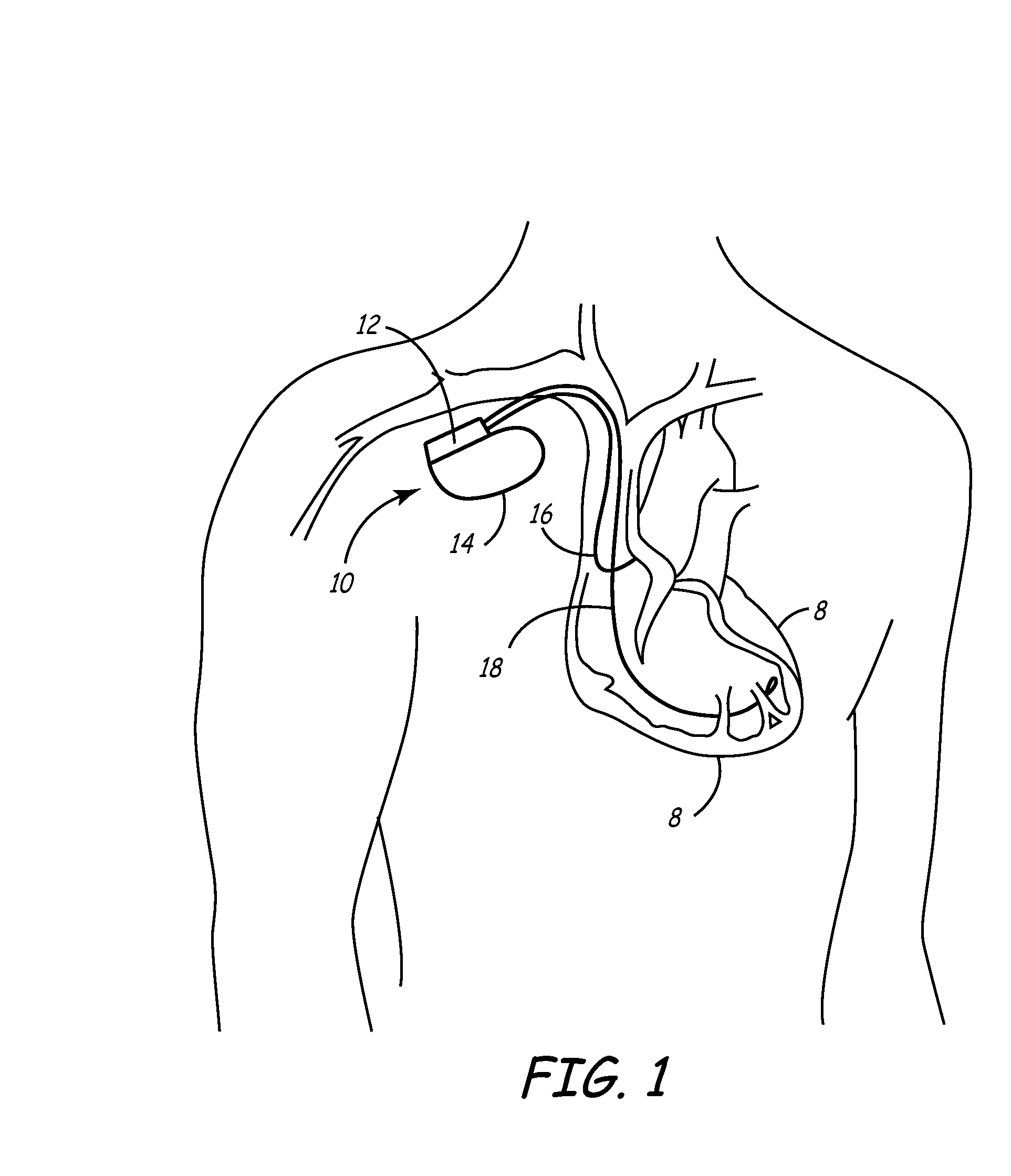
Figure 2 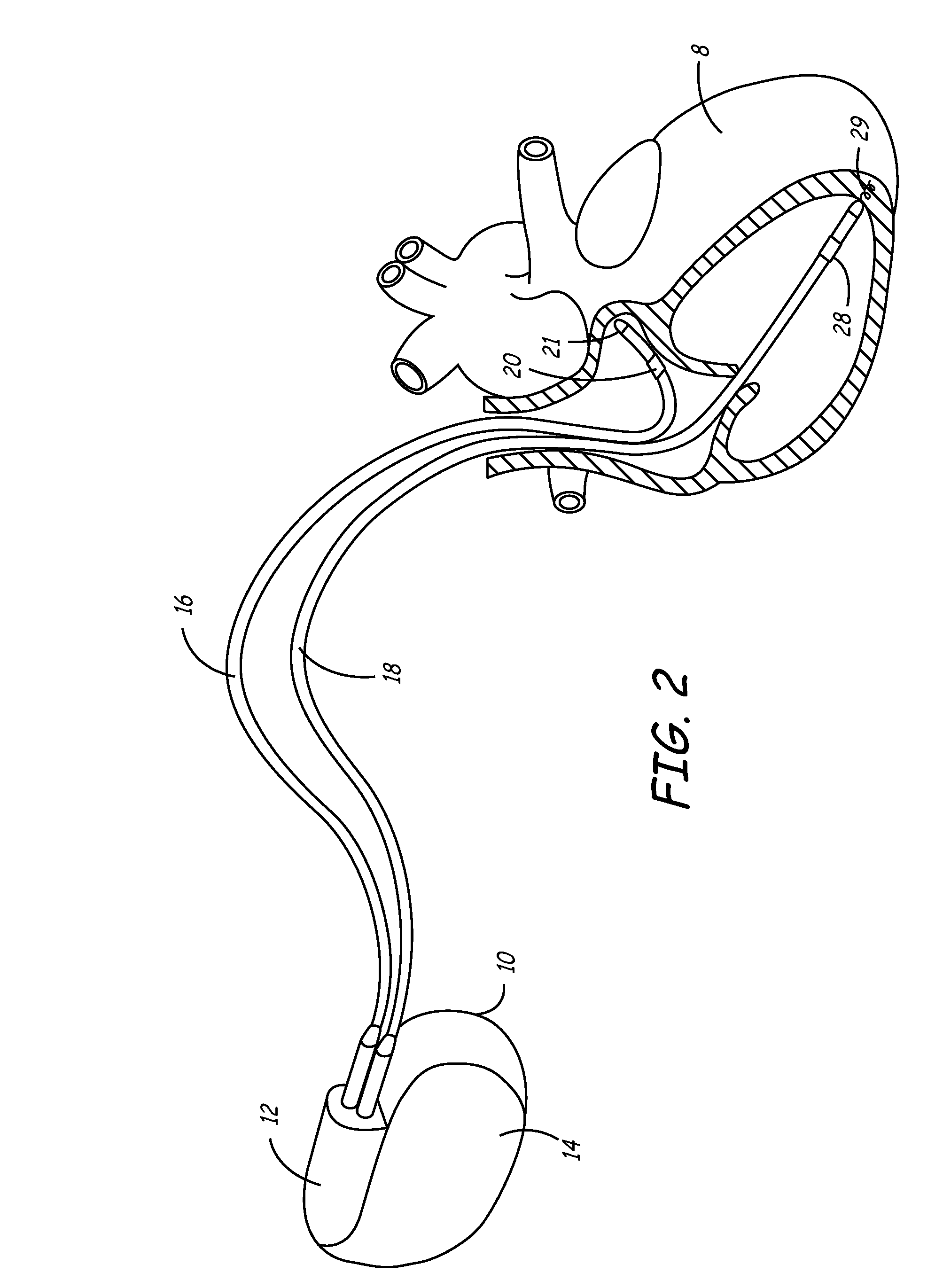
Figure 3
Abstract
Description
[0001] This application claims priority to provisional U.S. Application No. 60 / 439,460 filed 13 Jan. 2003.FIELD OF THE INVENTION
[0002] This invention relates to implantable cardiac pacing devices that incorporate atrial anti-tachycardia control, and in particular dual chamber pacing devices with atrial anti-tachy control that optimize synchronous ventricular pacing.BACKGROUND OF THE INVENTION
[0003] Modern implantable cardiac pacing devices are designed for efficient dual or multiple chamber pacing as well as detection and treatment of dangerous cardiac arrhythmias. A dual chamber pacing device provides the capability of synchronous pacing, whereby the ventricle is paced in synchrony with the just preceding atrial beat (intrinsic or paced), thereby approximating the normal healthy coordination between the atrium and the ventricle and thus optimizing cardiac output. However, if the atrium is seized with an arrhythmia, such synchronous pacing cannot be resumed until after the arrhythmia a...
Examples
Embodiment Construction
[0025]FIG. 1 is a simplified schematic view of one embodiment of implantable medical device (“IMD”) 10 of the present invention. IMD 10 shown in FIG. 1 is a pacemaker comprising at least one of pacing and sensing leads 16 and 18 attached to hermetically sealed enclosure 14 and implanted near human or mammalian heart 8. Pacing and sensing leads 16 and 18 sense electrical signals attendant to the depolarization and re-polarization of the heart 8, and further provide pacing pulses for causing depolarization of cardiac tissue in the vicinity of the distal ends thereof. Leads 16 and 18 may have unipolar or bipolar electrodes disposed thereon, as is well known in the art. Examples of IMD 10 include implantable cardiac pacemakers disclosed in U.S. Pat. No. 5,158,078 to Bennett et al., U.S. Pat. No. 5,312,453 to Shelton et al. or U.S. Pat. No. 5,144,949 to Olson, all hereby incorporated by reference herein, each in its respective entirety.
[0026]FIG. 2 shows connector module 12 and hermetica...