
System for analysis of electrograms
an electrogram and electrogram technology, applied in the field of systems for performing and analysing electrograms, can solve the problems of scarring of the muscle tissue of the heart, increased transverse propagation of the tissue, and refractory area
Patent Information
- Authority / Receiving Office
- US · United States
- Patent Type
- Applications(United States)
- Current Assignee / Owner
- Publication Date
- 2009-09-10
- Estimated Expiration
- Not applicable · inactive patent
Smart Images
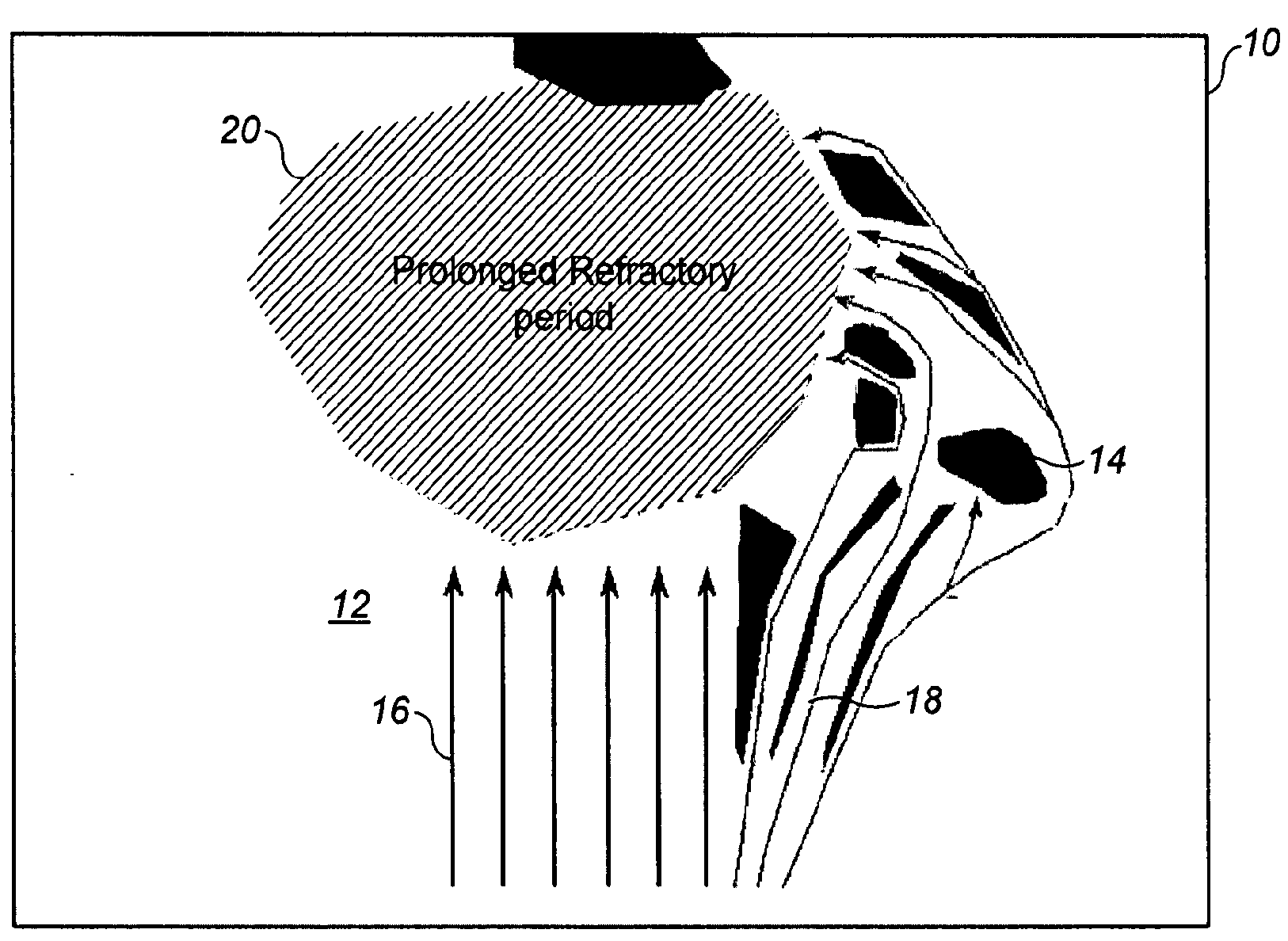
Figure 1 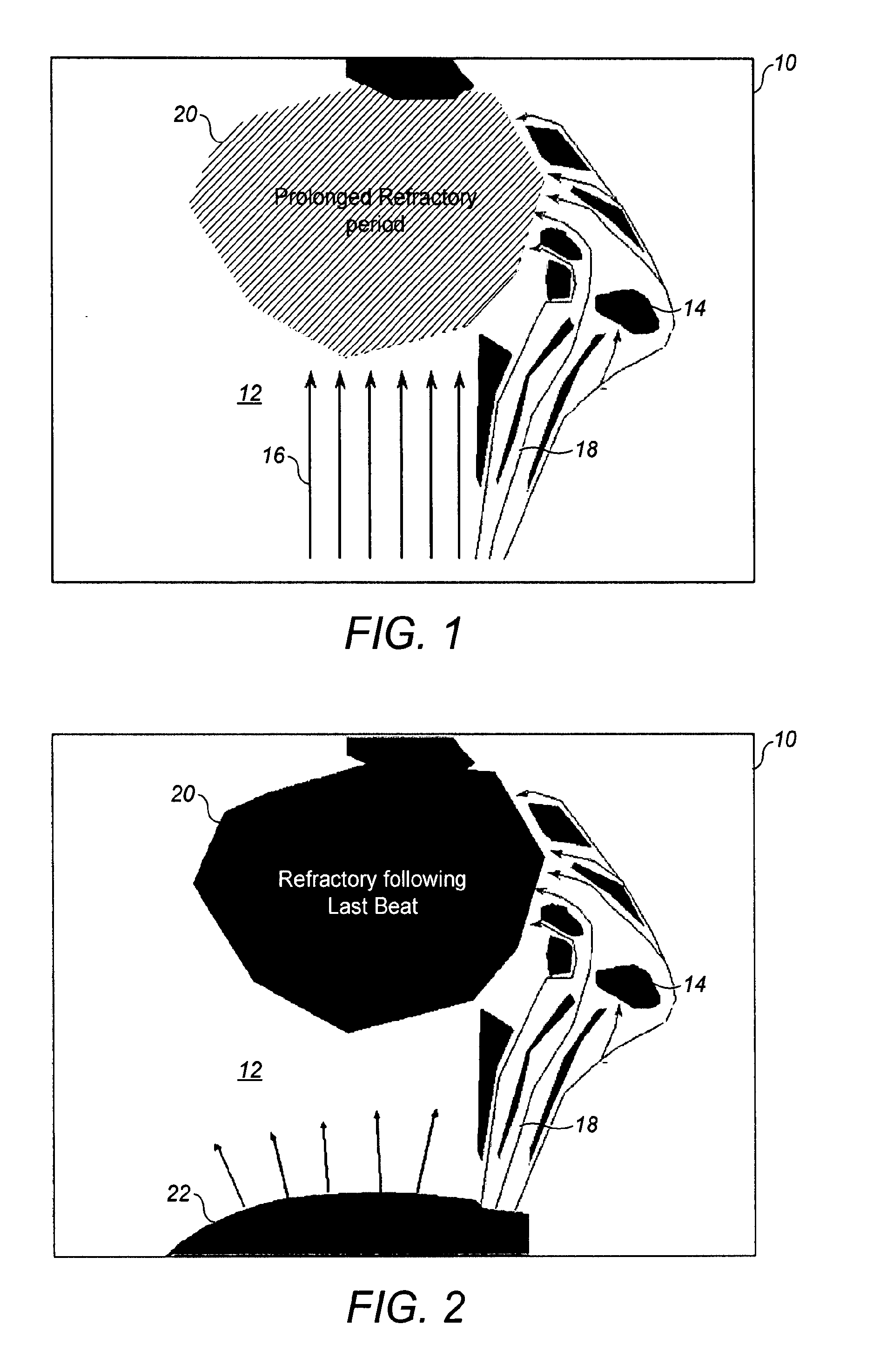
Figure 2 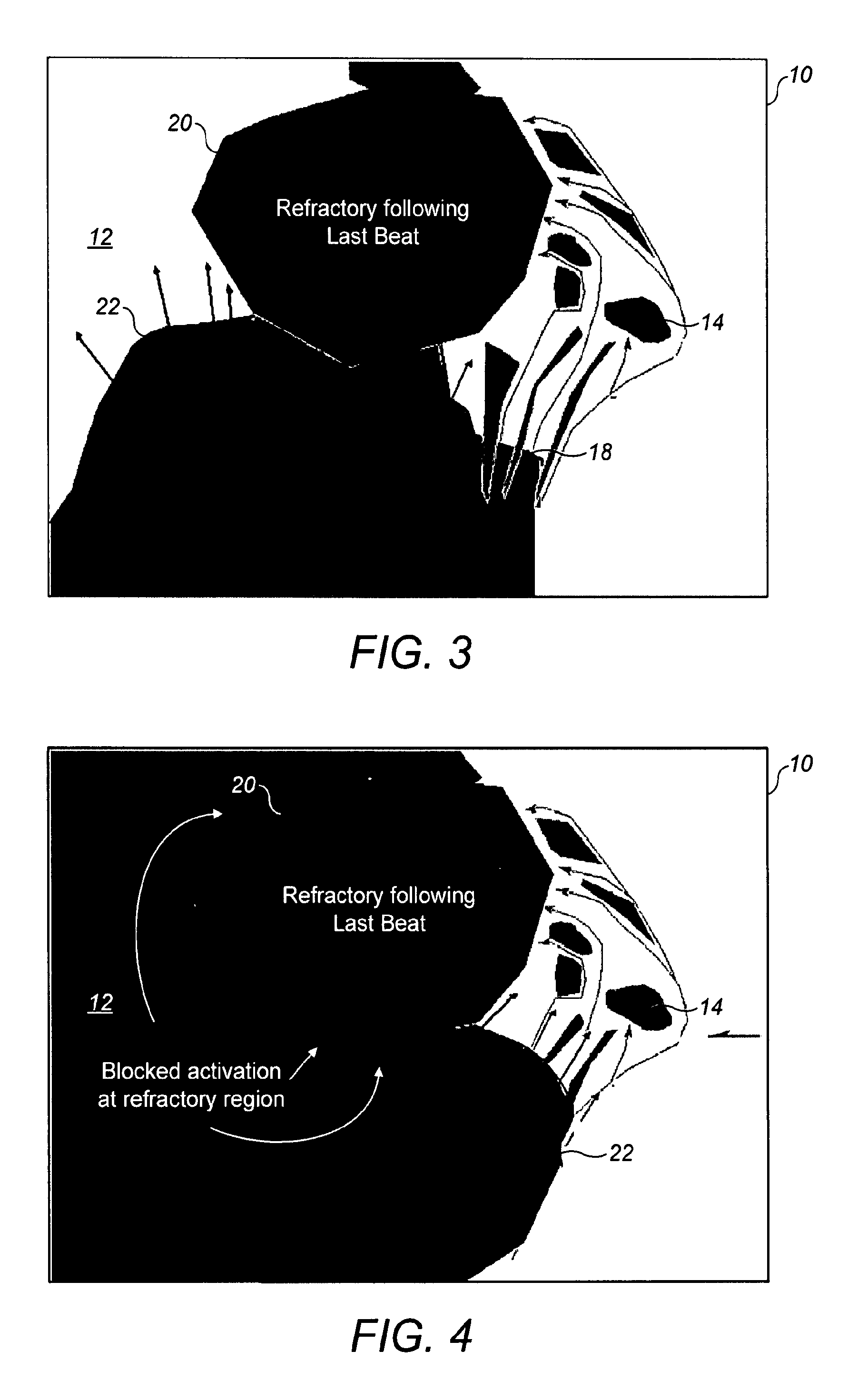
Figure 3
Abstract
Description
FIELD OF THE INVENTION
[0001] The present invention relates to systems for use in performing and analysing electrograms, in particular for the identification of a cardiac condition.BACKGROUND OF THE INVENTION
[0002] As is known in the art a human heart comprises pacemaker cells and cardiac muscle cells (myocardium). Cardiac muscle cells are stimulated to contract by an electrical signal. An incident electrical signal causes a cardiac cell to undergo depolarisation. The cell slowly repolarises after it has been stimulated in this way. A contraction in a cardiac muscle cell causes changes to the environment of a neighbouring cell, which can trigger contraction in the neighbouring cell. In this way a signal is transmitted through the muscle of the heart.
[0003] In the resting state cells are negative (having a resting potential of about −70 mV). When a muscle cell is stimulated the potential inside increases (i.e. becomes less negative), in a process known as “depolarisation”. Once the cell ...
Examples
Embodiment Construction
[0144]As discussed above, the present invention relates to the apparatus for performing and analysing paced electrograms. The present invention includes various methods and arrangements each of which will be discussed in detail in turn.
Processing of Data from Electrograms
[0145]Aspects of the processing of an electrogram 100 produced from stimulating a heart by inserting electrodes therein, for example, as described with reference to FIGS. 9 to 11 will firstly be described. An aspect of particular importance to the interpretation of electrograms is the post-processing of signals so as to reduce noise, so that potentials may be distinguished from noise in the signal, and so that the potentials can be recorded accurately. As is known in the art, signals inherently contain a mixture of noise and data, the noise originating from background sources such as fluorescent lights, X-ray heads, motors, monitors, other equipment commonly found in labs or hospitals, or poor catheter connections. ...