
Method and System for Hemodynamic Optimization Using Plethysmography
a plethysmography and hemodynamic optimization technology, applied in the field of implantable medical devices, can solve the problems of affecting the efficiency of cardiac stroke, and affecting the quality of cardiac stroke, so as to ensure the volume of cardiac stroke. the effect of sufficien
Patent Information
- Authority / Receiving Office
- US · United States
- Patent Type
- Applications(United States)
- Current Assignee / Owner
- Publication Date
- 2011-06-16
Smart Images
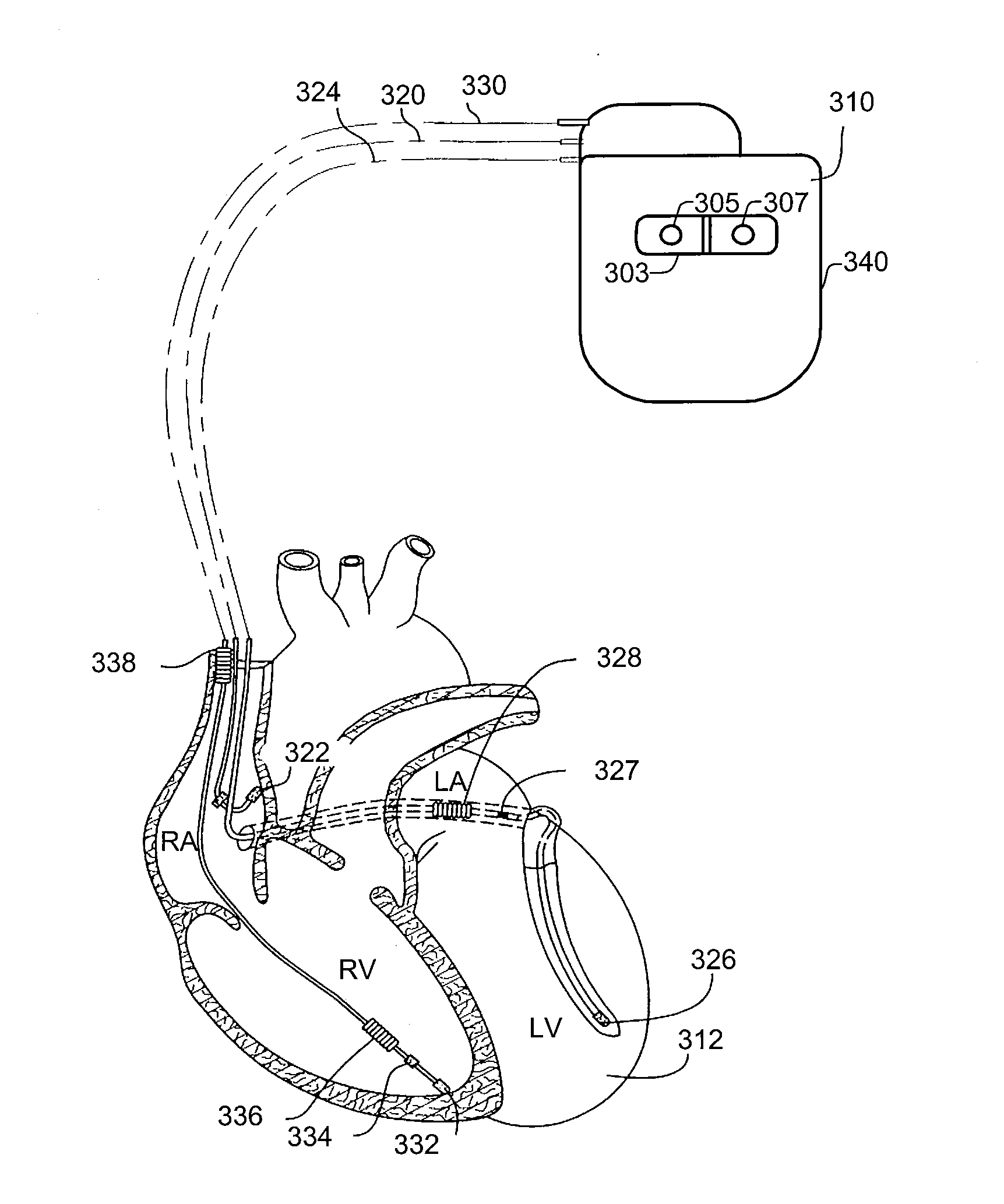
Figure 1 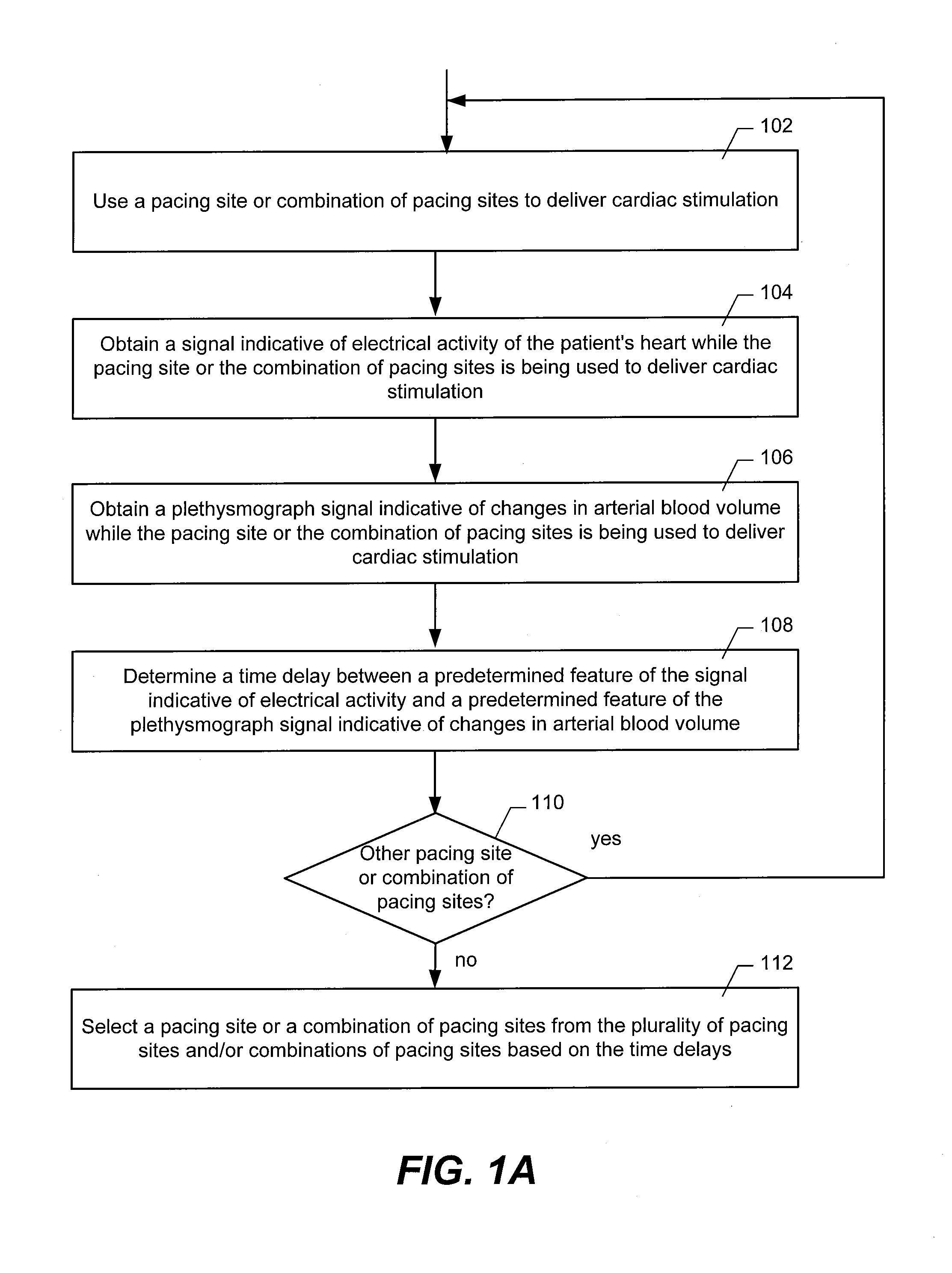
Figure 2 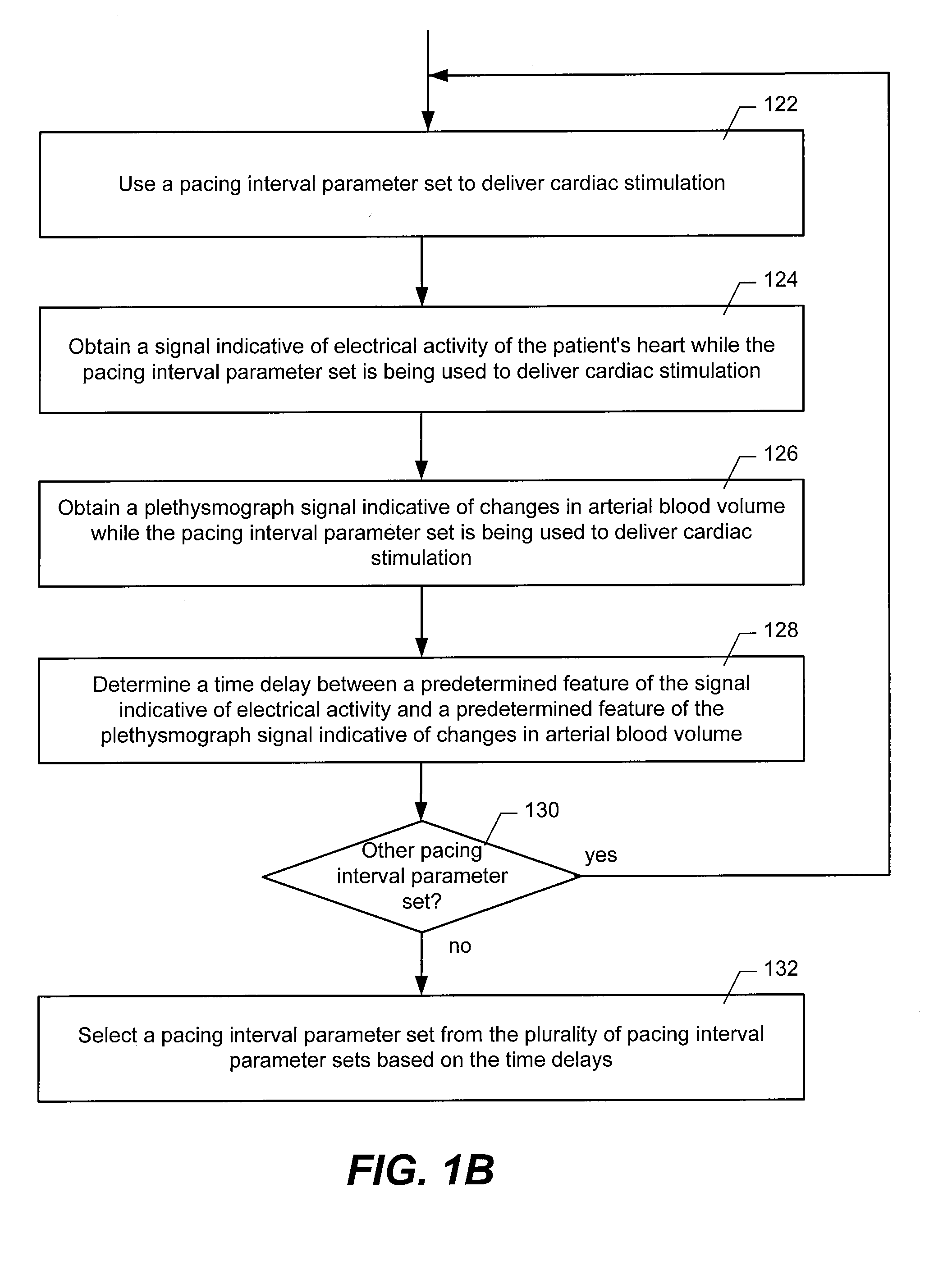
Figure 3
Abstract
Description
PRIORITY CLAIM
[0001] This application claims priority under 35 U.S.C. 119(e) to U.S. Provisional Patent Application No. 61 / 285,321, filed Dec. 10, 2009, entitled “Method and System for Hemodynamic Optimization during Cardiac Resynchronization by Photoplethysmography,” which is incorporated herein by reference.FIELD OF THE INVENTION
[0002] The invention generally relates to implantable medical devices (IMDs), such as pacemakers, implantable cardioverter / defibrillators (ICDs), and cardiac resynchronization therapy device / defibrillators (CRT-Ds) and, in particular, to techniques and systems for optimizing the hemodynamic performance of these devices using plethysmography signals.BACKGROUND OF THE INVENTION
[0003] Intra-operative cardiac resynchronization therapy (CRT) optimization has been demonstrated to significantly improve hemodynamics and will likely improve outcomes of heart failure (HF) patient's undergoing CRT implant. It is believed that patient selection, pacing site, and device t...
Examples
Embodiment Construction
[0019]The following description is of the best modes presently contemplated for practicing various embodiments of the present invention. The description is not to be taken in a limiting sense but is made merely for the purpose of describing the general principles of the invention. The scope of the invention should be ascertained with reference to the claims. In the description of the invention that follows, like numerals or reference designators will be used to refer to like parts or elements throughout. In addition, the first digit of a reference number identifies the drawing in which the reference number first appears.
[0020]It would be apparent to one of skill in the art that the present invention, as described below, may be implemented in many different embodiments of hardware, software, firmware, and / or the entities illustrated in the figures. Any actual software, firmware and / or hardware described herein is not limiting of the present invention. Thus, the operation and behavior...