
Azepane derivatives and methods of treating hepatitis B infections
a technology of azepane derivatives and hepatitis b, which is applied in the field of azepane derivatives and methods of treating hepatitis b infections, can solve the problems of unmet global medical needs, unmet burden of chronic hbv infection, and treatment does not provide a cure, so as to reduce the viral load in the individual, reduce the incidence of viral mutation and/or viral resistance, and accelerate the effect of ra
Patent Information
- Authority / Receiving Office
- US · United States
- Patent Type
- Patents(United States)
- Current Assignee / Owner
- Publication Date
- 2015-11-10
Smart Images
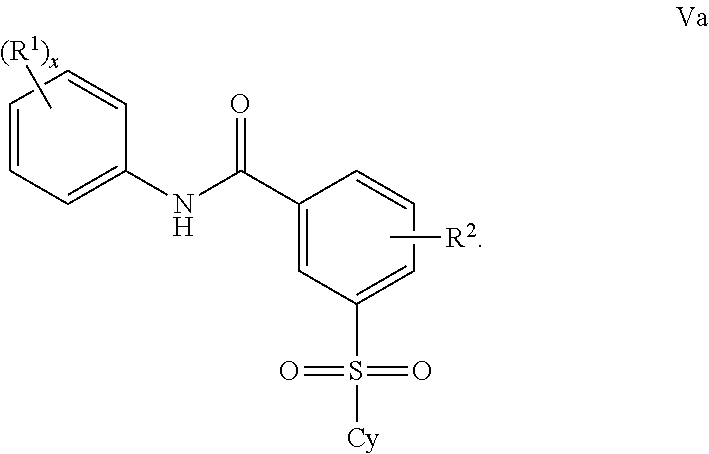
Figure 1 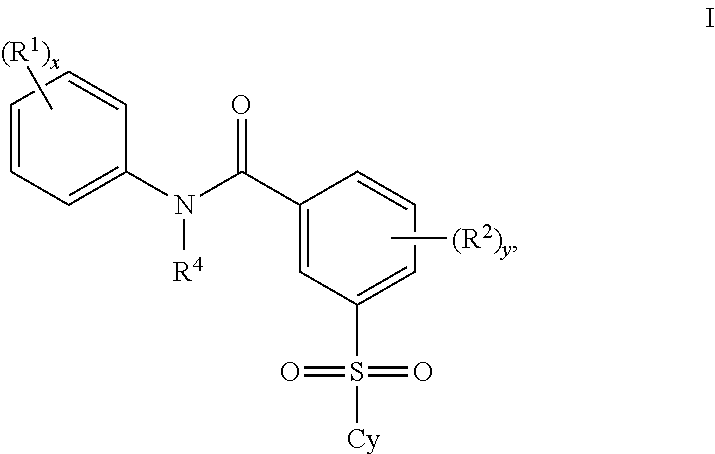
Figure 2 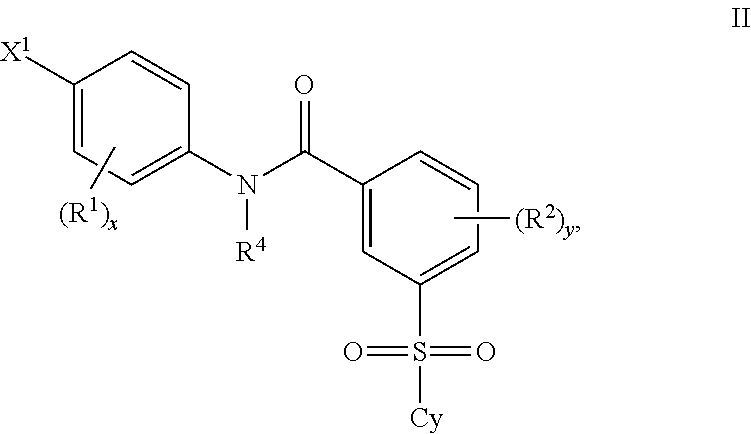
Figure 3
Abstract
Description
RELATED APPLICATIONS
[0001] This application claims priority to U.S. Provisional Application No. 61 / 928,130, filed Jan. 16, 2014, and U.S. application Ser. No. 14 / 511,964, filed Oct. 10, 2014. The entire contents of these applications are incorporated herein by reference in their entirety.BACKGROUND
[0002] Chronic hepatitis B virus (HBV) infection is a significant global health problem, affecting over 5% of the world population (over 350 million people worldwide and 1.25 million individuals in the U.S.).
[0003] Despite the availability of a prophylactic HBV vaccine, the burden of chronic HBV infection continues to be a significant unmet worldwide medical problem, due to suboptimal treatment options and sustained rates of new infections in most parts of the developing world. Current treatments do not provide a cure and are limited to only two classes of agents (interferon and nucleoside analogues / inhibitors of the viral polymerase); drug resistance, low efficacy, and tolerability issues li...
Examples
examples
[0406]The invention is now described with reference to the following Examples. These Examples are provided for the purpose of illustration only, and the invention is not limited to these Examples, but rather encompasses all variations that are evident as a result of the teachings provided herein.
[0407]Materials:
[0408]Unless otherwise noted, all starting materials and resins were obtained from commercial suppliers and used without purification.
[0409]
Region A:
[0410]
Region B:
[0411]
Region C:
[0412]
Part I Intermediate Synthesis (Regions A, B & C)
1 Preparation of Region A Intermediates
1.1 Preparation of A01 / 02
[0413]
1.1.1 Preparation of Compound 2 and 3
[0414]
[0415]To a solution of Compound 1 (5.0 g, 21.5 mmol) and ethyl 2-diazoacetate (3.2 g, 28.1 mmol) in THF (100 mL) was added BF3-Et2O (2.7 mL, 21.5 mmol) at −78° C. under N2. The reaction mixture was stirred at −78° C. for 1.5 h, then warmed to 28° C. slowly and stirred for 1.5 h. The resulting mixture was quenched with NaHCO3 (sat.) and ...
example
Inhibition of HBV Replication Dot-Blot Assay
[1017]Compounds active in the HBV assembly assay are tested for their activity and toxicity in cellular assay. In the first anti-viral assay, the ability of compounds to inhibit HBV replication in an HBV-producing hepatoma cell line using the dot-blot method is evaluated.
[1018]Briefly, confluent monolayers of HepG2-2.2.15 cells are incubated with complete medium containing various concentrations of a test compound. Three days later, the culture medium is replaced with fresh medium containing the appropriately diluted test compound. Six days following the initial administration of the test compound, the cell culture supernatant is collected, and cell lysis is performed. The samples are applied onto Nylos membranes and DNA is immobilized to the membrane by UV cross-linking. After pre-hybridization, the HBV probe is added and the hybridization is performed overnight. The membranes are exposed to the Kodak films; antiviral activity is calculat...