
Anode and battery
a technology applied in the field of anode and battery, can solve the problems of low cycle characteristics, low capacity of lithium secondary batteries, and low current collection properties, and achieve the effect of preventing an increase in impedance in batteries
Patent Information
- Authority / Receiving Office
- US · United States
- Patent Type
- Patents(United States)
- Current Assignee / Owner
- Publication Date
- 2016-08-23
Smart Images
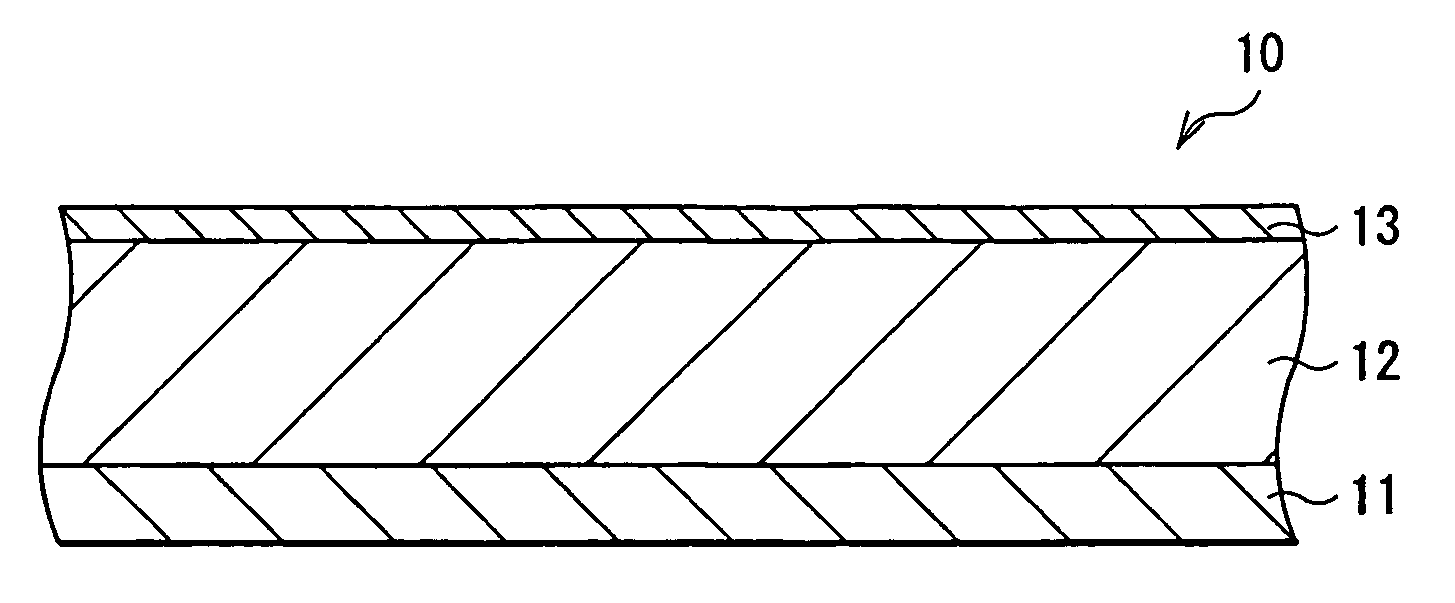
Figure 1 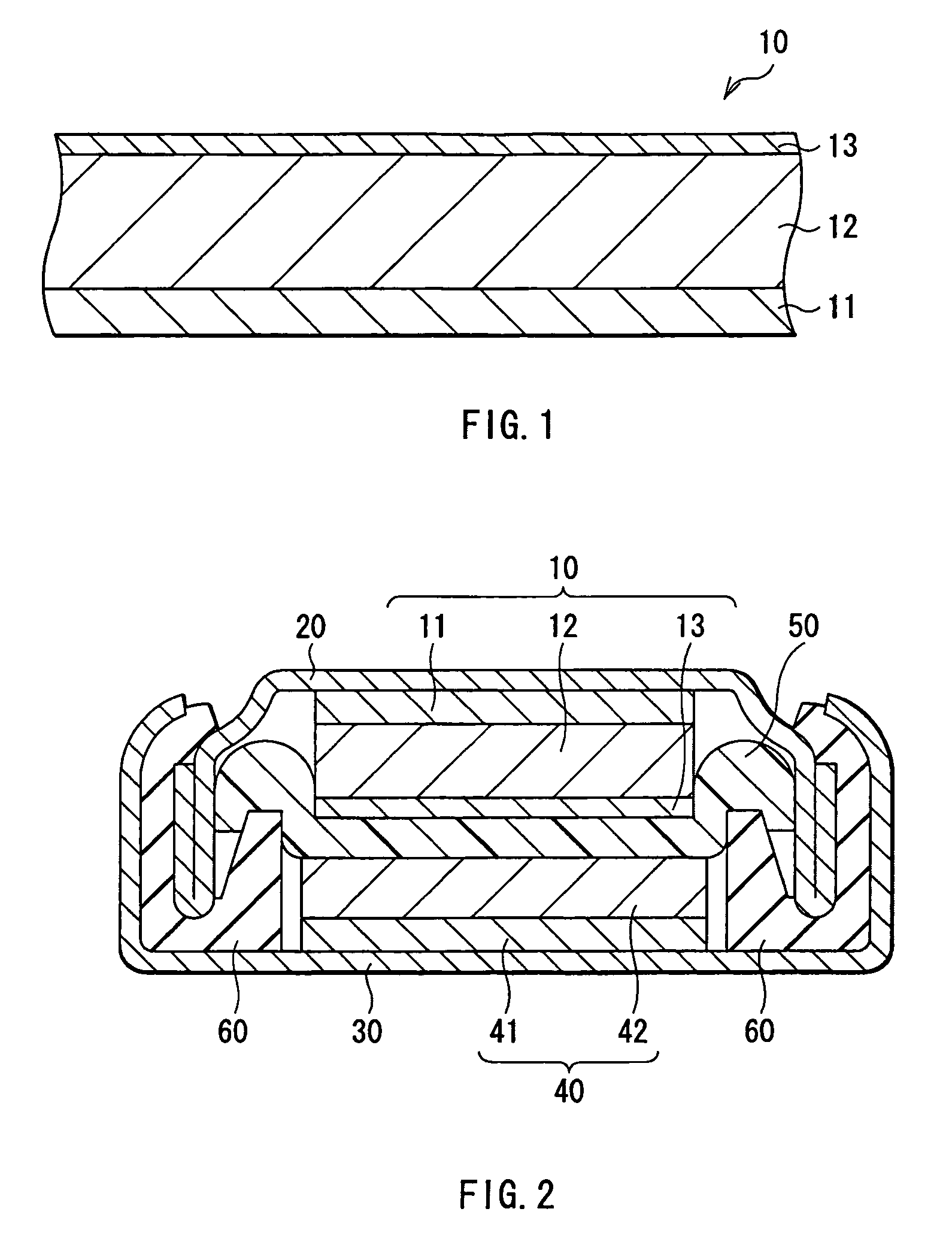
Figure 2 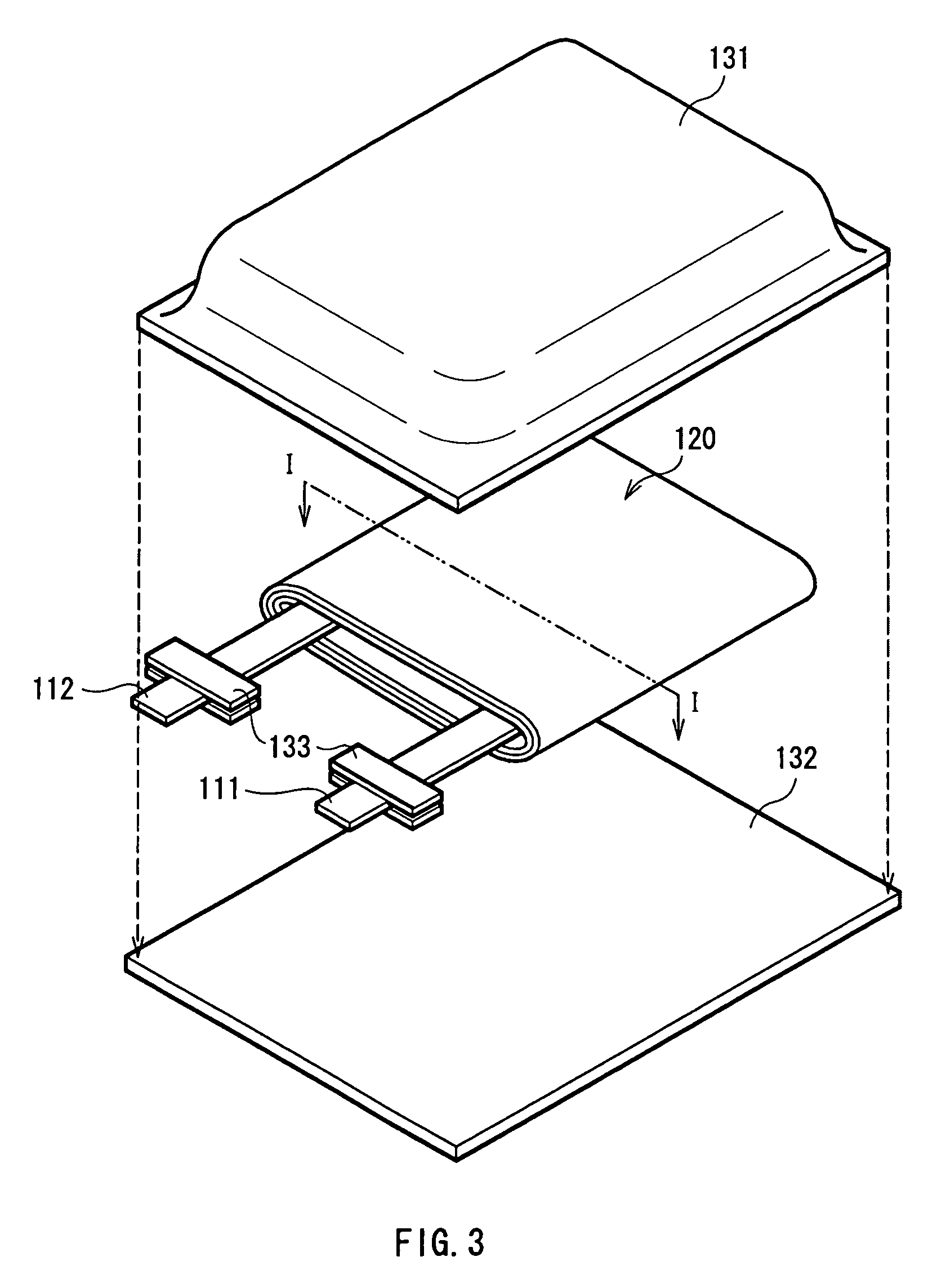
Figure 3
Abstract
Description
RELATED APPLICATION DATA
[0001] The present application claims priority to Japanese Application(s) No(s). P2004-019795 filed Jan. 28, 2004, which application(s) is / are incorporated herein by reference to the extent permitted by law.BACKGROUND OF THE INVENTION
[0002] 1. Field of the Invention
[0003] The present invention relates to an anode comprising an anode current collector and an anode active material layer, and a battery using the anode.
[0004] 2. Description of the Related Art
[0005] In recent years, as mobile devices have higher performance and more functions, higher capacities of secondary batteries as power sources of the mobile devices have been desired. As a secondary battery which meets the requirement, a lithium secondary battery is cited. However, the battery capacity of a currently typical lithium secondary battery which uses lithium cobalt oxide as a cathode and graphite as an anode has reached a point of saturation, so it is extremely difficult to substantially increase the c...
Examples
examples
[0074]Examples of the invention will be described in detail below referring to FIGS. 1 through 4. In the following examples, like components are donated by like numerals as of the above embodiment.
examples 1-1 through 1-5
[0075]Secondary batteries shown in FIGS. 3 and 4 were formed. At first, the anode active material layer 12 made of silicon was formed on the anode current collector 11 made of copper foil with a thickness of 15 μm by a sputtering method. Next, lithium metal was deposited on the anode active material layer 12 by a vacuum deposition method. An atmosphere at the time of depositing lithium metal was less than 1×10⁻³ Pa, and the deposition speed was 5 nm / s to 10 nm / s. The amount of deposited lithium metal, that is, the amount of lithium inserted into the anode active material layer 12 in advance was 5% of the anode capacity.
[0076]After lithium metal was deposited, an inactivated gas which included a mixture of carbon dioxide and argon at a volume ratio of 20:80 was introduced into a vacuum chamber at a flow rate of 50 cm3 / min (1 atm, 25° C.), and then a process of inactivating the anode active material layer 12 was carried out. After that, an argon gas was introduced into the vacuum cham...
examples 2-1 through 2-5 , 3-1 through 3-5 , 4-1 through 4-5
Examples 2-1 through 2-5, 3-1 through 3-5, 4-1 through 4-5
[0086]Secondary batteries of Examples 2-1 through 2-5, 3-1 through 3-5 and 4-1 through 4-5 were formed as in the case of Examples 1-1 through 1-5, except that the amount of lithium inserted into the anode active material layer 12 in advance was changed to 10%, 20% and 30%. Moreover, as Comparative Examples 2-1 through 2-5, 3-1 through 3-5 and 4-1 through 4-5, secondary batteries were formed as in the case of Examples 2-1 through 2-5, 3-1 through 3-5 and 4-1 through 4-5, except that no inactivation process by an inactivated gas was carried out. A charge-discharge test was carried out on the secondary batteries of Examples 2-1 through 2-5, 3-1 through 3-5 and 4-1 through 4-5 and Comparative Examples 2-1 through 2-5, 3-1 through 3-5 and 4-1 through 4-5 as in the case of Examples 1-1 through 1-5 to determine their capacity retention ratio in the 50th cycle and measure the degree of the variations by the standard deviation. The ob...