
CVT belt
a transmission belt and transverse force technology, applied in the direction of v-belts, driving belts, belts/chains/gearrings, etc., can solve the problems of high transverse compressive forces and frictional forces on the belt, additional frictional forces on the contact surfaces of the belt, and may be very severe in a cvt, so as to achieve significant performance benefits and high transverse stiffness
Patent Information
- Authority / Receiving Office
- US · United States
- Patent Type
- Patents(United States)
- Current Assignee / Owner
- Publication Date
- 2018-04-03
Smart Images
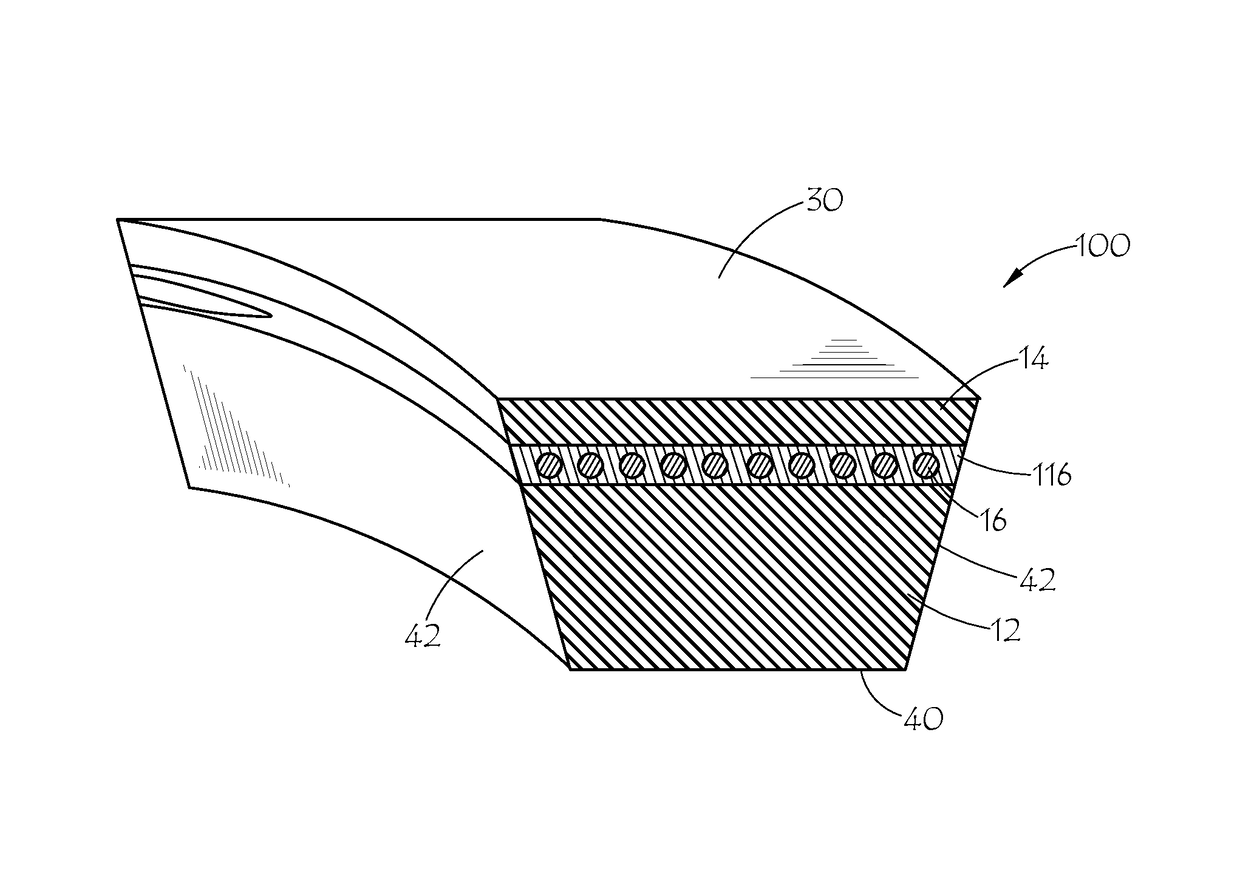
Figure 1 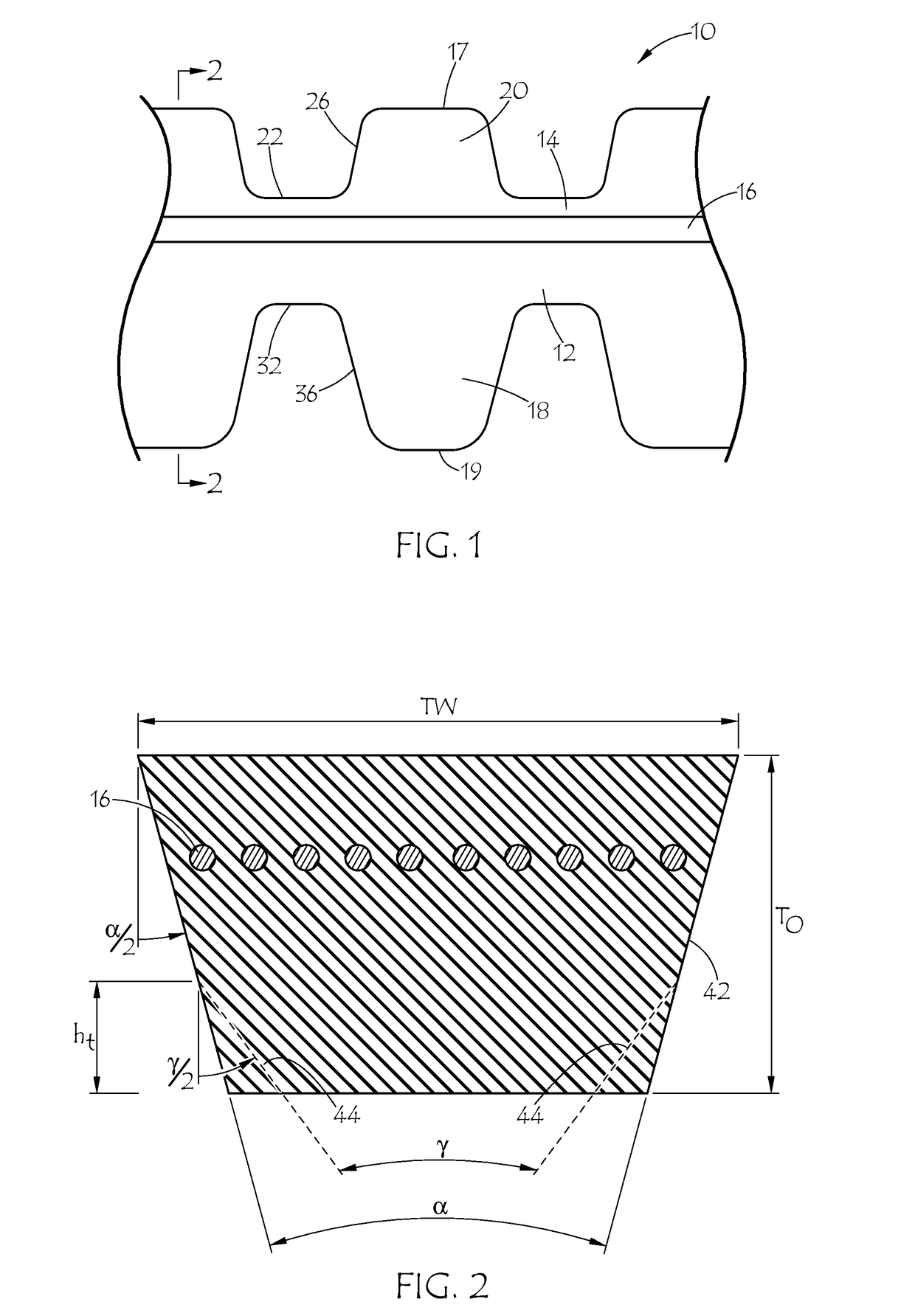
Figure 2 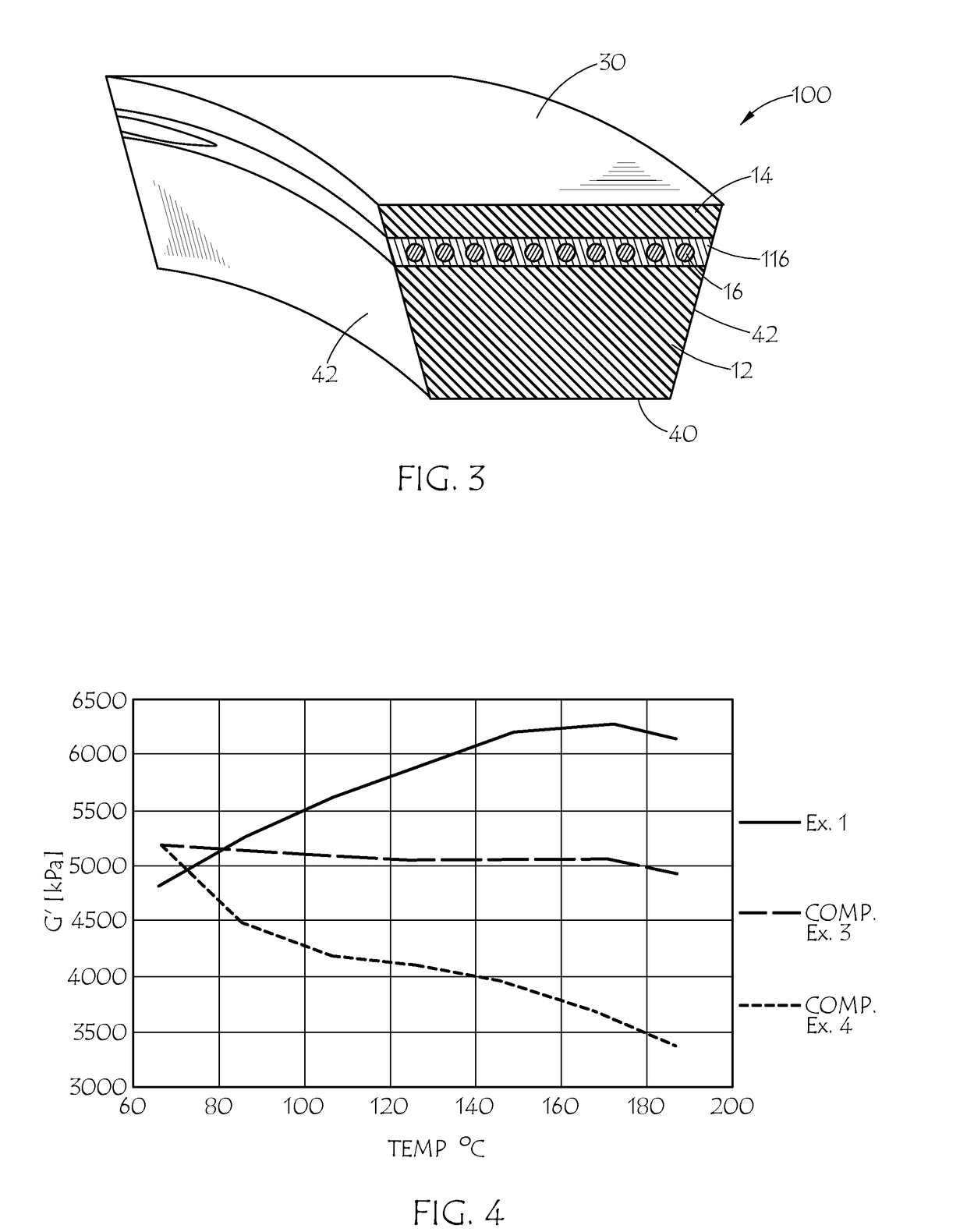
Figure 3
Abstract
Description
BACKGROUND OF THE INVENTION
[0001] This invention relates generally to a power transmission belt for a continuously variable transmission (“CVT”), more particularly to a CVT belt with a fiber-loaded rubber composition, and specifically a rubber composition based on polyolefin elastomer with both pulp and staple high-modulus fiber.
[0002] A CVT generally has some kind of closed-loop control or feedback mechanism for automatic and relatively rapid shifting based on the dynamics of the drive in a system. Often, in a CVT the driver sheave is controlled based on or reacts to a speed measurement or speed change in order to keep the power source or motor within an optimum power or speed range, and the driven sheave is controlled based on or reacts to the torque load. The variable-pitch sheaves may be adjusted by various mechanisms including mechanical, electro-mechanical, electronic, hydraulic, or the like. Belt-driven CVTs are widely used in scooters, all-terrain vehicles (“ATV”), snowmobiles...
Examples
examples
[0056]In the following examples, inventive examples are indicated as “Ex.” And comparative examples as “Comp. Ex.”
[0057]In a first set of examples, the rubber compositions are shown in volume percent in Table 1, and in phr in Table 2. Ex. 1 and Ex. 2 illustrate rubber compositions based on EOM elastomer with two different ratios of Kevlar pulp to para-aramid (1-mm chopped Technora) staple fiber. Comp. Ex. 3 is based on EPDM with similar fiber levels as Ex. 2, while Comp. Ex. 4 is based on CR elastomer. Note that the EPDM elastomer is Vistalon 2504, from Exxon, with a very low Mooney viscosity of about 25, and a broad molecular weight distribution, and includes about 10 phr of oil, all features intended to help with dispersing the high fiber loading. The EOM elastomer, on the other hand has a much higher Mooney viscosity of about 37, (indicating higher molecular weight), and practically no added oil, yet it was found that the EOM compositions were much easier to mix, mill and calende...