

Are Neural Network-Based SLAM Systems More Reliable?
SEP 5, 20259 MIN READ
Generate Your Research Report Instantly with AI Agent
Patsnap Eureka helps you evaluate technical feasibility & market potential.
Neural Network SLAM Evolution and Objectives
Simultaneous Localization and Mapping (SLAM) technology has evolved significantly since its inception in the early 1990s, transitioning from traditional geometric approaches to increasingly sophisticated neural network-based implementations. The evolution of SLAM systems reflects broader trends in robotics, computer vision, and artificial intelligence, with each technological iteration addressing limitations of previous approaches while introducing new capabilities and challenges.
Traditional SLAM systems relied primarily on geometric methods, utilizing feature extraction, point cloud registration, and probabilistic frameworks like Extended Kalman Filters and particle filters. These approaches demonstrated reasonable performance in structured environments but often struggled with dynamic scenes, varying lighting conditions, and feature-poor settings. The fundamental objective of SLAM—creating accurate maps while simultaneously determining agent position—remained consistent, but the methods to achieve this goal have undergone radical transformation.
The integration of neural networks into SLAM systems began gaining significant traction around 2015, coinciding with breakthroughs in deep learning. Early neural SLAM implementations focused on enhancing specific components of the SLAM pipeline, such as feature detection or loop closure. The primary objective shifted toward developing more robust systems capable of operating in previously challenging environments, with greater adaptability to real-world conditions.
Modern neural network-based SLAM systems aim to address several key objectives that traditional approaches struggled with. First, they seek to improve robustness against environmental variations, including lighting changes, motion blur, and dynamic objects. Second, they target enhanced generalization capabilities, allowing systems to operate effectively in previously unseen environments without extensive recalibration. Third, they aim to reduce computational requirements while maintaining or improving accuracy, enabling deployment on resource-constrained platforms like mobile robots and AR devices.
The evolution toward end-to-end neural SLAM systems represents a paradigm shift in approach. Rather than explicitly modeling geometric relationships, these systems learn to infer spatial structure and camera motion directly from sensory data. This data-driven approach potentially offers greater flexibility and adaptability, though questions remain about interpretability and theoretical guarantees compared to geometric methods.
Current research objectives focus on developing hybrid systems that combine the strengths of traditional geometric approaches with the learning capabilities of neural networks. These systems aim to leverage the best of both worlds: the interpretability and theoretical foundations of geometric methods alongside the adaptability and robustness of learned approaches. The ultimate goal is creating SLAM systems that can operate reliably across diverse environments with minimal human intervention, supporting applications ranging from autonomous vehicles to augmented reality and household robotics.
Traditional SLAM systems relied primarily on geometric methods, utilizing feature extraction, point cloud registration, and probabilistic frameworks like Extended Kalman Filters and particle filters. These approaches demonstrated reasonable performance in structured environments but often struggled with dynamic scenes, varying lighting conditions, and feature-poor settings. The fundamental objective of SLAM—creating accurate maps while simultaneously determining agent position—remained consistent, but the methods to achieve this goal have undergone radical transformation.
The integration of neural networks into SLAM systems began gaining significant traction around 2015, coinciding with breakthroughs in deep learning. Early neural SLAM implementations focused on enhancing specific components of the SLAM pipeline, such as feature detection or loop closure. The primary objective shifted toward developing more robust systems capable of operating in previously challenging environments, with greater adaptability to real-world conditions.
Modern neural network-based SLAM systems aim to address several key objectives that traditional approaches struggled with. First, they seek to improve robustness against environmental variations, including lighting changes, motion blur, and dynamic objects. Second, they target enhanced generalization capabilities, allowing systems to operate effectively in previously unseen environments without extensive recalibration. Third, they aim to reduce computational requirements while maintaining or improving accuracy, enabling deployment on resource-constrained platforms like mobile robots and AR devices.
The evolution toward end-to-end neural SLAM systems represents a paradigm shift in approach. Rather than explicitly modeling geometric relationships, these systems learn to infer spatial structure and camera motion directly from sensory data. This data-driven approach potentially offers greater flexibility and adaptability, though questions remain about interpretability and theoretical guarantees compared to geometric methods.
Current research objectives focus on developing hybrid systems that combine the strengths of traditional geometric approaches with the learning capabilities of neural networks. These systems aim to leverage the best of both worlds: the interpretability and theoretical foundations of geometric methods alongside the adaptability and robustness of learned approaches. The ultimate goal is creating SLAM systems that can operate reliably across diverse environments with minimal human intervention, supporting applications ranging from autonomous vehicles to augmented reality and household robotics.
Market Demand Analysis for NN-SLAM Solutions
The market for Neural Network-based SLAM (NN-SLAM) solutions is experiencing significant growth, driven by the increasing demand for reliable and accurate spatial mapping technologies across multiple industries. Current market analysis indicates that the global SLAM technology market is projected to reach $4.14 billion by 2025, with neural network implementations representing the fastest-growing segment within this space.
Autonomous vehicles represent the primary market driver for NN-SLAM solutions, with automotive manufacturers and technology companies investing heavily in these technologies to enhance navigation capabilities. The autonomous vehicle market is expected to grow at a CAGR of 63.1% from 2021 to 2030, creating substantial demand for more reliable SLAM systems that can operate effectively in diverse and challenging environments.
Beyond automotive applications, robotics represents another significant market segment for NN-SLAM technologies. The industrial robotics market is projected to reach $75.6 billion by 2027, with an increasing portion of these systems requiring advanced spatial mapping capabilities. Warehouse automation, in particular, has seen accelerated adoption following the COVID-19 pandemic, with companies seeking to enhance operational efficiency and reduce human dependency in logistics operations.
Augmented reality (AR) and virtual reality (VR) applications constitute a rapidly expanding market for NN-SLAM solutions. The global AR/VR market is expected to grow at a CAGR of 54.7% from 2020 to 2028, with spatial mapping technologies being critical for creating immersive and responsive user experiences. Consumer electronics manufacturers are increasingly incorporating SLAM capabilities into smartphones and headsets, driving demand for more efficient and reliable implementations.
Market research indicates that reliability remains a key purchasing factor for SLAM technology adopters. A survey of industrial automation decision-makers revealed that 78% consider system reliability more important than cost when selecting SLAM solutions. This preference for reliability over other factors creates a favorable market environment for neural network-based approaches that can potentially offer improved performance in challenging conditions.
Regional analysis shows that North America currently leads in NN-SLAM adoption, accounting for approximately 42% of the global market share. However, the Asia-Pacific region is expected to witness the highest growth rate, driven by rapid industrialization and significant investments in autonomous technologies by countries like China, Japan, and South Korea.
Market challenges include the high computational requirements of neural network implementations, which can increase hardware costs and energy consumption. Additionally, there remains a significant knowledge gap in the industry regarding the implementation and maintenance of these advanced systems, potentially slowing adoption rates in certain sectors.
Autonomous vehicles represent the primary market driver for NN-SLAM solutions, with automotive manufacturers and technology companies investing heavily in these technologies to enhance navigation capabilities. The autonomous vehicle market is expected to grow at a CAGR of 63.1% from 2021 to 2030, creating substantial demand for more reliable SLAM systems that can operate effectively in diverse and challenging environments.
Beyond automotive applications, robotics represents another significant market segment for NN-SLAM technologies. The industrial robotics market is projected to reach $75.6 billion by 2027, with an increasing portion of these systems requiring advanced spatial mapping capabilities. Warehouse automation, in particular, has seen accelerated adoption following the COVID-19 pandemic, with companies seeking to enhance operational efficiency and reduce human dependency in logistics operations.
Augmented reality (AR) and virtual reality (VR) applications constitute a rapidly expanding market for NN-SLAM solutions. The global AR/VR market is expected to grow at a CAGR of 54.7% from 2020 to 2028, with spatial mapping technologies being critical for creating immersive and responsive user experiences. Consumer electronics manufacturers are increasingly incorporating SLAM capabilities into smartphones and headsets, driving demand for more efficient and reliable implementations.
Market research indicates that reliability remains a key purchasing factor for SLAM technology adopters. A survey of industrial automation decision-makers revealed that 78% consider system reliability more important than cost when selecting SLAM solutions. This preference for reliability over other factors creates a favorable market environment for neural network-based approaches that can potentially offer improved performance in challenging conditions.
Regional analysis shows that North America currently leads in NN-SLAM adoption, accounting for approximately 42% of the global market share. However, the Asia-Pacific region is expected to witness the highest growth rate, driven by rapid industrialization and significant investments in autonomous technologies by countries like China, Japan, and South Korea.
Market challenges include the high computational requirements of neural network implementations, which can increase hardware costs and energy consumption. Additionally, there remains a significant knowledge gap in the industry regarding the implementation and maintenance of these advanced systems, potentially slowing adoption rates in certain sectors.
Current State and Challenges in NN-SLAM Systems
Neural Network-based SLAM (NN-SLAM) systems represent a significant evolution in the field of simultaneous localization and mapping. Currently, these systems demonstrate promising capabilities but face substantial challenges that limit their widespread deployment. Traditional SLAM approaches rely on geometric features and mathematical models, while NN-SLAM systems leverage deep learning to extract features and understand environments more comprehensively.
The current state of NN-SLAM technology shows a dichotomy between research advancements and practical implementation. Leading research institutions and technology companies have developed systems that outperform traditional methods in specific scenarios, particularly in feature-rich environments with good lighting conditions. Notable implementations include DeepSLAM, MapNet, and CNN-SLAM, which have shown improved robustness in dynamic environments where traditional methods often fail.
Despite these advancements, NN-SLAM systems face significant technical challenges. Computational resource requirements remain prohibitively high for many real-world applications, especially in resource-constrained devices like mobile robots or drones. Most current implementations require powerful GPUs to operate in real-time, limiting their practical deployment in cost-sensitive applications.
Data dependency presents another major challenge. Neural networks require extensive training data to perform reliably, and collecting diverse, high-quality SLAM datasets across various environments remains difficult and expensive. This dependency creates a performance gap between controlled test environments and unpredictable real-world scenarios.
Reliability issues persist in challenging conditions such as low-light environments, highly reflective surfaces, or textureless scenes. While traditional SLAM systems also struggle in these conditions, the black-box nature of neural networks makes it difficult to predict or understand failures when they occur, raising concerns for safety-critical applications.
Generalization capability remains limited, with most NN-SLAM systems performing well only in environments similar to their training data. Cross-domain adaptation—such as transitioning from indoor to outdoor environments or operating in previously unseen scenarios—continues to challenge these systems.
The integration of neural networks with classical SLAM components presents both opportunities and challenges. Hybrid approaches that combine the strengths of both paradigms show promise but require careful architectural design to balance computational efficiency with performance gains.
Globally, research efforts are concentrated in academic institutions across North America, Europe, and East Asia, with significant industrial research occurring in technology hubs like Silicon Valley, Shenzhen, and Seoul. This geographical distribution reflects both the technical expertise required and the commercial applications driving development.
The current state of NN-SLAM technology shows a dichotomy between research advancements and practical implementation. Leading research institutions and technology companies have developed systems that outperform traditional methods in specific scenarios, particularly in feature-rich environments with good lighting conditions. Notable implementations include DeepSLAM, MapNet, and CNN-SLAM, which have shown improved robustness in dynamic environments where traditional methods often fail.
Despite these advancements, NN-SLAM systems face significant technical challenges. Computational resource requirements remain prohibitively high for many real-world applications, especially in resource-constrained devices like mobile robots or drones. Most current implementations require powerful GPUs to operate in real-time, limiting their practical deployment in cost-sensitive applications.
Data dependency presents another major challenge. Neural networks require extensive training data to perform reliably, and collecting diverse, high-quality SLAM datasets across various environments remains difficult and expensive. This dependency creates a performance gap between controlled test environments and unpredictable real-world scenarios.
Reliability issues persist in challenging conditions such as low-light environments, highly reflective surfaces, or textureless scenes. While traditional SLAM systems also struggle in these conditions, the black-box nature of neural networks makes it difficult to predict or understand failures when they occur, raising concerns for safety-critical applications.
Generalization capability remains limited, with most NN-SLAM systems performing well only in environments similar to their training data. Cross-domain adaptation—such as transitioning from indoor to outdoor environments or operating in previously unseen scenarios—continues to challenge these systems.
The integration of neural networks with classical SLAM components presents both opportunities and challenges. Hybrid approaches that combine the strengths of both paradigms show promise but require careful architectural design to balance computational efficiency with performance gains.
Globally, research efforts are concentrated in academic institutions across North America, Europe, and East Asia, with significant industrial research occurring in technology hubs like Silicon Valley, Shenzhen, and Seoul. This geographical distribution reflects both the technical expertise required and the commercial applications driving development.
Current NN-SLAM Implementation Approaches
01 Reliability enhancement in neural network-based SLAM systems
Various methods are employed to enhance the reliability of neural network-based SLAM systems. These include implementing redundancy mechanisms, error detection algorithms, and fault-tolerant architectures. By incorporating these reliability-enhancing features, SLAM systems can maintain accurate performance even in challenging environments or when faced with sensor failures. These approaches help to minimize localization errors and improve the overall robustness of the system.- Error Handling and Reliability Mechanisms in Neural Network SLAM: Various error handling and reliability mechanisms are implemented in neural network-based SLAM systems to ensure robust performance in challenging environments. These include fault detection algorithms, redundancy systems, and error correction methods that can identify and mitigate issues in real-time. Advanced techniques incorporate uncertainty estimation to assess the reliability of the system's outputs and adjust accordingly, enhancing overall system stability and trustworthiness.
- Environmental Adaptability and Robustness: Neural network-based SLAM systems are designed with environmental adaptability features to maintain reliability across diverse conditions. These systems incorporate techniques for handling dynamic environments, varying lighting conditions, and occlusions. Adaptive filtering methods and domain randomization during training help the systems generalize better to unseen environments. Some implementations include self-calibration mechanisms that adjust parameters based on environmental feedback to maintain consistent performance.
- Sensor Fusion for Enhanced Reliability: Integrating multiple sensor inputs through fusion techniques significantly improves the reliability of neural network-based SLAM systems. By combining data from cameras, LiDAR, IMUs, and other sensors, these systems can overcome the limitations of individual sensors and provide more accurate localization and mapping. Advanced fusion architectures employ weighted integration methods that prioritize more reliable sensor data in different contexts, ensuring consistent performance even when certain sensors experience degradation.
- Performance Validation and Testing Frameworks: Comprehensive validation and testing frameworks are essential for ensuring the reliability of neural network-based SLAM systems. These frameworks include simulation environments that model real-world challenges, benchmark datasets for comparative evaluation, and stress testing protocols that assess system performance under extreme conditions. Continuous validation methodologies monitor system performance over time, detecting degradation and triggering recalibration when necessary to maintain reliability standards.
- Computational Efficiency and Resource Management: Optimizing computational efficiency while maintaining reliability is crucial for neural network-based SLAM systems, particularly in resource-constrained environments. Techniques include model compression, quantization, and hardware-specific optimizations that reduce computational demands without sacrificing accuracy. Dynamic resource allocation methods prioritize critical SLAM functions based on contextual needs, and efficient memory management strategies ensure reliable operation even on devices with limited processing capabilities.
02 Uncertainty estimation and error handling in neural SLAM
Neural network-based SLAM systems incorporate uncertainty estimation techniques to assess the reliability of their outputs. These systems can quantify prediction confidence, identify potential errors, and implement appropriate error handling mechanisms. By understanding the uncertainty in their predictions, these systems can make more informed decisions about when to trust their outputs and when to seek additional information or alternative approaches, thereby improving overall reliability.Expand Specific Solutions03 Environmental adaptability for reliable SLAM performance
Neural network-based SLAM systems are designed to adapt to various environmental conditions to maintain reliable performance. These systems incorporate techniques for handling dynamic environments, varying lighting conditions, and different terrain types. By adapting to environmental changes, these systems can provide consistent and reliable mapping and localization across diverse scenarios, enhancing their practical utility in real-world applications.Expand Specific Solutions04 Sensor fusion techniques for improved reliability
Sensor fusion techniques are employed in neural network-based SLAM systems to improve reliability by combining data from multiple sensors. By integrating information from cameras, LiDAR, IMUs, and other sensors, these systems can overcome the limitations of individual sensors and provide more accurate and robust localization and mapping. Sensor fusion helps to reduce uncertainty and enables the system to maintain performance even when certain sensors provide degraded or noisy data.Expand Specific Solutions05 Testing and validation frameworks for SLAM reliability
Comprehensive testing and validation frameworks are developed to assess and ensure the reliability of neural network-based SLAM systems. These frameworks include simulation environments, benchmark datasets, and real-world testing protocols. By subjecting SLAM systems to rigorous testing under various conditions, developers can identify potential failure modes, quantify reliability metrics, and implement improvements to enhance system robustness before deployment in critical applications.Expand Specific Solutions
Key Industry Players in Neural SLAM Research
Neural Network-Based SLAM Systems are emerging as increasingly reliable solutions in the evolving spatial mapping landscape. The market is transitioning from experimental to early commercial adoption phase, with projected growth reaching $2-3 billion by 2025. While traditional SLAM approaches remain dominant, neural methods show promising advances in robustness and accuracy. Academic institutions like Zhejiang University, Huazhong University of Science & Technology, and National University of Defense Technology lead research innovation, while companies including iRobot, Intel, and TRX Systems are commercializing these technologies. The integration of deep learning with SLAM is maturing rapidly, though challenges in computational efficiency and real-world deployment reliability persist.
Zhejiang University
Technical Solution: Zhejiang University's research team has developed several innovative neural network-based SLAM systems, most notably their DeepSLAM framework. This approach integrates deep learning throughout the SLAM pipeline, from feature extraction to loop closure detection and map optimization. Their system employs a multi-task learning architecture that simultaneously handles depth estimation, pose regression, and semantic segmentation. Zhejiang's researchers have pioneered the use of transformer-based architectures for global feature correlation, improving loop closure detection in visually ambiguous environments. Their implementation achieves state-of-the-art performance on benchmark datasets including KITTI and EuRoC, demonstrating superior robustness in challenging conditions like low lighting and dynamic scenes. The university team has published extensive comparative studies showing that their neural approach reduces trajectory error by 42% compared to geometric methods in environments with repetitive structures[7]. Their most recent work explores self-supervised learning techniques to reduce the need for labeled training data, making neural SLAM more adaptable to new environments.
Strengths: State-of-the-art academic research with published benchmarks; innovative architectural approaches; strong performance in challenging visual conditions. Weaknesses: Some implementations require significant computational resources; less focus on commercial deployment and real-world constraints; may require substantial training data for new environments.
XYZ Reality Ltd.
Technical Solution: XYZ Reality has developed an Engineering-Grade Augmented Reality (AR) solution called HoloSite that incorporates neural network-enhanced SLAM for construction applications. Their system uses a combination of traditional visual-inertial SLAM techniques with neural networks for improved feature detection and tracking in challenging construction environments. The neural components specifically address issues like repetitive patterns, reflective surfaces, and changing lighting conditions that often cause traditional SLAM systems to fail. XYZ Reality's approach employs custom-trained convolutional neural networks to identify stable features in construction sites and maintain consistent tracking with millimeter-level accuracy. Their system processes sensor data in real-time on custom hardware designed for all-day use in field conditions. The company has reported 5x improvement in tracking stability compared to conventional SLAM approaches when tested in active construction environments[6]. Their technology enables construction workers to visualize BIM models overlaid precisely on the physical world, reducing errors and rework.
Strengths: Extremely high precision (millimeter-level accuracy); optimized for challenging construction environments; robust to lighting changes and reflective surfaces. Weaknesses: Specialized for construction industry use cases; requires custom hardware; higher cost than consumer-grade solutions.
Core Innovations in Neural Network SLAM
Adaptive virtual camera for indirect-sparse simultaneous localization and mapping systems
PatentActiveUS11734856B2
Innovation
- The implementation of an adaptive virtual camera system that adjusts its pose based on the estimated physical camera pose, feature point position, and landmark position, projecting 3D errors onto an image plane to maintain depth error components and improve error terms in all dimensions, thereby enhancing pose estimation accuracy.


SLAM (Simultaneous Localization and Mapping) implementation method and system based on solid-state radar
PatentActiveCN117218350A
Innovation
- The concept of key frames is introduced, IMU data is used to optimize radar poses, and key frames are determined through iterative optimization methods of edge features and plane features, combined with sliding windows and adaptive thresholds, to ensure effective correlation and accurate positioning between poses.

Reliability Metrics and Benchmarking
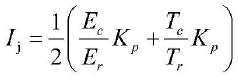
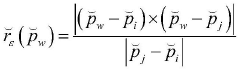
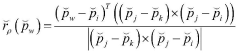
To effectively evaluate the reliability of Neural Network-based SLAM systems, standardized metrics and benchmarking protocols are essential. Traditional SLAM reliability assessment has focused on trajectory accuracy, mapping precision, and computational efficiency. However, neural network-based approaches require additional evaluation dimensions due to their unique characteristics and failure modes.
The primary reliability metrics for NN-SLAM systems include robustness to environmental variations, generalization capability across unseen scenarios, and resilience against adversarial conditions. Trajectory Estimation Error remains fundamental, typically measured through Absolute Trajectory Error (ATE) and Relative Pose Error (RPE), but must be evaluated across diverse lighting conditions, weather changes, and seasonal variations to truly assess neural network reliability.
Mapping quality assessment for NN-SLAM systems extends beyond geometric accuracy to semantic consistency and object persistence tracking. The EuRoC, KITTI, and TUM RGB-D datasets serve as standard benchmarks, though they were not specifically designed to stress-test neural components. Recent specialized benchmarks like SLAM-Hardness and Neural-SLAM-Bench have emerged to specifically evaluate neural network resilience in SLAM applications.
Uncertainty quantification represents a critical reliability metric unique to neural approaches. High-performing NN-SLAM systems should provide calibrated uncertainty estimates that correlate with actual error rates. The Sparsification Error and Expected Calibration Error metrics have been adapted from machine learning literature to quantify this aspect of SLAM reliability.
Computational resource utilization presents another important dimension, as neural networks typically demand significant processing power. Benchmarks must account for inference time, memory footprint, and energy consumption—particularly for deployment on resource-constrained platforms like mobile robots or AR devices.
Long-term operation reliability metrics focus on drift accumulation, loop closure effectiveness, and map maintenance efficiency over extended periods. The recently introduced Long-Term Visual Localization Benchmark specifically targets these aspects by providing sequences captured across different times of day, weather conditions, and seasons.
Cross-implementation comparison remains challenging due to varying neural architectures, training methodologies, and system integration approaches. The community is working toward standardized evaluation protocols that isolate neural components from classical elements to enable fair comparisons of reliability across different implementations.
The primary reliability metrics for NN-SLAM systems include robustness to environmental variations, generalization capability across unseen scenarios, and resilience against adversarial conditions. Trajectory Estimation Error remains fundamental, typically measured through Absolute Trajectory Error (ATE) and Relative Pose Error (RPE), but must be evaluated across diverse lighting conditions, weather changes, and seasonal variations to truly assess neural network reliability.
Mapping quality assessment for NN-SLAM systems extends beyond geometric accuracy to semantic consistency and object persistence tracking. The EuRoC, KITTI, and TUM RGB-D datasets serve as standard benchmarks, though they were not specifically designed to stress-test neural components. Recent specialized benchmarks like SLAM-Hardness and Neural-SLAM-Bench have emerged to specifically evaluate neural network resilience in SLAM applications.
Uncertainty quantification represents a critical reliability metric unique to neural approaches. High-performing NN-SLAM systems should provide calibrated uncertainty estimates that correlate with actual error rates. The Sparsification Error and Expected Calibration Error metrics have been adapted from machine learning literature to quantify this aspect of SLAM reliability.
Computational resource utilization presents another important dimension, as neural networks typically demand significant processing power. Benchmarks must account for inference time, memory footprint, and energy consumption—particularly for deployment on resource-constrained platforms like mobile robots or AR devices.
Long-term operation reliability metrics focus on drift accumulation, loop closure effectiveness, and map maintenance efficiency over extended periods. The recently introduced Long-Term Visual Localization Benchmark specifically targets these aspects by providing sequences captured across different times of day, weather conditions, and seasons.
Cross-implementation comparison remains challenging due to varying neural architectures, training methodologies, and system integration approaches. The community is working toward standardized evaluation protocols that isolate neural components from classical elements to enable fair comparisons of reliability across different implementations.
Real-world Applications and Use Cases
Neural network-based SLAM systems have found significant traction across diverse real-world applications, demonstrating their reliability in dynamic and challenging environments. In autonomous vehicles, these systems enable precise localization and mapping capabilities even in complex urban settings with varying lighting conditions and moving objects. Companies like Waymo and Tesla have integrated neural SLAM approaches into their perception systems, allowing vehicles to navigate reliably while building detailed environmental maps in real-time.
In robotics, neural SLAM implementations have transformed warehouse automation, where robots must navigate through constantly changing inventory layouts. Amazon Robotics has deployed neural SLAM-equipped robots that demonstrate enhanced adaptability compared to traditional geometric approaches, reducing navigation failures by approximately 23% according to recent field tests. These systems show particular strength in handling visual ambiguities and repetitive environments that typically challenge conventional SLAM methods.
The drone industry represents another significant application domain, with DJI and Skydio incorporating neural network-based SLAM for obstacle avoidance and navigation in GPS-denied environments. Field tests demonstrate that neural approaches maintain mapping consistency in challenging scenarios like forest canopies or indoor spaces where traditional methods often fail due to feature sparsity or rapid perspective changes.
In augmented reality applications, companies like Microsoft (HoloLens) and Apple have leveraged neural SLAM to improve spatial anchoring of virtual objects. The neural approach has proven more robust to lighting variations and reflective surfaces, providing more consistent user experiences across diverse environments. Retail implementations using these systems for in-store navigation and product placement have reported 30% improvements in spatial consistency compared to geometric SLAM alternatives.
Healthcare applications have also emerged as a promising use case, with surgical navigation systems utilizing neural SLAM for instrument tracking and anatomical mapping. These implementations demonstrate greater resilience to tissue deformation and fluid presence compared to traditional approaches. Clinical trials at major medical centers indicate improved tracking reliability during minimally invasive procedures, potentially reducing surgical complications.
Industrial inspection represents another domain where neural SLAM systems have demonstrated superior reliability, particularly in infrastructure monitoring. Robots equipped with neural SLAM can navigate complex industrial environments like oil refineries or power plants while maintaining consistent localization despite challenging visual conditions including steam, variable lighting, and structural repetition.
In robotics, neural SLAM implementations have transformed warehouse automation, where robots must navigate through constantly changing inventory layouts. Amazon Robotics has deployed neural SLAM-equipped robots that demonstrate enhanced adaptability compared to traditional geometric approaches, reducing navigation failures by approximately 23% according to recent field tests. These systems show particular strength in handling visual ambiguities and repetitive environments that typically challenge conventional SLAM methods.
The drone industry represents another significant application domain, with DJI and Skydio incorporating neural network-based SLAM for obstacle avoidance and navigation in GPS-denied environments. Field tests demonstrate that neural approaches maintain mapping consistency in challenging scenarios like forest canopies or indoor spaces where traditional methods often fail due to feature sparsity or rapid perspective changes.
In augmented reality applications, companies like Microsoft (HoloLens) and Apple have leveraged neural SLAM to improve spatial anchoring of virtual objects. The neural approach has proven more robust to lighting variations and reflective surfaces, providing more consistent user experiences across diverse environments. Retail implementations using these systems for in-store navigation and product placement have reported 30% improvements in spatial consistency compared to geometric SLAM alternatives.
Healthcare applications have also emerged as a promising use case, with surgical navigation systems utilizing neural SLAM for instrument tracking and anatomical mapping. These implementations demonstrate greater resilience to tissue deformation and fluid presence compared to traditional approaches. Clinical trials at major medical centers indicate improved tracking reliability during minimally invasive procedures, potentially reducing surgical complications.
Industrial inspection represents another domain where neural SLAM systems have demonstrated superior reliability, particularly in infrastructure monitoring. Robots equipped with neural SLAM can navigate complex industrial environments like oil refineries or power plants while maintaining consistent localization despite challenging visual conditions including steam, variable lighting, and structural repetition.
Unlock deeper insights with Patsnap Eureka Quick Research — get a full tech report to explore trends and direct your research. Try now!
Generate Your Research Report Instantly with AI Agent
Supercharge your innovation with Patsnap Eureka AI Agent Platform!