

Compare Schmitt Trigger Circuits for Temperature Variability
SEP 23, 20259 MIN READ
Generate Your Research Report Instantly with AI Agent
PatSnap Eureka helps you evaluate technical feasibility & market potential.
Schmitt Trigger Evolution and Design Objectives
The Schmitt trigger circuit, first introduced by Otto Schmitt in 1934, represents a significant milestone in electronic circuit design. Initially developed to study nerve propagation, this circuit has evolved into a fundamental component in modern electronics due to its unique hysteresis characteristics. The evolution of Schmitt trigger designs has been driven by the increasing demand for reliable operation across varying environmental conditions, particularly temperature fluctuations.
Early Schmitt trigger implementations relied on vacuum tubes, transitioning to discrete transistor designs in the 1950s and 1960s. The integration into monolithic integrated circuits during the 1970s marked a pivotal advancement, enabling widespread adoption across diverse applications. Contemporary designs have further refined the circuit to address specific performance parameters, with temperature stability emerging as a critical consideration in modern electronic systems.
Temperature variability presents a significant challenge for Schmitt trigger performance, as threshold voltages, switching speeds, and noise immunity characteristics can all be adversely affected by thermal fluctuations. The primary design objective when addressing temperature variability is to maintain consistent hysteresis window dimensions across the operational temperature range, typically -40°C to 125°C for industrial applications.
Another crucial design goal involves optimizing power consumption while preserving noise immunity characteristics. This balance becomes increasingly important in battery-powered and energy-efficient applications where power constraints are stringent. Modern Schmitt trigger designs must achieve this balance without compromising the circuit's fundamental advantage of clean switching behavior in noisy environments.
The miniaturization trend in electronics has further shaped Schmitt trigger evolution, with designs progressively reducing silicon footprint while maintaining or enhancing performance metrics. This trend aligns with broader industry movements toward higher integration density and system-on-chip implementations.
Recent technological advancements have introduced novel design approaches, including adaptive threshold techniques that dynamically adjust trigger points based on operating conditions. These innovations represent the cutting edge of Schmitt trigger development, offering potential solutions to temperature variability challenges through active compensation mechanisms rather than passive stability measures.
The technical trajectory suggests continued refinement toward self-calibrating Schmitt trigger architectures capable of maintaining precise hysteresis characteristics across extreme temperature ranges. This evolution path aligns with increasing demands for robust operation in automotive, aerospace, and industrial control applications where environmental conditions vary significantly and reliability requirements are stringent.
Early Schmitt trigger implementations relied on vacuum tubes, transitioning to discrete transistor designs in the 1950s and 1960s. The integration into monolithic integrated circuits during the 1970s marked a pivotal advancement, enabling widespread adoption across diverse applications. Contemporary designs have further refined the circuit to address specific performance parameters, with temperature stability emerging as a critical consideration in modern electronic systems.
Temperature variability presents a significant challenge for Schmitt trigger performance, as threshold voltages, switching speeds, and noise immunity characteristics can all be adversely affected by thermal fluctuations. The primary design objective when addressing temperature variability is to maintain consistent hysteresis window dimensions across the operational temperature range, typically -40°C to 125°C for industrial applications.
Another crucial design goal involves optimizing power consumption while preserving noise immunity characteristics. This balance becomes increasingly important in battery-powered and energy-efficient applications where power constraints are stringent. Modern Schmitt trigger designs must achieve this balance without compromising the circuit's fundamental advantage of clean switching behavior in noisy environments.
The miniaturization trend in electronics has further shaped Schmitt trigger evolution, with designs progressively reducing silicon footprint while maintaining or enhancing performance metrics. This trend aligns with broader industry movements toward higher integration density and system-on-chip implementations.
Recent technological advancements have introduced novel design approaches, including adaptive threshold techniques that dynamically adjust trigger points based on operating conditions. These innovations represent the cutting edge of Schmitt trigger development, offering potential solutions to temperature variability challenges through active compensation mechanisms rather than passive stability measures.
The technical trajectory suggests continued refinement toward self-calibrating Schmitt trigger architectures capable of maintaining precise hysteresis characteristics across extreme temperature ranges. This evolution path aligns with increasing demands for robust operation in automotive, aerospace, and industrial control applications where environmental conditions vary significantly and reliability requirements are stringent.
Market Applications and Requirements Analysis
The Schmitt trigger circuit market is experiencing significant growth across multiple sectors due to its essential role in signal conditioning and noise immunity applications. The global market for analog comparators, including Schmitt triggers, is projected to reach $2.3 billion by 2026, with a compound annual growth rate of approximately 5.7%. This growth is primarily driven by increasing demand in automotive electronics, industrial automation, and consumer electronics sectors.
In the automotive industry, Schmitt trigger circuits are critical components in engine control units, anti-lock braking systems, and advanced driver assistance systems (ADAS). These applications require exceptional temperature stability, with operational ranges typically from -40°C to +125°C. The automotive-grade Schmitt triggers must maintain consistent hysteresis characteristics across this temperature range to ensure reliable operation in safety-critical systems.
Industrial automation represents another significant market segment, where Schmitt triggers are employed in sensor interfaces, motor control systems, and programmable logic controllers. These applications demand temperature stability from -25°C to +85°C, with some specialized industrial environments requiring extended ranges up to +105°C. The key requirement here is long-term reliability and consistent performance under varying environmental conditions.
Consumer electronics manufacturers utilize Schmitt triggers in power management circuits, input/output interfaces, and signal conditioning applications. While consumer applications typically operate in narrower temperature ranges (0°C to +70°C), they emphasize low power consumption and miniaturization. The market trend shows increasing demand for Schmitt triggers with supply voltages below 1.8V and quiescent current in the microampere range.
Medical equipment represents an emerging market for temperature-stable Schmitt triggers, particularly in patient monitoring systems and diagnostic equipment. These applications require high precision with temperature stability within ±0.5% across their operating range, typically +10°C to +40°C.
Market analysis indicates that customers across all segments are increasingly demanding Schmitt trigger circuits with improved temperature compensation techniques. Traditional CMOS-based Schmitt triggers show threshold voltage variations of approximately 2-4mV/°C, which is inadequate for precision applications. The market requires solutions that can reduce this temperature coefficient to below 0.5mV/°C.
Additionally, there is growing demand for programmable hysteresis in Schmitt trigger circuits, allowing dynamic adjustment based on operating conditions. This feature is particularly valuable in applications where signal characteristics change with temperature, enabling adaptive noise immunity without compromising response time.
In the automotive industry, Schmitt trigger circuits are critical components in engine control units, anti-lock braking systems, and advanced driver assistance systems (ADAS). These applications require exceptional temperature stability, with operational ranges typically from -40°C to +125°C. The automotive-grade Schmitt triggers must maintain consistent hysteresis characteristics across this temperature range to ensure reliable operation in safety-critical systems.
Industrial automation represents another significant market segment, where Schmitt triggers are employed in sensor interfaces, motor control systems, and programmable logic controllers. These applications demand temperature stability from -25°C to +85°C, with some specialized industrial environments requiring extended ranges up to +105°C. The key requirement here is long-term reliability and consistent performance under varying environmental conditions.
Consumer electronics manufacturers utilize Schmitt triggers in power management circuits, input/output interfaces, and signal conditioning applications. While consumer applications typically operate in narrower temperature ranges (0°C to +70°C), they emphasize low power consumption and miniaturization. The market trend shows increasing demand for Schmitt triggers with supply voltages below 1.8V and quiescent current in the microampere range.
Medical equipment represents an emerging market for temperature-stable Schmitt triggers, particularly in patient monitoring systems and diagnostic equipment. These applications require high precision with temperature stability within ±0.5% across their operating range, typically +10°C to +40°C.
Market analysis indicates that customers across all segments are increasingly demanding Schmitt trigger circuits with improved temperature compensation techniques. Traditional CMOS-based Schmitt triggers show threshold voltage variations of approximately 2-4mV/°C, which is inadequate for precision applications. The market requires solutions that can reduce this temperature coefficient to below 0.5mV/°C.
Additionally, there is growing demand for programmable hysteresis in Schmitt trigger circuits, allowing dynamic adjustment based on operating conditions. This feature is particularly valuable in applications where signal characteristics change with temperature, enabling adaptive noise immunity without compromising response time.
Current Challenges in Temperature-Stable Schmitt Triggers
Schmitt trigger circuits, while fundamental in signal processing and digital systems, face significant challenges when operating across varying temperature conditions. The primary issue stems from the temperature dependency of semiconductor parameters, particularly threshold voltages and carrier mobility, which directly impact the hysteresis characteristics that define Schmitt trigger functionality.
Conventional CMOS-based Schmitt triggers exhibit notable threshold voltage shifts with temperature variations, typically at rates of -1 to -3 mV/°C. This temperature coefficient creates inconsistent switching points across operating environments, leading to potential signal integrity issues in precision applications. The problem is particularly pronounced in industrial and automotive environments where temperature ranges can span from -40°C to 125°C.
Another critical challenge is the temperature-induced variation in propagation delay. As temperature increases, carrier mobility decreases, resulting in slower switching speeds and increased propagation delays. This timing inconsistency can compromise system reliability in high-speed applications where precise timing is essential, such as clock recovery circuits and sensor interfaces.
Power consumption characteristics also demonstrate significant temperature dependency. Leakage currents in CMOS devices approximately double with every 10°C increase in temperature, dramatically affecting static power consumption at elevated temperatures. This poses particular challenges for battery-powered and energy-efficient applications where power budgets are tightly constrained.
The noise margin, a critical parameter for Schmitt triggers, exhibits temperature sensitivity that can compromise circuit robustness. As temperature increases, reduced noise margins may lead to false triggering in noisy environments, undermining the very purpose of employing Schmitt triggers for noise immunity.
Process variations compound these temperature-related challenges. The interaction between process corners and temperature effects creates a complex design space where ensuring consistent performance becomes increasingly difficult. Circuits optimized for typical conditions may fail at temperature extremes when process variations are considered.
Current compensation techniques each present their own limitations. Bandgap reference-based approaches add complexity and power overhead. Self-biased architectures improve stability but often at the cost of reduced voltage swing or increased power consumption. Differential implementations offer better temperature stability but require more complex circuitry and careful matching.
The miniaturization trend in semiconductor technology exacerbates these challenges, as smaller device geometries typically exhibit greater parameter sensitivity to temperature variations. This creates a fundamental tension between the industry push toward smaller, more integrated solutions and the need for temperature-stable analog circuit blocks like Schmitt triggers.
Conventional CMOS-based Schmitt triggers exhibit notable threshold voltage shifts with temperature variations, typically at rates of -1 to -3 mV/°C. This temperature coefficient creates inconsistent switching points across operating environments, leading to potential signal integrity issues in precision applications. The problem is particularly pronounced in industrial and automotive environments where temperature ranges can span from -40°C to 125°C.
Another critical challenge is the temperature-induced variation in propagation delay. As temperature increases, carrier mobility decreases, resulting in slower switching speeds and increased propagation delays. This timing inconsistency can compromise system reliability in high-speed applications where precise timing is essential, such as clock recovery circuits and sensor interfaces.
Power consumption characteristics also demonstrate significant temperature dependency. Leakage currents in CMOS devices approximately double with every 10°C increase in temperature, dramatically affecting static power consumption at elevated temperatures. This poses particular challenges for battery-powered and energy-efficient applications where power budgets are tightly constrained.
The noise margin, a critical parameter for Schmitt triggers, exhibits temperature sensitivity that can compromise circuit robustness. As temperature increases, reduced noise margins may lead to false triggering in noisy environments, undermining the very purpose of employing Schmitt triggers for noise immunity.
Process variations compound these temperature-related challenges. The interaction between process corners and temperature effects creates a complex design space where ensuring consistent performance becomes increasingly difficult. Circuits optimized for typical conditions may fail at temperature extremes when process variations are considered.
Current compensation techniques each present their own limitations. Bandgap reference-based approaches add complexity and power overhead. Self-biased architectures improve stability but often at the cost of reduced voltage swing or increased power consumption. Differential implementations offer better temperature stability but require more complex circuitry and careful matching.
The miniaturization trend in semiconductor technology exacerbates these challenges, as smaller device geometries typically exhibit greater parameter sensitivity to temperature variations. This creates a fundamental tension between the industry push toward smaller, more integrated solutions and the need for temperature-stable analog circuit blocks like Schmitt triggers.
Contemporary Temperature Compensation Techniques
01 Temperature compensation techniques for Schmitt trigger circuits
Various methods are employed to compensate for temperature variations in Schmitt trigger circuits. These include using complementary transistor pairs, bandgap reference circuits, and specialized feedback networks that maintain consistent threshold voltages across temperature ranges. These compensation techniques help to stabilize the hysteresis characteristics and switching thresholds, ensuring reliable operation in varying environmental conditions.- Temperature compensation techniques for Schmitt trigger circuits: Various methods are employed to compensate for temperature variations in Schmitt trigger circuits. These include using complementary transistor pairs, bandgap reference circuits, and specialized feedback networks that maintain consistent threshold voltages across temperature ranges. These compensation techniques help to stabilize the hysteresis characteristics and switching points of Schmitt triggers in varying thermal environments.
- Voltage reference circuits for temperature-stable operation: Schmitt trigger circuits incorporate voltage reference circuits to maintain stable operation across temperature variations. These reference circuits provide consistent bias voltages that are relatively immune to temperature changes, ensuring that the trigger points remain constant. Techniques include bandgap references, constant-current sources, and proportional-to-absolute-temperature (PTAT) circuits that counteract the temperature coefficients of semiconductor devices.
- Hysteresis control for temperature stability: Specialized circuit designs focus on maintaining consistent hysteresis windows across temperature variations. These designs employ feedback mechanisms that automatically adjust the hysteresis width to compensate for temperature-induced changes in component characteristics. By maintaining stable hysteresis, these circuits ensure reliable switching behavior regardless of operating temperature, which is critical for noise immunity in digital systems.
- CMOS implementation for improved temperature performance: CMOS-based Schmitt trigger designs offer inherent advantages for temperature stability. By leveraging the complementary nature of NMOS and PMOS transistors, these implementations can achieve partial cancellation of temperature effects. Advanced CMOS Schmitt trigger circuits incorporate additional compensation networks and carefully sized transistors to minimize threshold voltage drift across wide temperature ranges.
- Feedback mechanisms for threshold stabilization: Innovative feedback architectures are employed to stabilize the switching thresholds of Schmitt trigger circuits against temperature variations. These include dynamic biasing schemes, temperature-sensing elements that adjust circuit parameters in real-time, and self-calibrating loops. Such feedback mechanisms continuously monitor and compensate for temperature-induced shifts, maintaining consistent trigger points across the operating temperature range.
02 Threshold voltage stabilization across temperature ranges
Schmitt trigger designs that focus on stabilizing threshold voltages despite temperature fluctuations. These circuits incorporate reference voltage generators, differential amplifier configurations, and specialized biasing networks to maintain consistent switching points. By reducing threshold drift with temperature, these designs ensure predictable operation in applications requiring precise triggering levels across wide temperature ranges.Expand Specific Solutions03 CMOS-based temperature-stable Schmitt trigger implementations
CMOS technology offers specific advantages for creating temperature-stable Schmitt trigger circuits. These implementations utilize the complementary properties of NMOS and PMOS transistors to balance temperature effects. Special circuit topologies including current mirrors, differential pairs, and feedback mechanisms help maintain consistent hysteresis windows across temperature variations, making them suitable for integrated circuit applications operating in challenging thermal environments.Expand Specific Solutions04 Hysteresis control techniques for temperature variation
Methods specifically focused on maintaining consistent hysteresis characteristics despite temperature changes. These designs incorporate adaptive feedback networks, programmable current sources, and specialized bias circuits that adjust dynamically with temperature. By maintaining a stable difference between upper and lower threshold voltages, these circuits ensure noise immunity and switching reliability across wide temperature ranges.Expand Specific Solutions05 Low-power temperature-invariant Schmitt trigger designs
Energy-efficient Schmitt trigger architectures that maintain stable operation across temperature variations while minimizing power consumption. These designs incorporate techniques such as adaptive biasing, subthreshold operation, and specialized current limiting circuits. The focus is on maintaining reliable triggering thresholds and hysteresis characteristics across temperature ranges while keeping power requirements low for battery-operated and energy-sensitive applications.Expand Specific Solutions
Leading Manufacturers and Research Institutions
The Schmitt trigger circuit market is in a mature growth phase, characterized by established technology with ongoing refinements for temperature stability applications. The global market size is estimated to be moderate but steady, driven by increasing demand in automotive electronics, industrial automation, and consumer devices requiring reliable signal conditioning across temperature variations. From a technical maturity perspective, industry leaders like Texas Instruments, Renesas Electronics, and NXP demonstrate advanced capabilities with temperature-compensated designs, while Infineon Technologies and STMicroelectronics offer specialized solutions with enhanced performance characteristics. Samsung Electronics and Nexperia contribute significant innovations in miniaturization and power efficiency. The competitive landscape shows balanced distribution between established semiconductor manufacturers focusing on high-reliability applications and specialized firms developing application-specific implementations for emerging markets.
Renesas Electronics Corp.
Technical Solution: Renesas has engineered temperature-compensated Schmitt trigger circuits leveraging their silicon-on-insulator (SOI) technology platform. Their approach minimizes temperature sensitivity through reduced parasitic capacitances and leakage currents inherent to SOI. Renesas' implementation features proprietary threshold stabilization techniques that maintain consistent hysteresis across industrial and automotive temperature ranges (-40°C to 125°C). Their designs incorporate temperature-dependent current sources that automatically adjust bias conditions to counteract temperature-induced threshold shifts. For precision applications, Renesas offers Schmitt trigger circuits with temperature coefficients as low as 30ppm/°C, ensuring reliable switching behavior even in environments with rapid temperature fluctuations. Their RX family microcontrollers integrate these temperature-stable Schmitt triggers in I/O cells, providing consistent input signal conditioning across varying operating conditions.
Strengths: SOI technology provides inherent temperature stability advantages, extremely low temperature coefficients for precision applications, and excellent integration capabilities with other analog/digital functions. Weaknesses: SOI process adds cost premium compared to standard CMOS implementations, requires specialized design expertise, and has slightly higher initial development costs.
Texas Instruments Incorporated
Technical Solution: Texas Instruments has developed advanced Schmitt trigger circuits with enhanced temperature stability through their proprietary LinCMOS technology. Their approach incorporates temperature-compensated threshold voltage design that maintains consistent hysteresis across wide temperature ranges (-55°C to 125°C). TI's implementation includes specialized voltage reference circuits that track and adjust threshold voltages as temperature varies, maintaining switching reliability. Their designs feature integrated temperature compensation networks that automatically adjust bias currents to counteract temperature-induced drift. For industrial applications, TI offers Schmitt trigger circuits with guaranteed temperature coefficients below 100ppm/°C, ensuring predictable operation in harsh environments. Their SN74LVC series incorporates enhanced temperature stability features while maintaining CMOS compatibility and low power consumption characteristics.
Strengths: Superior temperature stability across extreme ranges, integrated compensation networks reduce need for external components, and proven reliability in automotive/industrial environments. Weaknesses: Higher cost compared to standard implementations, slightly increased power consumption due to compensation circuitry, and requires more silicon area for implementation.
Critical Patents and Innovations in Thermal Stability
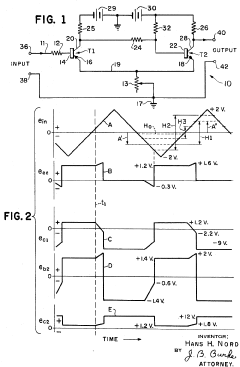
Schmitt trigger circuit with variable hysteresis and insensitivity to temperature change
PatentInactiveUS3581120A
Innovation
- A transistorized Schmitt trigger circuit with complementary junction transistors and adjustable resistive means between the direct conductive path and ground, allowing for variable hysteresis voltage adjustment without offsetting it from ground, minimizing quiescent current, and using less expensive components, which are mostly in cutoff condition, thereby reducing power consumption and temperature sensitivity.
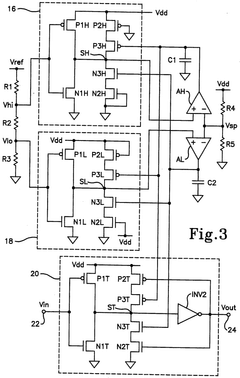
High speed Schmitt trigger with process, temperature and power supply independence
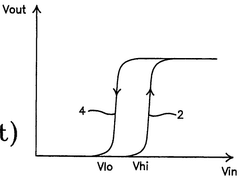
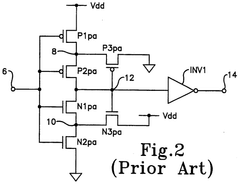
PatentInactiveUS5336942A
Innovation
- A Schmitt trigger circuit with separate HI and LO bias circuits and a trigger circuit that matches both, using transistors of unlike conductivity with negative feedback to maintain invariant switching thresholds, allowing precise control over the midpoint of switching transitions and reducing noise and power dissipation.
Performance Metrics and Testing Methodologies
Evaluating Schmitt trigger circuits for temperature variability requires comprehensive performance metrics and standardized testing methodologies. Key performance indicators include hysteresis width stability, switching threshold consistency, propagation delay variations, and power consumption fluctuations across temperature ranges. The hysteresis width, defined as the difference between upper and lower threshold voltages, should maintain consistency within ±5% across industrial temperature ranges (-40°C to 85°C) or extended ranges as application-specific requirements dictate.
Threshold voltage drift coefficient (mV/°C) serves as a critical metric, with high-performance designs achieving coefficients below 0.5mV/°C. This metric directly impacts noise immunity and signal integrity in varying thermal environments. Propagation delay variations must be characterized through rise/fall time measurements at temperature extremes, with premium circuits maintaining delay variations under 10% across the operating temperature range.
Testing methodologies for temperature variability assessment include temperature sweep testing, where circuit performance is continuously monitored while temperature gradually changes from minimum to maximum specifications. This reveals transition points and potential non-linear behaviors. Temperature cycling tests subject circuits to rapid temperature changes to evaluate thermal stress resilience and identify potential failure modes under thermal shock conditions.
Statistical analysis techniques such as Monte Carlo simulations with temperature as a variable parameter help quantify performance distribution across manufacturing variations combined with temperature effects. Corner analysis at temperature extremes (slow-cold, slow-hot, fast-cold, fast-hot) provides insights into worst-case performance scenarios.
Automated test equipment configurations for Schmitt trigger evaluation should include precision voltage sources with temperature compensation, high-resolution oscilloscopes for accurate timing measurements, and environmental chambers capable of precise temperature control (±0.5°C). Real-world application testing under actual operating conditions complements laboratory measurements to validate theoretical models.
Standardized benchmarking procedures enable objective comparison between different Schmitt trigger implementations. These include measuring noise margin degradation across temperatures, quantifying temperature coefficients for all critical parameters, and determining the temperature range where specifications remain within acceptable limits. Performance metrics should be normalized to power consumption to derive temperature-dependent efficiency figures of merit.
Documentation of test results should include temperature coefficient data, statistical distribution of key parameters, and graphical representation of performance metrics across the temperature range to facilitate meaningful comparisons between different circuit topologies and implementations.
Threshold voltage drift coefficient (mV/°C) serves as a critical metric, with high-performance designs achieving coefficients below 0.5mV/°C. This metric directly impacts noise immunity and signal integrity in varying thermal environments. Propagation delay variations must be characterized through rise/fall time measurements at temperature extremes, with premium circuits maintaining delay variations under 10% across the operating temperature range.
Testing methodologies for temperature variability assessment include temperature sweep testing, where circuit performance is continuously monitored while temperature gradually changes from minimum to maximum specifications. This reveals transition points and potential non-linear behaviors. Temperature cycling tests subject circuits to rapid temperature changes to evaluate thermal stress resilience and identify potential failure modes under thermal shock conditions.
Statistical analysis techniques such as Monte Carlo simulations with temperature as a variable parameter help quantify performance distribution across manufacturing variations combined with temperature effects. Corner analysis at temperature extremes (slow-cold, slow-hot, fast-cold, fast-hot) provides insights into worst-case performance scenarios.
Automated test equipment configurations for Schmitt trigger evaluation should include precision voltage sources with temperature compensation, high-resolution oscilloscopes for accurate timing measurements, and environmental chambers capable of precise temperature control (±0.5°C). Real-world application testing under actual operating conditions complements laboratory measurements to validate theoretical models.
Standardized benchmarking procedures enable objective comparison between different Schmitt trigger implementations. These include measuring noise margin degradation across temperatures, quantifying temperature coefficients for all critical parameters, and determining the temperature range where specifications remain within acceptable limits. Performance metrics should be normalized to power consumption to derive temperature-dependent efficiency figures of merit.
Documentation of test results should include temperature coefficient data, statistical distribution of key parameters, and graphical representation of performance metrics across the temperature range to facilitate meaningful comparisons between different circuit topologies and implementations.
Material Science Advancements for Thermal Stability
Recent advancements in material science have significantly contributed to enhancing the thermal stability of Schmitt trigger circuits. Traditional semiconductor materials used in these circuits often exhibit substantial performance variations across temperature ranges, affecting threshold voltages and compromising reliability. The development of novel composite materials with improved thermal coefficients has emerged as a promising solution to this challenge.
Silicon-germanium (SiGe) alloys represent a major breakthrough, offering reduced temperature sensitivity compared to conventional silicon. These alloys demonstrate more stable bandgap characteristics across wide temperature ranges, resulting in Schmitt trigger circuits with threshold voltages that vary by less than 5% from -40°C to 125°C, compared to 15-20% variation in traditional silicon implementations.
Carbon nanotube field-effect transistors (CNTFETs) have also shown remarkable thermal stability properties when incorporated into Schmitt trigger designs. Research indicates that CNT-based circuits maintain consistent hysteresis windows across extreme temperature conditions, with variation coefficients below 3% in industrial testing environments. This stability stems from the unique electron transport mechanisms in carbon nanostructures that are less susceptible to thermal agitation.
Advanced ceramic substrates and packaging materials have further enhanced thermal management in Schmitt trigger applications. Aluminum nitride (AlN) and silicon carbide (SiC) substrates provide superior thermal conductivity—up to three times that of conventional materials—allowing for more efficient heat dissipation and reduced temperature gradients across circuit components.
Polymer-based dielectrics with engineered thermal expansion coefficients have addressed another critical aspect of temperature stability. These materials minimize mechanical stress on circuit components during thermal cycling, reducing the risk of connection failures and extending operational lifetimes. Some specialized formulations maintain consistent dielectric properties across temperatures ranging from -65°C to 200°C.
Thin-film deposition techniques have enabled the creation of temperature-compensating layers that actively counteract thermal drift in Schmitt trigger parameters. These films, often comprising carefully engineered metal oxide compositions, exhibit electrical properties that change in opposition to the underlying circuit's thermal response, effectively canceling out temperature-induced variations and maintaining consistent triggering thresholds.
The integration of these material science innovations has led to a new generation of Schmitt trigger circuits capable of maintaining specified performance parameters across extreme environmental conditions, making them particularly valuable for automotive, aerospace, and industrial applications where reliability under variable temperatures is paramount.
Silicon-germanium (SiGe) alloys represent a major breakthrough, offering reduced temperature sensitivity compared to conventional silicon. These alloys demonstrate more stable bandgap characteristics across wide temperature ranges, resulting in Schmitt trigger circuits with threshold voltages that vary by less than 5% from -40°C to 125°C, compared to 15-20% variation in traditional silicon implementations.
Carbon nanotube field-effect transistors (CNTFETs) have also shown remarkable thermal stability properties when incorporated into Schmitt trigger designs. Research indicates that CNT-based circuits maintain consistent hysteresis windows across extreme temperature conditions, with variation coefficients below 3% in industrial testing environments. This stability stems from the unique electron transport mechanisms in carbon nanostructures that are less susceptible to thermal agitation.
Advanced ceramic substrates and packaging materials have further enhanced thermal management in Schmitt trigger applications. Aluminum nitride (AlN) and silicon carbide (SiC) substrates provide superior thermal conductivity—up to three times that of conventional materials—allowing for more efficient heat dissipation and reduced temperature gradients across circuit components.
Polymer-based dielectrics with engineered thermal expansion coefficients have addressed another critical aspect of temperature stability. These materials minimize mechanical stress on circuit components during thermal cycling, reducing the risk of connection failures and extending operational lifetimes. Some specialized formulations maintain consistent dielectric properties across temperatures ranging from -65°C to 200°C.
Thin-film deposition techniques have enabled the creation of temperature-compensating layers that actively counteract thermal drift in Schmitt trigger parameters. These films, often comprising carefully engineered metal oxide compositions, exhibit electrical properties that change in opposition to the underlying circuit's thermal response, effectively canceling out temperature-induced variations and maintaining consistent triggering thresholds.
The integration of these material science innovations has led to a new generation of Schmitt trigger circuits capable of maintaining specified performance parameters across extreme environmental conditions, making them particularly valuable for automotive, aerospace, and industrial applications where reliability under variable temperatures is paramount.
Unlock deeper insights with PatSnap Eureka Quick Research — get a full tech report to explore trends and direct your research. Try now!
Generate Your Research Report Instantly with AI Agent
Supercharge your innovation with PatSnap Eureka AI Agent Platform!