

How AMOLED drives advancements in educational technology?
JUL 17, 20259 MIN READ
Generate Your Research Report Instantly with AI Agent
PatSnap Eureka helps you evaluate technical feasibility & market potential.
AMOLED in EdTech: Background and Objectives
AMOLED (Active-Matrix Organic Light-Emitting Diode) technology has emerged as a game-changer in various industries, including educational technology. The evolution of display technologies has been a crucial factor in enhancing the learning experience, and AMOLED stands at the forefront of this revolution.
The primary objective of integrating AMOLED into educational technology is to create more engaging, interactive, and efficient learning environments. This technology aims to address the limitations of traditional display systems, such as poor visibility in varying light conditions, high power consumption, and lack of flexibility.
AMOLED's development can be traced back to the late 1980s, with significant advancements occurring in the past two decades. The technology has progressed from small-scale applications in mobile devices to larger displays suitable for educational settings. This evolution has been driven by the increasing demand for high-quality, energy-efficient displays in various sectors, including education.
In the context of educational technology, AMOLED offers several key advantages. Its ability to produce vibrant colors and deep blacks enhances visual content, making learning materials more appealing and easier to comprehend. The technology's high contrast ratio and wide viewing angles ensure that educational content remains clear and visible from various positions in a classroom or during remote learning sessions.
Furthermore, AMOLED's energy efficiency aligns with the growing emphasis on sustainability in educational institutions. By consuming less power than traditional LCD displays, AMOLED-equipped devices can operate for longer periods, supporting extended learning sessions without frequent recharging.
The flexibility of AMOLED displays opens up new possibilities for interactive learning tools. Foldable or rollable displays based on AMOLED technology can transform conventional textbooks into dynamic, interactive learning materials. This adaptability also supports the development of more ergonomic and portable educational devices, catering to the diverse needs of modern learners.
As we look towards the future, the integration of AMOLED in educational technology is expected to drive advancements in several areas. These include improved e-readers with paper-like display quality, interactive whiteboards with enhanced visibility and touch responsiveness, and wearable educational devices that provide immersive learning experiences.
The ongoing research and development in AMOLED technology promise even more exciting applications in education. Innovations such as transparent AMOLED displays could revolutionize how information is presented in classrooms, blending digital content seamlessly with the physical environment. Additionally, advancements in AMOLED's durability and cost-effectiveness are likely to accelerate its adoption in educational settings, making high-quality displays more accessible to a broader range of institutions and learners.
The primary objective of integrating AMOLED into educational technology is to create more engaging, interactive, and efficient learning environments. This technology aims to address the limitations of traditional display systems, such as poor visibility in varying light conditions, high power consumption, and lack of flexibility.
AMOLED's development can be traced back to the late 1980s, with significant advancements occurring in the past two decades. The technology has progressed from small-scale applications in mobile devices to larger displays suitable for educational settings. This evolution has been driven by the increasing demand for high-quality, energy-efficient displays in various sectors, including education.
In the context of educational technology, AMOLED offers several key advantages. Its ability to produce vibrant colors and deep blacks enhances visual content, making learning materials more appealing and easier to comprehend. The technology's high contrast ratio and wide viewing angles ensure that educational content remains clear and visible from various positions in a classroom or during remote learning sessions.
Furthermore, AMOLED's energy efficiency aligns with the growing emphasis on sustainability in educational institutions. By consuming less power than traditional LCD displays, AMOLED-equipped devices can operate for longer periods, supporting extended learning sessions without frequent recharging.
The flexibility of AMOLED displays opens up new possibilities for interactive learning tools. Foldable or rollable displays based on AMOLED technology can transform conventional textbooks into dynamic, interactive learning materials. This adaptability also supports the development of more ergonomic and portable educational devices, catering to the diverse needs of modern learners.
As we look towards the future, the integration of AMOLED in educational technology is expected to drive advancements in several areas. These include improved e-readers with paper-like display quality, interactive whiteboards with enhanced visibility and touch responsiveness, and wearable educational devices that provide immersive learning experiences.
The ongoing research and development in AMOLED technology promise even more exciting applications in education. Innovations such as transparent AMOLED displays could revolutionize how information is presented in classrooms, blending digital content seamlessly with the physical environment. Additionally, advancements in AMOLED's durability and cost-effectiveness are likely to accelerate its adoption in educational settings, making high-quality displays more accessible to a broader range of institutions and learners.
EdTech Market Demand for AMOLED Displays
The educational technology (EdTech) market has shown a growing demand for AMOLED displays, driven by the need for high-quality visual experiences in learning environments. As digital learning platforms and interactive educational tools become more prevalent, the superior display technology offered by AMOLED screens is increasingly sought after by educational institutions, content creators, and device manufacturers.
AMOLED displays provide several key advantages that align with the evolving needs of the EdTech sector. The vibrant colors, high contrast ratios, and deep blacks offered by AMOLED technology enhance the visual appeal of educational content, making it more engaging for students across all age groups. This improved visual quality is particularly beneficial for subjects that rely heavily on graphical representations, such as science, mathematics, and art.
The energy efficiency of AMOLED displays is another factor driving their demand in the EdTech market. As educational devices become more portable and battery life becomes a critical consideration, the power-saving capabilities of AMOLED screens make them an attractive option for manufacturers of educational tablets and laptops. This feature allows for longer usage times between charges, which is essential in classroom settings and for students learning remotely.
Furthermore, the flexibility of AMOLED technology opens up new possibilities for innovative educational devices. Foldable and rollable displays enabled by AMOLED technology are creating opportunities for more versatile and adaptable learning tools. These flexible form factors can transform from compact, portable devices to larger screens for group work or presentations, addressing the diverse needs of modern educational environments.
The EdTech market's demand for AMOLED displays is also influenced by the increasing focus on eye health in digital learning environments. AMOLED screens typically emit less blue light compared to traditional LCD displays, potentially reducing eye strain during extended periods of screen time. This feature is particularly valuable as concerns about the impact of prolonged device use on students' vision continue to grow.
As augmented reality (AR) and virtual reality (VR) applications gain traction in education, the demand for high-performance displays capable of delivering immersive experiences is rising. AMOLED technology's fast response times and high refresh rates make it well-suited for these advanced applications, positioning it as a preferred choice for next-generation educational devices and platforms.
The global shift towards remote and hybrid learning models has further accelerated the demand for high-quality displays in educational settings. As students and educators rely more heavily on digital devices for instruction and collaboration, the superior visual performance of AMOLED displays becomes increasingly valuable, enhancing the overall quality of the remote learning experience.
AMOLED displays provide several key advantages that align with the evolving needs of the EdTech sector. The vibrant colors, high contrast ratios, and deep blacks offered by AMOLED technology enhance the visual appeal of educational content, making it more engaging for students across all age groups. This improved visual quality is particularly beneficial for subjects that rely heavily on graphical representations, such as science, mathematics, and art.
The energy efficiency of AMOLED displays is another factor driving their demand in the EdTech market. As educational devices become more portable and battery life becomes a critical consideration, the power-saving capabilities of AMOLED screens make them an attractive option for manufacturers of educational tablets and laptops. This feature allows for longer usage times between charges, which is essential in classroom settings and for students learning remotely.
Furthermore, the flexibility of AMOLED technology opens up new possibilities for innovative educational devices. Foldable and rollable displays enabled by AMOLED technology are creating opportunities for more versatile and adaptable learning tools. These flexible form factors can transform from compact, portable devices to larger screens for group work or presentations, addressing the diverse needs of modern educational environments.
The EdTech market's demand for AMOLED displays is also influenced by the increasing focus on eye health in digital learning environments. AMOLED screens typically emit less blue light compared to traditional LCD displays, potentially reducing eye strain during extended periods of screen time. This feature is particularly valuable as concerns about the impact of prolonged device use on students' vision continue to grow.
As augmented reality (AR) and virtual reality (VR) applications gain traction in education, the demand for high-performance displays capable of delivering immersive experiences is rising. AMOLED technology's fast response times and high refresh rates make it well-suited for these advanced applications, positioning it as a preferred choice for next-generation educational devices and platforms.
The global shift towards remote and hybrid learning models has further accelerated the demand for high-quality displays in educational settings. As students and educators rely more heavily on digital devices for instruction and collaboration, the superior visual performance of AMOLED displays becomes increasingly valuable, enhancing the overall quality of the remote learning experience.
AMOLED Technology: Current State and Challenges
AMOLED (Active-Matrix Organic Light-Emitting Diode) technology has made significant strides in recent years, revolutionizing display technology across various sectors, including educational technology. However, its current state and challenges in the educational context warrant careful examination.
The current state of AMOLED technology in educational applications is characterized by its superior visual quality, energy efficiency, and flexibility. AMOLED displays offer vibrant colors, high contrast ratios, and wide viewing angles, making them ideal for educational content delivery. These displays can render complex graphics, simulations, and interactive content with exceptional clarity, enhancing the learning experience.
One of the key advantages of AMOLED in educational technology is its energy efficiency. The ability to selectively illuminate only the required pixels results in lower power consumption, particularly beneficial for portable educational devices with limited battery life. This feature allows for extended use in classroom settings without frequent charging interruptions.
The flexibility of AMOLED displays opens up new possibilities in educational tool design. Foldable or rollable displays can create more versatile and portable learning devices, adapting to various educational environments and student needs. This adaptability is particularly valuable in modern, dynamic learning spaces.
Despite these advancements, AMOLED technology faces several challenges in the educational sector. Cost remains a significant barrier to widespread adoption. The production of AMOLED displays is still more expensive compared to traditional LCD technology, making it challenging to implement in budget-constrained educational institutions.
Durability is another concern, especially in the hands of younger students. AMOLED displays can be more susceptible to screen burn-in and pixel degradation over time, which could affect the longevity of educational devices and increase maintenance costs.
The technology also faces challenges in outdoor visibility. While AMOLED displays excel in indoor environments, they can struggle with readability in bright sunlight, potentially limiting their use in outdoor educational activities or field trips.
Lastly, the integration of touch functionality with AMOLED displays, crucial for interactive learning experiences, presents technical challenges. Achieving high touch sensitivity without compromising display quality or increasing device thickness remains an area of ongoing development.
As AMOLED technology continues to evolve, addressing these challenges will be crucial for its broader adoption in educational technology. Innovations in manufacturing processes, materials science, and display design will play a key role in overcoming these hurdles and fully realizing the potential of AMOLED in advancing educational experiences.
The current state of AMOLED technology in educational applications is characterized by its superior visual quality, energy efficiency, and flexibility. AMOLED displays offer vibrant colors, high contrast ratios, and wide viewing angles, making them ideal for educational content delivery. These displays can render complex graphics, simulations, and interactive content with exceptional clarity, enhancing the learning experience.
One of the key advantages of AMOLED in educational technology is its energy efficiency. The ability to selectively illuminate only the required pixels results in lower power consumption, particularly beneficial for portable educational devices with limited battery life. This feature allows for extended use in classroom settings without frequent charging interruptions.
The flexibility of AMOLED displays opens up new possibilities in educational tool design. Foldable or rollable displays can create more versatile and portable learning devices, adapting to various educational environments and student needs. This adaptability is particularly valuable in modern, dynamic learning spaces.
Despite these advancements, AMOLED technology faces several challenges in the educational sector. Cost remains a significant barrier to widespread adoption. The production of AMOLED displays is still more expensive compared to traditional LCD technology, making it challenging to implement in budget-constrained educational institutions.
Durability is another concern, especially in the hands of younger students. AMOLED displays can be more susceptible to screen burn-in and pixel degradation over time, which could affect the longevity of educational devices and increase maintenance costs.
The technology also faces challenges in outdoor visibility. While AMOLED displays excel in indoor environments, they can struggle with readability in bright sunlight, potentially limiting their use in outdoor educational activities or field trips.
Lastly, the integration of touch functionality with AMOLED displays, crucial for interactive learning experiences, presents technical challenges. Achieving high touch sensitivity without compromising display quality or increasing device thickness remains an area of ongoing development.
As AMOLED technology continues to evolve, addressing these challenges will be crucial for its broader adoption in educational technology. Innovations in manufacturing processes, materials science, and display design will play a key role in overcoming these hurdles and fully realizing the potential of AMOLED in advancing educational experiences.
AMOLED Integration in Educational Devices
01 AMOLED display panel structure and manufacturing
This category focuses on the structure and manufacturing processes of AMOLED display panels. It includes innovations in pixel arrangements, thin-film transistor (TFT) designs, and layer compositions to improve display performance, efficiency, and durability. Advanced manufacturing techniques are employed to enhance the overall quality and yield of AMOLED panels.- AMOLED display panel structure and manufacturing: This category focuses on the structure and manufacturing processes of AMOLED display panels. It includes innovations in pixel arrangements, thin-film transistor (TFT) designs, and layer compositions to improve display performance and efficiency. Advancements in manufacturing techniques aim to enhance yield rates and reduce production costs.
- AMOLED driving and control methods: This point covers various driving and control methods for AMOLED displays. It includes techniques for pixel compensation, voltage control, and current driving to improve display uniformity and reduce image sticking. Advanced algorithms and circuits are developed to enhance color accuracy, brightness control, and power efficiency.
- AMOLED power management and efficiency: This category addresses power management and efficiency improvements in AMOLED displays. It includes techniques for reducing power consumption, optimizing voltage distribution, and implementing adaptive brightness control. Innovations in this area aim to extend battery life in mobile devices and improve overall energy efficiency.
- AMOLED touch integration and sensing: This point focuses on integrating touch functionality with AMOLED displays. It covers in-cell and on-cell touch technologies, as well as advancements in touch sensing algorithms. These innovations aim to improve touch sensitivity, reduce display thickness, and enhance the overall user experience in touch-enabled AMOLED devices.
- AMOLED color management and image quality: This category deals with color management and image quality improvements in AMOLED displays. It includes techniques for color gamut expansion, contrast enhancement, and HDR implementation. Advanced algorithms and hardware solutions are developed to optimize color accuracy, reduce color shift, and improve overall visual performance.
02 Driving and control methods for AMOLED displays
This point covers various driving and control methods for AMOLED displays. It includes techniques for pixel compensation, voltage control, and current regulation to improve display uniformity, reduce power consumption, and extend the lifespan of AMOLED panels. Advanced algorithms and circuits are developed to optimize display performance and address issues such as image retention and color shift.Expand Specific Solutions03 AMOLED power management and efficiency
This category focuses on power management and efficiency improvements for AMOLED displays. It includes techniques for reducing power consumption, optimizing voltage distribution, and enhancing overall energy efficiency. Innovations in this area aim to extend battery life in mobile devices and improve the sustainability of AMOLED technology.Expand Specific Solutions04 AMOLED color management and image quality enhancement
This point covers techniques for improving color reproduction, contrast, and overall image quality in AMOLED displays. It includes methods for color calibration, gamut expansion, and high dynamic range (HDR) implementation. Advanced algorithms and hardware solutions are developed to enhance visual performance and user experience.Expand Specific Solutions05 AMOLED integration with other technologies
This category explores the integration of AMOLED technology with other advanced features and functionalities. It includes innovations in touch sensing, fingerprint recognition, and flexible or foldable display designs. These integrations aim to expand the capabilities of AMOLED displays and enable new form factors and applications in various devices.Expand Specific Solutions
Key Players in AMOLED and EdTech Industries
The AMOLED technology in educational technology is in a growth phase, with increasing market size and evolving applications. The industry is characterized by a mix of established players and emerging innovators. Companies like BOE Technology Group, Innolux Corp, and TCL China Star Optoelectronics are leading the charge in display technology advancements. These firms are developing high-quality AMOLED displays suitable for educational devices, offering improved visual experiences and energy efficiency. The technology's maturity is progressing rapidly, with companies like Tianma Microelectronics and Everdisplay Optronics focusing on research and development to enhance AMOLED performance and reduce production costs, making it more accessible for educational applications.
BOE Technology Group Co., Ltd.
Technical Solution: BOE has developed advanced AMOLED displays specifically tailored for educational technology applications. Their flexible AMOLED screens offer high color accuracy and contrast ratios, enhancing visual learning experiences[1]. BOE's AMOLED displays incorporate low blue light technology, reducing eye strain during extended study sessions[2]. The company has also introduced touch-integrated AMOLED panels, enabling interactive learning interfaces for digital textbooks and educational apps[3]. BOE's latest AMOLED displays feature high refresh rates and low latency, improving the smoothness of educational video content and virtual reality applications in classrooms[4].
Strengths: High-quality visuals, eye-friendly technology, interactive capabilities. Weaknesses: Potentially higher cost compared to traditional displays, may require specialized content development.
Innolux Corp.
Technical Solution: Innolux has developed AMOLED displays with advanced features for educational technology. Their AMOLED panels offer high resolution and wide color gamut, enhancing the clarity of educational content[1]. Innolux has implemented in-cell touch technology in their AMOLED displays, creating seamless interactive surfaces for digital learning tools[2]. The company's AMOLED screens also incorporate energy-efficient designs, extending battery life for portable educational devices[3]. Innolux has focused on developing larger AMOLED displays suitable for interactive whiteboards and collaborative learning spaces in classrooms[4].
Strengths: High-resolution displays, interactive capabilities, energy efficiency. Weaknesses: Limited production capacity compared to larger competitors, potentially higher costs for large-format displays.
Innovations in AMOLED for Educational Applications
Amoled double-side display
PatentActiveUS20200219957A1
Innovation
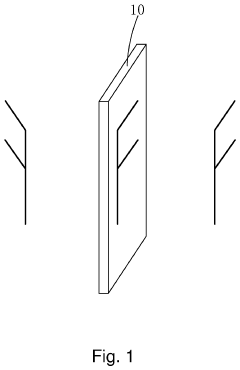
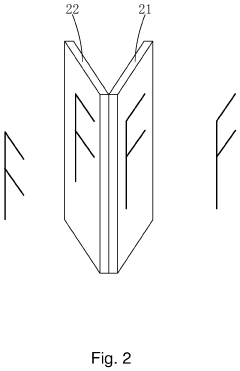
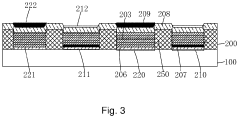
- An AMOLED double-sided display design featuring a substrate with alternating top-emitting and bottom-emitting OLED units, where the anode of top-emitting units is thicker and reflective, and the cathode of bottom-emitting units is thicker and light-transmissive, allowing for single IC control and eliminating mirrored images.
Array substrate, display device, and method for manufacturing array substrate
PatentActiveUS20170148862A1
Innovation
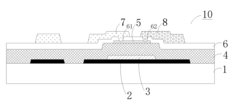
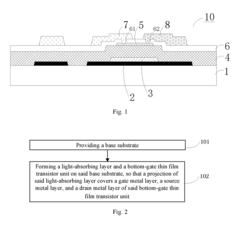
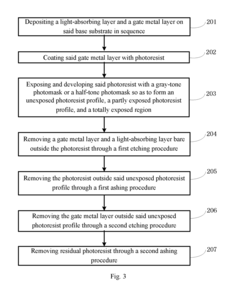
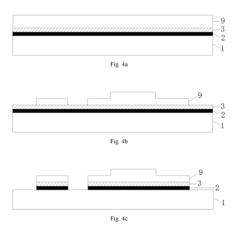
- An array substrate with a light-absorbing layer covering the gate, source, and drain metal layers of a bottom-gate thin film transistor unit, preventing ambient light irradiation while allowing useful light to pass through.
Energy Efficiency and Sustainability in EdTech Displays
AMOLED (Active-Matrix Organic Light-Emitting Diode) technology is driving significant advancements in educational technology, particularly in the realm of energy efficiency and sustainability. This innovative display technology offers several key advantages that contribute to more eco-friendly and power-efficient educational devices.
One of the primary benefits of AMOLED displays in educational technology is their superior energy efficiency compared to traditional LCD screens. AMOLED panels can selectively illuminate individual pixels, allowing for true blacks by turning off pixels entirely. This feature not only enhances visual quality but also significantly reduces power consumption, especially when displaying darker content or using dark mode interfaces, which are increasingly popular in educational applications.
The reduced power consumption of AMOLED displays translates directly into extended battery life for educational devices such as tablets, e-readers, and interactive whiteboards. Longer battery life means students and educators can use these devices for extended periods without frequent charging, enhancing productivity and reducing the need for constant access to power outlets. This is particularly beneficial in resource-constrained educational environments or during field trips and outdoor learning activities.
Furthermore, AMOLED technology contributes to the overall sustainability of educational technology through its potential for reduced electronic waste. The longer lifespan of AMOLED displays, coupled with their energy efficiency, means that educational institutions can use devices for longer periods before replacement becomes necessary. This longevity helps minimize the environmental impact associated with the production and disposal of electronic devices used in educational settings.
AMOLED displays also offer advantages in terms of device design and portability. Their thin and flexible nature allows for the creation of lighter, more compact educational devices. This improved portability not only enhances the user experience but also reduces the materials required for device manufacturing, further contributing to sustainability efforts in the education technology sector.
The color accuracy and high contrast ratios of AMOLED displays provide additional benefits for educational content. These features enable more vivid and engaging visual presentations, which can enhance learning experiences across various subjects, from science and art to geography and history. The improved visual quality can lead to better retention of information and increased student engagement, potentially reducing the need for printed materials and contributing to paperless learning environments.
As AMOLED technology continues to evolve, we can expect further improvements in energy efficiency and sustainability for educational devices. Ongoing research into more efficient OLED materials and manufacturing processes promises to deliver even greater power savings and environmental benefits in the future, solidifying AMOLED's role in advancing sustainable educational technology.
One of the primary benefits of AMOLED displays in educational technology is their superior energy efficiency compared to traditional LCD screens. AMOLED panels can selectively illuminate individual pixels, allowing for true blacks by turning off pixels entirely. This feature not only enhances visual quality but also significantly reduces power consumption, especially when displaying darker content or using dark mode interfaces, which are increasingly popular in educational applications.
The reduced power consumption of AMOLED displays translates directly into extended battery life for educational devices such as tablets, e-readers, and interactive whiteboards. Longer battery life means students and educators can use these devices for extended periods without frequent charging, enhancing productivity and reducing the need for constant access to power outlets. This is particularly beneficial in resource-constrained educational environments or during field trips and outdoor learning activities.
Furthermore, AMOLED technology contributes to the overall sustainability of educational technology through its potential for reduced electronic waste. The longer lifespan of AMOLED displays, coupled with their energy efficiency, means that educational institutions can use devices for longer periods before replacement becomes necessary. This longevity helps minimize the environmental impact associated with the production and disposal of electronic devices used in educational settings.
AMOLED displays also offer advantages in terms of device design and portability. Their thin and flexible nature allows for the creation of lighter, more compact educational devices. This improved portability not only enhances the user experience but also reduces the materials required for device manufacturing, further contributing to sustainability efforts in the education technology sector.
The color accuracy and high contrast ratios of AMOLED displays provide additional benefits for educational content. These features enable more vivid and engaging visual presentations, which can enhance learning experiences across various subjects, from science and art to geography and history. The improved visual quality can lead to better retention of information and increased student engagement, potentially reducing the need for printed materials and contributing to paperless learning environments.
As AMOLED technology continues to evolve, we can expect further improvements in energy efficiency and sustainability for educational devices. Ongoing research into more efficient OLED materials and manufacturing processes promises to deliver even greater power savings and environmental benefits in the future, solidifying AMOLED's role in advancing sustainable educational technology.
Accessibility and Inclusivity in AMOLED-Powered EdTech
AMOLED technology has significantly enhanced accessibility and inclusivity in educational technology, revolutionizing the way students with diverse needs interact with digital learning tools. The high contrast ratios and deep blacks of AMOLED displays provide superior visibility for visually impaired learners, making text and images more discernible even in challenging lighting conditions.
The ability of AMOLED screens to produce vibrant colors and sharp details has proven particularly beneficial for students with color vision deficiencies. By adjusting color profiles and contrast levels, educational content can be tailored to individual visual needs, ensuring that all students can access information equally.
AMOLED's energy efficiency and reduced eye strain contribute to extended usage periods, crucial for students who rely heavily on digital devices for learning. This is especially important for those with physical disabilities who may have limited mobility and depend on these devices for extended periods.
The technology's flexibility in form factor has enabled the development of foldable and rollable devices, opening new possibilities for adaptive learning tools. These innovative designs can be easily adjusted to accommodate various physical needs, making educational technology more accessible to students with motor impairments or limited dexterity.
AMOLED's superior touch responsiveness has improved the usability of educational apps and software for students with fine motor skill challenges. The precise touch detection allows for more accurate input, benefiting those who struggle with traditional input methods.
Furthermore, AMOLED displays' ability to render true blacks has enhanced the effectiveness of high-contrast modes, essential for students with visual processing disorders or reading difficulties such as dyslexia. This feature allows for customizable reading experiences that can significantly improve comprehension and reduce visual fatigue.
The technology's compatibility with various assistive technologies, such as screen readers and voice recognition software, has further expanded its inclusivity. AMOLED screens' quick response times and clear visual output ensure smooth integration with these tools, providing a seamless learning experience for students with diverse needs.
As AMOLED technology continues to evolve, its potential to create more inclusive educational environments grows. Future developments may include haptic feedback integration and advanced eye-tracking capabilities, further breaking down barriers to learning and ensuring that educational technology remains accessible to all students, regardless of their physical or cognitive abilities.
The ability of AMOLED screens to produce vibrant colors and sharp details has proven particularly beneficial for students with color vision deficiencies. By adjusting color profiles and contrast levels, educational content can be tailored to individual visual needs, ensuring that all students can access information equally.
AMOLED's energy efficiency and reduced eye strain contribute to extended usage periods, crucial for students who rely heavily on digital devices for learning. This is especially important for those with physical disabilities who may have limited mobility and depend on these devices for extended periods.
The technology's flexibility in form factor has enabled the development of foldable and rollable devices, opening new possibilities for adaptive learning tools. These innovative designs can be easily adjusted to accommodate various physical needs, making educational technology more accessible to students with motor impairments or limited dexterity.
AMOLED's superior touch responsiveness has improved the usability of educational apps and software for students with fine motor skill challenges. The precise touch detection allows for more accurate input, benefiting those who struggle with traditional input methods.
Furthermore, AMOLED displays' ability to render true blacks has enhanced the effectiveness of high-contrast modes, essential for students with visual processing disorders or reading difficulties such as dyslexia. This feature allows for customizable reading experiences that can significantly improve comprehension and reduce visual fatigue.
The technology's compatibility with various assistive technologies, such as screen readers and voice recognition software, has further expanded its inclusivity. AMOLED screens' quick response times and clear visual output ensure smooth integration with these tools, providing a seamless learning experience for students with diverse needs.
As AMOLED technology continues to evolve, its potential to create more inclusive educational environments grows. Future developments may include haptic feedback integration and advanced eye-tracking capabilities, further breaking down barriers to learning and ensuring that educational technology remains accessible to all students, regardless of their physical or cognitive abilities.
Unlock deeper insights with PatSnap Eureka Quick Research — get a full tech report to explore trends and direct your research. Try now!
Generate Your Research Report Instantly with AI Agent
Supercharge your innovation with PatSnap Eureka AI Agent Platform!