How Calorimeters Facilitate the Study of Aerosol Thermodynamics
AUG 5, 20259 MIN READ
Generate Your Research Report Instantly with AI Agent
Patsnap Eureka helps you evaluate technical feasibility & market potential.
Calorimetry in Aerosol Thermodynamics: Background and Objectives
Calorimetry has played a pivotal role in advancing our understanding of aerosol thermodynamics, a field crucial for atmospheric science, climate modeling, and air quality management. The study of aerosol thermodynamics encompasses the investigation of heat transfer processes, phase transitions, and energy exchanges within aerosol particles and their surrounding environment. Calorimeters, as precision instruments designed to measure heat capacity and heat transfer, have become indispensable tools in this domain.
The evolution of calorimetry in aerosol research can be traced back to the mid-20th century when atmospheric scientists began to recognize the significance of aerosols in climate and air quality. Early studies primarily focused on bulk properties of aerosols, but as technology advanced, researchers developed increasingly sophisticated calorimetric techniques to probe individual particles and their interactions with the atmosphere.
One of the primary objectives of employing calorimetry in aerosol thermodynamics is to quantify the energetics of aerosol formation, growth, and phase transitions. This includes measuring the latent heat of vaporization, condensation, and crystallization of aerosol particles, which are critical parameters for understanding their behavior in the atmosphere. Calorimeters enable researchers to determine these values with high precision, contributing to more accurate climate models and improved predictions of aerosol-cloud interactions.
Another key goal is to investigate the hygroscopic properties of aerosols, which significantly influence their role in cloud formation and atmospheric chemistry. Calorimetric measurements provide insights into how aerosols absorb or release water vapor under varying humidity conditions, a process that affects their size, composition, and optical properties. This information is essential for assessing the indirect effects of aerosols on climate through their impact on cloud formation and precipitation patterns.
Furthermore, calorimetry facilitates the study of heterogeneous reactions on aerosol surfaces, which are crucial for understanding atmospheric chemistry. By measuring the heat released or absorbed during these reactions, researchers can elucidate reaction mechanisms, kinetics, and thermodynamic parameters. This knowledge is vital for comprehending the complex interplay between aerosols and trace gases in the atmosphere, which influences air quality and climate on both local and global scales.
As technology continues to advance, the integration of calorimetry with other analytical techniques, such as mass spectrometry and optical methods, is opening new avenues for aerosol research. These combined approaches allow for simultaneous measurement of thermodynamic properties, chemical composition, and physical characteristics of aerosols, providing a more comprehensive understanding of their behavior and impacts.
The evolution of calorimetry in aerosol research can be traced back to the mid-20th century when atmospheric scientists began to recognize the significance of aerosols in climate and air quality. Early studies primarily focused on bulk properties of aerosols, but as technology advanced, researchers developed increasingly sophisticated calorimetric techniques to probe individual particles and their interactions with the atmosphere.
One of the primary objectives of employing calorimetry in aerosol thermodynamics is to quantify the energetics of aerosol formation, growth, and phase transitions. This includes measuring the latent heat of vaporization, condensation, and crystallization of aerosol particles, which are critical parameters for understanding their behavior in the atmosphere. Calorimeters enable researchers to determine these values with high precision, contributing to more accurate climate models and improved predictions of aerosol-cloud interactions.
Another key goal is to investigate the hygroscopic properties of aerosols, which significantly influence their role in cloud formation and atmospheric chemistry. Calorimetric measurements provide insights into how aerosols absorb or release water vapor under varying humidity conditions, a process that affects their size, composition, and optical properties. This information is essential for assessing the indirect effects of aerosols on climate through their impact on cloud formation and precipitation patterns.
Furthermore, calorimetry facilitates the study of heterogeneous reactions on aerosol surfaces, which are crucial for understanding atmospheric chemistry. By measuring the heat released or absorbed during these reactions, researchers can elucidate reaction mechanisms, kinetics, and thermodynamic parameters. This knowledge is vital for comprehending the complex interplay between aerosols and trace gases in the atmosphere, which influences air quality and climate on both local and global scales.
As technology continues to advance, the integration of calorimetry with other analytical techniques, such as mass spectrometry and optical methods, is opening new avenues for aerosol research. These combined approaches allow for simultaneous measurement of thermodynamic properties, chemical composition, and physical characteristics of aerosols, providing a more comprehensive understanding of their behavior and impacts.
Market Demand for Aerosol Thermodynamic Analysis
The market demand for aerosol thermodynamic analysis has been steadily growing, driven by various factors across multiple industries. In the environmental sector, there is an increasing need for accurate measurements of aerosol properties to better understand their impact on climate change and air quality. Regulatory bodies and research institutions require precise data on aerosol behavior to develop effective pollution control strategies and improve climate models.
The pharmaceutical industry represents another significant market for aerosol thermodynamic analysis. With the rising prevalence of respiratory diseases and the growing popularity of inhalation therapies, pharmaceutical companies are investing heavily in aerosol-based drug delivery systems. This has created a substantial demand for calorimetric techniques to study the thermodynamic properties of drug-laden aerosols, ensuring optimal drug efficacy and patient safety.
In the field of materials science and nanotechnology, aerosol thermodynamic analysis plays a crucial role in the development of advanced materials and coatings. Industries such as electronics, automotive, and aerospace rely on this technology to engineer high-performance materials with specific thermal properties. The market for aerosol-based manufacturing processes, such as spray drying and aerosol deposition, is expanding, further driving the need for sophisticated thermodynamic analysis tools.
The energy sector, particularly in the development of clean energy technologies, has also contributed to the growing market demand. Researchers and engineers working on fuel cells, batteries, and other energy storage systems require detailed understanding of aerosol thermodynamics to optimize energy conversion processes and improve overall system efficiency.
As global concerns about air pollution and its health impacts intensify, there is an increasing market for portable and real-time aerosol analysis devices. This trend is creating opportunities for the development of miniaturized calorimeters and integrated sensor systems capable of providing on-site thermodynamic measurements of aerosols in various environmental and industrial settings.
The COVID-19 pandemic has further highlighted the importance of aerosol science, leading to a surge in research activities related to respiratory droplets and airborne transmission of pathogens. This has created a new market segment for aerosol thermodynamic analysis tools in the fields of public health and infectious disease control.
Overall, the market for aerosol thermodynamic analysis is expected to continue its growth trajectory, driven by technological advancements, regulatory requirements, and the expanding applications across diverse industries. As the demand for more precise and comprehensive aerosol characterization increases, calorimetry-based techniques are likely to play an increasingly vital role in meeting these market needs.
The pharmaceutical industry represents another significant market for aerosol thermodynamic analysis. With the rising prevalence of respiratory diseases and the growing popularity of inhalation therapies, pharmaceutical companies are investing heavily in aerosol-based drug delivery systems. This has created a substantial demand for calorimetric techniques to study the thermodynamic properties of drug-laden aerosols, ensuring optimal drug efficacy and patient safety.
In the field of materials science and nanotechnology, aerosol thermodynamic analysis plays a crucial role in the development of advanced materials and coatings. Industries such as electronics, automotive, and aerospace rely on this technology to engineer high-performance materials with specific thermal properties. The market for aerosol-based manufacturing processes, such as spray drying and aerosol deposition, is expanding, further driving the need for sophisticated thermodynamic analysis tools.
The energy sector, particularly in the development of clean energy technologies, has also contributed to the growing market demand. Researchers and engineers working on fuel cells, batteries, and other energy storage systems require detailed understanding of aerosol thermodynamics to optimize energy conversion processes and improve overall system efficiency.
As global concerns about air pollution and its health impacts intensify, there is an increasing market for portable and real-time aerosol analysis devices. This trend is creating opportunities for the development of miniaturized calorimeters and integrated sensor systems capable of providing on-site thermodynamic measurements of aerosols in various environmental and industrial settings.
The COVID-19 pandemic has further highlighted the importance of aerosol science, leading to a surge in research activities related to respiratory droplets and airborne transmission of pathogens. This has created a new market segment for aerosol thermodynamic analysis tools in the fields of public health and infectious disease control.
Overall, the market for aerosol thermodynamic analysis is expected to continue its growth trajectory, driven by technological advancements, regulatory requirements, and the expanding applications across diverse industries. As the demand for more precise and comprehensive aerosol characterization increases, calorimetry-based techniques are likely to play an increasingly vital role in meeting these market needs.
Current Calorimetry Techniques and Challenges in Aerosol Studies
Calorimetry techniques have become indispensable tools in the study of aerosol thermodynamics, offering valuable insights into the complex behavior of these suspended particles. Current calorimetry methods employed in aerosol research primarily include differential scanning calorimetry (DSC), isothermal titration calorimetry (ITC), and flow calorimetry. These techniques enable researchers to measure heat changes associated with phase transitions, chemical reactions, and other thermodynamic processes occurring within aerosol systems.
DSC is particularly useful for investigating the thermal properties of aerosols, allowing for the determination of glass transition temperatures, melting points, and crystallization behaviors. This technique has been instrumental in understanding the phase state of organic aerosols and their potential for ice nucleation. ITC, on the other hand, provides detailed information on binding interactions and molecular recognition processes within aerosol systems, which is crucial for elucidating the mechanisms of aerosol formation and growth.
Flow calorimetry has emerged as a powerful tool for studying the thermodynamics of aerosol-gas interactions, enabling real-time measurements of heat changes as aerosols interact with various gaseous species. This technique has been particularly valuable in investigating the uptake of water vapor by hygroscopic aerosols and the associated enthalpies of mixing and dissolution.
Despite these advancements, several challenges persist in the application of calorimetry to aerosol studies. One significant hurdle is the small sample sizes typically associated with aerosol particles, which can lead to weak thermal signals and reduced measurement sensitivity. Researchers are continually working to improve the detection limits and signal-to-noise ratios of calorimetric instruments to address this issue.
Another challenge lies in maintaining the integrity of aerosol samples during calorimetric measurements. The high temperatures often employed in DSC experiments can lead to sample degradation or volatilization, potentially altering the composition and properties of the aerosols under investigation. Developing low-temperature calorimetry techniques and improving sample containment methods are active areas of research aimed at mitigating these effects.
The heterogeneous nature of many atmospheric aerosols presents additional complications for calorimetric analysis. Mixtures of organic and inorganic components, as well as the presence of multiple phases within individual particles, can result in complex thermal behaviors that are difficult to interpret. Advanced data analysis techniques and complementary analytical methods are being developed to deconvolute these complex signals and extract meaningful thermodynamic information.
Furthermore, the dynamic nature of aerosols in the atmosphere poses challenges for traditional calorimetry techniques, which often require static or equilibrium conditions. Developing in situ calorimetry methods capable of capturing the rapid changes in aerosol composition and properties under atmospheric conditions remains an important goal for researchers in this field.
DSC is particularly useful for investigating the thermal properties of aerosols, allowing for the determination of glass transition temperatures, melting points, and crystallization behaviors. This technique has been instrumental in understanding the phase state of organic aerosols and their potential for ice nucleation. ITC, on the other hand, provides detailed information on binding interactions and molecular recognition processes within aerosol systems, which is crucial for elucidating the mechanisms of aerosol formation and growth.
Flow calorimetry has emerged as a powerful tool for studying the thermodynamics of aerosol-gas interactions, enabling real-time measurements of heat changes as aerosols interact with various gaseous species. This technique has been particularly valuable in investigating the uptake of water vapor by hygroscopic aerosols and the associated enthalpies of mixing and dissolution.
Despite these advancements, several challenges persist in the application of calorimetry to aerosol studies. One significant hurdle is the small sample sizes typically associated with aerosol particles, which can lead to weak thermal signals and reduced measurement sensitivity. Researchers are continually working to improve the detection limits and signal-to-noise ratios of calorimetric instruments to address this issue.
Another challenge lies in maintaining the integrity of aerosol samples during calorimetric measurements. The high temperatures often employed in DSC experiments can lead to sample degradation or volatilization, potentially altering the composition and properties of the aerosols under investigation. Developing low-temperature calorimetry techniques and improving sample containment methods are active areas of research aimed at mitigating these effects.
The heterogeneous nature of many atmospheric aerosols presents additional complications for calorimetric analysis. Mixtures of organic and inorganic components, as well as the presence of multiple phases within individual particles, can result in complex thermal behaviors that are difficult to interpret. Advanced data analysis techniques and complementary analytical methods are being developed to deconvolute these complex signals and extract meaningful thermodynamic information.
Furthermore, the dynamic nature of aerosols in the atmosphere poses challenges for traditional calorimetry techniques, which often require static or equilibrium conditions. Developing in situ calorimetry methods capable of capturing the rapid changes in aerosol composition and properties under atmospheric conditions remains an important goal for researchers in this field.
Existing Calorimetric Solutions for Aerosol Thermodynamics
01 Design and construction of calorimeters
Calorimeters are devices used to measure heat transfer and energy changes in thermodynamic processes. Their design and construction involve various components such as insulation, temperature sensors, and heat exchange systems to accurately measure thermal properties of materials and reactions.- Calorimeter design and construction: Various designs and constructions of calorimeters for thermodynamic measurements are presented. These include improvements in insulation, temperature control, and measurement accuracy. Some designs focus on specific applications such as high-temperature or high-pressure environments.
- Heat flow measurement techniques: Advanced techniques for measuring heat flow in calorimetric systems are described. These methods aim to improve the precision and reliability of thermodynamic measurements, including the use of novel sensors and data processing algorithms.
- Calorimeters for specific applications: Specialized calorimeters designed for specific applications in thermodynamics research are presented. These include calorimeters for studying phase transitions, chemical reactions, and biological processes under controlled conditions.
- Integration of calorimetry with other analytical techniques: Methods for integrating calorimetry with other analytical techniques such as spectroscopy or chromatography are described. These combined approaches allow for more comprehensive thermodynamic analysis of complex systems.
- Data analysis and interpretation in calorimetry: Advanced methods for analyzing and interpreting calorimetric data are presented. These include software algorithms, statistical methods, and modeling techniques to extract meaningful thermodynamic parameters from raw calorimetric measurements.
02 Thermodynamic analysis using calorimetry
Calorimetry is employed for thermodynamic analysis in various fields, including chemistry, physics, and materials science. It allows for the measurement of heat capacity, enthalpy changes, and other thermodynamic parameters, providing valuable data for understanding and optimizing thermal processes.Expand Specific Solutions03 Advancements in calorimeter technology
Recent advancements in calorimeter technology have led to improved accuracy, sensitivity, and automation. These developments include the integration of digital sensors, data analysis software, and novel materials for enhanced thermal conductivity and insulation properties.Expand Specific Solutions04 Applications of calorimetry in research and industry
Calorimetry finds applications in various research and industrial settings, including pharmaceutical development, food science, materials testing, and energy storage. It is used for quality control, process optimization, and characterization of thermal properties in diverse fields.Expand Specific Solutions05 Specialized calorimeters for specific applications
Specialized calorimeters have been developed for specific applications, such as microcalorimetry for small-scale measurements, bomb calorimetry for combustion analysis, and differential scanning calorimetry for studying phase transitions and thermal stability of materials.Expand Specific Solutions
Key Players in Calorimetry Instrumentation for Aerosols
The study of aerosol thermodynamics using calorimeters is in a developing stage, with a growing market driven by increasing environmental concerns and regulatory requirements. The technology's maturity varies across applications, with some established methods and emerging innovative approaches. Key players like Shenzhen First Union Technology, Palo Alto Research Center, and Northeastern University are advancing the field through research and development. The competitive landscape is diverse, including academic institutions, research centers, and private companies, each contributing to the technology's evolution. As the importance of aerosol research in climate science and public health grows, the market for calorimetric techniques in this domain is expected to expand, attracting more players and driving further innovation.
The Regents of the University of California
Technical Solution: The University of California has developed advanced calorimetry techniques for studying aerosol thermodynamics. They utilize a combination of differential scanning calorimetry (DSC) and thermogravimetric analysis (TGA) to investigate the phase transitions and thermal properties of aerosols[1]. Their approach involves precise temperature control and real-time mass measurements, allowing for the determination of enthalpies of vaporization, melting points, and glass transition temperatures of complex aerosol mixtures[2]. The university has also pioneered the use of aerosol flow tube reactors coupled with calorimeters to study the kinetics of aerosol formation and growth under controlled conditions[3].
Strengths: Comprehensive thermal analysis capabilities, high-precision measurements, and ability to study complex aerosol systems. Weaknesses: Potential limitations in studying highly volatile or reactive aerosols, and the need for specialized equipment and expertise.
Mettler-Toledo GmbH
Technical Solution: Mettler-Toledo has developed high-sensitivity microcalorimeters specifically designed for aerosol thermodynamics research. Their instruments feature ultra-low noise levels and rapid response times, enabling the detection of subtle thermal events in aerosol systems[4]. The company's calorimeters incorporate advanced temperature modulation techniques, allowing for the separation of overlapping thermal processes and improved resolution of phase transitions[5]. Mettler-Toledo's systems also integrate seamlessly with other analytical techniques, such as spectroscopy and particle size analysis, providing a comprehensive approach to aerosol characterization[6].
Strengths: High-precision instruments, advanced modulation techniques, and integration capabilities with other analytical methods. Weaknesses: Potentially high cost and complexity, which may limit accessibility for some research groups.
Innovative Calorimetry Approaches in Aerosol Science
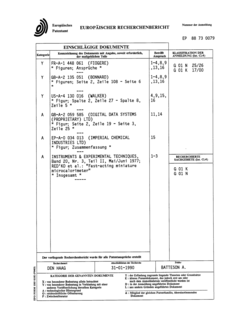
Calorimeter and process to determine the quantity of heat produced in a reaction in a calorimeter
PatentInactiveEP0286580A3
Innovation
- A calorimeter design featuring a reaction chamber surrounded by a temperature-stabilized medium, such as ice water, with a thermocouple for measuring temperature differences, allowing for simple, rapid, and accurate heat release measurements without the need for extensive room temperature control, enabling mobility and cost-effectiveness.
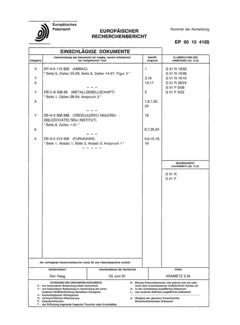
Method and apparatus for measuring particles in polydispersive systems, and concentration of particles of monodispersive aerosols
PatentInactiveEP0386665A3
Innovation
- A method using electrical charge measurements with D sensors and a charging device to determine particle size, speed, and concentration, independent of optical properties, by establishing a relationship between particle charge and size through statistical methods and electrostatic precipitator physics, allowing for non-contact detection of particles ≥2 μm and clouds down to 10 nm, with a measuring device comprising ring sensors, amplifiers, and a charging unit.
Environmental Impact of Aerosol Thermodynamic Research
The study of aerosol thermodynamics using calorimeters has significant environmental implications. As researchers delve deeper into understanding the behavior of aerosols in the atmosphere, the knowledge gained can be applied to address various environmental challenges.
One of the primary environmental impacts of this research is its contribution to climate change modeling. Aerosols play a crucial role in the Earth's radiative balance, and their thermodynamic properties directly influence their interactions with solar radiation. By accurately measuring and characterizing these properties, scientists can improve climate models, leading to more precise predictions of global temperature changes and weather patterns.
Furthermore, the insights gained from aerosol thermodynamic research can aid in developing strategies to mitigate air pollution. Understanding how aerosols form, grow, and interact with other atmospheric components allows for the design of more effective pollution control measures. This knowledge can be applied to reduce emissions from industrial processes, vehicles, and other sources, ultimately improving air quality in urban and rural areas alike.
The study of aerosol thermodynamics also has implications for human health. Aerosols can have detrimental effects on respiratory and cardiovascular systems, and understanding their behavior in the atmosphere can help predict and prevent exposure to harmful particles. This research can inform public health policies and guide the development of protective measures against air pollution-related health risks.
In the field of atmospheric chemistry, aerosol thermodynamic research contributes to our understanding of chemical reactions in the atmosphere. This knowledge is crucial for addressing issues such as acid rain, ozone depletion, and the formation of secondary pollutants. By elucidating the thermodynamic processes involved in these phenomena, scientists can develop more effective strategies for mitigating their environmental impacts.
Additionally, the study of aerosol thermodynamics has implications for renewable energy technologies. For instance, understanding how aerosols affect solar radiation can improve the efficiency of solar energy systems. This research can lead to the development of more effective solar panels and help optimize their placement in different atmospheric conditions.
Lastly, aerosol thermodynamic research contributes to our understanding of cloud formation and precipitation processes. This knowledge is essential for water resource management and can help in predicting and mitigating the effects of extreme weather events, such as droughts and floods, which are becoming more frequent due to climate change.
One of the primary environmental impacts of this research is its contribution to climate change modeling. Aerosols play a crucial role in the Earth's radiative balance, and their thermodynamic properties directly influence their interactions with solar radiation. By accurately measuring and characterizing these properties, scientists can improve climate models, leading to more precise predictions of global temperature changes and weather patterns.
Furthermore, the insights gained from aerosol thermodynamic research can aid in developing strategies to mitigate air pollution. Understanding how aerosols form, grow, and interact with other atmospheric components allows for the design of more effective pollution control measures. This knowledge can be applied to reduce emissions from industrial processes, vehicles, and other sources, ultimately improving air quality in urban and rural areas alike.
The study of aerosol thermodynamics also has implications for human health. Aerosols can have detrimental effects on respiratory and cardiovascular systems, and understanding their behavior in the atmosphere can help predict and prevent exposure to harmful particles. This research can inform public health policies and guide the development of protective measures against air pollution-related health risks.
In the field of atmospheric chemistry, aerosol thermodynamic research contributes to our understanding of chemical reactions in the atmosphere. This knowledge is crucial for addressing issues such as acid rain, ozone depletion, and the formation of secondary pollutants. By elucidating the thermodynamic processes involved in these phenomena, scientists can develop more effective strategies for mitigating their environmental impacts.
Additionally, the study of aerosol thermodynamics has implications for renewable energy technologies. For instance, understanding how aerosols affect solar radiation can improve the efficiency of solar energy systems. This research can lead to the development of more effective solar panels and help optimize their placement in different atmospheric conditions.
Lastly, aerosol thermodynamic research contributes to our understanding of cloud formation and precipitation processes. This knowledge is essential for water resource management and can help in predicting and mitigating the effects of extreme weather events, such as droughts and floods, which are becoming more frequent due to climate change.
Standardization of Calorimetric Methods for Aerosols
The standardization of calorimetric methods for aerosols is a critical step in advancing the study of aerosol thermodynamics. This process involves establishing uniform procedures, protocols, and guidelines for using calorimeters to measure the thermal properties of aerosols across different research institutions and laboratories.
One of the primary challenges in standardizing calorimetric methods for aerosols is the inherent complexity and variability of aerosol systems. Aerosols can vary widely in composition, size distribution, and physical state, making it difficult to develop a one-size-fits-all approach. To address this, standardization efforts focus on creating adaptable protocols that can be applied to a range of aerosol types while maintaining consistency in measurement techniques.
A key aspect of standardization is the development of reference materials and calibration standards specifically designed for aerosol calorimetry. These materials serve as benchmarks for instrument calibration and method validation, ensuring that measurements from different laboratories can be directly compared. The creation and distribution of these standards require collaboration between national metrology institutes, academic researchers, and industry partners.
Standardization also involves the establishment of best practices for sample preparation, handling, and analysis. This includes guidelines for collecting and storing aerosol samples, preparing them for calorimetric measurements, and interpreting the resulting data. Detailed protocols for controlling environmental conditions during measurements, such as temperature, humidity, and pressure, are essential to ensure reproducibility across different laboratory settings.
Interlaboratory comparison studies play a crucial role in the standardization process. These studies involve multiple laboratories performing calorimetric measurements on identical aerosol samples using agreed-upon protocols. The results of these comparisons help identify sources of variability and refine measurement techniques, ultimately leading to more robust and reliable methods.
The development of standardized data reporting formats and analysis procedures is another important aspect of this process. This includes establishing common units of measurement, defining key parameters to be reported, and creating standardized data processing algorithms. Such uniformity in data handling facilitates easier comparison of results across studies and enables the creation of comprehensive databases for aerosol thermodynamic properties.
As the field of aerosol science continues to evolve, standardization efforts must remain dynamic and responsive to new technological developments and scientific insights. Regular review and updating of standardized methods ensure that they remain relevant and incorporate the latest advancements in calorimetric techniques and aerosol research.
One of the primary challenges in standardizing calorimetric methods for aerosols is the inherent complexity and variability of aerosol systems. Aerosols can vary widely in composition, size distribution, and physical state, making it difficult to develop a one-size-fits-all approach. To address this, standardization efforts focus on creating adaptable protocols that can be applied to a range of aerosol types while maintaining consistency in measurement techniques.
A key aspect of standardization is the development of reference materials and calibration standards specifically designed for aerosol calorimetry. These materials serve as benchmarks for instrument calibration and method validation, ensuring that measurements from different laboratories can be directly compared. The creation and distribution of these standards require collaboration between national metrology institutes, academic researchers, and industry partners.
Standardization also involves the establishment of best practices for sample preparation, handling, and analysis. This includes guidelines for collecting and storing aerosol samples, preparing them for calorimetric measurements, and interpreting the resulting data. Detailed protocols for controlling environmental conditions during measurements, such as temperature, humidity, and pressure, are essential to ensure reproducibility across different laboratory settings.
Interlaboratory comparison studies play a crucial role in the standardization process. These studies involve multiple laboratories performing calorimetric measurements on identical aerosol samples using agreed-upon protocols. The results of these comparisons help identify sources of variability and refine measurement techniques, ultimately leading to more robust and reliable methods.
The development of standardized data reporting formats and analysis procedures is another important aspect of this process. This includes establishing common units of measurement, defining key parameters to be reported, and creating standardized data processing algorithms. Such uniformity in data handling facilitates easier comparison of results across studies and enables the creation of comprehensive databases for aerosol thermodynamic properties.
As the field of aerosol science continues to evolve, standardization efforts must remain dynamic and responsive to new technological developments and scientific insights. Regular review and updating of standardized methods ensure that they remain relevant and incorporate the latest advancements in calorimetric techniques and aerosol research.
Unlock deeper insights with Patsnap Eureka Quick Research — get a full tech report to explore trends and direct your research. Try now!
Generate Your Research Report Instantly with AI Agent
Supercharge your innovation with Patsnap Eureka AI Agent Platform!