How Magnesium Carbonate Supports Freshwater Biodiversity
AUG 1, 20259 MIN READ
Generate Your Research Report Instantly with AI Agent
Patsnap Eureka helps you evaluate technical feasibility & market potential.
Magnesium Carbonate and Freshwater Ecosystems
Magnesium carbonate plays a crucial role in supporting freshwater biodiversity through its influence on water chemistry and ecosystem dynamics. This compound, naturally occurring in many aquatic environments, acts as a buffer against pH fluctuations, helping to maintain stable conditions for diverse aquatic life.
In freshwater ecosystems, magnesium carbonate contributes to the overall mineral content, which is essential for the growth and development of various organisms. It serves as a source of magnesium, a vital nutrient for photosynthetic organisms like algae and aquatic plants. These primary producers form the foundation of the food web, supporting a wide range of consumers and predators.
The buffering capacity of magnesium carbonate is particularly important in mitigating the effects of acid rain and other anthropogenic sources of acidification. By neutralizing excess hydrogen ions, it helps prevent drastic pH changes that could otherwise harm sensitive aquatic species. This stability allows for the persistence of a diverse array of organisms, from microscopic plankton to larger fish and amphibians.
Furthermore, magnesium carbonate influences the availability of other essential nutrients in freshwater systems. It can form complexes with phosphorus, regulating its concentration in the water column. This process is crucial for controlling algal growth and maintaining a balanced ecosystem. The presence of magnesium carbonate also affects the solubility and bioavailability of trace metals, which can be either beneficial or harmful to aquatic life depending on their concentrations.
In karst landscapes, where magnesium carbonate is abundant in the form of dolomite, it contributes to the formation of unique aquatic habitats. The dissolution of this mineral creates intricate cave systems and underground rivers, providing specialized niches for rare and endemic species. These environments often harbor distinct communities of crustaceans, fish, and other organisms adapted to the specific chemical and physical conditions created by magnesium carbonate-rich waters.
The interaction between magnesium carbonate and freshwater ecosystems extends to the sediment layer as well. In lake and river bottoms, this compound can influence the composition and properties of sediments, affecting benthic communities and nutrient cycling processes. The presence of magnesium carbonate in sediments can also impact the exchange of gases and nutrients between the water column and the substrate, further shaping the habitat for bottom-dwelling organisms.
In freshwater ecosystems, magnesium carbonate contributes to the overall mineral content, which is essential for the growth and development of various organisms. It serves as a source of magnesium, a vital nutrient for photosynthetic organisms like algae and aquatic plants. These primary producers form the foundation of the food web, supporting a wide range of consumers and predators.
The buffering capacity of magnesium carbonate is particularly important in mitigating the effects of acid rain and other anthropogenic sources of acidification. By neutralizing excess hydrogen ions, it helps prevent drastic pH changes that could otherwise harm sensitive aquatic species. This stability allows for the persistence of a diverse array of organisms, from microscopic plankton to larger fish and amphibians.
Furthermore, magnesium carbonate influences the availability of other essential nutrients in freshwater systems. It can form complexes with phosphorus, regulating its concentration in the water column. This process is crucial for controlling algal growth and maintaining a balanced ecosystem. The presence of magnesium carbonate also affects the solubility and bioavailability of trace metals, which can be either beneficial or harmful to aquatic life depending on their concentrations.
In karst landscapes, where magnesium carbonate is abundant in the form of dolomite, it contributes to the formation of unique aquatic habitats. The dissolution of this mineral creates intricate cave systems and underground rivers, providing specialized niches for rare and endemic species. These environments often harbor distinct communities of crustaceans, fish, and other organisms adapted to the specific chemical and physical conditions created by magnesium carbonate-rich waters.
The interaction between magnesium carbonate and freshwater ecosystems extends to the sediment layer as well. In lake and river bottoms, this compound can influence the composition and properties of sediments, affecting benthic communities and nutrient cycling processes. The presence of magnesium carbonate in sediments can also impact the exchange of gases and nutrients between the water column and the substrate, further shaping the habitat for bottom-dwelling organisms.
Market Analysis for Eco-friendly Water Treatment
The market for eco-friendly water treatment solutions has experienced significant growth in recent years, driven by increasing environmental concerns and stricter regulations on water quality. The global water treatment market is projected to reach $211 billion by 2025, with a compound annual growth rate (CAGR) of 7.1% from 2020 to 2025. Within this market, eco-friendly solutions are gaining traction due to their lower environmental impact and long-term sustainability.
Magnesium carbonate, as a potential eco-friendly water treatment agent, is positioned to capture a share of this growing market. Its ability to support freshwater biodiversity while effectively treating water aligns with the increasing demand for sustainable solutions. The use of magnesium carbonate in water treatment is particularly relevant in regions facing freshwater ecosystem degradation and biodiversity loss.
The market for magnesium carbonate in water treatment is still emerging, with potential applications in both municipal and industrial water treatment sectors. Municipal water treatment, which accounts for approximately 60% of the global water treatment market, presents a significant opportunity for magnesium carbonate-based solutions. Industrial sectors, such as food and beverage, pharmaceuticals, and manufacturing, are also potential markets for this eco-friendly treatment method.
Geographically, North America and Europe are expected to be the primary markets for magnesium carbonate-based water treatment solutions due to their stringent environmental regulations and high awareness of ecological issues. However, rapidly developing regions in Asia-Pacific and Latin America are also showing increased interest in eco-friendly water treatment methods, driven by urbanization and growing environmental concerns.
The market for magnesium carbonate in water treatment faces competition from other eco-friendly solutions such as activated carbon, membrane filtration, and UV disinfection. However, its unique ability to support freshwater biodiversity gives it a competitive edge in certain applications, particularly in sensitive ecological areas or where biodiversity conservation is a priority.
Consumer trends indicate a growing preference for environmentally friendly products and services, which extends to water treatment solutions. This shift in consumer behavior is likely to drive demand for magnesium carbonate-based treatments, especially in regions with high environmental awareness and stringent regulations on water quality and ecosystem protection.
Magnesium carbonate, as a potential eco-friendly water treatment agent, is positioned to capture a share of this growing market. Its ability to support freshwater biodiversity while effectively treating water aligns with the increasing demand for sustainable solutions. The use of magnesium carbonate in water treatment is particularly relevant in regions facing freshwater ecosystem degradation and biodiversity loss.
The market for magnesium carbonate in water treatment is still emerging, with potential applications in both municipal and industrial water treatment sectors. Municipal water treatment, which accounts for approximately 60% of the global water treatment market, presents a significant opportunity for magnesium carbonate-based solutions. Industrial sectors, such as food and beverage, pharmaceuticals, and manufacturing, are also potential markets for this eco-friendly treatment method.
Geographically, North America and Europe are expected to be the primary markets for magnesium carbonate-based water treatment solutions due to their stringent environmental regulations and high awareness of ecological issues. However, rapidly developing regions in Asia-Pacific and Latin America are also showing increased interest in eco-friendly water treatment methods, driven by urbanization and growing environmental concerns.
The market for magnesium carbonate in water treatment faces competition from other eco-friendly solutions such as activated carbon, membrane filtration, and UV disinfection. However, its unique ability to support freshwater biodiversity gives it a competitive edge in certain applications, particularly in sensitive ecological areas or where biodiversity conservation is a priority.
Consumer trends indicate a growing preference for environmentally friendly products and services, which extends to water treatment solutions. This shift in consumer behavior is likely to drive demand for magnesium carbonate-based treatments, especially in regions with high environmental awareness and stringent regulations on water quality and ecosystem protection.
Current Applications and Challenges
Magnesium carbonate plays a crucial role in supporting freshwater biodiversity, with current applications spanning various aspects of aquatic ecosystem management. One primary use is in water treatment processes, where it acts as a pH buffer and alkalinity enhancer. By maintaining optimal pH levels, magnesium carbonate creates a stable environment for diverse aquatic species, promoting overall ecosystem health.
In aquaculture, magnesium carbonate is utilized to improve water quality and enhance fish growth. It helps regulate carbon dioxide levels, which is essential for photosynthetic organisms and the overall balance of aquatic ecosystems. Additionally, it serves as a source of essential minerals for aquatic organisms, supporting their physiological processes and contributing to biodiversity.
Magnesium carbonate is also employed in the restoration of degraded freshwater habitats. It can be used to neutralize acidic waters caused by acid rain or mining activities, creating conditions that allow for the reestablishment of diverse aquatic communities. This application has shown promising results in reviving ecosystems affected by human activities.
Despite its benefits, the use of magnesium carbonate in freshwater biodiversity support faces several challenges. One significant issue is the potential for over-application, which can lead to excessive alkalinity and disrupt the delicate balance of aquatic ecosystems. Careful monitoring and precise dosing are necessary to avoid negative impacts on sensitive species.
Another challenge lies in the variability of freshwater ecosystems. Different water bodies have unique chemical compositions and biological communities, making it difficult to establish standardized application protocols. Researchers and environmental managers must develop tailored approaches for each specific ecosystem to maximize the benefits of magnesium carbonate while minimizing potential risks.
The long-term effects of magnesium carbonate application on freshwater biodiversity are not yet fully understood. While short-term benefits are evident, there is a need for comprehensive studies to assess the long-term impacts on ecosystem dynamics, species interactions, and genetic diversity within aquatic populations.
Cost-effectiveness and scalability present additional challenges. Implementing magnesium carbonate treatments on a large scale can be expensive, particularly for extensive water bodies or in regions with limited resources. Developing cost-efficient methods for production, transportation, and application of magnesium carbonate is crucial for widespread adoption of this technology in biodiversity conservation efforts.
Lastly, regulatory frameworks and environmental policies regarding the use of magnesium carbonate in freshwater ecosystems are still evolving. Establishing clear guidelines and standards for its application, while considering potential ecological impacts, is essential for ensuring responsible and effective use in supporting freshwater biodiversity.
In aquaculture, magnesium carbonate is utilized to improve water quality and enhance fish growth. It helps regulate carbon dioxide levels, which is essential for photosynthetic organisms and the overall balance of aquatic ecosystems. Additionally, it serves as a source of essential minerals for aquatic organisms, supporting their physiological processes and contributing to biodiversity.
Magnesium carbonate is also employed in the restoration of degraded freshwater habitats. It can be used to neutralize acidic waters caused by acid rain or mining activities, creating conditions that allow for the reestablishment of diverse aquatic communities. This application has shown promising results in reviving ecosystems affected by human activities.
Despite its benefits, the use of magnesium carbonate in freshwater biodiversity support faces several challenges. One significant issue is the potential for over-application, which can lead to excessive alkalinity and disrupt the delicate balance of aquatic ecosystems. Careful monitoring and precise dosing are necessary to avoid negative impacts on sensitive species.
Another challenge lies in the variability of freshwater ecosystems. Different water bodies have unique chemical compositions and biological communities, making it difficult to establish standardized application protocols. Researchers and environmental managers must develop tailored approaches for each specific ecosystem to maximize the benefits of magnesium carbonate while minimizing potential risks.
The long-term effects of magnesium carbonate application on freshwater biodiversity are not yet fully understood. While short-term benefits are evident, there is a need for comprehensive studies to assess the long-term impacts on ecosystem dynamics, species interactions, and genetic diversity within aquatic populations.
Cost-effectiveness and scalability present additional challenges. Implementing magnesium carbonate treatments on a large scale can be expensive, particularly for extensive water bodies or in regions with limited resources. Developing cost-efficient methods for production, transportation, and application of magnesium carbonate is crucial for widespread adoption of this technology in biodiversity conservation efforts.
Lastly, regulatory frameworks and environmental policies regarding the use of magnesium carbonate in freshwater ecosystems are still evolving. Establishing clear guidelines and standards for its application, while considering potential ecological impacts, is essential for ensuring responsible and effective use in supporting freshwater biodiversity.
Existing Magnesium Carbonate Solutions
01 Magnesium carbonate in biodiversity conservation
Magnesium carbonate plays a role in biodiversity conservation efforts. It can be used in various environmental applications, such as soil amendment and water treatment, which indirectly support biodiversity by improving habitat conditions for various species.- Magnesium carbonate in soil biodiversity: Magnesium carbonate plays a role in soil biodiversity by influencing soil pH and nutrient availability. It can affect microbial communities and plant growth, contributing to overall ecosystem diversity. The presence of magnesium carbonate in soil can impact the distribution and abundance of various organisms, potentially enhancing biodiversity in certain environments.
- Magnesium carbonate in marine ecosystems: In marine ecosystems, magnesium carbonate contributes to the formation of coral reefs and other calcifying organisms. It plays a crucial role in maintaining the balance of marine biodiversity by providing habitats and supporting various species. The presence of magnesium carbonate in seawater also influences the carbon cycle and ocean acidification, which can impact marine biodiversity.
- Magnesium carbonate in industrial applications and biodiversity: The use of magnesium carbonate in industrial applications can have indirect effects on biodiversity. It is used in various processes that may impact ecosystems, such as water treatment, air pollution control, and manufacturing. The production and disposal of magnesium carbonate-based products can influence local biodiversity through changes in land use and potential environmental contamination.
- Magnesium carbonate in agricultural practices: Magnesium carbonate is used in agricultural practices to adjust soil pH and provide essential nutrients to plants. Its application can influence crop diversity and soil microbiome composition. The use of magnesium carbonate-based fertilizers may impact the biodiversity of agricultural ecosystems by altering plant-soil interactions and nutrient cycling.
- Magnesium carbonate in conservation and restoration: Magnesium carbonate can be utilized in conservation and restoration efforts to enhance biodiversity. It may be used in the creation of artificial habitats, soil amendments for degraded ecosystems, or in the treatment of contaminated sites. The application of magnesium carbonate in these contexts can support the recovery of biodiversity in damaged or threatened ecosystems.
02 Magnesium carbonate in agricultural applications
The use of magnesium carbonate in agriculture can impact biodiversity. It can be used as a soil amendment to adjust pH levels and provide essential magnesium to plants, potentially influencing the diversity of plant species in an ecosystem.Expand Specific Solutions03 Magnesium carbonate in marine ecosystems
Magnesium carbonate has implications for marine biodiversity. It can affect the formation of coral reefs and the shells of marine organisms, which are crucial components of marine ecosystems and biodiversity.Expand Specific Solutions04 Magnesium carbonate in industrial processes and biodiversity
The industrial use of magnesium carbonate and its byproducts can have indirect effects on biodiversity. Proper management and disposal of magnesium carbonate in industrial processes are essential to minimize negative impacts on surrounding ecosystems.Expand Specific Solutions05 Magnesium carbonate in carbon sequestration and climate change mitigation
Magnesium carbonate has potential applications in carbon sequestration, which could indirectly benefit biodiversity by mitigating climate change effects. Its use in capturing and storing carbon dioxide may help preserve diverse ecosystems threatened by global warming.Expand Specific Solutions
Key Players in Water Treatment Industry
The field of magnesium carbonate's role in supporting freshwater biodiversity is in its early developmental stages, with a growing market as environmental concerns increase. The technology's maturity is still evolving, with research institutions like Zhejiang University, Shanghai Ocean University, and the Institute of Hydrobiology, Chinese Academy of Sciences leading academic efforts. Companies such as Korea Electric Power Corp. and China Petroleum & Chemical Corp. are exploring industrial applications. The involvement of government agencies like the United States Environmental Protection Agency indicates increasing regulatory interest. This emerging field combines environmental science, chemistry, and ecology, attracting diverse players from academia, industry, and government sectors.
United States Environmental Protection Agency
Technical Solution: The U.S. EPA has implemented a multi-faceted approach to understanding the role of magnesium carbonate in supporting freshwater biodiversity. Their research includes long-term monitoring programs across various U.S. watersheds, examining the correlation between magnesium carbonate levels and species diversity. They have developed sophisticated models that predict how changes in magnesium carbonate concentrations might affect ecosystem health[2]. The EPA has also conducted laboratory studies to determine the optimal magnesium carbonate levels for different freshwater species, including endangered ones. Their findings indicate that magnesium carbonate plays a crucial role in maintaining water hardness, which is essential for the shell formation of many aquatic invertebrates[4]. Furthermore, they have investigated how magnesium carbonate interacts with other minerals to create microhabitats that support diverse microbial communities, which are fundamental to ecosystem functioning[6].
Strengths: Comprehensive monitoring programs, advanced predictive modeling, and focus on practical applications for conservation. Weaknesses: Research may be biased towards North American ecosystems and species.
Planetary Technologies, Inc.
Technical Solution: Planetary Technologies has developed an innovative approach to leveraging magnesium carbonate for enhancing freshwater biodiversity. Their primary focus is on using magnesium-rich minerals to create a carbon dioxide removal process that simultaneously benefits aquatic ecosystems. The company has engineered a method to extract magnesium from mineral-rich rocks and convert it into a form of magnesium carbonate that can be safely introduced into water bodies[7]. This process not only sequesters carbon dioxide but also helps to stabilize pH levels in freshwater systems affected by acidification. Their research indicates that this approach can significantly improve water quality and create more favorable conditions for a wide range of aquatic species[9]. Planetary Technologies has conducted pilot studies in several lakes, demonstrating increased biodiversity and improved ecosystem health following the controlled introduction of their magnesium carbonate solution[11].
Strengths: Innovative approach combining carbon sequestration with biodiversity enhancement, practical application of research findings. Weaknesses: Relatively new technology with limited long-term data on ecosystem impacts.
Innovative Research on Biodiversity Support
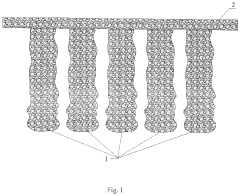
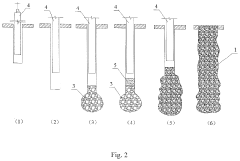
Equal energy deformation composite foundation using microorganisms to solidify aggregate and the construction method thereof
PatentInactiveUS20220315882A1
Innovation
- The method involves using Bacillus pasturii microorganisms to solidify coral aggregate or construction waste, forming a pile body and cushion layer structure, where the microorganisms cement the aggregate, enhancing the foundation's strength and stability, and utilizing a heavy hammer for controlled compaction to ensure uniform settlement and high bearing capacity.

Production of metal hydroxide from mineral resources and application thereof for capturing and sequestering carbon dioxide
PatentPendingUS20230304167A1
Innovation
- A hydrometallurgical process using heap or vat leaching with sulfuric acid to recover magnesium, nickel, and cobalt from magnesium silicate minerals, including asbestos tailings, followed by electrolysis to produce magnesium hydroxide, which captures and sequesters CO2, utilizing low-CO2 emitting energy sources.


Environmental Impact Assessment
The environmental impact assessment of magnesium carbonate's role in supporting freshwater biodiversity reveals both positive and negative effects on aquatic ecosystems. Magnesium carbonate, a naturally occurring mineral, plays a crucial role in maintaining water quality and pH levels in freshwater environments. Its presence can help buffer against acidification, which is particularly beneficial for sensitive aquatic species that require specific pH ranges for survival.
One of the primary positive impacts of magnesium carbonate is its ability to enhance water clarity. By promoting the precipitation of suspended particles, it reduces turbidity, allowing more light to penetrate the water column. This improved light penetration supports photosynthetic organisms, such as aquatic plants and algae, which form the base of many freshwater food chains. The increased primary productivity can lead to a more diverse and abundant ecosystem.
However, the introduction of excessive amounts of magnesium carbonate into freshwater systems can have detrimental effects. Over-saturation may lead to the formation of mineral deposits on the substrate, potentially altering habitat structures and impacting benthic communities. This can disrupt the natural balance of the ecosystem and affect species that rely on specific substrate conditions for breeding or feeding.
The impact on water chemistry extends beyond pH regulation. Magnesium carbonate can influence the availability of essential nutrients and trace elements. While this can be beneficial in some cases, it may also lead to nutrient imbalances if not carefully managed. For instance, it can affect the solubility and bioavailability of phosphorus, a critical nutrient for aquatic plant growth.
The assessment also considers the potential for magnesium carbonate to interact with pollutants present in freshwater systems. In some cases, it may help to immobilize certain contaminants, reducing their bioavailability and toxicity. Conversely, it could potentially enhance the mobility of other pollutants, depending on the specific chemical interactions at play.
Long-term ecological studies have shown that the presence of magnesium carbonate can influence species composition within freshwater ecosystems. Certain organisms may thrive in the altered conditions, while others may struggle to adapt. This shift in community structure can have cascading effects throughout the food web, potentially affecting biodiversity at multiple trophic levels.
The environmental impact assessment also takes into account the broader landscape context. The effects of magnesium carbonate on freshwater biodiversity can vary depending on factors such as local geology, climate, and existing water chemistry. Therefore, site-specific evaluations are crucial for accurately predicting and managing its impacts on aquatic ecosystems.
One of the primary positive impacts of magnesium carbonate is its ability to enhance water clarity. By promoting the precipitation of suspended particles, it reduces turbidity, allowing more light to penetrate the water column. This improved light penetration supports photosynthetic organisms, such as aquatic plants and algae, which form the base of many freshwater food chains. The increased primary productivity can lead to a more diverse and abundant ecosystem.
However, the introduction of excessive amounts of magnesium carbonate into freshwater systems can have detrimental effects. Over-saturation may lead to the formation of mineral deposits on the substrate, potentially altering habitat structures and impacting benthic communities. This can disrupt the natural balance of the ecosystem and affect species that rely on specific substrate conditions for breeding or feeding.
The impact on water chemistry extends beyond pH regulation. Magnesium carbonate can influence the availability of essential nutrients and trace elements. While this can be beneficial in some cases, it may also lead to nutrient imbalances if not carefully managed. For instance, it can affect the solubility and bioavailability of phosphorus, a critical nutrient for aquatic plant growth.
The assessment also considers the potential for magnesium carbonate to interact with pollutants present in freshwater systems. In some cases, it may help to immobilize certain contaminants, reducing their bioavailability and toxicity. Conversely, it could potentially enhance the mobility of other pollutants, depending on the specific chemical interactions at play.
Long-term ecological studies have shown that the presence of magnesium carbonate can influence species composition within freshwater ecosystems. Certain organisms may thrive in the altered conditions, while others may struggle to adapt. This shift in community structure can have cascading effects throughout the food web, potentially affecting biodiversity at multiple trophic levels.
The environmental impact assessment also takes into account the broader landscape context. The effects of magnesium carbonate on freshwater biodiversity can vary depending on factors such as local geology, climate, and existing water chemistry. Therefore, site-specific evaluations are crucial for accurately predicting and managing its impacts on aquatic ecosystems.
Regulatory Framework for Water Treatment Chemicals
The regulatory framework for water treatment chemicals plays a crucial role in ensuring the safety and effectiveness of magnesium carbonate in supporting freshwater biodiversity. Governments and environmental agencies worldwide have established comprehensive guidelines and standards to govern the use of water treatment chemicals, including magnesium carbonate, in aquatic ecosystems.
In the United States, the Environmental Protection Agency (EPA) oversees the regulation of water treatment chemicals under the Safe Drinking Water Act and the Clean Water Act. These regulations set maximum contaminant levels and treatment techniques for various substances, including magnesium carbonate, to protect public health and aquatic life. The EPA also maintains a list of approved water treatment chemicals and their permissible usage levels.
The European Union has implemented the Water Framework Directive, which provides a comprehensive approach to water management and protection. This directive sets quality standards for surface waters and groundwater, including limits on chemical pollutants. The European Chemicals Agency (ECHA) further regulates the registration, evaluation, authorization, and restriction of chemicals, including those used in water treatment.
In Canada, the Guidelines for Canadian Drinking Water Quality, established by Health Canada, provide guidance on the use of water treatment chemicals, including magnesium carbonate. These guidelines set maximum acceptable concentrations for various substances and outline treatment goals to ensure water safety and quality.
International organizations, such as the World Health Organization (WHO), also provide guidelines for drinking water quality and the use of water treatment chemicals. These guidelines serve as a reference for many countries in developing their national regulations and standards.
Specific regulations often address the dosage, purity, and application methods of magnesium carbonate in water treatment processes. These regulations aim to balance the benefits of using magnesium carbonate for water treatment with potential environmental impacts on freshwater ecosystems. Compliance with these regulations is typically monitored through regular water quality testing and reporting requirements.
Many regulatory frameworks also include provisions for the assessment and management of potential environmental risks associated with water treatment chemicals. This may involve conducting environmental impact assessments before the approval of new treatment methods or chemicals, as well as ongoing monitoring of treated water bodies to ensure the maintenance of ecological balance and biodiversity.
As scientific understanding of freshwater ecosystems and the impacts of water treatment chemicals evolves, regulatory frameworks are periodically updated to reflect new knowledge and emerging concerns. This adaptive approach ensures that the use of magnesium carbonate and other water treatment chemicals continues to support freshwater biodiversity while minimizing potential negative impacts on aquatic ecosystems.
In the United States, the Environmental Protection Agency (EPA) oversees the regulation of water treatment chemicals under the Safe Drinking Water Act and the Clean Water Act. These regulations set maximum contaminant levels and treatment techniques for various substances, including magnesium carbonate, to protect public health and aquatic life. The EPA also maintains a list of approved water treatment chemicals and their permissible usage levels.
The European Union has implemented the Water Framework Directive, which provides a comprehensive approach to water management and protection. This directive sets quality standards for surface waters and groundwater, including limits on chemical pollutants. The European Chemicals Agency (ECHA) further regulates the registration, evaluation, authorization, and restriction of chemicals, including those used in water treatment.
In Canada, the Guidelines for Canadian Drinking Water Quality, established by Health Canada, provide guidance on the use of water treatment chemicals, including magnesium carbonate. These guidelines set maximum acceptable concentrations for various substances and outline treatment goals to ensure water safety and quality.
International organizations, such as the World Health Organization (WHO), also provide guidelines for drinking water quality and the use of water treatment chemicals. These guidelines serve as a reference for many countries in developing their national regulations and standards.
Specific regulations often address the dosage, purity, and application methods of magnesium carbonate in water treatment processes. These regulations aim to balance the benefits of using magnesium carbonate for water treatment with potential environmental impacts on freshwater ecosystems. Compliance with these regulations is typically monitored through regular water quality testing and reporting requirements.
Many regulatory frameworks also include provisions for the assessment and management of potential environmental risks associated with water treatment chemicals. This may involve conducting environmental impact assessments before the approval of new treatment methods or chemicals, as well as ongoing monitoring of treated water bodies to ensure the maintenance of ecological balance and biodiversity.
As scientific understanding of freshwater ecosystems and the impacts of water treatment chemicals evolves, regulatory frameworks are periodically updated to reflect new knowledge and emerging concerns. This adaptive approach ensures that the use of magnesium carbonate and other water treatment chemicals continues to support freshwater biodiversity while minimizing potential negative impacts on aquatic ecosystems.
Unlock deeper insights with Patsnap Eureka Quick Research — get a full tech report to explore trends and direct your research. Try now!
Generate Your Research Report Instantly with AI Agent
Supercharge your innovation with Patsnap Eureka AI Agent Platform!