

How to Implement AI-Driven Topology Optimization in Robotics
SEP 16, 202510 MIN READ
Generate Your Research Report Instantly with AI Agent
PatSnap Eureka helps you evaluate technical feasibility & market potential.
AI-Driven Topology Optimization Background and Objectives
Topology optimization has emerged as a transformative approach in engineering design, evolving from a theoretical concept in the 1980s to a practical design methodology widely used across industries. The integration of artificial intelligence with topology optimization represents the next frontier in this evolution, particularly in robotics where weight, strength, and performance optimization are critical factors. This convergence of AI and topology optimization promises to revolutionize how robotic systems are designed and manufactured.
The historical trajectory of topology optimization began with homogenization methods, progressing through the Solid Isotropic Material with Penalization (SIMP) approach, level-set methods, and now entering an era where machine learning algorithms can predict optimal structures with unprecedented efficiency. This progression has been accelerated by advances in computational power and algorithmic sophistication, enabling more complex optimization problems to be solved in reasonable timeframes.
In the robotics domain, topology optimization has traditionally focused on static components, with limited application to dynamic systems due to computational constraints. The introduction of AI-driven approaches aims to overcome these limitations by leveraging neural networks, genetic algorithms, and reinforcement learning to navigate the vast design space more effectively and incorporate dynamic performance criteria directly into the optimization process.
The primary objective of implementing AI-driven topology optimization in robotics is to create lighter, stronger, and more energy-efficient robotic systems that can operate with greater precision and reliability. This involves developing frameworks that can simultaneously optimize for multiple performance metrics including structural integrity, thermal management, vibration characteristics, and energy consumption.
Another critical goal is to reduce the design-to-manufacturing timeline by automating the iterative optimization process that traditionally requires significant human intervention. AI systems can learn from previous designs and simulations, progressively improving their ability to generate optimal solutions for specific robotic applications.
Furthermore, this technology aims to enable adaptive design methodologies where robotic components can be rapidly reconfigured or redesigned based on changing operational requirements or environmental conditions. This adaptability is particularly valuable in fields such as space exploration, disaster response, and medical robotics where versatility is paramount.
The ultimate vision for AI-driven topology optimization in robotics extends beyond component-level design to system-level optimization, where entire robotic assemblies are conceived as integrated structures optimized for their specific functions. This holistic approach represents a paradigm shift from traditional design methodologies that treat components as discrete elements to be assembled.
The historical trajectory of topology optimization began with homogenization methods, progressing through the Solid Isotropic Material with Penalization (SIMP) approach, level-set methods, and now entering an era where machine learning algorithms can predict optimal structures with unprecedented efficiency. This progression has been accelerated by advances in computational power and algorithmic sophistication, enabling more complex optimization problems to be solved in reasonable timeframes.
In the robotics domain, topology optimization has traditionally focused on static components, with limited application to dynamic systems due to computational constraints. The introduction of AI-driven approaches aims to overcome these limitations by leveraging neural networks, genetic algorithms, and reinforcement learning to navigate the vast design space more effectively and incorporate dynamic performance criteria directly into the optimization process.
The primary objective of implementing AI-driven topology optimization in robotics is to create lighter, stronger, and more energy-efficient robotic systems that can operate with greater precision and reliability. This involves developing frameworks that can simultaneously optimize for multiple performance metrics including structural integrity, thermal management, vibration characteristics, and energy consumption.
Another critical goal is to reduce the design-to-manufacturing timeline by automating the iterative optimization process that traditionally requires significant human intervention. AI systems can learn from previous designs and simulations, progressively improving their ability to generate optimal solutions for specific robotic applications.
Furthermore, this technology aims to enable adaptive design methodologies where robotic components can be rapidly reconfigured or redesigned based on changing operational requirements or environmental conditions. This adaptability is particularly valuable in fields such as space exploration, disaster response, and medical robotics where versatility is paramount.
The ultimate vision for AI-driven topology optimization in robotics extends beyond component-level design to system-level optimization, where entire robotic assemblies are conceived as integrated structures optimized for their specific functions. This holistic approach represents a paradigm shift from traditional design methodologies that treat components as discrete elements to be assembled.
Market Demand Analysis for Optimized Robotic Structures
The global market for optimized robotic structures is experiencing unprecedented growth, driven by increasing demand for efficient, lightweight, and high-performance robotic systems across multiple industries. Current market analysis indicates that the industrial robotics sector alone is projected to reach $75 billion by 2025, with topology-optimized structures representing a rapidly growing segment within this market.
Manufacturing industries, particularly automotive and aerospace, are demonstrating the strongest demand for topology-optimized robotic structures. These sectors require robots with enhanced strength-to-weight ratios, improved energy efficiency, and optimized performance characteristics. The automotive industry has shown particular interest in lightweight robotic arms that can perform precise operations while consuming less energy, thereby reducing operational costs and environmental impact.
Healthcare represents another significant market, with surgical robots benefiting substantially from topology optimization. The precision requirements in medical robotics make optimized structures particularly valuable, as they can reduce vibration, increase stability, and improve overall surgical outcomes. Market research indicates that the medical robotics segment is growing at approximately 17% annually, with topology optimization becoming a key differentiator among competing products.
Consumer electronics manufacturing has emerged as a third major market segment, where miniaturized robots with optimized structures are increasingly deployed for assembly of small components. The demand for smaller, more precise robots with optimized structural characteristics has grown by over 20% in the past two years.
Market surveys reveal that end-users are willing to pay premium prices for robots with AI-optimized structures, primarily due to the tangible benefits in operational efficiency and reduced maintenance costs. Companies report that topology-optimized robots can achieve energy savings of 15-30% compared to conventionally designed counterparts, representing significant operational cost reductions over the robot's lifecycle.
Regional analysis shows Asia-Pacific leading the market demand, particularly in countries with advanced manufacturing sectors like Japan, South Korea, and China. North America follows closely, with strong demand from aerospace, defense, and medical technology sectors. European markets show particular interest in topology-optimized collaborative robots for manufacturing applications.
The market is further stimulated by increasing regulatory pressure for energy-efficient industrial equipment and growing corporate sustainability initiatives. As companies seek to reduce their carbon footprint, the energy efficiency benefits of topology-optimized robots become increasingly attractive from both economic and environmental perspectives.
Manufacturing industries, particularly automotive and aerospace, are demonstrating the strongest demand for topology-optimized robotic structures. These sectors require robots with enhanced strength-to-weight ratios, improved energy efficiency, and optimized performance characteristics. The automotive industry has shown particular interest in lightweight robotic arms that can perform precise operations while consuming less energy, thereby reducing operational costs and environmental impact.
Healthcare represents another significant market, with surgical robots benefiting substantially from topology optimization. The precision requirements in medical robotics make optimized structures particularly valuable, as they can reduce vibration, increase stability, and improve overall surgical outcomes. Market research indicates that the medical robotics segment is growing at approximately 17% annually, with topology optimization becoming a key differentiator among competing products.
Consumer electronics manufacturing has emerged as a third major market segment, where miniaturized robots with optimized structures are increasingly deployed for assembly of small components. The demand for smaller, more precise robots with optimized structural characteristics has grown by over 20% in the past two years.
Market surveys reveal that end-users are willing to pay premium prices for robots with AI-optimized structures, primarily due to the tangible benefits in operational efficiency and reduced maintenance costs. Companies report that topology-optimized robots can achieve energy savings of 15-30% compared to conventionally designed counterparts, representing significant operational cost reductions over the robot's lifecycle.
Regional analysis shows Asia-Pacific leading the market demand, particularly in countries with advanced manufacturing sectors like Japan, South Korea, and China. North America follows closely, with strong demand from aerospace, defense, and medical technology sectors. European markets show particular interest in topology-optimized collaborative robots for manufacturing applications.
The market is further stimulated by increasing regulatory pressure for energy-efficient industrial equipment and growing corporate sustainability initiatives. As companies seek to reduce their carbon footprint, the energy efficiency benefits of topology-optimized robots become increasingly attractive from both economic and environmental perspectives.
Current State and Challenges in Robotic Topology Optimization
The field of topology optimization in robotics has witnessed significant advancements in recent years, yet remains in a transitional phase between academic research and widespread industrial application. Currently, most implementations rely on traditional computational methods that often struggle with the complex constraints and multi-objective optimization requirements inherent in robotic systems. These conventional approaches typically require substantial computational resources and expert knowledge to yield practical results.
AI-driven topology optimization in robotics faces several technical challenges that limit its broader adoption. The primary obstacle is the computational complexity associated with simultaneously optimizing for multiple performance criteria such as weight reduction, structural integrity, thermal management, and dynamic response characteristics. Most existing algorithms struggle to efficiently navigate this high-dimensional solution space without compromising on solution quality or computational efficiency.
Another significant challenge is the integration gap between topology optimization tools and standard robotics design workflows. Current software ecosystems often operate in isolation, creating friction in the design-to-manufacturing pipeline. This disconnection frequently results in optimized designs that, while theoretically superior, prove difficult to manufacture using conventional production methods or require substantial manual refinement before implementation.
The material science aspect presents additional complications, as many topology optimization algorithms do not adequately account for the anisotropic properties of advanced composites and novel materials increasingly used in robotics. This limitation often leads to suboptimal designs when transitioning from simulation to physical prototypes, particularly in applications requiring precise mechanical properties or specialized performance characteristics.
From a geographical perspective, research leadership in this domain is concentrated primarily in North America, Western Europe, and East Asia, with notable contributions from institutions in the United States, Germany, China, and Japan. This concentration has created knowledge silos that sometimes impede the cross-pollination of ideas between academic research and industrial applications.
The regulatory environment adds another layer of complexity, particularly for robots intended for human interaction or safety-critical applications. Current optimization approaches rarely incorporate regulatory constraints directly into the design process, necessitating time-consuming iterative compliance verification.
Data availability represents a further constraint, as machine learning approaches to topology optimization require substantial training datasets that are often proprietary or simply nonexistent for specialized robotic applications. This data scarcity hampers the development of truly generalizable AI solutions that can work across diverse robotic design scenarios without extensive retraining or human intervention.
AI-driven topology optimization in robotics faces several technical challenges that limit its broader adoption. The primary obstacle is the computational complexity associated with simultaneously optimizing for multiple performance criteria such as weight reduction, structural integrity, thermal management, and dynamic response characteristics. Most existing algorithms struggle to efficiently navigate this high-dimensional solution space without compromising on solution quality or computational efficiency.
Another significant challenge is the integration gap between topology optimization tools and standard robotics design workflows. Current software ecosystems often operate in isolation, creating friction in the design-to-manufacturing pipeline. This disconnection frequently results in optimized designs that, while theoretically superior, prove difficult to manufacture using conventional production methods or require substantial manual refinement before implementation.
The material science aspect presents additional complications, as many topology optimization algorithms do not adequately account for the anisotropic properties of advanced composites and novel materials increasingly used in robotics. This limitation often leads to suboptimal designs when transitioning from simulation to physical prototypes, particularly in applications requiring precise mechanical properties or specialized performance characteristics.
From a geographical perspective, research leadership in this domain is concentrated primarily in North America, Western Europe, and East Asia, with notable contributions from institutions in the United States, Germany, China, and Japan. This concentration has created knowledge silos that sometimes impede the cross-pollination of ideas between academic research and industrial applications.
The regulatory environment adds another layer of complexity, particularly for robots intended for human interaction or safety-critical applications. Current optimization approaches rarely incorporate regulatory constraints directly into the design process, necessitating time-consuming iterative compliance verification.
Data availability represents a further constraint, as machine learning approaches to topology optimization require substantial training datasets that are often proprietary or simply nonexistent for specialized robotic applications. This data scarcity hampers the development of truly generalizable AI solutions that can work across diverse robotic design scenarios without extensive retraining or human intervention.
Current AI Topology Optimization Methodologies
01 AI-based structural design optimization
Artificial intelligence techniques are applied to optimize structural designs by analyzing various parameters and constraints. These AI systems can generate optimal topologies for components based on specified performance criteria, material properties, and manufacturing constraints. The optimization process involves iterative refinement of designs to achieve weight reduction while maintaining or improving structural integrity and performance characteristics.- AI-based structural design optimization: Artificial intelligence techniques are applied to optimize structural designs by analyzing various parameters and constraints. These AI systems can generate optimal topologies that meet specific performance criteria while minimizing material usage. The optimization algorithms consider factors such as stress distribution, load paths, and manufacturing constraints to create efficient structural designs that would be difficult to achieve through traditional methods.
- Machine learning for topology prediction and refinement: Machine learning models are trained to predict optimal topological structures based on input parameters and design requirements. These models can learn from previous optimization results to accelerate the design process and suggest improved topologies. By analyzing patterns in successful designs, the machine learning systems can generate new topological solutions that maintain structural integrity while reducing computational resources needed for optimization.
- Neural network-based optimization frameworks: Neural networks are employed to create advanced optimization frameworks that can handle complex topology optimization problems. These frameworks utilize deep learning techniques to understand the relationship between design parameters and performance outcomes. By training on simulation data, the neural networks can rapidly evaluate design alternatives and guide the optimization process toward solutions that balance multiple competing objectives.
- Integration of AI with manufacturing constraints: AI-driven topology optimization systems incorporate manufacturing constraints directly into the optimization process. This ensures that the optimized designs can be practically produced using available manufacturing technologies. The AI algorithms consider factors such as minimum feature size, build orientation, support structures, and material properties to generate designs that are both optimized for performance and feasible to manufacture.
- Multi-objective optimization using AI techniques: AI systems enable multi-objective topology optimization by simultaneously considering multiple performance criteria. These systems can balance competing objectives such as weight reduction, stiffness, thermal performance, and cost efficiency. By employing advanced algorithms like genetic algorithms, particle swarm optimization, and reinforcement learning, these AI-driven approaches can explore the design space more effectively and identify Pareto-optimal solutions that represent the best trade-offs between different objectives.
02 Machine learning for topology prediction and generation
Machine learning algorithms are employed to predict optimal topological structures based on training data from previous successful designs. These systems can learn patterns and relationships between design parameters and performance outcomes, enabling them to generate novel topology solutions that might not be discovered through traditional methods. The approach accelerates the design process by reducing the need for extensive iterative simulations while producing innovative structural configurations.Expand Specific Solutions03 Neural network-based optimization frameworks
Specialized neural network architectures are developed specifically for topology optimization problems. These frameworks can process complex constraints and multiple objectives simultaneously, balancing competing requirements such as strength, weight, thermal performance, and manufacturability. The neural networks are trained to understand the relationship between design spaces and performance metrics, enabling rapid exploration of design alternatives and identification of optimal solutions.Expand Specific Solutions04 Integration of AI with CAD/CAE systems
AI-driven topology optimization is integrated with existing Computer-Aided Design (CAD) and Computer-Aided Engineering (CAE) systems to create seamless workflows. This integration allows designers to leverage AI capabilities within familiar software environments, automatically generating optimized designs based on specified boundary conditions and constraints. The systems can interpret design intent, suggest modifications, and validate results against performance requirements in real-time.Expand Specific Solutions05 Multi-physics optimization using AI
Advanced AI systems enable topology optimization across multiple physical domains simultaneously, such as structural, thermal, fluid dynamics, and electromagnetic performance. These systems can balance competing requirements from different physics domains to create truly optimal designs that perform well under various operating conditions. The multi-physics approach ensures that optimized components maintain their performance advantages when subjected to real-world conditions involving multiple types of loads and environmental factors.Expand Specific Solutions
Key Industry Players in AI Robotics Optimization
AI-driven topology optimization in robotics is evolving rapidly, with the market currently in a growth phase characterized by increasing adoption across industrial automation sectors. The global market size for this technology is expanding, driven by demand for more efficient, lightweight robotic systems. From a technical maturity perspective, the landscape shows varied development levels. Industry leaders like Siemens AG and ANSYS are advancing commercial simulation platforms with integrated AI capabilities, while Honda Research Institute and Huawei are focusing on novel algorithmic approaches. Academic institutions including Georgia Tech and Northwestern University are contributing fundamental research. Companies like ABB Group and Bosch are implementing practical applications in industrial robotics, while specialized firms such as Rainbow Robotics are developing niche solutions combining AI optimization with physical robot design.
Siemens AG
Technical Solution: Siemens has developed an integrated AI-driven topology optimization platform for robotics that combines generative design algorithms with machine learning models. Their approach utilizes deep reinforcement learning to iteratively optimize robotic structures based on performance criteria and manufacturing constraints. The system employs physics-informed neural networks that incorporate mechanical principles into the AI model, enabling more realistic and manufacturable designs. Siemens' NX software suite includes specialized modules for topology optimization that leverage cloud computing resources to perform complex simulations and optimizations simultaneously. Their technology can reduce robot component weight by up to 30% while maintaining or improving structural integrity and performance characteristics. The platform also incorporates digital twin technology to validate optimized designs in virtual environments before physical prototyping, significantly reducing development cycles.
Strengths: Comprehensive integration with existing CAD/CAM workflows; extensive simulation capabilities; proven industrial implementation track record. Weaknesses: High computational requirements; complex implementation requiring specialized expertise; potential challenges in optimizing for highly dynamic robotic applications.
Honda Motor Co., Ltd.
Technical Solution: Honda has developed a proprietary AI-driven topology optimization system for their robotics division that focuses on creating lightweight, energy-efficient robotic structures. Their approach combines evolutionary algorithms with deep learning to generate optimized designs that specifically address the dynamic loading conditions unique to humanoid and industrial robots. Honda's system incorporates motion data from actual robot operations to train neural networks that can predict stress distributions under various movement patterns, enabling more accurate optimization for real-world applications. Their technology employs multi-objective optimization that simultaneously considers weight reduction, energy efficiency, manufacturing feasibility, and cost constraints. Honda has implemented this system in their ASIMO successor projects, achieving approximately 20% weight reduction while improving dynamic performance characteristics. The platform includes specialized modules for optimizing actuator placement and transmission systems, not just structural components, providing a more holistic approach to robot design optimization.
Strengths: Specialized focus on dynamic robotic applications; integration with actual motion data; proven implementation in commercial robotic systems. Weaknesses: Primarily developed for internal use; limited public documentation; potentially less adaptable to non-Honda robotic platforms.
Critical Patents and Research in Robotic Structural Optimization
Performing topology optimization fully with deep learning networks
PatentWO2023027700A1
Innovation
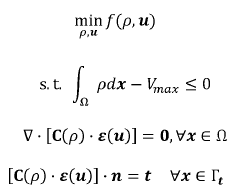
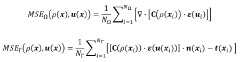
- A novel framework using deep learning neural networks (DNNs) to output density and displacement fields, trained with a loss function that includes design constraints, allowing for simultaneous analysis and design without the need for a finite element mesh, leveraging the capabilities of PINNs to eliminate the requirement for discrete element meshes.


Automated artificial intelligence topology generation based on source data
PatentPendingUS20250068930A1
Innovation
- The development of an AI-based auto-topology generating infrastructure that automatically creates multiple topology frames based on user input and source data, allowing for the automation of complex tasks with minimal user involvement, by identifying and utilizing the best AI and support processing nodes for each frame.


Computational Resource Requirements and Constraints
Implementing AI-driven topology optimization in robotics presents significant computational challenges that must be carefully addressed for successful deployment. The computational complexity of topology optimization algorithms, particularly when enhanced with AI techniques, requires substantial processing power. High-performance computing (HPC) systems with multi-core processors or GPU acceleration are typically necessary to handle the intensive calculations involved in iterative optimization processes. For real-time applications in robotics, dedicated hardware accelerators such as TPUs (Tensor Processing Units) or FPGAs (Field-Programmable Gate Arrays) may be required to achieve acceptable performance levels.
Memory requirements represent another critical constraint, as topology optimization algorithms often work with large datasets representing complex 3D structures and their physical properties. The memory footprint increases substantially when incorporating machine learning models, particularly deep neural networks that may contain millions of parameters. Organizations implementing these systems must carefully balance memory allocation between the optimization algorithms and the AI components to prevent performance bottlenecks.
Scalability considerations become paramount when deploying these systems across different robotic platforms. Cloud computing resources may offer a solution for more complex optimizations that exceed the capabilities of onboard systems, though this introduces latency concerns that must be evaluated against real-time operation requirements. Edge computing architectures that bring computational resources closer to the robots can help mitigate these latency issues while still providing sufficient processing power.
Energy efficiency emerges as a significant constraint, particularly for mobile robotic systems with limited power supplies. The computational intensity of AI-driven topology optimization can rapidly deplete battery reserves, necessitating careful power management strategies. This may involve selective activation of optimization routines only when necessary, or implementation of model compression techniques such as pruning and quantization to reduce computational demands without significantly sacrificing performance quality.
Integration with existing robotic control systems presents additional computational challenges. The optimization algorithms must be efficiently synchronized with sensing, perception, and actuation systems, often requiring careful resource allocation to prevent interference with critical control functions. Real-time operating systems (RTOS) may be necessary to ensure deterministic performance and appropriate prioritization of computational tasks.
Cost considerations cannot be overlooked, as high-performance computing resources represent a significant investment. Organizations must evaluate the trade-offs between computational capabilities and financial constraints, potentially exploring options such as time-sharing of resources or incremental implementation approaches that allow for gradual scaling of computational infrastructure as needs evolve.
Memory requirements represent another critical constraint, as topology optimization algorithms often work with large datasets representing complex 3D structures and their physical properties. The memory footprint increases substantially when incorporating machine learning models, particularly deep neural networks that may contain millions of parameters. Organizations implementing these systems must carefully balance memory allocation between the optimization algorithms and the AI components to prevent performance bottlenecks.
Scalability considerations become paramount when deploying these systems across different robotic platforms. Cloud computing resources may offer a solution for more complex optimizations that exceed the capabilities of onboard systems, though this introduces latency concerns that must be evaluated against real-time operation requirements. Edge computing architectures that bring computational resources closer to the robots can help mitigate these latency issues while still providing sufficient processing power.
Energy efficiency emerges as a significant constraint, particularly for mobile robotic systems with limited power supplies. The computational intensity of AI-driven topology optimization can rapidly deplete battery reserves, necessitating careful power management strategies. This may involve selective activation of optimization routines only when necessary, or implementation of model compression techniques such as pruning and quantization to reduce computational demands without significantly sacrificing performance quality.
Integration with existing robotic control systems presents additional computational challenges. The optimization algorithms must be efficiently synchronized with sensing, perception, and actuation systems, often requiring careful resource allocation to prevent interference with critical control functions. Real-time operating systems (RTOS) may be necessary to ensure deterministic performance and appropriate prioritization of computational tasks.
Cost considerations cannot be overlooked, as high-performance computing resources represent a significant investment. Organizations must evaluate the trade-offs between computational capabilities and financial constraints, potentially exploring options such as time-sharing of resources or incremental implementation approaches that allow for gradual scaling of computational infrastructure as needs evolve.
Manufacturing Feasibility of AI-Optimized Robotic Components
The manufacturing feasibility of AI-optimized robotic components represents a critical junction between theoretical design optimization and practical implementation. When AI-driven topology optimization generates novel robotic structures, manufacturers face significant challenges in translating these complex, often organic designs into physical components.
Traditional manufacturing methods like CNC machining and injection molding struggle with the intricate geometries that AI optimization typically produces. These conventional processes impose design constraints that can negate the performance benefits identified through topology optimization algorithms. The non-uniform, complex structures with internal cavities and variable wall thicknesses often exceed the capabilities of traditional manufacturing techniques.
Additive manufacturing technologies, particularly metal 3D printing processes like Selective Laser Melting (SLM) and Direct Metal Laser Sintering (DMLS), have emerged as primary enablers for producing AI-optimized robotic components. These technologies can fabricate complex geometries with minimal design constraints, allowing the realization of optimized structures that would be impossible to manufacture through conventional means.
Material considerations present another significant challenge. While polymer-based components can be readily produced using various 3D printing technologies, high-performance robotic applications often require metal components with specific mechanical properties. The material selection must balance optimization benefits with manufacturability, post-processing requirements, and end-use performance characteristics.
Post-processing requirements for AI-optimized components can be extensive and costly. Support structure removal, surface finishing, heat treatment, and precision machining of critical interfaces often add significant time and expense to the manufacturing process. These factors must be considered during the optimization phase to ensure designs remain manufacturable within reasonable cost parameters.
Quality assurance presents unique challenges for these complex components. Traditional inspection methods may be insufficient for verifying internal features and complex geometries. Advanced techniques such as CT scanning become necessary to validate the integrity of manufactured parts against the optimized design intent.
Cost implications remain a significant barrier to widespread adoption. While the performance benefits of AI-optimized components can be substantial, the increased manufacturing complexity and specialized equipment requirements often result in higher production costs compared to conventional designs. This cost premium must be justified by corresponding performance improvements or weight reductions.
Scalability considerations are essential for industrial implementation. While producing prototype quantities of optimized components is feasible, scaling to mass production presents challenges in maintaining consistency, quality, and economic viability across larger production volumes.
Traditional manufacturing methods like CNC machining and injection molding struggle with the intricate geometries that AI optimization typically produces. These conventional processes impose design constraints that can negate the performance benefits identified through topology optimization algorithms. The non-uniform, complex structures with internal cavities and variable wall thicknesses often exceed the capabilities of traditional manufacturing techniques.
Additive manufacturing technologies, particularly metal 3D printing processes like Selective Laser Melting (SLM) and Direct Metal Laser Sintering (DMLS), have emerged as primary enablers for producing AI-optimized robotic components. These technologies can fabricate complex geometries with minimal design constraints, allowing the realization of optimized structures that would be impossible to manufacture through conventional means.
Material considerations present another significant challenge. While polymer-based components can be readily produced using various 3D printing technologies, high-performance robotic applications often require metal components with specific mechanical properties. The material selection must balance optimization benefits with manufacturability, post-processing requirements, and end-use performance characteristics.
Post-processing requirements for AI-optimized components can be extensive and costly. Support structure removal, surface finishing, heat treatment, and precision machining of critical interfaces often add significant time and expense to the manufacturing process. These factors must be considered during the optimization phase to ensure designs remain manufacturable within reasonable cost parameters.
Quality assurance presents unique challenges for these complex components. Traditional inspection methods may be insufficient for verifying internal features and complex geometries. Advanced techniques such as CT scanning become necessary to validate the integrity of manufactured parts against the optimized design intent.
Cost implications remain a significant barrier to widespread adoption. While the performance benefits of AI-optimized components can be substantial, the increased manufacturing complexity and specialized equipment requirements often result in higher production costs compared to conventional designs. This cost premium must be justified by corresponding performance improvements or weight reductions.
Scalability considerations are essential for industrial implementation. While producing prototype quantities of optimized components is feasible, scaling to mass production presents challenges in maintaining consistency, quality, and economic viability across larger production volumes.
Unlock deeper insights with PatSnap Eureka Quick Research — get a full tech report to explore trends and direct your research. Try now!
Generate Your Research Report Instantly with AI Agent
Supercharge your innovation with PatSnap Eureka AI Agent Platform!