How to Reduce Manufacturing Costs Using Topology Optimization Techniques
SEP 16, 202510 MIN READ
Generate Your Research Report Instantly with AI Agent
PatSnap Eureka helps you evaluate technical feasibility & market potential.
Topology Optimization Background and Objectives
Topology optimization has emerged as a revolutionary approach in engineering design, evolving from theoretical mathematical concepts in the 1980s to becoming an essential tool in modern manufacturing. This computational method determines the optimal material distribution within a given design space, subject to specified constraints and load conditions, ultimately creating structures that maximize performance while minimizing material usage. The evolution of topology optimization has been closely linked with advancements in computational power, allowing for increasingly complex simulations and more refined results over the past four decades.
The fundamental principle behind topology optimization involves removing material from areas where it contributes least to structural performance, resulting in organic, often lattice-like structures that would be impossible to conceive through traditional design methods. Initially limited to academic research, this technology has progressively transitioned into practical industrial applications, particularly in aerospace, automotive, and medical device manufacturing where weight reduction directly translates to cost savings and performance improvements.
Recent technological advancements have significantly expanded the capabilities of topology optimization. The integration with additive manufacturing technologies has been particularly transformative, as 3D printing enables the production of complex geometries that were previously impossible to manufacture. This synergy between design optimization and manufacturing capability represents a paradigm shift in how products are conceptualized and produced, moving from design-for-manufacturing to manufacturing-for-design approaches.
The primary objective of implementing topology optimization in manufacturing processes is multifaceted. First, it aims to substantially reduce material consumption—often achieving 30-50% material savings compared to traditional designs—which directly lowers raw material costs. Second, it seeks to decrease production time and energy requirements through the creation of lighter components that require less processing. Third, it targets improved product performance characteristics such as enhanced strength-to-weight ratios, better thermal management, and optimized acoustic properties.
Looking forward, the trajectory of topology optimization is moving toward multi-physics applications, where structural considerations are simultaneously optimized alongside thermal, fluid dynamic, and electromagnetic properties. This holistic approach promises to deliver even greater manufacturing efficiencies by addressing multiple performance criteria in a single design process. Additionally, the integration of machine learning algorithms is beginning to accelerate optimization processes and uncover novel design solutions that human engineers might not consider.
The ultimate goal of topology optimization in manufacturing is to establish a seamless digital thread from conceptual design through production, creating a more agile, resource-efficient, and cost-effective manufacturing ecosystem that can rapidly adapt to changing market demands while minimizing environmental impact.
The fundamental principle behind topology optimization involves removing material from areas where it contributes least to structural performance, resulting in organic, often lattice-like structures that would be impossible to conceive through traditional design methods. Initially limited to academic research, this technology has progressively transitioned into practical industrial applications, particularly in aerospace, automotive, and medical device manufacturing where weight reduction directly translates to cost savings and performance improvements.
Recent technological advancements have significantly expanded the capabilities of topology optimization. The integration with additive manufacturing technologies has been particularly transformative, as 3D printing enables the production of complex geometries that were previously impossible to manufacture. This synergy between design optimization and manufacturing capability represents a paradigm shift in how products are conceptualized and produced, moving from design-for-manufacturing to manufacturing-for-design approaches.
The primary objective of implementing topology optimization in manufacturing processes is multifaceted. First, it aims to substantially reduce material consumption—often achieving 30-50% material savings compared to traditional designs—which directly lowers raw material costs. Second, it seeks to decrease production time and energy requirements through the creation of lighter components that require less processing. Third, it targets improved product performance characteristics such as enhanced strength-to-weight ratios, better thermal management, and optimized acoustic properties.
Looking forward, the trajectory of topology optimization is moving toward multi-physics applications, where structural considerations are simultaneously optimized alongside thermal, fluid dynamic, and electromagnetic properties. This holistic approach promises to deliver even greater manufacturing efficiencies by addressing multiple performance criteria in a single design process. Additionally, the integration of machine learning algorithms is beginning to accelerate optimization processes and uncover novel design solutions that human engineers might not consider.
The ultimate goal of topology optimization in manufacturing is to establish a seamless digital thread from conceptual design through production, creating a more agile, resource-efficient, and cost-effective manufacturing ecosystem that can rapidly adapt to changing market demands while minimizing environmental impact.
Market Demand for Cost-Effective Manufacturing Solutions
The global manufacturing industry is experiencing a significant shift towards cost-effective solutions, driven by increasing competitive pressures and economic uncertainties. Market research indicates that manufacturers across various sectors are actively seeking technologies that can reduce production costs while maintaining or improving product quality and performance. Topology optimization techniques have emerged as a promising solution in this landscape, with the market for such technologies projected to grow substantially over the next decade.
Manufacturing cost reduction has become a critical priority for businesses worldwide, particularly in industries with high material costs such as aerospace, automotive, and medical devices. A recent industry survey revealed that over 80% of manufacturing executives consider cost reduction as one of their top three strategic priorities. This demand is further amplified by the rising costs of raw materials, energy, and labor, which have collectively increased manufacturing overhead by approximately 15% in the past five years.
The market for topology optimization solutions is being driven by several key factors. First, there is growing pressure to reduce material usage without compromising structural integrity, especially as sustainability concerns become more prominent in corporate agendas. Second, the need for lightweight components in transportation industries to improve fuel efficiency and reduce emissions has created a specific demand for optimization technologies. Third, the increasing complexity of product designs requires more sophisticated approaches to manufacturing that can balance cost, performance, and manufacturability.
Regional analysis shows varying levels of adoption and demand. North America and Europe currently lead in the implementation of advanced manufacturing optimization techniques, primarily due to their established high-value manufacturing sectors and greater R&D investments. However, the Asia-Pacific region is showing the fastest growth rate in adoption, driven by rapid industrialization and the presence of large-scale manufacturing operations seeking competitive advantages.
Industry-specific demand patterns are also emerging. The aerospace sector shows the highest willingness to invest in topology optimization technologies, motivated by the substantial cost savings potential in reducing material usage for expensive alloys. The automotive industry follows closely, particularly with the transition to electric vehicles creating new design and manufacturing challenges. Medical device manufacturing represents a growing segment, where optimization techniques can address the need for customized, complex geometries while controlling production costs.
Customer expectations are evolving alongside these market trends. Manufacturers are increasingly seeking integrated solutions that combine topology optimization software with manufacturing process simulation, allowing for a more holistic approach to cost reduction. There is also growing demand for solutions that can be easily implemented within existing production workflows, with minimal disruption to operations and limited requirements for specialized expertise.
Manufacturing cost reduction has become a critical priority for businesses worldwide, particularly in industries with high material costs such as aerospace, automotive, and medical devices. A recent industry survey revealed that over 80% of manufacturing executives consider cost reduction as one of their top three strategic priorities. This demand is further amplified by the rising costs of raw materials, energy, and labor, which have collectively increased manufacturing overhead by approximately 15% in the past five years.
The market for topology optimization solutions is being driven by several key factors. First, there is growing pressure to reduce material usage without compromising structural integrity, especially as sustainability concerns become more prominent in corporate agendas. Second, the need for lightweight components in transportation industries to improve fuel efficiency and reduce emissions has created a specific demand for optimization technologies. Third, the increasing complexity of product designs requires more sophisticated approaches to manufacturing that can balance cost, performance, and manufacturability.
Regional analysis shows varying levels of adoption and demand. North America and Europe currently lead in the implementation of advanced manufacturing optimization techniques, primarily due to their established high-value manufacturing sectors and greater R&D investments. However, the Asia-Pacific region is showing the fastest growth rate in adoption, driven by rapid industrialization and the presence of large-scale manufacturing operations seeking competitive advantages.
Industry-specific demand patterns are also emerging. The aerospace sector shows the highest willingness to invest in topology optimization technologies, motivated by the substantial cost savings potential in reducing material usage for expensive alloys. The automotive industry follows closely, particularly with the transition to electric vehicles creating new design and manufacturing challenges. Medical device manufacturing represents a growing segment, where optimization techniques can address the need for customized, complex geometries while controlling production costs.
Customer expectations are evolving alongside these market trends. Manufacturers are increasingly seeking integrated solutions that combine topology optimization software with manufacturing process simulation, allowing for a more holistic approach to cost reduction. There is also growing demand for solutions that can be easily implemented within existing production workflows, with minimal disruption to operations and limited requirements for specialized expertise.
Current State and Challenges in Topology Optimization
Topology optimization has emerged as a powerful computational design methodology in modern manufacturing, yet its global implementation remains uneven. In developed economies, approximately 35% of manufacturing enterprises have adopted some form of topology optimization, while developing regions show adoption rates below 15%. This digital divide reflects not only technological access disparities but also varying levels of expertise and infrastructure necessary to implement these advanced techniques.
The current state of topology optimization is characterized by significant advancements in algorithmic efficiency and integration capabilities. Commercial software solutions like Altair OptiStruct, ANSYS Mechanical, and Siemens NX have made topology optimization more accessible to engineering teams. These platforms now offer more intuitive interfaces and better integration with traditional CAD/CAM workflows, reducing the technical barriers to implementation.
Despite these improvements, several critical challenges persist in the widespread adoption of topology optimization for cost reduction. Computational intensity remains a significant obstacle, with complex optimization problems requiring substantial processing power and time. For small to medium enterprises, this computational burden often translates to prohibitive infrastructure costs or extended design cycles that may offset potential manufacturing savings.
Manufacturing constraints represent another major challenge. While topology optimization algorithms can generate theoretically optimal designs, these often include complex geometries that are difficult or impossible to produce using conventional manufacturing methods. The gap between optimized designs and manufacturability creates a practical limitation that reduces the real-world cost benefits of topology optimization.
Knowledge barriers constitute a third significant challenge. The effective implementation of topology optimization requires specialized expertise in both computational mechanics and manufacturing processes. The shortage of professionals with this interdisciplinary knowledge base limits adoption, particularly in regions with less developed technical education systems.
Interoperability issues between topology optimization software and downstream manufacturing systems present additional complications. The translation of optimized designs into manufacturing instructions often requires substantial manual intervention, introducing inefficiencies and potential errors that can negate cost advantages.
Regulatory and certification challenges further complicate adoption in highly regulated industries such as aerospace and medical devices. Novel designs generated through topology optimization may require extensive testing and validation to meet safety standards, adding time and cost to the development process.
The current state of topology optimization is characterized by significant advancements in algorithmic efficiency and integration capabilities. Commercial software solutions like Altair OptiStruct, ANSYS Mechanical, and Siemens NX have made topology optimization more accessible to engineering teams. These platforms now offer more intuitive interfaces and better integration with traditional CAD/CAM workflows, reducing the technical barriers to implementation.
Despite these improvements, several critical challenges persist in the widespread adoption of topology optimization for cost reduction. Computational intensity remains a significant obstacle, with complex optimization problems requiring substantial processing power and time. For small to medium enterprises, this computational burden often translates to prohibitive infrastructure costs or extended design cycles that may offset potential manufacturing savings.
Manufacturing constraints represent another major challenge. While topology optimization algorithms can generate theoretically optimal designs, these often include complex geometries that are difficult or impossible to produce using conventional manufacturing methods. The gap between optimized designs and manufacturability creates a practical limitation that reduces the real-world cost benefits of topology optimization.
Knowledge barriers constitute a third significant challenge. The effective implementation of topology optimization requires specialized expertise in both computational mechanics and manufacturing processes. The shortage of professionals with this interdisciplinary knowledge base limits adoption, particularly in regions with less developed technical education systems.
Interoperability issues between topology optimization software and downstream manufacturing systems present additional complications. The translation of optimized designs into manufacturing instructions often requires substantial manual intervention, introducing inefficiencies and potential errors that can negate cost advantages.
Regulatory and certification challenges further complicate adoption in highly regulated industries such as aerospace and medical devices. Novel designs generated through topology optimization may require extensive testing and validation to meet safety standards, adding time and cost to the development process.
Current Topology Optimization Methods for Cost Reduction
01 Cost-effective topology optimization methods
Various methods have been developed to perform topology optimization while considering manufacturing costs. These approaches integrate cost factors directly into the optimization algorithms, allowing designers to balance performance requirements with economic constraints. The methods include mathematical models that quantify production expenses, computational techniques that evaluate cost-performance trade-offs, and algorithms that automatically adjust designs to minimize manufacturing expenses while maintaining structural integrity.- Cost-effective topology optimization methods: Various methods have been developed to perform topology optimization while minimizing manufacturing costs. These approaches include algorithms that consider material usage, production time, and resource allocation during the design phase. By integrating cost parameters directly into the optimization process, these techniques can generate designs that balance performance requirements with economic constraints, resulting in more commercially viable products.
- Additive manufacturing optimization for cost reduction: Topology optimization techniques specifically tailored for additive manufacturing processes can significantly reduce production costs. These methods consider factors such as build orientation, support structure minimization, and material usage efficiency. By optimizing designs for 3D printing technologies, manufacturers can decrease material waste, energy consumption, and post-processing requirements, leading to overall cost savings while maintaining structural performance.
- Multi-objective optimization balancing performance and cost: Multi-objective topology optimization approaches enable designers to simultaneously consider both performance metrics and manufacturing costs. These techniques employ algorithms that generate Pareto-optimal solutions, allowing engineers to evaluate trade-offs between structural efficiency, material usage, and production expenses. By visualizing these relationships, designers can select the most appropriate solution based on project-specific priorities and budget constraints.
- Manufacturing constraint integration for cost-efficient designs: Incorporating manufacturing constraints directly into topology optimization workflows helps create designs that are not only structurally efficient but also economical to produce. These methods account for limitations of specific manufacturing processes, such as minimum feature sizes, tool accessibility, and machining directions. By ensuring designs are manufacturable without expensive modifications, these approaches reduce post-optimization redesign efforts and associated costs.
- AI and machine learning for cost-optimized topology design: Artificial intelligence and machine learning techniques are being applied to topology optimization to create more cost-effective designs. These approaches use data from previous manufacturing experiences to predict production costs and identify potential manufacturing challenges. By leveraging computational intelligence to navigate complex design spaces, these methods can discover non-intuitive solutions that reduce material usage, simplify manufacturing processes, and lower overall production expenses.
02 Additive manufacturing optimization for cost reduction
Topology optimization techniques specifically tailored for additive manufacturing processes can significantly reduce production costs. These techniques consider the unique capabilities and constraints of 3D printing technologies, optimizing material usage, print time, and support structure requirements. By designing components specifically for additive manufacturing, unnecessary material consumption is eliminated, build orientation is optimized, and post-processing requirements are minimized, resulting in lower overall manufacturing costs.Expand Specific Solutions03 Multi-objective optimization balancing performance and cost
Multi-objective topology optimization approaches simultaneously consider both performance metrics and manufacturing costs. These methods employ algorithms that generate Pareto-optimal solutions, allowing engineers to evaluate trade-offs between structural performance and production expenses. By incorporating manufacturing cost models directly into the optimization process, designers can make informed decisions about design compromises that achieve acceptable performance at minimal cost.Expand Specific Solutions04 Manufacturing constraint integration for cost-efficient designs
Incorporating manufacturing constraints directly into topology optimization algorithms produces designs that are inherently more cost-effective to produce. These approaches consider fabrication limitations such as minimum feature sizes, tool accessibility, and machining directions during the optimization process. By ensuring designs are manufacturable without expensive modifications or specialized processes, production costs are significantly reduced while maintaining optimal performance characteristics.Expand Specific Solutions05 Digital twin and simulation-based cost optimization
Digital twin technology and advanced simulation techniques enable comprehensive cost analysis throughout the topology optimization process. These approaches create virtual representations of both the product and manufacturing processes, allowing for accurate prediction of production expenses before physical prototyping. By simulating various manufacturing scenarios and their associated costs, designers can identify optimal design configurations that minimize expenses while meeting performance requirements.Expand Specific Solutions
Leading Companies and Research Institutions in the Field
Topology optimization techniques for manufacturing cost reduction are gaining momentum in an industry transitioning from early adoption to mainstream implementation. The market is expanding rapidly, projected to reach significant scale as manufacturers seek efficiency gains. Leading technology providers like Siemens, Autodesk, Dassault Systèmes, and ANSYS have developed mature solutions integrating topology optimization into their CAD/CAE platforms. Academic institutions including Georgia Tech, Zhejiang University, and Dalian University of Technology are advancing theoretical frameworks, while industrial players such as Honda, Toyota, and Caterpillar are implementing these techniques to achieve tangible cost reductions in material usage, production time, and assembly complexity while maintaining structural performance.
Siemens AG
Technical Solution: Siemens has developed an advanced topology optimization platform called NX Topology Optimizer that integrates with their CAD/CAM/CAE software suite. Their approach combines generative design with manufacturing constraints to create optimized components that can be directly manufactured. The system employs multi-physics simulations considering structural, thermal, and fluid dynamics simultaneously to achieve holistic optimization[1]. Siemens' solution incorporates lattice structures and advanced meshing techniques that reduce material usage by up to 40% while maintaining or improving performance characteristics[2]. Their platform also features automated design validation tools that ensure optimized components meet all engineering requirements before manufacturing, significantly reducing development cycles[3]. Siemens has implemented machine learning algorithms that learn from previous optimization results to suggest better initial designs for new components, accelerating the convergence to optimal solutions.
Strengths: Comprehensive integration with existing CAD/CAM workflows enables seamless transition from design to manufacturing. Multi-physics capabilities provide more realistic optimization scenarios. Weaknesses: The system requires significant computational resources for complex optimizations, and the learning curve for effective implementation can be steep for new users.
Autodesk, Inc.
Technical Solution: Autodesk has pioneered generative design through their Fusion 360 platform, which incorporates topology optimization as a core feature. Their approach allows engineers to define functional requirements and manufacturing constraints, then algorithmically explores thousands of design alternatives to identify optimal solutions. Autodesk's system employs cloud computing to process complex calculations, enabling even small businesses to access advanced optimization capabilities[1]. Their technology incorporates manufacturing-aware constraints that ensure designs are optimized not just for performance but also for specific manufacturing methods like CNC machining, 3D printing, or casting[2]. Autodesk has demonstrated cost reductions of 20-50% in various case studies through material reduction and manufacturing process optimization[3]. Their platform also features an integrated simulation environment that allows immediate validation of optimized designs against real-world conditions, reducing the need for physical prototyping.
Strengths: Cloud-based processing makes advanced optimization accessible to companies of all sizes. Strong integration with multiple manufacturing methods ensures practical, producible designs. Weaknesses: Subscription-based pricing model may increase long-term costs, and optimization results sometimes require significant manual refinement before manufacturing.
Key Algorithms and Software Tools Analysis
Structural design using finite-element analysis
PatentPendingUS20230315947A1
Innovation
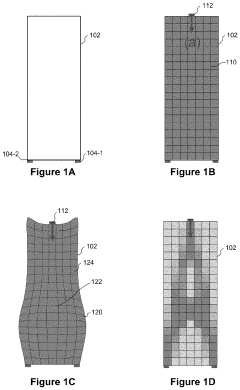
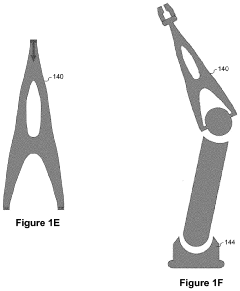
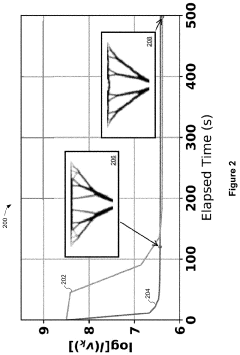
- The approach reformulates the problem as a bilevel optimization using a first-order algorithm and the Solid Isotropic Material with Penalization (SIMP) model, allowing for approximate solutions and reducing iterative costs, enabling faster design updates and convergence to locally optimal structures.

Method for structural optimization of a design and cost of a physical object
PatentActiveUS12124995B2
Innovation
- A computer-implemented method that uses a cluster-based finite difference approach to integrate manufacturing cost models into the topology optimization process, allowing for iterative adjustments to material density based on analytical derivatives of both structural performance and cost, thereby optimizing design for reduced manufacturing costs.


Material Selection Strategies for Optimized Designs
Material selection is a critical component in the successful implementation of topology optimization for cost reduction in manufacturing. The strategic selection of materials can significantly impact both the performance and economic viability of optimized designs. When implementing topology optimization techniques, engineers must consider not only the mechanical properties of materials but also their cost, availability, and processability.
Traditional manufacturing often relies on homogeneous materials throughout components, which frequently results in overengineering and material waste. By contrast, topology optimization enables the strategic use of different materials in specific regions of a component based on stress distribution and functional requirements. This multi-material approach allows for high-performance materials to be allocated only where necessary, while using more cost-effective alternatives elsewhere.
Advanced composite materials present particularly promising opportunities for optimized designs. These materials offer excellent strength-to-weight ratios and can be tailored to provide directional properties that align with load paths identified through topology optimization. However, the selection process must balance these performance benefits against potentially higher material costs and more complex manufacturing processes.
Lightweight alloys, such as aluminum and titanium variants, have become increasingly popular in topology-optimized designs, especially in aerospace and automotive applications. These materials offer significant weight reduction while maintaining necessary structural integrity, though their selection must be carefully evaluated against cost constraints and specific application requirements.
Additive manufacturing compatibility has emerged as a crucial consideration in material selection for topology-optimized designs. Materials that perform well in additive processes can fully leverage the geometric freedom offered by topology optimization. Polymer-based materials, including engineering thermoplastics and reinforced composites, provide cost-effective solutions for less structurally demanding applications while offering excellent design flexibility.
Material recyclability and sustainability factors are gaining importance in selection strategies. Materials that can be easily recycled or repurposed at end-of-life contribute to overall cost reduction through improved lifecycle economics and compliance with increasingly stringent environmental regulations. This consideration is particularly relevant for industries facing extended producer responsibility requirements.
The integration of simulation tools that incorporate material properties, manufacturing constraints, and cost factors has revolutionized the material selection process. These tools enable engineers to rapidly evaluate multiple material options within the topology optimization workflow, identifying optimal combinations that balance performance requirements with manufacturing cost objectives.
Traditional manufacturing often relies on homogeneous materials throughout components, which frequently results in overengineering and material waste. By contrast, topology optimization enables the strategic use of different materials in specific regions of a component based on stress distribution and functional requirements. This multi-material approach allows for high-performance materials to be allocated only where necessary, while using more cost-effective alternatives elsewhere.
Advanced composite materials present particularly promising opportunities for optimized designs. These materials offer excellent strength-to-weight ratios and can be tailored to provide directional properties that align with load paths identified through topology optimization. However, the selection process must balance these performance benefits against potentially higher material costs and more complex manufacturing processes.
Lightweight alloys, such as aluminum and titanium variants, have become increasingly popular in topology-optimized designs, especially in aerospace and automotive applications. These materials offer significant weight reduction while maintaining necessary structural integrity, though their selection must be carefully evaluated against cost constraints and specific application requirements.
Additive manufacturing compatibility has emerged as a crucial consideration in material selection for topology-optimized designs. Materials that perform well in additive processes can fully leverage the geometric freedom offered by topology optimization. Polymer-based materials, including engineering thermoplastics and reinforced composites, provide cost-effective solutions for less structurally demanding applications while offering excellent design flexibility.
Material recyclability and sustainability factors are gaining importance in selection strategies. Materials that can be easily recycled or repurposed at end-of-life contribute to overall cost reduction through improved lifecycle economics and compliance with increasingly stringent environmental regulations. This consideration is particularly relevant for industries facing extended producer responsibility requirements.
The integration of simulation tools that incorporate material properties, manufacturing constraints, and cost factors has revolutionized the material selection process. These tools enable engineers to rapidly evaluate multiple material options within the topology optimization workflow, identifying optimal combinations that balance performance requirements with manufacturing cost objectives.
Integration with Industry 4.0 Manufacturing Systems
The integration of topology optimization techniques with Industry 4.0 manufacturing systems represents a significant advancement in cost reduction strategies for modern manufacturing. Industry 4.0, characterized by smart factories, cyber-physical systems, and the Internet of Things (IoT), provides an ideal ecosystem for implementing and maximizing the benefits of topology optimization. This integration creates a synergistic relationship where data-driven decision making enhances the effectiveness of optimized designs.
Real-time data collection and analysis capabilities of Industry 4.0 systems enable continuous feedback loops that can inform topology optimization algorithms. Sensors embedded throughout the production process can monitor material usage, energy consumption, and production times, providing valuable inputs for optimization parameters. This data-driven approach allows for more accurate constraints and objectives in the optimization process, resulting in designs that are not only structurally efficient but also aligned with actual manufacturing capabilities and limitations.
Digital twins, a cornerstone of Industry 4.0, offer a virtual representation of physical manufacturing processes. When combined with topology optimization, these digital twins can simulate and predict how optimized components will perform under various manufacturing conditions before physical production begins. This predictive capability significantly reduces costly trial-and-error iterations and minimizes material waste, directly contributing to cost reduction objectives.
Additive manufacturing technologies, particularly 3D printing, have become increasingly integrated into Industry 4.0 environments. These technologies are uniquely suited to produce the complex geometries that often result from topology optimization processes. The combination of topology optimization algorithms with advanced 3D printing capabilities allows manufacturers to create components with previously impossible geometries that maximize strength while minimizing material usage.
Cloud computing infrastructure within Industry 4.0 systems provides the computational power necessary for running sophisticated topology optimization algorithms. This eliminates the need for expensive on-premises high-performance computing resources, democratizing access to advanced optimization techniques for manufacturers of all sizes. Cloud-based optimization platforms can also facilitate collaboration between design and manufacturing teams, streamlining the transition from optimized design to production.
Machine learning algorithms can enhance topology optimization by identifying patterns in manufacturing data that human engineers might miss. These algorithms can predict potential manufacturing issues with optimized designs and suggest modifications that maintain structural integrity while improving manufacturability. As these systems accumulate more data, their predictive capabilities become increasingly refined, leading to progressively more efficient optimization outcomes.
Real-time data collection and analysis capabilities of Industry 4.0 systems enable continuous feedback loops that can inform topology optimization algorithms. Sensors embedded throughout the production process can monitor material usage, energy consumption, and production times, providing valuable inputs for optimization parameters. This data-driven approach allows for more accurate constraints and objectives in the optimization process, resulting in designs that are not only structurally efficient but also aligned with actual manufacturing capabilities and limitations.
Digital twins, a cornerstone of Industry 4.0, offer a virtual representation of physical manufacturing processes. When combined with topology optimization, these digital twins can simulate and predict how optimized components will perform under various manufacturing conditions before physical production begins. This predictive capability significantly reduces costly trial-and-error iterations and minimizes material waste, directly contributing to cost reduction objectives.
Additive manufacturing technologies, particularly 3D printing, have become increasingly integrated into Industry 4.0 environments. These technologies are uniquely suited to produce the complex geometries that often result from topology optimization processes. The combination of topology optimization algorithms with advanced 3D printing capabilities allows manufacturers to create components with previously impossible geometries that maximize strength while minimizing material usage.
Cloud computing infrastructure within Industry 4.0 systems provides the computational power necessary for running sophisticated topology optimization algorithms. This eliminates the need for expensive on-premises high-performance computing resources, democratizing access to advanced optimization techniques for manufacturers of all sizes. Cloud-based optimization platforms can also facilitate collaboration between design and manufacturing teams, streamlining the transition from optimized design to production.
Machine learning algorithms can enhance topology optimization by identifying patterns in manufacturing data that human engineers might miss. These algorithms can predict potential manufacturing issues with optimized designs and suggest modifications that maintain structural integrity while improving manufacturability. As these systems accumulate more data, their predictive capabilities become increasingly refined, leading to progressively more efficient optimization outcomes.
Unlock deeper insights with PatSnap Eureka Quick Research — get a full tech report to explore trends and direct your research. Try now!
Generate Your Research Report Instantly with AI Agent
Supercharge your innovation with PatSnap Eureka AI Agent Platform!