
How to Test LS2 Engine Throttle Body's Response Time
SEP 4, 20259 MIN READ
Generate Your Research Report Instantly with AI Agent
Patsnap Eureka helps you evaluate technical feasibility & market potential.
LS2 Engine Throttle Body Technology Background and Objectives
The LS2 engine throttle body represents a critical component in General Motors' Gen IV small-block V8 engine family, introduced in 2005 as part of the company's performance vehicle lineup. This electronic throttle control system, also known as "drive-by-wire," replaced the traditional mechanical linkage between the accelerator pedal and throttle body, marking a significant technological advancement in engine management systems. The evolution of throttle body technology has progressed from purely mechanical systems to sophisticated electronic control units that optimize engine performance, fuel efficiency, and emissions control.
Response time testing for throttle bodies has become increasingly important as automotive manufacturers face stricter emissions regulations and consumer demands for improved drivability. The throttle body's ability to respond quickly and accurately to driver input directly impacts vehicle performance, fuel economy, and overall driving experience. Historical testing methodologies have evolved from basic mechanical measurements to sophisticated electronic monitoring systems that can detect millisecond-level response variations.
The primary technical objective in testing LS2 engine throttle body response time is to establish standardized measurement protocols that accurately quantify the time elapsed between electronic signal input and physical throttle plate movement. This includes evaluating both opening and closing response times under various operating conditions, such as different temperatures, voltage levels, and simulated load scenarios. Additionally, testing aims to identify potential failure modes, performance degradation patterns, and optimization opportunities.
Current industry standards typically require throttle response times below 100 milliseconds, with premium performance applications demanding even faster responses in the 50-70 millisecond range. Meeting these benchmarks requires precise testing methodologies that can isolate the throttle body's performance from other system variables. The technical goal is to develop testing procedures that are both repeatable and representative of real-world operating conditions.
Another critical objective is to understand the relationship between throttle response time and overall engine performance metrics, including torque delivery, emissions control, and fuel efficiency. This requires comprehensive testing that correlates throttle body behavior with downstream effects on engine operation, particularly during transient conditions such as rapid acceleration or deceleration events.
Looking forward, the technical trajectory points toward even more precise control systems with adaptive learning capabilities that can compensate for component wear, environmental variations, and changing driver behaviors. Testing methodologies must evolve accordingly to evaluate these advanced features and ensure they meet both regulatory requirements and performance expectations throughout the vehicle's operational lifetime.
Response time testing for throttle bodies has become increasingly important as automotive manufacturers face stricter emissions regulations and consumer demands for improved drivability. The throttle body's ability to respond quickly and accurately to driver input directly impacts vehicle performance, fuel economy, and overall driving experience. Historical testing methodologies have evolved from basic mechanical measurements to sophisticated electronic monitoring systems that can detect millisecond-level response variations.
The primary technical objective in testing LS2 engine throttle body response time is to establish standardized measurement protocols that accurately quantify the time elapsed between electronic signal input and physical throttle plate movement. This includes evaluating both opening and closing response times under various operating conditions, such as different temperatures, voltage levels, and simulated load scenarios. Additionally, testing aims to identify potential failure modes, performance degradation patterns, and optimization opportunities.
Current industry standards typically require throttle response times below 100 milliseconds, with premium performance applications demanding even faster responses in the 50-70 millisecond range. Meeting these benchmarks requires precise testing methodologies that can isolate the throttle body's performance from other system variables. The technical goal is to develop testing procedures that are both repeatable and representative of real-world operating conditions.
Another critical objective is to understand the relationship between throttle response time and overall engine performance metrics, including torque delivery, emissions control, and fuel efficiency. This requires comprehensive testing that correlates throttle body behavior with downstream effects on engine operation, particularly during transient conditions such as rapid acceleration or deceleration events.
Looking forward, the technical trajectory points toward even more precise control systems with adaptive learning capabilities that can compensate for component wear, environmental variations, and changing driver behaviors. Testing methodologies must evolve accordingly to evaluate these advanced features and ensure they meet both regulatory requirements and performance expectations throughout the vehicle's operational lifetime.
Market Requirements for Throttle Response Testing
The automotive industry has witnessed a growing demand for precise throttle response testing methodologies, particularly for high-performance engines like the LS2. This market requirement stems from multiple stakeholders including manufacturers, performance tuners, regulatory bodies, and end consumers, each with distinct needs and expectations regarding throttle response characteristics.
Vehicle manufacturers require comprehensive throttle response testing solutions to ensure their products meet increasingly stringent emissions standards while maintaining optimal performance characteristics. The ability to accurately measure and optimize throttle body response time directly impacts fuel efficiency ratings, emissions compliance, and overall engine performance metrics that influence market positioning and regulatory approval.
Performance aftermarket companies represent another significant market segment demanding advanced throttle response testing capabilities. These businesses develop and sell performance-enhancing modifications for LS2 engines and require precise measurement tools to validate their product claims and demonstrate tangible improvements in throttle response times, which often serve as key selling points for their offerings.
Racing teams and professional motorsport organizations constitute a specialized but influential market segment. For these users, even millisecond improvements in throttle response can translate to competitive advantages on the track. Their requirements typically focus on high-precision testing equipment capable of detecting minute variations in response characteristics under various operating conditions.
Consumer-facing automotive service centers increasingly offer throttle body cleaning and optimization services, creating demand for diagnostic tools that can demonstrate before-and-after performance improvements to justify service costs to customers. This market segment typically requires more affordable, user-friendly testing solutions that still provide reliable data.
Regulatory compliance represents another critical market driver, as emissions testing protocols in various jurisdictions increasingly incorporate throttle response parameters as part of their certification requirements. Testing equipment that aligns with these regulatory standards is essential for manufacturers seeking market approval.
The market also shows growing interest in throttle response testing solutions that integrate with broader vehicle diagnostic systems, allowing for comprehensive performance analysis rather than isolated throttle body evaluation. This trend reflects the increasing complexity of engine management systems and the interconnected nature of modern automotive performance optimization.
From a geographical perspective, North American and European markets currently demonstrate the highest demand for sophisticated LS2 throttle response testing equipment, corresponding to regions where performance vehicles utilizing these engines are most prevalent. However, emerging markets in Asia are showing accelerated growth as performance tuning culture expands globally.
Vehicle manufacturers require comprehensive throttle response testing solutions to ensure their products meet increasingly stringent emissions standards while maintaining optimal performance characteristics. The ability to accurately measure and optimize throttle body response time directly impacts fuel efficiency ratings, emissions compliance, and overall engine performance metrics that influence market positioning and regulatory approval.
Performance aftermarket companies represent another significant market segment demanding advanced throttle response testing capabilities. These businesses develop and sell performance-enhancing modifications for LS2 engines and require precise measurement tools to validate their product claims and demonstrate tangible improvements in throttle response times, which often serve as key selling points for their offerings.
Racing teams and professional motorsport organizations constitute a specialized but influential market segment. For these users, even millisecond improvements in throttle response can translate to competitive advantages on the track. Their requirements typically focus on high-precision testing equipment capable of detecting minute variations in response characteristics under various operating conditions.
Consumer-facing automotive service centers increasingly offer throttle body cleaning and optimization services, creating demand for diagnostic tools that can demonstrate before-and-after performance improvements to justify service costs to customers. This market segment typically requires more affordable, user-friendly testing solutions that still provide reliable data.
Regulatory compliance represents another critical market driver, as emissions testing protocols in various jurisdictions increasingly incorporate throttle response parameters as part of their certification requirements. Testing equipment that aligns with these regulatory standards is essential for manufacturers seeking market approval.
The market also shows growing interest in throttle response testing solutions that integrate with broader vehicle diagnostic systems, allowing for comprehensive performance analysis rather than isolated throttle body evaluation. This trend reflects the increasing complexity of engine management systems and the interconnected nature of modern automotive performance optimization.
From a geographical perspective, North American and European markets currently demonstrate the highest demand for sophisticated LS2 throttle response testing equipment, corresponding to regions where performance vehicles utilizing these engines are most prevalent. However, emerging markets in Asia are showing accelerated growth as performance tuning culture expands globally.
Current Testing Methods and Technical Challenges
The current testing methods for LS2 engine throttle body response time can be categorized into laboratory-based and field-based approaches. Laboratory testing typically employs specialized equipment such as dynamometers, oscilloscopes, and high-precision data acquisition systems to measure the time between signal input and physical throttle plate movement. These systems can detect response times down to milliseconds, providing highly accurate measurements under controlled conditions.
Standard laboratory protocols often include step-response testing, where a sudden change in throttle position command is introduced and the resulting movement is recorded. Frequency response testing is another common method, where sinusoidal input signals of varying frequencies are applied to evaluate the throttle body's dynamic performance across different operating conditions.
Field testing methods involve on-vehicle measurements using portable diagnostic equipment. These typically include OBD-II scanners with advanced data logging capabilities, aftermarket performance meters, and specialized throttle response testing tools. While less precise than laboratory methods, field testing provides valuable real-world performance data under actual driving conditions.
Despite these established methods, significant technical challenges persist in throttle body response time testing. One major challenge is the isolation of throttle body performance from other system components. The throttle response is influenced by multiple ECU parameters, sensor inputs, and mechanical factors, making it difficult to attribute response delays specifically to the throttle body itself.
Environmental factors present another substantial challenge. Temperature variations significantly affect throttle body performance, with cold-start conditions often resulting in slower response times due to increased mechanical resistance. Testing protocols must account for these variations to produce consistent, comparable results.
Signal noise and measurement accuracy limitations also complicate testing efforts. The electrical signals controlling throttle position can be subject to interference, while mechanical hysteresis in the throttle mechanism introduces variability in response characteristics. Advanced filtering techniques and statistical analysis are required to extract meaningful data from these noisy measurements.
Standardization remains an ongoing challenge in the industry. Different manufacturers employ varying test methodologies and performance criteria, making direct comparisons between throttle bodies difficult. The lack of universally accepted testing protocols has led to inconsistent reporting of response time specifications across the automotive industry.
Recent advancements in testing technology include real-time 3D motion capture systems for precise throttle plate movement analysis and machine learning algorithms that can identify subtle patterns in response behavior. These innovations are gradually addressing some of the longstanding challenges in throttle body performance evaluation.
Standard laboratory protocols often include step-response testing, where a sudden change in throttle position command is introduced and the resulting movement is recorded. Frequency response testing is another common method, where sinusoidal input signals of varying frequencies are applied to evaluate the throttle body's dynamic performance across different operating conditions.
Field testing methods involve on-vehicle measurements using portable diagnostic equipment. These typically include OBD-II scanners with advanced data logging capabilities, aftermarket performance meters, and specialized throttle response testing tools. While less precise than laboratory methods, field testing provides valuable real-world performance data under actual driving conditions.
Despite these established methods, significant technical challenges persist in throttle body response time testing. One major challenge is the isolation of throttle body performance from other system components. The throttle response is influenced by multiple ECU parameters, sensor inputs, and mechanical factors, making it difficult to attribute response delays specifically to the throttle body itself.
Environmental factors present another substantial challenge. Temperature variations significantly affect throttle body performance, with cold-start conditions often resulting in slower response times due to increased mechanical resistance. Testing protocols must account for these variations to produce consistent, comparable results.
Signal noise and measurement accuracy limitations also complicate testing efforts. The electrical signals controlling throttle position can be subject to interference, while mechanical hysteresis in the throttle mechanism introduces variability in response characteristics. Advanced filtering techniques and statistical analysis are required to extract meaningful data from these noisy measurements.
Standardization remains an ongoing challenge in the industry. Different manufacturers employ varying test methodologies and performance criteria, making direct comparisons between throttle bodies difficult. The lack of universally accepted testing protocols has led to inconsistent reporting of response time specifications across the automotive industry.
Recent advancements in testing technology include real-time 3D motion capture systems for precise throttle plate movement analysis and machine learning algorithms that can identify subtle patterns in response behavior. These innovations are gradually addressing some of the longstanding challenges in throttle body performance evaluation.
Current Throttle Body Response Time Testing Solutions
01 Electronic throttle control systems for LS2 engines
Electronic throttle control systems are used in LS2 engines to improve throttle response time. These systems replace traditional mechanical linkages with electronic sensors and actuators that can more precisely control the throttle body position. By using electronic controls, the engine management system can optimize throttle response based on various inputs such as accelerator pedal position, engine load, and vehicle speed, resulting in improved response times and overall engine performance.- Electronic throttle control systems for LS2 engines: Electronic throttle control systems are used in LS2 engines to improve throttle response time. These systems replace traditional mechanical linkages with electronic sensors and actuators that can more precisely control the throttle body position. By using electronic controls, the engine management system can optimize throttle response based on various parameters such as engine load, speed, and driver input, resulting in improved response times and overall engine performance.
- Throttle body design improvements for faster response: Specific design improvements to the throttle body itself can enhance response time in LS2 engines. These improvements include optimized airflow passages, reduced friction in the throttle plate mechanism, and improved throttle plate shapes. By reducing the mechanical resistance and improving airflow characteristics, these design enhancements allow the throttle body to respond more quickly to driver inputs, resulting in better engine responsiveness and performance.
- Sensor and actuator technology for throttle response: Advanced sensor and actuator technologies play a crucial role in improving throttle response time in LS2 engines. High-precision position sensors provide accurate feedback on throttle position, while fast-acting actuators quickly adjust the throttle plate. These technologies work together to minimize the delay between driver input and engine response, resulting in more responsive acceleration and better overall driving experience.
- Engine control unit calibration for throttle response: Calibration of the engine control unit (ECU) is essential for optimizing throttle response in LS2 engines. By fine-tuning the ECU parameters related to throttle control, engineers can reduce response delays and improve the relationship between pedal position and throttle opening. Advanced algorithms can anticipate driver intentions and adjust throttle response characteristics based on driving conditions, resulting in more predictable and responsive engine behavior.
- Integration of throttle control with transmission systems: The integration of throttle control with transmission systems can significantly improve overall response time in LS2 engines. By coordinating throttle position changes with transmission shift patterns, the system can maintain optimal engine performance during acceleration and gear changes. This integrated approach ensures that throttle response is matched to the current gear ratio and vehicle speed, providing smoother power delivery and improved drivability.
02 Throttle body design optimization for faster response
The physical design of the throttle body significantly impacts response time in LS2 engines. Optimized throttle body designs feature improved airflow characteristics, reduced friction in the throttle plate mechanism, and precision manufacturing tolerances. These design improvements minimize the lag between driver input and engine response, resulting in more immediate throttle response and better overall engine performance. Advanced materials and coatings can further reduce friction and wear in the throttle mechanism.Expand Specific Solutions03 Sensor and actuator improvements for throttle response
Advanced sensors and actuators play a crucial role in improving throttle response time in LS2 engines. High-precision throttle position sensors provide more accurate feedback to the engine control unit, while faster and more powerful actuators can move the throttle plate more quickly and precisely. These components work together to reduce the delay between driver input and throttle movement, resulting in improved response times and more precise throttle control under various operating conditions.Expand Specific Solutions04 Engine control unit calibration for throttle response
Calibration of the engine control unit (ECU) significantly affects throttle response in LS2 engines. Advanced algorithms and mapping techniques can be implemented to optimize the relationship between accelerator pedal input and throttle body position. These calibrations can be tailored to different driving modes, providing either smoother, more gradual response for everyday driving or more aggressive, immediate response for performance driving. Proper ECU calibration can substantially improve throttle response time without requiring hardware modifications.Expand Specific Solutions05 Integrated systems approach to throttle response improvement
An integrated systems approach combines multiple technologies to comprehensively improve throttle response in LS2 engines. This approach coordinates electronic throttle control with other engine systems such as fuel injection, ignition timing, and variable valve timing. By synchronizing these systems, the engine can respond more quickly and efficiently to driver inputs. Additionally, adaptive learning algorithms can continuously optimize throttle response based on driving patterns and conditions, providing consistent performance improvements over time.Expand Specific Solutions
Major Players in Engine Management System Testing
The LS2 engine throttle body response time testing market is in a growth phase, with increasing demand driven by automotive performance optimization and emissions control requirements. The market size is expanding due to the rising adoption of electronic throttle control systems in modern vehicles. Technologically, this field is moderately mature, with established players like Toyota, Honda, and Nissan leading in Asian markets, while Bosch and DENSO dominate the component manufacturing sector. Emerging competition comes from Chinese manufacturers such as Weichai Power, Dongfeng, and Changan Automobile, who are rapidly advancing their throttle response testing capabilities. Academic institutions like Southeast University and Zhejiang University are contributing significant research to improve testing methodologies and standards.
Robert Bosch GmbH
Technical Solution: Bosch has developed advanced electronic throttle body testing systems specifically designed for LS2 engines that utilize high-precision sensors and microcontrollers to measure response times with millisecond accuracy. Their testing methodology incorporates a closed-loop feedback system that simulates various engine load conditions while monitoring throttle plate movement in real-time. The system employs specialized software algorithms that can detect minute variations in throttle response, allowing for comprehensive performance analysis under different operating temperatures and voltage conditions. Bosch's approach includes both static and dynamic testing protocols, measuring not only initial response time but also tracking the complete motion profile of the throttle plate to identify potential mechanical or electrical issues that could affect drivability. Their testing equipment can simulate various driver inputs and environmental conditions to ensure throttle bodies meet OEM specifications across all operating parameters.
Strengths: Industry-leading precision with response time measurements accurate to within 0.1ms; comprehensive testing across multiple environmental conditions; integrated diagnostic capabilities that can identify specific failure modes. Weaknesses: Higher implementation cost compared to simpler testing solutions; requires specialized training for technicians; system complexity may lead to longer setup times for different engine variants.
DENSO Corp.
Technical Solution: DENSO has engineered a sophisticated throttle body testing platform specifically calibrated for LS2 engine applications that combines hardware and software solutions to evaluate response characteristics. Their system utilizes high-frequency sampling technology (up to 10kHz) to capture the precise movement profile of the throttle plate following command signals. DENSO's approach incorporates thermal chambers to test throttle body performance across the full operating temperature range (-40°C to 125°C), ensuring consistent response times under all conditions. The testing protocol includes both step-response and frequency-response measurements to characterize both the speed and accuracy of throttle positioning. Their proprietary software analyzes multiple parameters simultaneously, including response time, overshoot, settling time, and hysteresis, providing a comprehensive performance profile of each throttle body unit. DENSO's system also incorporates accelerated life testing capabilities to predict long-term reliability and performance degradation over time.
Strengths: Exceptional measurement resolution capable of detecting sub-millisecond variations in response time; comprehensive environmental testing capabilities; advanced data analytics for identifying performance trends across production batches. Weaknesses: Significant capital investment required for full implementation; complex calibration procedures needed for different engine variants; requires specialized technical expertise to interpret detailed test results.
Key Technical Innovations in Response Time Measurement
Response time test apparatus for a mass air flow sensor
PatentInactiveUS5307667A
Innovation
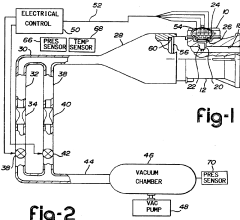
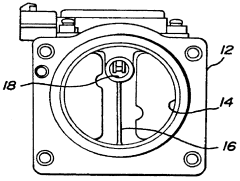
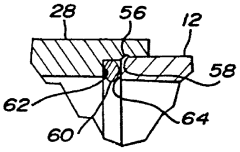
- An automated response time test apparatus using sonic nozzles to create controlled step changes in air flow, with electrical control to measure and compare the response time of the mass air flow sensor, ensuring it meets specification limits by accurately recording and computing the sensor's response time.
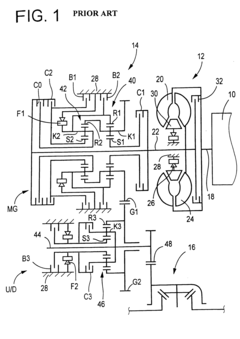
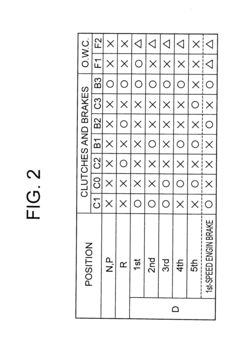
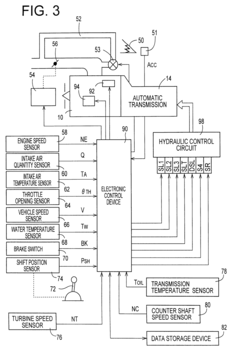
Apparatus for controlling vehicle drive system including drive power source and automatic transmission
PatentInactiveUS6735509B2
Innovation
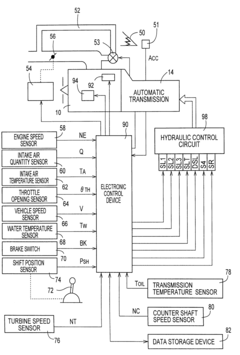
- A control apparatus that includes feedback control means to regulate the engaging force of the first frictional coupling device, with shifting-abnormality detecting means to identify racing or tie-up behaviors and learning compensation means to adjust the initial engaging force, and pre-synchronization output reducing means to manage the drive power source output.
Testing Equipment Calibration and Standardization
Accurate testing of the LS2 engine throttle body response time requires properly calibrated and standardized equipment to ensure reliable and reproducible results. The calibration process begins with establishing a reference standard for all measurement devices, including oscilloscopes, data acquisition systems, and specialized throttle position sensors. These instruments must be calibrated against certified reference standards traceable to national or international measurement standards such as those maintained by NIST (National Institute of Standards and Technology).
For throttle body response testing specifically, calibration should focus on temporal accuracy and precision. Oscilloscopes and data acquisition systems must be verified for timing accuracy, typically requiring calibration to within ±0.1ms or better to capture the millisecond-level response characteristics of modern electronic throttle bodies. Signal conditioning equipment requires verification of bandwidth capabilities, ensuring they can accurately capture the full frequency spectrum of throttle body operation without introducing phase shifts or amplitude distortions.
Standardization of testing protocols is equally critical to ensure consistency across different testing sessions and between different laboratories. This includes establishing standard environmental conditions for testing, with temperature control maintained at 23°C ±2°C and humidity levels between 40-60% to minimize variations in electronic component performance. Standardized power supply specifications must be implemented, typically requiring regulated DC power sources with less than 50mV ripple to eliminate power-related variables.
Test signal generation equipment requires particular attention, with calibrated function generators producing precisely defined step inputs and frequency sweeps. These generators should be verified for rise time accuracy, amplitude stability, and timing precision. For the LS2 throttle body specifically, calibration should account for the 12V operating environment and the particular electrical characteristics of the GM throttle control module.
Documentation of calibration procedures and results forms an essential component of the standardization process. Each piece of equipment should maintain a calibration record including calibration date, calibration constants, deviation from standards, and next calibration due date. Testing laboratories should implement a calibration schedule based on equipment stability, usage frequency, and manufacturer recommendations, typically ranging from 6-12 months for precision electronic test equipment.
Cross-validation between different measurement systems provides an additional verification layer, comparing results from alternative measurement approaches to identify systematic errors or calibration drift. This multi-method verification enhances confidence in the absolute accuracy of throttle response measurements beyond what can be achieved through individual instrument calibration alone.
For throttle body response testing specifically, calibration should focus on temporal accuracy and precision. Oscilloscopes and data acquisition systems must be verified for timing accuracy, typically requiring calibration to within ±0.1ms or better to capture the millisecond-level response characteristics of modern electronic throttle bodies. Signal conditioning equipment requires verification of bandwidth capabilities, ensuring they can accurately capture the full frequency spectrum of throttle body operation without introducing phase shifts or amplitude distortions.
Standardization of testing protocols is equally critical to ensure consistency across different testing sessions and between different laboratories. This includes establishing standard environmental conditions for testing, with temperature control maintained at 23°C ±2°C and humidity levels between 40-60% to minimize variations in electronic component performance. Standardized power supply specifications must be implemented, typically requiring regulated DC power sources with less than 50mV ripple to eliminate power-related variables.
Test signal generation equipment requires particular attention, with calibrated function generators producing precisely defined step inputs and frequency sweeps. These generators should be verified for rise time accuracy, amplitude stability, and timing precision. For the LS2 throttle body specifically, calibration should account for the 12V operating environment and the particular electrical characteristics of the GM throttle control module.
Documentation of calibration procedures and results forms an essential component of the standardization process. Each piece of equipment should maintain a calibration record including calibration date, calibration constants, deviation from standards, and next calibration due date. Testing laboratories should implement a calibration schedule based on equipment stability, usage frequency, and manufacturer recommendations, typically ranging from 6-12 months for precision electronic test equipment.
Cross-validation between different measurement systems provides an additional verification layer, comparing results from alternative measurement approaches to identify systematic errors or calibration drift. This multi-method verification enhances confidence in the absolute accuracy of throttle response measurements beyond what can be achieved through individual instrument calibration alone.
Environmental Factors Affecting Throttle Response Measurements
Environmental factors play a crucial role in the accuracy and reliability of throttle response measurements for the LS2 engine throttle body. Temperature variations significantly impact the performance characteristics of electronic throttle control systems. At lower temperatures (below 40°F/4°C), throttle bodies may exhibit delayed response times due to increased viscosity of lubricants and thermal contraction of components. Conversely, at elevated temperatures (above 100°F/38°C), electronic components may experience altered electrical properties, potentially affecting signal processing speed and actuator performance.
Humidity levels introduce another variable that can compromise test validity. High humidity environments (above 80% relative humidity) may lead to condensation on electronic components, potentially causing signal interference or short circuits in extreme cases. This moisture can degrade the quality of electrical connections and alter the resistance values in sensor circuits, resulting in inconsistent throttle response measurements.
Barometric pressure variations, particularly at different altitudes, affect the engine's air intake dynamics and consequently the throttle body's operational parameters. Testing conducted at high altitudes (above 5,000 feet) may show different response characteristics compared to sea-level measurements due to the lower air density. These differences must be normalized when comparing test results from different locations.
Electromagnetic interference (EMI) from nearby electronic equipment can significantly distort throttle position sensor signals and electronic control unit (ECU) communications. Testing facilities should implement proper shielding and maintain a controlled electromagnetic environment to ensure measurement consistency. Common sources of EMI include power tools, fluorescent lighting, and wireless communication devices operating in proximity to the test setup.
Vibration and mechanical stress represent additional environmental factors that can influence throttle response measurements. Engine vibration patterns vary with mounting configurations and test stand designs. Excessive vibration may induce mechanical resonance in throttle components or create micro-movements in electrical connections, leading to signal noise and inconsistent response time measurements.
Standardized testing protocols should specify acceptable ranges for these environmental parameters and include calibration procedures that account for their variations. Documentation of environmental conditions during testing is essential for result reproducibility and valid comparisons between different test sessions or facilities. Implementation of environmental control systems in testing facilities can significantly improve measurement consistency and reliability.
Humidity levels introduce another variable that can compromise test validity. High humidity environments (above 80% relative humidity) may lead to condensation on electronic components, potentially causing signal interference or short circuits in extreme cases. This moisture can degrade the quality of electrical connections and alter the resistance values in sensor circuits, resulting in inconsistent throttle response measurements.
Barometric pressure variations, particularly at different altitudes, affect the engine's air intake dynamics and consequently the throttle body's operational parameters. Testing conducted at high altitudes (above 5,000 feet) may show different response characteristics compared to sea-level measurements due to the lower air density. These differences must be normalized when comparing test results from different locations.
Electromagnetic interference (EMI) from nearby electronic equipment can significantly distort throttle position sensor signals and electronic control unit (ECU) communications. Testing facilities should implement proper shielding and maintain a controlled electromagnetic environment to ensure measurement consistency. Common sources of EMI include power tools, fluorescent lighting, and wireless communication devices operating in proximity to the test setup.
Vibration and mechanical stress represent additional environmental factors that can influence throttle response measurements. Engine vibration patterns vary with mounting configurations and test stand designs. Excessive vibration may induce mechanical resonance in throttle components or create micro-movements in electrical connections, leading to signal noise and inconsistent response time measurements.
Standardized testing protocols should specify acceptable ranges for these environmental parameters and include calibration procedures that account for their variations. Documentation of environmental conditions during testing is essential for result reproducibility and valid comparisons between different test sessions or facilities. Implementation of environmental control systems in testing facilities can significantly improve measurement consistency and reliability.
Unlock deeper insights with Patsnap Eureka Quick Research — get a full tech report to explore trends and direct your research. Try now!
Generate Your Research Report Instantly with AI Agent
Supercharge your innovation with Patsnap Eureka AI Agent Platform!