

Improve GC-MS Response for Polycyclic Aromatics
SEP 22, 20259 MIN READ
Generate Your Research Report Instantly with AI Agent
PatSnap Eureka helps you evaluate technical feasibility & market potential.
PAH Detection Background and Objectives
Polycyclic Aromatic Hydrocarbons (PAHs) represent a significant class of environmental pollutants with known carcinogenic and mutagenic properties. The detection and quantification of these compounds have been a critical focus in environmental monitoring, food safety, and public health protection for decades. Gas Chromatography-Mass Spectrometry (GC-MS) has emerged as the gold standard analytical technique for PAH analysis due to its exceptional sensitivity, selectivity, and ability to separate complex mixtures.
The historical development of PAH detection methods has evolved from rudimentary colorimetric techniques in the early 20th century to sophisticated instrumental analyses today. The 1970s marked a turning point with the introduction of GC-MS systems capable of detecting PAHs at parts-per-billion levels. Subsequent technological advancements have continuously improved detection limits, with modern systems achieving parts-per-trillion sensitivity for certain PAH compounds.
Despite these impressive capabilities, current GC-MS methodologies for PAH analysis face several persistent challenges. These include matrix interference effects, discrimination of high-molecular-weight PAHs during sample introduction, thermal degradation during analysis, and variable response factors across the PAH spectrum. These limitations can compromise the accuracy, precision, and reproducibility of analytical results, particularly when dealing with complex environmental or biological samples.
The primary objective of this technical research is to systematically investigate and develop innovative approaches to enhance GC-MS response for PAHs across their molecular weight range. Specifically, we aim to optimize sample preparation protocols, injection techniques, chromatographic separation parameters, and mass spectrometric detection conditions to achieve more consistent and sensitive detection of the full range of environmentally relevant PAHs.
Secondary objectives include developing standardized methodologies that minimize matrix effects, reduce discrimination against high-molecular-weight PAHs, and improve overall method robustness. We also seek to establish calibration strategies that account for compound-specific response variations and ensure accurate quantification across diverse sample types.
The technological trajectory suggests that improvements in GC-MS hardware, including advanced inlet designs, more inert flow paths, and higher-sensitivity mass analyzers, will continue to drive progress in this field. Complementary developments in sample preparation techniques, such as novel extraction and clean-up methodologies, also show promise for enhancing overall analytical performance for PAH detection.
This research aligns with global regulatory trends toward lower detection limits for PAHs in environmental and food samples, reflecting growing concerns about chronic low-level exposure to these persistent organic pollutants and their potential cumulative health effects.
The historical development of PAH detection methods has evolved from rudimentary colorimetric techniques in the early 20th century to sophisticated instrumental analyses today. The 1970s marked a turning point with the introduction of GC-MS systems capable of detecting PAHs at parts-per-billion levels. Subsequent technological advancements have continuously improved detection limits, with modern systems achieving parts-per-trillion sensitivity for certain PAH compounds.
Despite these impressive capabilities, current GC-MS methodologies for PAH analysis face several persistent challenges. These include matrix interference effects, discrimination of high-molecular-weight PAHs during sample introduction, thermal degradation during analysis, and variable response factors across the PAH spectrum. These limitations can compromise the accuracy, precision, and reproducibility of analytical results, particularly when dealing with complex environmental or biological samples.
The primary objective of this technical research is to systematically investigate and develop innovative approaches to enhance GC-MS response for PAHs across their molecular weight range. Specifically, we aim to optimize sample preparation protocols, injection techniques, chromatographic separation parameters, and mass spectrometric detection conditions to achieve more consistent and sensitive detection of the full range of environmentally relevant PAHs.
Secondary objectives include developing standardized methodologies that minimize matrix effects, reduce discrimination against high-molecular-weight PAHs, and improve overall method robustness. We also seek to establish calibration strategies that account for compound-specific response variations and ensure accurate quantification across diverse sample types.
The technological trajectory suggests that improvements in GC-MS hardware, including advanced inlet designs, more inert flow paths, and higher-sensitivity mass analyzers, will continue to drive progress in this field. Complementary developments in sample preparation techniques, such as novel extraction and clean-up methodologies, also show promise for enhancing overall analytical performance for PAH detection.
This research aligns with global regulatory trends toward lower detection limits for PAHs in environmental and food samples, reflecting growing concerns about chronic low-level exposure to these persistent organic pollutants and their potential cumulative health effects.
Market Demand for Enhanced PAH Analysis
The global market for Polycyclic Aromatic Hydrocarbon (PAH) analysis has experienced significant growth in recent years, driven primarily by increasing environmental regulations and heightened awareness of public health concerns. Current market estimates value the analytical instrumentation sector for PAH detection at approximately $2.5 billion, with a compound annual growth rate of 6.8% projected through 2028.
Environmental monitoring represents the largest market segment, accounting for nearly 40% of PAH analysis applications. Government agencies worldwide have implemented stricter regulations regarding PAH levels in soil, water, and air, creating substantial demand for more sensitive and accurate detection methods. The European Union's Water Framework Directive and the U.S. EPA's priority pollutant list have specifically targeted PAHs, mandating regular monitoring and compliance reporting.
The food safety sector constitutes the fastest-growing segment, expanding at 8.2% annually. Consumer awareness regarding carcinogenic compounds in food has prompted regulatory bodies to establish lower maximum residue limits for PAHs in various food products. This trend is particularly pronounced in developed markets like North America, Europe, and parts of Asia, where food safety standards continue to tighten.
Petroleum and petrochemical industries represent another significant market driver, requiring PAH analysis for product quality control and environmental compliance. As these industries expand in emerging economies, the demand for advanced analytical capabilities follows, creating new market opportunities for enhanced GC-MS technologies.
Healthcare and toxicology applications are emerging as promising growth areas, with clinical research increasingly focusing on PAH exposure as a risk factor for various diseases. This sector is expected to grow at 7.5% annually over the next five years.
Geographically, North America and Europe currently dominate the market with a combined share of 65%, though Asia-Pacific regions—particularly China and India—are experiencing the most rapid growth rates due to expanding industrial activities and strengthening environmental regulations.
Market research indicates that end-users consistently identify three key demands: improved detection limits to meet increasingly stringent regulatory requirements, enhanced throughput capabilities to process more samples efficiently, and reduced analytical costs per sample. These market needs directly align with the technical objectives of improving GC-MS response for PAHs.
Environmental monitoring represents the largest market segment, accounting for nearly 40% of PAH analysis applications. Government agencies worldwide have implemented stricter regulations regarding PAH levels in soil, water, and air, creating substantial demand for more sensitive and accurate detection methods. The European Union's Water Framework Directive and the U.S. EPA's priority pollutant list have specifically targeted PAHs, mandating regular monitoring and compliance reporting.
The food safety sector constitutes the fastest-growing segment, expanding at 8.2% annually. Consumer awareness regarding carcinogenic compounds in food has prompted regulatory bodies to establish lower maximum residue limits for PAHs in various food products. This trend is particularly pronounced in developed markets like North America, Europe, and parts of Asia, where food safety standards continue to tighten.
Petroleum and petrochemical industries represent another significant market driver, requiring PAH analysis for product quality control and environmental compliance. As these industries expand in emerging economies, the demand for advanced analytical capabilities follows, creating new market opportunities for enhanced GC-MS technologies.
Healthcare and toxicology applications are emerging as promising growth areas, with clinical research increasingly focusing on PAH exposure as a risk factor for various diseases. This sector is expected to grow at 7.5% annually over the next five years.
Geographically, North America and Europe currently dominate the market with a combined share of 65%, though Asia-Pacific regions—particularly China and India—are experiencing the most rapid growth rates due to expanding industrial activities and strengthening environmental regulations.
Market research indicates that end-users consistently identify three key demands: improved detection limits to meet increasingly stringent regulatory requirements, enhanced throughput capabilities to process more samples efficiently, and reduced analytical costs per sample. These market needs directly align with the technical objectives of improving GC-MS response for PAHs.
Current GC-MS Limitations for PAH Detection
Gas Chromatography-Mass Spectrometry (GC-MS) has long been the gold standard for detecting and quantifying Polycyclic Aromatic Hydrocarbons (PAHs) in environmental and biological samples. However, despite its widespread use, this analytical technique faces several significant limitations when applied to PAH detection, particularly for complex environmental matrices and trace-level analysis.
One of the primary challenges is the inherent low response factor for higher molecular weight PAHs. As the number of aromatic rings increases, PAHs become less volatile and more prone to thermal degradation during the GC process. This results in poor peak shapes, reduced sensitivity, and inconsistent quantification, especially for PAHs containing five or more rings such as benzo[a]pyrene and dibenz[a,h]anthracene.
Sample preparation issues further complicate PAH analysis. The strong adsorption properties of PAHs, particularly to glassware and instrument components, lead to significant analyte losses during extraction and transfer steps. This phenomenon, known as the "wall effect," can reduce recovery rates by up to 30-40% for certain high molecular weight PAHs, compromising the accuracy of quantitative analysis.
Matrix interference presents another substantial challenge. Environmental samples often contain complex organic matter that can co-elute with target PAHs, leading to signal suppression or enhancement. This is particularly problematic in soil, sediment, and biological tissue samples where humic substances and lipids create significant background noise, reducing the signal-to-noise ratio and elevating detection limits.
Ionization efficiency in the mass spectrometer also poses limitations. The traditional electron impact (EI) ionization used in most GC-MS systems causes extensive fragmentation of PAH molecules, reducing the abundance of molecular ions and thus decreasing sensitivity. While this fragmentation pattern aids in identification, it significantly hampers detection at trace levels, often necessitating the use of selected ion monitoring (SIM) mode at the expense of full spectral information.
Carryover effects between sample injections represent another persistent issue. High molecular weight PAHs tend to accumulate in the GC system, particularly in the injection port liner and column, leading to memory effects that can contaminate subsequent analyses. This necessitates frequent system maintenance and blank runs, reducing laboratory throughput and increasing operational costs.
The current detection limits of conventional GC-MS systems (typically in the range of 0.1-1.0 μg/L) are increasingly insufficient for modern environmental monitoring requirements, which often demand detection at ng/L levels to comply with stringent regulatory standards for these carcinogenic compounds. This limitation is particularly critical for drinking water analysis and biomonitoring studies where ultra-trace detection is essential.
One of the primary challenges is the inherent low response factor for higher molecular weight PAHs. As the number of aromatic rings increases, PAHs become less volatile and more prone to thermal degradation during the GC process. This results in poor peak shapes, reduced sensitivity, and inconsistent quantification, especially for PAHs containing five or more rings such as benzo[a]pyrene and dibenz[a,h]anthracene.
Sample preparation issues further complicate PAH analysis. The strong adsorption properties of PAHs, particularly to glassware and instrument components, lead to significant analyte losses during extraction and transfer steps. This phenomenon, known as the "wall effect," can reduce recovery rates by up to 30-40% for certain high molecular weight PAHs, compromising the accuracy of quantitative analysis.
Matrix interference presents another substantial challenge. Environmental samples often contain complex organic matter that can co-elute with target PAHs, leading to signal suppression or enhancement. This is particularly problematic in soil, sediment, and biological tissue samples where humic substances and lipids create significant background noise, reducing the signal-to-noise ratio and elevating detection limits.
Ionization efficiency in the mass spectrometer also poses limitations. The traditional electron impact (EI) ionization used in most GC-MS systems causes extensive fragmentation of PAH molecules, reducing the abundance of molecular ions and thus decreasing sensitivity. While this fragmentation pattern aids in identification, it significantly hampers detection at trace levels, often necessitating the use of selected ion monitoring (SIM) mode at the expense of full spectral information.
Carryover effects between sample injections represent another persistent issue. High molecular weight PAHs tend to accumulate in the GC system, particularly in the injection port liner and column, leading to memory effects that can contaminate subsequent analyses. This necessitates frequent system maintenance and blank runs, reducing laboratory throughput and increasing operational costs.
The current detection limits of conventional GC-MS systems (typically in the range of 0.1-1.0 μg/L) are increasingly insufficient for modern environmental monitoring requirements, which often demand detection at ng/L levels to comply with stringent regulatory standards for these carcinogenic compounds. This limitation is particularly critical for drinking water analysis and biomonitoring studies where ultra-trace detection is essential.
Current GC-MS Optimization Approaches
01 GC-MS instrumentation and system design
Various designs and improvements in GC-MS instrumentation focus on enhancing system performance, sensitivity, and reliability. These innovations include specialized ion sources, detector configurations, and integrated system components that optimize the separation and identification of compounds. Advanced designs incorporate features for improved vacuum systems, temperature control, and interface mechanisms between the gas chromatograph and mass spectrometer components.- GC-MS instrumentation and system design: Various designs and improvements in GC-MS instrumentation focus on enhancing system performance, sensitivity, and reliability. These innovations include specialized ion source configurations, detector arrangements, and integrated system components that optimize the separation and identification of compounds. Advanced designs incorporate features for improved vacuum systems, temperature control, and interface mechanisms between the gas chromatograph and mass spectrometer components.
- Sample preparation and introduction techniques: Effective sample preparation and introduction methods are critical for accurate GC-MS analysis. These techniques include various extraction procedures, concentration methods, and specialized sample introduction systems designed to minimize contamination and maximize analyte recovery. Innovations in this area focus on automated sample handling, micro-extraction techniques, and specialized interfaces that improve the transfer of samples into the GC-MS system while maintaining sample integrity.
- Data processing and analytical methods: Advanced data processing techniques and analytical methods enhance the interpretation of GC-MS response data. These include specialized algorithms for peak detection, deconvolution of overlapping signals, and automated compound identification. Software solutions incorporate database matching, statistical analysis tools, and machine learning approaches to improve the accuracy of compound identification and quantification from complex chromatographic and mass spectral data.
- Calibration and response factor determination: Methods for calibrating GC-MS systems and determining response factors are essential for quantitative analysis. These approaches include the use of internal and external standards, calibration curves, and matrix-matched calibration techniques. Innovations focus on improving the linearity, reproducibility, and accuracy of response measurements across different concentration ranges and sample matrices, enabling more precise quantification of target analytes.
- Application-specific GC-MS response optimization: Specialized techniques for optimizing GC-MS response in specific applications address the unique challenges of different sample types and target compounds. These include modifications to ionization parameters, chromatographic conditions, and detection settings tailored to particular classes of compounds or analytical challenges. Application areas include environmental monitoring, food safety, pharmaceutical analysis, and forensic investigations, each requiring specific approaches to maximize sensitivity and selectivity.
02 Sample preparation and introduction techniques
Effective sample preparation and introduction methods are critical for accurate GC-MS analysis. These techniques include specialized extraction procedures, concentration methods, and sample introduction systems designed to minimize contamination and maximize analyte recovery. Innovations in this area focus on automated sample handling, microextraction techniques, and specialized interfaces that improve the transfer of analytes from the sample to the GC-MS system.Expand Specific Solutions03 Data processing and analysis methods
Advanced data processing algorithms and analysis methods enhance the interpretation of GC-MS response data. These computational approaches include specialized software for peak detection, deconvolution of complex spectra, and automated compound identification. Machine learning and artificial intelligence techniques are increasingly applied to process large datasets, identify patterns, and improve the accuracy of compound identification and quantification from GC-MS responses.Expand Specific Solutions04 Calibration and response factor optimization
Methods for optimizing GC-MS response factors and calibration procedures ensure accurate quantitative analysis. These approaches include the development of internal and external standard methods, matrix-matched calibration techniques, and procedures for determining and compensating for instrument response variations. Innovations focus on improving linearity, expanding dynamic range, and enhancing the accuracy of quantitative measurements across diverse sample types.Expand Specific Solutions05 Application-specific GC-MS methods
Specialized GC-MS methods are developed for specific applications across various fields including environmental monitoring, food safety, pharmaceutical analysis, and forensic science. These methods involve optimized separation parameters, detection conditions, and data interpretation approaches tailored to particular analytes or sample matrices. Application-specific innovations include targeted analysis protocols, multi-residue methods, and specialized techniques for challenging sample types or trace-level detection requirements.Expand Specific Solutions
Leading Manufacturers and Research Institutions
The GC-MS response improvement for Polycyclic Aromatic Hydrocarbons (PAHs) market is in a growth phase, driven by increasing environmental regulations and analytical needs. The global market is expanding as PAH detection becomes critical in petroleum, environmental monitoring, and food safety sectors. Technologically, major players demonstrate varying maturity levels: Sinopec and PetroChina lead with comprehensive research capabilities in petroleum applications; Shimadzu offers advanced analytical instrumentation; while academic institutions like University of Tokyo and Sichuan University contribute fundamental research. Western corporations including BP and GlaxoSmithKline focus on specialized applications, creating a competitive landscape where collaboration between instrument manufacturers, petroleum companies, and research institutions drives innovation in PAH detection methodologies.
China Petroleum & Chemical Corp.
Technical Solution: China Petroleum & Chemical Corp. (Sinopec) has developed an advanced GC-MS methodology specifically optimized for PAH detection in petroleum products. Their approach incorporates multi-dimensional GC (GC×GC) coupled with time-of-flight mass spectrometry (TOF-MS) to enhance separation of complex PAH mixtures. The technique employs specialized column combinations with non-polar primary columns and moderately polar secondary columns to achieve superior chromatographic resolution. Sinopec has also implemented selective ion monitoring (SIM) modes to increase sensitivity for target PAHs by factors of 10-100x compared to full scan methods. Their methodology includes optimized sample preparation protocols using accelerated solvent extraction (ASE) with carefully selected solvent mixtures to maximize PAH recovery from complex matrices while minimizing interference from aliphatic hydrocarbons.
Strengths: Superior separation capability for complex petroleum matrices; significantly improved detection limits (down to ppb levels) for regulatory compliance; comprehensive PAH profiling capability. Weaknesses: Requires sophisticated instrumentation and technical expertise; higher operational costs compared to conventional GC-MS; longer analysis times for comprehensive profiling.
Sinopec Research Institute of Petroleum Processing
Technical Solution: Sinopec Research Institute has pioneered a novel derivatization approach for enhancing PAH detection sensitivity in GC-MS analysis. Their technique involves selective fluorination of PAHs using xenon difluoride reagents under controlled conditions, which significantly improves the electron capture efficiency during MS detection. The institute has developed a proprietary two-step sample preparation protocol that first isolates PAH fractions using solid-phase extraction with specially formulated graphene-based adsorbents, followed by the derivatization process. This approach has demonstrated a 5-8 fold improvement in detection sensitivity for 5-6 ring PAHs compared to conventional methods. Additionally, they've optimized GC parameters including programmed temperature vaporization (PTV) injection techniques and custom temperature ramping profiles specifically tailored for derivatized PAHs, resulting in improved peak shapes and reduced thermal degradation of higher molecular weight compounds.
Strengths: Exceptional sensitivity for high molecular weight PAHs that traditionally show poor response; reduced matrix effects through selective derivatization; improved quantification accuracy at trace levels. Weaknesses: Complex sample preparation workflow increases analysis time; derivatization efficiency can vary between different PAH structures; requires specialized reagents and handling protocols.
Key Innovations in PAH Detection Methods
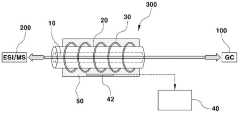
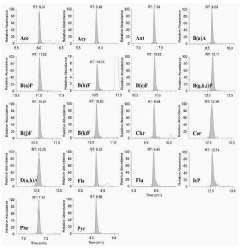
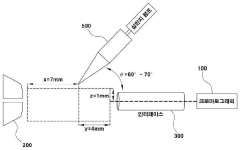
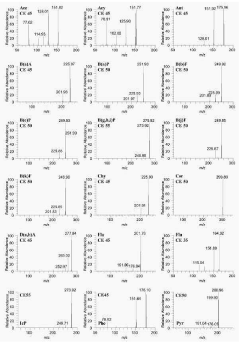
A method of ionization and analysis of polycyclic aromatic hydrocarbons by gas chromatography-electrospray/mass spectrometry
PatentInactiveKR1020170011591A
Innovation
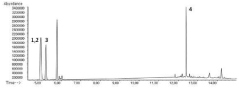
- A method using gas chromatography-electrospray/mass spectrometry (GC-ESI/MS) with specific conditions for sample preparation, electrospray ionization, and mass spectrometer detection to ionize PAHs efficiently, minimizing interference and enhancing selectivity and sensitivity.
Method for determination of metabolites of polycyclic aromatic hydrocarbons in biological material
PatentInactiveKR1020130097315A
Innovation
- A method involving enzymatic hydrolysis of biological samples with 85 to 99% methanol elution followed by gas chromatography-mass spectrometry (GC-MS) analysis, using enzymes like β-glucuronidase and arylsulfatase, and incorporating steps such as pH adjustment, derivatization with MSTFA/TMSI/TMCS, and internal standard calibration with 1-naphthol-d8.
Environmental Regulations Impacting PAH Analysis
The regulatory landscape governing Polycyclic Aromatic Hydrocarbons (PAHs) analysis has evolved significantly over the past decades, driven by increasing awareness of their environmental and health impacts. The United States Environmental Protection Agency (EPA) has established Method 8270 under the Resource Conservation and Recovery Act (RCRA), which specifically addresses the analysis of PAHs in environmental samples using GC-MS techniques. This method sets forth specific requirements for detection limits, quality control procedures, and reporting standards that laboratories must adhere to when analyzing PAHs.
In the European Union, the Water Framework Directive (2000/60/EC) and its daughter directive (2013/39/EU) have identified several PAHs as priority hazardous substances, establishing Environmental Quality Standards (EQS) that require highly sensitive analytical methods. These regulations have directly influenced the development of enhanced GC-MS methodologies to achieve lower detection limits for PAHs in various environmental matrices.
The international standard ISO 28540:2011 provides detailed guidelines for the determination of PAHs in water samples, emphasizing the importance of proper sample preparation and analytical techniques to minimize interferences and maximize response. Compliance with these standards necessitates continuous improvement in GC-MS response for PAHs.
Recent regulatory trends show a movement toward more stringent limits for PAHs in drinking water and soil. For instance, the World Health Organization (WHO) has established guideline values for benzo[a]pyrene in drinking water at 0.7 μg/L, requiring analytical methods with increasingly lower detection capabilities. Similarly, food safety regulations such as European Commission Regulation No. 835/2011 have set maximum levels for PAHs in various foodstuffs, further driving the need for improved analytical sensitivity.
China's Environmental Protection Law and subsequent standards have also incorporated specific requirements for PAH monitoring in air, water, and soil, aligning with global regulatory frameworks while addressing unique local environmental challenges. These regulations typically specify sampling methods, analytical procedures, and quality assurance protocols that directly impact GC-MS methodology development.
The implementation of these regulations has significant implications for laboratories conducting PAH analysis, necessitating investments in advanced instrumentation, method development, and validation procedures. Regulatory compliance often requires demonstrating method performance characteristics such as accuracy, precision, linearity, and detection limits specific to PAHs, which directly influences the technical approaches used to improve GC-MS response for these compounds.
In the European Union, the Water Framework Directive (2000/60/EC) and its daughter directive (2013/39/EU) have identified several PAHs as priority hazardous substances, establishing Environmental Quality Standards (EQS) that require highly sensitive analytical methods. These regulations have directly influenced the development of enhanced GC-MS methodologies to achieve lower detection limits for PAHs in various environmental matrices.
The international standard ISO 28540:2011 provides detailed guidelines for the determination of PAHs in water samples, emphasizing the importance of proper sample preparation and analytical techniques to minimize interferences and maximize response. Compliance with these standards necessitates continuous improvement in GC-MS response for PAHs.
Recent regulatory trends show a movement toward more stringent limits for PAHs in drinking water and soil. For instance, the World Health Organization (WHO) has established guideline values for benzo[a]pyrene in drinking water at 0.7 μg/L, requiring analytical methods with increasingly lower detection capabilities. Similarly, food safety regulations such as European Commission Regulation No. 835/2011 have set maximum levels for PAHs in various foodstuffs, further driving the need for improved analytical sensitivity.
China's Environmental Protection Law and subsequent standards have also incorporated specific requirements for PAH monitoring in air, water, and soil, aligning with global regulatory frameworks while addressing unique local environmental challenges. These regulations typically specify sampling methods, analytical procedures, and quality assurance protocols that directly impact GC-MS methodology development.
The implementation of these regulations has significant implications for laboratories conducting PAH analysis, necessitating investments in advanced instrumentation, method development, and validation procedures. Regulatory compliance often requires demonstrating method performance characteristics such as accuracy, precision, linearity, and detection limits specific to PAHs, which directly influences the technical approaches used to improve GC-MS response for these compounds.
Sample Preparation Advancements for PAH Detection
Sample preparation techniques for Polycyclic Aromatic Hydrocarbons (PAHs) have evolved significantly over the past decade, addressing the critical challenges of sensitivity, selectivity, and reproducibility in GC-MS analysis. Traditional liquid-liquid extraction methods, while still utilized in some laboratories, have increasingly been supplemented or replaced by more efficient techniques that enhance analyte recovery and minimize matrix interference.
Solid-phase extraction (SPE) has emerged as a cornerstone methodology for PAH sample preparation, offering substantial improvements in both extraction efficiency and sample cleanup. Recent advancements in SPE sorbent materials, particularly molecularly imprinted polymers (MIPs) and novel carbon-based materials, have demonstrated remarkable selectivity for PAH compounds even in complex environmental matrices. These materials exhibit up to 30% higher recovery rates compared to conventional C18 sorbents.
Microextraction techniques represent another significant advancement in PAH sample preparation. Solid-phase microextraction (SPME) and its variants such as stir bar sorptive extraction (SBSE) have gained prominence due to their solvent-free operation and integration potential with automated systems. The development of novel fiber coatings with enhanced thermal stability and extraction capacity has extended the application range of these techniques to more complex environmental and biological samples.
Accelerated solvent extraction (ASE) and pressurized liquid extraction (PLE) have revolutionized the extraction of PAHs from solid matrices such as soil and sediment samples. These techniques utilize elevated temperatures and pressures to increase extraction kinetics and solubility, reducing extraction times from hours to minutes while maintaining or improving recovery rates. Recent optimization studies have demonstrated that ASE can achieve >90% recovery for most PAHs when operating parameters are properly tuned.
QuEChERS (Quick, Easy, Cheap, Effective, Rugged, and Safe) methodology has been successfully adapted for PAH analysis in various matrices. This approach combines salting-out extraction with dispersive solid-phase extraction cleanup, offering a streamlined workflow that reduces sample preparation time by up to 70% compared to traditional methods while maintaining analytical performance.
Ultrasound-assisted extraction (UAE) and microwave-assisted extraction (MAE) have shown promise for rapid extraction of PAHs from complex matrices. These energy-assisted techniques significantly reduce extraction times and solvent consumption while improving extraction efficiency. Recent studies indicate that optimized UAE protocols can achieve comparable or superior results to Soxhlet extraction in less than 30 minutes versus 16-24 hours for traditional approaches.
Solid-phase extraction (SPE) has emerged as a cornerstone methodology for PAH sample preparation, offering substantial improvements in both extraction efficiency and sample cleanup. Recent advancements in SPE sorbent materials, particularly molecularly imprinted polymers (MIPs) and novel carbon-based materials, have demonstrated remarkable selectivity for PAH compounds even in complex environmental matrices. These materials exhibit up to 30% higher recovery rates compared to conventional C18 sorbents.
Microextraction techniques represent another significant advancement in PAH sample preparation. Solid-phase microextraction (SPME) and its variants such as stir bar sorptive extraction (SBSE) have gained prominence due to their solvent-free operation and integration potential with automated systems. The development of novel fiber coatings with enhanced thermal stability and extraction capacity has extended the application range of these techniques to more complex environmental and biological samples.
Accelerated solvent extraction (ASE) and pressurized liquid extraction (PLE) have revolutionized the extraction of PAHs from solid matrices such as soil and sediment samples. These techniques utilize elevated temperatures and pressures to increase extraction kinetics and solubility, reducing extraction times from hours to minutes while maintaining or improving recovery rates. Recent optimization studies have demonstrated that ASE can achieve >90% recovery for most PAHs when operating parameters are properly tuned.
QuEChERS (Quick, Easy, Cheap, Effective, Rugged, and Safe) methodology has been successfully adapted for PAH analysis in various matrices. This approach combines salting-out extraction with dispersive solid-phase extraction cleanup, offering a streamlined workflow that reduces sample preparation time by up to 70% compared to traditional methods while maintaining analytical performance.
Ultrasound-assisted extraction (UAE) and microwave-assisted extraction (MAE) have shown promise for rapid extraction of PAHs from complex matrices. These energy-assisted techniques significantly reduce extraction times and solvent consumption while improving extraction efficiency. Recent studies indicate that optimized UAE protocols can achieve comparable or superior results to Soxhlet extraction in less than 30 minutes versus 16-24 hours for traditional approaches.
Unlock deeper insights with PatSnap Eureka Quick Research — get a full tech report to explore trends and direct your research. Try now!
Generate Your Research Report Instantly with AI Agent
Supercharge your innovation with PatSnap Eureka AI Agent Platform!