

Measure Flexible Electronics Tech in Liquid Environment Conductivity
SEP 10, 202510 MIN READ
Generate Your Research Report Instantly with AI Agent
PatSnap Eureka helps you evaluate technical feasibility & market potential.
Flexible Electronics in Liquid Environments: Background & Objectives
Flexible electronics represents a revolutionary departure from conventional rigid electronic systems, enabling the development of bendable, stretchable, and conformable electronic devices that can maintain functionality under mechanical deformation. The evolution of this technology began in the early 2000s with the development of organic semiconductors and has rapidly accelerated over the past decade with advancements in materials science, fabrication techniques, and system integration approaches.
The integration of flexible electronics with liquid environments presents both unique opportunities and significant challenges. Historically, electronics and liquids have been considered incompatible due to concerns about short circuits, corrosion, and material degradation. However, the ability to measure conductivity and other properties in liquid environments has become increasingly important for applications in healthcare, environmental monitoring, and industrial process control.
Recent technological trends indicate a convergence of flexible electronics with microfluidics, electrochemical sensors, and biocompatible materials. This convergence has enabled new capabilities in wearable health monitors, implantable medical devices, and environmental sensing systems that can operate reliably in contact with bodily fluids, natural water systems, or industrial process liquids.
The primary objective of measuring flexible electronics technology in liquid environment conductivity is to develop robust sensing platforms that can accurately quantify ionic concentrations, solution properties, and electrochemical reactions while maintaining mechanical flexibility and durability in diverse liquid environments. This includes creating sensors that can withstand repeated bending, stretching, and exposure to potentially corrosive solutions without performance degradation.
Secondary objectives include miniaturization of sensing elements, reduction of power consumption, enhancement of measurement sensitivity and selectivity, and development of manufacturing processes suitable for high-volume, low-cost production. Additionally, there is a growing emphasis on creating systems that can provide real-time, continuous monitoring rather than discrete measurements.
From a materials perspective, the field is exploring novel combinations of conductive polymers, carbon nanomaterials, metallic nanostructures, and composite systems that maintain electrical conductivity while offering mechanical flexibility and chemical stability in liquid environments. Encapsulation strategies using hydrophobic coatings, ion-selective membranes, and protective layers represent another critical area of development.
The ultimate technological goal is to create seamless interfaces between electronic systems and liquid environments that enable precise, reliable measurements while maintaining the form factor advantages of flexible electronics. This would revolutionize applications ranging from continuous glucose monitoring in diabetes management to real-time water quality assessment in environmental protection efforts.
The integration of flexible electronics with liquid environments presents both unique opportunities and significant challenges. Historically, electronics and liquids have been considered incompatible due to concerns about short circuits, corrosion, and material degradation. However, the ability to measure conductivity and other properties in liquid environments has become increasingly important for applications in healthcare, environmental monitoring, and industrial process control.
Recent technological trends indicate a convergence of flexible electronics with microfluidics, electrochemical sensors, and biocompatible materials. This convergence has enabled new capabilities in wearable health monitors, implantable medical devices, and environmental sensing systems that can operate reliably in contact with bodily fluids, natural water systems, or industrial process liquids.
The primary objective of measuring flexible electronics technology in liquid environment conductivity is to develop robust sensing platforms that can accurately quantify ionic concentrations, solution properties, and electrochemical reactions while maintaining mechanical flexibility and durability in diverse liquid environments. This includes creating sensors that can withstand repeated bending, stretching, and exposure to potentially corrosive solutions without performance degradation.
Secondary objectives include miniaturization of sensing elements, reduction of power consumption, enhancement of measurement sensitivity and selectivity, and development of manufacturing processes suitable for high-volume, low-cost production. Additionally, there is a growing emphasis on creating systems that can provide real-time, continuous monitoring rather than discrete measurements.
From a materials perspective, the field is exploring novel combinations of conductive polymers, carbon nanomaterials, metallic nanostructures, and composite systems that maintain electrical conductivity while offering mechanical flexibility and chemical stability in liquid environments. Encapsulation strategies using hydrophobic coatings, ion-selective membranes, and protective layers represent another critical area of development.
The ultimate technological goal is to create seamless interfaces between electronic systems and liquid environments that enable precise, reliable measurements while maintaining the form factor advantages of flexible electronics. This would revolutionize applications ranging from continuous glucose monitoring in diabetes management to real-time water quality assessment in environmental protection efforts.
Market Analysis for Liquid-Based Flexible Electronic Sensors
The global market for liquid-based flexible electronic sensors is experiencing robust growth, driven by increasing demand across multiple industries including healthcare, environmental monitoring, and industrial applications. Current market valuations indicate that the flexible electronics sector is expanding at a compound annual growth rate of approximately 15% between 2022 and 2027, with liquid environment sensors representing a significant growth segment within this market.
Healthcare applications constitute the largest market share for these sensors, particularly in continuous health monitoring systems where flexible sensors can measure various biomarkers in bodily fluids. The medical wearables segment alone is projected to reach over $30 billion by 2025, with liquid conductivity sensors playing a crucial role in this expansion.
Environmental monitoring represents another substantial market opportunity, as governments worldwide implement stricter regulations on water quality and pollution control. The demand for real-time, in-situ monitoring of water conductivity using flexible sensors is growing at nearly 18% annually, creating a market expected to exceed $5 billion by 2026.
Industrial applications, particularly in chemical processing and manufacturing, form the third major market segment. These industries require continuous monitoring of liquid conductivity for process control and quality assurance, with the industrial sensor market for liquid environments valued at approximately $7 billion globally.
Regionally, North America currently leads the market with approximately 35% share, followed by Europe at 28% and Asia-Pacific at 25%. However, the Asia-Pacific region is demonstrating the fastest growth rate at nearly 20% annually, driven by rapid industrialization and increasing environmental concerns in countries like China and India.
Consumer demand trends indicate a strong preference for miniaturized, highly accurate, and energy-efficient sensors that can operate reliably in various liquid environments. Additionally, there is growing interest in biodegradable and environmentally friendly sensor materials, particularly for environmental monitoring applications.
Market barriers include high initial development costs, technical challenges in ensuring long-term stability in harsh liquid environments, and regulatory hurdles for medical applications. Despite these challenges, venture capital investment in flexible electronic sensor startups has increased by 45% over the past three years, indicating strong confidence in future market growth.
The competitive landscape features both established electronics manufacturers expanding into flexible sensors and innovative startups developing specialized solutions. Strategic partnerships between material science companies, electronics manufacturers, and end-users are becoming increasingly common as the technology matures and finds new applications.
Healthcare applications constitute the largest market share for these sensors, particularly in continuous health monitoring systems where flexible sensors can measure various biomarkers in bodily fluids. The medical wearables segment alone is projected to reach over $30 billion by 2025, with liquid conductivity sensors playing a crucial role in this expansion.
Environmental monitoring represents another substantial market opportunity, as governments worldwide implement stricter regulations on water quality and pollution control. The demand for real-time, in-situ monitoring of water conductivity using flexible sensors is growing at nearly 18% annually, creating a market expected to exceed $5 billion by 2026.
Industrial applications, particularly in chemical processing and manufacturing, form the third major market segment. These industries require continuous monitoring of liquid conductivity for process control and quality assurance, with the industrial sensor market for liquid environments valued at approximately $7 billion globally.
Regionally, North America currently leads the market with approximately 35% share, followed by Europe at 28% and Asia-Pacific at 25%. However, the Asia-Pacific region is demonstrating the fastest growth rate at nearly 20% annually, driven by rapid industrialization and increasing environmental concerns in countries like China and India.
Consumer demand trends indicate a strong preference for miniaturized, highly accurate, and energy-efficient sensors that can operate reliably in various liquid environments. Additionally, there is growing interest in biodegradable and environmentally friendly sensor materials, particularly for environmental monitoring applications.
Market barriers include high initial development costs, technical challenges in ensuring long-term stability in harsh liquid environments, and regulatory hurdles for medical applications. Despite these challenges, venture capital investment in flexible electronic sensor startups has increased by 45% over the past three years, indicating strong confidence in future market growth.
The competitive landscape features both established electronics manufacturers expanding into flexible sensors and innovative startups developing specialized solutions. Strategic partnerships between material science companies, electronics manufacturers, and end-users are becoming increasingly common as the technology matures and finds new applications.
Technical Challenges in Liquid Conductivity Measurement
Measuring conductivity in liquid environments presents significant challenges for flexible electronics technology. The primary obstacle lies in maintaining device integrity and performance while exposed to potentially corrosive or conductive fluids. Traditional rigid electronic systems often employ protective encapsulation, but flexible systems require materials that maintain elasticity while providing adequate protection, creating an inherent design conflict.
Material degradation represents another major challenge, as prolonged exposure to liquids can lead to swelling, delamination, or chemical breakdown of flexible substrates and conductive elements. Polymers commonly used in flexible electronics, such as polyimide or PDMS, exhibit varying degrees of liquid absorption that can alter their mechanical and electrical properties over time, compromising measurement accuracy and device longevity.
Signal integrity becomes particularly problematic in conductive liquid environments due to parasitic current pathways and electrical interference. The liquid medium itself can act as a conductor, creating unintended electrical connections between different parts of the sensing system. This phenomenon necessitates sophisticated isolation techniques and signal processing algorithms to distinguish between the target measurement and environmental noise.
Calibration and drift compensation present ongoing challenges, as flexible sensors in liquid environments typically experience baseline shifts due to temperature fluctuations, ionic concentration changes, and material property alterations. These effects are often non-linear and time-dependent, requiring advanced compensation algorithms that can adapt to changing conditions without frequent recalibration.
Electrode-electrolyte interface phenomena further complicate measurements, as electrochemical reactions at the sensor surface can lead to polarization effects, double-layer capacitance, and impedance changes. These interface dynamics are particularly challenging for flexible systems where surface morphology may change during bending or stretching, altering the effective electrode area and interface characteristics.
Power management presents unique difficulties, as conventional battery technologies are often incompatible with flexible form factors and liquid environments. Energy harvesting alternatives such as piezoelectric or biofuel cells show promise but typically generate insufficient power for continuous high-precision measurements, necessitating ultra-low-power circuit designs and intelligent duty cycling.
Manufacturing scalability remains a significant hurdle, as production processes must balance precision with cost-effectiveness while ensuring consistent performance across devices. Techniques like screen printing and inkjet printing offer promising approaches for flexible electrode fabrication, but achieving uniform electrical properties and reliable liquid-resistant connections between components continues to challenge mass production efforts.
Material degradation represents another major challenge, as prolonged exposure to liquids can lead to swelling, delamination, or chemical breakdown of flexible substrates and conductive elements. Polymers commonly used in flexible electronics, such as polyimide or PDMS, exhibit varying degrees of liquid absorption that can alter their mechanical and electrical properties over time, compromising measurement accuracy and device longevity.
Signal integrity becomes particularly problematic in conductive liquid environments due to parasitic current pathways and electrical interference. The liquid medium itself can act as a conductor, creating unintended electrical connections between different parts of the sensing system. This phenomenon necessitates sophisticated isolation techniques and signal processing algorithms to distinguish between the target measurement and environmental noise.
Calibration and drift compensation present ongoing challenges, as flexible sensors in liquid environments typically experience baseline shifts due to temperature fluctuations, ionic concentration changes, and material property alterations. These effects are often non-linear and time-dependent, requiring advanced compensation algorithms that can adapt to changing conditions without frequent recalibration.
Electrode-electrolyte interface phenomena further complicate measurements, as electrochemical reactions at the sensor surface can lead to polarization effects, double-layer capacitance, and impedance changes. These interface dynamics are particularly challenging for flexible systems where surface morphology may change during bending or stretching, altering the effective electrode area and interface characteristics.
Power management presents unique difficulties, as conventional battery technologies are often incompatible with flexible form factors and liquid environments. Energy harvesting alternatives such as piezoelectric or biofuel cells show promise but typically generate insufficient power for continuous high-precision measurements, necessitating ultra-low-power circuit designs and intelligent duty cycling.
Manufacturing scalability remains a significant hurdle, as production processes must balance precision with cost-effectiveness while ensuring consistent performance across devices. Techniques like screen printing and inkjet printing offer promising approaches for flexible electrode fabrication, but achieving uniform electrical properties and reliable liquid-resistant connections between components continues to challenge mass production efforts.
Current Measurement Solutions for Liquid Conductivity
01 Conductive materials for flexible electronics
Various conductive materials can be incorporated into flexible electronic devices to enhance conductivity while maintaining flexibility. These materials include conductive polymers, metal nanowires, carbon-based materials like graphene, and hybrid composites. The selection of appropriate conductive materials is crucial for achieving optimal electrical performance in flexible electronic applications while ensuring mechanical flexibility and durability under bending and stretching conditions.- Conductive materials for flexible electronics: Various conductive materials can be incorporated into flexible electronic devices to enhance conductivity while maintaining flexibility. These materials include metallic nanowires, conductive polymers, carbon-based materials like graphene and carbon nanotubes, and hybrid composites. The selection of appropriate conductive materials is crucial for achieving optimal electrical performance in flexible electronic applications while ensuring mechanical durability during bending and stretching.
- Flexible substrate technologies: Flexible substrates serve as the foundation for flexible electronic devices. These substrates can be made from various materials including polymers, thin glass, and hybrid materials. The choice of substrate affects the overall flexibility, durability, and electrical performance of the device. Advanced manufacturing techniques are employed to create substrates that can withstand repeated bending and folding while maintaining structural integrity and supporting conductive elements.
- Manufacturing processes for flexible conductive circuits: Specialized manufacturing processes have been developed to create conductive patterns on flexible substrates. These include printing techniques such as screen printing, inkjet printing, and roll-to-roll processing, as well as deposition methods like physical vapor deposition and chemical vapor deposition. These processes enable the creation of intricate conductive patterns while maintaining the flexibility of the substrate and ensuring good adhesion between the conductive material and the substrate.
- Stretchable electronics and conductivity maintenance: Stretchable electronics represent an advanced subset of flexible electronics that can maintain conductivity even when subjected to significant strain. Various approaches have been developed to achieve stretchability, including serpentine patterns, mesh structures, and intrinsically stretchable materials. These technologies enable the creation of electronic devices that can conform to complex surfaces and maintain electrical functionality during stretching and deformation.
- Interface engineering for improved conductivity: Interface engineering focuses on optimizing the connections between different materials in flexible electronic devices to enhance conductivity and reliability. This includes surface treatments, adhesion layers, and novel bonding techniques that reduce contact resistance and improve charge transfer across interfaces. Proper interface engineering is essential for maintaining consistent electrical performance during mechanical deformation and over the lifetime of flexible electronic devices.
02 Stretchable and bendable circuit designs
Innovative circuit designs enable electronics to maintain conductivity while being flexed or stretched. These designs include serpentine patterns, mesh structures, and island-bridge configurations that can accommodate mechanical deformation without compromising electrical connectivity. Such approaches distribute strain across the structure rather than concentrating it at specific points, allowing for greater flexibility while preserving conductive pathways and electronic functionality.Expand Specific Solutions03 Substrate technologies for flexible electronics
Advanced substrate materials play a critical role in flexible electronics by providing a supportive yet pliable foundation. Polymer-based substrates such as polyimide, polyethylene terephthalate (PET), and polydimethylsiloxane (PDMS) offer excellent flexibility while maintaining dimensional stability. These substrates can be engineered with surface treatments to enhance adhesion of conductive layers and improve overall device performance under mechanical stress.Expand Specific Solutions04 Interface engineering for improved conductivity
Interface engineering techniques enhance conductivity in flexible electronic devices by optimizing the connections between different materials and components. Methods include surface modification, adhesion layer implementation, and controlled doping at interfaces. These approaches minimize contact resistance, improve charge transfer across material boundaries, and ensure consistent electrical performance even when the device is subjected to mechanical deformation, thereby enhancing overall conductivity and device reliability.Expand Specific Solutions05 Manufacturing processes for flexible conductive systems
Specialized manufacturing techniques enable the production of highly conductive flexible electronic systems. These include roll-to-roll processing, direct printing methods like inkjet and screen printing, laser patterning, and transfer techniques. Low-temperature processing methods preserve substrate integrity while ensuring proper formation of conductive pathways. These manufacturing approaches allow for scalable production of flexible electronic devices with consistent conductivity properties even under mechanical stress.Expand Specific Solutions
Industry Leaders in Flexible Electronic Sensing Technologies
Flexible electronics technology in liquid environment conductivity is currently in a growth phase, with the market expanding rapidly due to increasing applications in biomedical, industrial sensing, and consumer electronics sectors. The global market size is projected to reach significant value as industries adopt these solutions for real-time monitoring in challenging environments. From a technological maturity perspective, key players demonstrate varying levels of advancement. Academic institutions like Tsinghua University and Karlsruhe Institute of Technology are driving fundamental research, while companies including Siemens AG, Endress+Hauser Flowtec, and Beijing Dream Ink Technology are commercializing practical applications. Sharp Corp and NGK Insulators are developing specialized materials, while Commissariat à l'énergie atomique and Boeing are exploring high-performance applications in extreme environments, indicating the technology is transitioning from research to commercial implementation.
Endress+Hauser Flowtec AG
Technical Solution: Endress+Hauser has developed advanced flexible sensor arrays specifically designed for liquid conductivity measurement in industrial processes. Their technology incorporates thin-film flexible electrodes with multi-point sensing capabilities that can conform to irregular surfaces while maintaining measurement integrity in harsh liquid environments. The company's solution features temperature-compensated conductivity sensors with integrated signal processing that enables real-time monitoring across varying conductivity ranges (0.04 μS/cm to 2000 mS/cm). Their flexible electronics platform incorporates specialized polymer substrates with encapsulation techniques that ensure long-term stability when continuously exposed to corrosive liquids. The system employs four-electrode measurement techniques to minimize polarization effects and electrode fouling, which are common challenges in liquid conductivity measurements. Endress+Hauser's technology also includes self-diagnostic capabilities that can detect electrode coating, damage, or calibration drift while submerged.
Strengths: Industry-leading accuracy across wide conductivity ranges; robust design for harsh chemical environments; advanced temperature compensation algorithms. Weaknesses: Higher cost compared to rigid sensor alternatives; requires specialized installation procedures; limited flexibility in extremely high-temperature applications.
Beijing Dream Ink Technology Co., Ltd.
Technical Solution: Beijing Dream Ink has developed innovative flexible printed electronics specifically for liquid conductivity measurement applications. Their technology utilizes conductive ink formulations printed on flexible polymer substrates that can be directly immersed in various liquid environments while maintaining electrical performance. The company's solution features multi-layer printed sensor arrays with specialized encapsulation that protects the conductive traces while allowing accurate measurement of liquid conductivity. Their flexible sensors incorporate silver nanoparticle-based inks with proprietary stabilizers that resist degradation in aqueous environments, enabling long-term deployment in monitoring applications. Beijing Dream Ink's technology employs impedance-based measurement techniques with integrated temperature compensation, achieving measurement ranges from 0.1 μS/cm to 500 mS/cm with ±1% accuracy. The manufacturing process allows for customizable sensor geometries and electrode spacing to optimize performance for specific liquid environments, from ultrapure water to highly conductive chemical solutions.
Strengths: Cost-effective manufacturing through printing processes; highly customizable sensor designs; excellent flexibility for complex installation requirements. Weaknesses: Lower durability in highly corrosive environments compared to traditional sensors; limited temperature range (0-80°C); requires more frequent calibration in continuous use applications.
Key Innovations in Waterproof Flexible Electronics
Conductivity measurement method
PatentPendingUS20250035575A1
Innovation
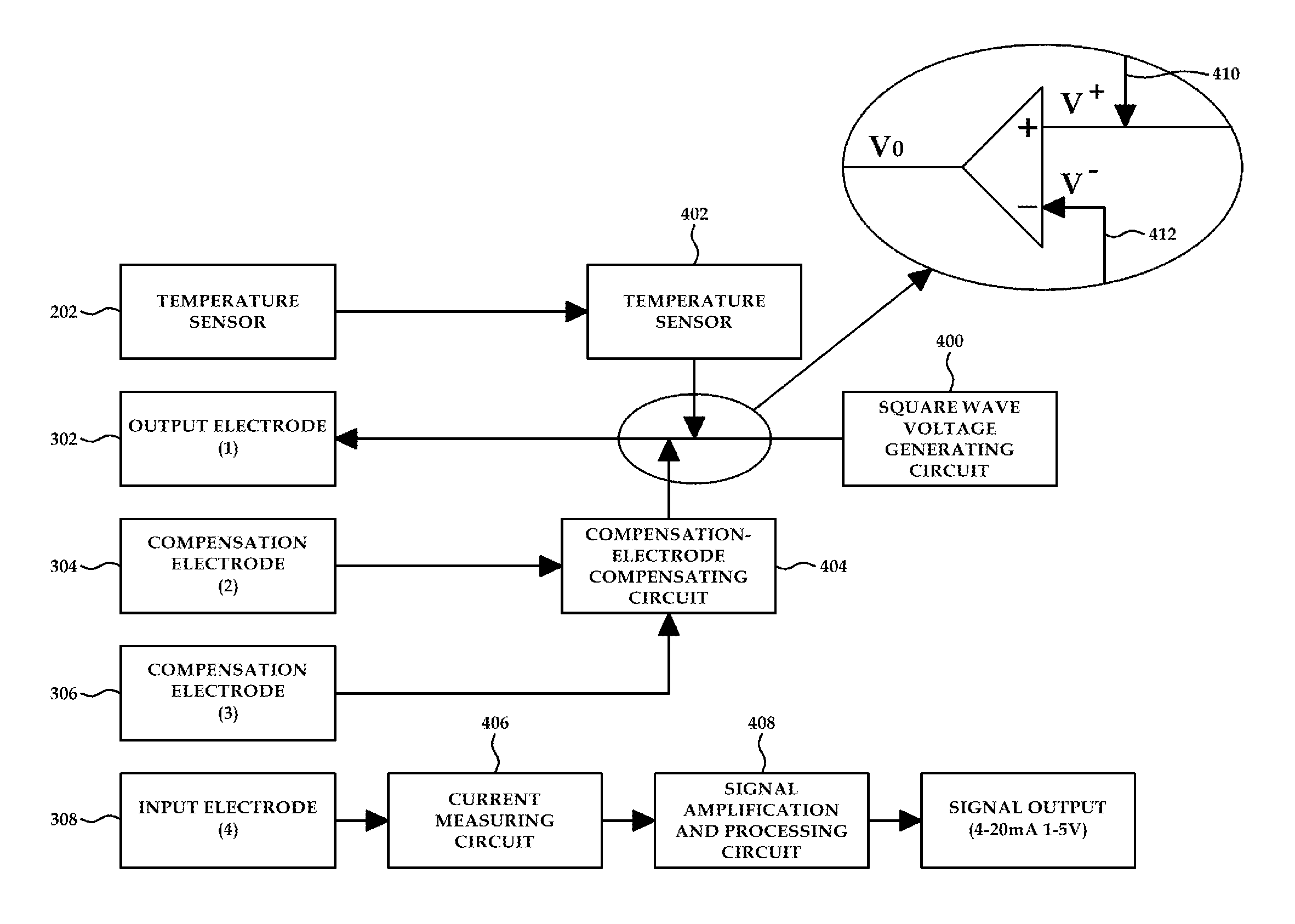
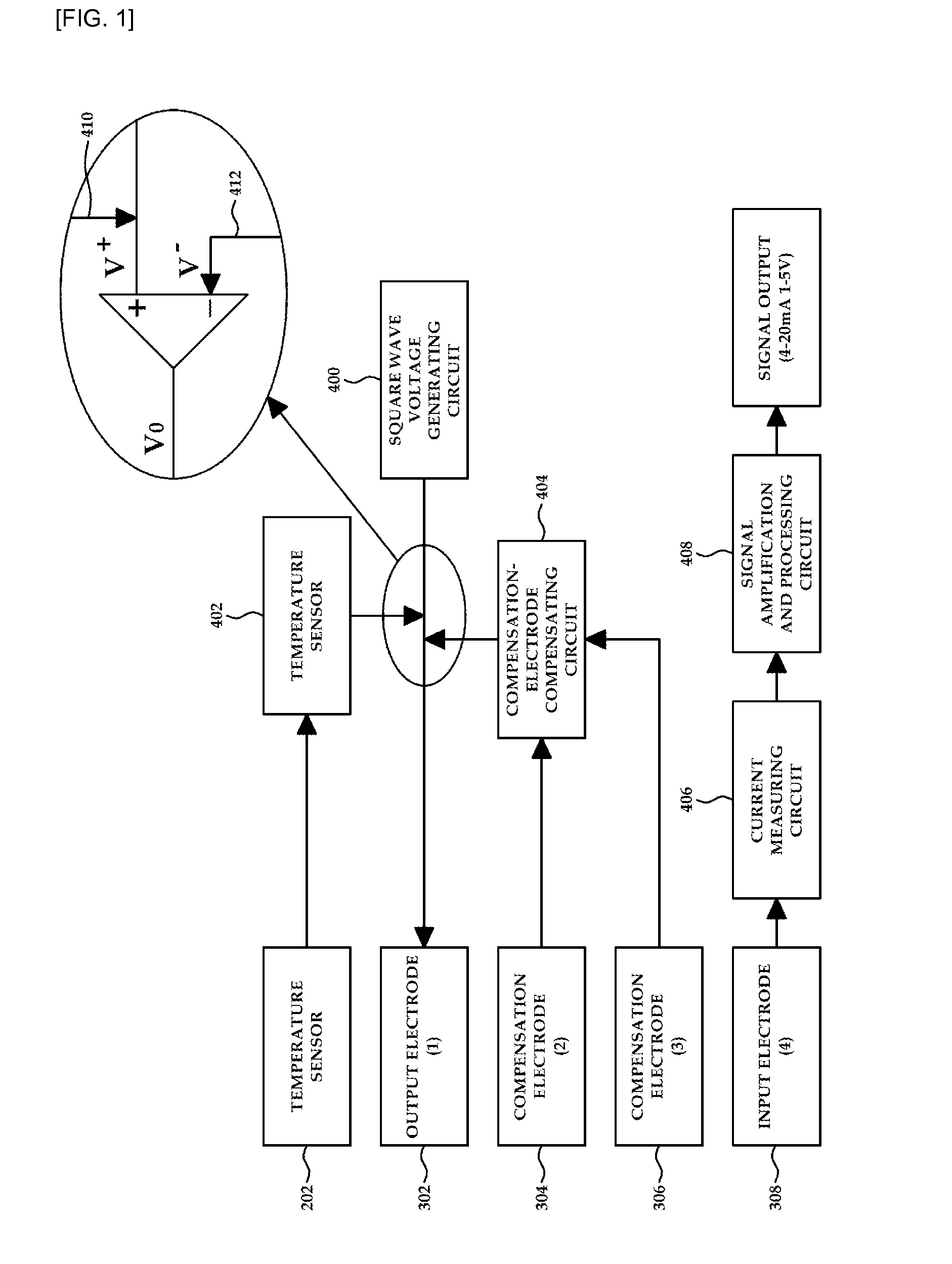
- A conductivity measurement method utilizing a conductivity sensor with an insulating layer, detection electrodes, and a protective layer formed of an insulator, where the conductivity is measured by extracting a value from the complex impedance between the electrodes, considering only the real part and ignoring the imaginary part.


Apparatus for measuring electrical conductivity in liquid
PatentActiveUS20150097588A1
Innovation
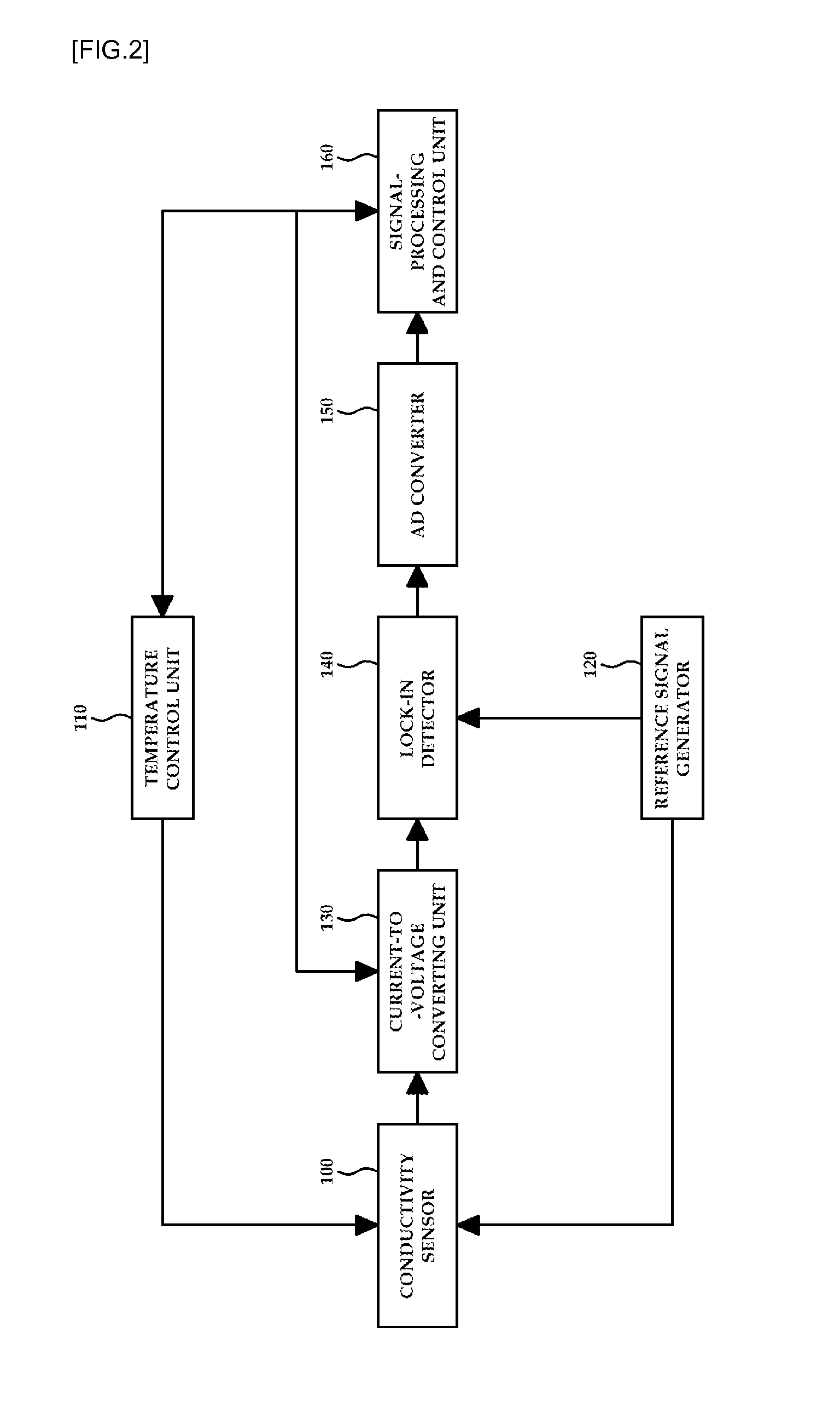
- An apparatus comprising a conductivity sensor with a temperature control unit, a reference signal generator, a current-to-voltage converting unit, a lock-in detector, and a signal-processing and control unit, which maintains a constant temperature, generates a stable reference signal, and employs low-noise signal processing to synchronize and filter the output, ensuring accurate and consistent conductivity measurements.

Materials Science Advancements for Liquid-Compatible Electronics
Recent advancements in materials science have revolutionized the development of liquid-compatible electronics, particularly for measuring conductivity in liquid environments. Traditional rigid electronic components face significant challenges when exposed to liquids, including corrosion, short-circuiting, and performance degradation. However, innovative materials and fabrication techniques have emerged to address these limitations.
Hydrophobic and hydrophilic coatings represent a fundamental breakthrough in this field. These specialized surface treatments can selectively control the interaction between electronic components and liquid media. Parylene conformal coatings, for instance, provide excellent moisture barriers while maintaining flexibility, enabling electronics to function reliably in aqueous environments without compromising measurement accuracy.
Conductive polymers have emerged as a promising alternative to traditional metal conductors for liquid environment applications. Materials such as PEDOT:PSS (poly(3,4-ethylenedioxythiophene) polystyrene sulfonate) exhibit remarkable stability in various liquid media while maintaining electrical conductivity. These polymers can be solution-processed and patterned onto flexible substrates, creating sensors that conform to irregular surfaces while resisting degradation in liquid environments.
Graphene and other 2D materials represent another significant advancement. Their atomically thin structure, combined with exceptional electrical properties and chemical stability, makes them ideal for liquid-compatible sensing applications. Graphene-based sensors have demonstrated remarkable sensitivity to changes in liquid conductivity while maintaining structural integrity in harsh environments. Recent developments in large-scale production methods have also improved the commercial viability of these materials.
Encapsulation technologies have evolved substantially, with multilayer barrier films providing unprecedented protection for sensitive electronic components. These films combine alternating organic and inorganic layers to create tortuous paths that prevent liquid penetration while maintaining flexibility. Advanced encapsulation techniques can achieve water vapor transmission rates below 10^-6 g/m²/day, ensuring long-term reliability in liquid environments.
Biocompatible materials represent a critical advancement for applications involving biological fluids. Polymers such as polyimide, parylene-C, and certain silicones demonstrate excellent biocompatibility while providing necessary electrical insulation and mechanical properties. These materials enable the development of implantable sensors for continuous monitoring of bodily fluids without triggering adverse immune responses.
Self-healing materials constitute a promising frontier in liquid-compatible electronics. These innovative materials can autonomously repair damage caused by liquid exposure, significantly extending device lifespan. Approaches include microencapsulated healing agents, reversible chemical bonds, and dynamic supramolecular networks that restore electrical connections after damage occurs.
Hydrophobic and hydrophilic coatings represent a fundamental breakthrough in this field. These specialized surface treatments can selectively control the interaction between electronic components and liquid media. Parylene conformal coatings, for instance, provide excellent moisture barriers while maintaining flexibility, enabling electronics to function reliably in aqueous environments without compromising measurement accuracy.
Conductive polymers have emerged as a promising alternative to traditional metal conductors for liquid environment applications. Materials such as PEDOT:PSS (poly(3,4-ethylenedioxythiophene) polystyrene sulfonate) exhibit remarkable stability in various liquid media while maintaining electrical conductivity. These polymers can be solution-processed and patterned onto flexible substrates, creating sensors that conform to irregular surfaces while resisting degradation in liquid environments.
Graphene and other 2D materials represent another significant advancement. Their atomically thin structure, combined with exceptional electrical properties and chemical stability, makes them ideal for liquid-compatible sensing applications. Graphene-based sensors have demonstrated remarkable sensitivity to changes in liquid conductivity while maintaining structural integrity in harsh environments. Recent developments in large-scale production methods have also improved the commercial viability of these materials.
Encapsulation technologies have evolved substantially, with multilayer barrier films providing unprecedented protection for sensitive electronic components. These films combine alternating organic and inorganic layers to create tortuous paths that prevent liquid penetration while maintaining flexibility. Advanced encapsulation techniques can achieve water vapor transmission rates below 10^-6 g/m²/day, ensuring long-term reliability in liquid environments.
Biocompatible materials represent a critical advancement for applications involving biological fluids. Polymers such as polyimide, parylene-C, and certain silicones demonstrate excellent biocompatibility while providing necessary electrical insulation and mechanical properties. These materials enable the development of implantable sensors for continuous monitoring of bodily fluids without triggering adverse immune responses.
Self-healing materials constitute a promising frontier in liquid-compatible electronics. These innovative materials can autonomously repair damage caused by liquid exposure, significantly extending device lifespan. Approaches include microencapsulated healing agents, reversible chemical bonds, and dynamic supramolecular networks that restore electrical connections after damage occurs.
Environmental Impact and Sustainability Considerations
The development and deployment of flexible electronics for liquid environment conductivity measurement necessitates careful consideration of environmental impacts throughout the technology lifecycle. Traditional electronic waste presents significant environmental challenges, with toxic materials leaching into soil and water systems. Flexible electronics offer potential sustainability advantages through reduced material usage, lower energy manufacturing processes, and improved recyclability compared to rigid counterparts.
Manufacturing flexible electronic sensors involves materials such as conductive polymers, carbon-based nanomaterials, and thin metal films that may have varying environmental footprints. Water-based processing techniques are increasingly replacing solvent-based methods, reducing harmful emissions and waste. Additionally, biodegradable substrates like cellulose derivatives and natural polymers are emerging as environmentally friendly alternatives to conventional plastic substrates, potentially enabling compostable sensor systems for temporary deployment in aquatic environments.
The operational phase of liquid conductivity measurement systems presents both challenges and opportunities for environmental sustainability. These sensors can contribute positively by enabling more efficient water quality monitoring, reducing chemical reagent usage compared to traditional testing methods, and supporting conservation efforts through early detection of contamination. However, long-term deployment in aquatic environments raises concerns about microplastic generation if the flexible components degrade over time.
End-of-life considerations represent a critical aspect of environmental impact assessment. Current flexible electronics often combine multiple materials that are difficult to separate, complicating recycling processes. Research into design-for-disassembly approaches and mono-material systems is advancing to address this challenge. Some innovative designs incorporate triggered degradation mechanisms that allow sensors to harmlessly decompose after their useful life, minimizing persistent environmental contamination.
Energy efficiency throughout the product lifecycle significantly influences the overall environmental footprint. Low-power operation is particularly important for distributed sensing networks. Recent advances in energy harvesting technologies—including piezoelectric elements that generate power from water movement and biofuel cells that derive energy from organic matter in the measurement environment—are enabling self-powered systems that eliminate battery waste while extending operational lifetimes.
Regulatory frameworks are evolving to address the unique environmental considerations of flexible electronics. The European Union's Restriction of Hazardous Substances (RoHS) and Waste Electrical and Electronic Equipment (WEEE) directives are being adapted to cover these emerging technologies. Companies developing liquid conductivity measurement systems must increasingly demonstrate compliance with environmental standards through lifecycle assessments and sustainable design practices to meet market expectations and regulatory requirements.
Manufacturing flexible electronic sensors involves materials such as conductive polymers, carbon-based nanomaterials, and thin metal films that may have varying environmental footprints. Water-based processing techniques are increasingly replacing solvent-based methods, reducing harmful emissions and waste. Additionally, biodegradable substrates like cellulose derivatives and natural polymers are emerging as environmentally friendly alternatives to conventional plastic substrates, potentially enabling compostable sensor systems for temporary deployment in aquatic environments.
The operational phase of liquid conductivity measurement systems presents both challenges and opportunities for environmental sustainability. These sensors can contribute positively by enabling more efficient water quality monitoring, reducing chemical reagent usage compared to traditional testing methods, and supporting conservation efforts through early detection of contamination. However, long-term deployment in aquatic environments raises concerns about microplastic generation if the flexible components degrade over time.
End-of-life considerations represent a critical aspect of environmental impact assessment. Current flexible electronics often combine multiple materials that are difficult to separate, complicating recycling processes. Research into design-for-disassembly approaches and mono-material systems is advancing to address this challenge. Some innovative designs incorporate triggered degradation mechanisms that allow sensors to harmlessly decompose after their useful life, minimizing persistent environmental contamination.
Energy efficiency throughout the product lifecycle significantly influences the overall environmental footprint. Low-power operation is particularly important for distributed sensing networks. Recent advances in energy harvesting technologies—including piezoelectric elements that generate power from water movement and biofuel cells that derive energy from organic matter in the measurement environment—are enabling self-powered systems that eliminate battery waste while extending operational lifetimes.
Regulatory frameworks are evolving to address the unique environmental considerations of flexible electronics. The European Union's Restriction of Hazardous Substances (RoHS) and Waste Electrical and Electronic Equipment (WEEE) directives are being adapted to cover these emerging technologies. Companies developing liquid conductivity measurement systems must increasingly demonstrate compliance with environmental standards through lifecycle assessments and sustainable design practices to meet market expectations and regulatory requirements.
Unlock deeper insights with PatSnap Eureka Quick Research — get a full tech report to explore trends and direct your research. Try now!
Generate Your Research Report Instantly with AI Agent
Supercharge your innovation with PatSnap Eureka AI Agent Platform!