
Vinyl Acrylic Copolymer Emulsion: Advanced Formulation Strategies And Performance Optimization For High-Performance Coatings
AUG 25, 20269 MIN READ
Generate Your Research Report Instantly with AI Agent
Patsnap Eureka helps you evaluate technical feasibility & market potential.
Neuromorphic System Evolution and Objectives
Neuromorphic computing systems have evolved significantly over the past few decades, driven by the desire to create artificial neural networks that mimic the human brain's structure and function. This field emerged in the 1980s with the development of analog VLSI circuits that emulated neuronal and synaptic dynamics. Since then, neuromorphic systems have progressed through several key stages, each marked by advancements in hardware design, integration techniques, and computational capabilities.
The early 2000s saw a shift towards digital neuromorphic systems, which offered improved scalability and programmability. This era was characterized by the development of large-scale neuromorphic processors, such as IBM's TrueNorth and Intel's Loihi. These chips demonstrated the potential for energy-efficient, brain-inspired computing at scale, capable of processing sensory data and performing complex cognitive tasks.
Recent years have witnessed a convergence of neuromorphic computing with emerging memory technologies, particularly non-volatile memories like memristors and phase-change materials. This integration has paved the way for more efficient and compact neuromorphic architectures, addressing the von Neumann bottleneck inherent in traditional computing paradigms.
The primary objectives of neuromorphic system integration have evolved in tandem with technological advancements. Initially, the focus was on replicating basic neuronal functions and small-scale neural networks. As the field matured, objectives expanded to include the development of large-scale, low-power neuromorphic systems capable of real-time sensory processing and decision-making.
Current objectives in neuromorphic system integration center around three critical aspects: memory, interconnect, and power delivery. In terms of memory, the goal is to develop high-density, low-power memory solutions that can efficiently store and access synaptic weights and neuronal states. This involves exploring novel memory technologies and architectures that support the massive parallelism inherent in neural computations.
Interconnect considerations focus on developing efficient communication pathways between neurons and synapses, mimicking the brain's complex connectivity. This includes exploring 3D integration techniques, on-chip networking solutions, and novel packaging technologies to maximize connectivity while minimizing power consumption and latency.
Power delivery objectives aim to optimize energy efficiency, a crucial factor in scaling neuromorphic systems. This involves developing innovative power distribution networks, exploring energy harvesting techniques, and implementing adaptive power management strategies to support the dynamic nature of neural computations.
Looking ahead, the field of neuromorphic system integration is poised to tackle even more ambitious objectives. These include achieving brain-scale neuromorphic systems, integrating multi-modal sensory processing capabilities, and developing neuromorphic architectures capable of online learning and adaptation. As the technology continues to mature, we can expect neuromorphic systems to play an increasingly important role in artificial intelligence, robotics, and edge computing applications.
The early 2000s saw a shift towards digital neuromorphic systems, which offered improved scalability and programmability. This era was characterized by the development of large-scale neuromorphic processors, such as IBM's TrueNorth and Intel's Loihi. These chips demonstrated the potential for energy-efficient, brain-inspired computing at scale, capable of processing sensory data and performing complex cognitive tasks.
Recent years have witnessed a convergence of neuromorphic computing with emerging memory technologies, particularly non-volatile memories like memristors and phase-change materials. This integration has paved the way for more efficient and compact neuromorphic architectures, addressing the von Neumann bottleneck inherent in traditional computing paradigms.
The primary objectives of neuromorphic system integration have evolved in tandem with technological advancements. Initially, the focus was on replicating basic neuronal functions and small-scale neural networks. As the field matured, objectives expanded to include the development of large-scale, low-power neuromorphic systems capable of real-time sensory processing and decision-making.
Current objectives in neuromorphic system integration center around three critical aspects: memory, interconnect, and power delivery. In terms of memory, the goal is to develop high-density, low-power memory solutions that can efficiently store and access synaptic weights and neuronal states. This involves exploring novel memory technologies and architectures that support the massive parallelism inherent in neural computations.
Interconnect considerations focus on developing efficient communication pathways between neurons and synapses, mimicking the brain's complex connectivity. This includes exploring 3D integration techniques, on-chip networking solutions, and novel packaging technologies to maximize connectivity while minimizing power consumption and latency.
Power delivery objectives aim to optimize energy efficiency, a crucial factor in scaling neuromorphic systems. This involves developing innovative power distribution networks, exploring energy harvesting techniques, and implementing adaptive power management strategies to support the dynamic nature of neural computations.
Looking ahead, the field of neuromorphic system integration is poised to tackle even more ambitious objectives. These include achieving brain-scale neuromorphic systems, integrating multi-modal sensory processing capabilities, and developing neuromorphic architectures capable of online learning and adaptation. As the technology continues to mature, we can expect neuromorphic systems to play an increasingly important role in artificial intelligence, robotics, and edge computing applications.
Market Demand for Brain-Inspired Computing
The market demand for brain-inspired computing, particularly neuromorphic systems, has been steadily growing in recent years. This surge in interest is driven by the increasing need for more efficient and powerful computing solutions that can handle complex cognitive tasks, such as pattern recognition, natural language processing, and decision-making in real-time environments.
The global neuromorphic computing market is experiencing significant expansion, with projections indicating substantial growth in the coming years. This growth is fueled by the rising adoption of artificial intelligence and machine learning technologies across various industries, including healthcare, automotive, robotics, and consumer electronics.
One of the key drivers of market demand is the potential for neuromorphic systems to overcome the limitations of traditional von Neumann architecture. As data-intensive applications continue to proliferate, there is a growing need for computing systems that can process information more efficiently and with lower power consumption. Neuromorphic systems, inspired by the human brain's architecture, offer promising solutions to these challenges.
In the healthcare sector, neuromorphic computing is gaining traction for applications such as medical imaging analysis, drug discovery, and personalized medicine. The ability of these systems to process complex biological data and identify patterns quickly and accurately is particularly valuable in this field.
The automotive industry is another significant market for brain-inspired computing. As autonomous vehicles become more prevalent, there is an increasing demand for systems that can process sensory inputs and make real-time decisions in complex driving environments. Neuromorphic systems offer the potential for more efficient and responsive autonomous driving technologies.
In the field of robotics, neuromorphic computing is driving advancements in sensory processing, motor control, and adaptive learning. This technology enables robots to interact more naturally with their environment and adapt to changing conditions, opening up new possibilities in industrial automation, service robotics, and human-robot interaction.
The consumer electronics market is also showing interest in neuromorphic systems, particularly for applications in smartphones, wearables, and smart home devices. These systems can enable more sophisticated voice recognition, image processing, and predictive capabilities while consuming less power, addressing the ongoing challenge of battery life in portable devices.
As the demand for more intelligent and efficient computing solutions continues to grow across various sectors, the market for brain-inspired computing is expected to expand further. This trend is likely to drive increased investment in research and development of neuromorphic technologies, as well as the creation of new products and services that leverage these advanced computing capabilities.
The global neuromorphic computing market is experiencing significant expansion, with projections indicating substantial growth in the coming years. This growth is fueled by the rising adoption of artificial intelligence and machine learning technologies across various industries, including healthcare, automotive, robotics, and consumer electronics.
One of the key drivers of market demand is the potential for neuromorphic systems to overcome the limitations of traditional von Neumann architecture. As data-intensive applications continue to proliferate, there is a growing need for computing systems that can process information more efficiently and with lower power consumption. Neuromorphic systems, inspired by the human brain's architecture, offer promising solutions to these challenges.
In the healthcare sector, neuromorphic computing is gaining traction for applications such as medical imaging analysis, drug discovery, and personalized medicine. The ability of these systems to process complex biological data and identify patterns quickly and accurately is particularly valuable in this field.
The automotive industry is another significant market for brain-inspired computing. As autonomous vehicles become more prevalent, there is an increasing demand for systems that can process sensory inputs and make real-time decisions in complex driving environments. Neuromorphic systems offer the potential for more efficient and responsive autonomous driving technologies.
In the field of robotics, neuromorphic computing is driving advancements in sensory processing, motor control, and adaptive learning. This technology enables robots to interact more naturally with their environment and adapt to changing conditions, opening up new possibilities in industrial automation, service robotics, and human-robot interaction.
The consumer electronics market is also showing interest in neuromorphic systems, particularly for applications in smartphones, wearables, and smart home devices. These systems can enable more sophisticated voice recognition, image processing, and predictive capabilities while consuming less power, addressing the ongoing challenge of battery life in portable devices.
As the demand for more intelligent and efficient computing solutions continues to grow across various sectors, the market for brain-inspired computing is expected to expand further. This trend is likely to drive increased investment in research and development of neuromorphic technologies, as well as the creation of new products and services that leverage these advanced computing capabilities.
Neuromorphic Integration Challenges
Neuromorphic system integration presents significant challenges in the realms of memory, interconnect, and power delivery. These challenges stem from the fundamental differences between traditional von Neumann architectures and brain-inspired neuromorphic systems. The integration of memory components in neuromorphic systems requires a paradigm shift from conventional memory hierarchies to more distributed and localized memory structures that can support massive parallelism and low-latency access.
One of the primary challenges in memory integration is the need for high-density, low-power memory elements that can emulate synaptic plasticity. Current CMOS-based memory technologies struggle to meet these requirements, leading to research into novel memory technologies such as resistive RAM (RRAM), phase-change memory (PCM), and spintronic devices. These emerging technologies offer promising characteristics but face hurdles in scalability, reliability, and integration with existing CMOS processes.
Interconnect challenges in neuromorphic systems are equally daunting. The human brain's dense and complex connectivity serves as a model, but replicating this in silicon poses significant technical difficulties. Traditional metal interconnects suffer from high power consumption and limited bandwidth when scaled to the density required for neuromorphic systems. Novel approaches such as 3D integration, through-silicon vias (TSVs), and optical interconnects are being explored to address these limitations.
Power delivery is another critical aspect of neuromorphic system integration. The brain's energy efficiency serves as a benchmark, operating on approximately 20 watts. Achieving comparable efficiency in artificial systems requires innovative power distribution networks and energy-efficient computing paradigms. Challenges include minimizing power consumption in both active and standby modes, managing heat dissipation in densely packed 3D structures, and developing ultra-low-power circuits that can operate reliably at near-threshold voltages.
The integration of these three aspects - memory, interconnect, and power delivery - must be addressed holistically to create viable neuromorphic systems. This requires a multidisciplinary approach, combining expertise from materials science, device physics, circuit design, and system architecture. Advances in one area often have implications for the others, necessitating careful co-optimization of all components.
Furthermore, the scalability of neuromorphic systems presents an overarching challenge. As these systems grow in size and complexity to approach the capabilities of biological neural networks, the integration challenges become exponentially more difficult. Balancing performance, power efficiency, and cost-effectiveness at scale remains a significant hurdle in the development of practical neuromorphic computing platforms.
One of the primary challenges in memory integration is the need for high-density, low-power memory elements that can emulate synaptic plasticity. Current CMOS-based memory technologies struggle to meet these requirements, leading to research into novel memory technologies such as resistive RAM (RRAM), phase-change memory (PCM), and spintronic devices. These emerging technologies offer promising characteristics but face hurdles in scalability, reliability, and integration with existing CMOS processes.
Interconnect challenges in neuromorphic systems are equally daunting. The human brain's dense and complex connectivity serves as a model, but replicating this in silicon poses significant technical difficulties. Traditional metal interconnects suffer from high power consumption and limited bandwidth when scaled to the density required for neuromorphic systems. Novel approaches such as 3D integration, through-silicon vias (TSVs), and optical interconnects are being explored to address these limitations.
Power delivery is another critical aspect of neuromorphic system integration. The brain's energy efficiency serves as a benchmark, operating on approximately 20 watts. Achieving comparable efficiency in artificial systems requires innovative power distribution networks and energy-efficient computing paradigms. Challenges include minimizing power consumption in both active and standby modes, managing heat dissipation in densely packed 3D structures, and developing ultra-low-power circuits that can operate reliably at near-threshold voltages.
The integration of these three aspects - memory, interconnect, and power delivery - must be addressed holistically to create viable neuromorphic systems. This requires a multidisciplinary approach, combining expertise from materials science, device physics, circuit design, and system architecture. Advances in one area often have implications for the others, necessitating careful co-optimization of all components.
Furthermore, the scalability of neuromorphic systems presents an overarching challenge. As these systems grow in size and complexity to approach the capabilities of biological neural networks, the integration challenges become exponentially more difficult. Balancing performance, power efficiency, and cost-effectiveness at scale remains a significant hurdle in the development of practical neuromorphic computing platforms.
Current Neuromorphic Integration Solutions
01 Hardware implementation of neuromorphic systems
This involves the physical integration of neuromorphic components into hardware systems. It includes the design and fabrication of specialized chips and circuits that mimic the structure and function of biological neural networks. These hardware implementations aim to achieve high efficiency in processing neural network algorithms and enable real-time, low-power operation for various applications.- Hardware implementation of neuromorphic systems: This involves the physical integration of neuromorphic components into hardware systems. It includes the design and fabrication of specialized chips and circuits that mimic neural processes, enabling efficient processing of complex data patterns and learning algorithms in a manner similar to biological neural networks.
- Software frameworks for neuromorphic computing: Development of software architectures and programming models specifically tailored for neuromorphic systems. These frameworks facilitate the implementation of neural algorithms, enable efficient data processing, and provide interfaces for integrating neuromorphic hardware with conventional computing systems.
- Integration of neuromorphic systems with AI and machine learning: Combining neuromorphic architectures with artificial intelligence and machine learning techniques to enhance cognitive computing capabilities. This integration allows for more efficient processing of complex data patterns, improved learning algorithms, and better performance in tasks such as pattern recognition and decision-making.
- Neuromorphic sensor integration: Incorporation of neuromorphic principles into sensor systems, enabling more efficient and biologically-inspired processing of sensory data. This approach can lead to improved performance in areas such as computer vision, speech recognition, and other sensor-based applications.
- Scalability and power efficiency in neuromorphic systems: Addressing challenges related to scaling neuromorphic architectures and improving their power efficiency. This includes developing techniques for integrating large numbers of neuromorphic components while maintaining low power consumption, making these systems more practical for real-world applications.
02 Software frameworks for neuromorphic computing
Development of software architectures and programming models specifically designed for neuromorphic systems. These frameworks facilitate the implementation of neural network algorithms on neuromorphic hardware, providing tools for simulation, optimization, and deployment of neuromorphic applications. They aim to bridge the gap between traditional computing paradigms and neuromorphic architectures.Expand Specific Solutions03 Integration of neuromorphic systems with conventional computing
This focuses on combining neuromorphic architectures with traditional computing systems to create hybrid solutions. It involves developing interfaces and protocols that allow seamless communication and data exchange between neuromorphic components and conventional processors. The goal is to leverage the strengths of both paradigms for improved overall system performance.Expand Specific Solutions04 Neuromorphic sensor integration
Integration of neuromorphic principles into sensor systems, particularly in areas such as computer vision and audio processing. This involves developing sensors that can process information in a manner similar to biological sensory systems, enabling efficient and low-power sensing capabilities. The approach aims to enhance the performance of perception tasks in various applications.Expand Specific Solutions05 Scalability and system-level integration of neuromorphic architectures
Addressing challenges related to scaling neuromorphic systems to handle larger and more complex tasks. This includes developing methodologies for integrating multiple neuromorphic cores or modules into larger systems, managing communication and synchronization between components, and optimizing overall system performance. The focus is on creating neuromorphic architectures capable of tackling real-world, large-scale problems.Expand Specific Solutions
Key Players in Neuromorphic Computing
The neuromorphic system integration market is in a growth phase, driven by increasing demand for AI and edge computing applications. The market size is expanding rapidly, with projections indicating significant growth in the coming years. Technologically, the field is advancing but still maturing, with key players like IBM, Samsung, and Intel leading research and development efforts. Smaller specialized firms like Syntiant and HRL Laboratories are also making important contributions. Academic institutions such as Tsinghua University and research organizations like CEA are pushing the boundaries of neuromorphic computing. The involvement of major semiconductor companies like Micron and Applied Materials indicates the growing commercial potential of this technology.
International Business Machines Corp.
Technical Solution: IBM has developed a neuromorphic system called TrueNorth, which integrates memory and processing in a single chip architecture. The system uses a novel non-von Neumann architecture with 1 million programmable neurons and 256 million configurable synapses[1]. TrueNorth's design focuses on low power consumption, achieving 70 mW power draw while running at real-time speed[2]. IBM has also explored 3D integration techniques to improve interconnect efficiency and reduce power delivery challenges in neuromorphic systems[3]. Their approach includes through-silicon vias (TSVs) and fine-pitch microbumps to create high-density vertical connections between memory and processing layers[4].
Strengths: Low power consumption, high neuron and synapse density, innovative 3D integration. Weaknesses: Limited to specific neuromorphic applications, may require specialized programming models.
Samsung Electronics Co., Ltd.
Technical Solution: Samsung has been working on neuromorphic systems that integrate memory and processing using their advanced semiconductor technologies. They have developed a neuromorphic chip that utilizes resistive random-access memory (RRAM) as synaptic devices[5]. This approach allows for in-memory computing, reducing the energy consumption associated with data movement. Samsung's neuromorphic system incorporates high-density 3D stacked memory using their vertical NAND (V-NAND) technology, which improves interconnect efficiency[6]. They have also explored the use of magnetoresistive random-access memory (MRAM) for neuromorphic computing, which offers non-volatility and low power consumption[7].
Strengths: Advanced memory technologies (RRAM, V-NAND, MRAM), expertise in 3D integration. Weaknesses: Still in research phase for neuromorphic systems, may face challenges in scaling to large-scale applications.
Core Innovations in Memory and Interconnects
Superconducting neuromorphic computing devices and circuits
PatentWO2022192864A1
Innovation
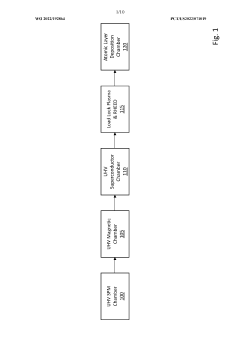
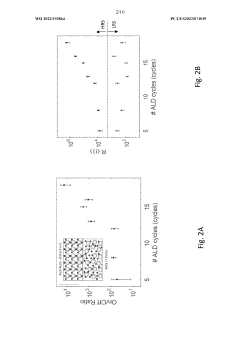
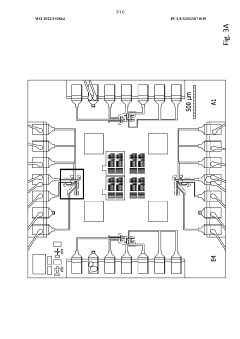
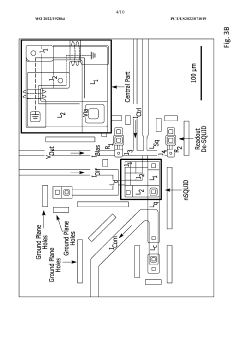
- The development of neuromorphic computing systems utilizing atomically thin, tunable superconducting memristors as synapses and ultra-sensitive superconducting quantum interference devices (SQUIDs) as neurons, which form neural units capable of performing universal logic gates and are scalable, energy-efficient, and compatible with cryogenic temperatures.
Neuromorphic computing device
PatentInactiveUS20200394502A1
Innovation
- The neuromorphic computing device incorporates first and second neural circuits electrically connected through synapse weights, where the synapse weights, such as resistors, convert neural signals into weighted signals and transfer them between the neural circuits, enabling efficient sum-of-product calculations with a 3D array stack structure and variable resistor configurations.


Regulatory Framework for AI Hardware
The regulatory framework for AI hardware is evolving rapidly to address the unique challenges posed by neuromorphic systems and their integration considerations. As these systems become more prevalent, policymakers are grappling with the need to balance innovation with safety and ethical concerns. Current regulations primarily focus on data privacy, security, and algorithmic transparency, but there is a growing recognition that hardware-specific guidelines are necessary.
In the context of memory integration, regulators are considering standards for data retention, access controls, and encryption methods specific to neuromorphic architectures. These regulations aim to ensure that sensitive information processed by these systems remains protected, even as the lines between processing and memory blur in brain-inspired computing paradigms.
Interconnect regulations are being developed to address the potential for unintended information leakage and side-channel attacks in highly connected neuromorphic systems. Proposed guidelines include requirements for secure communication protocols and physical isolation of critical components. Additionally, there is ongoing discussion about standardizing interconnect interfaces to promote interoperability and facilitate regulatory compliance across different neuromorphic platforms.
Power delivery considerations are driving the development of energy efficiency standards for AI hardware. Regulators are exploring ways to incentivize the development of low-power neuromorphic systems through certification programs and energy consumption limits. These efforts align with broader initiatives to reduce the environmental impact of computing infrastructure.
The regulatory landscape is also addressing the unique challenges of neuromorphic system scalability. As these systems grow in complexity and scale, there is a need for guidelines on system-level testing, validation, and certification processes. Proposed frameworks include requirements for demonstrating system stability, fault tolerance, and graceful degradation under various operating conditions.
Ethical considerations are increasingly shaping the regulatory approach to neuromorphic systems. Policymakers are exploring ways to ensure that these brain-inspired architectures do not inadvertently replicate or amplify biases present in biological systems. This includes developing guidelines for the ethical sourcing and use of neuroscientific data in system design and implementation.
As the field of neuromorphic computing advances, regulators are also considering the long-term implications of these systems. This includes developing frameworks for the responsible disposal and recycling of neuromorphic hardware, as well as guidelines for managing the potential environmental and health impacts of novel materials used in these systems.
In the context of memory integration, regulators are considering standards for data retention, access controls, and encryption methods specific to neuromorphic architectures. These regulations aim to ensure that sensitive information processed by these systems remains protected, even as the lines between processing and memory blur in brain-inspired computing paradigms.
Interconnect regulations are being developed to address the potential for unintended information leakage and side-channel attacks in highly connected neuromorphic systems. Proposed guidelines include requirements for secure communication protocols and physical isolation of critical components. Additionally, there is ongoing discussion about standardizing interconnect interfaces to promote interoperability and facilitate regulatory compliance across different neuromorphic platforms.
Power delivery considerations are driving the development of energy efficiency standards for AI hardware. Regulators are exploring ways to incentivize the development of low-power neuromorphic systems through certification programs and energy consumption limits. These efforts align with broader initiatives to reduce the environmental impact of computing infrastructure.
The regulatory landscape is also addressing the unique challenges of neuromorphic system scalability. As these systems grow in complexity and scale, there is a need for guidelines on system-level testing, validation, and certification processes. Proposed frameworks include requirements for demonstrating system stability, fault tolerance, and graceful degradation under various operating conditions.
Ethical considerations are increasingly shaping the regulatory approach to neuromorphic systems. Policymakers are exploring ways to ensure that these brain-inspired architectures do not inadvertently replicate or amplify biases present in biological systems. This includes developing guidelines for the ethical sourcing and use of neuroscientific data in system design and implementation.
As the field of neuromorphic computing advances, regulators are also considering the long-term implications of these systems. This includes developing frameworks for the responsible disposal and recycling of neuromorphic hardware, as well as guidelines for managing the potential environmental and health impacts of novel materials used in these systems.
Scalability and Manufacturability Considerations
Scalability and manufacturability are critical considerations in the development and implementation of neuromorphic systems. As these systems aim to emulate the human brain's neural networks, their complexity and scale present significant challenges in terms of production and integration.
The scalability of neuromorphic systems is a key factor in their potential for widespread adoption. Current manufacturing processes for traditional semiconductor devices may not be directly applicable to the production of large-scale neuromorphic systems. The intricate interconnections and specialized components required for these systems demand novel fabrication techniques and materials. Researchers are exploring advanced 3D integration technologies to increase the density of neural elements and reduce the overall footprint of neuromorphic chips.
Manufacturability concerns arise from the need to produce neuromorphic systems at scale while maintaining consistency and reliability. The integration of memory, interconnects, and power delivery components presents unique challenges in the manufacturing process. For memory, the use of emerging technologies such as resistive RAM (ReRAM) or phase-change memory (PCM) requires the development of new fabrication methods that can be reliably scaled up for mass production.
Interconnect technologies for neuromorphic systems must balance the need for high-density connections with the constraints of power consumption and signal integrity. Traditional metal interconnects may not be sufficient for the complex routing required in large-scale neural networks. Optical interconnects and through-silicon vias (TSVs) are being investigated as potential solutions to improve connectivity while maintaining manufacturability.
Power delivery considerations are crucial for the scalability of neuromorphic systems. As the number of neural elements increases, efficient power distribution becomes a significant challenge. Innovative power delivery networks and low-power design techniques are essential to ensure that large-scale neuromorphic systems remain viable from both performance and manufacturing perspectives.
The integration of these various components – memory, interconnects, and power delivery – must be achieved in a way that is compatible with existing semiconductor manufacturing infrastructure to ensure cost-effective production. This requires close collaboration between neuromorphic system designers and semiconductor manufacturers to develop processes that can be implemented at scale.
Addressing these scalability and manufacturability challenges is essential for the future of neuromorphic computing. As research progresses, new materials, fabrication techniques, and design methodologies are being developed to overcome these hurdles, paving the way for the production of large-scale, efficient neuromorphic systems that can revolutionize computing paradigms across various industries.
The scalability of neuromorphic systems is a key factor in their potential for widespread adoption. Current manufacturing processes for traditional semiconductor devices may not be directly applicable to the production of large-scale neuromorphic systems. The intricate interconnections and specialized components required for these systems demand novel fabrication techniques and materials. Researchers are exploring advanced 3D integration technologies to increase the density of neural elements and reduce the overall footprint of neuromorphic chips.
Manufacturability concerns arise from the need to produce neuromorphic systems at scale while maintaining consistency and reliability. The integration of memory, interconnects, and power delivery components presents unique challenges in the manufacturing process. For memory, the use of emerging technologies such as resistive RAM (ReRAM) or phase-change memory (PCM) requires the development of new fabrication methods that can be reliably scaled up for mass production.
Interconnect technologies for neuromorphic systems must balance the need for high-density connections with the constraints of power consumption and signal integrity. Traditional metal interconnects may not be sufficient for the complex routing required in large-scale neural networks. Optical interconnects and through-silicon vias (TSVs) are being investigated as potential solutions to improve connectivity while maintaining manufacturability.
Power delivery considerations are crucial for the scalability of neuromorphic systems. As the number of neural elements increases, efficient power distribution becomes a significant challenge. Innovative power delivery networks and low-power design techniques are essential to ensure that large-scale neuromorphic systems remain viable from both performance and manufacturing perspectives.
The integration of these various components – memory, interconnects, and power delivery – must be achieved in a way that is compatible with existing semiconductor manufacturing infrastructure to ensure cost-effective production. This requires close collaboration between neuromorphic system designers and semiconductor manufacturers to develop processes that can be implemented at scale.
Addressing these scalability and manufacturability challenges is essential for the future of neuromorphic computing. As research progresses, new materials, fabrication techniques, and design methodologies are being developed to overcome these hurdles, paving the way for the production of large-scale, efficient neuromorphic systems that can revolutionize computing paradigms across various industries.
Unlock deeper insights with Patsnap Eureka Quick Research — get a full tech report to explore trends and direct your research. Try now!
Generate Your Research Report Instantly with AI Agent
Supercharge your innovation with Patsnap Eureka AI Agent Platform!