
Acrylic Resin Emulsion: Comprehensive Analysis Of Formulation, Performance Optimization, And Industrial Applications
AUG 25, 20269 MIN READ
Generate Your Research Report Instantly with AI Agent
Patsnap Eureka helps you evaluate technical feasibility & market potential.
Neuromorphic Computing Background and Objectives
Neuromorphic computing represents a paradigm shift in computer architecture, drawing inspiration from the structure and function of biological neural networks. This approach aims to emulate the human brain's efficiency and adaptability in processing information, offering potential solutions to the limitations of traditional von Neumann architectures.
The concept of neuromorphic computing emerged in the late 1980s, pioneered by Carver Mead at Caltech. Since then, the field has evolved significantly, driven by advancements in neuroscience, materials science, and artificial intelligence. The primary objective of neuromorphic computing is to create hardware systems that can process information in a manner similar to biological neural networks, potentially leading to more energy-efficient and adaptable computing systems.
As we delve into the background of neuromorphic computing, it's crucial to understand its fundamental principles. Unlike traditional computing systems that rely on sequential processing and separate memory and processing units, neuromorphic systems integrate memory and processing, mimicking the parallel and distributed nature of biological neural networks. This approach allows for more efficient handling of complex, real-time data processing tasks, particularly in areas such as pattern recognition, sensory processing, and decision-making.
The development of neuromorphic computing has been fueled by the increasing demand for more efficient computing solutions, especially in the face of the slowing down of Moore's Law. As traditional silicon-based technologies approach their physical limits, neuromorphic computing offers a promising avenue for continued advancement in computing capabilities. This is particularly relevant in the context of edge computing and Internet of Things (IoT) applications, where low-power, high-performance computing is essential.
From a hardware engineering perspective, the goals of neuromorphic computing are multifaceted. One primary objective is to significantly reduce power consumption while maintaining or improving computational performance. This is achieved through the development of specialized hardware architectures that more closely resemble the energy-efficient information processing mechanisms of biological brains. Another key goal is to create systems capable of unsupervised learning and adaptation, allowing them to evolve and improve their performance over time without explicit programming.
As we look towards the future, the objectives of neuromorphic computing extend beyond mere performance improvements. Researchers and engineers in this field aim to develop systems that can handle complex cognitive tasks, such as natural language processing, autonomous decision-making, and even consciousness-like behaviors. These ambitious goals drive the ongoing research and development in neuromorphic hardware, pushing the boundaries of what's possible in artificial intelligence and computing.
The concept of neuromorphic computing emerged in the late 1980s, pioneered by Carver Mead at Caltech. Since then, the field has evolved significantly, driven by advancements in neuroscience, materials science, and artificial intelligence. The primary objective of neuromorphic computing is to create hardware systems that can process information in a manner similar to biological neural networks, potentially leading to more energy-efficient and adaptable computing systems.
As we delve into the background of neuromorphic computing, it's crucial to understand its fundamental principles. Unlike traditional computing systems that rely on sequential processing and separate memory and processing units, neuromorphic systems integrate memory and processing, mimicking the parallel and distributed nature of biological neural networks. This approach allows for more efficient handling of complex, real-time data processing tasks, particularly in areas such as pattern recognition, sensory processing, and decision-making.
The development of neuromorphic computing has been fueled by the increasing demand for more efficient computing solutions, especially in the face of the slowing down of Moore's Law. As traditional silicon-based technologies approach their physical limits, neuromorphic computing offers a promising avenue for continued advancement in computing capabilities. This is particularly relevant in the context of edge computing and Internet of Things (IoT) applications, where low-power, high-performance computing is essential.
From a hardware engineering perspective, the goals of neuromorphic computing are multifaceted. One primary objective is to significantly reduce power consumption while maintaining or improving computational performance. This is achieved through the development of specialized hardware architectures that more closely resemble the energy-efficient information processing mechanisms of biological brains. Another key goal is to create systems capable of unsupervised learning and adaptation, allowing them to evolve and improve their performance over time without explicit programming.
As we look towards the future, the objectives of neuromorphic computing extend beyond mere performance improvements. Researchers and engineers in this field aim to develop systems that can handle complex cognitive tasks, such as natural language processing, autonomous decision-making, and even consciousness-like behaviors. These ambitious goals drive the ongoing research and development in neuromorphic hardware, pushing the boundaries of what's possible in artificial intelligence and computing.
Market Demand for Brain-Inspired Computing
The market demand for brain-inspired computing, particularly neuromorphic computing, has been steadily growing in recent years. This surge in interest is driven by the increasing need for more efficient and powerful computing systems that can handle complex cognitive tasks, such as pattern recognition, natural language processing, and decision-making in real-time environments.
One of the primary drivers of market demand is the exponential growth of data generated by various sources, including Internet of Things (IoT) devices, social media platforms, and scientific instruments. Traditional computing architectures struggle to process and analyze this vast amount of data efficiently, creating a need for more advanced, brain-like computing systems that can handle complex, unstructured data with greater speed and energy efficiency.
The automotive industry has emerged as a significant market for neuromorphic computing, particularly in the development of autonomous vehicles. These systems require real-time processing of sensor data and decision-making capabilities that closely mimic human cognition. The ability of neuromorphic chips to perform these tasks with low power consumption makes them highly attractive for integration into vehicles.
Another key sector driving demand is healthcare and medical research. Neuromorphic computing shows promise in areas such as brain-computer interfaces, prosthetics, and drug discovery. The ability to process complex biological data and simulate neural networks opens up new possibilities for understanding and treating neurological disorders.
The artificial intelligence and machine learning industries are also significant contributors to the growing demand for neuromorphic computing. As AI applications become more sophisticated and widespread, there is an increasing need for hardware that can efficiently run neural networks and perform cognitive tasks. Neuromorphic chips offer potential advantages in terms of speed, energy efficiency, and adaptability compared to traditional GPU-based AI accelerators.
Edge computing and IoT applications represent another substantial market opportunity for neuromorphic systems. The ability to perform complex computations locally, with low power consumption, makes neuromorphic chips ideal for deployment in smart devices, sensors, and other edge computing scenarios where real-time processing and energy efficiency are critical.
As the technology matures and becomes more accessible, we can expect to see increased adoption across various industries, including robotics, aerospace, and consumer electronics. The market demand is likely to be further fueled by ongoing research and development efforts, as well as the potential for neuromorphic computing to address limitations in current computing paradigms, particularly in terms of energy efficiency and cognitive task performance.
One of the primary drivers of market demand is the exponential growth of data generated by various sources, including Internet of Things (IoT) devices, social media platforms, and scientific instruments. Traditional computing architectures struggle to process and analyze this vast amount of data efficiently, creating a need for more advanced, brain-like computing systems that can handle complex, unstructured data with greater speed and energy efficiency.
The automotive industry has emerged as a significant market for neuromorphic computing, particularly in the development of autonomous vehicles. These systems require real-time processing of sensor data and decision-making capabilities that closely mimic human cognition. The ability of neuromorphic chips to perform these tasks with low power consumption makes them highly attractive for integration into vehicles.
Another key sector driving demand is healthcare and medical research. Neuromorphic computing shows promise in areas such as brain-computer interfaces, prosthetics, and drug discovery. The ability to process complex biological data and simulate neural networks opens up new possibilities for understanding and treating neurological disorders.
The artificial intelligence and machine learning industries are also significant contributors to the growing demand for neuromorphic computing. As AI applications become more sophisticated and widespread, there is an increasing need for hardware that can efficiently run neural networks and perform cognitive tasks. Neuromorphic chips offer potential advantages in terms of speed, energy efficiency, and adaptability compared to traditional GPU-based AI accelerators.
Edge computing and IoT applications represent another substantial market opportunity for neuromorphic systems. The ability to perform complex computations locally, with low power consumption, makes neuromorphic chips ideal for deployment in smart devices, sensors, and other edge computing scenarios where real-time processing and energy efficiency are critical.
As the technology matures and becomes more accessible, we can expect to see increased adoption across various industries, including robotics, aerospace, and consumer electronics. The market demand is likely to be further fueled by ongoing research and development efforts, as well as the potential for neuromorphic computing to address limitations in current computing paradigms, particularly in terms of energy efficiency and cognitive task performance.
Current State and Challenges in Neuromorphic Hardware
Neuromorphic computing has made significant strides in recent years, yet it still faces numerous challenges in hardware implementation. The current state of neuromorphic hardware is characterized by a diverse landscape of approaches, each with its own strengths and limitations.
One of the primary challenges is the development of efficient and scalable hardware architectures that can effectively mimic the complex, parallel processing capabilities of biological neural networks. Traditional von Neumann architectures, with their separation of memory and processing units, struggle to match the energy efficiency and parallelism of biological systems. This has led to the exploration of novel architectures, such as memristor-based systems and spiking neural networks (SNNs), which aim to more closely emulate the brain's structure and function.
Power consumption remains a critical issue in neuromorphic hardware design. While biological brains are remarkably energy-efficient, current neuromorphic systems often consume significantly more power, limiting their practical applications. Researchers are actively working on developing low-power neuromorphic chips and exploring new materials and device technologies to address this challenge.
Another major hurdle is the integration of learning capabilities directly into hardware. While software-based machine learning algorithms have achieved remarkable success, implementing on-chip learning mechanisms that can adapt and evolve in real-time remains a significant challenge. This includes developing hardware-friendly learning algorithms and creating efficient memory structures capable of storing and updating synaptic weights.
The lack of standardization in neuromorphic hardware design and evaluation metrics poses additional challenges. Different research groups and companies often use varying architectures, benchmarks, and performance metrics, making it difficult to compare and evaluate different approaches. Establishing common benchmarks and evaluation criteria is crucial for advancing the field and facilitating collaboration.
Scaling neuromorphic systems to match the complexity of biological brains is another formidable challenge. Current neuromorphic chips typically contain thousands to millions of artificial neurons, far fewer than the billions found in the human brain. Developing hardware that can scale to billions of neurons while maintaining energy efficiency and computational capabilities is a significant engineering challenge.
Manufacturing and reliability issues also present obstacles in neuromorphic hardware development. Many proposed neuromorphic architectures rely on emerging technologies, such as memristors or phase-change materials, which are not yet fully mature for large-scale production. Ensuring the reliability, consistency, and long-term stability of these devices is crucial for practical applications.
Despite these challenges, the field of neuromorphic hardware continues to advance rapidly, driven by the potential for more efficient, brain-like computing systems. Ongoing research and development efforts are addressing these issues through innovative design approaches, new materials, and improved fabrication techniques, paving the way for the next generation of neuromorphic computing systems.
One of the primary challenges is the development of efficient and scalable hardware architectures that can effectively mimic the complex, parallel processing capabilities of biological neural networks. Traditional von Neumann architectures, with their separation of memory and processing units, struggle to match the energy efficiency and parallelism of biological systems. This has led to the exploration of novel architectures, such as memristor-based systems and spiking neural networks (SNNs), which aim to more closely emulate the brain's structure and function.
Power consumption remains a critical issue in neuromorphic hardware design. While biological brains are remarkably energy-efficient, current neuromorphic systems often consume significantly more power, limiting their practical applications. Researchers are actively working on developing low-power neuromorphic chips and exploring new materials and device technologies to address this challenge.
Another major hurdle is the integration of learning capabilities directly into hardware. While software-based machine learning algorithms have achieved remarkable success, implementing on-chip learning mechanisms that can adapt and evolve in real-time remains a significant challenge. This includes developing hardware-friendly learning algorithms and creating efficient memory structures capable of storing and updating synaptic weights.
The lack of standardization in neuromorphic hardware design and evaluation metrics poses additional challenges. Different research groups and companies often use varying architectures, benchmarks, and performance metrics, making it difficult to compare and evaluate different approaches. Establishing common benchmarks and evaluation criteria is crucial for advancing the field and facilitating collaboration.
Scaling neuromorphic systems to match the complexity of biological brains is another formidable challenge. Current neuromorphic chips typically contain thousands to millions of artificial neurons, far fewer than the billions found in the human brain. Developing hardware that can scale to billions of neurons while maintaining energy efficiency and computational capabilities is a significant engineering challenge.
Manufacturing and reliability issues also present obstacles in neuromorphic hardware development. Many proposed neuromorphic architectures rely on emerging technologies, such as memristors or phase-change materials, which are not yet fully mature for large-scale production. Ensuring the reliability, consistency, and long-term stability of these devices is crucial for practical applications.
Despite these challenges, the field of neuromorphic hardware continues to advance rapidly, driven by the potential for more efficient, brain-like computing systems. Ongoing research and development efforts are addressing these issues through innovative design approaches, new materials, and improved fabrication techniques, paving the way for the next generation of neuromorphic computing systems.
Existing Neuromorphic Hardware Solutions
01 Neuromorphic hardware architectures
Development of specialized hardware architectures that mimic the structure and function of biological neural networks. These designs aim to improve energy efficiency, processing speed, and adaptability in artificial intelligence applications.- Neuromorphic hardware architectures: Development of hardware architectures that mimic the structure and function of biological neural networks. These designs aim to improve energy efficiency, processing speed, and adaptability in computing systems by emulating the brain's parallel processing capabilities.
- Synaptic devices for neuromorphic computing: Creation of artificial synapses using various materials and structures to enable efficient signal transmission and processing in neuromorphic systems. These devices aim to replicate the plasticity and learning capabilities of biological synapses.
- Neuromorphic algorithms and learning methods: Development of algorithms and learning methods specifically designed for neuromorphic computing systems. These approaches focus on implementing brain-inspired learning mechanisms, such as spike-timing-dependent plasticity and unsupervised learning, to enhance the performance and adaptability of neuromorphic systems.
- Integration of neuromorphic computing with conventional systems: Techniques for integrating neuromorphic computing elements with traditional computing architectures to create hybrid systems. These approaches aim to leverage the strengths of both paradigms, combining the efficiency of neuromorphic processing with the versatility of conventional computing.
- Applications of neuromorphic computing: Exploration of various applications for neuromorphic computing systems, including pattern recognition, natural language processing, autonomous systems, and edge computing. These applications leverage the unique capabilities of neuromorphic architectures to address complex real-world problems efficiently.
02 Synaptic devices for neuromorphic computing
Creation of novel synaptic devices that emulate the behavior of biological synapses. These devices are crucial for implementing neuromorphic systems, enabling efficient learning and memory capabilities in artificial neural networks.Expand Specific Solutions03 Neuromorphic algorithms and learning methods
Development of algorithms and learning methods specifically designed for neuromorphic systems. These approaches focus on spike-based processing, online learning, and adaptation to improve the performance and efficiency of neuromorphic computing systems.Expand Specific Solutions04 Integration of neuromorphic computing with conventional systems
Techniques for integrating neuromorphic computing elements with traditional computing architectures. This integration aims to leverage the strengths of both approaches, enabling hybrid systems that can handle a wide range of computational tasks efficiently.Expand Specific Solutions05 Applications of neuromorphic computing
Exploration of various applications for neuromorphic computing systems, including pattern recognition, sensory processing, robotics, and edge computing. These applications leverage the unique capabilities of neuromorphic architectures to solve complex real-world problems.Expand Specific Solutions
Key Players in Neuromorphic Chip Development
Neuromorphic computing is an emerging field at the intersection of artificial intelligence and hardware engineering, currently in its early development stages. The market size is growing but remains relatively small, with potential for significant expansion as the technology matures. Major players like IBM, Intel, and Samsung are investing heavily in research and development, while startups and academic institutions are also making important contributions. The technology is still in its infancy, with most implementations being experimental or proof-of-concept. Companies are focusing on developing specialized hardware architectures and algorithms that mimic biological neural networks, aiming to achieve higher efficiency and performance in AI tasks compared to traditional computing paradigms.
Samsung Electronics Co., Ltd.
Technical Solution: Samsung's approach to neuromorphic computing involves developing brain-inspired hardware using advanced materials and architectures. They have focused on creating neuromorphic chips using resistive random-access memory (RRAM) technology, which allows for efficient implementation of synaptic weights in artificial neural networks[7]. Samsung has demonstrated a neuromorphic chip that integrates RRAM synaptic devices with CMOS neurons, achieving energy efficiency improvements of up to 100x compared to conventional digital circuits[8]. Their research also explores the use of phase-change memory (PCM) for neuromorphic computing, aiming to create more efficient and scalable AI hardware solutions[9].
Strengths: Integration of advanced memory technologies, potential for high energy efficiency and density. Weaknesses: Still in research phase, challenges in scaling up to large-scale production.
International Business Machines Corp.
Technical Solution: IBM's neuromorphic computing approach focuses on developing brain-inspired hardware and software systems. Their TrueNorth chip, a neurosynaptic processor, contains 1 million programmable neurons and 256 million configurable synapses[1]. IBM has also developed the Loihi 2 neuromorphic chip in collaboration with Intel, which features up to 1 million neurons per chip and supports new classes of neuro-inspired algorithms[2]. IBM's neuromorphic systems aim to achieve high energy efficiency and real-time processing capabilities for AI applications, with a reported 1000x improvement in energy efficiency compared to traditional von Neumann architectures[3].
Strengths: High energy efficiency, scalability, and potential for real-time AI processing. Weaknesses: Complexity in programming and integration with existing systems, limited software ecosystem compared to traditional computing paradigms.
Core Innovations in Neuromorphic Circuit Design
Neural network hardware device and system
PatentPendingUS20230422516A1
Innovation
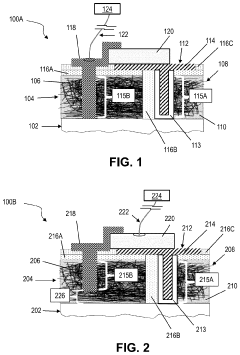
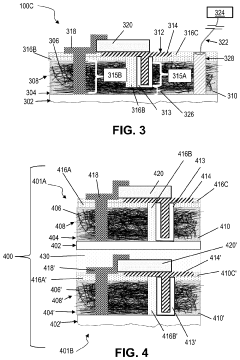
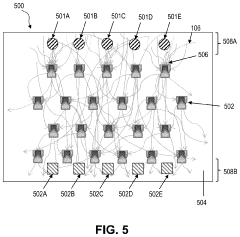
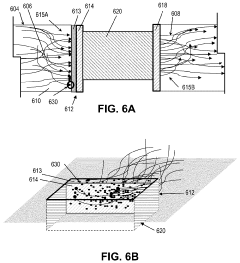
- A neural network device comprising a mesh layer of randomly dispersed conductive nano-strands with memristor devices and modulating devices that enable electrical communication between a large number of individual nano-strands, mimicking dendritic communication and allowing for non-deterministic signal propagation, exceeding the interconnect capabilities of conventional lithographic methods.
Superconducting neuromorphic computing devices and circuits
PatentWO2022192864A1
Innovation
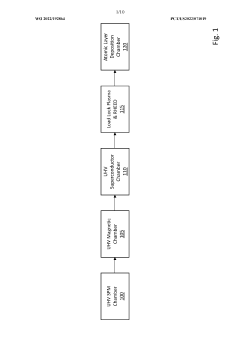
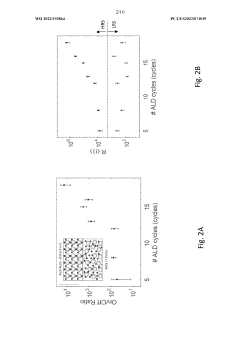
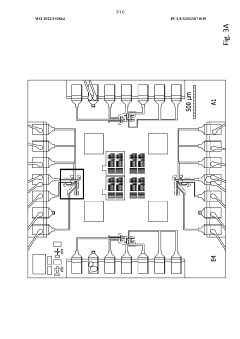
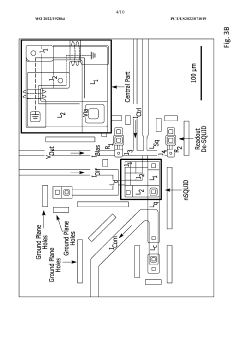
- The development of neuromorphic computing systems utilizing atomically thin, tunable superconducting memristors as synapses and ultra-sensitive superconducting quantum interference devices (SQUIDs) as neurons, which form neural units capable of performing universal logic gates and are scalable, energy-efficient, and compatible with cryogenic temperatures.
Energy Efficiency in Neuromorphic Systems
Neuromorphic computing systems have gained significant attention for their potential to revolutionize energy efficiency in computing. These systems, inspired by the human brain's architecture and functionality, offer promising solutions to the growing energy consumption challenges faced by traditional computing paradigms. The energy efficiency of neuromorphic systems stems from their ability to process information in a highly parallel and event-driven manner, similar to biological neural networks.
One of the key advantages of neuromorphic systems is their ability to perform computations with significantly lower power consumption compared to conventional von Neumann architectures. This is achieved through the use of specialized hardware components, such as memristors and artificial synapses, which can efficiently emulate the behavior of biological neurons and synapses. These components allow for local, in-memory processing, reducing the energy-intensive data movement between memory and processing units that is characteristic of traditional computing systems.
The event-driven nature of neuromorphic systems further contributes to their energy efficiency. Unlike conventional computers that operate on a fixed clock cycle, neuromorphic systems process information only when necessary, triggered by incoming signals or events. This approach significantly reduces idle power consumption and allows for more efficient utilization of computational resources.
Neuromorphic systems also excel in tasks that involve pattern recognition, sensory processing, and decision-making, which are inherently energy-intensive for traditional computing architectures. By leveraging the principles of biological neural networks, these systems can perform such tasks with remarkable efficiency, often requiring orders of magnitude less energy than their conventional counterparts.
Recent advancements in neuromorphic hardware have demonstrated impressive energy efficiency gains. For example, IBM's TrueNorth chip, a neuromorphic processor, has shown the ability to perform complex cognitive tasks while consuming only a fraction of the power required by traditional processors. Similarly, Intel's Loihi neuromorphic research chip has demonstrated significant energy efficiency improvements in various AI and machine learning applications.
The potential impact of neuromorphic computing on energy efficiency extends beyond individual devices. As these systems become more prevalent in edge computing and Internet of Things (IoT) applications, they could significantly reduce the overall energy footprint of distributed computing networks. This is particularly important as the number of connected devices continues to grow exponentially, placing increasing demands on energy resources.
However, challenges remain in fully realizing the energy efficiency potential of neuromorphic systems. Ongoing research focuses on optimizing the design and fabrication of neuromorphic hardware, improving the scalability of these systems, and developing more efficient algorithms and programming models tailored to neuromorphic architectures. As these challenges are addressed, neuromorphic computing is poised to play a crucial role in advancing energy-efficient computing solutions for a wide range of applications, from mobile devices to large-scale data centers.
One of the key advantages of neuromorphic systems is their ability to perform computations with significantly lower power consumption compared to conventional von Neumann architectures. This is achieved through the use of specialized hardware components, such as memristors and artificial synapses, which can efficiently emulate the behavior of biological neurons and synapses. These components allow for local, in-memory processing, reducing the energy-intensive data movement between memory and processing units that is characteristic of traditional computing systems.
The event-driven nature of neuromorphic systems further contributes to their energy efficiency. Unlike conventional computers that operate on a fixed clock cycle, neuromorphic systems process information only when necessary, triggered by incoming signals or events. This approach significantly reduces idle power consumption and allows for more efficient utilization of computational resources.
Neuromorphic systems also excel in tasks that involve pattern recognition, sensory processing, and decision-making, which are inherently energy-intensive for traditional computing architectures. By leveraging the principles of biological neural networks, these systems can perform such tasks with remarkable efficiency, often requiring orders of magnitude less energy than their conventional counterparts.
Recent advancements in neuromorphic hardware have demonstrated impressive energy efficiency gains. For example, IBM's TrueNorth chip, a neuromorphic processor, has shown the ability to perform complex cognitive tasks while consuming only a fraction of the power required by traditional processors. Similarly, Intel's Loihi neuromorphic research chip has demonstrated significant energy efficiency improvements in various AI and machine learning applications.
The potential impact of neuromorphic computing on energy efficiency extends beyond individual devices. As these systems become more prevalent in edge computing and Internet of Things (IoT) applications, they could significantly reduce the overall energy footprint of distributed computing networks. This is particularly important as the number of connected devices continues to grow exponentially, placing increasing demands on energy resources.
However, challenges remain in fully realizing the energy efficiency potential of neuromorphic systems. Ongoing research focuses on optimizing the design and fabrication of neuromorphic hardware, improving the scalability of these systems, and developing more efficient algorithms and programming models tailored to neuromorphic architectures. As these challenges are addressed, neuromorphic computing is poised to play a crucial role in advancing energy-efficient computing solutions for a wide range of applications, from mobile devices to large-scale data centers.
Applications and Use Cases for Neuromorphic Computing
Neuromorphic computing finds applications across various domains, leveraging its unique capabilities to address complex computational challenges. In the field of robotics, neuromorphic systems enable more efficient and adaptive control mechanisms, allowing robots to navigate dynamic environments and interact with humans more naturally. These systems can process sensory inputs in real-time, making decisions based on learned patterns and experiences, much like biological neural networks.
In the realm of autonomous vehicles, neuromorphic computing offers significant advantages in processing visual and sensor data. The ability to rapidly analyze and respond to changing road conditions, pedestrian movements, and other vehicles makes neuromorphic systems particularly suited for this application. The low power consumption of neuromorphic hardware also aligns well with the energy constraints of electric vehicles.
Healthcare is another sector benefiting from neuromorphic computing. Brain-computer interfaces (BCIs) utilizing neuromorphic principles can enhance prosthetic limb control, offering more intuitive and responsive movement for amputees. Additionally, neuromorphic systems show promise in analyzing complex medical imaging data, potentially improving diagnostic accuracy and speed in fields such as radiology and pathology.
In the domain of artificial intelligence and machine learning, neuromorphic computing presents opportunities for more efficient and scalable implementations of neural networks. The inherent parallelism and event-driven nature of neuromorphic hardware align well with the computational requirements of deep learning algorithms, potentially reducing power consumption and increasing processing speed for large-scale AI applications.
Financial technology is exploring neuromorphic computing for high-frequency trading and risk analysis. The ability to process vast amounts of market data in real-time and make split-second decisions based on complex patterns aligns well with the strengths of neuromorphic systems. This could lead to more sophisticated trading strategies and improved market predictions.
Lastly, neuromorphic computing shows promise in edge computing applications, where low power consumption and real-time processing are crucial. IoT devices, wearable technology, and smart home systems could benefit from neuromorphic hardware, enabling more intelligent and responsive edge devices while minimizing energy usage and data transmission requirements.
In the realm of autonomous vehicles, neuromorphic computing offers significant advantages in processing visual and sensor data. The ability to rapidly analyze and respond to changing road conditions, pedestrian movements, and other vehicles makes neuromorphic systems particularly suited for this application. The low power consumption of neuromorphic hardware also aligns well with the energy constraints of electric vehicles.
Healthcare is another sector benefiting from neuromorphic computing. Brain-computer interfaces (BCIs) utilizing neuromorphic principles can enhance prosthetic limb control, offering more intuitive and responsive movement for amputees. Additionally, neuromorphic systems show promise in analyzing complex medical imaging data, potentially improving diagnostic accuracy and speed in fields such as radiology and pathology.
In the domain of artificial intelligence and machine learning, neuromorphic computing presents opportunities for more efficient and scalable implementations of neural networks. The inherent parallelism and event-driven nature of neuromorphic hardware align well with the computational requirements of deep learning algorithms, potentially reducing power consumption and increasing processing speed for large-scale AI applications.
Financial technology is exploring neuromorphic computing for high-frequency trading and risk analysis. The ability to process vast amounts of market data in real-time and make split-second decisions based on complex patterns aligns well with the strengths of neuromorphic systems. This could lead to more sophisticated trading strategies and improved market predictions.
Lastly, neuromorphic computing shows promise in edge computing applications, where low power consumption and real-time processing are crucial. IoT devices, wearable technology, and smart home systems could benefit from neuromorphic hardware, enabling more intelligent and responsive edge devices while minimizing energy usage and data transmission requirements.
Unlock deeper insights with Patsnap Eureka Quick Research — get a full tech report to explore trends and direct your research. Try now!
Generate Your Research Report Instantly with AI Agent
Supercharge your innovation with Patsnap Eureka AI Agent Platform!