New frontiers in AMOLED sensor display integration.
SEP 12, 20259 MIN READ
Generate Your Research Report Instantly with AI Agent
PatSnap Eureka helps you evaluate technical feasibility & market potential.
AMOLED Sensor Display Evolution and Objectives
AMOLED (Active-Matrix Organic Light-Emitting Diode) technology has revolutionized the display industry since its inception in the late 1990s. The evolution of AMOLED displays has been marked by continuous improvements in image quality, energy efficiency, and form factor flexibility. As we enter a new era of display technology, the integration of sensors within AMOLED displays represents a significant frontier in innovation.
The primary objective of AMOLED sensor display integration is to create multifunctional displays that can not only present visual information but also capture and process various types of data. This convergence of display and sensing technologies aims to enhance user interaction, improve device functionality, and enable new applications across multiple industries.
One of the key drivers behind this technological evolution is the growing demand for more immersive and interactive user experiences. By incorporating sensors directly into the display, manufacturers can eliminate the need for separate sensor components, leading to sleeker device designs and potentially reducing production costs. This integration also opens up possibilities for more accurate and responsive touch interfaces, as well as advanced biometric authentication methods.
The evolution of AMOLED sensor displays can be traced through several key milestones. Early developments focused on improving touch sensitivity and accuracy within the display itself. This was followed by the integration of fingerprint sensors, initially as discrete components beneath the display and later as in-display sensors that could read fingerprints through the screen. The next phase saw the incorporation of ambient light and proximity sensors, further enhancing the display's ability to adapt to environmental conditions and user presence.
Current objectives in AMOLED sensor display integration include the development of more sophisticated sensing capabilities, such as health monitoring sensors that can measure heart rate, blood oxygen levels, and even blood pressure through the display surface. Another area of focus is the integration of advanced camera technologies, potentially allowing for under-display front-facing cameras that do not require a notch or punch-hole in the screen.
Looking ahead, researchers and manufacturers are exploring ways to incorporate additional sensing modalities, such as temperature, humidity, and even chemical sensors, into AMOLED displays. The ultimate goal is to create "smart surfaces" that can seamlessly blend visual output with multi-modal sensing input, paving the way for more intuitive and context-aware devices.
As AMOLED sensor display technology continues to advance, it is expected to play a crucial role in the development of next-generation smartphones, wearables, automotive interfaces, and other consumer electronics. The ongoing research in this field aims to overcome current limitations in sensor accuracy, power consumption, and manufacturing complexity, driving towards a future where displays become intelligent, interactive portals to the digital world.
The primary objective of AMOLED sensor display integration is to create multifunctional displays that can not only present visual information but also capture and process various types of data. This convergence of display and sensing technologies aims to enhance user interaction, improve device functionality, and enable new applications across multiple industries.
One of the key drivers behind this technological evolution is the growing demand for more immersive and interactive user experiences. By incorporating sensors directly into the display, manufacturers can eliminate the need for separate sensor components, leading to sleeker device designs and potentially reducing production costs. This integration also opens up possibilities for more accurate and responsive touch interfaces, as well as advanced biometric authentication methods.
The evolution of AMOLED sensor displays can be traced through several key milestones. Early developments focused on improving touch sensitivity and accuracy within the display itself. This was followed by the integration of fingerprint sensors, initially as discrete components beneath the display and later as in-display sensors that could read fingerprints through the screen. The next phase saw the incorporation of ambient light and proximity sensors, further enhancing the display's ability to adapt to environmental conditions and user presence.
Current objectives in AMOLED sensor display integration include the development of more sophisticated sensing capabilities, such as health monitoring sensors that can measure heart rate, blood oxygen levels, and even blood pressure through the display surface. Another area of focus is the integration of advanced camera technologies, potentially allowing for under-display front-facing cameras that do not require a notch or punch-hole in the screen.
Looking ahead, researchers and manufacturers are exploring ways to incorporate additional sensing modalities, such as temperature, humidity, and even chemical sensors, into AMOLED displays. The ultimate goal is to create "smart surfaces" that can seamlessly blend visual output with multi-modal sensing input, paving the way for more intuitive and context-aware devices.
As AMOLED sensor display technology continues to advance, it is expected to play a crucial role in the development of next-generation smartphones, wearables, automotive interfaces, and other consumer electronics. The ongoing research in this field aims to overcome current limitations in sensor accuracy, power consumption, and manufacturing complexity, driving towards a future where displays become intelligent, interactive portals to the digital world.
Market Demand for Integrated Display Sensors
The integration of sensors into AMOLED displays represents a significant technological advancement that is driving substantial market demand across various industries. This innovative approach combines the functionality of sensors with the high-quality visual output of AMOLED screens, creating a more seamless and interactive user experience.
In the consumer electronics sector, particularly smartphones and wearables, there is a growing demand for devices that can offer more screen real estate without increasing the overall size of the device. Integrated display sensors allow manufacturers to eliminate separate sensor components, thereby reducing bezel size and maximizing the display area. This trend aligns with consumer preferences for edge-to-edge displays and sleeker device designs.
The automotive industry is another key market driving demand for integrated display sensors. As vehicles become more technologically advanced, there is an increasing need for sophisticated in-car infotainment systems and digital dashboards. AMOLED displays with integrated sensors offer improved touch sensitivity, enhanced visibility in various lighting conditions, and the potential for gesture recognition, all of which contribute to a safer and more intuitive driving experience.
In the healthcare sector, the demand for integrated display sensors is rising due to the potential for creating more advanced medical devices. From portable diagnostic tools to patient monitoring systems, these displays can offer improved touch sensitivity for gloved operation and the ability to integrate biometric sensors directly into the screen, enhancing functionality while maintaining a compact form factor.
The gaming and entertainment industries are also showing significant interest in this technology. AMOLED displays with integrated sensors can provide more immersive gaming experiences through improved touch response and the potential for pressure-sensitive inputs. This capability opens up new possibilities for game design and user interaction.
In the industrial and manufacturing sectors, there is a growing demand for rugged, responsive touch displays that can withstand harsh environments. Integrated sensor displays offer the durability and sensitivity required for use in factory floors, construction sites, and other challenging settings.
The retail sector is exploring the use of integrated sensor displays for interactive kiosks and digital signage. These displays can offer enhanced customer engagement through touch interactivity and the potential for gesture recognition, creating more dynamic and personalized shopping experiences.
As the Internet of Things (IoT) continues to expand, the demand for smart home devices with intuitive interfaces is increasing. Integrated sensor displays in appliances, thermostats, and security systems can provide users with more streamlined control and monitoring capabilities.
The market demand for integrated display sensors is expected to grow significantly in the coming years, driven by advancements in AMOLED technology and the increasing need for more compact, multifunctional devices across various industries. This trend is likely to spur further innovation in sensor integration techniques and applications, potentially reshaping user interaction paradigms across multiple sectors.
In the consumer electronics sector, particularly smartphones and wearables, there is a growing demand for devices that can offer more screen real estate without increasing the overall size of the device. Integrated display sensors allow manufacturers to eliminate separate sensor components, thereby reducing bezel size and maximizing the display area. This trend aligns with consumer preferences for edge-to-edge displays and sleeker device designs.
The automotive industry is another key market driving demand for integrated display sensors. As vehicles become more technologically advanced, there is an increasing need for sophisticated in-car infotainment systems and digital dashboards. AMOLED displays with integrated sensors offer improved touch sensitivity, enhanced visibility in various lighting conditions, and the potential for gesture recognition, all of which contribute to a safer and more intuitive driving experience.
In the healthcare sector, the demand for integrated display sensors is rising due to the potential for creating more advanced medical devices. From portable diagnostic tools to patient monitoring systems, these displays can offer improved touch sensitivity for gloved operation and the ability to integrate biometric sensors directly into the screen, enhancing functionality while maintaining a compact form factor.
The gaming and entertainment industries are also showing significant interest in this technology. AMOLED displays with integrated sensors can provide more immersive gaming experiences through improved touch response and the potential for pressure-sensitive inputs. This capability opens up new possibilities for game design and user interaction.
In the industrial and manufacturing sectors, there is a growing demand for rugged, responsive touch displays that can withstand harsh environments. Integrated sensor displays offer the durability and sensitivity required for use in factory floors, construction sites, and other challenging settings.
The retail sector is exploring the use of integrated sensor displays for interactive kiosks and digital signage. These displays can offer enhanced customer engagement through touch interactivity and the potential for gesture recognition, creating more dynamic and personalized shopping experiences.
As the Internet of Things (IoT) continues to expand, the demand for smart home devices with intuitive interfaces is increasing. Integrated sensor displays in appliances, thermostats, and security systems can provide users with more streamlined control and monitoring capabilities.
The market demand for integrated display sensors is expected to grow significantly in the coming years, driven by advancements in AMOLED technology and the increasing need for more compact, multifunctional devices across various industries. This trend is likely to spur further innovation in sensor integration techniques and applications, potentially reshaping user interaction paradigms across multiple sectors.
Current Challenges in AMOLED Sensor Integration
The integration of sensors into AMOLED displays presents several significant challenges that researchers and manufacturers are currently grappling with. One of the primary obstacles is the interference between the display and sensor functionalities. AMOLED displays emit light, which can potentially disrupt the operation of optical sensors, such as those used for under-display fingerprint recognition or front-facing cameras. This interference can lead to reduced sensor accuracy and performance.
Another major challenge lies in maintaining display quality while incorporating sensors. The presence of sensors beneath or within the display can affect pixel density, color accuracy, and overall visual performance. Manufacturers must find ways to minimize these impacts without compromising the high-quality viewing experience that AMOLED displays are known for.
Space constraints pose a significant hurdle in sensor integration. Modern smartphones and other devices demand increasingly thin profiles, leaving little room for additional components. Integrating sensors into the display stack without increasing device thickness requires innovative design solutions and advanced manufacturing techniques.
Power consumption is another critical concern. Both AMOLED displays and sensors require power to operate, and their integration can lead to increased energy demands. Balancing the power requirements of both components while maintaining the energy efficiency expected in modern devices is a complex task that engineers must address.
Durability and reliability present additional challenges. Sensors integrated into displays must withstand the same environmental stresses and daily wear as the display itself. Ensuring long-term functionality and accuracy of these integrated sensors under various conditions is crucial for widespread adoption.
Manufacturing complexity is a significant obstacle in AMOLED sensor integration. The production process must be refined to accommodate the precise placement and connection of sensors within the display structure. This increased complexity can lead to higher production costs and potentially lower yields, impacting the overall affordability of devices featuring this technology.
Lastly, software integration and calibration pose ongoing challenges. Developing algorithms that can effectively process sensor data while accounting for potential display interference requires sophisticated software engineering. Additionally, each integrated sensor may require individual calibration to ensure optimal performance, adding another layer of complexity to the manufacturing and quality control processes.
Another major challenge lies in maintaining display quality while incorporating sensors. The presence of sensors beneath or within the display can affect pixel density, color accuracy, and overall visual performance. Manufacturers must find ways to minimize these impacts without compromising the high-quality viewing experience that AMOLED displays are known for.
Space constraints pose a significant hurdle in sensor integration. Modern smartphones and other devices demand increasingly thin profiles, leaving little room for additional components. Integrating sensors into the display stack without increasing device thickness requires innovative design solutions and advanced manufacturing techniques.
Power consumption is another critical concern. Both AMOLED displays and sensors require power to operate, and their integration can lead to increased energy demands. Balancing the power requirements of both components while maintaining the energy efficiency expected in modern devices is a complex task that engineers must address.
Durability and reliability present additional challenges. Sensors integrated into displays must withstand the same environmental stresses and daily wear as the display itself. Ensuring long-term functionality and accuracy of these integrated sensors under various conditions is crucial for widespread adoption.
Manufacturing complexity is a significant obstacle in AMOLED sensor integration. The production process must be refined to accommodate the precise placement and connection of sensors within the display structure. This increased complexity can lead to higher production costs and potentially lower yields, impacting the overall affordability of devices featuring this technology.
Lastly, software integration and calibration pose ongoing challenges. Developing algorithms that can effectively process sensor data while accounting for potential display interference requires sophisticated software engineering. Additionally, each integrated sensor may require individual calibration to ensure optimal performance, adding another layer of complexity to the manufacturing and quality control processes.
Existing AMOLED Sensor Integration Solutions
01 Integration of sensors in AMOLED displays
AMOLED displays can be integrated with various sensors, such as fingerprint sensors, touch sensors, and light sensors. This integration allows for enhanced functionality and user interaction while maintaining the display's visual quality. The sensors can be embedded within the display layers or incorporated into the pixel structure, enabling features like in-display fingerprint recognition and adaptive brightness control.- Integration of sensors in AMOLED displays: AMOLED displays can be integrated with various sensors, such as fingerprint sensors, touch sensors, or light sensors. This integration allows for enhanced functionality and user interaction while maintaining the display's visual quality. The sensors can be embedded within the display layers or incorporated into the pixel structure, enabling features like in-display fingerprint recognition or adaptive brightness control.
- Pixel circuit design for AMOLED displays with integrated sensors: Specialized pixel circuits are designed to accommodate both display and sensing functions in AMOLED displays. These circuits may include additional transistors or capacitors to support sensor operations without compromising display performance. The design focuses on minimizing interference between display and sensing functions while optimizing power efficiency and response time.
- Driving methods for AMOLED displays with integrated sensors: Novel driving methods are developed to manage the dual functionality of display and sensing in integrated AMOLED panels. These methods may involve time-division multiplexing between display and sensing operations, or simultaneous operation through specialized circuitry. The driving schemes aim to maintain display quality while enabling accurate and responsive sensor functionality.
- Fabrication techniques for sensor-integrated AMOLED displays: Advanced fabrication techniques are employed to integrate sensors into AMOLED display structures. These may include thin-film deposition methods, etching processes, or novel materials that allow for seamless integration of sensing elements within the display layers. The fabrication processes focus on maintaining display performance while incorporating additional sensing capabilities.
- Power management in sensor-integrated AMOLED displays: Efficient power management strategies are implemented to handle the increased power requirements of sensor-integrated AMOLED displays. These may include selective activation of sensing areas, dynamic power allocation between display and sensing functions, or low-power sensing modes. The goal is to minimize overall power consumption while maintaining optimal performance for both display and sensing operations.
02 Pixel circuit design for sensor integration
Specialized pixel circuit designs are developed to accommodate sensor integration in AMOLED displays. These circuits may include additional transistors or components to support both display and sensing functions. The design aims to minimize interference between display and sensing operations while maintaining high image quality and sensor accuracy.Expand Specific Solutions03 Driving methods for integrated sensor-display panels
Novel driving methods are implemented to manage the operation of integrated sensor-display panels. These methods coordinate the timing and control of display refresh cycles with sensor scanning periods to optimize performance and reduce power consumption. Advanced algorithms may be used to process sensor data and adjust display parameters in real-time.Expand Specific Solutions04 Fabrication techniques for sensor-integrated AMOLED displays
Specialized fabrication techniques are developed to manufacture sensor-integrated AMOLED displays. These may include new deposition methods, etching processes, or material combinations to create layered structures that incorporate both display and sensing elements. The goal is to achieve high yield and reliability while maintaining the display's flexibility and thinness.Expand Specific Solutions05 Power management in sensor-integrated AMOLED displays
Efficient power management strategies are crucial for sensor-integrated AMOLED displays. These may include selective activation of display areas or sensors, dynamic refresh rate adjustment, and intelligent power distribution between display and sensing functions. Advanced power management circuits and algorithms are designed to optimize energy consumption while maintaining performance.Expand Specific Solutions
Key Players in AMOLED Sensor Display Industry
The AMOLED sensor display integration market is in a growth phase, driven by increasing demand for advanced display technologies in consumer electronics and automotive sectors. The market size is expanding rapidly, with major players like Samsung Electronics, BOE Technology, and TCL China Star Optoelectronics leading the charge. These companies are investing heavily in R&D to improve AMOLED technology and integrate sensors seamlessly. The technology is maturing, with companies like IGNIS Innovation and Everdisplay Optronics focusing on solving challenges such as image sticking and burn-in. As the technology advances, we're seeing increased adoption in smartphones, wearables, and automotive displays, indicating a promising future for AMOLED sensor display integration.
BOE Technology Group Co., Ltd.
Technical Solution: BOE has developed advanced AMOLED sensor display integration technologies, including on-cell touch AMOLED displays and in-display fingerprint sensors. Their latest innovation involves integrating micro-LED technology with AMOLED displays to create high-brightness, low-power consumption screens with enhanced touch sensitivity[1]. BOE's flexible AMOLED displays incorporate advanced strain sensors, enabling foldable and rollable devices with improved durability and user interaction capabilities[2]. The company has also made strides in integrating health monitoring sensors directly into AMOLED panels, allowing for non-invasive measurement of vital signs such as heart rate and blood oxygen levels[3].
Strengths: Vertical integration capabilities, large-scale production, diverse product portfolio. Weaknesses: Relatively new to high-end AMOLED market, potential quality consistency issues in mass production.
Samsung Electronics Co., Ltd.
Technical Solution: Samsung has pioneered several breakthroughs in AMOLED sensor display integration. Their latest development includes the integration of an under-display camera (UDC) with their AMOLED panels, utilizing advanced pixel arrangements and AI-enhanced image processing to improve image quality[4]. Samsung has also introduced touch-integrated AMOLED displays with enhanced pressure sensitivity, enabling new user interface paradigms[5]. Furthermore, they have developed AMOLED displays with integrated biosensors capable of measuring blood pressure and stress levels, potentially revolutionizing mobile health monitoring[6].
Strengths: Market leader in AMOLED technology, strong R&D capabilities, vertical integration. Weaknesses: High production costs, potential oversupply issues.
Breakthrough Technologies for Display Sensors
Active matrix organic light emitting diode pixel unit circuit, display panel and electronic product
PatentActiveUS9459721B2
Innovation
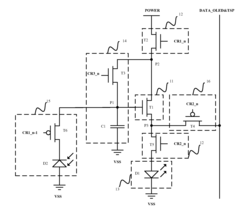
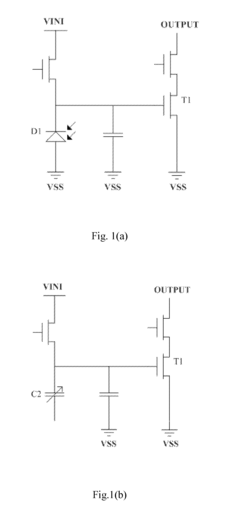
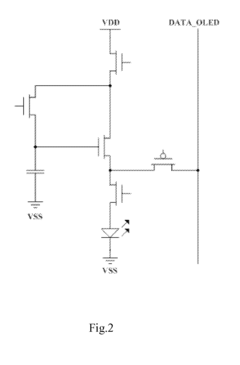
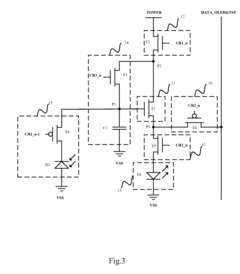
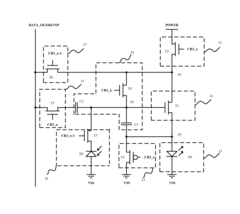
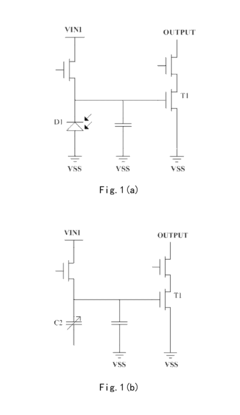
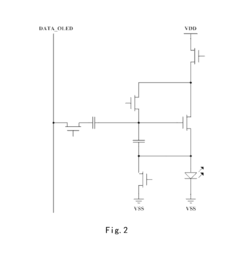
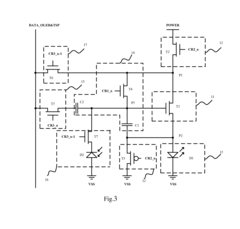
- The AMOLED pixel unit circuit is redesigned to include a light emitting module, a driving module, a threshold compensating module, a light emission controlling module, a touch sensing module, and an induction signal outputting module, which utilize existing data lines and control signals to integrate the TSP in Cell circuit, sharing circuit elements and control signals to minimize additional components.
Active matrix organic light emitting diode pixel unit circuit and display panel
PatentActiveUS9530354B2
Innovation
- An active matrix organic light emitting diode pixel unit circuit is designed with specific modules such as a light emitting module, driving module, threshold compensation module, light emitting control module, touch sensing module, and sensing signal output module, utilizing common data lines and control signals to integrate the TSP in Cell circuit, including additional TFTs and capacitors, while optimizing circuit components and signal operations.
Manufacturing Processes for Integrated Displays
The manufacturing processes for integrated AMOLED sensor displays represent a critical frontier in display technology, combining advanced organic light-emitting diode (OLED) technology with integrated sensing capabilities. These processes involve several key stages, each requiring precise control and innovative techniques to achieve seamless integration.
The first stage in manufacturing integrated displays is the preparation of the substrate, typically a flexible or rigid material such as polyimide or glass. This substrate undergoes rigorous cleaning and surface treatment to ensure optimal adhesion and uniformity for subsequent layers. The next critical step is the deposition of thin-film transistors (TFTs) that form the backplane of the display. This process often utilizes low-temperature polycrystalline silicon (LTPS) or oxide TFT technologies, which offer high electron mobility and stability.
Following the TFT layer, the OLED stack is deposited through a series of vacuum deposition processes. This stack typically consists of hole injection, hole transport, emissive, and electron transport layers, each requiring precise thickness control and material purity. The integration of sensor elements within this stack presents unique challenges, necessitating novel deposition techniques and materials that maintain display performance while enabling sensing functionality.
One of the most critical aspects of manufacturing integrated displays is the encapsulation process. This step protects the sensitive OLED materials and integrated sensors from moisture and oxygen, which can significantly degrade performance and lifespan. Advanced thin-film encapsulation (TFE) techniques, such as atomic layer deposition (ALD), are employed to create ultra-thin, highly effective barrier layers.
The integration of touch and other sensing functionalities often involves additional layers or embedded elements within the display stack. This may include transparent conductive layers for capacitive touch sensing or specialized materials for pressure or temperature sensing. The manufacturing process must carefully balance the addition of these elements with the optical and electrical performance of the display.
Finally, the manufacturing process concludes with module assembly, where the display panel is integrated with driving circuits, connectors, and potentially a protective cover glass. This stage requires precise alignment and bonding techniques to ensure the integrity of the integrated sensors and display elements.
Throughout these manufacturing processes, advanced quality control measures are implemented, including in-line optical and electrical testing, to ensure the functionality of both display and sensing elements. The development of these manufacturing processes continues to evolve, with ongoing research focused on improving yield, reducing costs, and enhancing the integration of advanced sensing capabilities in AMOLED displays.
The first stage in manufacturing integrated displays is the preparation of the substrate, typically a flexible or rigid material such as polyimide or glass. This substrate undergoes rigorous cleaning and surface treatment to ensure optimal adhesion and uniformity for subsequent layers. The next critical step is the deposition of thin-film transistors (TFTs) that form the backplane of the display. This process often utilizes low-temperature polycrystalline silicon (LTPS) or oxide TFT technologies, which offer high electron mobility and stability.
Following the TFT layer, the OLED stack is deposited through a series of vacuum deposition processes. This stack typically consists of hole injection, hole transport, emissive, and electron transport layers, each requiring precise thickness control and material purity. The integration of sensor elements within this stack presents unique challenges, necessitating novel deposition techniques and materials that maintain display performance while enabling sensing functionality.
One of the most critical aspects of manufacturing integrated displays is the encapsulation process. This step protects the sensitive OLED materials and integrated sensors from moisture and oxygen, which can significantly degrade performance and lifespan. Advanced thin-film encapsulation (TFE) techniques, such as atomic layer deposition (ALD), are employed to create ultra-thin, highly effective barrier layers.
The integration of touch and other sensing functionalities often involves additional layers or embedded elements within the display stack. This may include transparent conductive layers for capacitive touch sensing or specialized materials for pressure or temperature sensing. The manufacturing process must carefully balance the addition of these elements with the optical and electrical performance of the display.
Finally, the manufacturing process concludes with module assembly, where the display panel is integrated with driving circuits, connectors, and potentially a protective cover glass. This stage requires precise alignment and bonding techniques to ensure the integrity of the integrated sensors and display elements.
Throughout these manufacturing processes, advanced quality control measures are implemented, including in-line optical and electrical testing, to ensure the functionality of both display and sensing elements. The development of these manufacturing processes continues to evolve, with ongoing research focused on improving yield, reducing costs, and enhancing the integration of advanced sensing capabilities in AMOLED displays.
Energy Efficiency in Sensor-Integrated Displays
Energy efficiency is a critical consideration in the development of sensor-integrated displays, particularly in the context of AMOLED technology. As these displays become more sophisticated, incorporating various sensors for enhanced functionality, the challenge of maintaining low power consumption becomes increasingly significant.
AMOLED displays inherently offer advantages in energy efficiency compared to traditional LCD technology, primarily due to their ability to selectively illuminate individual pixels. This characteristic allows for true blacks and reduced power consumption in darker scenes. However, the integration of sensors introduces new energy demands that must be carefully managed.
One of the key approaches to improving energy efficiency in sensor-integrated AMOLED displays is the development of low-power sensing technologies. These include advancements in photodiodes, capacitive touch sensors, and pressure-sensitive layers that can operate with minimal power draw. By optimizing the power consumption of individual sensor components, the overall energy footprint of the display system can be significantly reduced.
Another important strategy involves intelligent power management systems. These systems can dynamically adjust the display's brightness and sensor activation based on ambient conditions and user interaction patterns. For example, proximity sensors can be used to detect when a device is in a pocket or face-down, allowing the display to enter a low-power state. Similarly, ambient light sensors can fine-tune display brightness to conserve energy while maintaining optimal visibility.
The integration of energy harvesting technologies presents an exciting frontier in enhancing the energy efficiency of sensor-integrated displays. Transparent solar cells overlaid on the display surface can capture ambient light to supplement the device's power supply. Additionally, piezoelectric elements incorporated into the display structure can potentially convert mechanical energy from touch interactions into electrical energy.
Advancements in display driver ICs and power management circuits also play a crucial role in optimizing energy consumption. These components can be designed to operate at lower voltages and with improved efficiency, reducing the overall power requirements of the display system. Furthermore, the development of more efficient OLED materials and pixel structures contributes to lower power consumption at the fundamental level of display operation.
As sensor integration becomes more complex, the challenge of managing data processing and communication within the display system grows. Edge computing techniques and low-power microcontrollers can be employed to process sensor data locally, reducing the energy costs associated with data transmission to the main device processor. This approach not only conserves power but also enhances response times for sensor-dependent features.
AMOLED displays inherently offer advantages in energy efficiency compared to traditional LCD technology, primarily due to their ability to selectively illuminate individual pixels. This characteristic allows for true blacks and reduced power consumption in darker scenes. However, the integration of sensors introduces new energy demands that must be carefully managed.
One of the key approaches to improving energy efficiency in sensor-integrated AMOLED displays is the development of low-power sensing technologies. These include advancements in photodiodes, capacitive touch sensors, and pressure-sensitive layers that can operate with minimal power draw. By optimizing the power consumption of individual sensor components, the overall energy footprint of the display system can be significantly reduced.
Another important strategy involves intelligent power management systems. These systems can dynamically adjust the display's brightness and sensor activation based on ambient conditions and user interaction patterns. For example, proximity sensors can be used to detect when a device is in a pocket or face-down, allowing the display to enter a low-power state. Similarly, ambient light sensors can fine-tune display brightness to conserve energy while maintaining optimal visibility.
The integration of energy harvesting technologies presents an exciting frontier in enhancing the energy efficiency of sensor-integrated displays. Transparent solar cells overlaid on the display surface can capture ambient light to supplement the device's power supply. Additionally, piezoelectric elements incorporated into the display structure can potentially convert mechanical energy from touch interactions into electrical energy.
Advancements in display driver ICs and power management circuits also play a crucial role in optimizing energy consumption. These components can be designed to operate at lower voltages and with improved efficiency, reducing the overall power requirements of the display system. Furthermore, the development of more efficient OLED materials and pixel structures contributes to lower power consumption at the fundamental level of display operation.
As sensor integration becomes more complex, the challenge of managing data processing and communication within the display system grows. Edge computing techniques and low-power microcontrollers can be employed to process sensor data locally, reducing the energy costs associated with data transmission to the main device processor. This approach not only conserves power but also enhances response times for sensor-dependent features.
Unlock deeper insights with PatSnap Eureka Quick Research — get a full tech report to explore trends and direct your research. Try now!
Generate Your Research Report Instantly with AI Agent
Supercharge your innovation with PatSnap Eureka AI Agent Platform!