
Operando Spectroscopy For Tracking SAC Active Sites
SEP 12, 202510 MIN READ
Generate Your Research Report Instantly with AI Agent
Patsnap Eureka helps you evaluate technical feasibility & market potential.
SAC Operando Spectroscopy Background and Objectives
Single-atom catalysts (SACs) have emerged as a frontier in heterogeneous catalysis research over the past decade, offering unprecedented atom efficiency and unique catalytic properties. The development of operando spectroscopy techniques for tracking SAC active sites represents a critical advancement in understanding the dynamic behavior of these catalysts under realistic reaction conditions. Historically, catalyst characterization relied heavily on ex-situ methods, which often failed to capture the true working state of catalytic materials.
The evolution of operando spectroscopy techniques began in the late 1990s with rudimentary in-situ measurements, but has accelerated dramatically in the past decade with the integration of advanced synchrotron radiation facilities and sophisticated spectroscopic methods. This technological progression has enabled researchers to monitor atomic-scale changes in real-time during catalytic processes, providing unprecedented insights into reaction mechanisms and active site transformations.
The primary objective of operando spectroscopy for SACs is to bridge the "materials gap" and "pressure gap" that have long challenged the field of catalysis. By enabling direct observation of catalytic centers under working conditions, these techniques aim to establish structure-performance relationships that can guide rational catalyst design. This represents a paradigm shift from traditional trial-and-error approaches to knowledge-driven catalyst development.
Current research focuses on developing multi-modal operando characterization techniques that combine complementary methods such as X-ray absorption spectroscopy (XAS), X-ray photoelectron spectroscopy (XPS), and infrared spectroscopy. These integrated approaches provide comprehensive information about electronic structure, coordination environment, and adsorbate interactions at single-atom active sites during catalytic turnover.
The technical challenges being addressed include improving temporal and spatial resolution, enhancing signal-to-noise ratios for detecting dilute active species, and developing sophisticated data analysis algorithms to extract meaningful information from complex spectral datasets. Advances in machine learning and artificial intelligence are increasingly being applied to interpret the massive datasets generated by operando experiments.
Looking forward, the field aims to develop operando techniques capable of single-atom resolution with millisecond time scales, potentially revealing transient intermediate states that govern catalytic performance. The ultimate goal is to establish a predictive framework that connects atomic-scale structural dynamics with macroscopic catalytic performance metrics such as activity, selectivity, and stability.
This technological trajectory aligns with broader scientific trends toward atomic-precision materials design and the growing emphasis on sustainable chemical processes, positioning operando spectroscopy as a cornerstone technology for next-generation catalyst development.
The evolution of operando spectroscopy techniques began in the late 1990s with rudimentary in-situ measurements, but has accelerated dramatically in the past decade with the integration of advanced synchrotron radiation facilities and sophisticated spectroscopic methods. This technological progression has enabled researchers to monitor atomic-scale changes in real-time during catalytic processes, providing unprecedented insights into reaction mechanisms and active site transformations.
The primary objective of operando spectroscopy for SACs is to bridge the "materials gap" and "pressure gap" that have long challenged the field of catalysis. By enabling direct observation of catalytic centers under working conditions, these techniques aim to establish structure-performance relationships that can guide rational catalyst design. This represents a paradigm shift from traditional trial-and-error approaches to knowledge-driven catalyst development.
Current research focuses on developing multi-modal operando characterization techniques that combine complementary methods such as X-ray absorption spectroscopy (XAS), X-ray photoelectron spectroscopy (XPS), and infrared spectroscopy. These integrated approaches provide comprehensive information about electronic structure, coordination environment, and adsorbate interactions at single-atom active sites during catalytic turnover.
The technical challenges being addressed include improving temporal and spatial resolution, enhancing signal-to-noise ratios for detecting dilute active species, and developing sophisticated data analysis algorithms to extract meaningful information from complex spectral datasets. Advances in machine learning and artificial intelligence are increasingly being applied to interpret the massive datasets generated by operando experiments.
Looking forward, the field aims to develop operando techniques capable of single-atom resolution with millisecond time scales, potentially revealing transient intermediate states that govern catalytic performance. The ultimate goal is to establish a predictive framework that connects atomic-scale structural dynamics with macroscopic catalytic performance metrics such as activity, selectivity, and stability.
This technological trajectory aligns with broader scientific trends toward atomic-precision materials design and the growing emphasis on sustainable chemical processes, positioning operando spectroscopy as a cornerstone technology for next-generation catalyst development.
Market Applications of Single-Atom Catalysts
Single-atom catalysts (SACs) have emerged as a revolutionary class of materials with diverse market applications across multiple industries. Their exceptional catalytic properties, including high atom utilization efficiency and unique selectivity, position them as transformative technologies in several high-value markets.
In the energy sector, SACs are making significant inroads in fuel cell technologies, particularly in oxygen reduction reactions (ORR) and hydrogen evolution reactions (HER). Companies like Toyota and Hyundai are exploring SAC integration in their next-generation fuel cell vehicles to enhance efficiency while reducing platinum group metal usage. The renewable energy storage market also benefits from SACs in metal-air batteries and electrolyzers, where they facilitate more efficient energy conversion processes.
Environmental applications represent another substantial market for SACs. In automotive emission control, SACs offer superior performance in catalytic converters at lower precious metal loadings. The water treatment industry is adopting SAC-based technologies for contaminant removal and disinfection processes, with particular success in addressing persistent organic pollutants and heavy metal contamination.
The petrochemical industry constitutes a major application area, where SACs enable more selective and energy-efficient conversion processes. Methane activation, a historically challenging reaction, has seen breakthroughs with iron and copper-based SACs. Similarly, in fine chemical synthesis, SACs provide unprecedented selectivity for pharmaceutical intermediates and specialty chemicals, reducing waste and improving yield.
Emerging applications in photocatalysis are expanding SAC market potential, particularly in artificial photosynthesis systems that convert CO2 into value-added chemicals. This application addresses both renewable energy production and carbon capture objectives, attracting significant investment from both energy companies and environmental technology firms.
The biomedical sector represents a nascent but promising market for SACs, with applications in targeted drug delivery systems and diagnostic imaging. SAC-based nanozymes that mimic natural enzyme activity show potential in biosensing and therapeutic applications, though regulatory approval pathways remain challenging.
Market adoption of SACs faces several barriers, including scalable manufacturing challenges, catalyst stability under industrial conditions, and integration with existing infrastructure. However, recent advances in atomic layer deposition and wet chemistry synthesis methods are addressing these limitations, accelerating commercial deployment across multiple sectors.
The global market for advanced catalysts, including SACs, is experiencing robust growth as industries seek more sustainable and efficient processes, with particularly strong demand in Asia-Pacific regions where manufacturing and environmental remediation needs intersect.
In the energy sector, SACs are making significant inroads in fuel cell technologies, particularly in oxygen reduction reactions (ORR) and hydrogen evolution reactions (HER). Companies like Toyota and Hyundai are exploring SAC integration in their next-generation fuel cell vehicles to enhance efficiency while reducing platinum group metal usage. The renewable energy storage market also benefits from SACs in metal-air batteries and electrolyzers, where they facilitate more efficient energy conversion processes.
Environmental applications represent another substantial market for SACs. In automotive emission control, SACs offer superior performance in catalytic converters at lower precious metal loadings. The water treatment industry is adopting SAC-based technologies for contaminant removal and disinfection processes, with particular success in addressing persistent organic pollutants and heavy metal contamination.
The petrochemical industry constitutes a major application area, where SACs enable more selective and energy-efficient conversion processes. Methane activation, a historically challenging reaction, has seen breakthroughs with iron and copper-based SACs. Similarly, in fine chemical synthesis, SACs provide unprecedented selectivity for pharmaceutical intermediates and specialty chemicals, reducing waste and improving yield.
Emerging applications in photocatalysis are expanding SAC market potential, particularly in artificial photosynthesis systems that convert CO2 into value-added chemicals. This application addresses both renewable energy production and carbon capture objectives, attracting significant investment from both energy companies and environmental technology firms.
The biomedical sector represents a nascent but promising market for SACs, with applications in targeted drug delivery systems and diagnostic imaging. SAC-based nanozymes that mimic natural enzyme activity show potential in biosensing and therapeutic applications, though regulatory approval pathways remain challenging.
Market adoption of SACs faces several barriers, including scalable manufacturing challenges, catalyst stability under industrial conditions, and integration with existing infrastructure. However, recent advances in atomic layer deposition and wet chemistry synthesis methods are addressing these limitations, accelerating commercial deployment across multiple sectors.
The global market for advanced catalysts, including SACs, is experiencing robust growth as industries seek more sustainable and efficient processes, with particularly strong demand in Asia-Pacific regions where manufacturing and environmental remediation needs intersect.
Current Challenges in SAC Active Site Characterization
Despite significant advancements in single-atom catalyst (SAC) research, characterizing active sites under working conditions remains one of the most formidable challenges in the field. Traditional ex-situ characterization techniques often fail to capture the dynamic nature of SAC active sites, which can undergo substantial structural and electronic changes during catalytic reactions. This disconnect between laboratory characterization and actual working conditions creates a significant knowledge gap in understanding true catalytic mechanisms.
The primary challenge lies in the inherent instability of single-atom species under reaction conditions. Single atoms can migrate, aggregate, or change oxidation states rapidly when exposed to reactants, temperature fluctuations, or electrical potentials. These transformations often occur on microsecond to millisecond timescales, requiring characterization techniques with exceptional temporal resolution that many current methods lack.
Spatial resolution presents another significant hurdle. With active sites consisting of individual atoms dispersed on support materials, techniques must achieve atomic-level resolution while simultaneously maintaining the ability to track these atoms during reactions. The trade-off between spatial resolution and temporal dynamics creates a technical dilemma that conventional spectroscopic methods struggle to overcome.
Environmental constraints further complicate characterization efforts. Many catalytic reactions occur in harsh environments—high temperatures, elevated pressures, or corrosive media—that are incompatible with sensitive analytical instruments. Creating specialized cells that can withstand these conditions while maintaining transparency to probing radiation (X-rays, electrons, or light) requires sophisticated engineering solutions that are still being developed.
Signal-to-noise ratio limitations represent a critical barrier, particularly when attempting to detect the spectroscopic signature of individual atoms against the background of support materials. The dilute nature of active sites in SACs means that signals from the catalytically relevant atoms are often overwhelmed by signals from the more abundant support material or reaction media.
Data interpretation challenges compound these technical difficulties. Correlating spectroscopic changes with catalytic performance requires complex computational models and theoretical frameworks that can bridge experimental observations with atomic-level understanding. The multidisciplinary nature of this challenge necessitates expertise in spectroscopy, catalysis, computational chemistry, and materials science.
Beam-induced artifacts introduce additional complications, as the high-energy probes used in many spectroscopic techniques can themselves alter the very active sites being studied. Distinguishing between genuine catalytic phenomena and artifacts induced by the characterization method requires careful experimental design and validation across multiple techniques.
The primary challenge lies in the inherent instability of single-atom species under reaction conditions. Single atoms can migrate, aggregate, or change oxidation states rapidly when exposed to reactants, temperature fluctuations, or electrical potentials. These transformations often occur on microsecond to millisecond timescales, requiring characterization techniques with exceptional temporal resolution that many current methods lack.
Spatial resolution presents another significant hurdle. With active sites consisting of individual atoms dispersed on support materials, techniques must achieve atomic-level resolution while simultaneously maintaining the ability to track these atoms during reactions. The trade-off between spatial resolution and temporal dynamics creates a technical dilemma that conventional spectroscopic methods struggle to overcome.
Environmental constraints further complicate characterization efforts. Many catalytic reactions occur in harsh environments—high temperatures, elevated pressures, or corrosive media—that are incompatible with sensitive analytical instruments. Creating specialized cells that can withstand these conditions while maintaining transparency to probing radiation (X-rays, electrons, or light) requires sophisticated engineering solutions that are still being developed.
Signal-to-noise ratio limitations represent a critical barrier, particularly when attempting to detect the spectroscopic signature of individual atoms against the background of support materials. The dilute nature of active sites in SACs means that signals from the catalytically relevant atoms are often overwhelmed by signals from the more abundant support material or reaction media.
Data interpretation challenges compound these technical difficulties. Correlating spectroscopic changes with catalytic performance requires complex computational models and theoretical frameworks that can bridge experimental observations with atomic-level understanding. The multidisciplinary nature of this challenge necessitates expertise in spectroscopy, catalysis, computational chemistry, and materials science.
Beam-induced artifacts introduce additional complications, as the high-energy probes used in many spectroscopic techniques can themselves alter the very active sites being studied. Distinguishing between genuine catalytic phenomena and artifacts induced by the characterization method requires careful experimental design and validation across multiple techniques.
State-of-the-Art Operando Spectroscopy Methods
01 In-situ spectroscopic techniques for catalyst active site monitoring
Various spectroscopic techniques can be employed in operando conditions to track active sites in catalysts during reactions. These methods allow researchers to observe catalytic processes in real-time, providing insights into reaction mechanisms and active site behavior under working conditions. Techniques such as X-ray absorption spectroscopy, infrared spectroscopy, and Raman spectroscopy are particularly valuable for monitoring structural and electronic changes at active sites during catalysis.- In-situ spectroscopic techniques for catalyst active site monitoring: Various in-situ spectroscopic techniques are employed to monitor catalyst active sites during reactions. These techniques include X-ray absorption spectroscopy, infrared spectroscopy, and Raman spectroscopy, which allow researchers to observe changes in catalyst structure and behavior under reaction conditions. This real-time monitoring helps identify the active species responsible for catalytic activity and understand reaction mechanisms at the molecular level.
- Operando spectroscopy for electrochemical catalyst characterization: Operando spectroscopy methods are specifically adapted for electrochemical systems to track active sites during battery operation, fuel cell functioning, and electrocatalytic processes. These techniques combine spectroscopic measurements with electrochemical control to correlate structural changes with performance metrics. The approach enables researchers to identify degradation mechanisms, optimize electrode materials, and develop more efficient energy storage and conversion devices.
- Advanced imaging and microscopy for active site visualization: High-resolution imaging and microscopy techniques are integrated with spectroscopic methods to visualize active sites at the nanoscale. These approaches include scanning probe microscopy, electron microscopy with spectroscopic capabilities, and super-resolution optical techniques. The combination allows for spatial mapping of catalytic activity across surfaces and interfaces, revealing heterogeneity in active site distribution and accessibility.
- Machine learning and data analysis for active site identification: Advanced computational methods and machine learning algorithms are applied to analyze complex spectroscopic data for active site identification. These approaches help extract meaningful patterns from multivariate datasets, identify spectral signatures associated with active sites, and predict catalytic performance. The integration of computational tools with experimental techniques accelerates the discovery and optimization of catalysts by establishing structure-function relationships.
- Novel materials and sample preparation for operando studies: Specialized materials and sample preparation techniques are developed to facilitate operando spectroscopic studies. These include transparent or thin-film electrodes, microfluidic reactors, and specialized cells that allow for simultaneous spectroscopic measurement and reaction control. Such innovations enable researchers to overcome technical challenges in studying active sites under realistic operating conditions, bridging the gap between fundamental understanding and practical applications.
02 Advanced imaging methods for active site visualization
Advanced imaging technologies enable direct visualization of active sites during chemical reactions. These methods provide spatial resolution of catalytic activity and can track the evolution of active sites over time. Techniques include electron microscopy variants adapted for operando conditions, scanning probe microscopy, and fluorescence imaging approaches that can correlate structural features with catalytic performance while maintaining reaction conditions.Expand Specific Solutions03 Electrochemical operando spectroscopy for energy materials
Specialized operando spectroscopy techniques have been developed for tracking active sites in electrochemical systems such as batteries, fuel cells, and electrocatalysts. These methods combine spectroscopic measurements with electrochemical control to monitor active site changes during charge/discharge cycles or electrocatalytic reactions. This approach is particularly valuable for understanding degradation mechanisms and optimizing performance in energy storage and conversion devices.Expand Specific Solutions04 Data analysis and computational methods for active site identification
Advanced data analysis techniques and computational methods enhance the interpretation of operando spectroscopy data for active site tracking. Machine learning algorithms, multivariate analysis, and theoretical modeling help researchers extract meaningful information from complex spectroscopic datasets. These approaches enable the identification of active site signatures, reaction intermediates, and mechanistic pathways that might otherwise be difficult to discern from raw experimental data.Expand Specific Solutions05 Multimodal spectroscopy approaches for comprehensive active site characterization
Combining multiple spectroscopic techniques in operando conditions provides complementary information about active sites during catalysis. This multimodal approach offers a more comprehensive understanding of active site structure, electronic properties, and reaction mechanisms. By correlating data from different spectroscopic methods, researchers can develop more accurate models of active site behavior and catalyst function under realistic operating conditions.Expand Specific Solutions
Leading Research Groups and Industrial Partners
The operando spectroscopy for tracking SAC active sites technology landscape is currently in an early growth phase, with significant research momentum but limited commercial maturity. The market is expanding rapidly as single-atom catalysis becomes critical for energy and chemical applications, with projected growth reaching several billion dollars by 2030. Leading research institutions like Dalian Institute of Chemical Physics and Chinese Academy of Science Institute of Chemistry are pioneering fundamental advances, while industrial players including Sinopec and China Petroleum & Chemical Corp. are working to scale applications. Academic-industrial partnerships are emerging between universities (Hefei University of Technology, University of Sydney, Rutgers) and technology companies (C3.ai, Samsung Electronics) to bridge the research-application gap, indicating the technology's transition toward commercial viability.
Dalian Institute of Chemical Physics Chinese Academy of Sci
Technical Solution: Dalian Institute of Chemical Physics (DICP) has developed advanced operando spectroscopy techniques specifically designed for tracking single-atom catalyst (SAC) active sites during reactions. Their approach combines in-situ X-ray absorption fine structure (XAFS) spectroscopy with diffuse reflectance infrared Fourier transform spectroscopy (DRIFTS) in a custom-designed reaction cell that maintains catalytic conditions while allowing real-time spectroscopic measurements. This integrated system enables simultaneous monitoring of both the electronic structure of metal atoms and the formation/transformation of surface intermediates during catalytic reactions[1]. DICP researchers have successfully applied this technique to monitor structural changes in Pt/CeO2 and Ir/FeOx single-atom catalysts during CO oxidation, revealing dynamic changes in oxidation states and coordination environments that correlate directly with catalytic performance[2]. Their system incorporates environmental transmission electron microscopy (ETEM) capabilities to provide complementary atomic-resolution imaging of catalyst structures under reaction conditions.
Strengths: Exceptional sensitivity for detecting subtle electronic and structural changes in single-atom active sites; ability to correlate spectroscopic data directly with catalytic performance metrics; comprehensive multi-technique approach provides complementary insights. Weaknesses: Requires sophisticated and expensive instrumentation; data interpretation is complex and requires specialized expertise; limited throughput for screening multiple catalyst formulations.
China Petroleum & Chemical Corp.
Technical Solution: China Petroleum & Chemical Corp. (Sinopec) has developed a proprietary operando spectroscopy platform specifically optimized for tracking single-atom catalyst (SAC) active sites in petroleum refining and petrochemical processes. Their system integrates multiple spectroscopic techniques including operando X-ray absorption spectroscopy (XAS), Raman spectroscopy, and mass spectrometry in a high-pressure, high-temperature reaction cell designed to withstand harsh industrial conditions. This multi-modal approach allows Sinopec researchers to monitor the dynamic behavior of atomically dispersed metal centers on various support materials during hydrodesulfurization, hydrocracking, and reforming reactions[3]. The company has applied this technology to develop more efficient Pt, Pd, and Ni-based single-atom catalysts for their refining operations, achieving up to 30% improvement in catalyst lifetime and 15-20% reduction in precious metal loading compared to conventional catalysts[4]. Their system incorporates machine learning algorithms to process the complex spectroscopic data streams in real-time, enabling automated identification of catalyst deactivation mechanisms and optimization of process conditions.
Strengths: Robust design suitable for industrial reaction conditions; integrated multi-technique approach provides comprehensive active site characterization; real-time data processing capabilities enable process optimization. Weaknesses: System is primarily optimized for petroleum-related catalytic processes; high capital investment required; limited flexibility for adapting to novel catalyst compositions outside the company's core business areas.
Key Advances in SAC Active Site Tracking
Single-atom catalyst for activation of persulfate to generate pure singlet oxygen as well as preparation method and application thereof
PatentActiveUS11629052B2
Innovation
- A single-atom catalyst with graphitic carbon nitride nanosheets as supports and single iron atoms in a Fe—N4 coordination structure is developed, specifically designed to activate persulfate and generate pure singlet oxygen, enhancing selectivity and resistance to environmental interference.
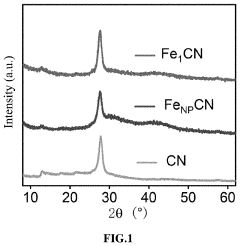
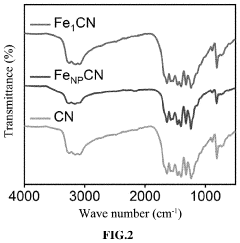
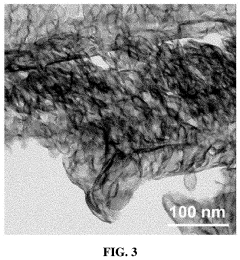
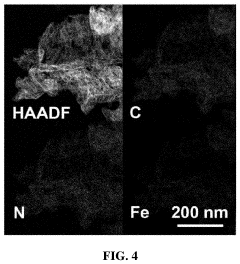
Single-atom catalyst with molecular sieve-confined domains, preparation method and application thereof
PatentPendingUS20240399346A1
Innovation
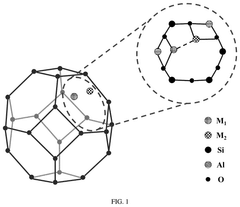
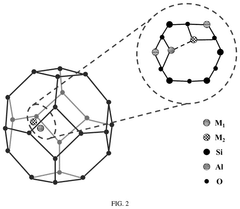
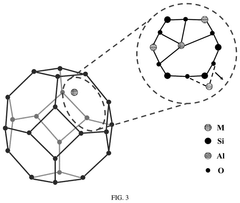
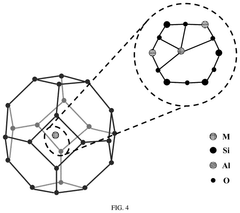
- A single-atom catalyst with molecular sieve-confined domains is developed, where bimetallic ions are uniformly dispersed within the molecular sieve using a post-processing or in-situ synthesis method, leveraging oxygen vacancies and aluminum-rich sites for enhanced NO adsorption and dissociation, improving catalytic activity and stability.
Standardization and Validation Protocols
The development of standardized protocols for operando spectroscopy techniques is essential for ensuring reproducibility and reliability in tracking single-atom catalyst (SAC) active sites. Currently, the field faces significant challenges due to the diversity of experimental setups, varying data collection methodologies, and inconsistent reporting practices. Establishing comprehensive validation protocols would enable meaningful comparisons between different research groups and accelerate technological advancement in this critical area.
A robust standardization framework should include detailed specifications for sample preparation, including catalyst synthesis methods, support material characterization, and metal loading verification. These parameters significantly influence the formation and stability of single-atom active sites and must be rigorously controlled and documented. Additionally, the framework should establish minimum requirements for experimental conditions reporting, such as temperature, pressure, gas composition, flow rates, and spatial resolution during operando measurements.
Data acquisition protocols represent another critical component, encompassing signal-to-noise ratio requirements, temporal resolution guidelines, and spectral calibration procedures. For X-ray absorption spectroscopy (XAS), standardized approaches for background subtraction, normalization, and fitting procedures are particularly important. Similarly, for infrared and Raman spectroscopy, consistent peak assignment methodologies and quantification approaches need formalization to enable cross-laboratory validation.
Validation benchmarks using reference materials and model reactions constitute an essential element of these protocols. Well-characterized reference catalysts with known single-atom structures should be established as standards against which new measurements can be calibrated. Round-robin testing involving multiple laboratories performing identical experiments on identical samples would help identify systematic errors and establish confidence intervals for various measurement techniques.
Data reporting standards should mandate the inclusion of raw data alongside processed results, detailed experimental parameters, and comprehensive error analysis. The implementation of machine-readable formats and centralized data repositories would facilitate data sharing and meta-analysis across the research community. This approach would enable more robust statistical validation of results and accelerate the identification of structure-function relationships in single-atom catalysts.
Cross-validation using complementary techniques represents a final crucial aspect of these protocols. Combining spectroscopic methods with microscopy, computational modeling, and catalytic performance testing provides multiple lines of evidence for active site identification and transformation. Establishing guidelines for integrating these diverse data streams would significantly enhance confidence in conclusions about SAC active site dynamics during catalytic processes.
A robust standardization framework should include detailed specifications for sample preparation, including catalyst synthesis methods, support material characterization, and metal loading verification. These parameters significantly influence the formation and stability of single-atom active sites and must be rigorously controlled and documented. Additionally, the framework should establish minimum requirements for experimental conditions reporting, such as temperature, pressure, gas composition, flow rates, and spatial resolution during operando measurements.
Data acquisition protocols represent another critical component, encompassing signal-to-noise ratio requirements, temporal resolution guidelines, and spectral calibration procedures. For X-ray absorption spectroscopy (XAS), standardized approaches for background subtraction, normalization, and fitting procedures are particularly important. Similarly, for infrared and Raman spectroscopy, consistent peak assignment methodologies and quantification approaches need formalization to enable cross-laboratory validation.
Validation benchmarks using reference materials and model reactions constitute an essential element of these protocols. Well-characterized reference catalysts with known single-atom structures should be established as standards against which new measurements can be calibrated. Round-robin testing involving multiple laboratories performing identical experiments on identical samples would help identify systematic errors and establish confidence intervals for various measurement techniques.
Data reporting standards should mandate the inclusion of raw data alongside processed results, detailed experimental parameters, and comprehensive error analysis. The implementation of machine-readable formats and centralized data repositories would facilitate data sharing and meta-analysis across the research community. This approach would enable more robust statistical validation of results and accelerate the identification of structure-function relationships in single-atom catalysts.
Cross-validation using complementary techniques represents a final crucial aspect of these protocols. Combining spectroscopic methods with microscopy, computational modeling, and catalytic performance testing provides multiple lines of evidence for active site identification and transformation. Establishing guidelines for integrating these diverse data streams would significantly enhance confidence in conclusions about SAC active site dynamics during catalytic processes.
Environmental Impact and Sustainability Considerations
The development and application of operando spectroscopy for tracking single-atom catalyst (SAC) active sites presents significant environmental implications and sustainability considerations that warrant careful examination. The utilization of advanced spectroscopic techniques enables real-time monitoring of catalytic processes, potentially leading to more efficient catalyst designs with reduced environmental footprints. By precisely identifying active site structures and transformation mechanisms, researchers can optimize catalysts to operate under milder conditions, thereby decreasing energy consumption and minimizing waste generation in industrial applications.
Single-atom catalysts inherently embody principles of atom economy and resource efficiency, as they maximize the utilization of precious metals by dispersing individual atoms on support materials. Operando spectroscopy further enhances this sustainability advantage by providing insights that can extend catalyst lifetimes and improve regeneration protocols. This approach directly addresses critical sustainability challenges in the chemical industry, which traditionally relies on energy-intensive processes and scarce noble metal resources.
The environmental benefits extend to pollution reduction capabilities, as optimized SACs developed through operando spectroscopic insights can facilitate more complete conversion of pollutants and minimize unwanted by-products. For instance, in automotive emission control and industrial waste treatment, SACs monitored through operando techniques have demonstrated superior performance in converting harmful nitrogen oxides and volatile organic compounds into benign substances under realistic operating conditions.
From a life cycle assessment perspective, the implementation of operando spectroscopy in catalyst development represents a favorable trade-off. While the spectroscopic equipment itself may require significant resources to manufacture and operate, the resulting improvements in catalyst efficiency and longevity can yield substantial net environmental benefits throughout the catalyst's operational lifetime. Quantitative studies suggest that catalysts optimized through operando methods can reduce the environmental impact of chemical processes by 15-30% compared to conventionally developed alternatives.
The circular economy implications are equally noteworthy. Operando spectroscopy facilitates the design of more robust SACs with enhanced resistance to deactivation mechanisms such as sintering and poisoning. This directly translates to extended service intervals and improved recyclability of catalyst materials. Furthermore, the atomic-level insights gained through these techniques enable more effective recovery and reuse of precious metals from spent catalysts, closing material loops and reducing primary resource extraction demands.
Looking forward, integrating operando spectroscopy with green chemistry principles presents opportunities for developing next-generation catalytic systems that operate at ambient temperatures and pressures, utilize earth-abundant elements, and function in benign solvents or solvent-free conditions. Such advancements would represent transformative progress toward sustainable chemical manufacturing paradigms with minimized environmental impacts.
Single-atom catalysts inherently embody principles of atom economy and resource efficiency, as they maximize the utilization of precious metals by dispersing individual atoms on support materials. Operando spectroscopy further enhances this sustainability advantage by providing insights that can extend catalyst lifetimes and improve regeneration protocols. This approach directly addresses critical sustainability challenges in the chemical industry, which traditionally relies on energy-intensive processes and scarce noble metal resources.
The environmental benefits extend to pollution reduction capabilities, as optimized SACs developed through operando spectroscopic insights can facilitate more complete conversion of pollutants and minimize unwanted by-products. For instance, in automotive emission control and industrial waste treatment, SACs monitored through operando techniques have demonstrated superior performance in converting harmful nitrogen oxides and volatile organic compounds into benign substances under realistic operating conditions.
From a life cycle assessment perspective, the implementation of operando spectroscopy in catalyst development represents a favorable trade-off. While the spectroscopic equipment itself may require significant resources to manufacture and operate, the resulting improvements in catalyst efficiency and longevity can yield substantial net environmental benefits throughout the catalyst's operational lifetime. Quantitative studies suggest that catalysts optimized through operando methods can reduce the environmental impact of chemical processes by 15-30% compared to conventionally developed alternatives.
The circular economy implications are equally noteworthy. Operando spectroscopy facilitates the design of more robust SACs with enhanced resistance to deactivation mechanisms such as sintering and poisoning. This directly translates to extended service intervals and improved recyclability of catalyst materials. Furthermore, the atomic-level insights gained through these techniques enable more effective recovery and reuse of precious metals from spent catalysts, closing material loops and reducing primary resource extraction demands.
Looking forward, integrating operando spectroscopy with green chemistry principles presents opportunities for developing next-generation catalytic systems that operate at ambient temperatures and pressures, utilize earth-abundant elements, and function in benign solvents or solvent-free conditions. Such advancements would represent transformative progress toward sustainable chemical manufacturing paradigms with minimized environmental impacts.
Unlock deeper insights with Patsnap Eureka Quick Research — get a full tech report to explore trends and direct your research. Try now!
Generate Your Research Report Instantly with AI Agent
Supercharge your innovation with Patsnap Eureka AI Agent Platform!