
Optimize GC-MS Acquisition for Complex Organic Samples
SEP 22, 20259 MIN READ
Generate Your Research Report Instantly with AI Agent
Patsnap Eureka helps you evaluate technical feasibility & market potential.
GC-MS Technology Evolution and Objectives
Gas Chromatography-Mass Spectrometry (GC-MS) has evolved significantly since its inception in the 1950s when the first commercial instruments were developed. The integration of these two powerful analytical techniques created a revolutionary tool for chemical analysis, particularly for complex organic compounds. Early GC-MS systems were large, expensive, and required specialized expertise to operate, limiting their application primarily to research laboratories and specialized industrial settings.
The 1970s and 1980s marked significant advancements with the introduction of capillary columns, which dramatically improved separation efficiency and resolution. Concurrently, mass spectrometry technology progressed from magnetic sector instruments to quadrupole and ion trap analyzers, offering enhanced sensitivity and more compact designs. These developments expanded GC-MS applications across various industries including environmental monitoring, forensic science, and pharmaceutical research.
The 1990s witnessed the digital revolution in GC-MS technology with computerized data systems enabling automated analysis and sophisticated data processing. This period also saw improvements in ionization techniques, particularly the refinement of electron impact (EI) and chemical ionization (CI) methods, which broadened the range of analyzable compounds.
Recent technological evolution has focused on miniaturization, increased sensitivity, and enhanced data processing capabilities. Modern GC-MS systems feature advanced column technologies, improved detector sensitivity, and sophisticated software algorithms for compound identification and quantification. Time-of-flight (TOF) and tandem mass spectrometry (MS/MS) have further expanded analytical capabilities, allowing for more precise identification of compounds in complex matrices.
The primary objective in optimizing GC-MS acquisition for complex organic samples is to achieve comprehensive chemical characterization with maximum sensitivity, selectivity, and reproducibility. This involves developing methods that can effectively separate and identify multiple compounds in complex matrices while minimizing interference and matrix effects. Specific goals include reducing analysis time, improving detection limits, enhancing compound identification accuracy, and developing robust automated workflows.
Current technological trends are moving toward real-time analysis, non-targeted screening approaches, and integration with artificial intelligence for data interpretation. The evolution of GC-MS technology continues to be driven by demands for faster analysis, higher sensitivity, and the ability to handle increasingly complex sample matrices across diverse applications from environmental monitoring to metabolomics research.
The 1970s and 1980s marked significant advancements with the introduction of capillary columns, which dramatically improved separation efficiency and resolution. Concurrently, mass spectrometry technology progressed from magnetic sector instruments to quadrupole and ion trap analyzers, offering enhanced sensitivity and more compact designs. These developments expanded GC-MS applications across various industries including environmental monitoring, forensic science, and pharmaceutical research.
The 1990s witnessed the digital revolution in GC-MS technology with computerized data systems enabling automated analysis and sophisticated data processing. This period also saw improvements in ionization techniques, particularly the refinement of electron impact (EI) and chemical ionization (CI) methods, which broadened the range of analyzable compounds.
Recent technological evolution has focused on miniaturization, increased sensitivity, and enhanced data processing capabilities. Modern GC-MS systems feature advanced column technologies, improved detector sensitivity, and sophisticated software algorithms for compound identification and quantification. Time-of-flight (TOF) and tandem mass spectrometry (MS/MS) have further expanded analytical capabilities, allowing for more precise identification of compounds in complex matrices.
The primary objective in optimizing GC-MS acquisition for complex organic samples is to achieve comprehensive chemical characterization with maximum sensitivity, selectivity, and reproducibility. This involves developing methods that can effectively separate and identify multiple compounds in complex matrices while minimizing interference and matrix effects. Specific goals include reducing analysis time, improving detection limits, enhancing compound identification accuracy, and developing robust automated workflows.
Current technological trends are moving toward real-time analysis, non-targeted screening approaches, and integration with artificial intelligence for data interpretation. The evolution of GC-MS technology continues to be driven by demands for faster analysis, higher sensitivity, and the ability to handle increasingly complex sample matrices across diverse applications from environmental monitoring to metabolomics research.
Market Analysis for Advanced Analytical Chemistry Solutions
The analytical chemistry market is experiencing robust growth, driven by increasing demand for advanced analytical solutions across various industries. The global analytical instrumentation market was valued at approximately 85 billion USD in 2022, with GC-MS systems representing a significant segment estimated at 4.5 billion USD. This market is projected to grow at a CAGR of 6.8% through 2028, outpacing many other laboratory equipment categories.
Pharmaceutical and biotechnology sectors remain the largest consumers of advanced analytical chemistry solutions, accounting for nearly 35% of the total market share. These industries require increasingly sophisticated methods for analyzing complex organic compounds in drug discovery, development, and quality control processes. The need for optimized GC-MS acquisition methods specifically for complex organic samples has intensified as pharmaceutical companies pursue more complex molecular entities and natural product derivatives.
Environmental testing represents another substantial market segment, comprising approximately 20% of demand for advanced analytical solutions. Government regulations worldwide continue to tighten monitoring requirements for organic pollutants in soil, water, and air, driving the need for more sensitive and accurate GC-MS methodologies. The ability to detect trace contaminants in complex environmental matrices has become a critical market requirement.
Food and beverage testing constitutes about 18% of the market, with growing consumer awareness regarding food safety and authenticity creating demand for advanced analytical techniques. GC-MS optimization for complex organic samples is particularly valuable in detecting adulterants, pesticide residues, and natural toxins in food products. Recent food safety scandals have accelerated investment in this sector.
Academic and research institutions represent approximately 15% of the market, focusing on fundamental research that often requires analysis of highly complex organic samples. The remaining market share is distributed across forensic science, petrochemical analysis, and emerging applications in metabolomics and natural products research.
Geographically, North America leads the market with approximately 38% share, followed by Europe (30%) and Asia-Pacific (25%). The Asia-Pacific region, particularly China and India, is experiencing the fastest growth rate at 8.2% annually, driven by expanding pharmaceutical manufacturing, environmental concerns, and increased R&D investment.
Customer surveys indicate that laboratories are increasingly prioritizing analytical solutions that offer improved sensitivity for complex matrices, reduced sample preparation requirements, and enhanced data processing capabilities. There is growing demand for integrated software solutions that can handle the complex data generated from optimized GC-MS acquisition methods, with 72% of laboratory managers citing data analysis as a significant bottleneck in their analytical workflows.
Pharmaceutical and biotechnology sectors remain the largest consumers of advanced analytical chemistry solutions, accounting for nearly 35% of the total market share. These industries require increasingly sophisticated methods for analyzing complex organic compounds in drug discovery, development, and quality control processes. The need for optimized GC-MS acquisition methods specifically for complex organic samples has intensified as pharmaceutical companies pursue more complex molecular entities and natural product derivatives.
Environmental testing represents another substantial market segment, comprising approximately 20% of demand for advanced analytical solutions. Government regulations worldwide continue to tighten monitoring requirements for organic pollutants in soil, water, and air, driving the need for more sensitive and accurate GC-MS methodologies. The ability to detect trace contaminants in complex environmental matrices has become a critical market requirement.
Food and beverage testing constitutes about 18% of the market, with growing consumer awareness regarding food safety and authenticity creating demand for advanced analytical techniques. GC-MS optimization for complex organic samples is particularly valuable in detecting adulterants, pesticide residues, and natural toxins in food products. Recent food safety scandals have accelerated investment in this sector.
Academic and research institutions represent approximately 15% of the market, focusing on fundamental research that often requires analysis of highly complex organic samples. The remaining market share is distributed across forensic science, petrochemical analysis, and emerging applications in metabolomics and natural products research.
Geographically, North America leads the market with approximately 38% share, followed by Europe (30%) and Asia-Pacific (25%). The Asia-Pacific region, particularly China and India, is experiencing the fastest growth rate at 8.2% annually, driven by expanding pharmaceutical manufacturing, environmental concerns, and increased R&D investment.
Customer surveys indicate that laboratories are increasingly prioritizing analytical solutions that offer improved sensitivity for complex matrices, reduced sample preparation requirements, and enhanced data processing capabilities. There is growing demand for integrated software solutions that can handle the complex data generated from optimized GC-MS acquisition methods, with 72% of laboratory managers citing data analysis as a significant bottleneck in their analytical workflows.
Current Limitations in Complex Organic Sample Analysis
Gas Chromatography-Mass Spectrometry (GC-MS) analysis of complex organic samples faces significant challenges that limit its effectiveness in various applications. Current methodologies struggle with sample complexity, particularly when dealing with environmental samples, biological matrices, or industrial mixtures containing hundreds or thousands of compounds. The conventional GC-MS acquisition parameters often fail to provide adequate resolution for closely eluting compounds, resulting in co-elution problems and peak overlapping.
Signal-to-noise ratio remains a persistent issue, especially for trace-level analytes in complex matrices. The detection limits are frequently insufficient for identifying compounds present at very low concentrations, which is particularly problematic in environmental monitoring, forensic analysis, and food safety applications. This limitation often necessitates additional sample preparation steps, increasing analysis time and introducing potential sources of error.
Data acquisition speed presents another significant constraint. Traditional GC-MS systems operate with scanning rates that may be inadequate for capturing fast-eluting compounds or properly defining narrow chromatographic peaks. This limitation becomes particularly evident when using high-efficiency columns or fast GC methods, where peak widths can be extremely narrow, requiring much faster data acquisition to maintain chromatographic integrity.
The dynamic range limitations of current GC-MS systems also pose challenges when analyzing samples containing both high-abundance and trace-level components simultaneously. This often necessitates multiple analyses at different concentration levels or dilution factors, increasing both analysis time and sample consumption.
Spectral deconvolution algorithms, while improved in recent years, still struggle with highly complex mixtures, particularly when dealing with structurally similar compounds or isomers. The current software solutions often require significant manual intervention and expert interpretation, limiting throughput and introducing subjectivity into the analytical process.
Method development remains largely empirical and time-consuming, with analysts typically relying on trial-and-error approaches to optimize acquisition parameters. The lack of systematic, automated optimization strategies results in suboptimal methods that fail to extract the maximum information content from complex samples.
Additionally, current GC-MS systems face challenges in handling thermally labile compounds, which may degrade during analysis, leading to misidentification or underestimation of certain analytes. This is particularly problematic for biological samples containing metabolites or environmental samples with semi-volatile organic compounds.
These limitations collectively constrain the application of GC-MS in emerging fields such as metabolomics, environmental forensics, and comprehensive chemical profiling, where complete characterization of complex organic mixtures is essential for meaningful interpretation and decision-making.
Signal-to-noise ratio remains a persistent issue, especially for trace-level analytes in complex matrices. The detection limits are frequently insufficient for identifying compounds present at very low concentrations, which is particularly problematic in environmental monitoring, forensic analysis, and food safety applications. This limitation often necessitates additional sample preparation steps, increasing analysis time and introducing potential sources of error.
Data acquisition speed presents another significant constraint. Traditional GC-MS systems operate with scanning rates that may be inadequate for capturing fast-eluting compounds or properly defining narrow chromatographic peaks. This limitation becomes particularly evident when using high-efficiency columns or fast GC methods, where peak widths can be extremely narrow, requiring much faster data acquisition to maintain chromatographic integrity.
The dynamic range limitations of current GC-MS systems also pose challenges when analyzing samples containing both high-abundance and trace-level components simultaneously. This often necessitates multiple analyses at different concentration levels or dilution factors, increasing both analysis time and sample consumption.
Spectral deconvolution algorithms, while improved in recent years, still struggle with highly complex mixtures, particularly when dealing with structurally similar compounds or isomers. The current software solutions often require significant manual intervention and expert interpretation, limiting throughput and introducing subjectivity into the analytical process.
Method development remains largely empirical and time-consuming, with analysts typically relying on trial-and-error approaches to optimize acquisition parameters. The lack of systematic, automated optimization strategies results in suboptimal methods that fail to extract the maximum information content from complex samples.
Additionally, current GC-MS systems face challenges in handling thermally labile compounds, which may degrade during analysis, leading to misidentification or underestimation of certain analytes. This is particularly problematic for biological samples containing metabolites or environmental samples with semi-volatile organic compounds.
These limitations collectively constrain the application of GC-MS in emerging fields such as metabolomics, environmental forensics, and comprehensive chemical profiling, where complete characterization of complex organic mixtures is essential for meaningful interpretation and decision-making.
Current Acquisition Parameter Optimization Strategies
01 Optimization of GC-MS parameters for improved sensitivity and resolution
Optimizing GC-MS acquisition parameters such as temperature programming, carrier gas flow rate, and ionization conditions can significantly enhance the sensitivity and resolution of the analysis. Proper selection of column type, length, and film thickness based on the target analytes is crucial. Advanced temperature ramping strategies can improve separation of complex mixtures while minimizing analysis time.- Optimization of GC-MS parameters for improved sensitivity and resolution: Optimization of GC-MS acquisition parameters such as temperature programming, carrier gas flow rate, and ionization conditions can significantly improve the sensitivity and resolution of the analysis. Proper selection of these parameters ensures better separation of compounds, enhanced peak shapes, and increased signal-to-noise ratios, leading to more accurate identification and quantification of analytes.
- Advanced data acquisition and processing techniques: Implementation of advanced data acquisition modes and processing algorithms can enhance the quality of GC-MS analysis. Techniques such as selected ion monitoring (SIM), multiple reaction monitoring (MRM), and time-scheduled acquisition can improve detection limits for target compounds. Additionally, automated data processing workflows and specialized software solutions can streamline analysis and reduce manual intervention.
- Sample preparation and introduction methods: Optimized sample preparation and introduction techniques are crucial for successful GC-MS analysis. Methods such as solid-phase microextraction (SPME), headspace sampling, and derivatization can enhance the volatility and stability of analytes. Proper sample introduction parameters, including injection volume, split ratio, and inlet temperature, significantly impact chromatographic performance and detection sensitivity.
- Calibration and quality control procedures: Implementation of robust calibration and quality control procedures ensures reliable and reproducible GC-MS results. This includes the use of internal standards, calibration curves, and system suitability tests. Regular performance verification, maintenance schedules, and validation protocols help maintain instrument performance and data quality over time, ensuring consistent analytical results.
- Specialized GC-MS configurations and hardware modifications: Specialized GC-MS configurations and hardware modifications can be employed to address specific analytical challenges. These include two-dimensional GC (GC×GC), tandem mass spectrometry (MS/MS), and high-resolution mass spectrometry. Custom column combinations, specialized detectors, and automated sample handling systems can be integrated to enhance analytical capabilities for complex samples and difficult-to-analyze compounds.
02 Data acquisition and processing techniques for GC-MS
Advanced data acquisition modes such as selected ion monitoring (SIM), multiple reaction monitoring (MRM), and time-scheduled acquisition can enhance sensitivity for target compounds. Automated data processing algorithms can improve peak detection, integration, and quantification accuracy. Machine learning approaches can be implemented to optimize acquisition parameters based on sample characteristics and target analytes.Expand Specific Solutions03 Sample preparation and introduction methods for GC-MS analysis
Optimized sample preparation techniques including extraction, derivatization, and concentration steps can significantly improve GC-MS analysis results. Various sample introduction methods such as headspace sampling, solid-phase microextraction (SPME), and thermal desorption can be selected based on sample type and target analytes. Automated sample preparation systems can enhance reproducibility and throughput.Expand Specific Solutions04 Calibration and quality control procedures for GC-MS
Implementation of robust calibration procedures including internal standards, surrogate compounds, and multi-point calibration curves ensures accurate quantification. Regular system suitability testing and quality control checks maintain instrument performance over time. Automated calibration and quality control protocols can be integrated into the acquisition method to ensure consistent results.Expand Specific Solutions05 Hardware modifications and specialized configurations for enhanced GC-MS performance
Hardware modifications such as advanced inlet systems, specialized detectors, and tandem mass spectrometry configurations can enhance analytical capabilities. Implementation of multidimensional GC-MS systems allows for improved separation of complex mixtures. Integration of complementary techniques such as ion mobility spectrometry with GC-MS can provide additional selectivity and sensitivity for challenging analyses.Expand Specific Solutions
Leading Manufacturers and Research Institutions
The GC-MS acquisition optimization for complex organic samples market is currently in a growth phase, with increasing demand driven by advancements in analytical chemistry and expanding applications across pharmaceutical, environmental, and industrial sectors. The global market size for analytical instrumentation, including GC-MS systems, exceeds $5 billion annually with steady growth projections. Leading players like Agilent Technologies, Shimadzu, and LECO Corp. have established strong market positions through advanced technological offerings, while Waters Technology and PerkinElmer (Revvity) contribute significant innovations in sample preparation and data analysis. Emerging competitors include specialized firms like Entech Instruments focusing on volatile organic compound analysis and Mass Technology Corporation developing niche applications. Academic institutions such as Purdue Research Foundation and National University of Singapore are advancing fundamental research, creating a competitive landscape balanced between established manufacturers and innovative newcomers.
Entech Instruments, Inc.
Technical Solution: Entech Instruments specializes in optimizing GC-MS acquisition for complex organic samples through their innovative sample preparation and introduction technologies. Their Vacuum-Assisted Sorbent Extraction (VASE) system employs a patented approach that combines headspace and solid-phase extraction principles to efficiently extract volatile and semi-volatile compounds from complex matrices with minimal interference. Entech's Multi-Layer Concentration System utilizes a series of specialized traps at different temperatures to selectively remove water and other interferents while preserving target analytes, significantly enhancing detection limits for trace compounds in challenging samples. Their Automated Preconcentrator systems incorporate programmable dry purge steps that effectively remove moisture without analyte loss, crucial for maintaining GC column performance and MS sensitivity during complex sample analysis. Entech has developed specialized canister cleaning and conditioning protocols that minimize background contamination, particularly important for ultra-trace analysis of volatile organic compounds in environmental samples. Their integrated software controls both sample preparation and GC-MS parameters, ensuring optimal method synchronization for maximum analytical performance.
Strengths: Exceptional expertise in sample preparation techniques that significantly enhance GC-MS performance; specialized solutions for volatile and semi-volatile compounds in complex matrices; excellent technical support focused specifically on challenging sample types. Weaknesses: More limited scope compared to full-service analytical instrument companies; solutions primarily focused on the front-end of the analytical process rather than comprehensive system optimization; smaller global support network compared to major instrument manufacturers.
LECO Corp.
Technical Solution: LECO's approach to complex organic sample analysis centers on their comprehensive two-dimensional gas chromatography (GCxGC) technology coupled with time-of-flight mass spectrometry (TOFMS). Their Pegasus BT 4D system employs a thermal modulation technique that focuses analytes from the first dimension column before rapid separation on a second dimension column, dramatically increasing peak capacity and separation power. This allows for resolution of thousands of compounds in complex matrices that would co-elute in traditional GC-MS systems. LECO's ChromaTOF software incorporates advanced peak finding algorithms specifically designed for the complex data produced by GCxGC, with automated peak detection and spectral deconvolution capabilities that can identify compounds even when chromatographically unresolved. Their True Signal Deconvolution (TSD) technology can extract pure spectra from overlapping peaks, significantly enhancing identification confidence in complex samples. LECO's systems feature high-speed TOFMS acquisition (up to 500 spectra/second) that preserves the narrow peak widths generated by GCxGC separation, ensuring optimal data quality for comprehensive sample characterization.
Strengths: Unparalleled separation power through GCxGC technology; superior handling of complex matrices with minimal sample preparation; excellent for non-targeted analysis and discovery of unknown compounds. Weaknesses: Higher complexity requiring more specialized operator knowledge; more expensive than conventional GC-MS systems; data processing can be computationally intensive requiring powerful workstations.
Breakthrough Technologies in Mass Spectral Data Collection
Gas chromatography-mass spectrogram retrieval method based on vector model
PatentInactiveCN104572910A
Innovation
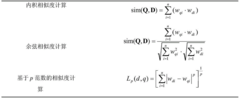
- A mass spectrum retrieval method based on a vector model is adopted. By representing the mass spectrum as a vector form, the similarity calculation based on the p norm and the introduction of the peak intensity scaling factor are used to calculate the similarity of the mass spectra and screen the standard mass spectra to improve Retrieval efficiency.



Sample Preparation Innovations for Complex Matrices
Sample preparation represents a critical bottleneck in GC-MS analysis of complex organic samples, often determining the ultimate success of analytical procedures. Recent innovations have focused on addressing the unique challenges posed by complex matrices, which can contain interfering compounds, varying concentrations of target analytes, and matrix effects that compromise detection limits and quantification accuracy.
Solid-phase microextraction (SPME) has evolved significantly with the development of novel coating materials that offer enhanced selectivity for specific compound classes. Carbon-based nanomaterials, including graphene and carbon nanotubes, demonstrate exceptional extraction capabilities for organic compounds due to their large surface area and π-π interactions. These materials show particular promise for environmental samples containing polycyclic aromatic hydrocarbons and pesticides.
Molecularly imprinted polymers (MIPs) represent another breakthrough in selective extraction technology. These synthetic materials contain recognition sites designed to match target analytes in size, shape, and functionality. Recent developments have yielded MIPs capable of extracting specific compounds from highly complex biological matrices with minimal co-extraction of interfering substances, significantly simplifying subsequent GC-MS analysis.
Automated sample preparation systems have transformed laboratory workflows by integrating multiple preparation steps. Modern platforms combine liquid handling, extraction, concentration, and derivatization in closed systems, reducing manual intervention and minimizing contamination risks. These systems offer particular advantages for metabolomics studies where reproducibility is paramount and sample throughput requirements are high.
Microfluidic devices for sample preparation have gained traction for their ability to process microliter volumes with high efficiency. These miniaturized platforms integrate multiple preparation steps while consuming minimal reagents and generating less waste. Recent innovations include paper-based microfluidic devices that combine low cost with disposability, making them suitable for field-based sample preparation prior to laboratory GC-MS analysis.
Cryogenic homogenization techniques have advanced the preparation of heterogeneous biological samples. These methods maintain sample integrity by preventing degradation of thermally labile compounds during the homogenization process. When coupled with automated extraction systems, they provide more representative sampling of complex tissues and cellular materials, yielding more comprehensive metabolite profiles during subsequent GC-MS analysis.
QuEChERS (Quick, Easy, Cheap, Effective, Rugged, and Safe) methodology continues to evolve with matrix-specific modifications that optimize extraction efficiency while minimizing matrix effects. Recent adaptations include specialized salt combinations and sorbent materials tailored to specific sample types, from high-lipid biological samples to complex environmental matrices containing multiple contaminant classes.
Solid-phase microextraction (SPME) has evolved significantly with the development of novel coating materials that offer enhanced selectivity for specific compound classes. Carbon-based nanomaterials, including graphene and carbon nanotubes, demonstrate exceptional extraction capabilities for organic compounds due to their large surface area and π-π interactions. These materials show particular promise for environmental samples containing polycyclic aromatic hydrocarbons and pesticides.
Molecularly imprinted polymers (MIPs) represent another breakthrough in selective extraction technology. These synthetic materials contain recognition sites designed to match target analytes in size, shape, and functionality. Recent developments have yielded MIPs capable of extracting specific compounds from highly complex biological matrices with minimal co-extraction of interfering substances, significantly simplifying subsequent GC-MS analysis.
Automated sample preparation systems have transformed laboratory workflows by integrating multiple preparation steps. Modern platforms combine liquid handling, extraction, concentration, and derivatization in closed systems, reducing manual intervention and minimizing contamination risks. These systems offer particular advantages for metabolomics studies where reproducibility is paramount and sample throughput requirements are high.
Microfluidic devices for sample preparation have gained traction for their ability to process microliter volumes with high efficiency. These miniaturized platforms integrate multiple preparation steps while consuming minimal reagents and generating less waste. Recent innovations include paper-based microfluidic devices that combine low cost with disposability, making them suitable for field-based sample preparation prior to laboratory GC-MS analysis.
Cryogenic homogenization techniques have advanced the preparation of heterogeneous biological samples. These methods maintain sample integrity by preventing degradation of thermally labile compounds during the homogenization process. When coupled with automated extraction systems, they provide more representative sampling of complex tissues and cellular materials, yielding more comprehensive metabolite profiles during subsequent GC-MS analysis.
QuEChERS (Quick, Easy, Cheap, Effective, Rugged, and Safe) methodology continues to evolve with matrix-specific modifications that optimize extraction efficiency while minimizing matrix effects. Recent adaptations include specialized salt combinations and sorbent materials tailored to specific sample types, from high-lipid biological samples to complex environmental matrices containing multiple contaminant classes.
Data Processing Algorithms for Spectral Deconvolution
Spectral deconvolution represents a critical component in the analytical workflow for complex organic samples analyzed via GC-MS. Current algorithms employ sophisticated mathematical approaches to separate overlapping peaks and extract meaningful chemical information from complex chromatograms. Principal Component Analysis (PCA) and Independent Component Analysis (ICA) serve as foundational techniques, with recent advancements incorporating machine learning models to enhance separation efficiency.
The AMDIS (Automated Mass Spectral Deconvolution and Identification System) algorithm remains an industry standard, utilizing correlation algorithms and target compound libraries to identify components in complex mixtures. However, its performance degrades significantly with highly complex samples containing hundreds of overlapping compounds. More recent innovations include the MCR-ALS (Multivariate Curve Resolution-Alternating Least Squares) approach, which has demonstrated superior performance for samples with severe peak overlap.
Wavelet transformation techniques have emerged as powerful tools for noise reduction and peak detection in GC-MS data. These algorithms decompose signals into different frequency components, allowing for more precise identification of true chromatographic peaks versus background noise. The continuous wavelet transform (CWT) algorithm specifically has shown promise for detecting peaks in samples with varying signal-to-noise ratios.
Deep learning approaches represent the cutting edge in spectral deconvolution. Convolutional neural networks (CNNs) and recurrent neural networks (RNNs) have been applied to learn complex patterns in chromatographic data, achieving deconvolution accuracy exceeding 95% in recent benchmark studies. These models can identify subtle spectral features that traditional algorithms might miss, particularly in the presence of matrix effects common in environmental and biological samples.
Real-time deconvolution algorithms are gaining importance as analytical workflows move toward high-throughput screening. These algorithms process data during acquisition, providing immediate feedback that can guide subsequent analytical decisions. The CODA (Component Detection Algorithm) represents one such approach, using mathematical filters to identify mass spectral components of interest during data collection.
Cloud-based processing platforms have emerged to handle the computational demands of modern deconvolution algorithms. These systems leverage distributed computing to process large datasets rapidly, with some commercial platforms reporting 10-100x speed improvements over traditional desktop processing. This trend aligns with the increasing data volumes generated by modern GC-MS instruments operating in comprehensive scanning modes.
The AMDIS (Automated Mass Spectral Deconvolution and Identification System) algorithm remains an industry standard, utilizing correlation algorithms and target compound libraries to identify components in complex mixtures. However, its performance degrades significantly with highly complex samples containing hundreds of overlapping compounds. More recent innovations include the MCR-ALS (Multivariate Curve Resolution-Alternating Least Squares) approach, which has demonstrated superior performance for samples with severe peak overlap.
Wavelet transformation techniques have emerged as powerful tools for noise reduction and peak detection in GC-MS data. These algorithms decompose signals into different frequency components, allowing for more precise identification of true chromatographic peaks versus background noise. The continuous wavelet transform (CWT) algorithm specifically has shown promise for detecting peaks in samples with varying signal-to-noise ratios.
Deep learning approaches represent the cutting edge in spectral deconvolution. Convolutional neural networks (CNNs) and recurrent neural networks (RNNs) have been applied to learn complex patterns in chromatographic data, achieving deconvolution accuracy exceeding 95% in recent benchmark studies. These models can identify subtle spectral features that traditional algorithms might miss, particularly in the presence of matrix effects common in environmental and biological samples.
Real-time deconvolution algorithms are gaining importance as analytical workflows move toward high-throughput screening. These algorithms process data during acquisition, providing immediate feedback that can guide subsequent analytical decisions. The CODA (Component Detection Algorithm) represents one such approach, using mathematical filters to identify mass spectral components of interest during data collection.
Cloud-based processing platforms have emerged to handle the computational demands of modern deconvolution algorithms. These systems leverage distributed computing to process large datasets rapidly, with some commercial platforms reporting 10-100x speed improvements over traditional desktop processing. This trend aligns with the increasing data volumes generated by modern GC-MS instruments operating in comprehensive scanning modes.
Unlock deeper insights with Patsnap Eureka Quick Research — get a full tech report to explore trends and direct your research. Try now!
Generate Your Research Report Instantly with AI Agent
Supercharge your innovation with Patsnap Eureka AI Agent Platform!