
Optimizing GC-MS Column Selection for VOC Testing
SEP 22, 20259 MIN READ
Generate Your Research Report Instantly with AI Agent
Patsnap Eureka helps you evaluate technical feasibility & market potential.
GC-MS Column Technology Background and Objectives
Gas Chromatography-Mass Spectrometry (GC-MS) has evolved significantly since its inception in the 1950s, becoming an indispensable analytical technique for volatile organic compound (VOC) detection and quantification. The column technology, serving as the heart of the separation process, has undergone remarkable transformations from packed columns to modern capillary columns with enhanced selectivity and resolution capabilities.
The evolution of GC-MS column technology has been driven by increasing demands for higher sensitivity, improved separation efficiency, and broader application scope across environmental monitoring, food safety, pharmaceutical analysis, and forensic investigations. Early columns suffered from limitations in thermal stability, column bleeding, and separation efficiency, which significantly constrained VOC analysis capabilities.
Recent technological advancements have introduced stationary phases with specialized selectivity, ultra-inert deactivation techniques, and novel bonding chemistries that substantially improve column performance for VOC testing. These innovations have enabled the detection of trace-level VOCs in complex matrices with unprecedented accuracy and precision, addressing critical analytical challenges in regulatory compliance and research applications.
The current market trajectory indicates a growing preference for application-specific columns designed to address particular VOC testing requirements. This specialization trend reflects the increasing complexity of analytical demands across different industries, where optimized column selection can significantly impact method development efficiency and analytical outcomes.
Despite these advancements, several technical challenges persist in VOC analysis using GC-MS columns. These include matrix interference effects, thermal degradation of sensitive compounds, and the need for comprehensive coverage of compounds with widely varying physicochemical properties in a single analytical run.
The primary objective of this technical research is to establish a systematic framework for optimizing GC-MS column selection specifically for VOC testing applications. This framework aims to correlate column characteristics (stationary phase chemistry, film thickness, dimensions, and thermal properties) with specific VOC analysis requirements to enable more informed decision-making in method development.
Additional goals include identifying emerging column technologies with potential to address current limitations in VOC analysis, evaluating the cost-benefit relationship of advanced column technologies versus conventional options, and developing predictive models to streamline column selection based on target analyte properties and analytical requirements.
By comprehensively examining the technological landscape of GC-MS columns for VOC testing, this research seeks to provide actionable insights that can significantly enhance analytical performance, reduce method development time, and improve overall laboratory efficiency in diverse VOC testing scenarios.
The evolution of GC-MS column technology has been driven by increasing demands for higher sensitivity, improved separation efficiency, and broader application scope across environmental monitoring, food safety, pharmaceutical analysis, and forensic investigations. Early columns suffered from limitations in thermal stability, column bleeding, and separation efficiency, which significantly constrained VOC analysis capabilities.
Recent technological advancements have introduced stationary phases with specialized selectivity, ultra-inert deactivation techniques, and novel bonding chemistries that substantially improve column performance for VOC testing. These innovations have enabled the detection of trace-level VOCs in complex matrices with unprecedented accuracy and precision, addressing critical analytical challenges in regulatory compliance and research applications.
The current market trajectory indicates a growing preference for application-specific columns designed to address particular VOC testing requirements. This specialization trend reflects the increasing complexity of analytical demands across different industries, where optimized column selection can significantly impact method development efficiency and analytical outcomes.
Despite these advancements, several technical challenges persist in VOC analysis using GC-MS columns. These include matrix interference effects, thermal degradation of sensitive compounds, and the need for comprehensive coverage of compounds with widely varying physicochemical properties in a single analytical run.
The primary objective of this technical research is to establish a systematic framework for optimizing GC-MS column selection specifically for VOC testing applications. This framework aims to correlate column characteristics (stationary phase chemistry, film thickness, dimensions, and thermal properties) with specific VOC analysis requirements to enable more informed decision-making in method development.
Additional goals include identifying emerging column technologies with potential to address current limitations in VOC analysis, evaluating the cost-benefit relationship of advanced column technologies versus conventional options, and developing predictive models to streamline column selection based on target analyte properties and analytical requirements.
By comprehensively examining the technological landscape of GC-MS columns for VOC testing, this research seeks to provide actionable insights that can significantly enhance analytical performance, reduce method development time, and improve overall laboratory efficiency in diverse VOC testing scenarios.
VOC Testing Market Demand Analysis
The global market for Volatile Organic Compounds (VOC) testing has experienced significant growth in recent years, driven primarily by increasing environmental regulations and growing awareness of indoor air quality concerns. The market size for VOC testing equipment and services was valued at approximately 860 million USD in 2022 and is projected to reach 1.2 billion USD by 2027, representing a compound annual growth rate of 6.8%.
Environmental monitoring represents the largest segment within the VOC testing market, accounting for nearly 40% of the total market share. This is largely due to stringent government regulations regarding air quality and emissions control across industrial sectors. The Clean Air Act in the United States and similar legislation in Europe and Asia have established strict limits on VOC emissions, necessitating regular testing and monitoring.
Industrial applications constitute the second-largest market segment, with manufacturing facilities, chemical plants, and petroleum refineries requiring continuous VOC monitoring to ensure compliance with workplace safety standards and environmental regulations. This segment is expected to grow at a rate of 7.2% annually through 2027, outpacing the overall market growth.
Healthcare and indoor air quality monitoring represent emerging segments with substantial growth potential. As awareness of sick building syndrome and the health impacts of VOCs increases, demand for testing in residential buildings, schools, hospitals, and commercial spaces has risen dramatically. This segment is projected to grow at 8.5% annually, the fastest among all VOC testing applications.
Regional analysis indicates North America currently leads the market with approximately 35% share, followed closely by Europe at 30% and Asia-Pacific at 25%. However, the Asia-Pacific region is expected to witness the highest growth rate due to rapid industrialization, increasing environmental awareness, and strengthening regulatory frameworks in countries like China and India.
The demand for more sensitive, selective, and efficient GC-MS column technologies is particularly strong, as existing testing methodologies struggle to meet increasingly stringent detection limits and the need to identify complex VOC mixtures. End-users are specifically seeking columns that can provide better separation of isomers, reduced analysis time, lower detection limits, and enhanced durability when exposed to complex matrices.
Market research indicates that 78% of laboratories performing VOC testing cite column selection as a critical factor affecting their analytical performance, with 65% expressing dissatisfaction with current column options for complex VOC mixtures. This represents a significant market opportunity for optimized GC-MS column technologies specifically designed for VOC testing applications.
Environmental monitoring represents the largest segment within the VOC testing market, accounting for nearly 40% of the total market share. This is largely due to stringent government regulations regarding air quality and emissions control across industrial sectors. The Clean Air Act in the United States and similar legislation in Europe and Asia have established strict limits on VOC emissions, necessitating regular testing and monitoring.
Industrial applications constitute the second-largest market segment, with manufacturing facilities, chemical plants, and petroleum refineries requiring continuous VOC monitoring to ensure compliance with workplace safety standards and environmental regulations. This segment is expected to grow at a rate of 7.2% annually through 2027, outpacing the overall market growth.
Healthcare and indoor air quality monitoring represent emerging segments with substantial growth potential. As awareness of sick building syndrome and the health impacts of VOCs increases, demand for testing in residential buildings, schools, hospitals, and commercial spaces has risen dramatically. This segment is projected to grow at 8.5% annually, the fastest among all VOC testing applications.
Regional analysis indicates North America currently leads the market with approximately 35% share, followed closely by Europe at 30% and Asia-Pacific at 25%. However, the Asia-Pacific region is expected to witness the highest growth rate due to rapid industrialization, increasing environmental awareness, and strengthening regulatory frameworks in countries like China and India.
The demand for more sensitive, selective, and efficient GC-MS column technologies is particularly strong, as existing testing methodologies struggle to meet increasingly stringent detection limits and the need to identify complex VOC mixtures. End-users are specifically seeking columns that can provide better separation of isomers, reduced analysis time, lower detection limits, and enhanced durability when exposed to complex matrices.
Market research indicates that 78% of laboratories performing VOC testing cite column selection as a critical factor affecting their analytical performance, with 65% expressing dissatisfaction with current column options for complex VOC mixtures. This represents a significant market opportunity for optimized GC-MS column technologies specifically designed for VOC testing applications.
Current State and Challenges in GC-MS Column Technology
Gas Chromatography-Mass Spectrometry (GC-MS) column technology has evolved significantly over the past decades, yet several challenges persist in optimizing column selection for Volatile Organic Compound (VOC) testing. Currently, the market offers a diverse range of column types including packed columns, capillary columns, and the more advanced wall-coated open tubular (WCOT), support-coated open tubular (SCOT), and porous-layer open tubular (PLOT) columns. Each type presents distinct advantages for specific VOC applications, creating a complex decision matrix for analysts.
The state-of-the-art in GC-MS column technology features advanced stationary phases with improved thermal stability, reduced bleed characteristics, and enhanced separation capabilities. Manufacturers have developed specialized columns with tailored selectivity for specific VOC classes, such as polar columns for oxygenated compounds and non-polar columns for hydrocarbons. Recent innovations include multi-dimensional GC columns that significantly improve separation power for complex VOC mixtures.
Despite these advancements, several technical challenges remain unresolved. Column bleed continues to be a significant issue, particularly at elevated temperatures required for higher molecular weight VOCs, leading to increased background noise and potential misidentification of compounds. The trade-off between resolution and analysis time presents another persistent challenge, as high-resolution separations often require longer columns and extended run times, reducing laboratory throughput.
Cross-reactivity and co-elution problems frequently occur when analyzing complex environmental or biological samples containing hundreds of VOCs with similar physicochemical properties. Current column technologies struggle to achieve complete separation of these structurally similar compounds, necessitating complex data processing algorithms to deconvolute overlapping peaks.
Geographic distribution of GC-MS column technology development shows concentration in North America, Europe, and Japan, with companies like Agilent Technologies, Restek, and Shimadzu leading innovation. Emerging research centers in China and India are increasingly contributing to the field, though the technological gap remains significant.
A critical limitation in current technology is the lack of universal columns capable of efficiently separating both polar and non-polar VOCs in a single run. This necessitates multiple analyses using different column types, increasing cost and time requirements. Additionally, column degradation and lifetime issues persist, particularly when analyzing complex matrices containing reactive compounds that can damage stationary phases.
The environmental impact of column manufacturing and disposal represents an emerging concern, with traditional production methods utilizing potentially harmful chemicals. The industry faces increasing pressure to develop more sustainable alternatives while maintaining or improving analytical performance for VOC testing applications.
The state-of-the-art in GC-MS column technology features advanced stationary phases with improved thermal stability, reduced bleed characteristics, and enhanced separation capabilities. Manufacturers have developed specialized columns with tailored selectivity for specific VOC classes, such as polar columns for oxygenated compounds and non-polar columns for hydrocarbons. Recent innovations include multi-dimensional GC columns that significantly improve separation power for complex VOC mixtures.
Despite these advancements, several technical challenges remain unresolved. Column bleed continues to be a significant issue, particularly at elevated temperatures required for higher molecular weight VOCs, leading to increased background noise and potential misidentification of compounds. The trade-off between resolution and analysis time presents another persistent challenge, as high-resolution separations often require longer columns and extended run times, reducing laboratory throughput.
Cross-reactivity and co-elution problems frequently occur when analyzing complex environmental or biological samples containing hundreds of VOCs with similar physicochemical properties. Current column technologies struggle to achieve complete separation of these structurally similar compounds, necessitating complex data processing algorithms to deconvolute overlapping peaks.
Geographic distribution of GC-MS column technology development shows concentration in North America, Europe, and Japan, with companies like Agilent Technologies, Restek, and Shimadzu leading innovation. Emerging research centers in China and India are increasingly contributing to the field, though the technological gap remains significant.
A critical limitation in current technology is the lack of universal columns capable of efficiently separating both polar and non-polar VOCs in a single run. This necessitates multiple analyses using different column types, increasing cost and time requirements. Additionally, column degradation and lifetime issues persist, particularly when analyzing complex matrices containing reactive compounds that can damage stationary phases.
The environmental impact of column manufacturing and disposal represents an emerging concern, with traditional production methods utilizing potentially harmful chemicals. The industry faces increasing pressure to develop more sustainable alternatives while maintaining or improving analytical performance for VOC testing applications.
Current Column Selection Strategies for VOC Analysis
01 Column selection and material optimization
The selection of appropriate column materials and dimensions is crucial for GC-MS analysis optimization. Different stationary phases (such as polysiloxane-based, polyethylene glycol-based) offer varying selectivity for different analyte classes. Column parameters including length, internal diameter, and film thickness must be optimized based on the specific application requirements. The proper selection of these parameters affects resolution, sensitivity, and analysis time.- Column selection and material optimization: The selection of appropriate column materials and dimensions is crucial for GC-MS analysis optimization. Different stationary phases (such as polar, non-polar, or specialty columns) can be chosen based on the target analytes. Column parameters including length, internal diameter, and film thickness significantly impact separation efficiency, resolution, and analysis time. Optimizing these parameters helps achieve better chromatographic performance for specific applications.
- Temperature programming strategies: Temperature programming is essential for optimizing GC-MS column performance. This involves carefully designed temperature ramps, isothermal holds, and maximum temperature settings to enhance separation of compounds with different volatilities. Optimized temperature programs can reduce analysis time while maintaining resolution, improve peak shapes, and extend column lifetime. Advanced temperature control strategies can be tailored for specific sample types and analytical requirements.
- Carrier gas flow optimization: Optimizing carrier gas parameters significantly impacts GC-MS column performance. This includes selection of appropriate carrier gas type (hydrogen, helium, or nitrogen), flow rate control, and pressure programming. The linear velocity of carrier gas affects separation efficiency, analysis time, and detection sensitivity. Advanced flow control techniques can be implemented to maintain consistent performance across temperature programs and compensate for column aging effects.
- Sample introduction and injection techniques: Sample introduction methods significantly impact GC-MS column performance. Optimization includes injection techniques (split, splitless, on-column), injection volume, and inlet temperature settings. These parameters must be carefully controlled to prevent column overloading, minimize discrimination of high-boiling compounds, and reduce sample degradation. Proper sample preparation and introduction techniques help maintain column efficiency and extend column lifetime.
- Column maintenance and conditioning procedures: Proper column maintenance and conditioning procedures are essential for optimal GC-MS performance. This includes initial column conditioning, regular maintenance protocols, and troubleshooting techniques for common column issues. Procedures such as trimming the column inlet, baking out contaminants, and implementing proper shutdown methods help maintain separation efficiency and extend column lifetime. Specialized conditioning techniques can be applied for specific applications or challenging sample matrices.
02 Temperature programming strategies
Temperature programming is essential for optimizing GC-MS separations. This involves carefully designed temperature ramps, isothermal holds, and maximum temperature settings to achieve optimal separation of compounds with different volatilities. Advanced temperature programming strategies can reduce analysis time while maintaining resolution between critical pairs of analytes. Optimized temperature gradients can significantly improve peak shape and detection sensitivity.Expand Specific Solutions03 Carrier gas flow optimization
Carrier gas parameters including type (helium, hydrogen, nitrogen), flow rate, and pressure/velocity settings significantly impact GC-MS performance. Optimizing these parameters can improve chromatographic efficiency, reduce analysis time, and enhance sensitivity. Constant flow versus constant pressure modes offer different advantages depending on the application. The selection of optimal carrier gas conditions must consider the specific detector requirements and separation challenges.Expand Specific Solutions04 Sample introduction and injection techniques
Optimization of sample introduction methods including split/splitless injection, on-column injection, and programmed temperature vaporization significantly impacts GC-MS performance. Parameters such as injection volume, split ratio, inlet temperature, and liner design must be tailored to the specific application. These optimizations help minimize sample discrimination, thermal degradation, and maximize sensitivity for target analytes.Expand Specific Solutions05 Interface and detector parameter optimization
Optimization of the GC-MS interface and MS detector parameters is critical for achieving high sensitivity and selectivity. This includes tuning of transfer line temperature, ion source parameters, mass analyzer settings, and data acquisition modes. Selecting appropriate scan rates, mass ranges, and ionization energies based on the target analytes can significantly improve detection limits and compound identification. Advanced techniques like selected ion monitoring (SIM) or multiple reaction monitoring (MRM) can be employed for trace analysis.Expand Specific Solutions
Key Manufacturers and Suppliers in GC-MS Column Industry
The VOC testing market using GC-MS technology is currently in a growth phase, with increasing demand driven by environmental regulations and industrial quality control requirements. The competitive landscape features established analytical instrument manufacturers like Entech Instruments, Ion Science, and Markes International alongside research institutions such as Technion Research Foundation and University of Manchester. Market differentiation occurs primarily through column technology optimization, with companies focusing on improving selectivity, sensitivity, and analysis speed. The technology maturity varies across applications, with petroleum industry players like PetroChina and Daqing Oilfield driving innovation for hydrocarbon analysis, while pharmaceutical entities like Honghe Pharmaceutical pursue specialized VOC detection methods. Recent advancements by LECO and PerkinElmer in column technology are pushing the field toward higher resolution and more comprehensive VOC characterization.
Entech Instruments, Inc.
Technical Solution: Entech Instruments has developed specialized preconcentration systems and column selection methodologies specifically for environmental VOC testing. Their approach centers on the AUTOCAN system, which integrates with GC-MS platforms and employs a multi-stage preconcentration process to optimize VOC detection. For column selection, Entech has pioneered the use of their proprietary EnTech-VOC columns (60m × 0.32mm × 1.8μm) featuring a modified 5% phenyl methylpolysiloxane phase with enhanced selectivity for environmental VOCs. Their column technology incorporates specialized deactivation treatments that minimize active sites, particularly important for polar VOCs that tend to tail on conventional columns. Entech's Silonite coating technology extends to the entire sample path, eliminating adsorption issues that can compromise quantitative accuracy. Their automated column selection system evaluates target compound lists against historical performance data to recommend optimal column configurations based on specific VOC classes and concentration ranges.
Strengths: Exceptional sensitivity for trace-level environmental VOCs; comprehensive approach addressing the entire analytical pathway; specialized columns optimized for specific VOC applications like air toxics and TO-15 methods. Weaknesses: Systems optimized primarily for environmental rather than industrial applications; higher initial investment costs; some proprietary components limit flexibility with other manufacturers' systems.
Ion Science Ltd.
Technical Solution: Ion Science has developed specialized GC-MS column selection technologies focused on real-time VOC monitoring applications. Their approach centers on the Falco fixed VOC detector system which incorporates miniaturized GC columns optimized for rapid separation of targeted VOC compounds. For column selection, Ion Science employs proprietary narrow-bore capillary columns (10m × 0.15mm × 0.15μm) with specialized stationary phases that provide rapid separation of VOCs while maintaining adequate resolution. Their technology includes temperature-programmed column modules that can rapidly heat and cool, allowing for cycle times under 60 seconds for near-continuous monitoring. Ion Science's column selection methodology prioritizes speed and specificity over comprehensive separation, using retention time libraries specific to their column configurations to identify target VOCs even with partial chromatographic resolution. Their MiniPID detection technology complements the specialized columns by providing selective detection of ionizable VOCs with sub-ppb sensitivity.
Strengths: Extremely rapid analysis cycles suitable for continuous monitoring; robust design for field deployment in harsh environments; low maintenance requirements compared to traditional GC-MS systems. Weaknesses: Limited separation capacity compared to traditional analytical GC-MS; narrower range of detectable compounds; less suitable for comprehensive unknown compound identification; primarily designed for targeted monitoring rather than research applications.
Critical Technical Innovations in Column Chemistry
Analyte sensor and method of use
PatentWO2017031303A1
Innovation
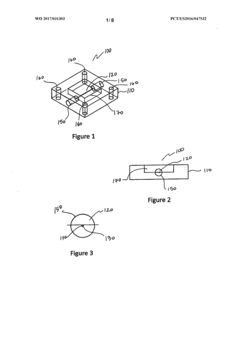
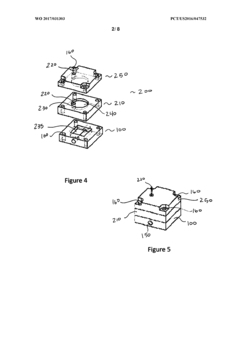
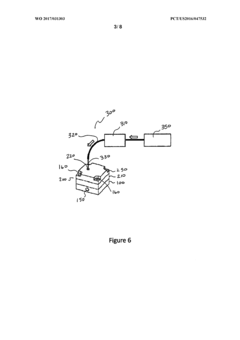
- A sensor assembly utilizing a metal substrate with a polymer waveguide that optically couples fiber optic cables, employing heat stripping absorption spectroscopy to capture, pre-concentrate, and quantify analytes by adjusting temperature thresholds and analyzing absorption spectra to determine concentrations of VOCs like acetone and toluene.

Environmental Regulations Impacting VOC Testing Methods
Environmental regulations governing Volatile Organic Compounds (VOCs) have evolved significantly over the past decades, creating a complex regulatory landscape that directly impacts testing methodologies and column selection criteria for GC-MS analysis. The Clean Air Act Amendments of 1990 established the foundation for VOC regulation in the United States, with subsequent updates refining permissible emission levels and monitoring requirements. Similarly, the European Union's VOC Solvents Emissions Directive (1999/13/EC) and its successor, the Industrial Emissions Directive (2010/75/EU), have progressively tightened controls on VOC emissions across industrial sectors.
These regulations have driven the development of standardized testing methods with specific performance requirements that directly influence column selection decisions. The U.S. Environmental Protection Agency's Method TO-15 for ambient air analysis and Method 8260 for volatile organics in various matrices prescribe detailed analytical parameters, including recommended column specifications for optimal separation of target compounds. These methods often specify minimum column efficiency, phase type, and dimensional requirements to achieve regulatory compliance.
In recent years, regulatory focus has expanded to include emerging VOCs of concern, such as per- and polyfluoroalkyl substances (PFAS) and various oxygenated VOCs from consumer products. This expansion has necessitated more versatile column technologies capable of analyzing a broader spectrum of compounds with varying polarities and volatilities in a single analytical run.
The global harmonization of VOC testing standards through organizations like ISO has further influenced column selection practices. ISO 16000-6 for indoor air quality assessment and ISO 16017 for sampling and analysis of VOCs have established internationally recognized protocols that specify column performance criteria to ensure consistent results across different laboratories and jurisdictions.
Regulatory compliance also increasingly demands lower detection limits, driving the need for columns with reduced bleed characteristics and enhanced sensitivity. The European REACH regulation's substance evaluation requirements and California's Proposition 65 have established some of the most stringent thresholds for certain VOCs, necessitating high-performance columns capable of trace-level detection without interference.
Industry-specific regulations present additional considerations for column selection. For instance, pharmaceutical manufacturing under FDA and EMA guidelines requires columns that can achieve specified system suitability criteria for residual solvent analysis, while the automotive industry must adhere to specific test methods for materials emissions testing that influence column choice.
As regulatory frameworks continue to evolve toward more comprehensive VOC monitoring and stricter emission controls, column technology must advance in parallel to meet these emerging analytical challenges while maintaining compliance with established regulatory methods.
These regulations have driven the development of standardized testing methods with specific performance requirements that directly influence column selection decisions. The U.S. Environmental Protection Agency's Method TO-15 for ambient air analysis and Method 8260 for volatile organics in various matrices prescribe detailed analytical parameters, including recommended column specifications for optimal separation of target compounds. These methods often specify minimum column efficiency, phase type, and dimensional requirements to achieve regulatory compliance.
In recent years, regulatory focus has expanded to include emerging VOCs of concern, such as per- and polyfluoroalkyl substances (PFAS) and various oxygenated VOCs from consumer products. This expansion has necessitated more versatile column technologies capable of analyzing a broader spectrum of compounds with varying polarities and volatilities in a single analytical run.
The global harmonization of VOC testing standards through organizations like ISO has further influenced column selection practices. ISO 16000-6 for indoor air quality assessment and ISO 16017 for sampling and analysis of VOCs have established internationally recognized protocols that specify column performance criteria to ensure consistent results across different laboratories and jurisdictions.
Regulatory compliance also increasingly demands lower detection limits, driving the need for columns with reduced bleed characteristics and enhanced sensitivity. The European REACH regulation's substance evaluation requirements and California's Proposition 65 have established some of the most stringent thresholds for certain VOCs, necessitating high-performance columns capable of trace-level detection without interference.
Industry-specific regulations present additional considerations for column selection. For instance, pharmaceutical manufacturing under FDA and EMA guidelines requires columns that can achieve specified system suitability criteria for residual solvent analysis, while the automotive industry must adhere to specific test methods for materials emissions testing that influence column choice.
As regulatory frameworks continue to evolve toward more comprehensive VOC monitoring and stricter emission controls, column technology must advance in parallel to meet these emerging analytical challenges while maintaining compliance with established regulatory methods.
Cost-Benefit Analysis of Advanced Column Technologies
When evaluating advanced column technologies for VOC testing via GC-MS, initial acquisition costs must be weighed against long-term operational benefits. Premium columns such as those with specialized stationary phases (e.g., ionic liquid columns) typically command price premiums of 30-50% over standard columns, representing a significant upfront investment. However, these advanced columns often demonstrate extended lifespans of 1.5-2.5 times longer than conventional alternatives when handling complex VOC matrices, substantially reducing replacement frequency.
Operational efficiency gains present compelling economic advantages. High-efficiency columns with enhanced separation capabilities can reduce analysis times by 15-25%, directly translating to increased sample throughput and laboratory productivity. For high-volume testing facilities processing 50+ samples daily, this efficiency improvement can yield annual labor cost savings of $20,000-35,000, rapidly offsetting the initial investment premium.
Maintenance economics further favor advanced column technologies. Specialized columns with improved thermal stability and reduced bleed characteristics require less frequent conditioning and calibration, reducing instrument downtime by an estimated 10-15%. This translates to approximately 3-5 additional operational days annually for a typical analytical laboratory, representing $5,000-8,000 in recovered productivity.
Consumable reduction constitutes another significant cost advantage. Advanced columns typically require 20-30% less carrier gas and can often operate effectively with reduced solvent volumes for sample preparation. For laboratories conducting routine VOC analysis, this can translate to annual savings of $3,000-7,000 in consumable expenses, while simultaneously reducing environmental impact through decreased waste generation.
Quality-related economic benefits must also be considered. Enhanced selectivity and resolution capabilities of advanced columns reduce the need for repeat analyses due to co-elution issues or insufficient separation, with error rates typically decreasing by 40-60%. For regulatory compliance testing, this improved reliability significantly reduces costly resampling events and potential regulatory penalties, providing risk mitigation value that, while difficult to quantify precisely, often exceeds $10,000 annually for regulated industries.
Return-on-investment calculations indicate that despite higher initial costs, premium column technologies typically achieve break-even points within 8-14 months of implementation for laboratories conducting regular VOC analyses. This favorable economic profile is further enhanced when considering the intangible benefits of improved data quality and analytical confidence, particularly for complex environmental or industrial hygiene applications where detection accuracy carries significant downstream implications.
Operational efficiency gains present compelling economic advantages. High-efficiency columns with enhanced separation capabilities can reduce analysis times by 15-25%, directly translating to increased sample throughput and laboratory productivity. For high-volume testing facilities processing 50+ samples daily, this efficiency improvement can yield annual labor cost savings of $20,000-35,000, rapidly offsetting the initial investment premium.
Maintenance economics further favor advanced column technologies. Specialized columns with improved thermal stability and reduced bleed characteristics require less frequent conditioning and calibration, reducing instrument downtime by an estimated 10-15%. This translates to approximately 3-5 additional operational days annually for a typical analytical laboratory, representing $5,000-8,000 in recovered productivity.
Consumable reduction constitutes another significant cost advantage. Advanced columns typically require 20-30% less carrier gas and can often operate effectively with reduced solvent volumes for sample preparation. For laboratories conducting routine VOC analysis, this can translate to annual savings of $3,000-7,000 in consumable expenses, while simultaneously reducing environmental impact through decreased waste generation.
Quality-related economic benefits must also be considered. Enhanced selectivity and resolution capabilities of advanced columns reduce the need for repeat analyses due to co-elution issues or insufficient separation, with error rates typically decreasing by 40-60%. For regulatory compliance testing, this improved reliability significantly reduces costly resampling events and potential regulatory penalties, providing risk mitigation value that, while difficult to quantify precisely, often exceeds $10,000 annually for regulated industries.
Return-on-investment calculations indicate that despite higher initial costs, premium column technologies typically achieve break-even points within 8-14 months of implementation for laboratories conducting regular VOC analyses. This favorable economic profile is further enhanced when considering the intangible benefits of improved data quality and analytical confidence, particularly for complex environmental or industrial hygiene applications where detection accuracy carries significant downstream implications.
Unlock deeper insights with Patsnap Eureka Quick Research — get a full tech report to explore trends and direct your research. Try now!
Generate Your Research Report Instantly with AI Agent
Supercharge your innovation with Patsnap Eureka AI Agent Platform!