

Processing Complex Geometries: Vacuum Forming Best Practices
JUL 30, 20259 MIN READ
Generate Your Research Report Instantly with AI Agent
PatSnap Eureka helps you evaluate technical feasibility & market potential.
Vacuum Forming Evolution and Objectives
Vacuum forming, a thermoforming process, has evolved significantly since its inception in the 1950s. Initially developed for creating simple plastic shapes, it has grown into a sophisticated manufacturing technique capable of producing complex geometries. The evolution of vacuum forming has been driven by advancements in materials science, automation, and computer-aided design.
In its early stages, vacuum forming was limited to basic shapes and relatively small-scale production. As the technology progressed, larger and more intricate molds became feasible, expanding the range of possible applications. The introduction of CNC-machined molds in the 1980s marked a significant milestone, allowing for greater precision and repeatability in the production of complex geometries.
The development of advanced thermoplastics has played a crucial role in the evolution of vacuum forming. Materials with improved heat resistance, durability, and flexibility have enabled the creation of more sophisticated products across various industries, including automotive, aerospace, and medical devices.
Automation has been another key factor in the advancement of vacuum forming. The integration of robotic systems and programmable logic controllers (PLCs) has streamlined the production process, reducing cycle times and improving consistency. This has made vacuum forming a viable option for high-volume production of complex parts.
The objectives of modern vacuum forming technology are multifaceted. Primarily, there is a focus on enhancing the ability to process increasingly complex geometries while maintaining high levels of accuracy and surface finish. This includes improving the formation of deep draws, sharp corners, and intricate details that were previously challenging to achieve.
Another key objective is to optimize material usage and reduce waste. This involves developing more efficient heating systems, improving mold design to minimize material thinning, and implementing advanced trimming techniques to maximize yield.
Sustainability has also become a significant goal in vacuum forming. Efforts are being made to incorporate more recyclable and biodegradable materials into the process, as well as to reduce energy consumption through more efficient heating and cooling systems.
The industry is also striving to enhance the flexibility of vacuum forming processes. This includes developing quick-change mold systems and improving the adaptability of machines to handle a wider range of materials and part sizes, allowing for more versatile production capabilities.
As vacuum forming continues to evolve, the ultimate objective is to position it as a competitive alternative to other manufacturing processes for producing complex geometries, offering advantages in terms of cost-effectiveness, speed, and material properties.
In its early stages, vacuum forming was limited to basic shapes and relatively small-scale production. As the technology progressed, larger and more intricate molds became feasible, expanding the range of possible applications. The introduction of CNC-machined molds in the 1980s marked a significant milestone, allowing for greater precision and repeatability in the production of complex geometries.
The development of advanced thermoplastics has played a crucial role in the evolution of vacuum forming. Materials with improved heat resistance, durability, and flexibility have enabled the creation of more sophisticated products across various industries, including automotive, aerospace, and medical devices.
Automation has been another key factor in the advancement of vacuum forming. The integration of robotic systems and programmable logic controllers (PLCs) has streamlined the production process, reducing cycle times and improving consistency. This has made vacuum forming a viable option for high-volume production of complex parts.
The objectives of modern vacuum forming technology are multifaceted. Primarily, there is a focus on enhancing the ability to process increasingly complex geometries while maintaining high levels of accuracy and surface finish. This includes improving the formation of deep draws, sharp corners, and intricate details that were previously challenging to achieve.
Another key objective is to optimize material usage and reduce waste. This involves developing more efficient heating systems, improving mold design to minimize material thinning, and implementing advanced trimming techniques to maximize yield.
Sustainability has also become a significant goal in vacuum forming. Efforts are being made to incorporate more recyclable and biodegradable materials into the process, as well as to reduce energy consumption through more efficient heating and cooling systems.
The industry is also striving to enhance the flexibility of vacuum forming processes. This includes developing quick-change mold systems and improving the adaptability of machines to handle a wider range of materials and part sizes, allowing for more versatile production capabilities.
As vacuum forming continues to evolve, the ultimate objective is to position it as a competitive alternative to other manufacturing processes for producing complex geometries, offering advantages in terms of cost-effectiveness, speed, and material properties.
Market Analysis for Complex Geometry Products
The market for complex geometry products has been experiencing significant growth in recent years, driven by advancements in manufacturing technologies and increasing demand for customized, high-performance components across various industries. Vacuum forming, as a versatile and cost-effective method for processing complex geometries, has played a crucial role in this market expansion.
In the automotive sector, the demand for complex geometry products has been particularly strong. Lightweight, aerodynamic components with intricate shapes are increasingly sought after to improve fuel efficiency and vehicle performance. The aerospace industry also represents a substantial market for complex geometry products, with a focus on lightweight, high-strength parts that can withstand extreme conditions.
The consumer goods sector has shown a growing appetite for products with complex geometries, especially in electronics, appliances, and packaging. This trend is driven by the desire for sleek, ergonomic designs that stand out in competitive markets. Additionally, the medical device industry has been a significant contributor to the market growth, requiring precision-engineered components for various applications, from prosthetics to diagnostic equipment.
The global market for complex geometry products processed through vacuum forming is estimated to be in the billions of dollars, with a compound annual growth rate (CAGR) projected to remain strong in the coming years. This growth is supported by the increasing adoption of advanced materials, such as high-performance plastics and composites, which allow for more intricate and durable designs.
Geographically, North America and Europe have been leading markets for complex geometry products, owing to their well-established manufacturing sectors and high adoption rates of advanced technologies. However, the Asia-Pacific region is expected to witness the fastest growth, driven by rapid industrialization, increasing automotive production, and growing investments in aerospace and medical device manufacturing.
Key market drivers include the push for lightweight materials in transportation, the trend towards miniaturization in electronics, and the growing demand for customized medical devices. Additionally, the increasing focus on sustainability has led to a rise in demand for complex geometry products that optimize material usage and improve energy efficiency.
Despite the positive outlook, the market faces challenges such as the need for skilled labor to operate advanced manufacturing equipment and the high initial investment required for state-of-the-art vacuum forming technologies. However, ongoing innovations in automation and digital manufacturing processes are expected to address these challenges and further drive market growth.
In the automotive sector, the demand for complex geometry products has been particularly strong. Lightweight, aerodynamic components with intricate shapes are increasingly sought after to improve fuel efficiency and vehicle performance. The aerospace industry also represents a substantial market for complex geometry products, with a focus on lightweight, high-strength parts that can withstand extreme conditions.
The consumer goods sector has shown a growing appetite for products with complex geometries, especially in electronics, appliances, and packaging. This trend is driven by the desire for sleek, ergonomic designs that stand out in competitive markets. Additionally, the medical device industry has been a significant contributor to the market growth, requiring precision-engineered components for various applications, from prosthetics to diagnostic equipment.
The global market for complex geometry products processed through vacuum forming is estimated to be in the billions of dollars, with a compound annual growth rate (CAGR) projected to remain strong in the coming years. This growth is supported by the increasing adoption of advanced materials, such as high-performance plastics and composites, which allow for more intricate and durable designs.
Geographically, North America and Europe have been leading markets for complex geometry products, owing to their well-established manufacturing sectors and high adoption rates of advanced technologies. However, the Asia-Pacific region is expected to witness the fastest growth, driven by rapid industrialization, increasing automotive production, and growing investments in aerospace and medical device manufacturing.
Key market drivers include the push for lightweight materials in transportation, the trend towards miniaturization in electronics, and the growing demand for customized medical devices. Additionally, the increasing focus on sustainability has led to a rise in demand for complex geometry products that optimize material usage and improve energy efficiency.
Despite the positive outlook, the market faces challenges such as the need for skilled labor to operate advanced manufacturing equipment and the high initial investment required for state-of-the-art vacuum forming technologies. However, ongoing innovations in automation and digital manufacturing processes are expected to address these challenges and further drive market growth.
Current Challenges in Vacuum Forming Complex Shapes
Vacuum forming of complex shapes presents several significant challenges that manufacturers and designers must overcome to achieve high-quality results. One of the primary issues is the uneven material distribution that occurs when forming intricate geometries. As the plastic sheet is stretched over a mold with complex contours, it tends to thin out in areas of deep draws or sharp corners, leading to potential weak spots or even failure points in the final product.
Another challenge lies in the accurate replication of fine details and textures. Complex shapes often incorporate intricate surface features that can be difficult to capture precisely through the vacuum forming process. This is particularly problematic when dealing with molds that have undercuts or negative draft angles, as these features can impede the removal of the formed part from the mold.
Temperature control is a critical factor that becomes increasingly complex when working with intricate shapes. Achieving uniform heating of the plastic sheet is essential for consistent forming, but complex geometries can create hot or cold spots that affect the material's pliability. This non-uniform heating can result in inconsistent wall thickness, surface defects, or incomplete forming of certain areas.
The design of appropriate molds for complex shapes also presents a significant challenge. Molds must be engineered to facilitate proper airflow and evacuation during the vacuum process, which becomes more difficult with intricate geometries. Inadequate venting can lead to air traps, resulting in incomplete forming or surface imperfections.
Furthermore, the selection of suitable materials for complex vacuum forming is crucial. Different plastics exhibit varying levels of formability and detail reproduction. Materials that offer high elongation and low shrinkage are often preferred for complex shapes, but these may come at the cost of other desirable properties such as strength or chemical resistance.
Cycle time optimization is another challenge when dealing with complex geometries. The forming process for intricate shapes typically requires longer heating and cooling cycles, which can significantly impact production efficiency. Balancing the need for quality results with the demands of high-volume production is an ongoing challenge for manufacturers.
Lastly, the post-forming trimming and finishing of complex shapes can be particularly demanding. Automated trimming processes may struggle with intricate contours, often necessitating manual intervention, which can be time-consuming and less precise. Achieving consistent quality in finishing operations across a production run of complex parts requires specialized tooling and skilled labor.
Another challenge lies in the accurate replication of fine details and textures. Complex shapes often incorporate intricate surface features that can be difficult to capture precisely through the vacuum forming process. This is particularly problematic when dealing with molds that have undercuts or negative draft angles, as these features can impede the removal of the formed part from the mold.
Temperature control is a critical factor that becomes increasingly complex when working with intricate shapes. Achieving uniform heating of the plastic sheet is essential for consistent forming, but complex geometries can create hot or cold spots that affect the material's pliability. This non-uniform heating can result in inconsistent wall thickness, surface defects, or incomplete forming of certain areas.
The design of appropriate molds for complex shapes also presents a significant challenge. Molds must be engineered to facilitate proper airflow and evacuation during the vacuum process, which becomes more difficult with intricate geometries. Inadequate venting can lead to air traps, resulting in incomplete forming or surface imperfections.
Furthermore, the selection of suitable materials for complex vacuum forming is crucial. Different plastics exhibit varying levels of formability and detail reproduction. Materials that offer high elongation and low shrinkage are often preferred for complex shapes, but these may come at the cost of other desirable properties such as strength or chemical resistance.
Cycle time optimization is another challenge when dealing with complex geometries. The forming process for intricate shapes typically requires longer heating and cooling cycles, which can significantly impact production efficiency. Balancing the need for quality results with the demands of high-volume production is an ongoing challenge for manufacturers.
Lastly, the post-forming trimming and finishing of complex shapes can be particularly demanding. Automated trimming processes may struggle with intricate contours, often necessitating manual intervention, which can be time-consuming and less precise. Achieving consistent quality in finishing operations across a production run of complex parts requires specialized tooling and skilled labor.
Best Practices for Complex Geometry Vacuum Forming
01 Multi-stage vacuum forming for complex geometries
A multi-stage vacuum forming process is used to create complex geometries. This involves sequential forming steps, each targeting different areas or features of the part. The process allows for more intricate shapes and better detail reproduction compared to single-stage forming.- Advanced mold design for complex geometries: Utilizing advanced mold designs to accommodate complex geometries in vacuum forming processes. This includes multi-part molds, adjustable molds, and molds with removable inserts to create intricate shapes and undercuts that would be difficult to achieve with traditional single-piece molds.
- Computer-aided design and simulation: Implementing computer-aided design (CAD) and simulation software to optimize the vacuum forming process for complex geometries. This involves creating detailed 3D models, analyzing material flow, and predicting potential issues before physical production begins.
- Multi-stage forming techniques: Employing multi-stage forming techniques to gradually shape complex geometries. This may involve pre-forming, sequential forming steps, or combining vacuum forming with other processes like thermoforming or pressure forming to achieve intricate shapes.
- Temperature and pressure control systems: Implementing advanced temperature and pressure control systems to precisely manage the forming process for complex geometries. This includes zoned heating, variable vacuum pressure, and real-time adjustments to ensure optimal material distribution and detail reproduction.
- Innovative material selection and preparation: Selecting and preparing specialized materials that are better suited for vacuum forming complex geometries. This may involve using multi-layer films, reinforced plastics, or pre-treated sheets to enhance formability, detail retention, and overall part quality.
02 Adaptive mold design for vacuum forming
Adaptive molds are used in vacuum forming to accommodate complex geometries. These molds can be adjusted or reconfigured to suit different part shapes, allowing for greater flexibility in production. The use of adaptive molds can reduce tooling costs and improve the ability to form intricate designs.Expand Specific Solutions03 Computer-aided design and simulation for complex vacuum forming
Advanced computer-aided design (CAD) and simulation tools are employed to optimize the vacuum forming process for complex geometries. These tools help in predicting material behavior, identifying potential issues, and refining mold designs before physical production begins.Expand Specific Solutions04 Temperature and pressure control for improved forming of complex shapes
Precise control of temperature and pressure during the vacuum forming process is crucial for achieving complex geometries. This includes zonal heating, variable pressure application, and carefully timed cooling cycles to ensure proper material flow and detail reproduction.Expand Specific Solutions05 Use of specialized materials for complex vacuum forming
Specialized thermoplastic materials with enhanced formability characteristics are used for vacuum forming complex geometries. These materials may have improved flow properties, better detail reproduction, or the ability to maintain strength in thin sections, allowing for more intricate part designs.Expand Specific Solutions
Key Industry Players and Competitive Landscape
The vacuum forming industry is currently in a mature stage, with a stable market size and established best practices. The global market for vacuum forming is estimated to be in the billions of dollars, driven by applications in packaging, automotive, and consumer goods sectors. Technologically, the field is well-developed, with ongoing innovations focused on improving efficiency and sustainability. Key players like Canon, Inc., Applied Materials, Inc., and Lam Research Corp. are at the forefront of advancing processing techniques for complex geometries. These companies, along with others like ULVAC, Inc. and Corning, Inc., are investing in research and development to enhance precision, reduce material waste, and increase automation in vacuum forming processes.
Applied Materials, Inc.
Technical Solution: Applied Materials has developed vacuum forming techniques for semiconductor and display manufacturing processes. Their approach focuses on ultra-thin film deposition and patterning on complex substrate geometries[8]. The company utilizes advanced plasma-enhanced chemical vapor deposition (PECVD) systems in conjunction with precision vacuum control to achieve uniform coatings on 3D structures[10]. Applied Materials has also implemented multi-step vacuum forming processes that combine etching, deposition, and annealing in a single vacuum environment, reducing contamination risks and improving overall efficiency[12]. Their technology incorporates in-situ metrology tools for real-time monitoring and adjustment of process parameters[14].
Strengths: Expertise in thin-film technologies, high-precision vacuum control, and integration with other semiconductor manufacturing processes. Weaknesses: Limited to specific applications in the electronics industry and potentially high equipment costs.
The Boeing Co.
Technical Solution: Boeing has developed advanced vacuum forming techniques for complex aerospace geometries. Their process utilizes high-temperature thermoplastics and precision-controlled vacuum systems to create intricate, lightweight components for aircraft structures[1]. The company employs multi-axis CNC machining to create accurate molds and implements real-time monitoring systems to ensure consistent part quality during the vacuum forming process[3]. Boeing's approach also incorporates advanced simulation software to predict material behavior and optimize forming parameters, resulting in reduced material waste and improved part consistency[5].
Strengths: Expertise in aerospace-grade materials, advanced simulation capabilities, and precision control systems. Weaknesses: High equipment costs and potentially longer production times for complex parts.
Innovative Mold Design Techniques for Complex Shapes
Vacuum forming method for membrane-like objects having protruding structures and forming apparatus thereof
PatentPendingUS20250042076A1
Innovation
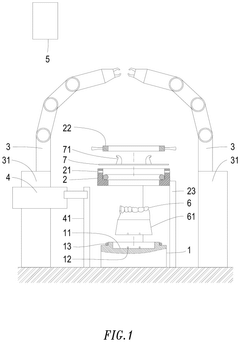
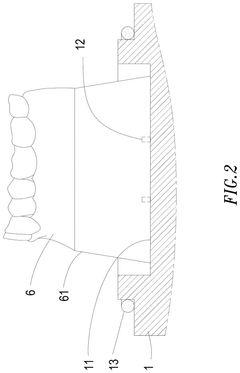
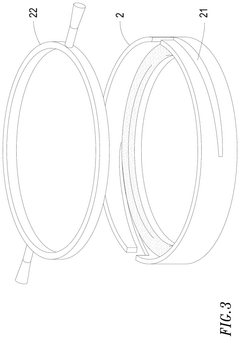
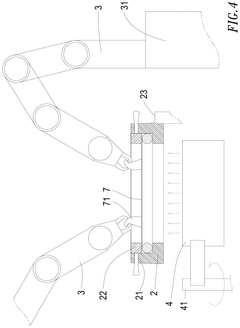
- A computer simulation is used to pre-construct and position special structures on a membrane-like object, which is then transferred to a predetermined forming position using a controllable transfer device during the vacuum forming process, ensuring precise attachment to a mold.
Process for forming articles from extruded polymer sheet
PatentWO2015025285A2
Innovation
- A pressure forming technique that uses non-contact heating and high pressure to form transparent parts, allowing for independent control of temperature and pressure, which enables the production of parts with high optical quality, design freedom, and reduced cycle times without the need for pre-drying, using extruded sheets of materials like polycarbonate and polyethylene terephthalate glycol.


Material Selection for Complex Vacuum Forming
Material selection is a critical factor in achieving successful vacuum forming of complex geometries. The choice of material significantly impacts the final product's quality, performance, and cost-effectiveness. When dealing with intricate shapes and designs, it is essential to consider materials that offer a balance of formability, strength, and surface finish.
Thermoplastics are the primary materials used in vacuum forming due to their ability to soften and reshape when heated. For complex geometries, high-impact polystyrene (HIPS) and acrylonitrile butadiene styrene (ABS) are popular choices. HIPS offers excellent formability and detail reproduction, making it suitable for intricate designs. ABS provides superior impact resistance and durability, ideal for parts that require structural integrity.
For applications demanding higher heat resistance and dimensional stability, engineering plastics such as polycarbonate (PC) and polyethylene terephthalate glycol (PETG) are preferred. PC exhibits exceptional toughness and clarity, while PETG offers excellent chemical resistance and ease of processing. These materials can maintain their properties even when formed into complex shapes with thin walls or sharp corners.
When dealing with large, complex parts, materials with good melt strength and uniform wall thickness distribution are crucial. Polyethylene (PE) and polypropylene (PP) are often selected for their excellent melt strength and ability to maintain consistent thickness during the forming process. These materials also offer good chemical resistance and low moisture absorption, making them suitable for a wide range of applications.
For applications requiring high-temperature resistance or flame-retardant properties, specialty materials like polyetherimide (PEI) or flame-retardant grades of ABS or PC can be employed. These materials maintain their mechanical properties at elevated temperatures and comply with stringent safety regulations in industries such as aerospace and automotive.
The surface finish of the final product is another crucial consideration in material selection for complex geometries. Materials like acrylic (PMMA) offer excellent optical clarity and surface gloss, making them ideal for applications where aesthetics are paramount. For parts requiring a matte or textured finish, certain grades of ABS or PP with added fillers or modifiers can be utilized.
In conclusion, the selection of materials for vacuum forming complex geometries requires a thorough understanding of the specific application requirements, including mechanical properties, thermal characteristics, and surface finish. By carefully considering these factors and choosing the appropriate material, manufacturers can optimize the vacuum forming process for complex parts, ensuring high-quality, cost-effective production.
Thermoplastics are the primary materials used in vacuum forming due to their ability to soften and reshape when heated. For complex geometries, high-impact polystyrene (HIPS) and acrylonitrile butadiene styrene (ABS) are popular choices. HIPS offers excellent formability and detail reproduction, making it suitable for intricate designs. ABS provides superior impact resistance and durability, ideal for parts that require structural integrity.
For applications demanding higher heat resistance and dimensional stability, engineering plastics such as polycarbonate (PC) and polyethylene terephthalate glycol (PETG) are preferred. PC exhibits exceptional toughness and clarity, while PETG offers excellent chemical resistance and ease of processing. These materials can maintain their properties even when formed into complex shapes with thin walls or sharp corners.
When dealing with large, complex parts, materials with good melt strength and uniform wall thickness distribution are crucial. Polyethylene (PE) and polypropylene (PP) are often selected for their excellent melt strength and ability to maintain consistent thickness during the forming process. These materials also offer good chemical resistance and low moisture absorption, making them suitable for a wide range of applications.
For applications requiring high-temperature resistance or flame-retardant properties, specialty materials like polyetherimide (PEI) or flame-retardant grades of ABS or PC can be employed. These materials maintain their mechanical properties at elevated temperatures and comply with stringent safety regulations in industries such as aerospace and automotive.
The surface finish of the final product is another crucial consideration in material selection for complex geometries. Materials like acrylic (PMMA) offer excellent optical clarity and surface gloss, making them ideal for applications where aesthetics are paramount. For parts requiring a matte or textured finish, certain grades of ABS or PP with added fillers or modifiers can be utilized.
In conclusion, the selection of materials for vacuum forming complex geometries requires a thorough understanding of the specific application requirements, including mechanical properties, thermal characteristics, and surface finish. By carefully considering these factors and choosing the appropriate material, manufacturers can optimize the vacuum forming process for complex parts, ensuring high-quality, cost-effective production.
Sustainability in Vacuum Forming Processes
Sustainability in vacuum forming processes has become a critical focus in the industry, driven by increasing environmental concerns and regulatory pressures. The traditional vacuum forming process, while efficient for producing complex geometries, has been associated with high energy consumption and material waste. However, recent advancements have paved the way for more sustainable practices without compromising on the quality or complexity of the final products.
One of the primary areas of improvement is in material selection. Manufacturers are increasingly turning to biodegradable and recycled plastics as alternatives to traditional petroleum-based materials. These eco-friendly options not only reduce the carbon footprint but also address the end-of-life concerns for vacuum-formed products. Additionally, the development of thinner gauge materials that maintain structural integrity has led to significant reductions in raw material usage.
Energy efficiency has seen substantial enhancements through the implementation of advanced heating systems. Infrared heating technology, for instance, offers more precise and localized heating, reducing overall energy consumption. Some innovative systems incorporate heat recovery mechanisms, capturing and reusing waste heat from the forming process, further improving energy efficiency.
Waste reduction strategies have also evolved. Computer-aided design (CAD) and simulation tools now allow for optimized mold designs and material layouts, minimizing trim waste. Moreover, in-line recycling systems have been integrated into production lines, enabling immediate reprocessing of scrap material, thus closing the loop in the manufacturing process.
Water conservation has become another focal point in sustainable vacuum forming. Closed-loop cooling systems and water recycling technologies have significantly reduced water consumption, particularly in facilities that produce large volumes of vacuum-formed products.
The industry has also seen a shift towards more sustainable packaging solutions for vacuum-formed products. Lightweight, stackable designs not only reduce material use but also optimize transportation efficiency, lowering the overall carbon footprint of the supply chain.
Furthermore, lifecycle assessment tools are increasingly being employed to evaluate the environmental impact of vacuum-formed products from cradle to grave. This holistic approach enables manufacturers to make informed decisions about materials, processes, and design choices that minimize environmental impact throughout the product's lifecycle.
As the vacuum forming industry continues to evolve, the integration of Industry 4.0 technologies promises further sustainability gains. Smart sensors and data analytics are being leveraged to optimize process parameters in real-time, reducing energy consumption and material waste while maintaining product quality. These advancements not only contribute to environmental sustainability but also offer economic benefits through improved efficiency and reduced operational costs.
One of the primary areas of improvement is in material selection. Manufacturers are increasingly turning to biodegradable and recycled plastics as alternatives to traditional petroleum-based materials. These eco-friendly options not only reduce the carbon footprint but also address the end-of-life concerns for vacuum-formed products. Additionally, the development of thinner gauge materials that maintain structural integrity has led to significant reductions in raw material usage.
Energy efficiency has seen substantial enhancements through the implementation of advanced heating systems. Infrared heating technology, for instance, offers more precise and localized heating, reducing overall energy consumption. Some innovative systems incorporate heat recovery mechanisms, capturing and reusing waste heat from the forming process, further improving energy efficiency.
Waste reduction strategies have also evolved. Computer-aided design (CAD) and simulation tools now allow for optimized mold designs and material layouts, minimizing trim waste. Moreover, in-line recycling systems have been integrated into production lines, enabling immediate reprocessing of scrap material, thus closing the loop in the manufacturing process.
Water conservation has become another focal point in sustainable vacuum forming. Closed-loop cooling systems and water recycling technologies have significantly reduced water consumption, particularly in facilities that produce large volumes of vacuum-formed products.
The industry has also seen a shift towards more sustainable packaging solutions for vacuum-formed products. Lightweight, stackable designs not only reduce material use but also optimize transportation efficiency, lowering the overall carbon footprint of the supply chain.
Furthermore, lifecycle assessment tools are increasingly being employed to evaluate the environmental impact of vacuum-formed products from cradle to grave. This holistic approach enables manufacturers to make informed decisions about materials, processes, and design choices that minimize environmental impact throughout the product's lifecycle.
As the vacuum forming industry continues to evolve, the integration of Industry 4.0 technologies promises further sustainability gains. Smart sensors and data analytics are being leveraged to optimize process parameters in real-time, reducing energy consumption and material waste while maintaining product quality. These advancements not only contribute to environmental sustainability but also offer economic benefits through improved efficiency and reduced operational costs.
Unlock deeper insights with PatSnap Eureka Quick Research — get a full tech report to explore trends and direct your research. Try now!
Generate Your Research Report Instantly with AI Agent
Supercharge your innovation with PatSnap Eureka AI Agent Platform!