
Propionic Acid's Functionality in Robust Chemical Processes
JUL 3, 20259 MIN READ
Generate Your Research Report Instantly with AI Agent
Patsnap Eureka helps you evaluate technical feasibility & market potential.
Propionic Acid Overview
Propionic acid, a three-carbon carboxylic acid, plays a crucial role in various chemical processes due to its unique properties and versatile applications. This compound, with the molecular formula C3H6O2, is a colorless liquid at room temperature and possesses a distinctive pungent odor. Its functionality in robust chemical processes stems from its chemical structure and reactivity.
In the realm of industrial chemistry, propionic acid serves as a vital intermediate and precursor for numerous products. Its carboxylic acid group enables it to participate in a wide range of reactions, including esterification, condensation, and reduction. This versatility makes it an essential building block in the synthesis of pharmaceuticals, polymers, and specialty chemicals.
One of the primary applications of propionic acid is in the food industry, where it acts as a preservative and mold inhibitor. Its antimicrobial properties stem from its ability to lower pH and disrupt microbial cell membranes. This functionality is particularly valuable in the preservation of baked goods, dairy products, and animal feed, contributing to extended shelf life and improved food safety.
In the field of polymer chemistry, propionic acid and its derivatives play a significant role in the production of cellulose acetate propionate (CAP) and other specialty plastics. The incorporation of propionic acid moieties into polymer chains imparts unique properties such as improved flexibility, durability, and chemical resistance. These characteristics make CAP an attractive material for various applications, including eyeglass frames, tool handles, and automotive components.
The pharmaceutical industry also benefits from propionic acid's functionality. It serves as a starting material for the synthesis of various drugs, including ibuprofen, a widely used nonsteroidal anti-inflammatory drug (NSAID). The acid's ability to form esters and amides makes it valuable in the production of prodrugs and other pharmaceutical intermediates.
In the realm of organic synthesis, propionic acid acts as a versatile reagent and solvent. Its moderate acidity and ability to form stable salts make it useful in various reactions, including the formation of metal propionates. These compounds find applications in catalysis, polymer stabilization, and as drying agents in paints and coatings.
The robustness of chemical processes involving propionic acid is further enhanced by its relatively low toxicity and environmental impact compared to other organic acids. This characteristic makes it an attractive option for green chemistry applications and sustainable industrial processes. Additionally, its high boiling point and low vapor pressure contribute to its stability and ease of handling in various chemical operations.
In the realm of industrial chemistry, propionic acid serves as a vital intermediate and precursor for numerous products. Its carboxylic acid group enables it to participate in a wide range of reactions, including esterification, condensation, and reduction. This versatility makes it an essential building block in the synthesis of pharmaceuticals, polymers, and specialty chemicals.
One of the primary applications of propionic acid is in the food industry, where it acts as a preservative and mold inhibitor. Its antimicrobial properties stem from its ability to lower pH and disrupt microbial cell membranes. This functionality is particularly valuable in the preservation of baked goods, dairy products, and animal feed, contributing to extended shelf life and improved food safety.
In the field of polymer chemistry, propionic acid and its derivatives play a significant role in the production of cellulose acetate propionate (CAP) and other specialty plastics. The incorporation of propionic acid moieties into polymer chains imparts unique properties such as improved flexibility, durability, and chemical resistance. These characteristics make CAP an attractive material for various applications, including eyeglass frames, tool handles, and automotive components.
The pharmaceutical industry also benefits from propionic acid's functionality. It serves as a starting material for the synthesis of various drugs, including ibuprofen, a widely used nonsteroidal anti-inflammatory drug (NSAID). The acid's ability to form esters and amides makes it valuable in the production of prodrugs and other pharmaceutical intermediates.
In the realm of organic synthesis, propionic acid acts as a versatile reagent and solvent. Its moderate acidity and ability to form stable salts make it useful in various reactions, including the formation of metal propionates. These compounds find applications in catalysis, polymer stabilization, and as drying agents in paints and coatings.
The robustness of chemical processes involving propionic acid is further enhanced by its relatively low toxicity and environmental impact compared to other organic acids. This characteristic makes it an attractive option for green chemistry applications and sustainable industrial processes. Additionally, its high boiling point and low vapor pressure contribute to its stability and ease of handling in various chemical operations.
Market Analysis
The market for propionic acid in robust chemical processes has shown significant growth in recent years, driven by its versatile functionality and increasing applications across various industries. The global propionic acid market size was valued at approximately $1.5 billion in 2020 and is projected to reach $2.1 billion by 2027, growing at a CAGR of around 5.2% during the forecast period.
The food and beverage industry remains the largest consumer of propionic acid, accounting for over 40% of the market share. Its use as a preservative in baked goods, dairy products, and animal feed has been a key driver of demand. The growing awareness of food safety and the need for extended shelf life of products have further boosted its adoption in this sector.
In the pharmaceutical industry, propionic acid's functionality as an intermediate in the synthesis of various drugs and active pharmaceutical ingredients has led to increased demand. The market in this sector is expected to grow at a higher rate compared to other applications, driven by the expansion of the pharmaceutical industry in emerging economies and the development of new drug formulations.
The agriculture sector represents another significant market for propionic acid, particularly in animal feed preservation. The increasing focus on livestock health and productivity has led to a rise in the use of propionic acid-based feed additives. This trend is especially prominent in regions with large-scale animal farming operations, such as North America and Europe.
Geographically, North America and Europe currently dominate the propionic acid market, collectively accounting for over 60% of the global market share. However, the Asia-Pacific region is expected to witness the highest growth rate in the coming years, driven by rapid industrialization, increasing food and beverage production, and growing pharmaceutical manufacturing activities in countries like China and India.
The market is characterized by the presence of several key players, including BASF SE, Dow Inc., Eastman Chemical Company, and Perstorp Holding AB. These companies are focusing on expanding their production capacities and developing innovative applications to maintain their market positions and meet the growing demand.
Challenges in the market include fluctuating raw material prices, particularly propylene, which can impact profit margins. Additionally, the increasing emphasis on sustainable and bio-based alternatives may pose a threat to the traditional propionic acid market in the long term. However, ongoing research into more efficient production methods and new applications in robust chemical processes is expected to create new opportunities for market growth.
The food and beverage industry remains the largest consumer of propionic acid, accounting for over 40% of the market share. Its use as a preservative in baked goods, dairy products, and animal feed has been a key driver of demand. The growing awareness of food safety and the need for extended shelf life of products have further boosted its adoption in this sector.
In the pharmaceutical industry, propionic acid's functionality as an intermediate in the synthesis of various drugs and active pharmaceutical ingredients has led to increased demand. The market in this sector is expected to grow at a higher rate compared to other applications, driven by the expansion of the pharmaceutical industry in emerging economies and the development of new drug formulations.
The agriculture sector represents another significant market for propionic acid, particularly in animal feed preservation. The increasing focus on livestock health and productivity has led to a rise in the use of propionic acid-based feed additives. This trend is especially prominent in regions with large-scale animal farming operations, such as North America and Europe.
Geographically, North America and Europe currently dominate the propionic acid market, collectively accounting for over 60% of the global market share. However, the Asia-Pacific region is expected to witness the highest growth rate in the coming years, driven by rapid industrialization, increasing food and beverage production, and growing pharmaceutical manufacturing activities in countries like China and India.
The market is characterized by the presence of several key players, including BASF SE, Dow Inc., Eastman Chemical Company, and Perstorp Holding AB. These companies are focusing on expanding their production capacities and developing innovative applications to maintain their market positions and meet the growing demand.
Challenges in the market include fluctuating raw material prices, particularly propylene, which can impact profit margins. Additionally, the increasing emphasis on sustainable and bio-based alternatives may pose a threat to the traditional propionic acid market in the long term. However, ongoing research into more efficient production methods and new applications in robust chemical processes is expected to create new opportunities for market growth.
Technical Challenges
Propionic acid's functionality in robust chemical processes faces several technical challenges that require innovative solutions. One of the primary obstacles is the corrosive nature of propionic acid, which can lead to equipment degradation and increased maintenance costs. This corrosivity necessitates the use of specialized materials and coatings for process equipment, adding complexity and expense to manufacturing processes.
Another significant challenge lies in the purification and separation of propionic acid from reaction mixtures. Traditional distillation methods can be energy-intensive and may lead to product loss due to the formation of azeotropes. This issue is particularly pronounced when dealing with aqueous solutions of propionic acid, as water-acid separation can be difficult and costly.
The production of propionic acid through fermentation processes presents its own set of challenges. Maintaining optimal conditions for microbial growth and acid production while preventing contamination and managing byproducts requires precise control systems and robust bioprocess engineering. Additionally, the relatively low yields and productivity of biological routes compared to petrochemical methods pose economic hurdles for large-scale implementation.
In applications where propionic acid serves as a preservative or antimicrobial agent, ensuring uniform distribution and maintaining effective concentrations throughout the product's shelf life can be technically demanding. This is especially true for complex food matrices or in products with varying pH levels and compositions.
The volatility of propionic acid at elevated temperatures presents challenges in high-temperature applications and storage. Developing stable formulations and containment strategies that prevent loss of the active compound while maintaining its functionality is an ongoing area of research and development.
Environmental concerns and regulatory pressures add another layer of complexity to propionic acid's use in chemical processes. Reducing emissions, improving recovery and recycling methods, and developing greener production routes are critical challenges that the industry must address to ensure sustainable practices and compliance with evolving regulations.
Lastly, the scalability of novel production methods and applications of propionic acid remains a significant technical hurdle. Bridging the gap between laboratory-scale successes and industrial-scale implementation often requires substantial process engineering and optimization, particularly when dealing with new catalytic systems or biotechnological approaches.
Another significant challenge lies in the purification and separation of propionic acid from reaction mixtures. Traditional distillation methods can be energy-intensive and may lead to product loss due to the formation of azeotropes. This issue is particularly pronounced when dealing with aqueous solutions of propionic acid, as water-acid separation can be difficult and costly.
The production of propionic acid through fermentation processes presents its own set of challenges. Maintaining optimal conditions for microbial growth and acid production while preventing contamination and managing byproducts requires precise control systems and robust bioprocess engineering. Additionally, the relatively low yields and productivity of biological routes compared to petrochemical methods pose economic hurdles for large-scale implementation.
In applications where propionic acid serves as a preservative or antimicrobial agent, ensuring uniform distribution and maintaining effective concentrations throughout the product's shelf life can be technically demanding. This is especially true for complex food matrices or in products with varying pH levels and compositions.
The volatility of propionic acid at elevated temperatures presents challenges in high-temperature applications and storage. Developing stable formulations and containment strategies that prevent loss of the active compound while maintaining its functionality is an ongoing area of research and development.
Environmental concerns and regulatory pressures add another layer of complexity to propionic acid's use in chemical processes. Reducing emissions, improving recovery and recycling methods, and developing greener production routes are critical challenges that the industry must address to ensure sustainable practices and compliance with evolving regulations.
Lastly, the scalability of novel production methods and applications of propionic acid remains a significant technical hurdle. Bridging the gap between laboratory-scale successes and industrial-scale implementation often requires substantial process engineering and optimization, particularly when dealing with new catalytic systems or biotechnological approaches.
Current Applications
01 Chemical synthesis and production of propionic acid
Propionic acid can be synthesized through various chemical processes, including the oxidation of propionaldehyde, carbonylation of ethylene, or fermentation of carbohydrates. These methods involve different catalysts, reaction conditions, and purification techniques to produce high-quality propionic acid for industrial applications.- Chemical synthesis and production of propionic acid: Propionic acid can be synthesized through various chemical processes, including the oxidation of propionaldehyde, carbonylation of ethylene, or fermentation of carbohydrates. These methods involve different catalysts, reaction conditions, and purification techniques to produce high-quality propionic acid for industrial applications.
- Antimicrobial and preservative properties: Propionic acid exhibits strong antimicrobial and preservative properties, making it useful in food preservation, animal feed, and pharmaceutical applications. It inhibits the growth of mold and bacteria, extending the shelf life of various products and improving their safety for consumption.
- Industrial applications and derivatives: Propionic acid serves as a precursor for various industrial chemicals and derivatives. It is used in the production of plastics, herbicides, pharmaceuticals, and flavoring agents. Its versatility in chemical reactions allows for the creation of numerous valuable compounds for different industries.
- Environmental and sustainable production methods: Research is ongoing to develop more environmentally friendly and sustainable methods for producing propionic acid. This includes exploring bio-based production processes, utilizing renewable resources, and optimizing fermentation techniques to reduce the environmental impact of propionic acid manufacturing.
- Analytical methods and quality control: Various analytical techniques are employed to assess the purity, concentration, and quality of propionic acid in different products and processes. These methods include chromatography, spectroscopy, and titration, ensuring the consistency and effectiveness of propionic acid in its various applications.
02 Use of propionic acid in food preservation
Propionic acid and its salts are widely used as food preservatives due to their antimicrobial properties. They inhibit the growth of mold and bacteria, extending the shelf life of various food products. The application of propionic acid in food preservation involves specific formulations and incorporation methods to ensure effectiveness and compliance with food safety regulations.Expand Specific Solutions03 Propionic acid in pharmaceutical applications
Propionic acid and its derivatives have various pharmaceutical applications, including use as intermediates in drug synthesis, as components in topical formulations, and in the production of certain medications. The functionality of propionic acid in pharmaceuticals is related to its chemical properties and ability to form esters and other derivatives with specific therapeutic effects.Expand Specific Solutions04 Industrial applications of propionic acid
Propionic acid has diverse industrial applications beyond food and pharmaceuticals. It is used in the production of plastics, herbicides, and as a chemical intermediate in various manufacturing processes. The versatility of propionic acid in industrial settings is due to its reactivity and ability to form various compounds with useful properties.Expand Specific Solutions05 Biotechnological production of propionic acid
Propionic acid can be produced through biotechnological methods, particularly using microbial fermentation. This involves the use of specific bacterial strains, optimization of fermentation conditions, and development of efficient recovery processes. Biotechnological production offers a more sustainable alternative to traditional chemical synthesis methods.Expand Specific Solutions
Industry Leaders
The competitive landscape for propionic acid's functionality in robust chemical processes is characterized by a mature industry with established players and ongoing research efforts. The global market for propionic acid is expected to grow steadily due to its diverse applications in food preservation, pharmaceuticals, and industrial processes. Key players like BASF, Dow, and Arkema dominate the market, leveraging their extensive R&D capabilities and global presence. Universities and research institutions, such as the University of Campinas and Ohio State University, contribute to technological advancements. The technology's maturity varies across applications, with traditional uses well-established and newer applications in sustainable chemistry and bio-based production still evolving, driving ongoing innovation in the field.
BASF Corp.
Technical Solution: BASF has developed advanced processes for propionic acid production, focusing on improving yield and purity. Their method involves a two-step process: carbonylation of ethylene to form propionaldehyde, followed by oxidation to propionic acid[1]. This approach utilizes a rhodium-based catalyst system, which has shown to increase selectivity and reduce byproduct formation[3]. BASF has also implemented continuous flow reactors, allowing for better control of reaction conditions and improved process efficiency[5]. Additionally, they have explored the use of bio-based feedstocks to produce propionic acid, aligning with sustainability goals[7].
Strengths: High yield and purity, efficient catalyst system, continuous flow technology. Weaknesses: Dependence on petrochemical feedstocks for traditional methods, potential catalyst cost issues.
Dow Global Technologies LLC
Technical Solution: Dow has focused on developing robust chemical processes for propionic acid production and its derivatives. Their approach includes a novel oxidative carbonylation process using ethylene, carbon monoxide, and oxygen as raw materials[2]. This method employs a palladium-based catalyst system, which has demonstrated high selectivity and improved atom economy[4]. Dow has also invested in process intensification techniques, such as reactive distillation, to combine reaction and separation steps, thereby reducing equipment costs and energy consumption[6]. Furthermore, they have explored the use of propionic acid as a building block for biodegradable polymers, expanding its functionality in sustainable materials[8].
Strengths: Innovative catalyst system, process intensification, integration with polymer production. Weaknesses: Potential safety concerns with CO handling, reliance on metal catalysts.
Key Innovations
Improved propionibacterium strains for the production of propionic acid
PatentWO2017055932A2
Innovation
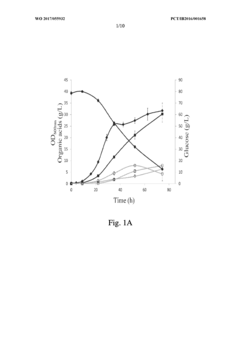
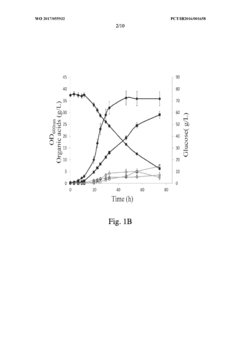
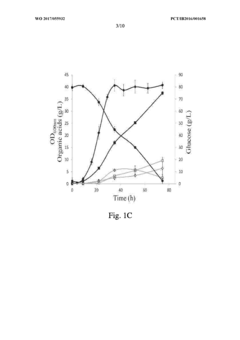
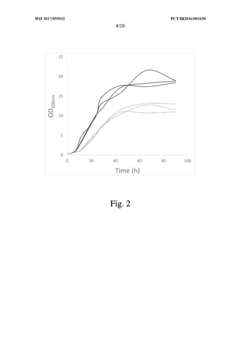
- Genome shuffling between selected Propionibacterium strains, such as P. acidipropionici ATCC 4875 and P. acidipropionici ATCC 55737, to generate novel strains with enhanced growth rates and propionic acid production, utilizing genetic material exchange to create strains with improved metabolic pathways and regulatory mechanisms.
Bioproduction of Propionic Acid from Levulinic Acid by Utilizing Recombinant Pseudomonas putida
PatentInactiveKR1020240029628A
Innovation
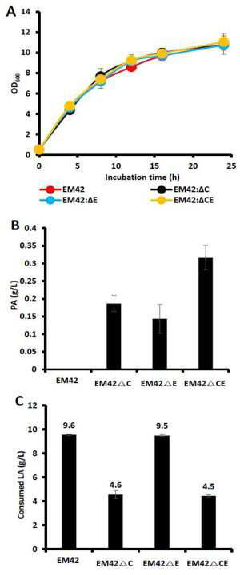
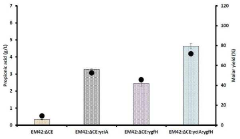
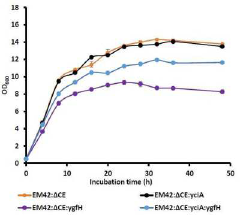
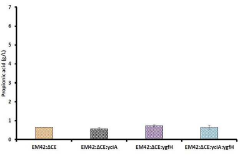
- A transgenic Pseudomonas putida strain is developed by deleting prpC and prpE genes and expressing yciA and ygfH genes, utilizing levulinic acid as a substrate to enhance propionic acid production through a levulinic acid-inducible expression system, optimizing the metabolic pathway to improve titer and yield.
Environmental Impact
Propionic acid's functionality in robust chemical processes has significant environmental implications that warrant careful consideration. The production and use of propionic acid can impact various environmental aspects, including air quality, water resources, and overall ecosystem health.
In terms of air quality, the manufacturing process of propionic acid may release volatile organic compounds (VOCs) and other potentially harmful emissions. These emissions can contribute to the formation of ground-level ozone and smog, which negatively affect both human health and the environment. However, advancements in production technologies have led to more efficient processes that minimize these emissions, reducing the overall environmental footprint.
Water pollution is another critical concern associated with propionic acid production and use. Improper handling or disposal of propionic acid and its byproducts can lead to contamination of water bodies, potentially harming aquatic ecosystems. To mitigate this risk, robust wastewater treatment systems and stringent disposal protocols are essential in facilities that utilize propionic acid in their chemical processes.
The environmental impact of propionic acid extends to its role in preserving food and animal feed. By preventing the growth of mold and bacteria, propionic acid helps reduce food waste, which indirectly contributes to environmental conservation by minimizing the resources required for food production and disposal. This preservation function also reduces the need for more environmentally harmful alternatives, potentially leading to a net positive environmental impact.
In the context of sustainable chemistry, propionic acid presents opportunities for green chemistry applications. Its production from renewable resources, such as biomass fermentation, offers a more environmentally friendly alternative to traditional petrochemical-based methods. This shift towards bio-based production aligns with global efforts to reduce dependence on fossil fuels and decrease carbon emissions.
The lifecycle assessment of propionic acid reveals varying environmental impacts depending on the production method and end-use application. While some processes may have higher energy requirements or generate more waste, others demonstrate improved efficiency and reduced environmental burden. Continuous research and development efforts aim to optimize these processes, further minimizing the environmental footprint of propionic acid throughout its lifecycle.
As regulations surrounding environmental protection become more stringent, the chemical industry is increasingly focused on developing cleaner production methods for propionic acid. This includes exploring catalytic processes that operate under milder conditions, require less energy, and produce fewer byproducts. Such innovations not only reduce the environmental impact but also improve the overall sustainability of chemical processes involving propionic acid.
In terms of air quality, the manufacturing process of propionic acid may release volatile organic compounds (VOCs) and other potentially harmful emissions. These emissions can contribute to the formation of ground-level ozone and smog, which negatively affect both human health and the environment. However, advancements in production technologies have led to more efficient processes that minimize these emissions, reducing the overall environmental footprint.
Water pollution is another critical concern associated with propionic acid production and use. Improper handling or disposal of propionic acid and its byproducts can lead to contamination of water bodies, potentially harming aquatic ecosystems. To mitigate this risk, robust wastewater treatment systems and stringent disposal protocols are essential in facilities that utilize propionic acid in their chemical processes.
The environmental impact of propionic acid extends to its role in preserving food and animal feed. By preventing the growth of mold and bacteria, propionic acid helps reduce food waste, which indirectly contributes to environmental conservation by minimizing the resources required for food production and disposal. This preservation function also reduces the need for more environmentally harmful alternatives, potentially leading to a net positive environmental impact.
In the context of sustainable chemistry, propionic acid presents opportunities for green chemistry applications. Its production from renewable resources, such as biomass fermentation, offers a more environmentally friendly alternative to traditional petrochemical-based methods. This shift towards bio-based production aligns with global efforts to reduce dependence on fossil fuels and decrease carbon emissions.
The lifecycle assessment of propionic acid reveals varying environmental impacts depending on the production method and end-use application. While some processes may have higher energy requirements or generate more waste, others demonstrate improved efficiency and reduced environmental burden. Continuous research and development efforts aim to optimize these processes, further minimizing the environmental footprint of propionic acid throughout its lifecycle.
As regulations surrounding environmental protection become more stringent, the chemical industry is increasingly focused on developing cleaner production methods for propionic acid. This includes exploring catalytic processes that operate under milder conditions, require less energy, and produce fewer byproducts. Such innovations not only reduce the environmental impact but also improve the overall sustainability of chemical processes involving propionic acid.
Safety Regulations
The implementation of propionic acid in robust chemical processes necessitates strict adherence to safety regulations to ensure the protection of workers, the environment, and the integrity of production facilities. Regulatory bodies such as the Occupational Safety and Health Administration (OSHA) and the Environmental Protection Agency (EPA) in the United States, as well as their counterparts in other countries, have established comprehensive guidelines for the handling, storage, and use of propionic acid.
Personal protective equipment (PPE) is a critical component of safety protocols when working with propionic acid. Workers must wear appropriate chemical-resistant gloves, protective eyewear, and respiratory protection when handling this substance. The selection of PPE materials should be based on their resistance to propionic acid, as outlined in safety data sheets and regulatory guidelines.
Proper ventilation is essential in areas where propionic acid is used or stored. Local exhaust ventilation systems should be installed to remove vapors and maintain air quality within acceptable limits. Regular monitoring of air quality and exposure levels is necessary to ensure compliance with permissible exposure limits (PELs) set by regulatory agencies.
Storage regulations for propionic acid require the use of corrosion-resistant containers and storage areas equipped with secondary containment systems to prevent spills and leaks. Temperature control is crucial, as propionic acid should be stored away from heat sources and incompatible materials. Proper labeling and hazard communication are mandatory, including the use of globally harmonized system (GHS) pictograms and safety data sheets readily accessible to workers.
Emergency response procedures must be established and regularly practiced to address potential incidents involving propionic acid. This includes the installation of safety showers and eyewash stations in proximity to work areas, as well as the development of spill response protocols and evacuation procedures.
Transportation of propionic acid is subject to strict regulations, including proper packaging, labeling, and documentation requirements. Carriers must comply with hazardous materials transportation regulations, such as those outlined in the U.S. Department of Transportation's (DOT) Hazardous Materials Regulations or the European Agreement concerning the International Carriage of Dangerous Goods by Road (ADR).
Waste management and disposal of propionic acid and its byproducts must adhere to environmental regulations. Proper neutralization and treatment processes should be implemented before disposal, and facilities must obtain necessary permits for handling and disposing of hazardous waste.
Regular safety audits and inspections are essential to ensure ongoing compliance with safety regulations. These audits should assess the effectiveness of safety measures, identify potential hazards, and implement corrective actions as needed. Employee training programs must be comprehensive and up-to-date, covering all aspects of safe handling, emergency procedures, and regulatory requirements related to propionic acid use in chemical processes.
Personal protective equipment (PPE) is a critical component of safety protocols when working with propionic acid. Workers must wear appropriate chemical-resistant gloves, protective eyewear, and respiratory protection when handling this substance. The selection of PPE materials should be based on their resistance to propionic acid, as outlined in safety data sheets and regulatory guidelines.
Proper ventilation is essential in areas where propionic acid is used or stored. Local exhaust ventilation systems should be installed to remove vapors and maintain air quality within acceptable limits. Regular monitoring of air quality and exposure levels is necessary to ensure compliance with permissible exposure limits (PELs) set by regulatory agencies.
Storage regulations for propionic acid require the use of corrosion-resistant containers and storage areas equipped with secondary containment systems to prevent spills and leaks. Temperature control is crucial, as propionic acid should be stored away from heat sources and incompatible materials. Proper labeling and hazard communication are mandatory, including the use of globally harmonized system (GHS) pictograms and safety data sheets readily accessible to workers.
Emergency response procedures must be established and regularly practiced to address potential incidents involving propionic acid. This includes the installation of safety showers and eyewash stations in proximity to work areas, as well as the development of spill response protocols and evacuation procedures.
Transportation of propionic acid is subject to strict regulations, including proper packaging, labeling, and documentation requirements. Carriers must comply with hazardous materials transportation regulations, such as those outlined in the U.S. Department of Transportation's (DOT) Hazardous Materials Regulations or the European Agreement concerning the International Carriage of Dangerous Goods by Road (ADR).
Waste management and disposal of propionic acid and its byproducts must adhere to environmental regulations. Proper neutralization and treatment processes should be implemented before disposal, and facilities must obtain necessary permits for handling and disposing of hazardous waste.
Regular safety audits and inspections are essential to ensure ongoing compliance with safety regulations. These audits should assess the effectiveness of safety measures, identify potential hazards, and implement corrective actions as needed. Employee training programs must be comprehensive and up-to-date, covering all aspects of safe handling, emergency procedures, and regulatory requirements related to propionic acid use in chemical processes.
Unlock deeper insights with Patsnap Eureka Quick Research — get a full tech report to explore trends and direct your research. Try now!
Generate Your Research Report Instantly with AI Agent
Supercharge your innovation with Patsnap Eureka AI Agent Platform!