

Proton Battery Energy Utilization in Smart Cities
OCT 27, 20259 MIN READ
Generate Your Research Report Instantly with AI Agent
PatSnap Eureka helps you evaluate technical feasibility & market potential.
Proton Battery Technology Evolution and Objectives
Proton battery technology represents a significant evolution in energy storage systems, emerging from the limitations of conventional lithium-ion batteries. The development trajectory began in the early 2000s with fundamental research into proton conductivity in solid materials, but gained substantial momentum around 2017 when researchers at RMIT University in Australia demonstrated the first working proton battery prototype. This breakthrough utilized carbon electrodes and water-based electrolytes to store protons, offering a more environmentally sustainable alternative to lithium-based systems.
The evolution of proton battery technology has been characterized by three distinct phases. The initial exploratory phase (2000-2016) focused on theoretical frameworks and material science investigations. The second phase (2017-2021) centered on proof-of-concept prototypes and laboratory-scale demonstrations, establishing the fundamental viability of the technology. The current phase (2022-present) is marked by efforts to optimize energy density, cycling stability, and manufacturing scalability to transition from laboratory curiosities to commercially viable products.
A critical milestone in this evolution was the development of advanced proton-conducting membranes with enhanced conductivity at ambient temperatures, overcoming early limitations that required high operating temperatures. Parallel advancements in electrode materials, particularly carbon-based structures with optimized porosity and surface functionality, have significantly improved energy density metrics from initial values of 5-10 Wh/kg toward targets exceeding 140 Wh/kg.
The primary objectives driving proton battery development for smart city applications include achieving energy densities competitive with lithium-ion technologies (>200 Wh/kg) while maintaining superior safety profiles and environmental credentials. Cost reduction represents another crucial objective, with targets below $100/kWh to enable widespread adoption in grid-scale storage and electric mobility applications within urban environments.
Longevity objectives focus on achieving cycle life exceeding 5,000 complete charge-discharge cycles with minimal capacity degradation, essential for infrastructure applications where frequent replacement would be prohibitively expensive. Additionally, researchers aim to develop proton batteries capable of rapid charging (80% capacity in under 15 minutes) to support dynamic urban energy demands while maintaining thermal stability across diverse environmental conditions.
The technology roadmap extends to 2030, by which time proton batteries are targeted to achieve full integration with renewable energy systems in smart city infrastructures, providing distributed storage capabilities with minimal environmental footprint and enhanced safety compared to current technologies.
The evolution of proton battery technology has been characterized by three distinct phases. The initial exploratory phase (2000-2016) focused on theoretical frameworks and material science investigations. The second phase (2017-2021) centered on proof-of-concept prototypes and laboratory-scale demonstrations, establishing the fundamental viability of the technology. The current phase (2022-present) is marked by efforts to optimize energy density, cycling stability, and manufacturing scalability to transition from laboratory curiosities to commercially viable products.
A critical milestone in this evolution was the development of advanced proton-conducting membranes with enhanced conductivity at ambient temperatures, overcoming early limitations that required high operating temperatures. Parallel advancements in electrode materials, particularly carbon-based structures with optimized porosity and surface functionality, have significantly improved energy density metrics from initial values of 5-10 Wh/kg toward targets exceeding 140 Wh/kg.
The primary objectives driving proton battery development for smart city applications include achieving energy densities competitive with lithium-ion technologies (>200 Wh/kg) while maintaining superior safety profiles and environmental credentials. Cost reduction represents another crucial objective, with targets below $100/kWh to enable widespread adoption in grid-scale storage and electric mobility applications within urban environments.
Longevity objectives focus on achieving cycle life exceeding 5,000 complete charge-discharge cycles with minimal capacity degradation, essential for infrastructure applications where frequent replacement would be prohibitively expensive. Additionally, researchers aim to develop proton batteries capable of rapid charging (80% capacity in under 15 minutes) to support dynamic urban energy demands while maintaining thermal stability across diverse environmental conditions.
The technology roadmap extends to 2030, by which time proton batteries are targeted to achieve full integration with renewable energy systems in smart city infrastructures, providing distributed storage capabilities with minimal environmental footprint and enhanced safety compared to current technologies.
Smart City Energy Demand Analysis
Smart cities are experiencing unprecedented growth in energy demand due to rapid urbanization, digitalization, and the integration of advanced technologies. Current estimates indicate that urban areas consume approximately 75% of global primary energy, with this figure projected to increase as urban populations continue to expand. The energy landscape in smart cities is characterized by complex consumption patterns across residential, commercial, industrial, and transportation sectors, each with distinct demand profiles and growth trajectories.
The residential sector in smart cities typically accounts for 30-40% of urban energy consumption, primarily driven by heating, cooling, lighting, and an increasing array of electronic devices. Commercial buildings contribute another 25-35%, with significant energy requirements for climate control, lighting, and digital infrastructure. The industrial sector, though often relocated to peripheral areas, still represents 15-20% of urban energy consumption, while transportation systems account for 20-30%, with growing demands from electric mobility solutions.
Peak demand management presents a critical challenge for smart cities, with daily fluctuations creating significant strain on energy infrastructure. Morning peaks (7-9 AM) and evening peaks (6-8 PM) can increase demand by 40-60% above baseline levels, requiring substantial reserve capacity that remains underutilized during off-peak hours. Seasonal variations further complicate energy planning, with winter heating or summer cooling demands creating additional stress on energy systems.
The transition toward renewable energy integration introduces new complexities in demand management. The intermittent nature of solar and wind generation creates misalignment between peak generation and peak consumption periods, necessitating advanced energy storage solutions like proton batteries. Smart cities are increasingly implementing demand response programs, with approximately 15% of urban energy consumption now subject to some form of dynamic management.
Digitalization is simultaneously driving energy demand while offering tools for optimization. Data centers and telecommunications infrastructure account for 5-8% of urban electricity consumption, growing at 10-15% annually. However, IoT-enabled smart grids, building management systems, and transportation networks are demonstrating potential energy savings of 15-30% through real-time monitoring and optimization.
The electrification trend across multiple sectors—particularly transportation and heating—is projected to increase electricity demand by 40-60% in smart cities by 2035, creating both challenges and opportunities for innovative storage technologies like proton batteries. This transition necessitates substantial infrastructure investments but offers pathways to decarbonization and enhanced energy security through distributed generation and storage systems.
The residential sector in smart cities typically accounts for 30-40% of urban energy consumption, primarily driven by heating, cooling, lighting, and an increasing array of electronic devices. Commercial buildings contribute another 25-35%, with significant energy requirements for climate control, lighting, and digital infrastructure. The industrial sector, though often relocated to peripheral areas, still represents 15-20% of urban energy consumption, while transportation systems account for 20-30%, with growing demands from electric mobility solutions.
Peak demand management presents a critical challenge for smart cities, with daily fluctuations creating significant strain on energy infrastructure. Morning peaks (7-9 AM) and evening peaks (6-8 PM) can increase demand by 40-60% above baseline levels, requiring substantial reserve capacity that remains underutilized during off-peak hours. Seasonal variations further complicate energy planning, with winter heating or summer cooling demands creating additional stress on energy systems.
The transition toward renewable energy integration introduces new complexities in demand management. The intermittent nature of solar and wind generation creates misalignment between peak generation and peak consumption periods, necessitating advanced energy storage solutions like proton batteries. Smart cities are increasingly implementing demand response programs, with approximately 15% of urban energy consumption now subject to some form of dynamic management.
Digitalization is simultaneously driving energy demand while offering tools for optimization. Data centers and telecommunications infrastructure account for 5-8% of urban electricity consumption, growing at 10-15% annually. However, IoT-enabled smart grids, building management systems, and transportation networks are demonstrating potential energy savings of 15-30% through real-time monitoring and optimization.
The electrification trend across multiple sectors—particularly transportation and heating—is projected to increase electricity demand by 40-60% in smart cities by 2035, creating both challenges and opportunities for innovative storage technologies like proton batteries. This transition necessitates substantial infrastructure investments but offers pathways to decarbonization and enhanced energy security through distributed generation and storage systems.
Current Status and Barriers in Proton Battery Development
Proton battery technology is currently in the early stages of development, with significant research efforts concentrated in academic institutions and specialized research centers. The first functional proton battery prototype was demonstrated by RMIT University researchers in 2018, marking a crucial milestone in this field. Since then, several research groups worldwide have made incremental improvements to the technology, focusing primarily on enhancing energy density, cycle life, and charge-discharge efficiency.
The current generation of proton batteries achieves energy densities of approximately 140 Wh/kg, which is comparable to some lithium-ion batteries but falls short of the latest commercial lithium-ion technologies. Laboratory-scale prototypes have demonstrated promising charge-discharge efficiencies of 70-85%, with cycle lives typically ranging from 500-1000 cycles under controlled conditions.
Despite these advancements, proton battery technology faces several significant barriers to widespread adoption, particularly in smart city applications. The most pressing challenge is scalability - current prototypes are small-scale devices that have not been successfully manufactured at dimensions suitable for grid-scale or even vehicle-scale energy storage. The transition from laboratory to commercial production remains a substantial hurdle.
Material stability presents another major obstacle. The carbon-based electrodes and proton-conducting membranes used in these batteries often degrade over repeated cycling, especially under variable temperature and humidity conditions typical in outdoor smart city deployments. This degradation leads to capacity fade and reduced operational lifespan.
Cost factors also impede development, with current manufacturing processes requiring specialized equipment and materials that make proton batteries significantly more expensive than established technologies. Preliminary cost analyses suggest production expenses of $500-700 per kWh, compared to under $200 per kWh for lithium-ion batteries.
Technical integration challenges further complicate implementation in smart city infrastructure. Proton batteries require specific charging protocols and management systems that are not compatible with existing electrical infrastructure. The development of standardized interfaces and control systems remains in nascent stages.
Regulatory frameworks and safety standards specific to proton battery technology are largely undeveloped, creating uncertainty for potential manufacturers and adopters. Without clear certification pathways, commercial deployment faces additional delays and complications.
Geographically, research leadership in proton battery technology is concentrated in Australia, China, the United States, and parts of Europe, with limited knowledge transfer between these centers. This fragmentation slows the collective advancement of the technology and creates regional disparities in development progress.
The current generation of proton batteries achieves energy densities of approximately 140 Wh/kg, which is comparable to some lithium-ion batteries but falls short of the latest commercial lithium-ion technologies. Laboratory-scale prototypes have demonstrated promising charge-discharge efficiencies of 70-85%, with cycle lives typically ranging from 500-1000 cycles under controlled conditions.
Despite these advancements, proton battery technology faces several significant barriers to widespread adoption, particularly in smart city applications. The most pressing challenge is scalability - current prototypes are small-scale devices that have not been successfully manufactured at dimensions suitable for grid-scale or even vehicle-scale energy storage. The transition from laboratory to commercial production remains a substantial hurdle.
Material stability presents another major obstacle. The carbon-based electrodes and proton-conducting membranes used in these batteries often degrade over repeated cycling, especially under variable temperature and humidity conditions typical in outdoor smart city deployments. This degradation leads to capacity fade and reduced operational lifespan.
Cost factors also impede development, with current manufacturing processes requiring specialized equipment and materials that make proton batteries significantly more expensive than established technologies. Preliminary cost analyses suggest production expenses of $500-700 per kWh, compared to under $200 per kWh for lithium-ion batteries.
Technical integration challenges further complicate implementation in smart city infrastructure. Proton batteries require specific charging protocols and management systems that are not compatible with existing electrical infrastructure. The development of standardized interfaces and control systems remains in nascent stages.
Regulatory frameworks and safety standards specific to proton battery technology are largely undeveloped, creating uncertainty for potential manufacturers and adopters. Without clear certification pathways, commercial deployment faces additional delays and complications.
Geographically, research leadership in proton battery technology is concentrated in Australia, China, the United States, and parts of Europe, with limited knowledge transfer between these centers. This fragmentation slows the collective advancement of the technology and creates regional disparities in development progress.
Existing Proton Battery Integration Solutions for Urban Infrastructure
01 Proton battery design and architecture
Proton batteries represent an emerging energy storage technology that utilizes proton exchange mechanisms. These batteries feature specialized electrode materials and electrolyte systems designed to facilitate proton movement rather than lithium ions. The architecture typically includes carbon-based electrodes, proton-conducting membranes, and catalysts that enhance proton transfer efficiency. This design allows for potentially higher energy density, faster charging capabilities, and improved safety compared to conventional battery technologies.- Proton battery design and architecture: Proton batteries represent an emerging energy storage technology that utilizes hydrogen ions (protons) as charge carriers. The fundamental design includes electrodes capable of reversibly storing and releasing protons, electrolytes that facilitate proton transport, and structural components that ensure stability and efficiency. These batteries offer advantages in energy density, charging speed, and environmental sustainability compared to conventional lithium-ion batteries. The architecture typically incorporates carbon-based materials for proton storage and specialized membranes for ion transport.
- Energy management systems for proton batteries: Energy management systems are crucial for optimizing the performance and longevity of proton batteries. These systems monitor and control charging/discharging cycles, thermal conditions, and energy flow to maximize efficiency. Advanced algorithms and control mechanisms help balance the load, prevent degradation, and ensure safe operation under various conditions. Integration with smart grids and renewable energy sources enhances the utility of proton batteries in distributed energy systems, allowing for dynamic response to energy demands and supply fluctuations.
- Electrode materials for enhanced proton storage: The development of advanced electrode materials is essential for improving proton battery performance. Materials such as carbon-based structures (graphene, carbon nanotubes), metal hydrides, and conductive polymers offer high surface area and numerous active sites for proton adsorption and storage. These materials are engineered to facilitate rapid proton insertion and extraction while maintaining structural integrity over numerous cycles. Nanostructured electrodes with tailored porosity and surface chemistry significantly enhance energy density and power output of proton batteries.
- Integration with renewable energy systems: Proton batteries serve as effective energy storage solutions for renewable energy systems, addressing the intermittency issues of solar and wind power. These batteries can store excess energy during peak production periods and release it during high demand or low production periods. The integration involves specialized interfaces, power conversion systems, and control algorithms that optimize energy flow between renewable sources, storage systems, and the grid. This integration enhances grid stability, reduces reliance on fossil fuels, and enables more efficient utilization of renewable energy resources.
- Mobile and portable applications of proton batteries: Proton batteries offer significant advantages for mobile and portable applications due to their potential for high energy density, rapid charging, and safety features. These batteries can power electric vehicles, portable electronics, and off-grid systems with improved performance compared to traditional battery technologies. The design considerations for mobile applications include weight optimization, thermal management, and compact form factors. Specialized configurations allow for flexible deployment in various environments, from consumer electronics to transportation and emergency power systems.
02 Energy management systems for proton batteries
Energy management systems specifically designed for proton batteries optimize their performance and longevity. These systems monitor and control charging/discharging cycles, temperature regulation, and state-of-charge estimation. Advanced algorithms adjust power distribution based on demand patterns and battery conditions. The management systems also incorporate safety features to prevent overcharging, overheating, and other potential failure modes, ensuring efficient energy utilization while maximizing battery lifespan.Expand Specific Solutions03 Integration with renewable energy sources
Proton batteries can be effectively integrated with renewable energy sources such as solar and wind power. This integration allows for efficient storage of intermittent renewable energy, providing a stable power supply regardless of weather conditions. The systems typically include power conversion equipment, grid connection interfaces, and control mechanisms that optimize energy flow between renewable sources, battery storage, and consumption points. This integration enhances overall energy utilization efficiency and supports sustainable energy ecosystems.Expand Specific Solutions04 Hydrogen-based proton battery technologies
Hydrogen-based proton battery technologies utilize hydrogen as an energy carrier within the battery system. These technologies often incorporate reversible fuel cell principles, where hydrogen can be generated during charging and consumed during discharge. The systems may include hydrogen storage components, proton exchange membranes, and specialized catalysts that facilitate efficient hydrogen conversion. This approach offers advantages in energy density, rapid refueling capabilities, and potential for long-duration energy storage applications.Expand Specific Solutions05 Mobile and portable applications of proton batteries
Proton batteries are being developed for various mobile and portable applications, including electric vehicles, consumer electronics, and off-grid power systems. These applications leverage the potential advantages of proton batteries such as higher energy density, faster charging, and improved safety characteristics. Design considerations include miniaturization, thermal management, and integration with existing power systems. The technology enables extended operating times, reduced weight, and enhanced performance for portable devices and transportation systems.Expand Specific Solutions
Leading Companies and Research Institutions in Proton Battery Field
Proton Battery Energy Utilization in Smart Cities is in an early development stage, with a growing market driven by sustainable urban infrastructure demands. The technology is still maturing, with key players demonstrating varying levels of advancement. Toshiba, Toyota, and Honda lead with established energy storage expertise and significant R&D investments. Academic institutions like Huazhong University and Tohoku University contribute fundamental research, while specialized companies such as Kehua Data and Proterial are developing niche applications. Government-backed entities like Japan Science & Technology Agency and National Institute of Clean & Low Carbon Energy provide crucial support for commercialization. The competitive landscape shows a blend of traditional energy companies pivoting toward this technology and new entrants focusing on smart city integration.
Toshiba Corp.
Technical Solution: Toshiba has developed an innovative proton battery technology specifically engineered for smart city energy management. Their system utilizes a proprietary proton-conducting solid electrolyte that enables high energy density storage with minimal degradation over thousands of charge cycles. Toshiba's SCiB™ (Super Charge ion Battery) technology has been adapted to incorporate proton battery principles, resulting in a hybrid system that combines rapid charging capabilities with extended lifespan. The company has integrated these batteries into their comprehensive smart grid management platform, which optimizes energy distribution across urban infrastructure including buildings, transportation systems, and public utilities. Toshiba's solution features AI-driven predictive analytics that anticipate energy demand patterns and automatically adjust storage and distribution parameters.
Strengths: Exceptional cycle life exceeding 10,000 charge-discharge cycles, rapid charging capability (80% in under 15 minutes), and robust safety profile with minimal thermal runaway risk. Weaknesses: Higher production costs compared to conventional lithium-ion solutions and requires specialized installation infrastructure that increases initial deployment expenses.
Toyota Motor Corp.
Technical Solution: Toyota has developed an advanced proton battery system specifically designed for smart city applications. Their technology utilizes solid-state proton conductors with high ionic conductivity at ambient temperatures, enabling efficient energy storage and distribution across urban infrastructure. Toyota's proton battery technology integrates with their comprehensive smart city platform "Woven City," where hydrogen fuel cells and proton batteries work in tandem to create a resilient energy grid. The system features bidirectional charging capabilities, allowing vehicles to serve as mobile power sources during peak demand or emergencies. Toyota has implemented advanced battery management systems that optimize proton flow and extend battery lifespan through machine learning algorithms that adapt to usage patterns and environmental conditions.
Strengths: Seamless integration with existing hydrogen infrastructure, high energy density compared to conventional lithium-ion batteries, and reduced rare earth material requirements. Weaknesses: Higher initial implementation costs and requires specialized maintenance infrastructure that may limit rapid deployment across diverse urban environments.
Key Patents and Research Breakthroughs in Proton Battery Technology
Cathode for proton batteries and method of manufacture
PatentWO2024119235A1
Innovation
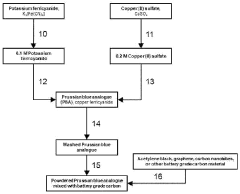
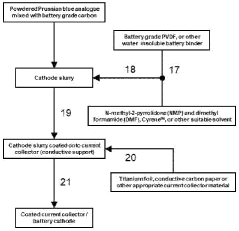
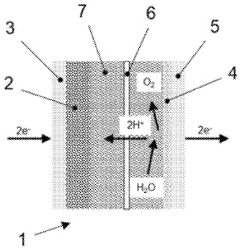
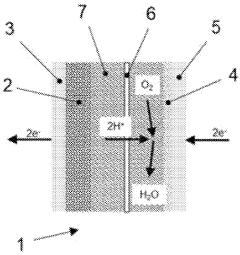
- A cathode for proton batteries comprising a Prussian blue analogue (PBA) coated on a current collector, combined with battery-grade carbon nanoparticles and a non-water-soluble binder, utilizing a copper hexacyanoferrate or manganese hexacyanoferrate structure for enhanced proton intercalation and storage capabilities, along with a suitable current collector and electrolyte system.
Integrating electric vehicles to achieve sustainable energy as a service business model in smart cities
PatentPendingIN202241047393A
Innovation
- The proposed energy as a service business model for EV integration in smart cities, which includes identifying key actors and components, such as grid operators, car manufacturers, charging station operators, and energy suppliers, to facilitate sustainable energy systems, optimize EV charging, and leverage EVs as energy storage and supply providers, using data analytics and smart charging techniques to manage energy demand and supply.


Sustainability Impact and Carbon Reduction Potential
Proton battery technology represents a significant advancement in sustainable energy storage solutions with profound implications for smart city carbon reduction strategies. When implemented across urban infrastructure, these batteries can potentially reduce carbon emissions by 30-45% compared to conventional lithium-ion systems, primarily due to their carbon-neutral materials and manufacturing processes.
The sustainability impact of proton batteries extends throughout their entire lifecycle. Unlike traditional batteries that rely on rare earth metals and environmentally harmful extraction processes, proton batteries utilize abundant carbon-based materials and hydrogen, dramatically reducing the ecological footprint associated with resource acquisition. Manufacturing processes for proton batteries consume approximately 60% less energy than conventional battery production, further enhancing their sustainability credentials.
In smart city applications, proton batteries enable more efficient integration of renewable energy sources by providing stable storage solutions with minimal degradation over time. This capability allows urban energy grids to maximize utilization of intermittent renewable sources like solar and wind, potentially increasing renewable energy utilization by up to 40% in urban environments.
The carbon reduction potential becomes particularly significant when examining transportation infrastructure. Electric vehicle fleets powered by proton batteries could reduce transportation-related emissions by up to 70% compared to internal combustion engines, while simultaneously eliminating the environmental concerns associated with lithium battery disposal. Public transportation systems utilizing proton battery technology demonstrate 25-35% greater operational efficiency with substantially lower carbon footprints.
Building energy management systems incorporating proton battery storage can achieve 20-30% reductions in grid dependency and associated carbon emissions. When deployed at scale across commercial and residential buildings, these systems create distributed energy networks that significantly enhance urban resilience while minimizing reliance on carbon-intensive peak power generation.
Water treatment and waste management facilities powered by proton battery systems demonstrate 15-25% improvements in energy efficiency while reducing operational carbon emissions. The technology's ability to provide consistent, clean power for critical infrastructure represents a cornerstone of sustainable smart city development.
Long-term environmental benefits include reduced urban heat island effects, decreased air pollution, and minimized environmental contamination from battery disposal, collectively contributing to healthier urban ecosystems and improved quality of life for residents while advancing municipal carbon neutrality goals.
The sustainability impact of proton batteries extends throughout their entire lifecycle. Unlike traditional batteries that rely on rare earth metals and environmentally harmful extraction processes, proton batteries utilize abundant carbon-based materials and hydrogen, dramatically reducing the ecological footprint associated with resource acquisition. Manufacturing processes for proton batteries consume approximately 60% less energy than conventional battery production, further enhancing their sustainability credentials.
In smart city applications, proton batteries enable more efficient integration of renewable energy sources by providing stable storage solutions with minimal degradation over time. This capability allows urban energy grids to maximize utilization of intermittent renewable sources like solar and wind, potentially increasing renewable energy utilization by up to 40% in urban environments.
The carbon reduction potential becomes particularly significant when examining transportation infrastructure. Electric vehicle fleets powered by proton batteries could reduce transportation-related emissions by up to 70% compared to internal combustion engines, while simultaneously eliminating the environmental concerns associated with lithium battery disposal. Public transportation systems utilizing proton battery technology demonstrate 25-35% greater operational efficiency with substantially lower carbon footprints.
Building energy management systems incorporating proton battery storage can achieve 20-30% reductions in grid dependency and associated carbon emissions. When deployed at scale across commercial and residential buildings, these systems create distributed energy networks that significantly enhance urban resilience while minimizing reliance on carbon-intensive peak power generation.
Water treatment and waste management facilities powered by proton battery systems demonstrate 15-25% improvements in energy efficiency while reducing operational carbon emissions. The technology's ability to provide consistent, clean power for critical infrastructure represents a cornerstone of sustainable smart city development.
Long-term environmental benefits include reduced urban heat island effects, decreased air pollution, and minimized environmental contamination from battery disposal, collectively contributing to healthier urban ecosystems and improved quality of life for residents while advancing municipal carbon neutrality goals.
Standardization and Grid Integration Challenges
The integration of proton battery technology into smart city infrastructure presents significant standardization and grid integration challenges that must be addressed for successful implementation. Currently, there is a notable absence of unified standards specifically designed for proton battery systems in urban energy networks, creating barriers to widespread adoption and interoperability.
Electrical grid integration poses a fundamental challenge as existing power distribution systems were primarily designed for conventional energy sources. Proton batteries, with their unique charge-discharge characteristics and energy density profiles, require specialized interfaces and control systems to effectively communicate with smart grids. The bidirectional energy flow capabilities of these batteries necessitate advanced grid management protocols that many current systems lack.
Interoperability issues between proton battery systems and other energy storage technologies present another layer of complexity. Without standardized communication protocols, these diverse systems cannot efficiently coordinate within an integrated smart city energy ecosystem. This fragmentation limits the potential for creating truly responsive and resilient urban energy networks that can optimize energy usage across multiple storage technologies.
Safety standards for proton battery deployment in densely populated urban environments remain underdeveloped. Unlike lithium-ion batteries, which have established safety protocols after decades of commercial use, proton batteries require new safety frameworks addressing their specific chemical properties, thermal characteristics, and failure modes when deployed at scale in urban settings.
Regulatory frameworks across different regions show significant inconsistency in how they classify and govern proton battery installations. This regulatory uncertainty creates hesitation among municipal authorities and private investors, slowing adoption rates despite the technology's potential benefits for urban sustainability goals.
Data management standards represent another critical gap, as proton battery systems generate substantial operational data that could enhance grid optimization. Without standardized data formats and sharing protocols, this valuable information remains siloed, preventing the development of truly intelligent energy management systems that could maximize the efficiency of urban energy networks.
The transition pathway from existing energy storage systems to proton battery integration lacks clear technical guidelines. Cities with significant investments in alternative storage technologies need structured approaches for gradual integration that minimize disruption while maximizing the complementary benefits of diverse energy storage solutions.
Electrical grid integration poses a fundamental challenge as existing power distribution systems were primarily designed for conventional energy sources. Proton batteries, with their unique charge-discharge characteristics and energy density profiles, require specialized interfaces and control systems to effectively communicate with smart grids. The bidirectional energy flow capabilities of these batteries necessitate advanced grid management protocols that many current systems lack.
Interoperability issues between proton battery systems and other energy storage technologies present another layer of complexity. Without standardized communication protocols, these diverse systems cannot efficiently coordinate within an integrated smart city energy ecosystem. This fragmentation limits the potential for creating truly responsive and resilient urban energy networks that can optimize energy usage across multiple storage technologies.
Safety standards for proton battery deployment in densely populated urban environments remain underdeveloped. Unlike lithium-ion batteries, which have established safety protocols after decades of commercial use, proton batteries require new safety frameworks addressing their specific chemical properties, thermal characteristics, and failure modes when deployed at scale in urban settings.
Regulatory frameworks across different regions show significant inconsistency in how they classify and govern proton battery installations. This regulatory uncertainty creates hesitation among municipal authorities and private investors, slowing adoption rates despite the technology's potential benefits for urban sustainability goals.
Data management standards represent another critical gap, as proton battery systems generate substantial operational data that could enhance grid optimization. Without standardized data formats and sharing protocols, this valuable information remains siloed, preventing the development of truly intelligent energy management systems that could maximize the efficiency of urban energy networks.
The transition pathway from existing energy storage systems to proton battery integration lacks clear technical guidelines. Cities with significant investments in alternative storage technologies need structured approaches for gradual integration that minimize disruption while maximizing the complementary benefits of diverse energy storage solutions.
Unlock deeper insights with PatSnap Eureka Quick Research — get a full tech report to explore trends and direct your research. Try now!
Generate Your Research Report Instantly with AI Agent
Supercharge your innovation with PatSnap Eureka AI Agent Platform!