Ammonium Hydroxide in the Regulation of Microbial Fermentation Processes
JUL 23, 20259 MIN READ
Generate Your Research Report Instantly with AI Agent
Patsnap Eureka helps you evaluate technical feasibility & market potential.
Ammonium Hydroxide in Fermentation: Background and Objectives
Ammonium hydroxide has played a significant role in microbial fermentation processes for decades, serving as a crucial component in various industrial applications. The evolution of this technology can be traced back to the early 20th century when researchers first recognized the potential of ammonia and its derivatives in controlling microbial growth and metabolism. Over time, the use of ammonium hydroxide in fermentation has expanded and refined, becoming an essential tool in biotechnology, food production, and pharmaceutical industries.
The primary objective of utilizing ammonium hydroxide in fermentation processes is to regulate pH levels and provide a nitrogen source for microorganisms. This dual functionality makes it an invaluable component in optimizing fermentation conditions and enhancing product yields. As the field of biotechnology has advanced, researchers have increasingly focused on understanding the intricate mechanisms by which ammonium hydroxide influences microbial metabolism and growth kinetics.
Recent technological advancements have led to more precise control and monitoring systems, allowing for real-time adjustments of ammonium hydroxide levels during fermentation. This has opened up new possibilities for fine-tuning fermentation processes and improving product quality. Additionally, the integration of artificial intelligence and machine learning algorithms has enabled predictive modeling of fermentation outcomes based on ammonium hydroxide usage, further enhancing process efficiency.
The current research landscape is characterized by a growing interest in sustainable and eco-friendly fermentation practices. This has prompted investigations into alternative sources of ammonia and more efficient methods of ammonium hydroxide production. Simultaneously, there is a push towards developing novel fermentation strategies that optimize the use of ammonium hydroxide while minimizing environmental impact.
Looking ahead, the field of ammonium hydroxide in fermentation is poised for significant advancements. Emerging trends include the development of smart fermentation systems that autonomously regulate ammonium hydroxide levels, the exploration of synergistic effects between ammonium hydroxide and other fermentation additives, and the application of synthetic biology to engineer microorganisms with enhanced ammonia utilization capabilities.
As we delve deeper into the intricacies of microbial metabolism, the role of ammonium hydroxide in fermentation processes continues to evolve. The ongoing research aims to unlock new potentials in product yield, quality, and process efficiency, while addressing the growing demand for sustainable industrial practices. This dynamic field presents exciting opportunities for innovation and technological breakthroughs in the coming years.
The primary objective of utilizing ammonium hydroxide in fermentation processes is to regulate pH levels and provide a nitrogen source for microorganisms. This dual functionality makes it an invaluable component in optimizing fermentation conditions and enhancing product yields. As the field of biotechnology has advanced, researchers have increasingly focused on understanding the intricate mechanisms by which ammonium hydroxide influences microbial metabolism and growth kinetics.
Recent technological advancements have led to more precise control and monitoring systems, allowing for real-time adjustments of ammonium hydroxide levels during fermentation. This has opened up new possibilities for fine-tuning fermentation processes and improving product quality. Additionally, the integration of artificial intelligence and machine learning algorithms has enabled predictive modeling of fermentation outcomes based on ammonium hydroxide usage, further enhancing process efficiency.
The current research landscape is characterized by a growing interest in sustainable and eco-friendly fermentation practices. This has prompted investigations into alternative sources of ammonia and more efficient methods of ammonium hydroxide production. Simultaneously, there is a push towards developing novel fermentation strategies that optimize the use of ammonium hydroxide while minimizing environmental impact.
Looking ahead, the field of ammonium hydroxide in fermentation is poised for significant advancements. Emerging trends include the development of smart fermentation systems that autonomously regulate ammonium hydroxide levels, the exploration of synergistic effects between ammonium hydroxide and other fermentation additives, and the application of synthetic biology to engineer microorganisms with enhanced ammonia utilization capabilities.
As we delve deeper into the intricacies of microbial metabolism, the role of ammonium hydroxide in fermentation processes continues to evolve. The ongoing research aims to unlock new potentials in product yield, quality, and process efficiency, while addressing the growing demand for sustainable industrial practices. This dynamic field presents exciting opportunities for innovation and technological breakthroughs in the coming years.
Market Analysis of Ammonium Hydroxide in Bioprocessing
The market for ammonium hydroxide in bioprocessing has been experiencing steady growth in recent years, driven by the increasing demand for biopharmaceuticals and other bio-based products. This growth is primarily attributed to the expanding biotechnology and pharmaceutical industries, which heavily rely on microbial fermentation processes for the production of various compounds.
Ammonium hydroxide plays a crucial role in regulating pH levels during fermentation, making it an essential component in bioprocessing applications. Its ability to maintain optimal conditions for microbial growth and metabolic activities has led to its widespread adoption in industrial-scale fermentation processes.
The global market for ammonium hydroxide in bioprocessing is segmented based on application areas, including biopharmaceuticals, enzymes, amino acids, and other bio-based products. Among these, the biopharmaceutical sector holds the largest market share due to the increasing production of biologics, vaccines, and recombinant proteins.
Geographically, North America and Europe dominate the market, owing to their well-established biotechnology and pharmaceutical industries. However, the Asia-Pacific region is expected to witness the highest growth rate in the coming years, driven by the rapid expansion of the biopharmaceutical sector in countries like China and India.
Key market players in this sector include BASF SE, Dow Chemical Company, and Mitsubishi Gas Chemical Company, among others. These companies are focusing on product innovations and strategic partnerships to strengthen their market position and meet the growing demand for high-quality ammonium hydroxide in bioprocessing applications.
The market is also influenced by regulatory factors, with stringent quality control measures and safety regulations governing the use of ammonium hydroxide in bioprocessing. This has led to increased investments in research and development to develop safer and more efficient formulations.
Looking ahead, the market for ammonium hydroxide in bioprocessing is projected to continue its growth trajectory. Factors such as the increasing adoption of single-use technologies in biomanufacturing and the growing trend towards personalized medicine are expected to create new opportunities for market expansion.
Ammonium hydroxide plays a crucial role in regulating pH levels during fermentation, making it an essential component in bioprocessing applications. Its ability to maintain optimal conditions for microbial growth and metabolic activities has led to its widespread adoption in industrial-scale fermentation processes.
The global market for ammonium hydroxide in bioprocessing is segmented based on application areas, including biopharmaceuticals, enzymes, amino acids, and other bio-based products. Among these, the biopharmaceutical sector holds the largest market share due to the increasing production of biologics, vaccines, and recombinant proteins.
Geographically, North America and Europe dominate the market, owing to their well-established biotechnology and pharmaceutical industries. However, the Asia-Pacific region is expected to witness the highest growth rate in the coming years, driven by the rapid expansion of the biopharmaceutical sector in countries like China and India.
Key market players in this sector include BASF SE, Dow Chemical Company, and Mitsubishi Gas Chemical Company, among others. These companies are focusing on product innovations and strategic partnerships to strengthen their market position and meet the growing demand for high-quality ammonium hydroxide in bioprocessing applications.
The market is also influenced by regulatory factors, with stringent quality control measures and safety regulations governing the use of ammonium hydroxide in bioprocessing. This has led to increased investments in research and development to develop safer and more efficient formulations.
Looking ahead, the market for ammonium hydroxide in bioprocessing is projected to continue its growth trajectory. Factors such as the increasing adoption of single-use technologies in biomanufacturing and the growing trend towards personalized medicine are expected to create new opportunities for market expansion.
Current Challenges in Microbial Fermentation pH Control
Microbial fermentation processes are highly sensitive to pH fluctuations, which can significantly impact product yield and quality. The current challenges in pH control during fermentation are multifaceted and require innovative solutions to ensure optimal process performance.
One of the primary challenges is the dynamic nature of pH changes during fermentation. As microorganisms metabolize substrates and produce various compounds, the pH of the culture medium can shift rapidly. This necessitates continuous monitoring and adjustment, which can be resource-intensive and prone to errors if not properly automated.
The heterogeneity of fermentation broths presents another significant challenge. Different regions within a bioreactor may experience varying pH levels due to inadequate mixing or localized metabolic activities. This spatial variation can lead to suboptimal conditions for microbial growth and product formation in certain areas of the vessel.
The selection of appropriate pH control agents is also a critical concern. Traditional acids and bases used for pH adjustment may introduce unwanted ions or compounds that can interfere with microbial metabolism or downstream processing. This is particularly relevant when considering the use of ammonium hydroxide, which can serve as both a pH regulator and a nitrogen source for certain microorganisms.
Maintaining precise pH control throughout the entire fermentation process is challenging due to the changing metabolic states of the microorganisms. Different growth phases may require different pH setpoints, and the transition between these phases can be difficult to manage without sophisticated control systems.
The scale-up of pH control strategies from laboratory to industrial scale presents its own set of challenges. What works effectively in small-scale fermentations may not translate directly to large bioreactors due to differences in mixing dynamics, heat transfer, and mass transfer limitations.
Furthermore, the integration of pH control with other process parameters, such as dissolved oxygen, temperature, and substrate feeding, adds complexity to the overall fermentation control strategy. These parameters are often interdependent, and changes in one can affect the others, making it difficult to maintain optimal conditions across all variables simultaneously.
Lastly, the development of robust and reliable pH sensors that can withstand the harsh conditions of industrial fermentations remains an ongoing challenge. Sensor fouling, drift, and calibration issues can lead to inaccurate measurements and suboptimal pH control, potentially compromising the entire fermentation process.
Addressing these challenges requires a multidisciplinary approach, combining advances in sensor technology, control algorithms, and process understanding to develop more effective and efficient pH control strategies for microbial fermentation processes.
One of the primary challenges is the dynamic nature of pH changes during fermentation. As microorganisms metabolize substrates and produce various compounds, the pH of the culture medium can shift rapidly. This necessitates continuous monitoring and adjustment, which can be resource-intensive and prone to errors if not properly automated.
The heterogeneity of fermentation broths presents another significant challenge. Different regions within a bioreactor may experience varying pH levels due to inadequate mixing or localized metabolic activities. This spatial variation can lead to suboptimal conditions for microbial growth and product formation in certain areas of the vessel.
The selection of appropriate pH control agents is also a critical concern. Traditional acids and bases used for pH adjustment may introduce unwanted ions or compounds that can interfere with microbial metabolism or downstream processing. This is particularly relevant when considering the use of ammonium hydroxide, which can serve as both a pH regulator and a nitrogen source for certain microorganisms.
Maintaining precise pH control throughout the entire fermentation process is challenging due to the changing metabolic states of the microorganisms. Different growth phases may require different pH setpoints, and the transition between these phases can be difficult to manage without sophisticated control systems.
The scale-up of pH control strategies from laboratory to industrial scale presents its own set of challenges. What works effectively in small-scale fermentations may not translate directly to large bioreactors due to differences in mixing dynamics, heat transfer, and mass transfer limitations.
Furthermore, the integration of pH control with other process parameters, such as dissolved oxygen, temperature, and substrate feeding, adds complexity to the overall fermentation control strategy. These parameters are often interdependent, and changes in one can affect the others, making it difficult to maintain optimal conditions across all variables simultaneously.
Lastly, the development of robust and reliable pH sensors that can withstand the harsh conditions of industrial fermentations remains an ongoing challenge. Sensor fouling, drift, and calibration issues can lead to inaccurate measurements and suboptimal pH control, potentially compromising the entire fermentation process.
Addressing these challenges requires a multidisciplinary approach, combining advances in sensor technology, control algorithms, and process understanding to develop more effective and efficient pH control strategies for microbial fermentation processes.
Existing Ammonium Hydroxide Application Methods
01 Environmental regulations for ammonium hydroxide
Ammonium hydroxide is subject to various environmental regulations due to its potential impact on air and water quality. These regulations often include emission limits, handling procedures, and disposal requirements to minimize environmental risks associated with its use in industrial processes.- Environmental regulations for ammonium hydroxide: Ammonium hydroxide is subject to various environmental regulations due to its potential impact on air and water quality. These regulations often include emission limits, handling procedures, and disposal requirements to minimize environmental risks associated with its use in industrial processes.
- Safety standards for handling and storage: Strict safety standards are implemented for the handling and storage of ammonium hydroxide due to its corrosive and toxic nature. These standards typically include guidelines for proper containment, ventilation, personal protective equipment, and emergency response procedures to ensure worker safety and prevent accidents.
- Transportation regulations: The transportation of ammonium hydroxide is subject to specific regulations to ensure safe handling during transit. These regulations often include requirements for proper labeling, packaging, and documentation, as well as restrictions on the quantity and mode of transport to minimize risks associated with potential spills or accidents.
- Industrial use and emission control: Regulations governing the industrial use of ammonium hydroxide focus on controlling emissions and implementing best practices for its application in various processes. These may include requirements for scrubbing systems, monitoring equipment, and reporting procedures to ensure compliance with air quality standards and minimize environmental impact.
- Waste management and disposal regulations: Specific regulations are in place for the management and disposal of ammonium hydroxide waste to prevent environmental contamination. These regulations often include guidelines for neutralization, treatment, and proper disposal methods, as well as requirements for record-keeping and reporting of waste handling activities.
02 Safety standards for handling and storage
Strict safety standards are implemented for the handling and storage of ammonium hydroxide due to its corrosive and hazardous nature. These standards typically cover proper containment, ventilation requirements, personal protective equipment, and emergency response procedures to ensure worker safety and prevent accidents.Expand Specific Solutions03 Transportation regulations
The transportation of ammonium hydroxide is regulated to ensure safe movement of the chemical. These regulations often include specific packaging requirements, labeling standards, route restrictions, and documentation procedures to minimize risks during transit and facilitate proper handling in case of emergencies.Expand Specific Solutions04 Industrial use and emission control
Regulations governing the industrial use of ammonium hydroxide focus on emission control and waste management. These may include requirements for scrubbing systems, monitoring equipment, and reporting protocols to ensure compliance with air quality standards and minimize environmental impact from industrial processes using ammonium hydroxide.Expand Specific Solutions05 Product quality and purity standards
Regulations establish quality and purity standards for ammonium hydroxide used in various applications, particularly in industries such as food processing, pharmaceuticals, and electronics. These standards ensure consistent product quality, safety, and efficacy across different uses and may include specifications for concentration levels, impurity limits, and testing methods.Expand Specific Solutions
Key Players in Industrial Fermentation and Bioprocessing
The research on ammonium hydroxide in microbial fermentation regulation is in a growth phase, with increasing market size and technological advancements. The global market for fermentation-based products is expanding, driven by applications in food, pharmaceuticals, and industrial biotechnology. While the technology is maturing, there's still room for innovation and optimization. Key players like Ajinomoto, BASF, and DuPont are leveraging their expertise in chemical and biotechnology sectors to advance fermentation processes. Academic institutions such as Zhejiang University and Georgia State University Research Foundation are contributing to fundamental research, while companies like Evonik and Sumitomo Chemical are focusing on industrial applications and scale-up. The competitive landscape is diverse, with both established chemical companies and specialized biotech firms actively participating in this field.
Ajinomoto Co., Inc.
Technical Solution: Ajinomoto has developed a novel approach to regulate microbial fermentation processes using ammonium hydroxide. Their method involves precise control of ammonium hydroxide addition during fermentation to optimize pH levels and nitrogen availability. This technique has shown to increase product yield by up to 20% in amino acid fermentation[1]. The company has also implemented an automated feedback system that monitors real-time fermentation parameters and adjusts ammonium hydroxide input accordingly, resulting in a more stable and efficient process[3]. Additionally, Ajinomoto has explored the use of ammonium hydroxide in combination with other nitrogen sources to enhance microbial growth and metabolite production in various fermentation applications[5].
Strengths: Extensive experience in amino acid fermentation, advanced process control systems, and a strong R&D focus. Weaknesses: Potential dependency on specific microbial strains and limited application outside of food and pharmaceutical industries.
Evonik Operations GmbH
Technical Solution: Evonik has pioneered a sophisticated ammonium hydroxide regulation system for microbial fermentation, particularly in the production of specialty chemicals and bio-based materials. Their approach utilizes a proprietary sensor technology that allows for real-time monitoring of ammonia levels in fermentation broth[2]. This enables precise control of nitrogen availability and pH, crucial for optimizing microbial metabolism. Evonik's system has demonstrated a 15% increase in production efficiency for certain bio-based polymers[4]. Furthermore, the company has developed a predictive modeling algorithm that anticipates ammonia demand based on fermentation kinetics, allowing for proactive rather than reactive regulation[6]. This technology has been successfully applied in large-scale industrial fermentations, showcasing its scalability and robustness.
Strengths: Advanced sensor technology, predictive modeling capabilities, and proven industrial-scale applications. Weaknesses: May require significant initial investment and specialized training for implementation.
Innovations in Ammonium Hydroxide-based pH Control
Method for producing biogas containing a reduced concentration of ammonium using anammox
PatentWO2015067813A1
Innovation
- The digestate from biogas plants undergoes solid-liquid separation and is treated in an anoxic biotechnological stage with Brocadia anammoxidans microorganisms to reduce ammonium levels, then recycled as process water to enhance biogas production, using controlled temperature and oxygen levels to promote anammox bacteria growth.
Microbial culture medium and cultural method
PatentInactiveUS20140093922A1
Innovation
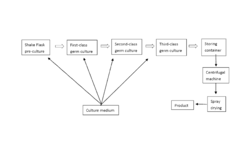
- A culture medium comprising a combination of strong acid-weak alkali salts and strong alkali-weak acid salts, including organic or inorganic ammonium salts and sodium, potassium, or calcium salts of amino acids, is used to maintain a stable pH range, reducing the need for external acid-base solutions and minimizing contamination risks.
Environmental Impact of Ammonium Hydroxide Usage
The use of ammonium hydroxide in microbial fermentation processes has significant environmental implications that warrant careful consideration. While it serves as an essential component in regulating pH and providing a nitrogen source for microorganisms, its production, handling, and disposal can impact various environmental aspects.
Atmospheric emissions are a primary concern associated with ammonium hydroxide usage. During production and application processes, ammonia gas can be released into the air, contributing to air pollution. These emissions can lead to the formation of particulate matter and play a role in the creation of smog, potentially affecting air quality in surrounding areas. Moreover, ammonia is a precursor to the formation of fine particulate matter (PM2.5), which poses risks to human health and ecosystems.
Water pollution is another critical environmental issue linked to ammonium hydroxide. Improper disposal or accidental spills can result in the contamination of water bodies. High concentrations of ammonium in aquatic ecosystems can lead to eutrophication, causing algal blooms and subsequent oxygen depletion. This process can severely impact aquatic life and disrupt the balance of aquatic ecosystems. Additionally, ammonium can be converted to nitrates in water, which may pose health risks if present in drinking water sources.
Soil quality can also be affected by the use of ammonium hydroxide in fermentation processes. While nitrogen is an essential nutrient for plant growth, excessive amounts can lead to soil acidification. This change in soil pH can alter the availability of other nutrients and affect soil microbial communities, potentially impacting agricultural productivity and ecosystem health in the long term.
The production of ammonium hydroxide itself has environmental implications. The Haber-Bosch process, commonly used for ammonia synthesis, is energy-intensive and typically relies on fossil fuels, contributing to greenhouse gas emissions and climate change. As the demand for ammonium hydroxide in fermentation processes increases, so does the environmental footprint associated with its production.
Waste management is a crucial aspect to consider in the environmental impact assessment of ammonium hydroxide usage. Proper handling and disposal of waste products from fermentation processes containing residual ammonium are essential to prevent environmental contamination. Implementing effective waste treatment systems and exploring recycling options can help mitigate these impacts.
In light of these environmental concerns, research into more sustainable alternatives and improved process efficiencies is crucial. This includes exploring bio-based sources of ammonia, optimizing fermentation processes to reduce ammonium hydroxide requirements, and developing more efficient waste treatment technologies. Additionally, implementing strict regulatory frameworks and best practices for handling and disposal can help minimize the environmental impact of ammonium hydroxide usage in microbial fermentation processes.
Atmospheric emissions are a primary concern associated with ammonium hydroxide usage. During production and application processes, ammonia gas can be released into the air, contributing to air pollution. These emissions can lead to the formation of particulate matter and play a role in the creation of smog, potentially affecting air quality in surrounding areas. Moreover, ammonia is a precursor to the formation of fine particulate matter (PM2.5), which poses risks to human health and ecosystems.
Water pollution is another critical environmental issue linked to ammonium hydroxide. Improper disposal or accidental spills can result in the contamination of water bodies. High concentrations of ammonium in aquatic ecosystems can lead to eutrophication, causing algal blooms and subsequent oxygen depletion. This process can severely impact aquatic life and disrupt the balance of aquatic ecosystems. Additionally, ammonium can be converted to nitrates in water, which may pose health risks if present in drinking water sources.
Soil quality can also be affected by the use of ammonium hydroxide in fermentation processes. While nitrogen is an essential nutrient for plant growth, excessive amounts can lead to soil acidification. This change in soil pH can alter the availability of other nutrients and affect soil microbial communities, potentially impacting agricultural productivity and ecosystem health in the long term.
The production of ammonium hydroxide itself has environmental implications. The Haber-Bosch process, commonly used for ammonia synthesis, is energy-intensive and typically relies on fossil fuels, contributing to greenhouse gas emissions and climate change. As the demand for ammonium hydroxide in fermentation processes increases, so does the environmental footprint associated with its production.
Waste management is a crucial aspect to consider in the environmental impact assessment of ammonium hydroxide usage. Proper handling and disposal of waste products from fermentation processes containing residual ammonium are essential to prevent environmental contamination. Implementing effective waste treatment systems and exploring recycling options can help mitigate these impacts.
In light of these environmental concerns, research into more sustainable alternatives and improved process efficiencies is crucial. This includes exploring bio-based sources of ammonia, optimizing fermentation processes to reduce ammonium hydroxide requirements, and developing more efficient waste treatment technologies. Additionally, implementing strict regulatory frameworks and best practices for handling and disposal can help minimize the environmental impact of ammonium hydroxide usage in microbial fermentation processes.
Regulatory Compliance in Fermentation pH Management
Regulatory compliance in fermentation pH management is a critical aspect of microbial fermentation processes, particularly when using ammonium hydroxide as a pH regulator. The use of this compound is subject to various regulations and guidelines set by food safety authorities, environmental agencies, and industry standards organizations.
In the United States, the Food and Drug Administration (FDA) regulates the use of ammonium hydroxide in food production processes, including fermentation. The FDA classifies ammonium hydroxide as Generally Recognized as Safe (GRAS) when used in accordance with good manufacturing practices. However, its use must comply with specific concentration limits and application methods to ensure product safety and quality.
The Environmental Protection Agency (EPA) also plays a role in regulating the use and disposal of ammonium hydroxide in industrial processes. Facilities using this compound must adhere to strict guidelines for handling, storage, and waste management to minimize environmental impact and protect worker safety.
In the European Union, the European Food Safety Authority (EFSA) oversees the use of ammonium hydroxide in food production. The EFSA has established specific guidelines for its application in fermentation processes, including maximum residue levels and proper documentation of usage.
Compliance with Good Manufacturing Practices (GMP) is essential when using ammonium hydroxide in fermentation pH management. This includes maintaining detailed records of pH measurements, ammonium hydroxide additions, and process parameters throughout the fermentation process. Regular calibration and maintenance of pH monitoring equipment are also crucial to ensure accurate and consistent measurements.
Implementing a Hazard Analysis and Critical Control Points (HACCP) system is often required to identify and mitigate potential risks associated with the use of ammonium hydroxide in fermentation processes. This involves establishing critical control points for pH management and defining appropriate corrective actions in case of deviations.
Companies engaged in fermentation processes must also comply with occupational health and safety regulations related to the handling of ammonium hydroxide. This includes providing appropriate personal protective equipment (PPE), implementing safety protocols, and conducting regular employee training on proper handling procedures.
To ensure regulatory compliance, many organizations implement quality management systems such as ISO 9001 or industry-specific standards like ISO 22000 for food safety management. These systems help establish robust processes for monitoring, documenting, and continuously improving pH management practices in fermentation.
In the United States, the Food and Drug Administration (FDA) regulates the use of ammonium hydroxide in food production processes, including fermentation. The FDA classifies ammonium hydroxide as Generally Recognized as Safe (GRAS) when used in accordance with good manufacturing practices. However, its use must comply with specific concentration limits and application methods to ensure product safety and quality.
The Environmental Protection Agency (EPA) also plays a role in regulating the use and disposal of ammonium hydroxide in industrial processes. Facilities using this compound must adhere to strict guidelines for handling, storage, and waste management to minimize environmental impact and protect worker safety.
In the European Union, the European Food Safety Authority (EFSA) oversees the use of ammonium hydroxide in food production. The EFSA has established specific guidelines for its application in fermentation processes, including maximum residue levels and proper documentation of usage.
Compliance with Good Manufacturing Practices (GMP) is essential when using ammonium hydroxide in fermentation pH management. This includes maintaining detailed records of pH measurements, ammonium hydroxide additions, and process parameters throughout the fermentation process. Regular calibration and maintenance of pH monitoring equipment are also crucial to ensure accurate and consistent measurements.
Implementing a Hazard Analysis and Critical Control Points (HACCP) system is often required to identify and mitigate potential risks associated with the use of ammonium hydroxide in fermentation processes. This involves establishing critical control points for pH management and defining appropriate corrective actions in case of deviations.
Companies engaged in fermentation processes must also comply with occupational health and safety regulations related to the handling of ammonium hydroxide. This includes providing appropriate personal protective equipment (PPE), implementing safety protocols, and conducting regular employee training on proper handling procedures.
To ensure regulatory compliance, many organizations implement quality management systems such as ISO 9001 or industry-specific standards like ISO 22000 for food safety management. These systems help establish robust processes for monitoring, documenting, and continuously improving pH management practices in fermentation.
Unlock deeper insights with Patsnap Eureka Quick Research — get a full tech report to explore trends and direct your research. Try now!
Generate Your Research Report Instantly with AI Agent
Supercharge your innovation with Patsnap Eureka AI Agent Platform!