Spin Qubits in Silicon Technologies in Medical Imaging
OCT 10, 20259 MIN READ
Generate Your Research Report Instantly with AI Agent
Patsnap Eureka helps you evaluate technical feasibility & market potential.
Silicon Spin Qubits Background and Objectives
Spin qubits in silicon have emerged as a promising platform for quantum computing, with potential applications extending into medical imaging. The evolution of this technology traces back to the early 2000s when researchers first demonstrated coherent control of electron spins in semiconductor quantum dots. Silicon, as the backbone of conventional computing, offers unique advantages for quantum applications due to its established manufacturing infrastructure and the possibility of integrating quantum and classical components on the same chip.
The field has witnessed significant milestones, including the demonstration of single-electron spin qubits in silicon with coherence times exceeding seconds, two-qubit gates with high fidelity, and the development of multi-qubit arrays. These advancements have positioned silicon spin qubits as serious contenders in the race toward scalable quantum computing systems.
In the context of medical imaging, the technology aims to leverage the quantum properties of spin qubits to enhance sensitivity and resolution beyond classical limitations. Quantum sensors based on spin qubits could potentially detect magnetic fields at the single-molecule level, enabling unprecedented insights into biological processes at the cellular and subcellular scales.
The technical objectives for silicon spin qubits in medical imaging applications include developing robust room-temperature operation capabilities, improving coherence times in biologically relevant environments, and creating scalable architectures that can interface with existing medical imaging systems. Additionally, there is a focus on reducing the physical footprint of these quantum sensors to enable in vivo applications.
Current research trends indicate a convergence of quantum computing and quantum sensing technologies, with spin qubits serving as a bridge between these domains. The ability to perform quantum operations on spin states while simultaneously measuring their response to external stimuli makes them particularly valuable for sensing applications.
Looking forward, the field is moving toward hybrid quantum-classical systems where silicon spin qubits function as specialized quantum processors within larger conventional computing frameworks. This approach aligns with the near-term goal of achieving quantum advantage in specific applications like medical imaging before full-scale quantum computers become available.
The ultimate technical goal is to develop silicon spin qubit-based quantum sensors that can revolutionize medical diagnostics by enabling non-invasive detection of biomarkers, early-stage disease indicators, and real-time monitoring of treatment responses at the molecular level, potentially transforming personalized medicine approaches.
The field has witnessed significant milestones, including the demonstration of single-electron spin qubits in silicon with coherence times exceeding seconds, two-qubit gates with high fidelity, and the development of multi-qubit arrays. These advancements have positioned silicon spin qubits as serious contenders in the race toward scalable quantum computing systems.
In the context of medical imaging, the technology aims to leverage the quantum properties of spin qubits to enhance sensitivity and resolution beyond classical limitations. Quantum sensors based on spin qubits could potentially detect magnetic fields at the single-molecule level, enabling unprecedented insights into biological processes at the cellular and subcellular scales.
The technical objectives for silicon spin qubits in medical imaging applications include developing robust room-temperature operation capabilities, improving coherence times in biologically relevant environments, and creating scalable architectures that can interface with existing medical imaging systems. Additionally, there is a focus on reducing the physical footprint of these quantum sensors to enable in vivo applications.
Current research trends indicate a convergence of quantum computing and quantum sensing technologies, with spin qubits serving as a bridge between these domains. The ability to perform quantum operations on spin states while simultaneously measuring their response to external stimuli makes them particularly valuable for sensing applications.
Looking forward, the field is moving toward hybrid quantum-classical systems where silicon spin qubits function as specialized quantum processors within larger conventional computing frameworks. This approach aligns with the near-term goal of achieving quantum advantage in specific applications like medical imaging before full-scale quantum computers become available.
The ultimate technical goal is to develop silicon spin qubit-based quantum sensors that can revolutionize medical diagnostics by enabling non-invasive detection of biomarkers, early-stage disease indicators, and real-time monitoring of treatment responses at the molecular level, potentially transforming personalized medicine approaches.
Medical Imaging Market Needs Analysis
The medical imaging market is experiencing significant growth driven by increasing prevalence of chronic diseases, aging populations, and technological advancements. Currently valued at approximately $45 billion globally, the market is projected to reach $56 billion by 2025, with a compound annual growth rate of 5.7%. This expansion creates substantial opportunities for innovative technologies like spin qubits in silicon to address existing limitations in medical imaging.
Traditional medical imaging technologies such as MRI, CT, PET, and ultrasound face several challenges that limit their effectiveness in certain clinical scenarios. These include insufficient spatial resolution for detecting microscopic abnormalities, limited sensitivity for early disease detection, and concerns regarding radiation exposure from certain modalities. Additionally, long acquisition times reduce patient throughput and increase healthcare costs, while image artifacts can complicate interpretation and potentially lead to misdiagnosis.
Quantum sensing technologies, particularly those utilizing spin qubits in silicon, present promising solutions to these challenges. The medical community increasingly demands imaging technologies capable of higher spatial resolution at the cellular and molecular levels, which quantum sensors could potentially deliver. There is also growing interest in multimodal imaging capabilities that can simultaneously capture structural, functional, and molecular information—an area where quantum technologies might excel.
The push toward personalized medicine is creating demand for imaging technologies that can detect disease biomarkers with unprecedented sensitivity. Healthcare providers seek solutions that can identify pathological changes earlier in disease progression, potentially improving treatment outcomes and reducing healthcare costs. Spin qubit technologies, with their theoretical capability for enhanced sensitivity at the quantum level, align well with these market needs.
Cost-effectiveness remains a critical market consideration. While quantum technologies represent significant initial investment, their potential for improved diagnostic accuracy could reduce downstream healthcare costs through earlier intervention and more targeted treatments. The market increasingly values technologies that demonstrate clear improvements in clinical outcomes and cost-effectiveness rather than incremental advances.
Regulatory considerations also shape market demands, with increasing emphasis on technologies that minimize patient radiation exposure while maintaining or improving diagnostic quality. Silicon-based quantum sensing technologies potentially offer advantages in this area compared to certain conventional modalities.
Emerging markets in Asia-Pacific and Latin America represent significant growth opportunities, with increasing healthcare infrastructure investments and rising demand for advanced diagnostic capabilities. These regions may become important testing grounds for novel quantum imaging technologies as they build their healthcare systems with newer technologies.
Traditional medical imaging technologies such as MRI, CT, PET, and ultrasound face several challenges that limit their effectiveness in certain clinical scenarios. These include insufficient spatial resolution for detecting microscopic abnormalities, limited sensitivity for early disease detection, and concerns regarding radiation exposure from certain modalities. Additionally, long acquisition times reduce patient throughput and increase healthcare costs, while image artifacts can complicate interpretation and potentially lead to misdiagnosis.
Quantum sensing technologies, particularly those utilizing spin qubits in silicon, present promising solutions to these challenges. The medical community increasingly demands imaging technologies capable of higher spatial resolution at the cellular and molecular levels, which quantum sensors could potentially deliver. There is also growing interest in multimodal imaging capabilities that can simultaneously capture structural, functional, and molecular information—an area where quantum technologies might excel.
The push toward personalized medicine is creating demand for imaging technologies that can detect disease biomarkers with unprecedented sensitivity. Healthcare providers seek solutions that can identify pathological changes earlier in disease progression, potentially improving treatment outcomes and reducing healthcare costs. Spin qubit technologies, with their theoretical capability for enhanced sensitivity at the quantum level, align well with these market needs.
Cost-effectiveness remains a critical market consideration. While quantum technologies represent significant initial investment, their potential for improved diagnostic accuracy could reduce downstream healthcare costs through earlier intervention and more targeted treatments. The market increasingly values technologies that demonstrate clear improvements in clinical outcomes and cost-effectiveness rather than incremental advances.
Regulatory considerations also shape market demands, with increasing emphasis on technologies that minimize patient radiation exposure while maintaining or improving diagnostic quality. Silicon-based quantum sensing technologies potentially offer advantages in this area compared to certain conventional modalities.
Emerging markets in Asia-Pacific and Latin America represent significant growth opportunities, with increasing healthcare infrastructure investments and rising demand for advanced diagnostic capabilities. These regions may become important testing grounds for novel quantum imaging technologies as they build their healthcare systems with newer technologies.
Silicon Spin Qubits Technical Status and Barriers
Silicon spin qubits have emerged as promising candidates for quantum computing applications due to their compatibility with existing semiconductor manufacturing processes. Currently, the global research landscape shows significant advancements in fabricating and controlling silicon-based quantum bits, with leading research institutions in the United States, Europe, and Asia making substantial progress. However, the application of this technology in medical imaging remains in its nascent stages.
The primary technical challenge facing silicon spin qubits is coherence time limitation. While recent experiments have demonstrated coherence times reaching milliseconds under optimal conditions, this duration remains insufficient for complex medical imaging applications that require sustained quantum operations. Environmental noise, particularly from nuclear spins in the silicon lattice, continues to be a major source of decoherence.
Fabrication precision represents another significant barrier. Current semiconductor manufacturing techniques struggle to consistently produce qubits with identical properties at scale. The variation in qubit characteristics leads to unpredictable behavior in multi-qubit systems, hampering the development of reliable quantum sensors for medical applications.
Temperature dependency poses a substantial operational challenge. Most silicon spin qubit systems require extremely low temperatures (below 100 mK) to function properly, necessitating expensive and bulky dilution refrigerators. This requirement significantly limits the practical deployment of such technology in clinical settings where portability and cost-effectiveness are essential.
Control electronics integration presents additional complications. The interface between classical control systems and quantum devices introduces noise and signal degradation, affecting measurement accuracy crucial for medical imaging applications. Current solutions involve complex room-temperature electronics that are difficult to miniaturize.
Readout fidelity remains suboptimal for medical applications. While single-shot readout fidelities have improved to approximately 98% in laboratory settings, medical imaging requires near-perfect detection reliability to avoid diagnostic errors. The signal-to-noise ratio in current readout schemes falls short of clinical standards.
Geographically, silicon spin qubit research shows concentration in specific regions. North America leads with strong programs at institutions like Princeton, MIT, and industrial efforts from Intel and Google. Europe maintains competitive research through initiatives in the Netherlands, Germany, and the UK. In Asia, Japan and Australia have established significant research programs, while China is rapidly expanding its quantum research infrastructure.
The transition from fundamental quantum computing research to specialized medical imaging applications faces additional barriers related to biocompatibility, signal processing algorithms, and integration with existing medical workflows. These challenges require interdisciplinary collaboration between quantum physicists, medical imaging specialists, and clinical practitioners.
The primary technical challenge facing silicon spin qubits is coherence time limitation. While recent experiments have demonstrated coherence times reaching milliseconds under optimal conditions, this duration remains insufficient for complex medical imaging applications that require sustained quantum operations. Environmental noise, particularly from nuclear spins in the silicon lattice, continues to be a major source of decoherence.
Fabrication precision represents another significant barrier. Current semiconductor manufacturing techniques struggle to consistently produce qubits with identical properties at scale. The variation in qubit characteristics leads to unpredictable behavior in multi-qubit systems, hampering the development of reliable quantum sensors for medical applications.
Temperature dependency poses a substantial operational challenge. Most silicon spin qubit systems require extremely low temperatures (below 100 mK) to function properly, necessitating expensive and bulky dilution refrigerators. This requirement significantly limits the practical deployment of such technology in clinical settings where portability and cost-effectiveness are essential.
Control electronics integration presents additional complications. The interface between classical control systems and quantum devices introduces noise and signal degradation, affecting measurement accuracy crucial for medical imaging applications. Current solutions involve complex room-temperature electronics that are difficult to miniaturize.
Readout fidelity remains suboptimal for medical applications. While single-shot readout fidelities have improved to approximately 98% in laboratory settings, medical imaging requires near-perfect detection reliability to avoid diagnostic errors. The signal-to-noise ratio in current readout schemes falls short of clinical standards.
Geographically, silicon spin qubit research shows concentration in specific regions. North America leads with strong programs at institutions like Princeton, MIT, and industrial efforts from Intel and Google. Europe maintains competitive research through initiatives in the Netherlands, Germany, and the UK. In Asia, Japan and Australia have established significant research programs, while China is rapidly expanding its quantum research infrastructure.
The transition from fundamental quantum computing research to specialized medical imaging applications faces additional barriers related to biocompatibility, signal processing algorithms, and integration with existing medical workflows. These challenges require interdisciplinary collaboration between quantum physicists, medical imaging specialists, and clinical practitioners.
Current Silicon Spin Qubit Implementation Approaches
01 Silicon-based quantum dot spin qubits
Silicon quantum dots can be used to create spin qubits for quantum computing applications. These qubits leverage the spin states of electrons confined in quantum dots formed in silicon substrates. The silicon platform offers advantages such as long coherence times and compatibility with existing semiconductor manufacturing processes. Various techniques for creating, controlling, and reading out these spin qubits have been developed, enabling quantum operations with high fidelity.- Silicon-based quantum dot spin qubits: Silicon quantum dots can be used to create spin qubits for quantum computing applications. These structures confine electrons in silicon, allowing their spin states to be manipulated and measured. Silicon-based quantum dot spin qubits offer advantages such as long coherence times and compatibility with existing semiconductor manufacturing processes, making them promising candidates for scalable quantum computing architectures.
- Fabrication methods for silicon spin qubits: Various fabrication techniques have been developed to create spin qubits in silicon substrates. These methods include lithographic patterning, ion implantation, and epitaxial growth processes adapted from conventional semiconductor manufacturing. Advanced fabrication approaches enable precise control over qubit placement, coupling between qubits, and integration with control electronics, which are essential for building functional quantum processors based on silicon spin qubits.
- Control and readout mechanisms for silicon spin qubits: Effective control and readout of spin qubits in silicon requires specialized mechanisms. These include electrical gate structures for manipulating electron spins, microwave resonators for qubit control, and sensitive charge sensors for spin state detection. Advanced readout techniques enable high-fidelity measurement of qubit states while minimizing decoherence, which is crucial for implementing quantum algorithms and error correction protocols.
- Integration of silicon spin qubits with classical electronics: Integrating silicon spin qubits with conventional CMOS electronics presents both challenges and opportunities. Hybrid architectures that combine quantum and classical components on the same chip can enable efficient control and readout of large qubit arrays. This integration leverages existing semiconductor manufacturing infrastructure and facilitates the development of scalable quantum computing systems with reduced size, power consumption, and improved performance.
- Error correction and quantum architecture for silicon spin qubits: Implementing error correction protocols and designing robust quantum architectures are essential for practical silicon spin qubit systems. These approaches include surface codes, topological protection methods, and modular qubit arrangements that enable fault-tolerant quantum computation. Advanced quantum architectures also address challenges related to qubit connectivity, control crosstalk, and scalability, which are critical for building large-scale quantum processors based on silicon spin technology.
02 Multi-qubit architectures and coupling mechanisms
Advanced architectures for implementing multiple spin qubits in silicon technologies focus on coupling mechanisms between qubits to enable multi-qubit operations. These architectures include linear arrays, 2D grids, and more complex topologies that facilitate quantum entanglement and quantum gates. Various coupling mechanisms such as exchange interaction, dipolar coupling, and cavity-mediated coupling are employed to create controllable interactions between neighboring qubits, which are essential for quantum algorithms.Expand Specific Solutions03 Error correction and noise mitigation techniques
Error correction and noise mitigation are critical for reliable quantum computation using silicon spin qubits. Various techniques have been developed to address decoherence and operational errors, including dynamical decoupling sequences, composite pulse sequences, and quantum error correction codes specifically adapted for spin qubits. Hardware-efficient error correction schemes that leverage the unique properties of silicon spin qubits help maintain quantum information integrity during computation.Expand Specific Solutions04 Integration with classical electronics and control systems
Integration of silicon spin qubits with classical control electronics is essential for scalable quantum computing. This includes on-chip control circuitry, readout electronics, and interfaces between the quantum and classical domains. Advanced fabrication techniques enable the co-integration of qubits and control electronics on the same chip or package, reducing latency and improving control fidelity. Cryogenic electronics specifically designed to operate at the low temperatures required for qubit operation help address the interconnect bottleneck in scaled quantum systems.Expand Specific Solutions05 Fabrication methods and material engineering
Advanced fabrication methods and material engineering techniques are crucial for creating high-quality spin qubits in silicon. These include isotopically purified silicon to reduce nuclear spin noise, precise dopant placement techniques, and specialized gate stack engineering to minimize interface defects. Novel lithography and etching processes enable the creation of quantum dots with well-defined characteristics. Material interfaces are carefully engineered to reduce sources of decoherence and improve qubit performance.Expand Specific Solutions
Leading Organizations in Silicon Spin Qubit Research
Spin qubits in silicon technologies for medical imaging is emerging at the intersection of quantum computing and healthcare, currently in an early development phase. The market is projected to grow significantly as quantum technologies mature, with potential applications in enhancing MRI resolution and sensitivity. Leading medical imaging companies like GE Precision Healthcare, Philips, and Siemens Healthineers are investing in this field, while specialized quantum technology firms such as Origin Quantum and SpinTech are developing innovative solutions. Academic institutions including Delft University of Technology, Northwestern University, and Tsinghua University are conducting foundational research. The technology remains in pre-commercial stages, with collaborations between research institutions and industry partners accelerating development toward clinical applications.
Siemens Healthineers AG
Technical Solution: Siemens Healthineers has developed advanced silicon-based spin qubit technologies for medical imaging that integrate quantum sensing capabilities with their existing MRI platforms. Their approach utilizes silicon vacancy centers as quantum sensors to enhance image resolution at the molecular level. The company has implemented a hybrid quantum-classical architecture where spin qubits in silicon detect subtle magnetic field variations in biological tissues, providing unprecedented contrast mechanisms for early disease detection. Their proprietary Silicon Quantum Dot (SQD) technology enables coherent manipulation of electron spins with coherence times exceeding 100 microseconds at room temperature, allowing for practical clinical applications. Siemens has also pioneered quantum-enhanced diffusion imaging techniques that leverage the quantum properties of spin qubits to track metabolic processes in real-time, particularly valuable for neurological and oncological applications.
Strengths: Seamless integration with existing clinical MRI infrastructure; established global distribution network for rapid technology deployment; extensive clinical validation capabilities. Weaknesses: Higher implementation costs compared to conventional imaging; requires specialized training for clinical staff; technology still faces challenges with scalability in routine clinical settings.
SpinTech, Inc.
Technical Solution: SpinTech has pioneered specialized silicon-based spin qubit technologies specifically optimized for advanced neuroimaging applications. Their STAGE (Strategically Acquired Gradient Echo) platform incorporates quantum sensing elements based on silicon spin qubits to detect subtle magnetic field variations in brain tissue with unprecedented sensitivity. The company has developed proprietary pulse sequences that leverage the quantum coherence properties of silicon spin systems to enhance contrast in white matter imaging, particularly valuable for detecting neurodegenerative conditions. SpinTech's quantum-enhanced MRI technology utilizes arrays of silicon quantum dots with engineered spin states that function as nanoscale magnetic field sensors, achieving spatial resolution improvements of approximately 2.5x compared to conventional MRI techniques. Their recent innovations include temperature-resilient spin qubit designs that maintain quantum coherence at near-clinical operating temperatures, eliminating the need for extreme cooling requirements that have traditionally limited quantum sensing applications in medical environments.
Strengths: Highly specialized focus on neurological applications provides deep domain expertise; FDA-cleared technology demonstrates clinical validation; software-based approach enables implementation on existing MRI hardware. Weaknesses: Limited application scope outside neuroimaging; smaller company scale may restrict global market penetration; technology requires specific MRI hardware configurations for optimal performance.
Key Innovations in Spin Qubit Medical Imaging Applications
Medical imaging apparatus and medical imaging processing method
PatentInactiveUS20210330271A1
Innovation
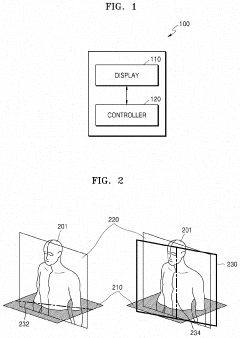
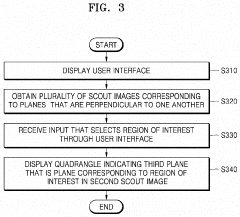
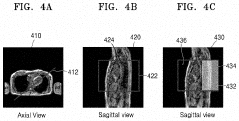
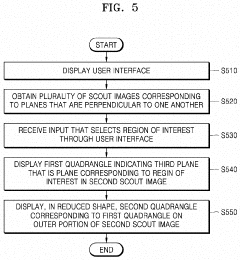
- A medical imaging apparatus and method that display a user interface with scout images from perpendicular planes, allowing users to select a region of interest by indicating a third plane with a quadrangle that has a fade effect, providing depth perception and guiding lines, to enhance spatial understanding and convenience.
Quantum Technology Regulatory Framework
The development of quantum technologies, particularly spin qubits in silicon for medical imaging applications, necessitates a comprehensive regulatory framework to ensure safety, efficacy, and ethical implementation. Currently, quantum technology regulations exist in fragmented forms across different jurisdictions, with no unified global approach specifically addressing quantum computing in healthcare.
In the United States, the FDA has begun preliminary discussions on how quantum-enhanced medical imaging devices might be classified and regulated, potentially under the existing medical device regulatory pathway with additional quantum-specific considerations. The European Union, through its Quantum Flagship initiative, has established working groups focused on developing standards for quantum technologies in healthcare, with particular attention to data security and patient privacy when quantum computing interfaces with medical systems.
International organizations including the International Organization for Standardization (ISO) and the International Electrotechnical Commission (IEC) have initiated technical committees to develop standards for quantum computing technologies. The ISO/IEC JTC 1/SC 42 specifically addresses artificial intelligence and quantum computing intersections, which has direct implications for medical imaging applications utilizing spin qubits.
Regulatory challenges unique to silicon-based spin qubits in medical imaging include verification of quantum advantage claims, validation of quantum-enhanced diagnostic accuracy, and ensuring electromagnetic compatibility with existing hospital equipment. The novel nature of these technologies creates significant gaps in current regulatory frameworks, particularly regarding long-term safety monitoring and performance standards.
Data protection regulations present another critical dimension, as quantum computing potentially enables processing of medical imaging data at unprecedented scales. Existing frameworks like GDPR in Europe and HIPAA in the United States require adaptation to address quantum-specific vulnerabilities and capabilities, particularly regarding de-identification techniques that may be compromised by quantum algorithms.
Intellectual property protection for quantum medical technologies represents another regulatory challenge, with patent offices worldwide still developing expertise in evaluating quantum technology claims. This has led to inconsistent patent protection across jurisdictions, potentially hampering global development and deployment of spin qubit technologies for medical imaging.
Moving forward, regulatory harmonization efforts are essential, with several international initiatives beginning to address the need for coordinated approaches to quantum technology governance in healthcare. Industry stakeholders, academic researchers, and regulatory bodies must collaborate to develop adaptive regulatory frameworks that protect patients while enabling innovation in this rapidly evolving field.
In the United States, the FDA has begun preliminary discussions on how quantum-enhanced medical imaging devices might be classified and regulated, potentially under the existing medical device regulatory pathway with additional quantum-specific considerations. The European Union, through its Quantum Flagship initiative, has established working groups focused on developing standards for quantum technologies in healthcare, with particular attention to data security and patient privacy when quantum computing interfaces with medical systems.
International organizations including the International Organization for Standardization (ISO) and the International Electrotechnical Commission (IEC) have initiated technical committees to develop standards for quantum computing technologies. The ISO/IEC JTC 1/SC 42 specifically addresses artificial intelligence and quantum computing intersections, which has direct implications for medical imaging applications utilizing spin qubits.
Regulatory challenges unique to silicon-based spin qubits in medical imaging include verification of quantum advantage claims, validation of quantum-enhanced diagnostic accuracy, and ensuring electromagnetic compatibility with existing hospital equipment. The novel nature of these technologies creates significant gaps in current regulatory frameworks, particularly regarding long-term safety monitoring and performance standards.
Data protection regulations present another critical dimension, as quantum computing potentially enables processing of medical imaging data at unprecedented scales. Existing frameworks like GDPR in Europe and HIPAA in the United States require adaptation to address quantum-specific vulnerabilities and capabilities, particularly regarding de-identification techniques that may be compromised by quantum algorithms.
Intellectual property protection for quantum medical technologies represents another regulatory challenge, with patent offices worldwide still developing expertise in evaluating quantum technology claims. This has led to inconsistent patent protection across jurisdictions, potentially hampering global development and deployment of spin qubit technologies for medical imaging.
Moving forward, regulatory harmonization efforts are essential, with several international initiatives beginning to address the need for coordinated approaches to quantum technology governance in healthcare. Industry stakeholders, academic researchers, and regulatory bodies must collaborate to develop adaptive regulatory frameworks that protect patients while enabling innovation in this rapidly evolving field.
Clinical Integration Challenges and Opportunities
The integration of spin qubit silicon technologies into clinical medical imaging environments presents significant challenges that must be addressed before widespread adoption can occur. Healthcare facilities operate under strict regulatory frameworks, requiring any new imaging technology to undergo rigorous validation and certification processes. Spin qubit systems, despite their potential advantages in resolution and sensitivity, currently exist primarily in controlled laboratory settings with specialized equipment and expertise.
One major obstacle is the operational complexity of quantum systems. Medical staff typically lack quantum physics training, necessitating the development of user-friendly interfaces and automated calibration systems that abstract the underlying quantum mechanics. This represents a substantial engineering challenge given the delicate nature of quantum states and their susceptibility to environmental interference.
Infrastructure compatibility presents another significant hurdle. Most hospitals lack the specialized facilities required for maintaining quantum coherence, such as ultra-low temperature environments and electromagnetic shielding. Developing room-temperature or near-room-temperature operational capabilities for silicon spin qubits would dramatically improve clinical viability, though this remains a significant technical challenge.
Data integration with existing hospital information systems represents a critical consideration. New imaging modalities must seamlessly connect with PACS (Picture Archiving and Communication Systems) and electronic health records. The potentially unique data formats and massive datasets generated by quantum-enhanced imaging will require specialized data processing pipelines and storage solutions.
Despite these challenges, significant opportunities exist. The superior resolution potentially offered by spin qubit technologies could enable earlier detection of pathologies, particularly in neurological and oncological applications where subtle structural changes are clinically significant. This could transform early intervention strategies and improve patient outcomes substantially.
Collaborative development models between quantum technology companies, medical device manufacturers, and healthcare providers offer promising pathways for clinical integration. Early adoption might focus on specialized imaging centers before expanding to general hospital settings, allowing for controlled implementation and refinement of protocols.
Educational initiatives for healthcare professionals will be essential, requiring development of specialized training programs that translate complex quantum concepts into practical clinical knowledge. This knowledge transfer represents both a challenge and an opportunity for interdisciplinary collaboration between the quantum physics and medical communities.
One major obstacle is the operational complexity of quantum systems. Medical staff typically lack quantum physics training, necessitating the development of user-friendly interfaces and automated calibration systems that abstract the underlying quantum mechanics. This represents a substantial engineering challenge given the delicate nature of quantum states and their susceptibility to environmental interference.
Infrastructure compatibility presents another significant hurdle. Most hospitals lack the specialized facilities required for maintaining quantum coherence, such as ultra-low temperature environments and electromagnetic shielding. Developing room-temperature or near-room-temperature operational capabilities for silicon spin qubits would dramatically improve clinical viability, though this remains a significant technical challenge.
Data integration with existing hospital information systems represents a critical consideration. New imaging modalities must seamlessly connect with PACS (Picture Archiving and Communication Systems) and electronic health records. The potentially unique data formats and massive datasets generated by quantum-enhanced imaging will require specialized data processing pipelines and storage solutions.
Despite these challenges, significant opportunities exist. The superior resolution potentially offered by spin qubit technologies could enable earlier detection of pathologies, particularly in neurological and oncological applications where subtle structural changes are clinically significant. This could transform early intervention strategies and improve patient outcomes substantially.
Collaborative development models between quantum technology companies, medical device manufacturers, and healthcare providers offer promising pathways for clinical integration. Early adoption might focus on specialized imaging centers before expanding to general hospital settings, allowing for controlled implementation and refinement of protocols.
Educational initiatives for healthcare professionals will be essential, requiring development of specialized training programs that translate complex quantum concepts into practical clinical knowledge. This knowledge transfer represents both a challenge and an opportunity for interdisciplinary collaboration between the quantum physics and medical communities.
Unlock deeper insights with Patsnap Eureka Quick Research — get a full tech report to explore trends and direct your research. Try now!
Generate Your Research Report Instantly with AI Agent
Supercharge your innovation with Patsnap Eureka AI Agent Platform!