GC-MS in VOCs from Building Materials: Health Metrics
SEP 22, 20259 MIN READ
Generate Your Research Report Instantly with AI Agent
Patsnap Eureka helps you evaluate technical feasibility & market potential.
GC-MS VOC Analysis Background and Objectives
Gas Chromatography-Mass Spectrometry (GC-MS) technology has evolved significantly since its inception in the 1950s, becoming an essential analytical tool for identifying and quantifying volatile organic compounds. The integration of these two powerful techniques—gas chromatography for separation and mass spectrometry for identification—has created a robust platform for detailed chemical analysis across numerous industries. In the building materials sector specifically, this technology has gained prominence over the past two decades as awareness of indoor air quality and its health implications has increased.
The evolution of GC-MS technology has been marked by continuous improvements in sensitivity, resolution, and automation capabilities. Early systems required significant expertise and time for sample preparation and analysis, while modern instruments offer streamlined workflows and enhanced detection limits in the parts-per-trillion range. This progression has enabled more comprehensive VOC profiling from complex building material matrices, supporting the growing focus on sustainable and health-conscious construction practices.
Current technological trends in this field include the development of portable GC-MS systems, real-time monitoring capabilities, and advanced data processing algorithms that can identify patterns and correlations between specific VOC profiles and health outcomes. These advancements are driving the transition from laboratory-confined analysis to field-deployable solutions that can provide immediate feedback on building material emissions.
The primary objective of GC-MS VOC analysis in building materials is to establish quantitative relationships between material emissions and human health metrics. This includes identifying specific compounds that may contribute to sick building syndrome, respiratory issues, or long-term health concerns. Secondary objectives encompass the development of standardized testing protocols, creation of comprehensive VOC databases specific to building materials, and establishment of evidence-based emission thresholds that can inform regulatory frameworks.
Additionally, this research aims to enable comparative analysis between traditional and emerging building materials, providing manufacturers with actionable insights for product development and optimization. By characterizing emission profiles across the lifecycle of materials—from production through installation and aging—researchers seek to understand temporal variations in VOC release patterns and their corresponding health implications.
The ultimate goal is to translate complex analytical data into practical guidelines that can be utilized by architects, builders, and consumers to make informed decisions about material selection, thereby contributing to healthier indoor environments and improved occupant wellbeing.
The evolution of GC-MS technology has been marked by continuous improvements in sensitivity, resolution, and automation capabilities. Early systems required significant expertise and time for sample preparation and analysis, while modern instruments offer streamlined workflows and enhanced detection limits in the parts-per-trillion range. This progression has enabled more comprehensive VOC profiling from complex building material matrices, supporting the growing focus on sustainable and health-conscious construction practices.
Current technological trends in this field include the development of portable GC-MS systems, real-time monitoring capabilities, and advanced data processing algorithms that can identify patterns and correlations between specific VOC profiles and health outcomes. These advancements are driving the transition from laboratory-confined analysis to field-deployable solutions that can provide immediate feedback on building material emissions.
The primary objective of GC-MS VOC analysis in building materials is to establish quantitative relationships between material emissions and human health metrics. This includes identifying specific compounds that may contribute to sick building syndrome, respiratory issues, or long-term health concerns. Secondary objectives encompass the development of standardized testing protocols, creation of comprehensive VOC databases specific to building materials, and establishment of evidence-based emission thresholds that can inform regulatory frameworks.
Additionally, this research aims to enable comparative analysis between traditional and emerging building materials, providing manufacturers with actionable insights for product development and optimization. By characterizing emission profiles across the lifecycle of materials—from production through installation and aging—researchers seek to understand temporal variations in VOC release patterns and their corresponding health implications.
The ultimate goal is to translate complex analytical data into practical guidelines that can be utilized by architects, builders, and consumers to make informed decisions about material selection, thereby contributing to healthier indoor environments and improved occupant wellbeing.
Market Demand for Indoor Air Quality Assessment
The global indoor air quality (IAQ) monitoring market has experienced substantial growth in recent years, driven by increasing awareness of health impacts from poor indoor air quality. According to recent market research, this sector was valued at approximately $4.5 billion in 2022 and is projected to reach $8.2 billion by 2028, representing a compound annual growth rate of 8.9% during the forecast period.
Building materials have emerged as a primary concern in indoor environments, with studies indicating they contribute up to 40% of indoor VOC emissions. This recognition has created significant market demand for advanced analytical methods like GC-MS that can precisely identify and quantify these compounds. The construction industry, valued at over $11 trillion globally, has shown increasing interest in VOC testing services, particularly in developed regions where green building certifications have gained prominence.
Consumer awareness regarding indoor air pollution has dramatically increased, with surveys indicating that 78% of homeowners now express concern about indoor air quality, compared to just 52% five years ago. This shift in consumer consciousness has created market opportunities for building material manufacturers who can demonstrate low VOC emissions through scientific testing methodologies like GC-MS.
Regulatory frameworks worldwide have strengthened requirements for VOC emissions from building materials. The European Union's Construction Products Regulation, California's Proposition 65, and similar regulations in Asia-Pacific markets have established strict limits on VOC emissions, necessitating reliable testing methods. This regulatory landscape has created a compliance-driven demand for GC-MS analysis services.
Healthcare costs associated with poor indoor air quality are estimated at $20 billion annually in direct medical care and $10 billion in lost productivity. Insurance companies and healthcare providers have begun recognizing the value of preventive IAQ assessment, creating a new market segment for analytical services that can establish correlations between building materials and health metrics.
The green building certification market, including programs like LEED, BREEAM, and WELL, has expanded at 14% annually. These certification systems increasingly require documentation of building material emissions, creating demand for standardized GC-MS testing protocols that can verify compliance with health-focused criteria.
Commercial real estate developers have recognized that buildings with demonstrated superior indoor air quality command premium prices, with studies showing 7% higher rental rates and 23% faster occupancy rates. This economic incentive has driven investment in comprehensive material testing during construction and renovation projects.
Building materials have emerged as a primary concern in indoor environments, with studies indicating they contribute up to 40% of indoor VOC emissions. This recognition has created significant market demand for advanced analytical methods like GC-MS that can precisely identify and quantify these compounds. The construction industry, valued at over $11 trillion globally, has shown increasing interest in VOC testing services, particularly in developed regions where green building certifications have gained prominence.
Consumer awareness regarding indoor air pollution has dramatically increased, with surveys indicating that 78% of homeowners now express concern about indoor air quality, compared to just 52% five years ago. This shift in consumer consciousness has created market opportunities for building material manufacturers who can demonstrate low VOC emissions through scientific testing methodologies like GC-MS.
Regulatory frameworks worldwide have strengthened requirements for VOC emissions from building materials. The European Union's Construction Products Regulation, California's Proposition 65, and similar regulations in Asia-Pacific markets have established strict limits on VOC emissions, necessitating reliable testing methods. This regulatory landscape has created a compliance-driven demand for GC-MS analysis services.
Healthcare costs associated with poor indoor air quality are estimated at $20 billion annually in direct medical care and $10 billion in lost productivity. Insurance companies and healthcare providers have begun recognizing the value of preventive IAQ assessment, creating a new market segment for analytical services that can establish correlations between building materials and health metrics.
The green building certification market, including programs like LEED, BREEAM, and WELL, has expanded at 14% annually. These certification systems increasingly require documentation of building material emissions, creating demand for standardized GC-MS testing protocols that can verify compliance with health-focused criteria.
Commercial real estate developers have recognized that buildings with demonstrated superior indoor air quality command premium prices, with studies showing 7% higher rental rates and 23% faster occupancy rates. This economic incentive has driven investment in comprehensive material testing during construction and renovation projects.
Current GC-MS Technology Challenges for VOC Detection
Despite significant advancements in GC-MS technology, several critical challenges persist in accurately detecting and quantifying VOCs from building materials. Sample preparation remains a major bottleneck, as VOCs from building materials often require complex extraction procedures. The diverse chemical nature of these compounds—ranging from highly volatile aldehydes to semi-volatile phthalates—necessitates different preparation methods, increasing analysis complexity and time requirements.
Sensitivity limitations present another significant challenge. Many health-relevant VOCs exist at trace concentrations (parts per billion or trillion), pushing detection limits of standard GC-MS systems. While modern instruments have improved sensitivity, detecting ultra-low concentration VOCs that may still impact human health remains problematic, particularly in real-world settings with multiple interfering compounds.
Chromatographic separation issues frequently arise when analyzing complex VOC mixtures from building materials. Co-elution of compounds with similar physicochemical properties can lead to misidentification or quantification errors. This is especially problematic when analyzing new or proprietary building materials with unknown VOC profiles, where reference standards may not be available.
Matrix effects from building materials significantly complicate analysis. The diverse matrices—including polymers, adhesives, and composite materials—can cause unpredictable interactions with target VOCs, affecting extraction efficiency and instrument response. These effects often require matrix-matched calibration standards, which are difficult to prepare for the wide variety of building materials in use.
Data interpretation challenges are equally significant. Modern GC-MS systems generate enormous datasets that require sophisticated software and expertise to analyze properly. Identifying unknown compounds in building materials remains difficult despite extensive mass spectral libraries, as many proprietary additives and their degradation products are not included in standard databases.
Standardization across the industry presents ongoing difficulties. Different testing protocols, sampling methods, and reporting units make comparing results between laboratories challenging. This lack of harmonization complicates the establishment of meaningful health-based exposure limits and regulatory standards for VOCs in building materials.
Time and cost constraints further limit widespread application. Comprehensive VOC analysis using GC-MS remains time-consuming and expensive, creating barriers for routine quality control testing and regulatory compliance, particularly for smaller manufacturers and in developing markets.
Sensitivity limitations present another significant challenge. Many health-relevant VOCs exist at trace concentrations (parts per billion or trillion), pushing detection limits of standard GC-MS systems. While modern instruments have improved sensitivity, detecting ultra-low concentration VOCs that may still impact human health remains problematic, particularly in real-world settings with multiple interfering compounds.
Chromatographic separation issues frequently arise when analyzing complex VOC mixtures from building materials. Co-elution of compounds with similar physicochemical properties can lead to misidentification or quantification errors. This is especially problematic when analyzing new or proprietary building materials with unknown VOC profiles, where reference standards may not be available.
Matrix effects from building materials significantly complicate analysis. The diverse matrices—including polymers, adhesives, and composite materials—can cause unpredictable interactions with target VOCs, affecting extraction efficiency and instrument response. These effects often require matrix-matched calibration standards, which are difficult to prepare for the wide variety of building materials in use.
Data interpretation challenges are equally significant. Modern GC-MS systems generate enormous datasets that require sophisticated software and expertise to analyze properly. Identifying unknown compounds in building materials remains difficult despite extensive mass spectral libraries, as many proprietary additives and their degradation products are not included in standard databases.
Standardization across the industry presents ongoing difficulties. Different testing protocols, sampling methods, and reporting units make comparing results between laboratories challenging. This lack of harmonization complicates the establishment of meaningful health-based exposure limits and regulatory standards for VOCs in building materials.
Time and cost constraints further limit widespread application. Comprehensive VOC analysis using GC-MS remains time-consuming and expensive, creating barriers for routine quality control testing and regulatory compliance, particularly for smaller manufacturers and in developing markets.
Current GC-MS Protocols for Building Material VOC Analysis
01 GC-MS for biomarker detection and health monitoring
Gas Chromatography-Mass Spectrometry (GC-MS) is utilized for detecting and analyzing biomarkers in biological samples to monitor health conditions. This technique enables the identification of specific compounds that indicate various health states, diseases, or metabolic disorders. The high sensitivity and specificity of GC-MS make it valuable for early disease detection and personalized health assessment by analyzing metabolites, volatile organic compounds, and other biomarkers in samples such as blood, urine, or breath.- GC-MS for biomarker detection in health monitoring: Gas Chromatography-Mass Spectrometry (GC-MS) is utilized for detecting and analyzing biomarkers in biological samples to monitor health conditions. This technique enables the identification of specific compounds that indicate disease states, metabolic disorders, or exposure to environmental toxins. The high sensitivity and specificity of GC-MS make it valuable for early disease detection and personalized medicine approaches by measuring health-related biomarkers in blood, urine, or breath samples.
- Environmental health assessment using GC-MS: GC-MS technology is applied to evaluate environmental health factors by analyzing air, water, and soil samples for contaminants and pollutants. This application helps in identifying toxic compounds, volatile organic compounds (VOCs), pesticides, and other environmental hazards that may impact human health. The quantitative data obtained through GC-MS analysis enables the establishment of exposure limits and safety standards, contributing to public health protection and environmental risk assessment.
- Metabolomic profiling for health status evaluation: GC-MS is employed for comprehensive metabolomic profiling to evaluate overall health status and detect metabolic abnormalities. By analyzing the complete set of small-molecule metabolites in biological samples, this approach provides insights into physiological processes and metabolic pathways. The metabolic profiles generated through GC-MS can reveal subtle changes in health status before clinical symptoms appear, offering potential for preventive healthcare and monitoring treatment efficacy.
- Portable and real-time GC-MS systems for health monitoring: Advancements in portable and real-time GC-MS systems have enabled point-of-care health monitoring and rapid diagnostics. These compact systems allow for on-site analysis of health metrics without requiring laboratory infrastructure, making them suitable for field use, emergency situations, or remote healthcare settings. Real-time monitoring capabilities provide immediate feedback on health parameters, facilitating timely medical interventions and continuous health assessment in various environments.
- Integration of GC-MS with AI for health metrics analysis: The integration of GC-MS with artificial intelligence and machine learning enhances the analysis and interpretation of health metrics data. These combined technologies enable automated pattern recognition, predictive modeling, and complex data correlation for improved diagnostic accuracy. AI algorithms can process the complex spectral data generated by GC-MS to identify subtle patterns associated with specific health conditions, potentially detecting diseases at earlier stages and providing more personalized health assessments.
02 Environmental health assessment using GC-MS
GC-MS technology is applied to evaluate environmental factors affecting human health by detecting and quantifying pollutants, toxins, and contaminants in air, water, and soil samples. This application helps establish correlations between environmental exposures and health outcomes, supporting public health initiatives and environmental monitoring programs. The technique allows for comprehensive screening of multiple compounds simultaneously, making it effective for identifying potential health hazards in the environment.Expand Specific Solutions03 GC-MS in clinical diagnostics and disease screening
GC-MS systems are integrated into clinical diagnostic workflows for disease screening, monitoring treatment efficacy, and identifying pathogens. The technology enables precise quantification of disease markers, therapeutic drug monitoring, and metabolic profiling for various conditions including metabolic disorders, infectious diseases, and cancer. Advanced algorithms and reference databases help interpret complex GC-MS data for clinical decision-making, improving diagnostic accuracy and patient outcomes.Expand Specific Solutions04 Portable and miniaturized GC-MS for point-of-care health metrics
Innovations in portable and miniaturized GC-MS systems enable point-of-care health monitoring and field-based health assessments. These compact devices facilitate real-time analysis of health metrics outside traditional laboratory settings, supporting applications in remote healthcare, emergency medicine, and community health screening. Technological advancements have reduced size, power requirements, and complexity while maintaining analytical performance, making health monitoring more accessible in resource-limited environments.Expand Specific Solutions05 Data processing and AI integration for GC-MS health analytics
Advanced data processing techniques and artificial intelligence are integrated with GC-MS systems to enhance health analytics capabilities. Machine learning algorithms help identify patterns in complex GC-MS data, enabling more accurate interpretation of health metrics and biomarker profiles. These computational approaches support predictive health modeling, personalized medicine applications, and large-scale population health studies by extracting meaningful insights from high-dimensional GC-MS datasets.Expand Specific Solutions
Key Industry Players in GC-MS and Building Material Testing
The GC-MS analysis of VOCs from building materials for health metrics is in an emerging growth phase, with increasing market demand driven by heightened health awareness and regulatory requirements. The global market is expanding steadily, estimated at approximately $2-3 billion with a CAGR of 5-7%. Technologically, the field shows moderate maturity with established analytical methods but ongoing innovation in sensitivity and automation. Key industry players represent diverse specializations: MKS and LECO provide advanced analytical instrumentation; Markes International and Tricorntech offer specialized VOC detection solutions; while academic institutions like The University of Manchester, Zhejiang University, and Maastricht University contribute significant research advancements. Commercial applications are developing rapidly as building material manufacturers increasingly adopt VOC testing to meet health-based certification requirements.
MKS, Inc.
Technical Solution: MKS, Inc. has developed advanced GC-MS solutions for building material VOC analysis through their Environmental and Process Analytics Division. Their systems feature high-sensitivity quadrupole mass spectrometers coupled with specialized thermal desorption units optimized for building material emissions testing. MKS has pioneered the use of micro-extraction techniques that allow for non-destructive sampling of building materials while maintaining the spatial distribution information of VOC sources. Their proprietary software includes advanced chemometric tools that can identify emission patterns characteristic of specific building materials and correlate them with established health metrics. The company has developed specialized environmental chambers that can simulate various temperature and humidity conditions to assess VOC emissions under different environmental scenarios. MKS systems incorporate automated quality control procedures that ensure data reliability for regulatory compliance testing, including automatic system suitability checks and internal standard monitoring.
Strengths: Excellent sensitivity and reproducibility for regulatory compliance testing; comprehensive software tools for data interpretation and health impact assessment; robust quality control features ensure reliable results. Weaknesses: Less portable than some competing technologies; higher operational costs due to specialized consumables; requires significant laboratory infrastructure for optimal performance.
LECO Corp.
Technical Solution: LECO Corporation has developed advanced GC-MS systems specifically designed for building material VOC analysis. Their Pegasus BT platform incorporates Time-of-Flight Mass Spectrometry (TOF-MS) technology that enables comprehensive detection of VOCs with high sensitivity and resolution. The system features their proprietary ChromaTOF software that utilizes automated peak finding and deconvolution algorithms to identify compounds in complex mixtures typical of building material emissions. LECO's thermal extraction technology allows for direct sampling of building materials without extensive sample preparation, significantly reducing analysis time. Their systems can detect VOCs at concentrations below 1 ppb, making them suitable for compliance with stringent health-based standards such as California's Section 01350 and various European emission regulations. The company has also developed specialized reference libraries specifically for building material emissions profiling.
Strengths: Superior mass accuracy and resolution compared to traditional quadrupole MS systems; excellent for untargeted analysis of unknown VOCs in complex building material emissions; high-throughput capabilities. Weaknesses: Higher initial investment cost compared to conventional GC-MS systems; requires specialized training for optimal operation; system size may limit portability for on-site testing.
Critical Advancements in VOC Identification Techniques
Analyte sensor and method of use
PatentWO2017031303A1
Innovation
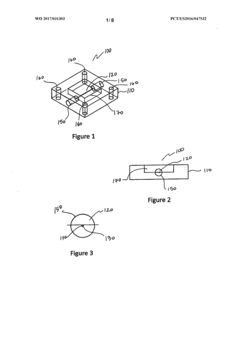
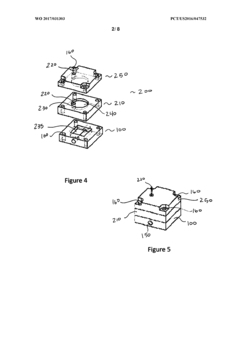
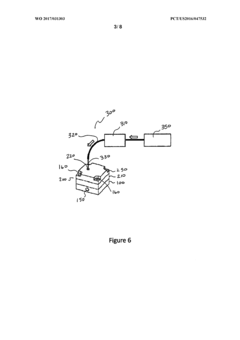
- A sensor assembly utilizing a metal substrate with a polymer waveguide that optically couples fiber optic cables, employing heat stripping absorption spectroscopy to capture, pre-concentrate, and quantify analytes by adjusting temperature thresholds and analyzing absorption spectra to determine concentrations of VOCs like acetone and toluene.

System for monitoring smoke composition with screen-printed sensors
PatentPendingIN202341066090A
Innovation
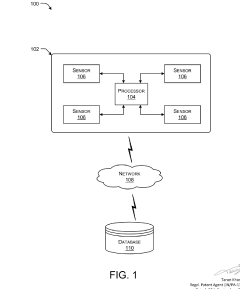
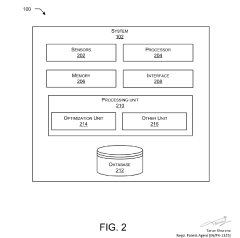
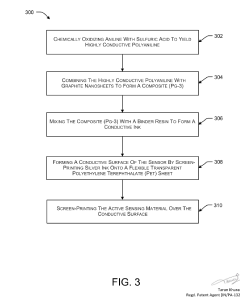
- A real-time monitoring system using flexible chemo-resistive sensors fabricated by screen printing technology, which includes polyaniline and graphite as active sensing materials, deposited on a Polyethylene Terephthalate (PET) substrate, and a processor to determine VOC concentrations and toxic composition.
Regulatory Standards for Building Material Emissions
The regulatory landscape for building material emissions has evolved significantly over the past decades, with increasing focus on human health protection. Key international standards include the European Union's Construction Products Regulation (EU No. 305/2011), which mandates that construction works must not pose threats to hygiene, health, or the environment throughout their lifecycle. This regulation specifically addresses the emission of dangerous substances, including VOCs from building materials.
In the United States, the California Department of Public Health (CDPH) Standard Method v1.2 has become a benchmark for evaluating VOC emissions from indoor materials. This protocol specifies testing procedures using environmental chambers to measure chemical emissions under controlled conditions, with results compared against established health-based exposure limits. The U.S. Environmental Protection Agency (EPA) has also developed the TSCA Title VI regulation for formaldehyde emissions from composite wood products.
Germany's AgBB (Committee for Health-related Evaluation of Building Products) evaluation scheme represents one of Europe's most comprehensive approaches, establishing testing protocols and evaluation criteria for VOCs and SVOCs (Semi-Volatile Organic Compounds). Similarly, France's emissions labeling system categorizes building products based on their VOC emission levels, using a simple A+ to C rating system that enhances consumer awareness.
The Japanese Industrial Standards (JIS) and the Chinese GB standards have established region-specific requirements for building material emissions, reflecting growing global consensus on the importance of indoor air quality regulation. These standards typically specify acceptable emission rates for formaldehyde, benzene, toluene, xylenes, and other priority VOCs identified as health hazards.
GC-MS analysis plays a crucial role in regulatory compliance testing, as it provides the analytical precision required to detect and quantify specific VOCs at the low concentration levels stipulated in these standards. The technique's ability to separate and identify individual compounds from complex mixtures makes it particularly valuable for regulatory purposes, where specific compounds have different permissible exposure limits.
Recent regulatory trends show movement toward harmonization of standards internationally, with increasing recognition of the cumulative effects of multiple VOCs. This has led to the development of concepts such as TVOC (Total Volatile Organic Compounds) limits and the consideration of additive effects through the use of "sum parameters" in regulatory frameworks. The integration of GC-MS data with health-based exposure models is becoming increasingly important in the development and enforcement of these evolving regulatory standards.
In the United States, the California Department of Public Health (CDPH) Standard Method v1.2 has become a benchmark for evaluating VOC emissions from indoor materials. This protocol specifies testing procedures using environmental chambers to measure chemical emissions under controlled conditions, with results compared against established health-based exposure limits. The U.S. Environmental Protection Agency (EPA) has also developed the TSCA Title VI regulation for formaldehyde emissions from composite wood products.
Germany's AgBB (Committee for Health-related Evaluation of Building Products) evaluation scheme represents one of Europe's most comprehensive approaches, establishing testing protocols and evaluation criteria for VOCs and SVOCs (Semi-Volatile Organic Compounds). Similarly, France's emissions labeling system categorizes building products based on their VOC emission levels, using a simple A+ to C rating system that enhances consumer awareness.
The Japanese Industrial Standards (JIS) and the Chinese GB standards have established region-specific requirements for building material emissions, reflecting growing global consensus on the importance of indoor air quality regulation. These standards typically specify acceptable emission rates for formaldehyde, benzene, toluene, xylenes, and other priority VOCs identified as health hazards.
GC-MS analysis plays a crucial role in regulatory compliance testing, as it provides the analytical precision required to detect and quantify specific VOCs at the low concentration levels stipulated in these standards. The technique's ability to separate and identify individual compounds from complex mixtures makes it particularly valuable for regulatory purposes, where specific compounds have different permissible exposure limits.
Recent regulatory trends show movement toward harmonization of standards internationally, with increasing recognition of the cumulative effects of multiple VOCs. This has led to the development of concepts such as TVOC (Total Volatile Organic Compounds) limits and the consideration of additive effects through the use of "sum parameters" in regulatory frameworks. The integration of GC-MS data with health-based exposure models is becoming increasingly important in the development and enforcement of these evolving regulatory standards.
Health Impact Assessment Frameworks for VOC Exposure
Health impact assessment frameworks for VOC exposure from building materials have evolved significantly over the past two decades, driven by increasing awareness of indoor air quality's effect on human health. These frameworks typically integrate multiple methodologies to evaluate both acute and chronic health risks associated with VOC emissions.
The World Health Organization's Indoor Air Quality Guidelines provide a foundational framework, establishing threshold limits for key VOCs commonly emitted from building materials. These guidelines incorporate toxicological data, exposure scenarios, and vulnerability factors to determine acceptable concentration levels for various populations.
The European Union's Construction Products Regulation (CPR) has developed a comprehensive assessment framework specifically targeting building materials. This approach classifies VOCs based on their carcinogenic, mutagenic, or reproductive toxicity potential, establishing emission classes that manufacturers must adhere to for market approval.
In the United States, the EPA's IRIS (Integrated Risk Information System) provides reference concentrations for many VOCs, which are incorporated into various assessment frameworks. The California Department of Public Health's Standard Method for VOC emissions testing represents another significant framework that establishes exposure scenarios and acceptance criteria specifically for building materials.
Health impact assessment frameworks typically employ a four-step process: hazard identification, exposure assessment, dose-response assessment, and risk characterization. GC-MS analysis plays a crucial role in the exposure assessment phase by accurately identifying and quantifying specific VOCs present in building materials.
Modern frameworks increasingly incorporate cumulative risk assessment approaches, recognizing that occupants are rarely exposed to single compounds but rather to complex VOC mixtures. These frameworks utilize concepts such as the Total Volatile Organic Compounds (TVOC) metric and the Lowest Concentration of Interest (LCI) approach to evaluate combined effects.
Recent advancements in health impact frameworks include the development of dynamic models that account for temporal variations in VOC emissions and occupant exposure patterns. These models integrate GC-MS data with computational fluid dynamics and physiologically-based pharmacokinetic modeling to provide more accurate health risk predictions.
The integration of biomonitoring data with GC-MS analysis represents the cutting edge of health impact assessment frameworks, allowing researchers to correlate actual human biomarkers with specific VOC exposures from building materials, thereby validating and refining existing assessment methodologies.
The World Health Organization's Indoor Air Quality Guidelines provide a foundational framework, establishing threshold limits for key VOCs commonly emitted from building materials. These guidelines incorporate toxicological data, exposure scenarios, and vulnerability factors to determine acceptable concentration levels for various populations.
The European Union's Construction Products Regulation (CPR) has developed a comprehensive assessment framework specifically targeting building materials. This approach classifies VOCs based on their carcinogenic, mutagenic, or reproductive toxicity potential, establishing emission classes that manufacturers must adhere to for market approval.
In the United States, the EPA's IRIS (Integrated Risk Information System) provides reference concentrations for many VOCs, which are incorporated into various assessment frameworks. The California Department of Public Health's Standard Method for VOC emissions testing represents another significant framework that establishes exposure scenarios and acceptance criteria specifically for building materials.
Health impact assessment frameworks typically employ a four-step process: hazard identification, exposure assessment, dose-response assessment, and risk characterization. GC-MS analysis plays a crucial role in the exposure assessment phase by accurately identifying and quantifying specific VOCs present in building materials.
Modern frameworks increasingly incorporate cumulative risk assessment approaches, recognizing that occupants are rarely exposed to single compounds but rather to complex VOC mixtures. These frameworks utilize concepts such as the Total Volatile Organic Compounds (TVOC) metric and the Lowest Concentration of Interest (LCI) approach to evaluate combined effects.
Recent advancements in health impact frameworks include the development of dynamic models that account for temporal variations in VOC emissions and occupant exposure patterns. These models integrate GC-MS data with computational fluid dynamics and physiologically-based pharmacokinetic modeling to provide more accurate health risk predictions.
The integration of biomonitoring data with GC-MS analysis represents the cutting edge of health impact assessment frameworks, allowing researchers to correlate actual human biomarkers with specific VOC exposures from building materials, thereby validating and refining existing assessment methodologies.
Unlock deeper insights with Patsnap Eureka Quick Research — get a full tech report to explore trends and direct your research. Try now!
Generate Your Research Report Instantly with AI Agent
Supercharge your innovation with Patsnap Eureka AI Agent Platform!