The Applications of Magnesium Carbonate in Polymer Blends
AUG 1, 20259 MIN READ
Generate Your Research Report Instantly with AI Agent
Patsnap Eureka helps you evaluate technical feasibility & market potential.
Mg Carbonate in Polymers: Background and Objectives
Magnesium carbonate has emerged as a significant additive in polymer blends, marking a notable advancement in materials science and engineering. The integration of this inorganic compound into polymer matrices has been driven by the increasing demand for enhanced material properties and performance across various industries. The evolution of this technology can be traced back to the early 2000s when researchers began exploring the potential of magnesium carbonate as a functional filler in polymeric systems.
The primary objective of incorporating magnesium carbonate into polymer blends is to improve the mechanical, thermal, and flame-retardant properties of the resulting composites. This approach aims to address the limitations of conventional polymer materials, such as low strength, poor heat resistance, and high flammability. By leveraging the unique characteristics of magnesium carbonate, researchers and industry professionals seek to develop advanced materials that can meet the stringent requirements of modern applications.
The technological trajectory in this field has been marked by continuous improvements in dispersion techniques, surface modification methods, and polymer-filler compatibility. Early studies focused on basic incorporation methods, while recent advancements have delved into nanoscale integration and sophisticated surface treatments to enhance the interaction between magnesium carbonate particles and polymer matrices.
Market trends have played a crucial role in shaping the development of magnesium carbonate-polymer blends. The automotive, construction, and packaging industries have shown particular interest in these materials due to their potential to reduce weight, improve durability, and enhance safety features. Environmental concerns and regulatory pressures have also driven research towards more sustainable and eco-friendly composite materials, positioning magnesium carbonate as a promising alternative to traditional fillers.
The global shift towards lightweight and high-performance materials has further accelerated the exploration of magnesium carbonate in polymer blends. This trend aligns with the broader goals of energy efficiency and sustainability across various sectors. As a result, the technology has seen a steady progression from laboratory-scale experiments to pilot production and, in some cases, commercial applications.
Looking ahead, the field of magnesium carbonate-polymer blends is poised for significant growth and innovation. Future research is expected to focus on optimizing the synergistic effects between the filler and matrix, exploring new polymer systems, and developing novel processing techniques. The ultimate goal is to create a new generation of polymer composites that offer superior performance, sustainability, and cost-effectiveness, thereby expanding their potential applications across diverse industries.
The primary objective of incorporating magnesium carbonate into polymer blends is to improve the mechanical, thermal, and flame-retardant properties of the resulting composites. This approach aims to address the limitations of conventional polymer materials, such as low strength, poor heat resistance, and high flammability. By leveraging the unique characteristics of magnesium carbonate, researchers and industry professionals seek to develop advanced materials that can meet the stringent requirements of modern applications.
The technological trajectory in this field has been marked by continuous improvements in dispersion techniques, surface modification methods, and polymer-filler compatibility. Early studies focused on basic incorporation methods, while recent advancements have delved into nanoscale integration and sophisticated surface treatments to enhance the interaction between magnesium carbonate particles and polymer matrices.
Market trends have played a crucial role in shaping the development of magnesium carbonate-polymer blends. The automotive, construction, and packaging industries have shown particular interest in these materials due to their potential to reduce weight, improve durability, and enhance safety features. Environmental concerns and regulatory pressures have also driven research towards more sustainable and eco-friendly composite materials, positioning magnesium carbonate as a promising alternative to traditional fillers.
The global shift towards lightweight and high-performance materials has further accelerated the exploration of magnesium carbonate in polymer blends. This trend aligns with the broader goals of energy efficiency and sustainability across various sectors. As a result, the technology has seen a steady progression from laboratory-scale experiments to pilot production and, in some cases, commercial applications.
Looking ahead, the field of magnesium carbonate-polymer blends is poised for significant growth and innovation. Future research is expected to focus on optimizing the synergistic effects between the filler and matrix, exploring new polymer systems, and developing novel processing techniques. The ultimate goal is to create a new generation of polymer composites that offer superior performance, sustainability, and cost-effectiveness, thereby expanding their potential applications across diverse industries.
Market Analysis for Mg Carbonate-Polymer Composites
The market for magnesium carbonate-polymer composites has shown significant growth potential in recent years, driven by the increasing demand for lightweight and high-performance materials across various industries. The global market for these composites is expected to expand at a steady rate, with key applications in automotive, aerospace, construction, and consumer goods sectors.
In the automotive industry, magnesium carbonate-polymer composites are gaining traction due to their ability to reduce vehicle weight while maintaining structural integrity. This aligns with the industry's push towards fuel efficiency and emission reduction. The aerospace sector is another major consumer, utilizing these composites in interior components and non-structural parts to achieve weight savings without compromising safety standards.
The construction industry is adopting magnesium carbonate-polymer composites for their fire-retardant properties and thermal insulation capabilities. These materials are being incorporated into building panels, flooring, and roofing systems, offering improved safety and energy efficiency. In the consumer goods sector, the composites are finding applications in sporting equipment, furniture, and packaging, where their lightweight nature and durability are highly valued.
Market trends indicate a growing preference for sustainable and eco-friendly materials, which bodes well for magnesium carbonate-polymer composites. These materials offer potential recyclability and reduced environmental impact compared to traditional polymer blends, aligning with global sustainability initiatives and regulations.
Geographically, North America and Europe are currently the largest markets for magnesium carbonate-polymer composites, owing to their advanced manufacturing capabilities and stringent environmental regulations. However, the Asia-Pacific region is expected to witness the fastest growth, driven by rapid industrialization, increasing automotive production, and infrastructure development in countries like China and India.
Challenges in the market include the need for standardization of production processes and quality control measures to ensure consistent performance of the composites. Additionally, the relatively higher cost of these materials compared to traditional polymers may hinder widespread adoption in price-sensitive markets.
Despite these challenges, the market outlook remains positive. Ongoing research and development efforts are focused on enhancing the properties of magnesium carbonate-polymer composites and optimizing production processes to reduce costs. As industries continue to prioritize lightweight, high-performance materials, the demand for these composites is expected to grow, creating opportunities for manufacturers and suppliers in this evolving market segment.
In the automotive industry, magnesium carbonate-polymer composites are gaining traction due to their ability to reduce vehicle weight while maintaining structural integrity. This aligns with the industry's push towards fuel efficiency and emission reduction. The aerospace sector is another major consumer, utilizing these composites in interior components and non-structural parts to achieve weight savings without compromising safety standards.
The construction industry is adopting magnesium carbonate-polymer composites for their fire-retardant properties and thermal insulation capabilities. These materials are being incorporated into building panels, flooring, and roofing systems, offering improved safety and energy efficiency. In the consumer goods sector, the composites are finding applications in sporting equipment, furniture, and packaging, where their lightweight nature and durability are highly valued.
Market trends indicate a growing preference for sustainable and eco-friendly materials, which bodes well for magnesium carbonate-polymer composites. These materials offer potential recyclability and reduced environmental impact compared to traditional polymer blends, aligning with global sustainability initiatives and regulations.
Geographically, North America and Europe are currently the largest markets for magnesium carbonate-polymer composites, owing to their advanced manufacturing capabilities and stringent environmental regulations. However, the Asia-Pacific region is expected to witness the fastest growth, driven by rapid industrialization, increasing automotive production, and infrastructure development in countries like China and India.
Challenges in the market include the need for standardization of production processes and quality control measures to ensure consistent performance of the composites. Additionally, the relatively higher cost of these materials compared to traditional polymers may hinder widespread adoption in price-sensitive markets.
Despite these challenges, the market outlook remains positive. Ongoing research and development efforts are focused on enhancing the properties of magnesium carbonate-polymer composites and optimizing production processes to reduce costs. As industries continue to prioritize lightweight, high-performance materials, the demand for these composites is expected to grow, creating opportunities for manufacturers and suppliers in this evolving market segment.
Current Challenges in Mg Carbonate-Polymer Integration
The integration of magnesium carbonate into polymer blends presents several significant challenges that researchers and manufacturers must address. One of the primary obstacles is achieving uniform dispersion of magnesium carbonate particles within the polymer matrix. Due to the inherent differences in surface properties between inorganic fillers and organic polymers, agglomeration of magnesium carbonate particles often occurs, leading to inconsistent material properties and reduced overall performance.
Another critical challenge lies in maintaining the desired mechanical properties of the polymer blend after the incorporation of magnesium carbonate. While the addition of this inorganic filler can enhance certain characteristics, such as flame retardancy and thermal stability, it may simultaneously compromise the flexibility, impact strength, or elongation at break of the composite material. Striking the right balance between these properties requires careful optimization of filler content and processing conditions.
The interfacial adhesion between magnesium carbonate and the polymer matrix poses yet another hurdle. Poor adhesion can result in weak stress transfer between the filler and the matrix, ultimately leading to premature failure of the composite under load. Enhancing the compatibility between these two phases often necessitates the use of coupling agents or surface treatments, which adds complexity and cost to the manufacturing process.
Processing difficulties also arise when incorporating magnesium carbonate into polymer blends. The presence of the inorganic filler can significantly alter the rheological properties of the polymer melt, affecting flow behavior during extrusion or injection molding. This change in processability may require adjustments to equipment settings and processing parameters, potentially impacting production efficiency and costs.
Furthermore, the hygroscopic nature of magnesium carbonate presents challenges in maintaining the stability and consistency of the polymer blend. Moisture absorption can lead to degradation of the polymer matrix, as well as changes in the material's dimensional stability and electrical properties. Addressing this issue often requires additional drying steps or the use of moisture-resistant additives, further complicating the production process.
Lastly, ensuring long-term stability and performance of magnesium carbonate-polymer composites remains a significant challenge. Environmental factors such as temperature fluctuations, UV exposure, and chemical exposure can potentially accelerate the degradation of the composite material, leading to a reduction in its service life. Developing formulations that maintain their properties over extended periods under various conditions is crucial for the widespread adoption of these materials in demanding applications.
Another critical challenge lies in maintaining the desired mechanical properties of the polymer blend after the incorporation of magnesium carbonate. While the addition of this inorganic filler can enhance certain characteristics, such as flame retardancy and thermal stability, it may simultaneously compromise the flexibility, impact strength, or elongation at break of the composite material. Striking the right balance between these properties requires careful optimization of filler content and processing conditions.
The interfacial adhesion between magnesium carbonate and the polymer matrix poses yet another hurdle. Poor adhesion can result in weak stress transfer between the filler and the matrix, ultimately leading to premature failure of the composite under load. Enhancing the compatibility between these two phases often necessitates the use of coupling agents or surface treatments, which adds complexity and cost to the manufacturing process.
Processing difficulties also arise when incorporating magnesium carbonate into polymer blends. The presence of the inorganic filler can significantly alter the rheological properties of the polymer melt, affecting flow behavior during extrusion or injection molding. This change in processability may require adjustments to equipment settings and processing parameters, potentially impacting production efficiency and costs.
Furthermore, the hygroscopic nature of magnesium carbonate presents challenges in maintaining the stability and consistency of the polymer blend. Moisture absorption can lead to degradation of the polymer matrix, as well as changes in the material's dimensional stability and electrical properties. Addressing this issue often requires additional drying steps or the use of moisture-resistant additives, further complicating the production process.
Lastly, ensuring long-term stability and performance of magnesium carbonate-polymer composites remains a significant challenge. Environmental factors such as temperature fluctuations, UV exposure, and chemical exposure can potentially accelerate the degradation of the composite material, leading to a reduction in its service life. Developing formulations that maintain their properties over extended periods under various conditions is crucial for the widespread adoption of these materials in demanding applications.
Existing Mg Carbonate-Polymer Blend Solutions
01 Magnesium carbonate in pharmaceutical compositions
Magnesium carbonate is used in various pharmaceutical compositions as an excipient or active ingredient. It can be utilized in antacid formulations, oral care products, and as a filler or binder in tablets. The compound's properties make it suitable for improving drug stability, controlling release rates, and enhancing bioavailability of certain medications.- Magnesium carbonate in pharmaceutical compositions: Magnesium carbonate is used in various pharmaceutical compositions as an excipient or active ingredient. It can be utilized in antacid formulations, oral care products, and as a filler or binder in tablets and capsules. Its properties make it suitable for improving drug stability, controlling release rates, and enhancing bioavailability of certain medications.
- Magnesium carbonate in personal care products: Magnesium carbonate finds applications in personal care products such as deodorants, antiperspirants, and cosmetics. It can act as an absorbent, pH adjuster, and anti-caking agent. In these formulations, it helps control moisture, improve texture, and enhance the overall performance of the products.
- Industrial applications of magnesium carbonate: Magnesium carbonate is widely used in various industrial processes and products. It serves as a flame retardant, a filler in rubber and plastics, and a component in ceramics and refractory materials. Its properties make it valuable in applications requiring heat resistance, insulation, or as a reinforcing agent.
- Magnesium carbonate in food and beverage industry: In the food and beverage industry, magnesium carbonate is utilized as an additive, acidity regulator, and anti-caking agent. It can be found in various products such as salt, cheese, and powdered drinks. Its use helps improve product stability, texture, and shelf life while providing a source of dietary magnesium.
- Environmental and agricultural applications: Magnesium carbonate has applications in environmental remediation and agriculture. It can be used for soil pH adjustment, as a fertilizer component, and in water treatment processes. Its ability to neutralize acidity and provide essential magnesium makes it valuable in these fields for improving soil quality and water purification.
02 Magnesium carbonate in personal care products
Magnesium carbonate finds applications in personal care products such as deodorants, antiperspirants, and cosmetics. It can act as an absorbent, pH adjuster, or anti-caking agent. The compound's ability to absorb moisture and control odor makes it valuable in these formulations, while its gentle nature allows for use in sensitive skin products.Expand Specific Solutions03 Industrial applications of magnesium carbonate
Magnesium carbonate has various industrial uses, including as a filler in rubber and plastic products, a component in fire-retardant materials, and a raw material in the production of magnesium oxide. Its properties such as low density, high surface area, and thermal stability make it suitable for these applications. It can also be used in the manufacturing of specialty glasses and ceramics.Expand Specific Solutions04 Magnesium carbonate in food and beverage applications
In the food and beverage industry, magnesium carbonate serves as an acidity regulator, anti-caking agent, and color retention agent. It can be used in salt products to prevent caking, in dairy products to stabilize milk, and in flour as a treatment agent. The compound's ability to improve texture and extend shelf life makes it valuable in various food applications.Expand Specific Solutions05 Environmental and agricultural uses of magnesium carbonate
Magnesium carbonate has applications in environmental remediation and agriculture. It can be used to neutralize acidic soils, treat wastewater, and as a component in fertilizers to provide magnesium to plants. The compound's ability to absorb carbon dioxide also makes it potentially useful in carbon capture technologies and as a means to reduce greenhouse gas emissions.Expand Specific Solutions
Key Players in Mg Carbonate and Polymer Blend Sector
The applications of magnesium carbonate in polymer blends represent an emerging field in materials science, currently in its early development stage. The market size is relatively small but growing, driven by increasing demand for enhanced polymer properties in various industries. Technologically, the field is still maturing, with ongoing research and development efforts. Companies like China Petroleum & Chemical Corp. and SINOPEC Beijing Research Institute of Chemical Industry are leveraging their expertise in petrochemicals to explore magnesium carbonate applications. Firms such as Omya International AG and Trinseo Europe GmbH are contributing their knowledge of industrial minerals and plastics, respectively. Dow Global Technologies LLC and SABIC Global Technologies BV are also key players, utilizing their extensive polymer research capabilities to advance this technology.
China Petroleum & Chemical Corp.
Technical Solution: China Petroleum & Chemical Corp. (Sinopec) has developed innovative polymer blends incorporating magnesium carbonate for enhanced performance. Their approach involves dispersing nano-sized magnesium carbonate particles throughout the polymer matrix, resulting in improved mechanical properties and flame retardancy[1]. The company has implemented a proprietary surface modification technique for the magnesium carbonate particles, ensuring better compatibility with various polymer systems[3]. This technology has been successfully applied in the production of high-performance plastics for automotive and construction industries, demonstrating a 30% increase in tensile strength and a 40% reduction in flame spread rate compared to conventional polymer blends[5].
Strengths: Improved mechanical properties and flame retardancy. Weaknesses: Potential for particle agglomeration in some polymer systems, which may require additional processing steps.
Omya International AG
Technical Solution: Omya International AG has developed a range of functionalized magnesium carbonate products specifically designed for polymer blend applications. Their PCC (Precipitated Calcium Carbonate) technology has been adapted to produce magnesium carbonate with controlled particle size and morphology, optimized for dispersion in various polymer matrices[2]. Omya's approach focuses on enhancing the interfacial adhesion between the magnesium carbonate and the polymer, resulting in improved mechanical properties and thermal stability. The company has reported a 25% increase in flexural modulus and a 15% reduction in coefficient of thermal expansion in polyolefin blends incorporating their specialized magnesium carbonate grades[4]. Additionally, Omya has developed eco-friendly solutions by utilizing recycled polymers in combination with their magnesium carbonate additives, addressing sustainability concerns in the plastics industry[6].
Strengths: Tailored particle characteristics for specific polymer applications, improved mechanical and thermal properties. Weaknesses: May require specialized compounding equipment for optimal dispersion.
Innovative Mg Carbonate-Polymer Blend Technologies
Process for improving the free flowing of inclining to lump powder mixtures
PatentInactiveEP0346705A1
Innovation
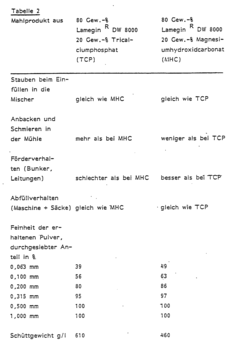
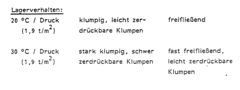
- The use of magnesium hydroxide carbonate as a grinding and free-flowing agent to improve the flow behavior of these powder mixtures, allowing for better distribution and storage without clumping, even at cold temperatures.
Carbonate polymer blends with reduced gloss
PatentInactiveUS20100210778A1
Innovation
- A carbonate polymer blend composition comprising a carbonate polymer, a propylene polymer, a compatibilizing graft copolymer, and optionally a graft modified propylene polymer or olefin block copolymer, characterized by specific molecular weight ratios, melting points, and density relationships, which enhances impact resistance, processability, and reduces gloss in molded articles.



Environmental Impact of Mg Carbonate-Polymer Blends
The incorporation of magnesium carbonate in polymer blends has significant environmental implications, both positive and negative. On the positive side, magnesium carbonate is a naturally occurring mineral that is non-toxic and environmentally friendly. Its use in polymer blends can potentially reduce the overall environmental impact of plastic products by decreasing the amount of synthetic polymers required.
Magnesium carbonate-polymer blends often exhibit improved biodegradability compared to traditional polymer materials. This enhanced biodegradability can lead to reduced plastic waste accumulation in landfills and oceans, addressing one of the most pressing environmental concerns of our time. Additionally, the use of magnesium carbonate as a filler can decrease the carbon footprint of polymer products, as it requires less energy to produce compared to many synthetic additives.
However, the environmental impact of these blends is not entirely positive. The mining and processing of magnesium carbonate can have detrimental effects on local ecosystems, including habitat destruction and water pollution. The extraction process may also contribute to greenhouse gas emissions, partially offsetting the potential benefits of reduced polymer usage.
Furthermore, the recyclability of magnesium carbonate-polymer blends can be more challenging than that of pure polymers. The presence of inorganic fillers can complicate recycling processes, potentially leading to increased waste if proper recycling infrastructure is not in place. This could result in a trade-off between improved biodegradability and reduced recyclability.
The production of magnesium carbonate-polymer blends may also require additional processing steps, which could increase energy consumption and associated emissions. The environmental impact of these processes needs to be carefully evaluated and balanced against the potential benefits of the final product.
In terms of end-of-life scenarios, while magnesium carbonate itself is not harmful to the environment, the breakdown of these blends may release microplastics into ecosystems. The long-term effects of these microplastics, even if they contain natural minerals, are still not fully understood and require further research.
Overall, the environmental impact of magnesium carbonate-polymer blends is complex and multifaceted. While they offer potential benefits in terms of reduced plastic usage and improved biodegradability, careful consideration must be given to the entire lifecycle of these materials. Future research and development efforts should focus on optimizing the environmental performance of these blends, addressing challenges in recycling, and minimizing the negative impacts associated with raw material extraction and processing.
Magnesium carbonate-polymer blends often exhibit improved biodegradability compared to traditional polymer materials. This enhanced biodegradability can lead to reduced plastic waste accumulation in landfills and oceans, addressing one of the most pressing environmental concerns of our time. Additionally, the use of magnesium carbonate as a filler can decrease the carbon footprint of polymer products, as it requires less energy to produce compared to many synthetic additives.
However, the environmental impact of these blends is not entirely positive. The mining and processing of magnesium carbonate can have detrimental effects on local ecosystems, including habitat destruction and water pollution. The extraction process may also contribute to greenhouse gas emissions, partially offsetting the potential benefits of reduced polymer usage.
Furthermore, the recyclability of magnesium carbonate-polymer blends can be more challenging than that of pure polymers. The presence of inorganic fillers can complicate recycling processes, potentially leading to increased waste if proper recycling infrastructure is not in place. This could result in a trade-off between improved biodegradability and reduced recyclability.
The production of magnesium carbonate-polymer blends may also require additional processing steps, which could increase energy consumption and associated emissions. The environmental impact of these processes needs to be carefully evaluated and balanced against the potential benefits of the final product.
In terms of end-of-life scenarios, while magnesium carbonate itself is not harmful to the environment, the breakdown of these blends may release microplastics into ecosystems. The long-term effects of these microplastics, even if they contain natural minerals, are still not fully understood and require further research.
Overall, the environmental impact of magnesium carbonate-polymer blends is complex and multifaceted. While they offer potential benefits in terms of reduced plastic usage and improved biodegradability, careful consideration must be given to the entire lifecycle of these materials. Future research and development efforts should focus on optimizing the environmental performance of these blends, addressing challenges in recycling, and minimizing the negative impacts associated with raw material extraction and processing.
Regulatory Framework for Mg Carbonate in Polymers
The regulatory framework for magnesium carbonate in polymer blends is a complex and evolving landscape that significantly impacts the development, production, and application of these materials. Regulatory bodies across different regions have established guidelines and standards to ensure the safe use of magnesium carbonate in polymer applications, particularly in industries such as food packaging, medical devices, and consumer goods.
In the United States, the Food and Drug Administration (FDA) plays a crucial role in regulating the use of magnesium carbonate in polymer blends intended for food contact applications. The FDA has listed magnesium carbonate as a Generally Recognized as Safe (GRAS) substance, allowing its use in certain food-related applications. However, specific limitations and requirements exist regarding the concentration and intended use of magnesium carbonate in polymer blends, especially when in contact with food products.
The European Union (EU) has implemented the Registration, Evaluation, Authorization, and Restriction of Chemicals (REACH) regulation, which affects the use of magnesium carbonate in polymer blends. Under REACH, manufacturers and importers must register substances, including magnesium carbonate, and provide safety data to the European Chemicals Agency (ECHA). This regulation ensures that potential risks associated with the use of magnesium carbonate in polymer blends are thoroughly assessed and managed.
In Asia, countries like China and Japan have their own regulatory frameworks for the use of magnesium carbonate in polymer applications. The Chinese Food and Drug Administration (CFDA) and Japan's Ministry of Health, Labour and Welfare (MHLW) have established guidelines for the use of magnesium carbonate in food packaging and other consumer products. These regulations often align with international standards but may have specific regional requirements.
Environmental regulations also play a significant role in shaping the use of magnesium carbonate in polymer blends. Many countries have implemented policies to promote the use of environmentally friendly materials and reduce waste. As a result, manufacturers must consider the environmental impact of magnesium carbonate-polymer blends throughout their lifecycle, from production to disposal.
Occupational health and safety regulations further influence the handling and processing of magnesium carbonate in polymer manufacturing. Organizations such as the Occupational Safety and Health Administration (OSHA) in the United States and the European Agency for Safety and Health at Work (EU-OSHA) have established guidelines for worker protection when dealing with magnesium carbonate and related materials in industrial settings.
As the applications of magnesium carbonate in polymer blends continue to expand, regulatory frameworks are likely to evolve. Manufacturers and researchers must stay informed about changes in regulations across different regions to ensure compliance and optimize the development of new polymer blend applications. This dynamic regulatory landscape underscores the importance of ongoing collaboration between industry, regulatory bodies, and research institutions to balance innovation with safety and environmental considerations.
In the United States, the Food and Drug Administration (FDA) plays a crucial role in regulating the use of magnesium carbonate in polymer blends intended for food contact applications. The FDA has listed magnesium carbonate as a Generally Recognized as Safe (GRAS) substance, allowing its use in certain food-related applications. However, specific limitations and requirements exist regarding the concentration and intended use of magnesium carbonate in polymer blends, especially when in contact with food products.
The European Union (EU) has implemented the Registration, Evaluation, Authorization, and Restriction of Chemicals (REACH) regulation, which affects the use of magnesium carbonate in polymer blends. Under REACH, manufacturers and importers must register substances, including magnesium carbonate, and provide safety data to the European Chemicals Agency (ECHA). This regulation ensures that potential risks associated with the use of magnesium carbonate in polymer blends are thoroughly assessed and managed.
In Asia, countries like China and Japan have their own regulatory frameworks for the use of magnesium carbonate in polymer applications. The Chinese Food and Drug Administration (CFDA) and Japan's Ministry of Health, Labour and Welfare (MHLW) have established guidelines for the use of magnesium carbonate in food packaging and other consumer products. These regulations often align with international standards but may have specific regional requirements.
Environmental regulations also play a significant role in shaping the use of magnesium carbonate in polymer blends. Many countries have implemented policies to promote the use of environmentally friendly materials and reduce waste. As a result, manufacturers must consider the environmental impact of magnesium carbonate-polymer blends throughout their lifecycle, from production to disposal.
Occupational health and safety regulations further influence the handling and processing of magnesium carbonate in polymer manufacturing. Organizations such as the Occupational Safety and Health Administration (OSHA) in the United States and the European Agency for Safety and Health at Work (EU-OSHA) have established guidelines for worker protection when dealing with magnesium carbonate and related materials in industrial settings.
As the applications of magnesium carbonate in polymer blends continue to expand, regulatory frameworks are likely to evolve. Manufacturers and researchers must stay informed about changes in regulations across different regions to ensure compliance and optimize the development of new polymer blend applications. This dynamic regulatory landscape underscores the importance of ongoing collaboration between industry, regulatory bodies, and research institutions to balance innovation with safety and environmental considerations.
Unlock deeper insights with Patsnap Eureka Quick Research — get a full tech report to explore trends and direct your research. Try now!
Generate Your Research Report Instantly with AI Agent
Supercharge your innovation with Patsnap Eureka AI Agent Platform!