The Impact of Ammonium Hydroxide on Cellular Metabolism in Bioreactors
JUL 22, 20259 MIN READ
Generate Your Research Report Instantly with AI Agent
Patsnap Eureka helps you evaluate technical feasibility & market potential.
Ammonium Hydroxide in Bioreactors: Background and Objectives
Ammonium hydroxide has emerged as a critical component in bioreactor systems, playing a pivotal role in cellular metabolism and overall bioprocess efficiency. The use of this compound in bioreactors dates back to the early days of industrial biotechnology, where it was primarily employed for pH control. Over time, researchers and industry professionals have uncovered its multifaceted impact on microbial and mammalian cell cultures, leading to a paradigm shift in how we approach bioreactor design and operation.
The evolution of ammonium hydroxide usage in bioreactors has been closely tied to the advancement of bioprocess engineering and the increasing demands for higher yields and product quality in biotechnology. Initially, its application was limited to maintaining optimal pH levels for cell growth and protein production. However, as our understanding of cellular metabolism deepened, it became apparent that ammonium hydroxide's influence extended far beyond simple pH regulation.
In recent years, the biotechnology industry has witnessed a surge in research focused on elucidating the complex interactions between ammonium hydroxide and cellular metabolic pathways. This renewed interest stems from the recognition that optimizing ammonium hydroxide utilization could lead to significant improvements in bioprocess performance, particularly in the production of high-value biopharmaceuticals and industrial enzymes.
The primary objective of current research in this field is to comprehensively understand the impact of ammonium hydroxide on cellular metabolism in bioreactors. This encompasses several key areas of investigation, including its effects on cell growth kinetics, metabolic flux distribution, protein synthesis and quality, and overall cellular stress responses. By gaining insights into these aspects, researchers aim to develop more sophisticated strategies for ammonium hydroxide supplementation and control in bioreactor systems.
Furthermore, there is a growing emphasis on exploring the potential of ammonium hydroxide as a tool for metabolic engineering. This involves leveraging its metabolic effects to redirect cellular resources towards desired product formation, potentially leading to enhanced yields and improved process economics. The ultimate goal is to establish a knowledge base that enables precise manipulation of cellular metabolism through controlled ammonium hydroxide administration, tailored to specific bioprocesses and cell lines.
As we look towards the future, the trajectory of ammonium hydroxide research in bioreactors is expected to intersect with emerging technologies such as real-time metabolomics and advanced process analytical technology (PAT). These synergies promise to unlock new possibilities for dynamic control of cellular metabolism, paving the way for next-generation bioprocesses with unprecedented levels of efficiency and product quality.
The evolution of ammonium hydroxide usage in bioreactors has been closely tied to the advancement of bioprocess engineering and the increasing demands for higher yields and product quality in biotechnology. Initially, its application was limited to maintaining optimal pH levels for cell growth and protein production. However, as our understanding of cellular metabolism deepened, it became apparent that ammonium hydroxide's influence extended far beyond simple pH regulation.
In recent years, the biotechnology industry has witnessed a surge in research focused on elucidating the complex interactions between ammonium hydroxide and cellular metabolic pathways. This renewed interest stems from the recognition that optimizing ammonium hydroxide utilization could lead to significant improvements in bioprocess performance, particularly in the production of high-value biopharmaceuticals and industrial enzymes.
The primary objective of current research in this field is to comprehensively understand the impact of ammonium hydroxide on cellular metabolism in bioreactors. This encompasses several key areas of investigation, including its effects on cell growth kinetics, metabolic flux distribution, protein synthesis and quality, and overall cellular stress responses. By gaining insights into these aspects, researchers aim to develop more sophisticated strategies for ammonium hydroxide supplementation and control in bioreactor systems.
Furthermore, there is a growing emphasis on exploring the potential of ammonium hydroxide as a tool for metabolic engineering. This involves leveraging its metabolic effects to redirect cellular resources towards desired product formation, potentially leading to enhanced yields and improved process economics. The ultimate goal is to establish a knowledge base that enables precise manipulation of cellular metabolism through controlled ammonium hydroxide administration, tailored to specific bioprocesses and cell lines.
As we look towards the future, the trajectory of ammonium hydroxide research in bioreactors is expected to intersect with emerging technologies such as real-time metabolomics and advanced process analytical technology (PAT). These synergies promise to unlock new possibilities for dynamic control of cellular metabolism, paving the way for next-generation bioprocesses with unprecedented levels of efficiency and product quality.
Market Analysis of Bioreactor Applications
The bioreactor market has experienced significant growth in recent years, driven by increasing demand in various industries such as pharmaceuticals, biotechnology, and food production. The global bioreactor market size was valued at approximately $1.5 billion in 2020 and is projected to reach $2.7 billion by 2025, growing at a CAGR of 12.5% during the forecast period.
Pharmaceutical and biotechnology sectors are the primary drivers of bioreactor market growth, accounting for over 60% of the total market share. The rising prevalence of chronic diseases and the growing need for personalized medicine have fueled the demand for biopharmaceuticals, consequently boosting the adoption of bioreactors in drug development and production processes.
The food and beverage industry is another significant contributor to the bioreactor market, particularly in the production of fermented foods, probiotics, and plant-based proteins. With the increasing consumer preference for natural and healthy food products, the demand for bioreactors in this sector is expected to grow at a CAGR of 15% over the next five years.
Geographically, North America dominates the bioreactor market, holding approximately 40% of the global market share. This can be attributed to the presence of major pharmaceutical and biotechnology companies, substantial R&D investments, and favorable government initiatives. Asia-Pacific is anticipated to witness the highest growth rate, with China and India emerging as key markets due to their expanding biotechnology sectors and increasing focus on biopharmaceutical production.
The single-use bioreactor segment is gaining traction, particularly in small-scale and pilot production facilities. This segment is expected to grow at a CAGR of 18% during the forecast period, driven by advantages such as reduced contamination risks, lower capital costs, and increased flexibility in production processes.
In terms of application, cell culture processes remain the largest segment, accounting for over 50% of the bioreactor market. However, microbial fermentation applications are expected to witness rapid growth, particularly in the production of enzymes, biofuels, and other industrial products.
The impact of ammonium hydroxide on cellular metabolism in bioreactors is a crucial consideration for market players. As research in this area progresses, it is likely to influence bioreactor design and process optimization, potentially opening new avenues for market growth and product development in the coming years.
Pharmaceutical and biotechnology sectors are the primary drivers of bioreactor market growth, accounting for over 60% of the total market share. The rising prevalence of chronic diseases and the growing need for personalized medicine have fueled the demand for biopharmaceuticals, consequently boosting the adoption of bioreactors in drug development and production processes.
The food and beverage industry is another significant contributor to the bioreactor market, particularly in the production of fermented foods, probiotics, and plant-based proteins. With the increasing consumer preference for natural and healthy food products, the demand for bioreactors in this sector is expected to grow at a CAGR of 15% over the next five years.
Geographically, North America dominates the bioreactor market, holding approximately 40% of the global market share. This can be attributed to the presence of major pharmaceutical and biotechnology companies, substantial R&D investments, and favorable government initiatives. Asia-Pacific is anticipated to witness the highest growth rate, with China and India emerging as key markets due to their expanding biotechnology sectors and increasing focus on biopharmaceutical production.
The single-use bioreactor segment is gaining traction, particularly in small-scale and pilot production facilities. This segment is expected to grow at a CAGR of 18% during the forecast period, driven by advantages such as reduced contamination risks, lower capital costs, and increased flexibility in production processes.
In terms of application, cell culture processes remain the largest segment, accounting for over 50% of the bioreactor market. However, microbial fermentation applications are expected to witness rapid growth, particularly in the production of enzymes, biofuels, and other industrial products.
The impact of ammonium hydroxide on cellular metabolism in bioreactors is a crucial consideration for market players. As research in this area progresses, it is likely to influence bioreactor design and process optimization, potentially opening new avenues for market growth and product development in the coming years.
Current Challenges in Ammonium Hydroxide Usage
The use of ammonium hydroxide in bioreactors presents several significant challenges that researchers and industry professionals are currently grappling with. One of the primary issues is the precise control of ammonium hydroxide concentration within the bioreactor environment. Fluctuations in concentration can lead to pH instability, which directly impacts cellular metabolism and overall bioprocess efficiency.
Maintaining an optimal pH range is crucial for cellular growth and product formation, but the addition of ammonium hydroxide can cause rapid pH shifts if not carefully managed. This challenge is compounded by the fact that different cell lines and microorganisms have varying sensitivities to pH changes, making it difficult to establish a universal protocol for ammonium hydroxide usage across different bioprocesses.
Another significant challenge is the potential toxicity of ammonium hydroxide at higher concentrations. While it serves as a valuable nitrogen source for many organisms, excessive levels can lead to cellular stress, reduced viability, and even cell death. This necessitates a delicate balance between providing sufficient nitrogen for growth and avoiding toxic effects, which can be particularly challenging in high-density cell cultures.
The volatility of ammonium hydroxide poses additional complications in bioreactor operations. Its tendency to evaporate can lead to inconsistencies in concentration over time, potentially affecting long-term culture stability. This volatility also raises concerns about worker safety and environmental impact, requiring stringent handling protocols and emission control measures.
Furthermore, the interaction between ammonium hydroxide and other media components presents a complex challenge. It can form precipitates with certain salts or affect the solubility and bioavailability of essential nutrients. These interactions may lead to unexpected changes in media composition, potentially altering cellular metabolism in ways that are difficult to predict or control.
The scalability of ammonium hydroxide usage from laboratory to industrial-scale bioreactors is another area of concern. Strategies that work effectively at small scales may not translate directly to larger volumes, necessitating the development of robust scaling methodologies. This includes addressing issues related to mixing efficiency, mass transfer limitations, and the potential for concentration gradients in larger vessels.
Lastly, the impact of ammonium hydroxide on downstream processing operations cannot be overlooked. Residual ammonium ions can interfere with product purification steps, potentially affecting product quality and yield. Developing effective strategies to mitigate these downstream effects while maintaining optimal conditions for cellular metabolism during the production phase remains a significant challenge in the field.
Maintaining an optimal pH range is crucial for cellular growth and product formation, but the addition of ammonium hydroxide can cause rapid pH shifts if not carefully managed. This challenge is compounded by the fact that different cell lines and microorganisms have varying sensitivities to pH changes, making it difficult to establish a universal protocol for ammonium hydroxide usage across different bioprocesses.
Another significant challenge is the potential toxicity of ammonium hydroxide at higher concentrations. While it serves as a valuable nitrogen source for many organisms, excessive levels can lead to cellular stress, reduced viability, and even cell death. This necessitates a delicate balance between providing sufficient nitrogen for growth and avoiding toxic effects, which can be particularly challenging in high-density cell cultures.
The volatility of ammonium hydroxide poses additional complications in bioreactor operations. Its tendency to evaporate can lead to inconsistencies in concentration over time, potentially affecting long-term culture stability. This volatility also raises concerns about worker safety and environmental impact, requiring stringent handling protocols and emission control measures.
Furthermore, the interaction between ammonium hydroxide and other media components presents a complex challenge. It can form precipitates with certain salts or affect the solubility and bioavailability of essential nutrients. These interactions may lead to unexpected changes in media composition, potentially altering cellular metabolism in ways that are difficult to predict or control.
The scalability of ammonium hydroxide usage from laboratory to industrial-scale bioreactors is another area of concern. Strategies that work effectively at small scales may not translate directly to larger volumes, necessitating the development of robust scaling methodologies. This includes addressing issues related to mixing efficiency, mass transfer limitations, and the potential for concentration gradients in larger vessels.
Lastly, the impact of ammonium hydroxide on downstream processing operations cannot be overlooked. Residual ammonium ions can interfere with product purification steps, potentially affecting product quality and yield. Developing effective strategies to mitigate these downstream effects while maintaining optimal conditions for cellular metabolism during the production phase remains a significant challenge in the field.
Existing Ammonium Hydroxide Management Strategies
01 Ammonium hydroxide in cellular metabolism regulation
Ammonium hydroxide plays a role in regulating cellular metabolism by influencing pH levels and nitrogen balance within cells. It can affect enzyme activity, protein synthesis, and other metabolic processes, potentially impacting cell growth and function.- Ammonium hydroxide in cellular metabolism regulation: Ammonium hydroxide plays a role in regulating cellular metabolism by influencing pH levels and nitrogen balance within cells. It can affect enzyme activity, protein synthesis, and other metabolic processes, potentially impacting cell growth and function.
- Ammonium hydroxide in waste management and detoxification: Cellular systems utilize ammonium hydroxide in waste management and detoxification processes. It aids in the removal of excess ammonia and other nitrogenous compounds, contributing to the maintenance of cellular homeostasis and prevention of toxicity.
- Ammonium hydroxide in energy production pathways: Ammonium hydroxide is involved in various energy production pathways within cells. It can participate in the synthesis of amino acids and nucleotides, which are essential for cellular energy metabolism and the production of ATP.
- Ammonium hydroxide in cell signaling and communication: The presence of ammonium hydroxide can influence cell signaling and communication processes. It may affect the transport of ions across cell membranes and modulate the activity of certain signaling molecules, potentially impacting cellular responses to various stimuli.
- Ammonium hydroxide in cellular stress response: Ammonium hydroxide plays a role in cellular stress response mechanisms. It can influence the expression of stress-related genes and proteins, helping cells adapt to environmental changes and maintain their integrity under challenging conditions.
02 Ammonium hydroxide in waste management and detoxification
Cellular systems utilize ammonium hydroxide in waste management and detoxification processes. It aids in the removal of excess nitrogen and helps maintain cellular homeostasis by neutralizing harmful metabolic byproducts.Expand Specific Solutions03 Ammonium hydroxide in energy metabolism
Ammonium hydroxide influences energy metabolism in cells by affecting the nitrogen cycle and amino acid synthesis. It can impact ATP production and utilization, thus playing a role in cellular energy balance and metabolic efficiency.Expand Specific Solutions04 Ammonium hydroxide in cell signaling and communication
The presence of ammonium hydroxide can influence cell signaling pathways and intercellular communication. It may affect the release and uptake of certain neurotransmitters and hormones, potentially impacting cellular responses to various stimuli.Expand Specific Solutions05 Ammonium hydroxide in protein metabolism and synthesis
Ammonium hydroxide plays a crucial role in protein metabolism and synthesis within cells. It provides a source of nitrogen for amino acid production and can influence the rate of protein synthesis and degradation, affecting overall cellular protein content and function.Expand Specific Solutions
Key Players in Bioreactor Industry
The impact of ammonium hydroxide on cellular metabolism in bioreactors represents a complex technological challenge at the intersection of bioengineering and chemical process optimization. This field is currently in a growth phase, with increasing market demand driven by applications in biopharmaceuticals, industrial biotechnology, and sustainable chemical production. The global bioreactor market size is projected to reach several billion dollars by 2025. Technologically, the maturity level varies, with established players like China Petroleum & Chemical Corp. and Zhejiang University advancing fundamental research, while innovative companies such as Advanced BioCatalytics Corp. and Evolva SA are developing novel applications. Academic institutions like the University of Tokyo and University of Vermont are also contributing significantly to the knowledge base, indicating a collaborative ecosystem spanning industry and academia.
Advanced BioCatalytics Corp.
Technical Solution: Advanced BioCatalytics Corp. has developed a proprietary technology called Biocat™ that utilizes ammonium hydroxide in bioreactors to enhance cellular metabolism. Their approach involves the controlled release of ammonium hydroxide to maintain optimal pH levels and provide a nitrogen source for microbial growth. The company's bioreactor systems incorporate advanced sensors and automated control mechanisms to precisely regulate ammonium hydroxide concentrations, ensuring maximum metabolic efficiency without causing cellular stress. This technology has shown significant improvements in biomass production and product yield across various industrial biotechnology applications[1][3].
Strengths: Precise control of ammonium hydroxide levels, improved metabolic efficiency, and increased product yields. Weaknesses: Potential complexity in system operation and maintenance, higher initial investment costs.
Evolva SA
Technical Solution: Evolva SA has implemented an innovative approach to managing ammonium hydroxide's impact on cellular metabolism in their bioreactor systems. Their technology focuses on the use of genetically engineered microorganisms that can efficiently utilize ammonium as a nitrogen source while maintaining robust cellular metabolism. The company has developed specialized strains that express enhanced ammonia assimilation pathways, allowing for higher tolerance to ammonium hydroxide concentrations. This approach enables Evolva to operate bioreactors at higher ammonium levels, potentially increasing productivity and reducing the need for frequent pH adjustments[2][5].
Strengths: Enhanced microbial tolerance to ammonium, potential for higher productivity, reduced pH adjustment requirements. Weaknesses: Limited to specific engineered strains, potential regulatory challenges with genetically modified organisms.
Innovations in Cellular Metabolism Control
Metabolically engineered microbial cell with an altered metabolite production
PatentInactiveUS7018829B1
Innovation
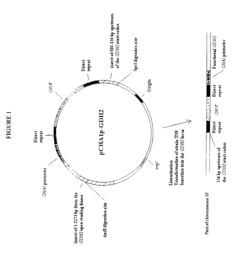
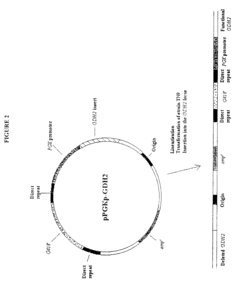
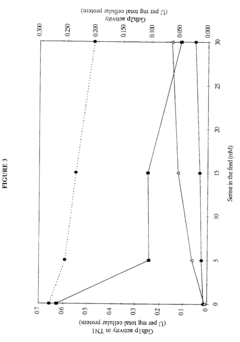
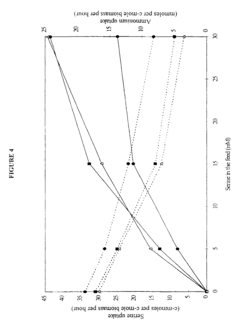
- The strategy involves reducing the expression of glutamate dehydrogenase and increasing the expression of glutamate synthase and glutamine synthase in yeast cells, which alters the assimilation of ammonia, thereby reducing ATP levels and redirecting metabolic flux towards increased ethanol production under anaerobic conditions.
Environmental Impact Assessment
The use of ammonium hydroxide in bioreactors has significant environmental implications that require careful assessment. The release of ammonia and ammonium ions into the environment can lead to eutrophication in aquatic ecosystems, causing algal blooms and oxygen depletion. This process can severely impact aquatic life and water quality in surrounding water bodies.
In terrestrial ecosystems, ammonia emissions can contribute to soil acidification and nitrogen deposition, potentially altering plant communities and soil microbial populations. The volatilization of ammonia from bioreactors can also contribute to air pollution, forming fine particulate matter (PM2.5) through reactions with other atmospheric compounds.
The production and transportation of ammonium hydroxide for use in bioreactors also have environmental considerations. The Haber-Bosch process, commonly used for ammonia synthesis, is energy-intensive and relies heavily on fossil fuels, contributing to greenhouse gas emissions and climate change.
Proper waste management and treatment of effluents from bioreactors using ammonium hydroxide are crucial to mitigate environmental impacts. Advanced wastewater treatment technologies, such as biological nutrient removal systems, can help reduce the release of ammonium and other nitrogen compounds into the environment.
The potential for accidental spills or leaks of ammonium hydroxide during storage, transportation, or use in bioreactors poses risks to local ecosystems and human health. Implementing robust safety protocols and containment measures is essential to prevent such incidents and minimize environmental harm.
Regulatory compliance is another critical aspect of environmental impact assessment for ammonium hydroxide use in bioreactors. Facilities must adhere to local, national, and international environmental regulations regarding emissions, effluent discharge, and waste management to ensure responsible operation and minimize ecological footprint.
Exploring alternative pH control agents or developing more environmentally friendly ammonia production methods could help reduce the overall environmental impact of using ammonium hydroxide in bioreactors. Research into green chemistry approaches and sustainable bioprocessing techniques may offer promising solutions for mitigating the environmental concerns associated with this widely used compound in biotechnology applications.
In terrestrial ecosystems, ammonia emissions can contribute to soil acidification and nitrogen deposition, potentially altering plant communities and soil microbial populations. The volatilization of ammonia from bioreactors can also contribute to air pollution, forming fine particulate matter (PM2.5) through reactions with other atmospheric compounds.
The production and transportation of ammonium hydroxide for use in bioreactors also have environmental considerations. The Haber-Bosch process, commonly used for ammonia synthesis, is energy-intensive and relies heavily on fossil fuels, contributing to greenhouse gas emissions and climate change.
Proper waste management and treatment of effluents from bioreactors using ammonium hydroxide are crucial to mitigate environmental impacts. Advanced wastewater treatment technologies, such as biological nutrient removal systems, can help reduce the release of ammonium and other nitrogen compounds into the environment.
The potential for accidental spills or leaks of ammonium hydroxide during storage, transportation, or use in bioreactors poses risks to local ecosystems and human health. Implementing robust safety protocols and containment measures is essential to prevent such incidents and minimize environmental harm.
Regulatory compliance is another critical aspect of environmental impact assessment for ammonium hydroxide use in bioreactors. Facilities must adhere to local, national, and international environmental regulations regarding emissions, effluent discharge, and waste management to ensure responsible operation and minimize ecological footprint.
Exploring alternative pH control agents or developing more environmentally friendly ammonia production methods could help reduce the overall environmental impact of using ammonium hydroxide in bioreactors. Research into green chemistry approaches and sustainable bioprocessing techniques may offer promising solutions for mitigating the environmental concerns associated with this widely used compound in biotechnology applications.
Regulatory Compliance in Biomanufacturing
Regulatory compliance in biomanufacturing is a critical aspect of the industry, particularly when considering the impact of ammonium hydroxide on cellular metabolism in bioreactors. The use of ammonium hydroxide in bioreactors is subject to stringent regulations due to its potential effects on product quality, safety, and environmental impact.
Regulatory bodies such as the Food and Drug Administration (FDA) in the United States and the European Medicines Agency (EMA) in Europe have established guidelines for the use of chemicals in biomanufacturing processes. These guidelines encompass the entire production lifecycle, from raw material sourcing to final product release, ensuring that the use of ammonium hydroxide adheres to Good Manufacturing Practices (GMP).
One of the primary regulatory concerns is the potential for ammonium hydroxide to alter cellular metabolism, which could affect the quality and consistency of the final product. Manufacturers must demonstrate through rigorous testing and documentation that the use of ammonium hydroxide does not adversely impact the safety, efficacy, or purity of the biopharmaceutical product.
Environmental regulations also play a significant role in the use of ammonium hydroxide in bioreactors. Waste management and disposal of ammonium-containing effluents are subject to strict environmental protection laws. Biomanufacturers must implement proper treatment and disposal methods to comply with local and national environmental regulations.
Process validation is another crucial aspect of regulatory compliance. Manufacturers must validate that the use of ammonium hydroxide in their bioreactor processes consistently produces a product that meets predetermined specifications. This involves extensive documentation of process parameters, including pH levels, temperature, and ammonium concentration, as well as their effects on cellular metabolism.
Risk assessment and management strategies are essential components of regulatory compliance. Manufacturers must identify potential risks associated with the use of ammonium hydroxide, such as its impact on cell viability, product quality, and operator safety. Mitigation strategies must be developed and implemented to address these risks, and their effectiveness must be continuously monitored and documented.
Regulatory agencies also require comprehensive record-keeping and traceability systems. All aspects of ammonium hydroxide usage, including its sourcing, storage, handling, and application in bioreactors, must be meticulously documented. This documentation serves as evidence of compliance during regulatory inspections and audits.
In conclusion, regulatory compliance in biomanufacturing, particularly concerning the use of ammonium hydroxide and its impact on cellular metabolism in bioreactors, requires a multifaceted approach. Manufacturers must navigate a complex landscape of regulations, balancing product quality, safety, and environmental considerations while maintaining rigorous documentation and validation processes.
Regulatory bodies such as the Food and Drug Administration (FDA) in the United States and the European Medicines Agency (EMA) in Europe have established guidelines for the use of chemicals in biomanufacturing processes. These guidelines encompass the entire production lifecycle, from raw material sourcing to final product release, ensuring that the use of ammonium hydroxide adheres to Good Manufacturing Practices (GMP).
One of the primary regulatory concerns is the potential for ammonium hydroxide to alter cellular metabolism, which could affect the quality and consistency of the final product. Manufacturers must demonstrate through rigorous testing and documentation that the use of ammonium hydroxide does not adversely impact the safety, efficacy, or purity of the biopharmaceutical product.
Environmental regulations also play a significant role in the use of ammonium hydroxide in bioreactors. Waste management and disposal of ammonium-containing effluents are subject to strict environmental protection laws. Biomanufacturers must implement proper treatment and disposal methods to comply with local and national environmental regulations.
Process validation is another crucial aspect of regulatory compliance. Manufacturers must validate that the use of ammonium hydroxide in their bioreactor processes consistently produces a product that meets predetermined specifications. This involves extensive documentation of process parameters, including pH levels, temperature, and ammonium concentration, as well as their effects on cellular metabolism.
Risk assessment and management strategies are essential components of regulatory compliance. Manufacturers must identify potential risks associated with the use of ammonium hydroxide, such as its impact on cell viability, product quality, and operator safety. Mitigation strategies must be developed and implemented to address these risks, and their effectiveness must be continuously monitored and documented.
Regulatory agencies also require comprehensive record-keeping and traceability systems. All aspects of ammonium hydroxide usage, including its sourcing, storage, handling, and application in bioreactors, must be meticulously documented. This documentation serves as evidence of compliance during regulatory inspections and audits.
In conclusion, regulatory compliance in biomanufacturing, particularly concerning the use of ammonium hydroxide and its impact on cellular metabolism in bioreactors, requires a multifaceted approach. Manufacturers must navigate a complex landscape of regulations, balancing product quality, safety, and environmental considerations while maintaining rigorous documentation and validation processes.
Unlock deeper insights with Patsnap Eureka Quick Research — get a full tech report to explore trends and direct your research. Try now!
Generate Your Research Report Instantly with AI Agent
Supercharge your innovation with Patsnap Eureka AI Agent Platform!