

Topology Optimization: Achieving High Load Capacity in Small-Scale Designs
SEP 16, 202510 MIN READ
Generate Your Research Report Instantly with AI Agent
PatSnap Eureka helps you evaluate technical feasibility & market potential.
Topology Optimization Background and Objectives
Topology optimization has emerged as a revolutionary approach in engineering design, evolving from theoretical mathematical concepts in the 1980s to becoming an essential tool in modern manufacturing. This design methodology uses algorithms to determine the optimal material distribution within a given design space, subject to specified constraints and load conditions. The fundamental principle involves removing material from areas that contribute minimally to structural performance while maintaining material in high-stress regions, resulting in lightweight yet robust structures.
The evolution of topology optimization has been closely linked with advancements in computational capabilities. Early implementations were limited to simple 2D problems due to computational constraints. However, with exponential growth in computing power and algorithm efficiency, topology optimization has expanded to complex 3D structures and multi-physics problems. Recent developments have integrated machine learning techniques to accelerate optimization processes and improve solution quality.
Current technological trends in topology optimization focus on addressing manufacturing constraints, multi-material optimization, and integration with additive manufacturing technologies. The shift from theoretical applications to practical implementation has been facilitated by the maturation of 3D printing technologies, allowing the fabrication of complex geometries previously impossible with traditional manufacturing methods.
The primary objective of topology optimization in achieving high load capacity for small-scale designs is to maximize structural performance while minimizing material usage. This is particularly crucial in applications where weight and space constraints are significant factors, such as aerospace components, medical implants, and miniaturized electronic devices. The goal extends beyond mere weight reduction to encompass improved functional performance, enhanced thermal management, and optimized mechanical properties.
Secondary objectives include reducing development cycles through virtual prototyping, minimizing material waste in manufacturing processes, and enabling design innovation through exploration of non-intuitive solutions that human designers might not conceive. Additionally, topology optimization aims to address multi-functional requirements by simultaneously optimizing for multiple physical phenomena, such as structural integrity, thermal conductivity, and fluid flow characteristics.
The long-term technological trajectory points toward fully integrated design-to-manufacturing workflows where topology optimization serves as the central design methodology. This integration promises to revolutionize product development across industries by enabling highly customized, performance-optimized components that precisely meet application-specific requirements while minimizing resource utilization.
The evolution of topology optimization has been closely linked with advancements in computational capabilities. Early implementations were limited to simple 2D problems due to computational constraints. However, with exponential growth in computing power and algorithm efficiency, topology optimization has expanded to complex 3D structures and multi-physics problems. Recent developments have integrated machine learning techniques to accelerate optimization processes and improve solution quality.
Current technological trends in topology optimization focus on addressing manufacturing constraints, multi-material optimization, and integration with additive manufacturing technologies. The shift from theoretical applications to practical implementation has been facilitated by the maturation of 3D printing technologies, allowing the fabrication of complex geometries previously impossible with traditional manufacturing methods.
The primary objective of topology optimization in achieving high load capacity for small-scale designs is to maximize structural performance while minimizing material usage. This is particularly crucial in applications where weight and space constraints are significant factors, such as aerospace components, medical implants, and miniaturized electronic devices. The goal extends beyond mere weight reduction to encompass improved functional performance, enhanced thermal management, and optimized mechanical properties.
Secondary objectives include reducing development cycles through virtual prototyping, minimizing material waste in manufacturing processes, and enabling design innovation through exploration of non-intuitive solutions that human designers might not conceive. Additionally, topology optimization aims to address multi-functional requirements by simultaneously optimizing for multiple physical phenomena, such as structural integrity, thermal conductivity, and fluid flow characteristics.
The long-term technological trajectory points toward fully integrated design-to-manufacturing workflows where topology optimization serves as the central design methodology. This integration promises to revolutionize product development across industries by enabling highly customized, performance-optimized components that precisely meet application-specific requirements while minimizing resource utilization.
Market Demand for Lightweight High-Strength Structures
The global market for lightweight high-strength structures has experienced exponential growth over the past decade, driven primarily by industries seeking to optimize performance while reducing material usage and environmental impact. Aerospace and automotive sectors lead this demand, with the aerospace market for lightweight materials projected to reach $40.5 billion by 2026, growing at a CAGR of 7.7%. Similarly, the automotive lightweight materials market is expected to surpass $125 billion by 2025 as manufacturers strive to meet stringent fuel efficiency and emission standards.
Topology optimization technologies that enable high load capacity in small-scale designs are particularly sought after in medical device manufacturing, where the global market is valued at $476 billion with specialized structural components representing approximately $32 billion of this total. The ability to create intricate, lightweight yet robust structures has revolutionized implantable devices, surgical instruments, and diagnostic equipment.
Consumer electronics represents another significant market driver, with manufacturers competing to produce thinner, lighter, and more durable devices. The structural components market within consumer electronics is valued at $58 billion globally, with an increasing percentage of designs incorporating topology-optimized elements. This trend is particularly evident in smartphones, laptops, and wearable technology where space constraints demand maximum structural efficiency.
The industrial equipment sector has also embraced topology optimization, particularly in robotics and automation systems where weight reduction directly correlates with energy efficiency and operational costs. The industrial robotics market, currently valued at $43.8 billion, is projected to grow at 10.5% annually through 2028, with lightweight structural components being a key focus area for innovation.
Defense applications represent a premium market segment, with military hardware manufacturers willing to pay significant premiums for materials and design approaches that can reduce weight while maintaining or improving ballistic protection and structural integrity. The defense lightweight materials market is projected to reach $21.2 billion by 2026.
Emerging applications in renewable energy, particularly wind turbine blade design and solar mounting systems, are creating new market opportunities. The structural optimization market within renewable energy is growing at 12.3% annually, driven by the need to maximize energy capture while minimizing material costs and improving durability against environmental factors.
Regional analysis indicates that North America and Europe currently lead in adoption of advanced topology optimization technologies, though Asia-Pacific markets are showing the fastest growth rates, particularly in China, Japan, and South Korea where manufacturing sophistication continues to advance rapidly.
Topology optimization technologies that enable high load capacity in small-scale designs are particularly sought after in medical device manufacturing, where the global market is valued at $476 billion with specialized structural components representing approximately $32 billion of this total. The ability to create intricate, lightweight yet robust structures has revolutionized implantable devices, surgical instruments, and diagnostic equipment.
Consumer electronics represents another significant market driver, with manufacturers competing to produce thinner, lighter, and more durable devices. The structural components market within consumer electronics is valued at $58 billion globally, with an increasing percentage of designs incorporating topology-optimized elements. This trend is particularly evident in smartphones, laptops, and wearable technology where space constraints demand maximum structural efficiency.
The industrial equipment sector has also embraced topology optimization, particularly in robotics and automation systems where weight reduction directly correlates with energy efficiency and operational costs. The industrial robotics market, currently valued at $43.8 billion, is projected to grow at 10.5% annually through 2028, with lightweight structural components being a key focus area for innovation.
Defense applications represent a premium market segment, with military hardware manufacturers willing to pay significant premiums for materials and design approaches that can reduce weight while maintaining or improving ballistic protection and structural integrity. The defense lightweight materials market is projected to reach $21.2 billion by 2026.
Emerging applications in renewable energy, particularly wind turbine blade design and solar mounting systems, are creating new market opportunities. The structural optimization market within renewable energy is growing at 12.3% annually, driven by the need to maximize energy capture while minimizing material costs and improving durability against environmental factors.
Regional analysis indicates that North America and Europe currently lead in adoption of advanced topology optimization technologies, though Asia-Pacific markets are showing the fastest growth rates, particularly in China, Japan, and South Korea where manufacturing sophistication continues to advance rapidly.
Current Challenges in Small-Scale Topology Optimization
Despite significant advancements in topology optimization for small-scale designs, several critical challenges continue to impede progress in achieving optimal load capacity. Manufacturing constraints represent one of the most significant barriers, as many theoretically optimal designs cannot be physically produced due to limitations in current manufacturing technologies. Even with additive manufacturing capabilities, challenges persist in achieving the necessary precision at small scales, particularly when dealing with complex geometries that include thin members or intricate internal structures.
Computational complexity presents another substantial hurdle. As design resolution increases to capture fine details necessary for small-scale optimization, the computational resources required grow exponentially. This often forces engineers to make compromises between solution accuracy and computational feasibility, potentially missing optimal design configurations. Current algorithms struggle to efficiently handle multi-scale features that are critical in small-scale applications where both macro and micro structural elements significantly impact performance.
Material behavior modeling at small scales introduces additional complications. Traditional continuum mechanics assumptions may break down at micro and nano scales, where surface effects, grain boundaries, and other microstructural features disproportionately influence material properties. The anisotropic behavior of materials at these scales often contradicts the isotropic assumptions built into many topology optimization algorithms.
Multi-physics considerations further complicate the optimization process. Small-scale designs frequently operate in environments where thermal, fluid, electromagnetic, and mechanical phenomena interact in complex ways. Current topology optimization frameworks struggle to simultaneously account for these coupled physics, often resulting in sub-optimal designs when considering only mechanical load capacity.
Validation and verification of small-scale optimized designs present methodological challenges. Experimental testing at small scales requires specialized equipment and techniques, making empirical validation difficult and expensive. The gap between simulation and physical testing creates uncertainty in design reliability, particularly for safety-critical applications where load capacity is paramount.
Lastly, the integration of uncertainty quantification remains underdeveloped. Small-scale designs are inherently more sensitive to manufacturing variations, material inconsistencies, and operational fluctuations. Current topology optimization approaches typically produce deterministic solutions that may fail to account for these uncertainties, potentially leading to designs that perform well under ideal conditions but lack robustness in real-world applications.
Computational complexity presents another substantial hurdle. As design resolution increases to capture fine details necessary for small-scale optimization, the computational resources required grow exponentially. This often forces engineers to make compromises between solution accuracy and computational feasibility, potentially missing optimal design configurations. Current algorithms struggle to efficiently handle multi-scale features that are critical in small-scale applications where both macro and micro structural elements significantly impact performance.
Material behavior modeling at small scales introduces additional complications. Traditional continuum mechanics assumptions may break down at micro and nano scales, where surface effects, grain boundaries, and other microstructural features disproportionately influence material properties. The anisotropic behavior of materials at these scales often contradicts the isotropic assumptions built into many topology optimization algorithms.
Multi-physics considerations further complicate the optimization process. Small-scale designs frequently operate in environments where thermal, fluid, electromagnetic, and mechanical phenomena interact in complex ways. Current topology optimization frameworks struggle to simultaneously account for these coupled physics, often resulting in sub-optimal designs when considering only mechanical load capacity.
Validation and verification of small-scale optimized designs present methodological challenges. Experimental testing at small scales requires specialized equipment and techniques, making empirical validation difficult and expensive. The gap between simulation and physical testing creates uncertainty in design reliability, particularly for safety-critical applications where load capacity is paramount.
Lastly, the integration of uncertainty quantification remains underdeveloped. Small-scale designs are inherently more sensitive to manufacturing variations, material inconsistencies, and operational fluctuations. Current topology optimization approaches typically produce deterministic solutions that may fail to account for these uncertainties, potentially leading to designs that perform well under ideal conditions but lack robustness in real-world applications.
Current Algorithms and Computational Approaches
01 Structural optimization methods for load capacity enhancement
Topology optimization techniques can be applied to enhance load capacity by optimizing the distribution of material within a design space. These methods involve mathematical algorithms that iteratively remove or redistribute material to achieve maximum stiffness or strength while minimizing weight. The optimization process considers various load cases and constraints to determine the optimal structural configuration that can withstand specified loads with minimal material usage.- Structural optimization methods for load capacity enhancement: Topology optimization techniques can be applied to enhance the load-bearing capacity of structures by optimizing material distribution. These methods involve mathematical algorithms that determine the optimal placement of material within a design space to maximize stiffness and strength while minimizing weight. The optimization process considers various loading conditions and constraints to achieve structures that can withstand higher loads with less material.
- Multi-objective optimization for load-bearing components: Multi-objective topology optimization approaches balance load capacity with other design requirements such as weight reduction, manufacturability, and cost efficiency. These methods employ advanced algorithms to find optimal solutions that satisfy multiple competing objectives simultaneously. By considering various performance metrics during the optimization process, designers can create components with improved load capacity while maintaining other critical design parameters.
- Lattice structure optimization for enhanced load distribution: Lattice structures can be optimized through topology optimization to improve load distribution and increase overall load capacity. By strategically designing the geometry, orientation, and density of lattice structures, engineers can create lightweight components with superior mechanical properties. These optimized lattice structures efficiently transfer loads throughout the component, reducing stress concentrations and enhancing structural integrity.
- Computational methods for predicting load capacity in optimized designs: Advanced computational methods, including finite element analysis and machine learning algorithms, are used to predict and validate the load capacity of topology-optimized structures. These techniques enable accurate simulation of structural behavior under various loading conditions, allowing engineers to identify potential failure modes and optimize designs accordingly. By integrating these computational methods into the design process, more reliable predictions of load capacity can be achieved.
- Manufacturing considerations for load-optimized components: Manufacturing constraints must be incorporated into topology optimization processes to ensure that load-optimized designs can be practically produced. This includes considerations for additive manufacturing, traditional machining limitations, and material properties. By accounting for manufacturing constraints during the optimization process, designers can create components that not only have theoretical load capacity improvements but can also be reliably manufactured while maintaining their intended performance characteristics.
02 Multi-objective optimization for load-bearing structures
Multi-objective topology optimization approaches balance load capacity with other design objectives such as weight reduction, manufacturability, and cost efficiency. These methods employ advanced algorithms to find optimal solutions that satisfy multiple, often competing criteria. By considering various performance metrics simultaneously, designers can develop structures that maintain high load capacity while meeting additional requirements such as thermal performance, vibration resistance, or production constraints.Expand Specific Solutions03 Computational methods for predicting load capacity
Advanced computational methods enable accurate prediction of load capacity in topologically optimized structures. These include finite element analysis, machine learning algorithms, and simulation techniques that model structural behavior under various loading conditions. By employing these computational tools, engineers can evaluate the performance of optimized designs before physical prototyping, allowing for iterative refinement to achieve desired load capacity specifications while identifying potential failure modes.Expand Specific Solutions04 Material-specific topology optimization for load bearing
Topology optimization techniques can be tailored to specific materials to maximize load capacity based on unique material properties. This approach considers material-specific characteristics such as anisotropy, non-linear behavior, or composite structures when determining optimal topologies. By accounting for the distinct mechanical properties of different materials, the optimization process can create structures that fully leverage material strengths while mitigating weaknesses, resulting in enhanced load-bearing capacity.Expand Specific Solutions05 Dynamic load capacity optimization techniques
Dynamic topology optimization methods address structures subjected to time-varying or cyclic loads. These techniques incorporate dynamic response characteristics into the optimization process to ensure structures can withstand fluctuating load conditions. By analyzing frequency responses, damping properties, and resonance effects, these methods develop topologies specifically designed to maintain structural integrity under dynamic loading scenarios, preventing fatigue failure and ensuring long-term load-bearing capacity.Expand Specific Solutions
Leading Companies and Research Institutions in the Field
Topology optimization for high load capacity in small-scale designs is currently in a growth phase, with the market expanding rapidly due to increasing demand for lightweight yet strong components across industries. The global market size for this technology is estimated to exceed $2 billion, driven by applications in aerospace, automotive, and medical sectors. From a technical maturity perspective, the field shows varied development levels among key players. Siemens AG, Dassault Systèmes, and Autodesk lead with advanced commercial solutions, while academic institutions like Huazhong University of Science & Technology and Northwestern University contribute significant research innovations. Companies like Microsoft Technology Licensing and Honda Motor are increasingly integrating topology optimization into product development, indicating growing industrial adoption of this technology.
Dassault Systèmes SE
Technical Solution: Dassault Systèmes has developed TOSCA Structure within their SIMULIA portfolio, offering sophisticated topology optimization capabilities for high-load applications. Their approach integrates seamlessly with their CATIA design platform and Abaqus FEA solver, creating a comprehensive environment for structural optimization. The technology employs advanced mathematical algorithms including level-set methods and topological derivatives to efficiently explore design spaces while maintaining manufacturability. For small-scale designs, Dassault has implemented multi-resolution optimization techniques that can capture both macro-level load paths and micro-level structural details. Their platform features specialized constraints for additive manufacturing, including minimum feature size control and support structure minimization. Dassault's solution incorporates non-linear analysis capabilities to accurately predict material behavior under extreme loading conditions, particularly important for small components where material is pushed to its limits. Recent enhancements include lattice structure optimization tools that create lightweight yet strong internal geometries optimized specifically for the loading conditions.
Strengths: Exceptional integration with comprehensive PLM ecosystem; sophisticated handling of non-linear material behavior; powerful optimization algorithms with proven convergence properties. Weaknesses: Complex implementation requiring significant expertise; substantial computational requirements for detailed optimizations; higher cost compared to standalone optimization tools.
Siemens AG
Technical Solution: Siemens has pioneered comprehensive topology optimization solutions through their NX and Simcenter software suites. Their approach integrates advanced finite element analysis with proprietary optimization algorithms specifically tailored for high load capacity applications in constrained spaces. The technology employs multi-objective optimization techniques that simultaneously consider structural performance, weight reduction, and manufacturing constraints. For small-scale designs, Siemens has developed specialized algorithms that can handle the unique challenges of miniaturization while maintaining structural integrity. Their platform incorporates lattice structure optimization that creates internal geometries impossible to achieve with traditional manufacturing methods. Siemens' solution also features adaptive meshing technology that automatically refines analysis in critical high-stress regions, ensuring accurate prediction of structural behavior under complex loading conditions. The company has recently enhanced their offerings with machine learning capabilities that leverage historical optimization data to accelerate convergence for similar design problems.
Strengths: Comprehensive integration across the entire product development lifecycle; robust handling of complex manufacturing constraints; extensive material database for accurate simulation. Weaknesses: High computational resource requirements for complex optimizations; significant expertise needed to fully utilize advanced features; premium pricing structure limits accessibility for smaller organizations.
Key Patents and Research Breakthroughs
System and method for performing structural topology optimization
PatentPendingUS20250005222A1
Innovation
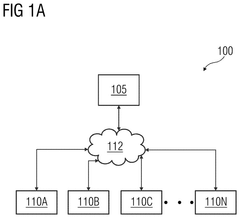
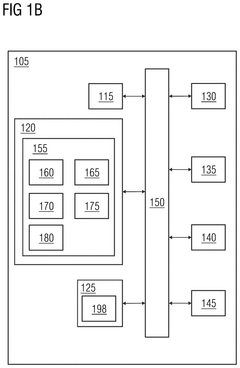
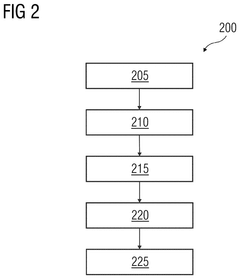
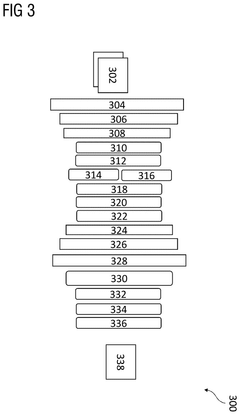
- A system and method that utilizes a deep learning model, specifically a U-Net variational autoencoder, to predict a suboptimal topology, which is then used to initialize an optimization solver for computing the optimal topology using methods like SIMP and BESO, thereby reducing computational resources and improving efficiency.
Structural topology optimization design method
PatentInactiveUS20160140269A1
Innovation
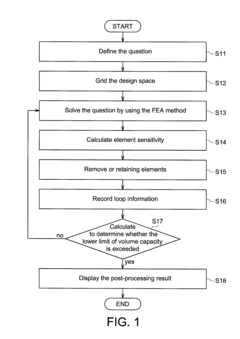
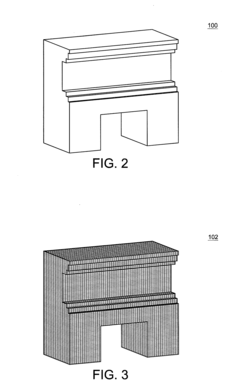
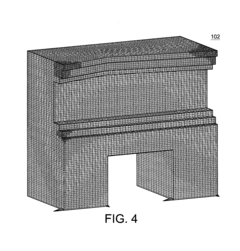
- A modified BESO method that omits the iteration process until the target volume capacity is reached, directly using structural profiles after each loop as optimization results, and utilizes a display interface to show the relationship between volume capacity and stiffness, allowing for easier determination of processing feasibility.

Materials Science Integration with Topology Optimization
The integration of materials science with topology optimization represents a critical frontier in advancing small-scale designs with high load capacity. Material selection and characterization serve as foundational elements in this integration, where the mechanical properties, density, and manufacturability of materials directly influence optimization outcomes. Recent developments have seen the incorporation of advanced materials such as high-strength alloys, composite materials, and metamaterials into topology optimization frameworks, enabling unprecedented performance in miniaturized components.
Multi-material topology optimization has emerged as a particularly promising approach, allowing designers to strategically distribute different materials throughout a structure to maximize strength while minimizing weight. This technique leverages the unique properties of each material, placing stronger materials in high-stress regions while utilizing lighter materials elsewhere. The computational algorithms supporting this approach have evolved significantly, now capable of handling complex material property distributions and manufacturing constraints simultaneously.
Material anisotropy consideration represents another significant advancement in this field. By accounting for directional properties of materials such as fiber-reinforced composites or additively manufactured structures with inherent anisotropy, topology optimization can align material strength with load paths. This alignment results in structures that efficiently utilize material properties to withstand specific loading conditions, particularly beneficial in applications where size constraints are paramount.
Microstructural optimization extends topology optimization to the material level, where the internal architecture of materials themselves becomes subject to design. This approach enables the creation of materials with tailored properties that complement the macroscopic structural optimization. Lattice structures, cellular materials, and functionally graded materials represent successful implementations of this concept, offering unprecedented strength-to-weight ratios in small-scale applications.
Manufacturing considerations have become increasingly integrated into materials-focused topology optimization. Additive manufacturing technologies, in particular, have expanded the design space by enabling the fabrication of complex geometries with tailored material compositions. However, this integration requires careful consideration of process-specific constraints such as minimum feature size, support structures, and thermal effects during fabrication.
The future trajectory of materials science integration with topology optimization points toward multi-physics approaches that simultaneously consider mechanical, thermal, and electrical properties. This holistic optimization strategy promises to deliver small-scale designs that excel not only in load-bearing capacity but also in other functional requirements. Additionally, machine learning techniques are beginning to accelerate material selection and property prediction, potentially revolutionizing the efficiency and effectiveness of topology optimization for high-performance, miniaturized components.
Multi-material topology optimization has emerged as a particularly promising approach, allowing designers to strategically distribute different materials throughout a structure to maximize strength while minimizing weight. This technique leverages the unique properties of each material, placing stronger materials in high-stress regions while utilizing lighter materials elsewhere. The computational algorithms supporting this approach have evolved significantly, now capable of handling complex material property distributions and manufacturing constraints simultaneously.
Material anisotropy consideration represents another significant advancement in this field. By accounting for directional properties of materials such as fiber-reinforced composites or additively manufactured structures with inherent anisotropy, topology optimization can align material strength with load paths. This alignment results in structures that efficiently utilize material properties to withstand specific loading conditions, particularly beneficial in applications where size constraints are paramount.
Microstructural optimization extends topology optimization to the material level, where the internal architecture of materials themselves becomes subject to design. This approach enables the creation of materials with tailored properties that complement the macroscopic structural optimization. Lattice structures, cellular materials, and functionally graded materials represent successful implementations of this concept, offering unprecedented strength-to-weight ratios in small-scale applications.
Manufacturing considerations have become increasingly integrated into materials-focused topology optimization. Additive manufacturing technologies, in particular, have expanded the design space by enabling the fabrication of complex geometries with tailored material compositions. However, this integration requires careful consideration of process-specific constraints such as minimum feature size, support structures, and thermal effects during fabrication.
The future trajectory of materials science integration with topology optimization points toward multi-physics approaches that simultaneously consider mechanical, thermal, and electrical properties. This holistic optimization strategy promises to deliver small-scale designs that excel not only in load-bearing capacity but also in other functional requirements. Additionally, machine learning techniques are beginning to accelerate material selection and property prediction, potentially revolutionizing the efficiency and effectiveness of topology optimization for high-performance, miniaturized components.
Manufacturing Constraints and Additive Manufacturing Considerations
Topology optimization implementation faces significant manufacturing constraints that must be addressed to ensure practical application in small-scale designs with high load capacity requirements. Traditional manufacturing methods often struggle with complex geometries generated by topology optimization algorithms, creating a gap between theoretical designs and manufacturable components.
Minimum feature size represents a critical constraint in topology optimization. Manufacturing processes have inherent limitations regarding the smallest features they can reliably produce. When optimizing for small-scale designs, algorithms must incorporate these limitations to prevent the generation of unrealistically thin members or detailed features that cannot be manufactured. This constraint directly impacts the achievable performance-to-weight ratio in high load capacity applications.
Surface finish requirements present another significant consideration. Topology-optimized structures often feature complex surfaces that may require post-processing to achieve desired tolerances and surface qualities. This is particularly relevant for components subject to fatigue loading, where surface irregularities can become stress concentration points and compromise the load-bearing capacity.
Additive manufacturing (AM) has emerged as a promising fabrication method for topology-optimized designs due to its ability to produce complex geometries. However, AM processes introduce their own set of constraints. Build orientation significantly affects mechanical properties, with components typically exhibiting anisotropic behavior. The orientation choice must balance optimal material distribution with the directional strength requirements of the high load application.
Support structure requirements in AM processes represent another critical consideration. Overhanging features require support structures during fabrication, which must later be removed. This necessity can limit design freedom and add post-processing steps. Advanced topology optimization algorithms now incorporate support-free design constraints to minimize these issues while maintaining load capacity.
Material-specific considerations vary across AM technologies. Powder-based methods may struggle with powder removal from internal channels, while resin-based systems have different resolution capabilities and mechanical properties. The selected AM process must align with the material requirements for the intended high load application.
Residual stresses induced during manufacturing processes can significantly impact the performance of topology-optimized components. These stresses may cause warping or dimensional inaccuracies that compromise the intended load paths. Simulation tools that account for these manufacturing-induced stresses are becoming essential in the optimization workflow to ensure the final component achieves its designed load capacity.
The integration of design for additive manufacturing (DfAM) principles with topology optimization represents the current best practice for achieving high load capacity in small-scale designs. This approach considers manufacturing constraints from the initial design stage rather than as post-optimization adjustments, resulting in solutions that are both high-performing and manufacturable.
Minimum feature size represents a critical constraint in topology optimization. Manufacturing processes have inherent limitations regarding the smallest features they can reliably produce. When optimizing for small-scale designs, algorithms must incorporate these limitations to prevent the generation of unrealistically thin members or detailed features that cannot be manufactured. This constraint directly impacts the achievable performance-to-weight ratio in high load capacity applications.
Surface finish requirements present another significant consideration. Topology-optimized structures often feature complex surfaces that may require post-processing to achieve desired tolerances and surface qualities. This is particularly relevant for components subject to fatigue loading, where surface irregularities can become stress concentration points and compromise the load-bearing capacity.
Additive manufacturing (AM) has emerged as a promising fabrication method for topology-optimized designs due to its ability to produce complex geometries. However, AM processes introduce their own set of constraints. Build orientation significantly affects mechanical properties, with components typically exhibiting anisotropic behavior. The orientation choice must balance optimal material distribution with the directional strength requirements of the high load application.
Support structure requirements in AM processes represent another critical consideration. Overhanging features require support structures during fabrication, which must later be removed. This necessity can limit design freedom and add post-processing steps. Advanced topology optimization algorithms now incorporate support-free design constraints to minimize these issues while maintaining load capacity.
Material-specific considerations vary across AM technologies. Powder-based methods may struggle with powder removal from internal channels, while resin-based systems have different resolution capabilities and mechanical properties. The selected AM process must align with the material requirements for the intended high load application.
Residual stresses induced during manufacturing processes can significantly impact the performance of topology-optimized components. These stresses may cause warping or dimensional inaccuracies that compromise the intended load paths. Simulation tools that account for these manufacturing-induced stresses are becoming essential in the optimization workflow to ensure the final component achieves its designed load capacity.
The integration of design for additive manufacturing (DfAM) principles with topology optimization represents the current best practice for achieving high load capacity in small-scale designs. This approach considers manufacturing constraints from the initial design stage rather than as post-optimization adjustments, resulting in solutions that are both high-performing and manufacturable.
Unlock deeper insights with PatSnap Eureka Quick Research — get a full tech report to explore trends and direct your research. Try now!
Generate Your Research Report Instantly with AI Agent
Supercharge your innovation with PatSnap Eureka AI Agent Platform!