
Strategy and charging control system and method
A strategy and access method technology, applied in the communication field, can solve problems affecting dynamic resource control and billing methods, and achieve the effect of small architecture changes
- Summary
- Abstract
- Description
- Claims
- Application Information
AI Technical Summary
Problems solved by technology
Method used
Image

Examples
Embodiment 1
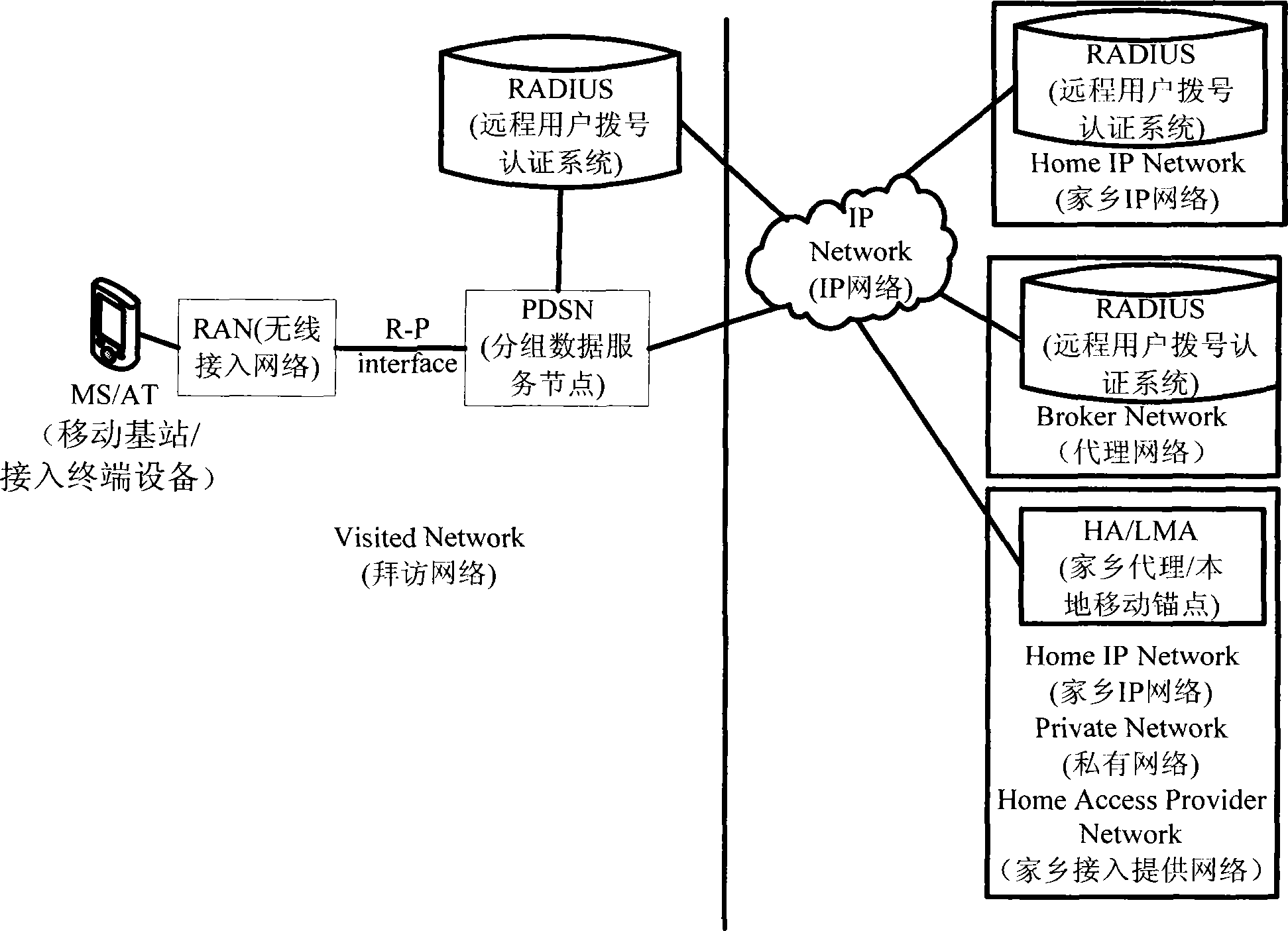
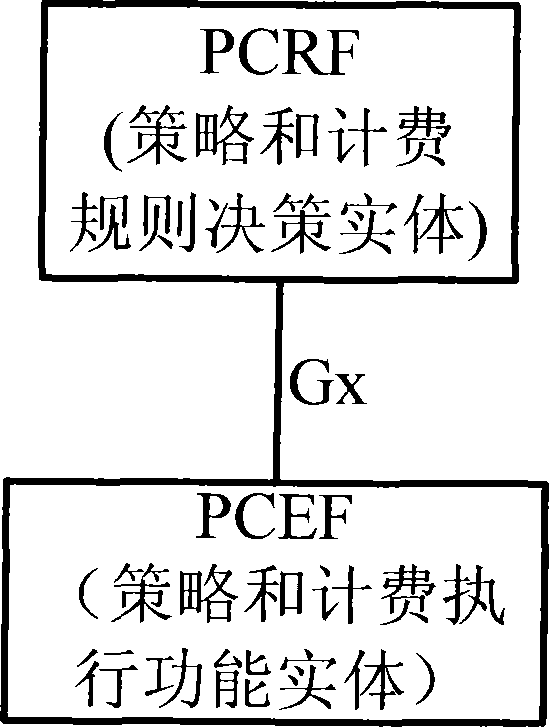
[0075] This example requires a reference architecture image 3 and process Figure 6 ; When the user starts up, the MS / AT initiates CMIPv4 access to the CDMA20001x or HRPD network, and the MS / AT initiates the access procedure to the CDMA2000 system by sending a mobile IP registration request to the PDSN. After PDSN receives the mobile IP registration request, PDSN, as PCEF-2, establishes IP-CAN session-2 with PCRF, and informs PCRF of the access mode of MS / AT (CMIPv4-support reverse tunnel); HA / LMA in After receiving the mobile IP registration request sent by PDSN, HA / LMA acts as PCEF-1 and establishes IP-CAN session-1 with PCRF, because when establishing two IP-CAN sessions, user identification, packet data network identification, The information such as the terminal IP address is the same, and the PCRF will associate the two IP-CAN sessions; and, PCEF-2 informs the PCRF that the current terminal access mode is: CMIPv4-supports reverse tunneling, so PCRF knows that at this t...
Embodiment 2
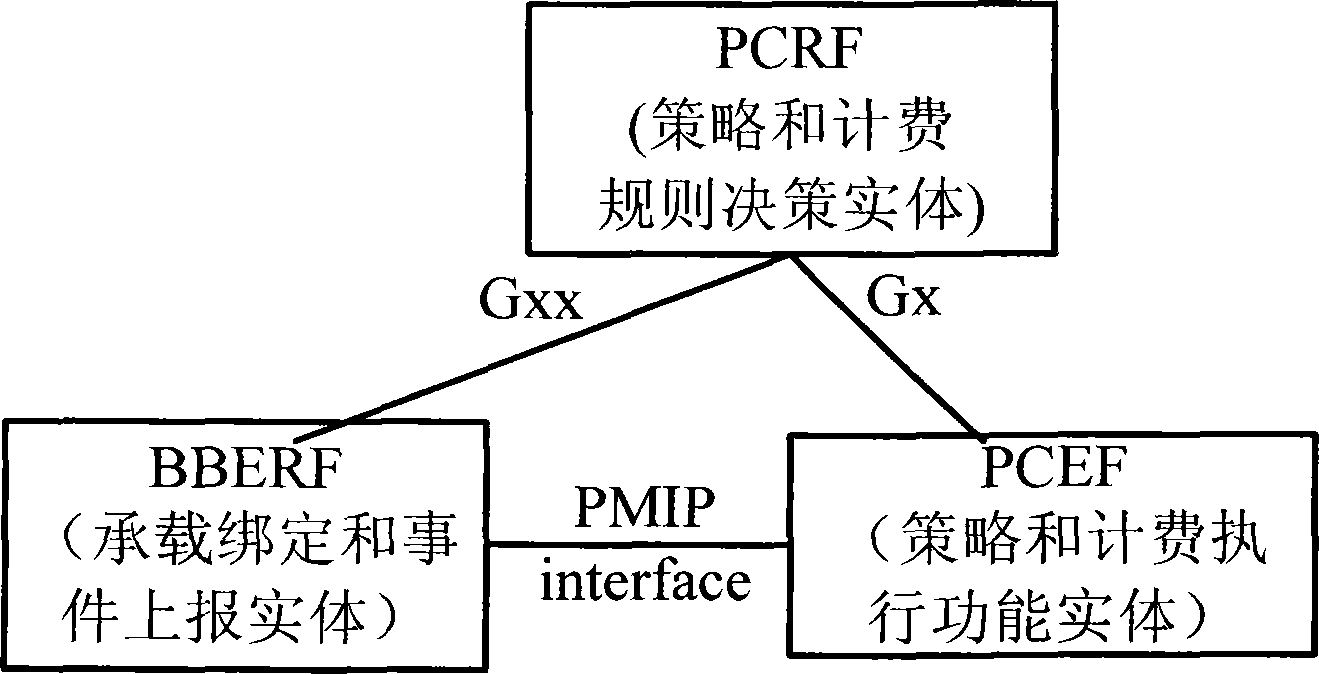
[0093] This example requires a reference architecture Figure 4 and process Figure 7 ; When the user starts up, the MS / AT initiates CMIPv4 access to the CDMA20001x or HRPD network, and the MS / AT initiates the access procedure to the CDMA2000 system by sending a mobile IP registration request to the PDSN. After PDSN receives the mobile IP registration request, PDSN, as PCEF-2, establishes IP-CAN session-2 with PCRF, and informs PCRF of the access mode of MS / AT (CMIPv4-does not support reverse tunnel); HA / LMA After receiving the mobile IP registration request sent by the PDSN, HA / LMA acts as PCEF-1 and establishes IP-CAN session-1 with PCRF, because when establishing two IP-CAN sessions, the user ID and packet data network ID and the terminal IP address and other information are the same, PCRF will associate the two IP-CAN sessions; and, PCEF-2 informs PCRF that the current terminal access method is: CMIPv4-does not support reverse tunneling, so PCRF knows this When charging,...
Embodiment 3
[0111] This example requires a reference architecture image 3 and process Figure 8 ; When the user starts up, the MS / AT initiates PMIPv4 access to the CDMA2000 1x or HRPD network, and the MS / AT initiates the access procedure to the CDMA2000 system by sending a PPP session to the PDSN. After the PDSN receives the IP control protocol negotiation request of the PPP session, the PDSN, as PCEF-2, establishes an IP-CAN session-2 with the PCRF, and informs the PCRF of the access mode (PMIPv4) of the MS / AT; After receiving the proxy mobile IP registration request sent by PDSN, HA / LMA acts as PCEF-1 and establishes IP-CAN session-1 with PCRF, because when two IP-CAN sessions are established, user identification and other information (APN, etc.) It is the same, PCRF will associate the two IP-CAN sessions; and, PCEF-2 informs PCRF that the current terminal access mode is: PMIPv4, so PCRF knows that the functional network element for charging at this time is HA / LMA, When PCRF delivers...
PUM
 Login to View More
 Abstract
Description
Claims
Application Information
 Login to View More