A Method for Extracting Hypernymy Relationship of Domain Concepts Based on Similar Concept Pairs

A relational extraction and conceptual technology, applied in special data processing applications, instruments, electrical digital data processing, etc., can solve problems such as time-consuming and labor-intensive, difficult to find templates, and decreased accuracy, and achieve the effect of improving accuracy

CN105808525BInactive Publication Date: 2018-06-29NAT COMP NETWORK & INFORMATION SECURITY MANAGEMENT CENT
3 Cites 0 Cited by

Patent Information

Authority / Receiving Office
CN · China
Patent Type
Patents(China)
Current Assignee / Owner
Publication Date
2018-06-29
Estimated Expiration
Not applicable · inactive patent

Smart Images

  • Figure 1
    Figure 1
  • Figure 2
    Figure 2
  • Figure 3
    Figure 3
Patent Text Reader

Abstract

The invention provides a domain concept hypernym-hyponym relation extraction method based on similar concept pairs. The method comprises the following steps that 1, a domain concept set is composed of multiple domain concepts, and similar domain concepts are extracted from the domain concept set on the basis of a concept clustering method; 2, candidate concept pairs possibly with a hypernym-hyponym relation are obtained, and similar candidate concept pairs are generated according to the similar concepts obtained in the first step; 3, part of training data is obtained by means of a knowledge base, relation characteristics are represented through the similar candidate concept pairs jointly, relation extraction based on multi-sentence characteristics is achieved, and therefore the domain concept hypernym-hyponym relation is extracted. The domain concept hypernym-hyponym relation extraction method based on the similar concept pairs has the advantages that limitation of the corpus scale can be broken through, and the accuracy rate of domain concept hypernym-hyponym relation extraction can be increased by means of the domain concept hypernym-hyponym relation extracted through the multi-sentence characteristics.
Need to check novelty before this filing date? Find Prior Art

Description

technical field

[0001] The invention belongs to the technical field of extracting the hyponym relations of domain concepts, and in particular relates to a method for extracting the hyponym relations of domain concepts based on similar concept pairs. Background technique

[0002] The semantic understanding of domain concepts and domain concept relationships is a comprehensive application of natural language processing related technologies, and it is also a difficult problem in this field. Domain concept relations mainly include hyponymy relations, synonymous relations, whole-part relations and so on. Among them, the hyponym relationship is a basic semantic relationship, which is the basis for constructing hierarchical ontology. The hyponym relationship refers to the relationship between the hypernym and the hyponym, where the hypernym is a subject term with a wider conceptual extension, and the hyponym is a subject term with a narrower conceptual connotation. For example, f...

Examples

Embodiment Construction

[0040] In order to make the technical problems, technical solutions and beneficial effects solved by the present invention clearer, the present invention will be further described in detail below in conjunction with the accompanying drawings and embodiments. It should be understood that the specific embodiments described here are only used to explain the present invention, not to limit the present invention.

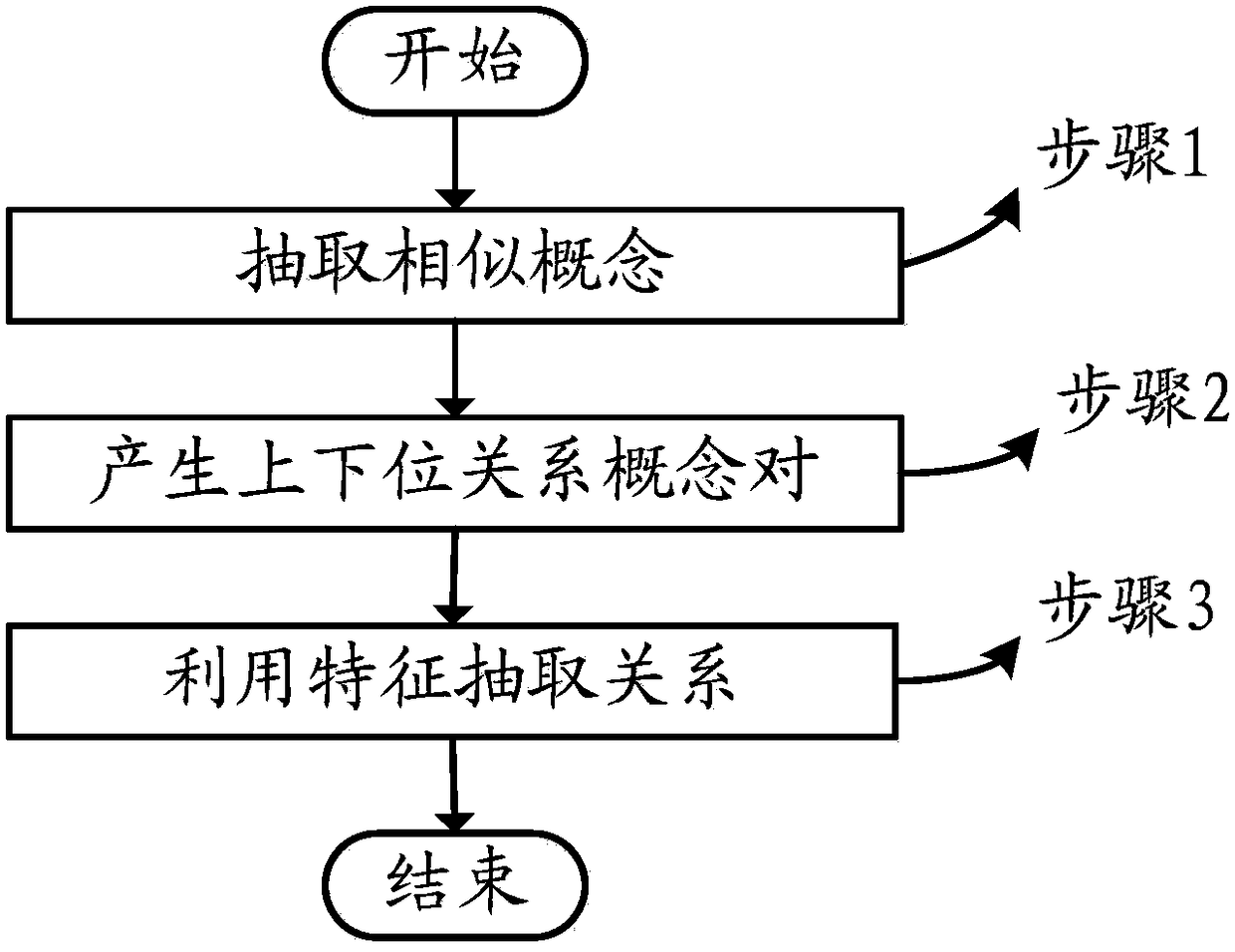
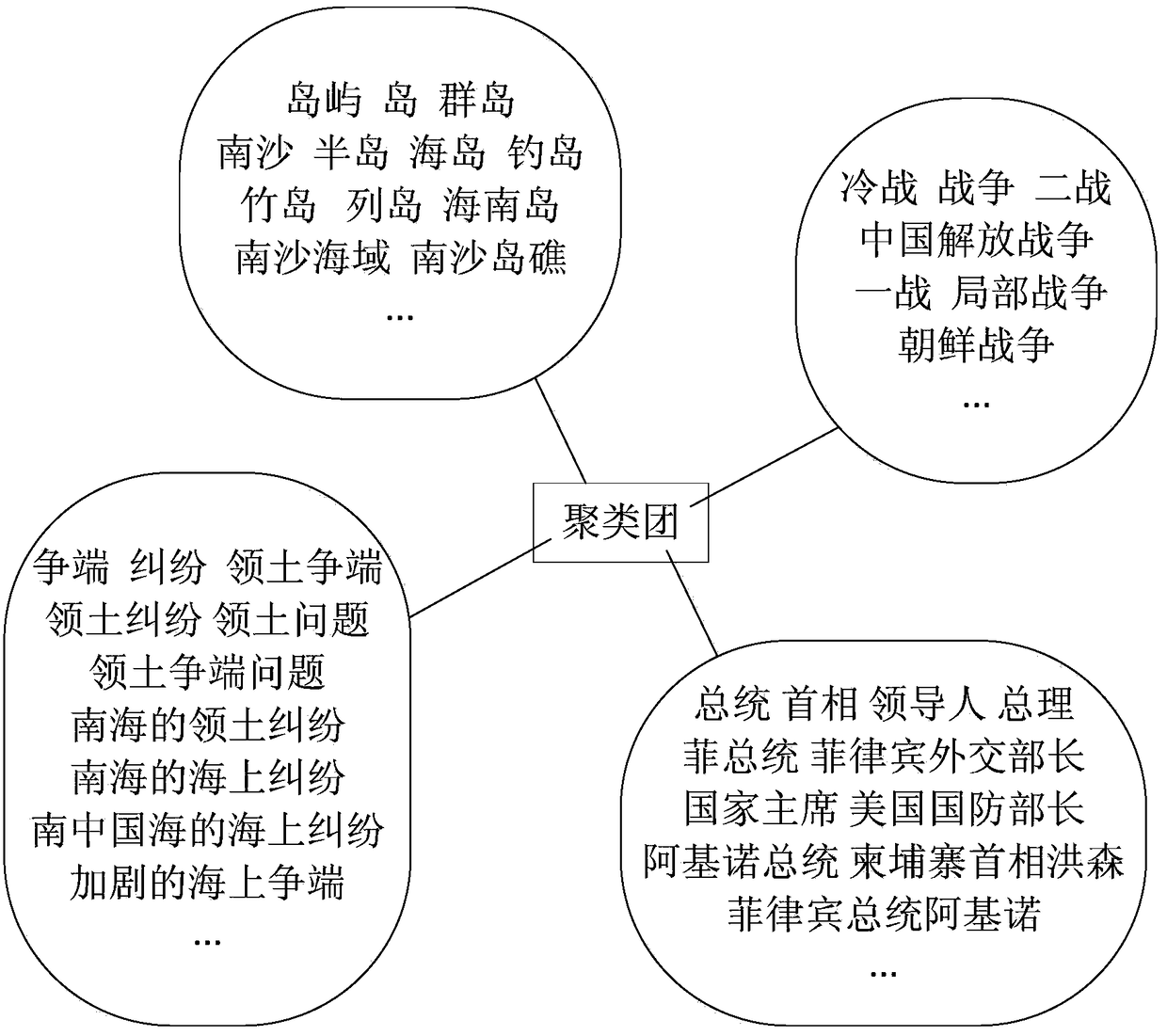
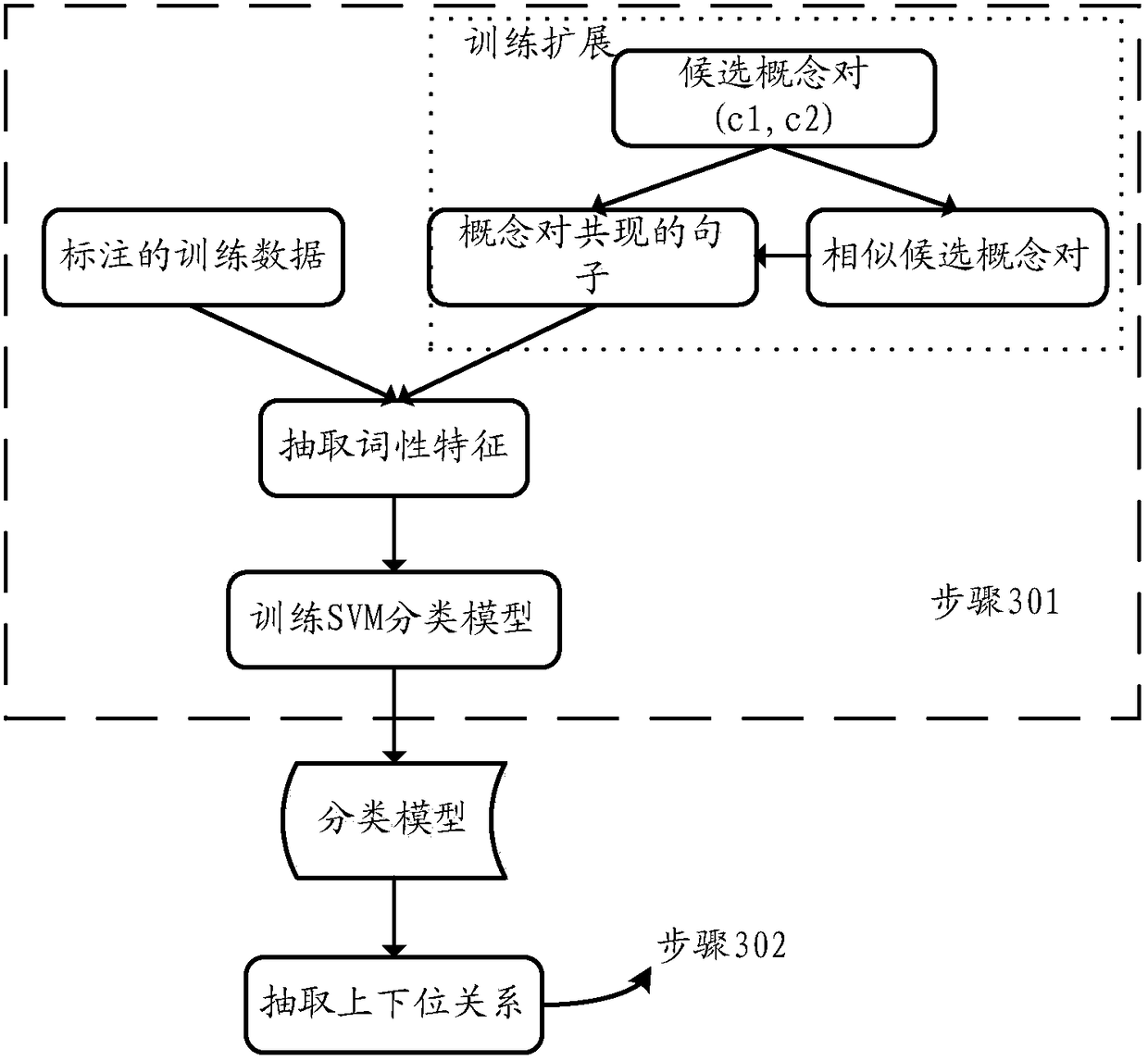
[0041] The invention proposes a method for extracting the hyponym relationship of domain concepts based on similar concept pairs. The invention mainly aims at the problem that the characteristics of training data are not obvious, and extracts the hyponym relationship of domain concepts based on multi-sentence features. The main idea of ​​this method is: it is considered that a set of sentences composed of concept pairs with similar meanings can express the same relationship feature, firstly extract similar concept pairs, and then integrate multi-sentence features on this ...