
Injury reduction insole
- Summary
- Abstract
- Description
- Claims
- Application Information
AI Technical Summary
Benefits of technology
Problems solved by technology
Method used
Image

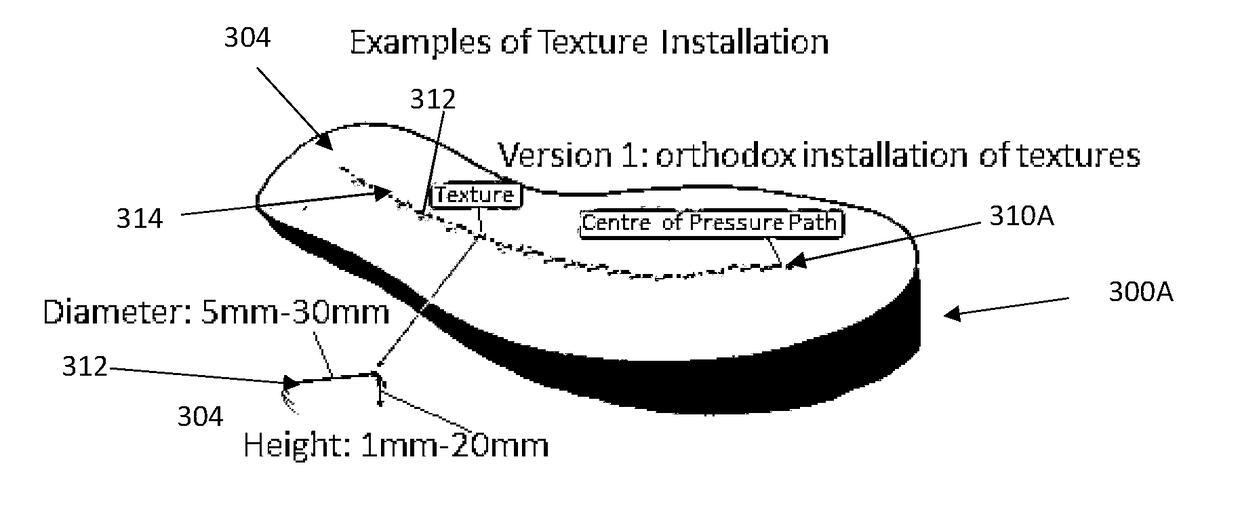
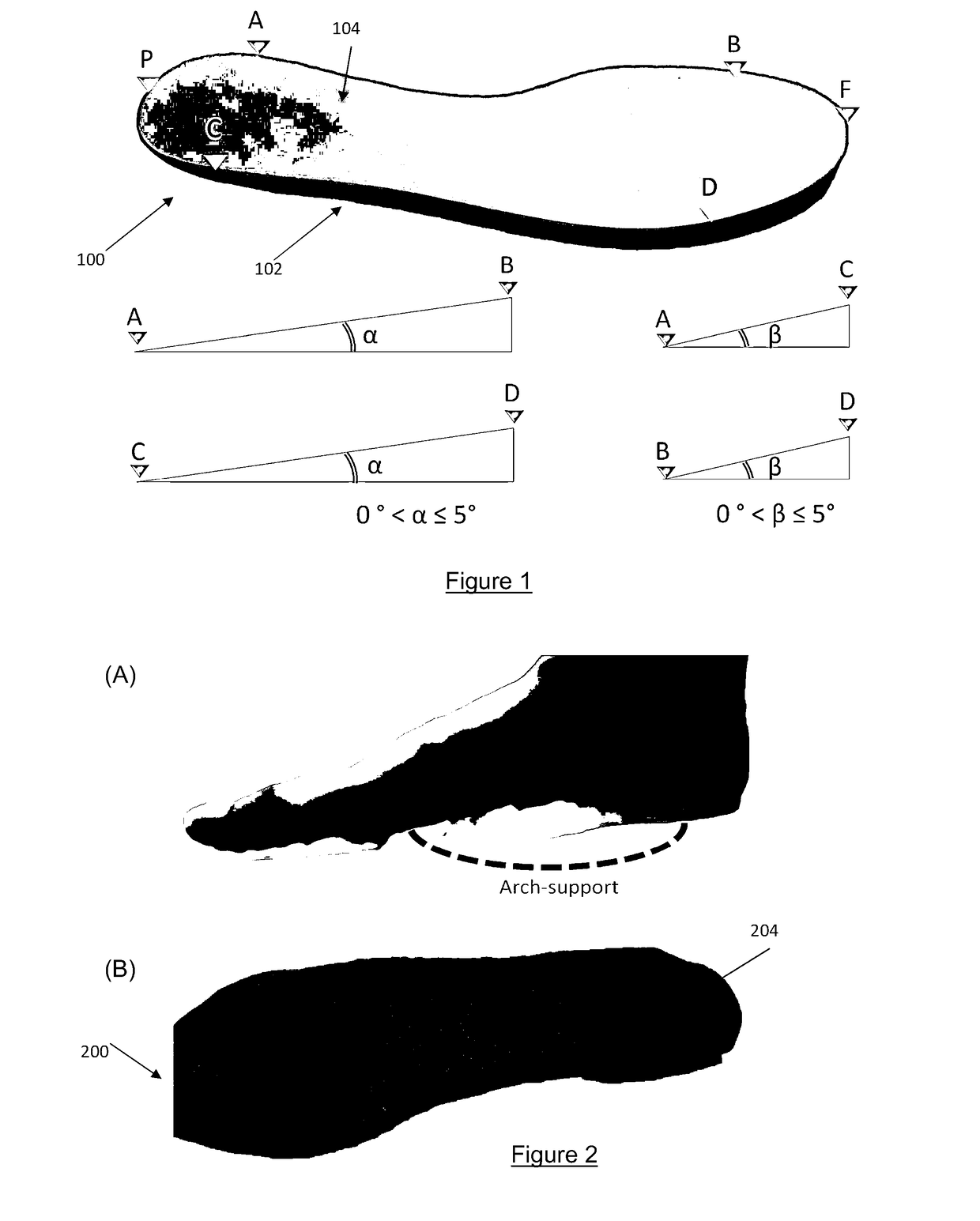
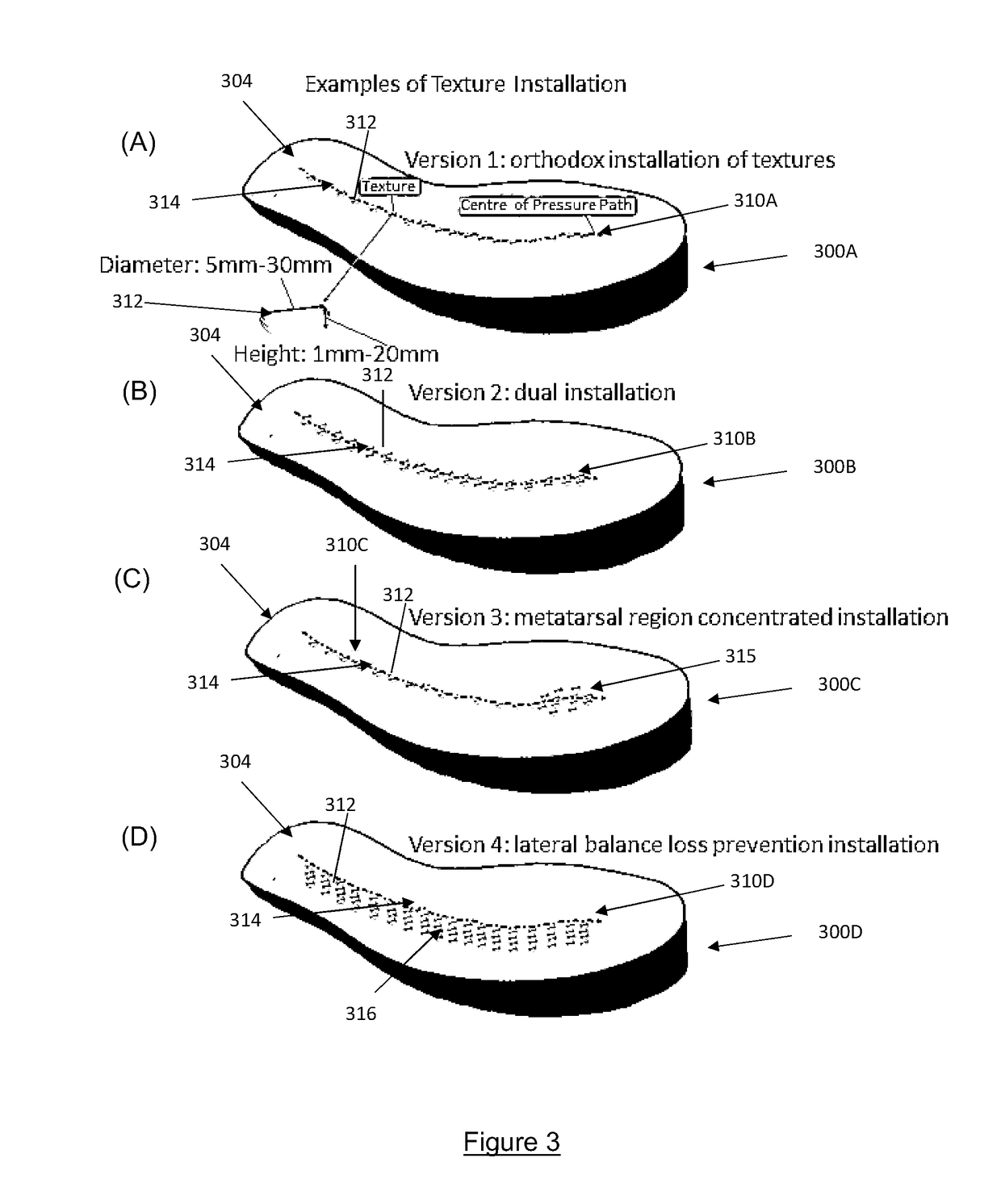
Examples
examples
[0122]A combination of dorsiflexion and eversion has been applied to an experimental / test insole 500 (FIG. 7) to examine effects of combined joint motions on minimising tripping and lateral balance loss risks and enhanced stance foot loading and reduced impact transferred to the knees. The insole effects were also examined to confirm these ankle joint modifications would not cause fundamental changes to the gait patterns.
[0123]The experimental footwear-insole 500 is illustrated in FIG. 7. The experimental / tested footwear-insoles 500 were designed to support 2.2° dorsiflexion and 4.5° eversion at the static standing position provided by an incline between a planar base 502 and planar top surface 504 of the insole 500.
[0124]The exact dimensions of each experimental insole 500 varied in accordance with the size of the test subject's feet. The insole 500 was sized to fit the general shoe size of each test subject's feet. In an example of the 26 cm footwear-insole (FIG. 7), relative to t...
PUM
| Property | Measurement | Unit |
|---|---|---|
| Length | aaaaa | aaaaa |
| Angle | aaaaa | aaaaa |
| Angle | aaaaa | aaaaa |
Abstract
Description
Claims
Application Information
 Login to View More