
Toilet training article containing a foaming agent
a training article and foaming technology, applied in the field of absorbent articles, can solve the problems of reducing affecting the ability of children to recognize when urination occurs, and exposing children to an increased risk of skin irritation and rashes
- Summary
- Abstract
- Description
- Claims
- Application Information
AI Technical Summary
Problems solved by technology
Method used
Image

Examples
Embodiment Construction
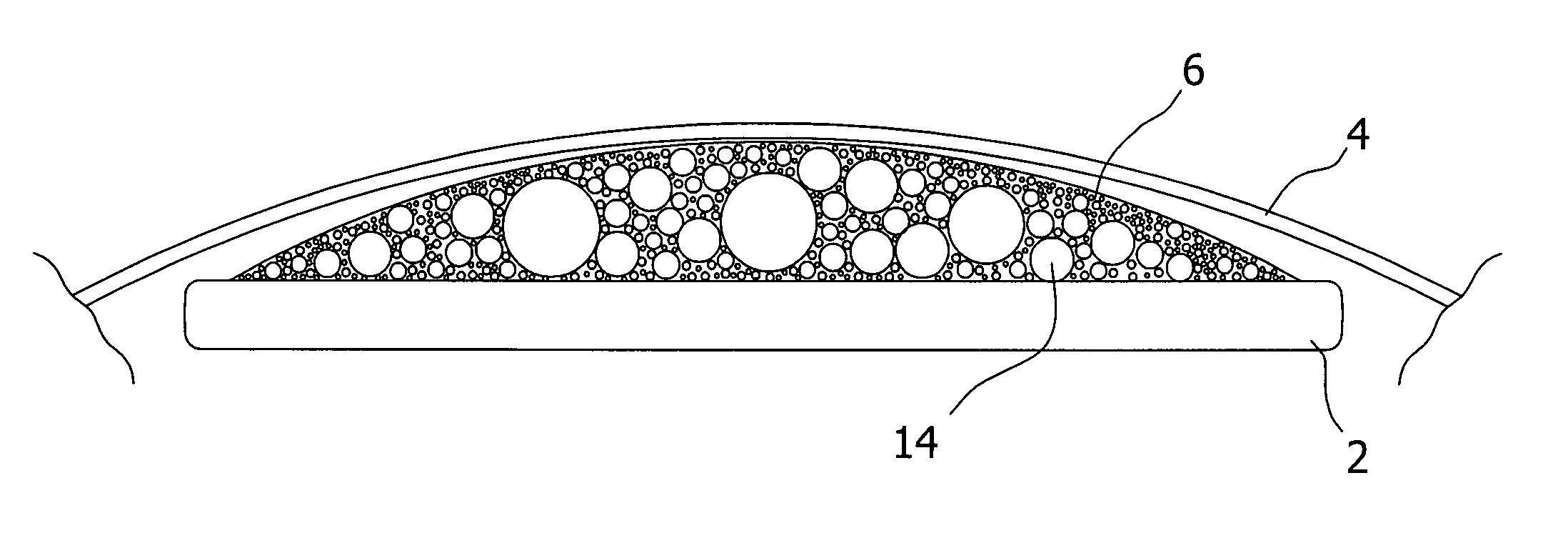
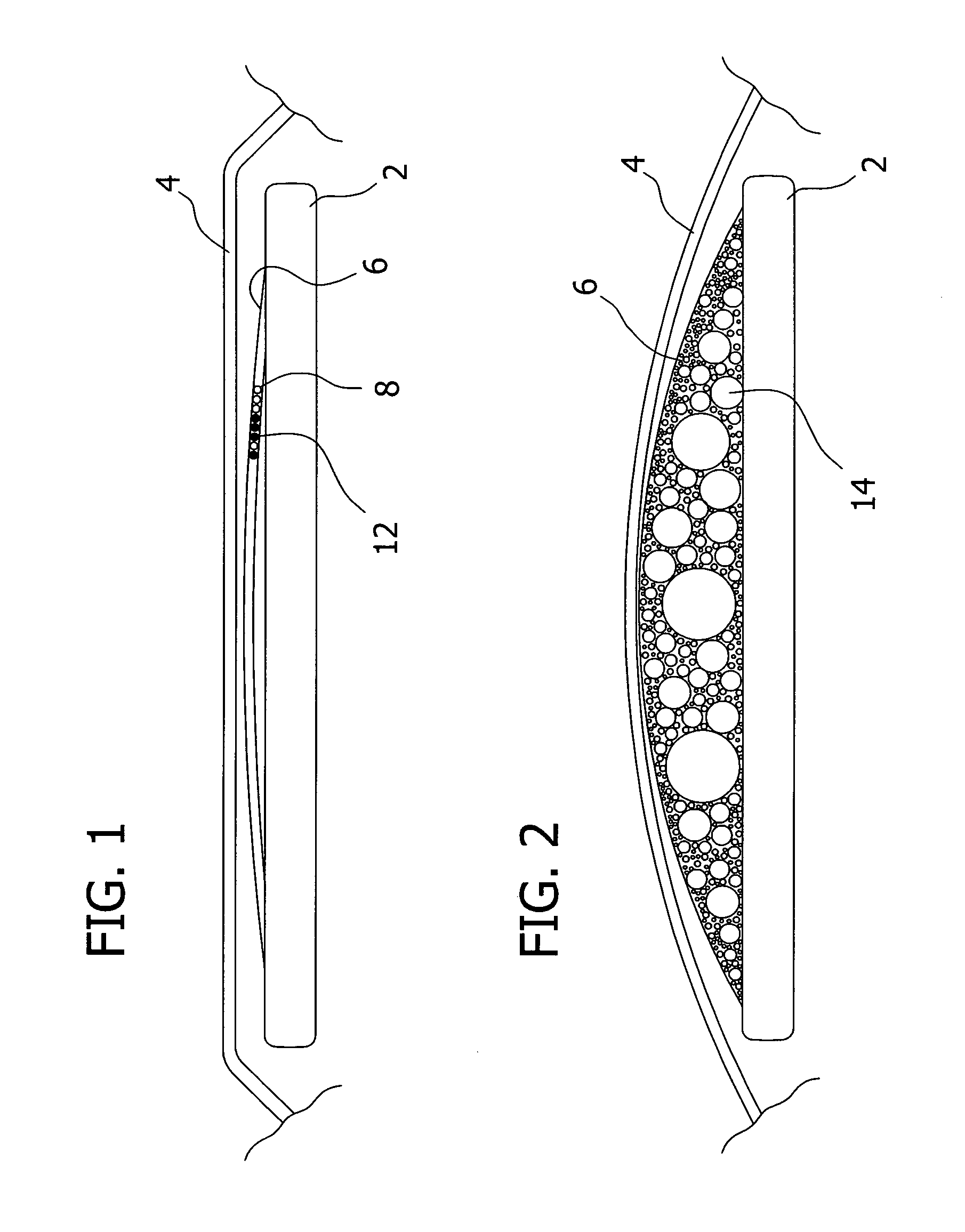
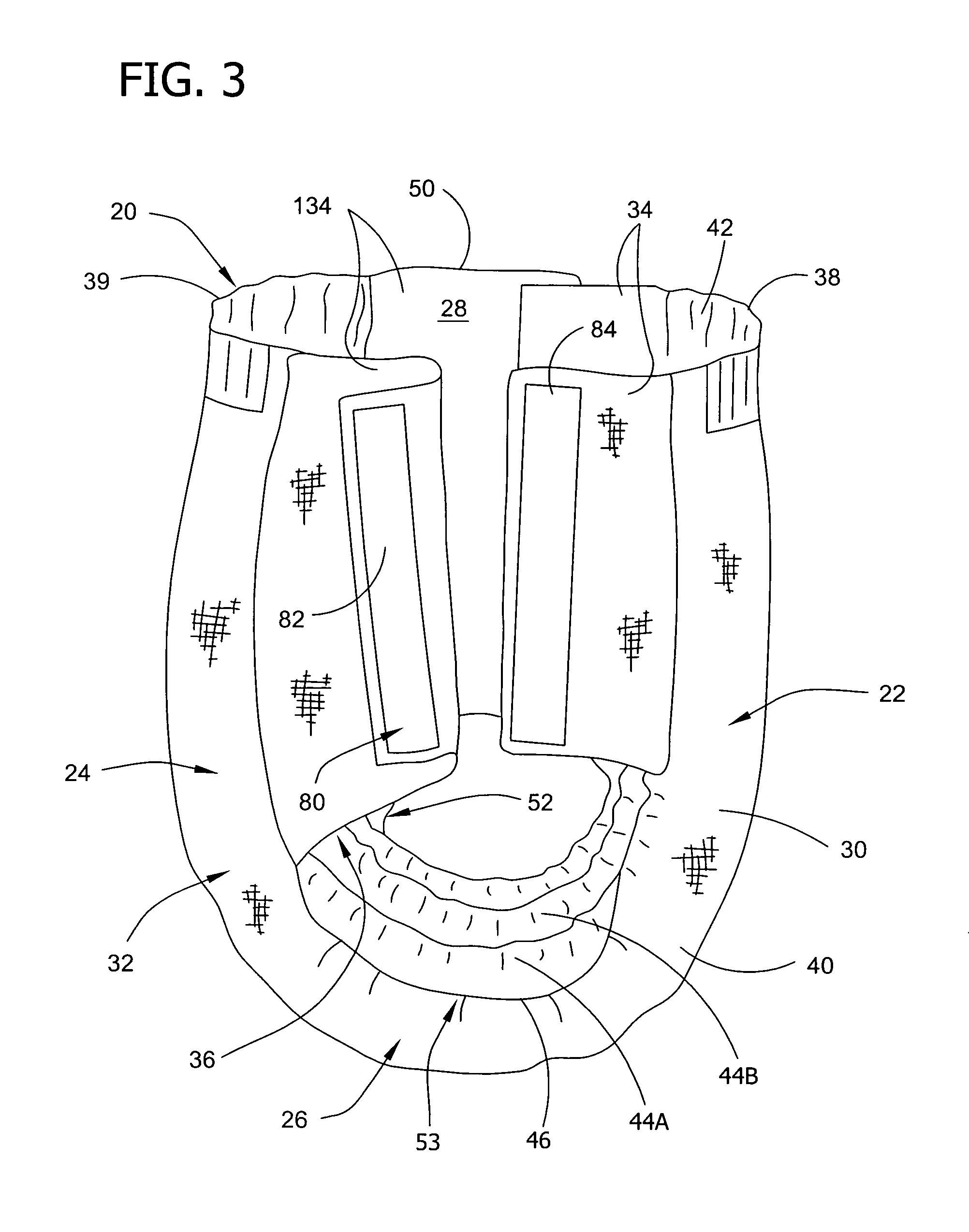
[0015]The present invention is generally directed to absorbent products for assisting children in toilet training. The absorbent products, such as toilet training pants, generally comprise a bodyside liner, an absorbent core, and a urine-permeable inflatable envelope positioned between the bodyside liner and the absorbent core. The inflatable envelope comprises a surfactant and a system that, upon wetting with urine, produces a gas, such as carbon dioxide. The gas produced upon the wetting with urine interacts with the surfactant to produce a foam that inflates the envelope. The inflated envelope pushes against the bodyside liner and causes the bodyside liner to press against the skin of the wearer to alert the wearer that urination has occurred. Optionally, the inflatable envelope may comprise a temperature change agent that makes the bodyside liner feel cool against the skin of the wearer. Desirably, the foam may be produced over an extended period of time such that if the bubbles...
PUM
| Property | Measurement | Unit |
|---|---|---|
| density | aaaaa | aaaaa |
| diameter | aaaaa | aaaaa |
| skin temperature | aaaaa | aaaaa |
Abstract
Description
Claims
Application Information
 Login to View More