

The preparation method of felodipine
A technology of felodipine and felodipine, which is applied in the field of medicine, can solve the problems of cumbersome synthetic routes, high operation requirements, and low total yield, and achieve the goals of short and effective preparation route steps, high toxicity residues, and increased drug content Effect
Patent Information
- Authority / Receiving Office
- CN · China
- Patent Type
- Applications(China)
- Current Assignee / Owner
- Publication Date
- 2011-12-21
- Estimated Expiration
- Not applicable · inactive patent
Smart Images
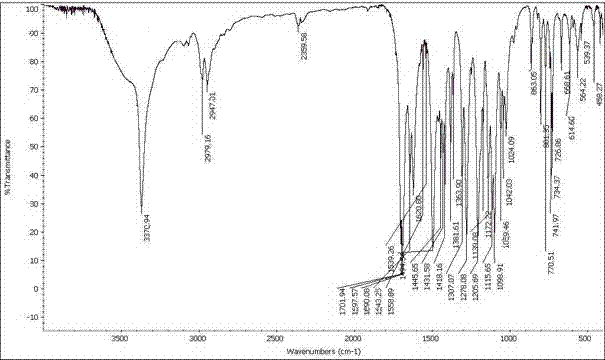
Figure 1 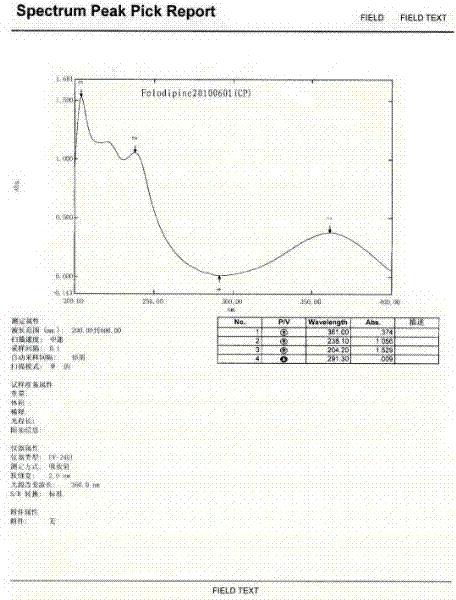
Figure 2 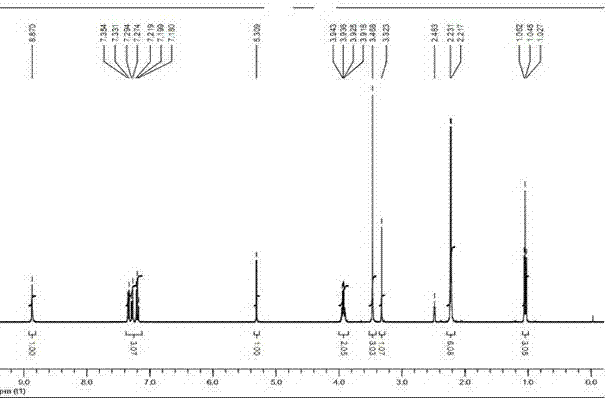
Figure 3
Abstract
Description
Technical field:
[0001] The invention belongs to the technical field of medicine, and specifically relates to a preparation method of felodipine. Background technique:
[0002] Felodipine, chemical name: 2,6-dimethyl-4-(2,3-dichlorophenyl)-1,4-dihydro-3,5-pyridinedicarboxylate methyl ethyl ester, CAS: [72509 -76-3], the chemical structure is as follows:
[0003]
[0004] Felodipine is a representative drug among 1,4-dihydropyridine antihypertensive drugs. Among all types of antihypertensive drugs, dihydropyridine calcium antagonists have the most significant efficacy. As an important representative of dihydropyridine antihypertensive drugs, felodipine not only has obvious antihypertensive effect, but also has few adverse reactions. It is an ideal antihypertensive drug.
[0005] There are currently four preparation methods of felodipine in domestic and foreign literature reports.
[0006] 1: World Pharmacy, 1996, 17(6) reported the use of 2,3-dichlorobenzaldehyde and ethyl acetoacet...
Examples
Embodiment 1
[0058] Example 1: Preparation of 2,3-dichlorobenzylidene acetoacetate methyl ester.
[0059] Add 108ml of methyl tert-butyl ether to a 500ml reaction flask, add 20g (0.11mol) 2,3-dichlorobenzaldehyde (general formula II), 0.65g piperidine, 0.5g glacial acetic acid, 20g under stirring at room temperature (0.17mol) Methyl acetoacetate (Formula III). Increase the temperature and heat to 60-62°C to reflux, and start water separation. After 10 hours of timing reaction from the reflux, the heating was stopped and the temperature was cooled to room temperature. Wash with water to pH 7, after drying with anhydrous sodium sulfate, distill the filtrate under reduced pressure to remove methyl tert-butyl ether (recovered). After the residue is cooled to room temperature, add 25ml of isopropanol and stir. Stir in an ice-water bath at 0°C. . After filtering, the filter cake was rinsed with a small amount of isopropanol and dried in vacuum to obtain 27.2 g (0.10 mol) of benzalide (general fo...
Embodiment 2
[0060] Example 2: Preparation of 2,3-dichlorobenzylidene acetoacetate methyl ester.
[0061] Add 108ml methyl tert-butyl ether into a 500ml reaction flask, and add 25g (0.14mol) 2,3-dichlorobenzaldehyde (general formula II), 0.65g piperidine, 0.5g glacial acetic acid, 20g under stirring at room temperature. (0.17mol) Methyl acetoacetate (Formula III). Increase the temperature and heat to 60-62°C to reflux, and start water separation. After 10 hours of timing reaction from the reflux, the heating was stopped and the temperature was cooled to room temperature. Wash with water to pH 6, dry the filtrate under reduced pressure to distill methyl tert-butyl ether (recovered) after drying with anhydrous calcium chloride, add 32ml of isopropanol to the residue after cooling to room temperature and stir well in an ice-water bath at 5°C Precipitation. After filtering, the filter cake was rinsed with a small amount of isopropanol and dried in vacuum to obtain 33.2 g (0.12 mol) of benzalid...
Embodiment 3
[0062] Example 3: Preparation of 2,3-dichlorobenzylidene acetoacetate methyl ester.
[0063] Add 117ml methylcyclohexane to a 500ml reaction flask, add 20g (0.11mol) 2,3-dichlorobenzaldehyde (general formula II), 0.65g piperidine, 0.5g glacial acetic acid, 25g ( 0.22mol) Methyl acetoacetate (general formula III). Raise the temperature and heat to 105~107℃ to reflux and start to separate water. The reaction time was 15 hours from the reflux, the heating was stopped, and the temperature was cooled to room temperature. Wash with water to pH 6, dry the filtrate under reduced pressure to remove methylcyclohexane (recovered). After the residue is cooled to room temperature, add 25ml of isopropanol and stir. Stir in an ice-water bath at 2°C for analysis. After filtering, the filter cake was rinsed with a small amount of isopropanol and dried under vacuum to obtain 25.4 g (0.09 mol) of benzalide (general formula IV) as a pale yellow solid substance with a yield of 84.6%.