
Multi-microcontroller radio frequency identification read-write device and data transmission method thereof
A microcontroller and radio frequency identification technology, applied in the field of radio frequency identification, can solve the problems of restricting the reading efficiency of the reading and writing device, the limitation of the number of related communication interfaces, and the difficulty of securing data packets, etc., so as to reduce redundancy and data Dealing with stress and addressing the effects of data redundancy
Patent Information
- Authority / Receiving Office
- CN · China
- Patent Type
- Patents(China)
- Current Assignee / Owner
- Publication Date
- 2015-03-11
- Estimated Expiration
- Not applicable · inactive patent
Smart Images
Figure 1 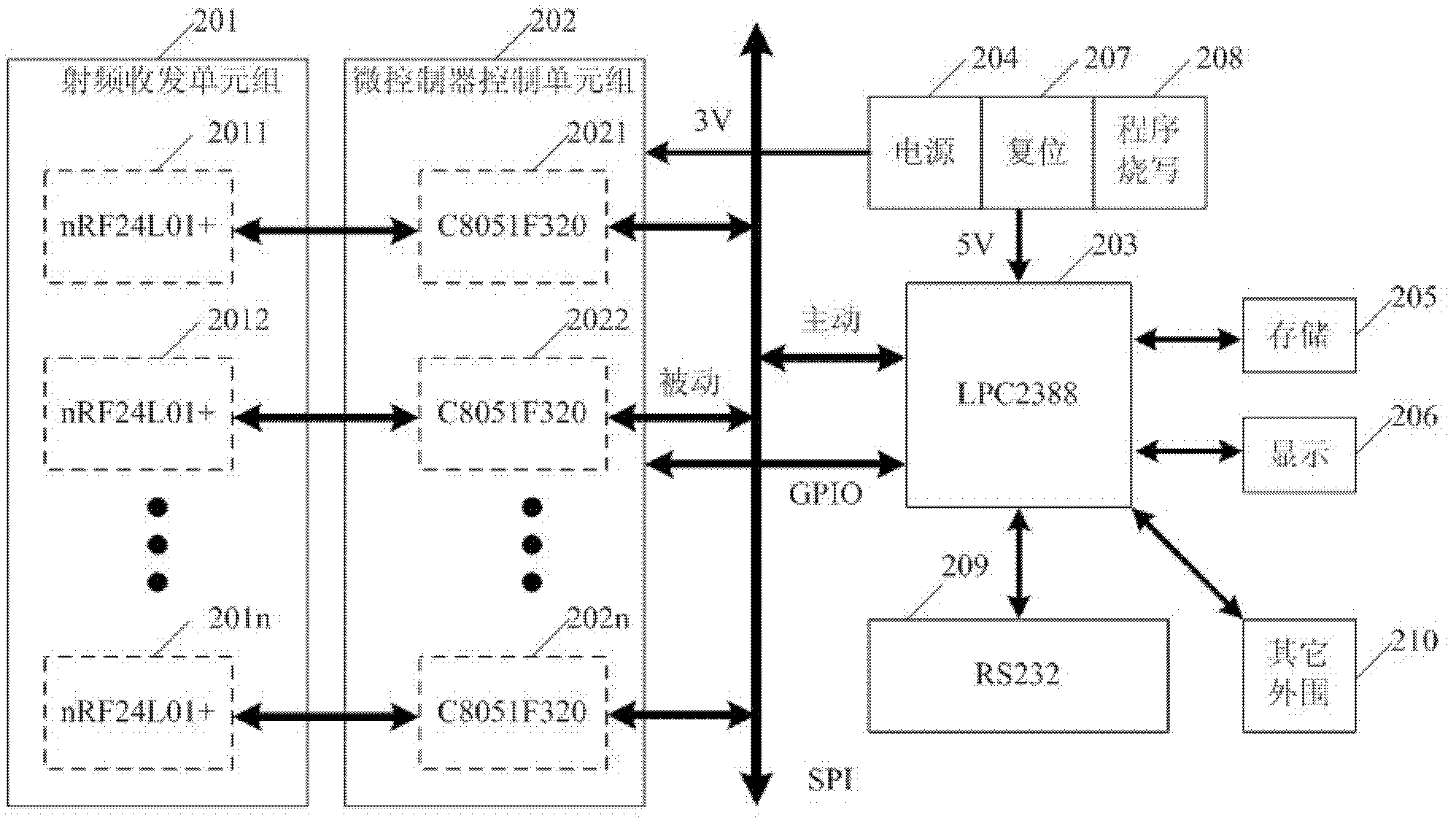
Figure 2 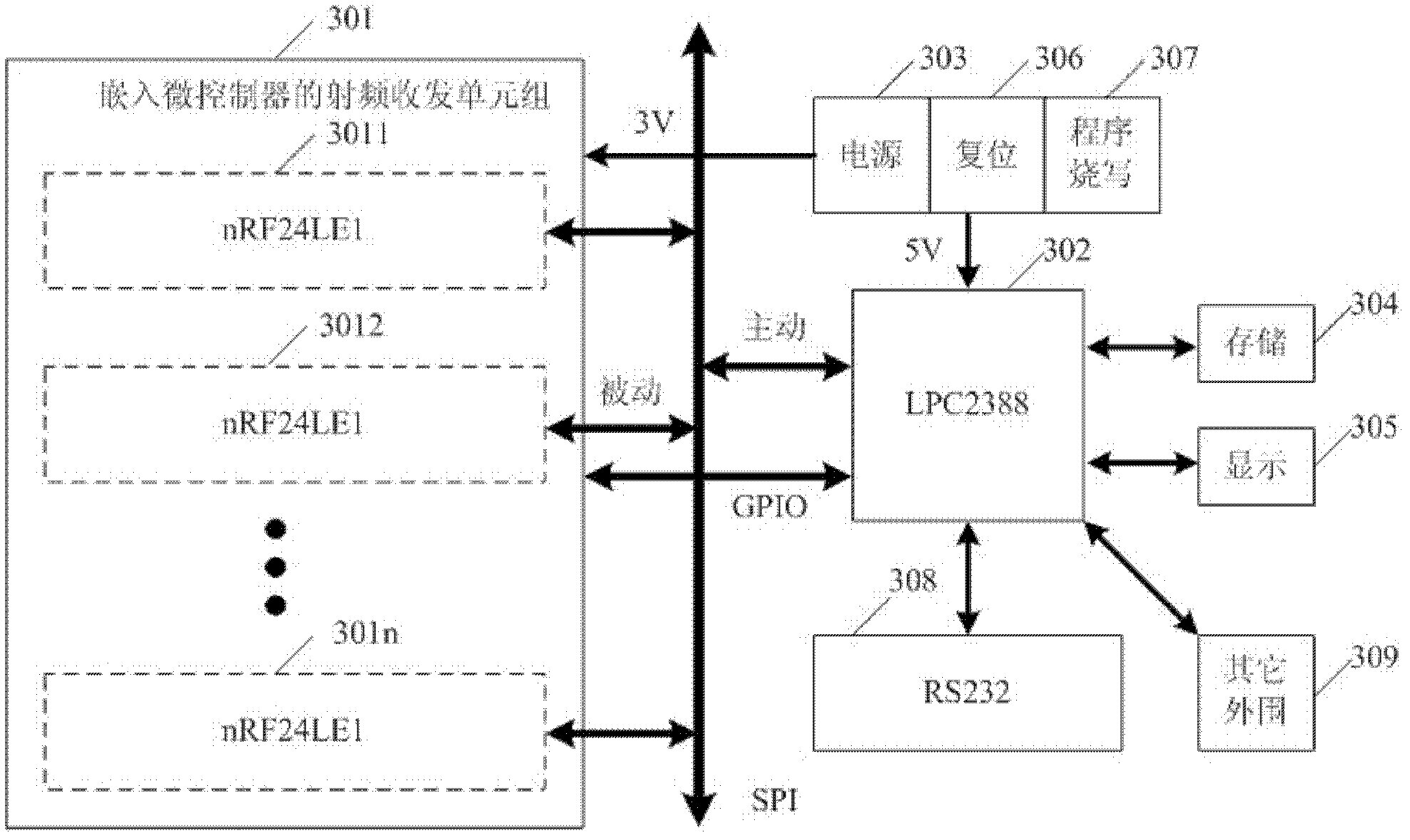
Figure 3
Abstract
Description
technical field
[0001] The invention belongs to radio frequency identification (RFID, Radio Frequency IDentification) technology, and specifically relates to a multi-microcontroller radio frequency identification reading and writing device and a data transmission method including RFID reader technology. Background technique
[0002] RFID technology is a non-contact automatic identification technology. It uses radio frequency electronic equipment to emit radio frequency signals, and through the spatial coupling of radio frequency signals to automatically identify target objects and obtain relevant data, and at the same time, new information can be written into the target object. Identify the device. The RFID system is mainly composed of readers, electronic tags, external terminals, etc., and is generally divided into active systems and passive systems. For example, in an active system, the main function of the reader is to receive the radio frequency signal transmitted by th...
Examples
Embodiment 1
[0034] like figure 2 As shown, the radio frequency transceiver unit group 201 selects the radio frequency transceiver chip nRF24L01+ whose central working frequency band is 2.45 GHz, the microcontroller control unit group selects the C8051F320 micro-control chip, the main microcontroller control unit 203 selects the LPC2388ARM microcontroller chip, and the main microprocessor The controller LPC2388 and several C8051F320 controlling the radio frequency transceiver unit carry out data transmission through the SPI bus, and connect the necessary control pins. The host computer interface 209 uses a standard RS232 serial port, and the regulated power supply module 204 provides stable 5V and 3V for the entire circuit. power supply.
Embodiment 2
[0036] like image 3 As shown, the radio frequency transceiver unit group and the microcontroller control unit group are integrated and merged into a radio frequency transceiver unit group 301 embedded in a microcontroller, and the radio frequency transceiver chip nRF24LE1 integrated with a microcontroller with a central working frequency band of 2.45 GHz is selected, and the main microcontroller The control unit 302 selects the LPC2388ARM microcontroller chip, the main microprocessor LPC2388 and several nRF24LE1 chips with microcontroller control function perform data transmission through the SPI bus, and connect the necessary control pins, the host computer interface 308 selects the standard RS232 The serial port and the stabilized power supply module 303 provide stable 5V and 3V power supplies for the entire circuit.
Embodiment 3
[0038] like Figure 4 , taking Embodiment 2 as an example to illustrate the data transmission method of the invention. nRF24LE1.k represents the kth radio frequency transceiver unit in the radio frequency transceiver unit group embedded in the microcontroller, REQ.k represents the data transmission request identification of the radio frequency transceiver unit, CS.k represents the SPI bus chip select of the radio frequency transceiver unit, PRI.k represents the data transmission priority identifier of the radio frequency transceiver unit.
[0039] Relevant microcontrollers are initialized first, in which the data transmission request identification and data transmission priority are both 0, and the SPI bus chip selection is 1 (invalid). When the microcontroller that controls the radio frequency transceiver unit receives valid data, if it is judged to be repeated tag data, it will receive the next data packet after returning, and if it is judged to be non-repetitive tag data, ...