
Wind driven permanent magnetic ore dressing method
A mineral processing method and permanent magnet technology, applied in chemical instruments and methods, magnetic separation, solid separation, etc., can solve problems such as potential safety hazards, prone to landslides, serious water and power consumption, etc., to prevent landslides and solve environmental pollution problems , the effect of saving water resources
Patent Information
- Authority / Receiving Office
- CN · China
- Current Assignee / Owner
- Publication Date
- 2012-06-27
- Estimated Expiration
- Not applicable · inactive patent
Smart Images
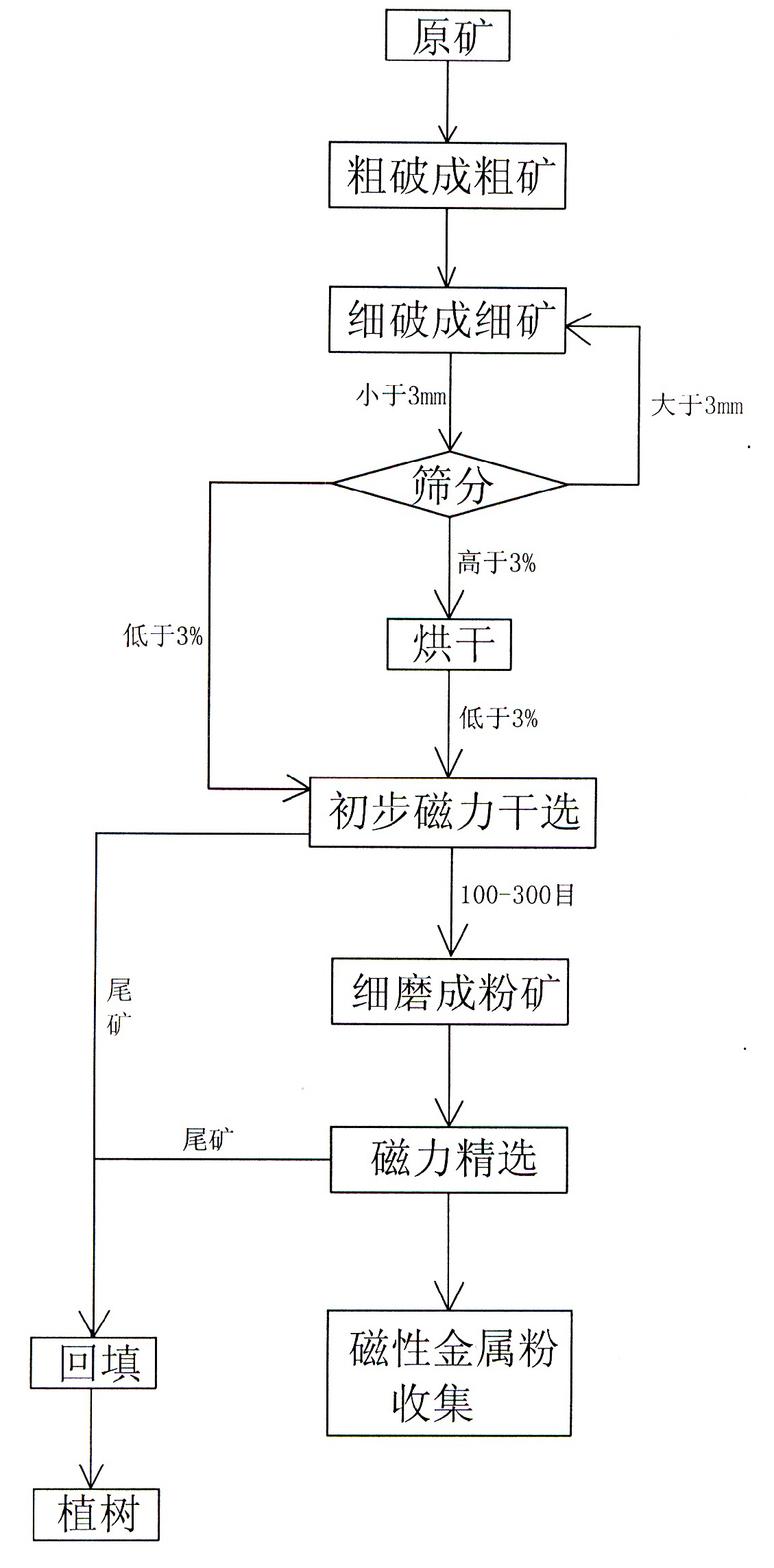
Figure 1 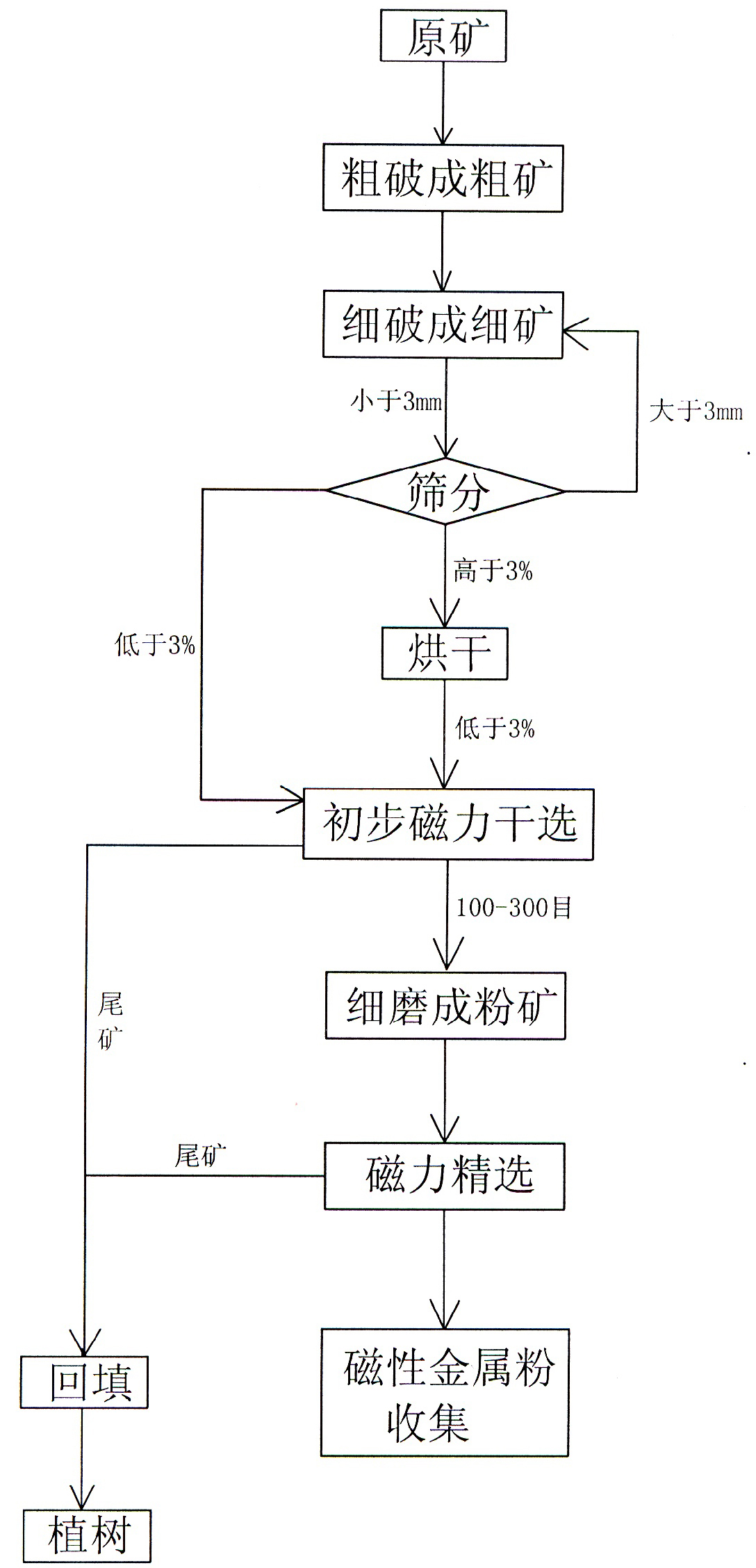
Figure 2
Abstract
Description
technical field
[0001] The invention relates to the field of ore dressing, in particular to a wind-force permanent magnet dry-type ore dressing method. Background technique
[0002] Most of the current mines use wet beneficiation. The process of beneficiation consumes a lot of water and electricity, and the recovery rate is up to about 85%. The efficiency is very low. The tailings formed after magnetic separation are slurry with high water content. , the treatment method is to build a tailings pond with a height of tens of meters to hundreds of meters for storage according to the site terrain. The maintenance of the tailings pond requires a lot of manpower and material resources, and it is prone to landslides. In order to avoid danger, for those who have already The state strictly prohibits any modification and utilization of the tailings ponds caused by it. Therefore, wet beneficiation not only destroys the geology and environment, but also artificially causes hidden danger...
Examples
Embodiment Construction
[0021] The specific implementation manner of the present invention will be described below in conjunction with the accompanying drawings.
[0022] Such as figure 1 The shown wind-force permanent magnet dry-type mineral processing method comprises the following steps:
[0023] Step 1. Use the crocodile crusher to crush the mined raw ore, and break the large ore of different sizes into small ore of the same size to form coarse ore;
[0024] Step 2. Transport the coarse ore to the double-stage hammer crusher through the conveyor belt for further crushing, and crush the coarse ore to a size of less than 3mm (that is, the length, width and height of the ore are all less than 3mm) to form fine ore;
[0025] Step 3. The fine ore is transported to the cylindrical screening device through the conveying device, and the fine ore above 3 mm is screened out and returned to step 2 for further processing. A moisture measuring instrument is installed in the screening device, and the moisture...