
Wood pulp fiber/silk interweaved furnishing burnt-out fabric
A wood pulp fiber and fabric technology, which is applied in the field of textile fabrics and fabrics, can solve the problems of alkali resistance, acid resistance, blurred pattern details, and pattern distortion, and achieves a strong three-dimensional sense, delicate hand feel, and realistic pattern. Effect
Patent Information
- Authority / Receiving Office
- CN · China
- Patent Type
- Applications(China)
- Current Assignee / Owner
- Publication Date
- 2013-01-16
- Estimated Expiration
- Not applicable · inactive patent
Smart Images
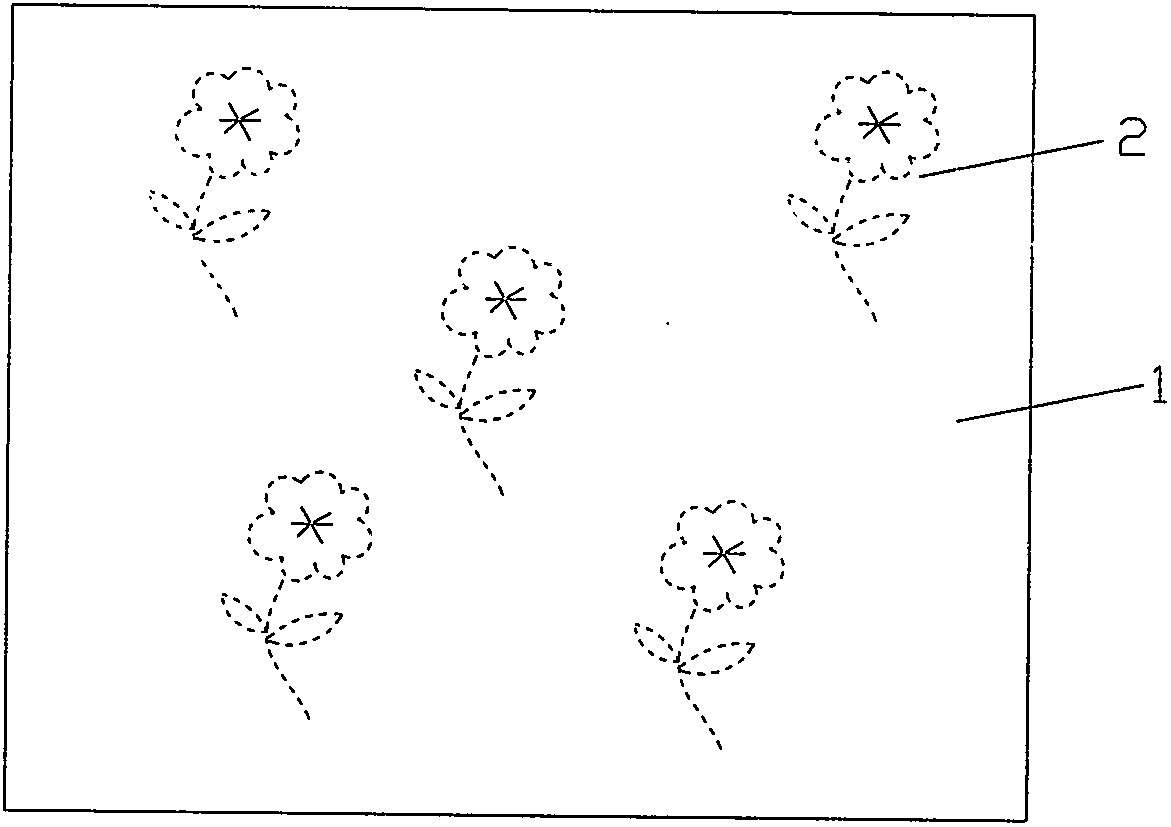
Figure 1
Abstract
Description
(1) Technical field
[0001] The invention relates to a fabric, in particular to a fabric for making napkins, curtains and bedspread decorative fabrics, belonging to the field of textile fabrics. (2) Background technology
[0002] Burnt-out fabric refers to the light and thin blended fabric with translucent flower-shaped pattern on the surface. It has good air permeability, strong scratch resistance, quick drying and no ironing. It is the best choice for napkins, curtains, and bedspread decorative fabrics. However, because burnt-out fabrics use the principle of cotton fibers to be alkali-resistant and not acid-resistant, polyester-cotton core-spun yarns are used to weave fabrics, and then through post-processing technology, strong acid is used to corrode the outer cotton yarns to expose the thinner polyester core threads, forming semi-woven fabrics. For transparent patterns, the subtleties of the pattern are often blurred, resulting in distortion of the pattern. (3) Contents...
Examples
Embodiment Construction
[0012] see figure 1 , the present invention relates to a burnt-out fabric, comprising a burnt-out fabric body 1, the burnt-out fabric body 1 is formed by interweaving warp threads and weft threads, the warp threads are wood pulp fibers, and the weft threads are real silk, the burnt-out fabric body 1 There is an embroidery layer 2 partially on the surface. The embroidery layer 2 is a layer embroidered on the surface of the burnt-out fabric body 1 with colored threads, and is used to outline the subtleties of the pattern shown by the burn-out fabric body 1 to make the pattern more realistic.