
Device and method for testing mechanical property in ultrahigh temperature oxidation environment
A testing device and oxidizing environment technology, applied in the direction of using stable bending force to test material strength, using stable shear force to test material strength, using stable tension/compression to test material strength, etc., can solve difficult problems. Obtaining a uniform and stable oxidizing environment, uneven temperature field, poor experimental repeatability, etc.
Patent Information
- Authority / Receiving Office
- CN · China
- Patent Type
- Patents(China)
- Current Assignee / Owner
- Publication Date
- 2014-09-17
Smart Images
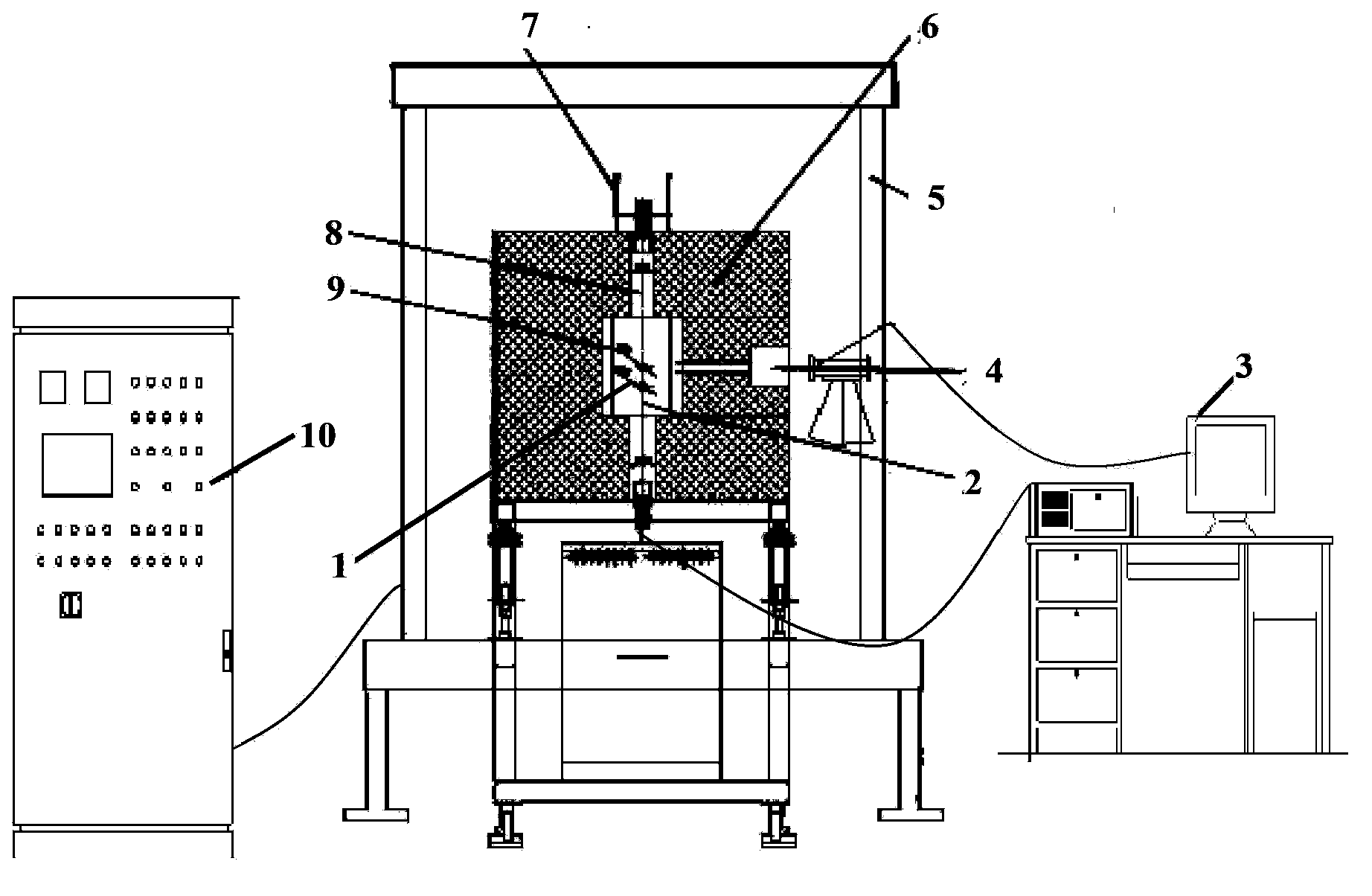
Figure 1 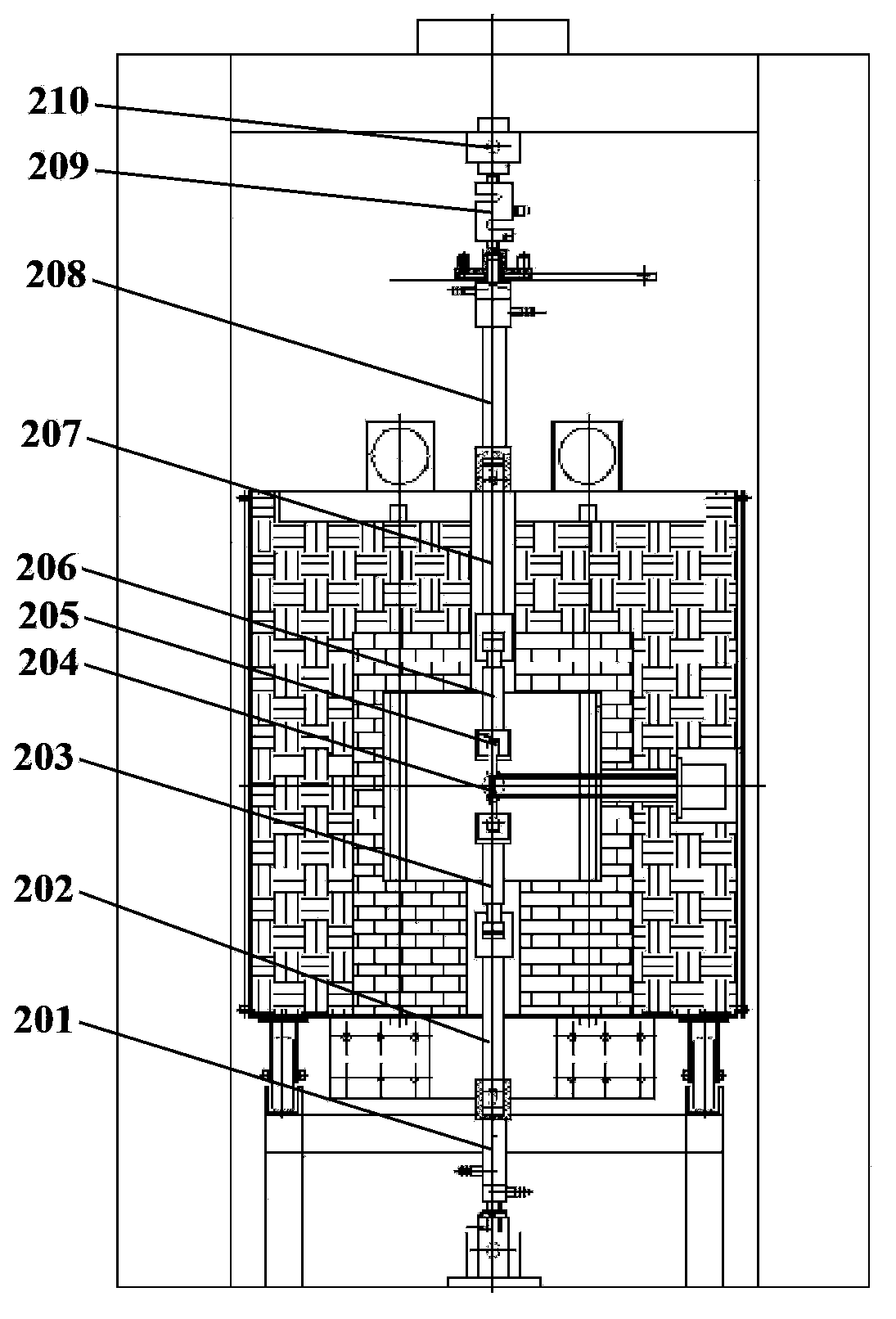
Figure 2 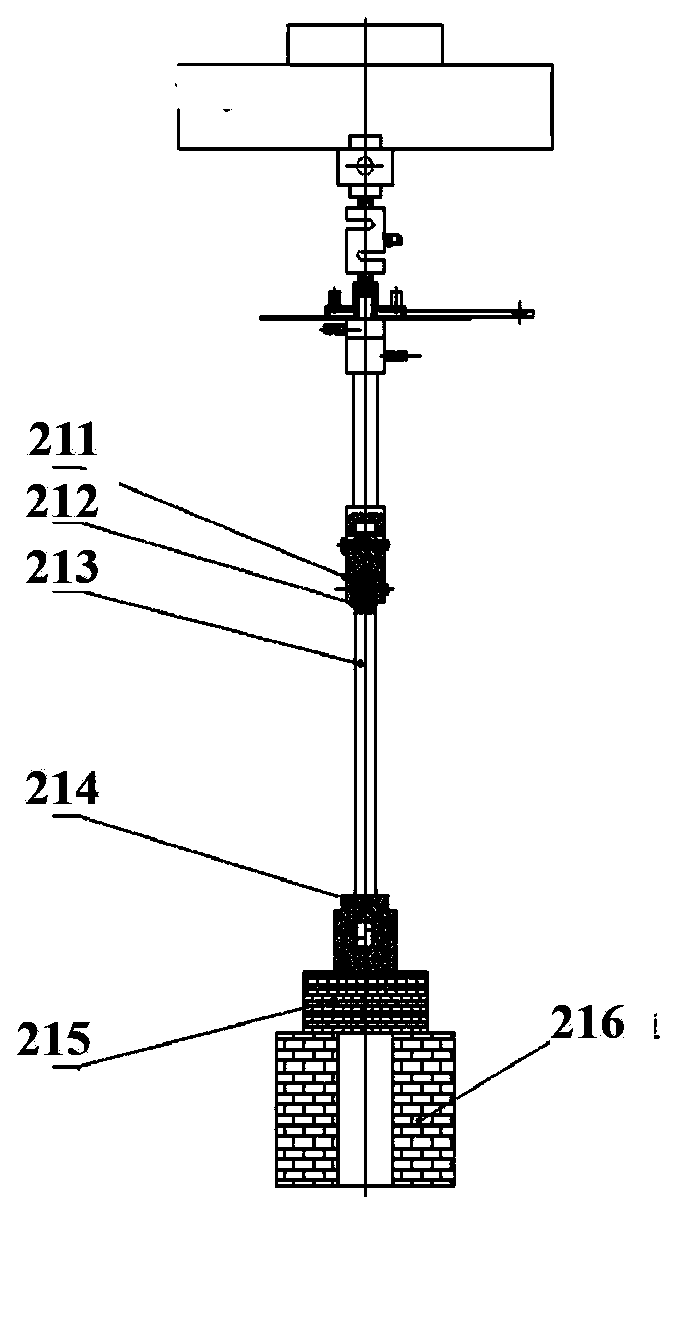
Figure 3
Abstract
Description
technical field
[0001] The invention relates to a device for testing the mechanical properties of materials in an oxidizing environment from room temperature to 1800 degrees. Specifically, it is a new type of ultra-high temperature ceramic heating body that is heated and loaded to test the mechanical properties of materials such as tension, compression, bending, shearing, indentation, fatigue, and creep. Background technique
[0002] In view of the fact that the medium and high temperature materials and structures in the high-tech field and national defense equipment construction need to withstand complex heat / force / oxidation coupling or complex combustion environment, and key ultra-high temperature materials (such as micro-ablative C / C composite materials, non-ablative ultra-high temperature Ceramics, superalloys, C / SiC composites) performance complexity. When evaluating the service safety of the design of ultra-high temperature components used in extreme environments, it ...
Examples
Embodiment 1
[0079] Embodiment 1: Measuring the tensile strength of a certain ultra-high temperature ceramic material
[0080] The specific experimental operation steps are:
[0081] (1) Take a test sample. The shape and size of the sample refer to the American ASTM C1295 standard. The gauge length of the sample is 30mm, and the cross-section within the gauge length is 5.97mm×2.98mm. On the upper and lower chucks connected by rods (such as figure 2 As shown), give the sample a small pre-tightening force (﹤20N) to keep it in the vertical direction; insert the ultra-high temperature extension into the furnace body, and the gauge length section of the ejector rod is in contact with the pre-sample; adjust the power supply, The heating process in the furnace is controlled by an ultra-high temperature ceramic heating element, and the temperature of the sample in the furnace is measured by an infrared thermometer to 1650 degrees, and then kept for 5 minutes;
[0082] (2) The loading bar loads ...
Embodiment 2
[0083] Example 2: Measuring the flexural strength of an ultra-high temperature ceramic material supporting a certain military product
[0084] The specific experimental operation steps are:
[0085] (1) Take a test sample, measure its size as 2.98mm×3.97mm×40.2mm, place the sample on the roller rod fixed on the fixture support (such as image 3 As shown), the span between the lower rollers is 20mm; adjust the power supply, heat the furnace through the ultra-high temperature ceramic heating element, use the infrared temperature measuring device to measure the temperature of the sample in the furnace to 1800 degrees, and keep it for 5 minutes;
[0086] (2) The upper roller rod loads the sample at the center of the sample at a speed of 0.5 mm / min until the sample breaks, and records the load-displacement curve (such as Figure 5 Shown), the corresponding critical load when the sample breaks is 154N; the calculated cantilever beam bending strength is 131MPa.