
Phosphate-hydraulic oil composition
A hydraulic oil composition, composition technology, applied in the direction of lubricating composition, petroleum industry, base material, etc., can solve the problem of poor shear stability and thickening ability, poor shear stability, low temperature performance and poor thickening ability etc. to achieve excellent low temperature fluidity, excellent flame resistance, and excellent flame resistance
Patent Information
- Authority / Receiving Office
- CN · China
- Patent Type
- Applications(China)
- Current Assignee / Owner
- Publication Date
- 2013-04-24
Smart Images
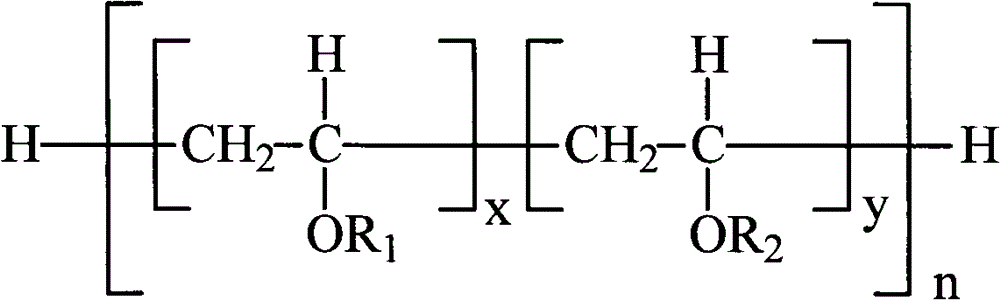
Figure 1 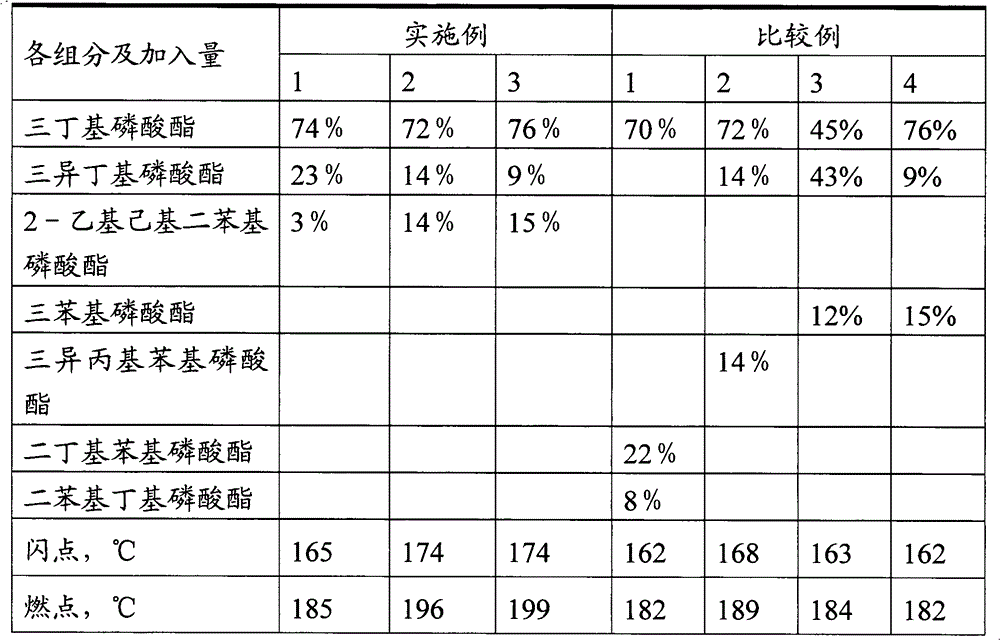
Figure 2 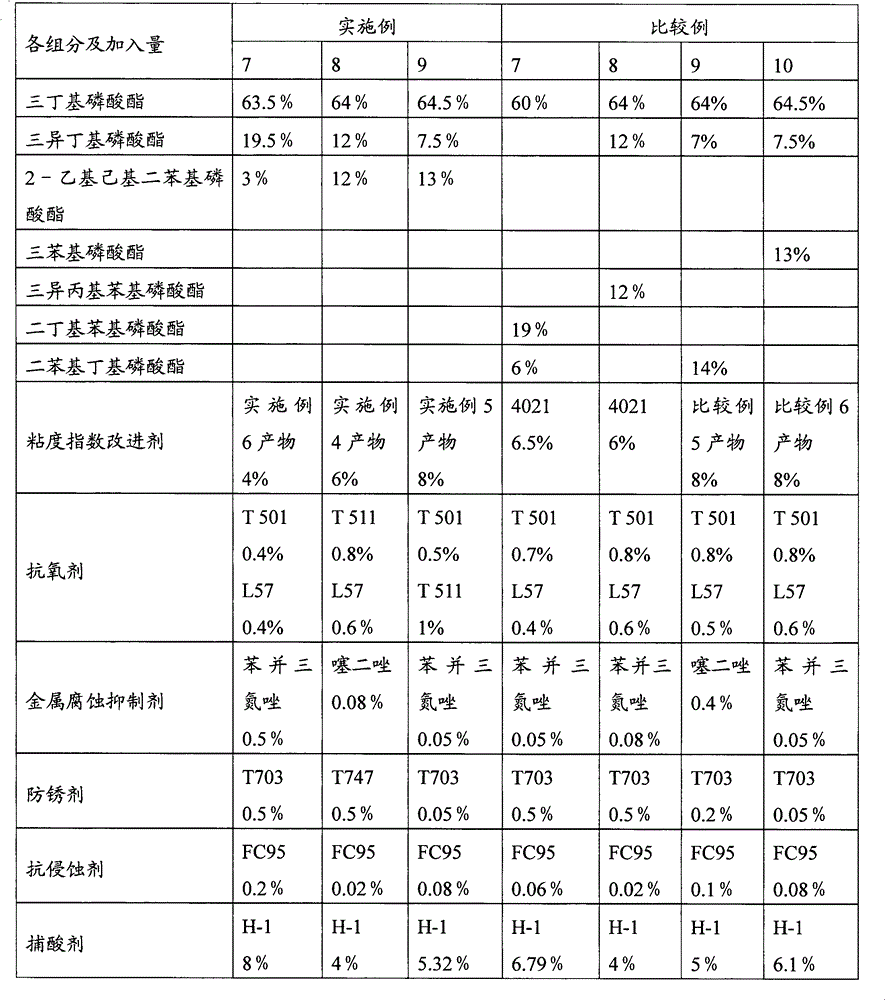
Figure 3
Abstract
Description
technical field
[0001] The invention relates to a phosphate ester hydraulic oil composition, in particular to a phosphate ester hydraulic oil composition used for aviation hydraulic oil. Background technique
[0002] Aviation hydraulic oil needs to have excellent flame retardancy, good high and low temperature performance, good thermal and oxidation stability, good corrosion stability and viscosity-temperature performance. Common aviation hydraulic oils include synthetic hydrocarbon flame-resistant aviation hydraulic oils, phosphate ester fire-resistant hydraulic oils, and so on.
[0003] Most of the hydraulic oils used in civil aircraft are phosphate ester hydraulic oils, which contain a combination of alkyl phosphates, alkyl aryl phosphates, and triaryl phosphates. Skydrol LD-4 is a phosphate ester aviation hydraulic oil commonly used in the market. This hydraulic oil usually contains 18% to 25% by weight of dibutylphenyl phosphate, 50% to 60% by weight of tributyl phosph...
Examples
Embodiment 4
[0070] 56 g of toluene, 0.1 g of isobutanol and 0.42 g of boron trifluoride etherate were placed in a 500 ml glass flask equipped with a U-shaped tube, dropping funnel, spherical condenser, thermometer and stirrer. A mixture of 60 g of vinyl ethyl ether and 80 g of vinyl isobutyl ether was put into the dropping funnel and added dropwise to the flask over 2 h. The reaction started during the dropwise addition, and the temperature of the reaction solution rose. The temperature of the reaction solution was kept at about 25°C by cooling with an ice-water bath. After the dropwise addition was complete, the reaction solution was stirred for another 30 min. Then, the reaction mixture was transferred to a washing vessel, washed three times with 500 ml of aqueous sodium hydroxide solution (6%), and then washed with water to render the mixture neutral. The solvent and residual starting material were removed under vacuum to obtain the polymer product. 1.4 g of amorphous nickel catalys...
Embodiment 5
[0072] 48 g of isooctane, 0.3 g of isobutanol and 1.2 g of boron trifluoride etherate were charged into a 500 ml glass flask equipped with a U-shaped tube, dropping funnel, spherical condenser, thermometer and stirrer. A mixture of 140 g of vinyl ethyl ether and 20 g of vinyl isobutyl ether was put into the dropping funnel and added dropwise to the flask over 2 h. The reaction started during the dropwise addition, and the temperature of the reaction solution rose. The temperature of the reaction solution was kept at about 35°C by cooling with an ice-water bath. After the dropwise addition was complete, the reaction solution was stirred for another 30 min. Then, the reaction mixture was transferred to a washing vessel, washed three times with 500 ml of aqueous sodium hydroxide solution (6%), and then washed with water to render the mixture neutral. The solvent and residual starting material were removed under vacuum to obtain the polymer product. 2.8g of amorphous nickel cat...
Embodiment 6
[0074]81 g of isooctane, 0.05 g of ethanol and 0.8 g of aluminum trichloride were placed in a 500 ml glass flask equipped with a U-shaped tube, dropping funnel, spherical condenser, thermometer and stirrer. A mixture of 10 g of vinyl ethyl ether and 150 g of vinyl isohexyl ether was put into the dropping funnel and added dropwise to the flask over 2 h. The reaction started during the dropwise addition, and the temperature of the reaction solution rose. The temperature of the reaction solution was kept at about 40°C by cooling with an ice-water bath. After the dropwise addition was complete, the reaction solution was stirred for another 30 min. Then, the reaction mixture was transferred to a washing vessel, washed three times with 500 ml of aqueous sodium hydroxide solution (6%), and then washed with water to render the mixture neutral. The solvent and residual starting material were removed under vacuum to obtain the polymer product. 2.1g of Raney nickel catalyst and 70g of...