
Preparation method of quick dissociative type thermosensitive hyaluronic acid hydrogel
A hyaluronic acid, temperature-sensitive technology, applied in the field of biomedical materials, can solve the problems of unsatisfactory hydrogel uniformity, stability and durability, unable to meet the needs of rapid cell-matrix separation, etc., and achieve flexible control of pore size Narrow size, pore size distribution, and strong controllability
Patent Information
- Authority / Receiving Office
- CN · China
- Patent Type
- Patents(China)
- Current Assignee / Owner
- Publication Date
- 2014-08-06
- Estimated Expiration
- Not applicable · inactive patent
Smart Images
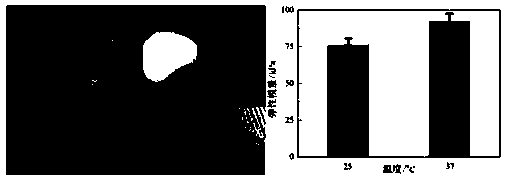
Figure 1 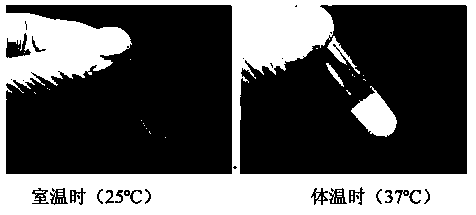
Figure 2 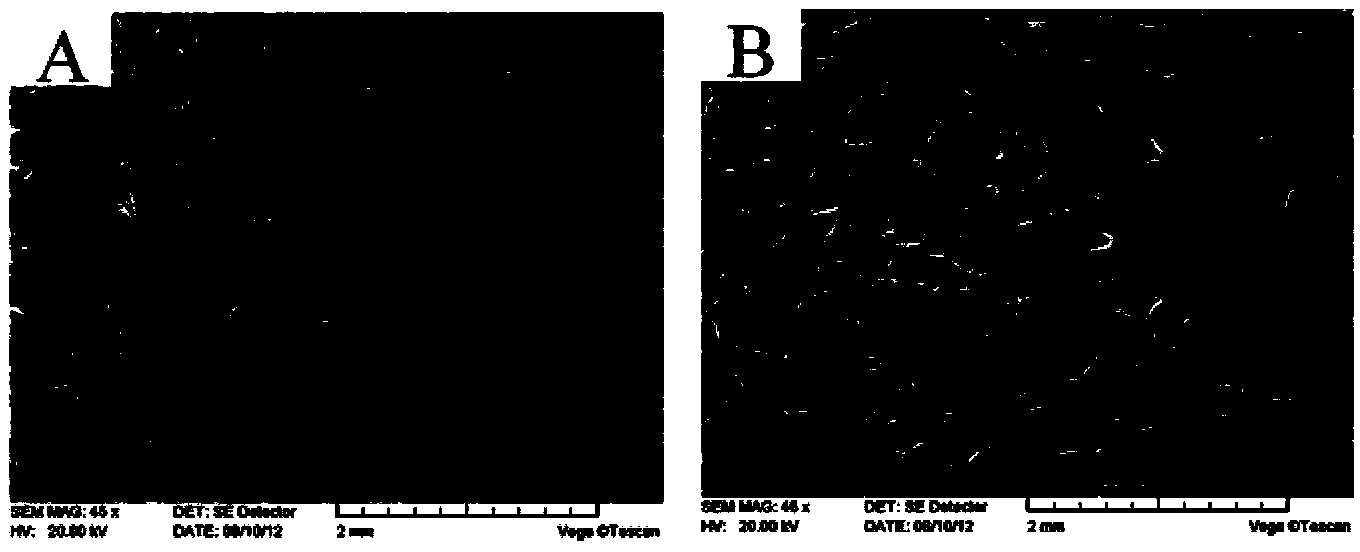
Figure 3
Abstract
Description
technical field
[0001] The invention belongs to the field of biomedical materials, and in particular relates to a preparation method of a rapidly dissociable thermosensitive hyaluronic acid hydrogel suitable for three-dimensional cell culture. Background technique
[0002] More and more studies have shown that the growth behavior, protein expression, and cell function of cells cultured in two-dimensional monolayers based on culture plates cannot objectively reflect the real situation of cells in vivo. Scholars believe that this is due to the difference between the two-dimensional culture environment and the three-dimensional microenvironment of cells in vivo. The former ignores the influence of cell-cell and cell-matrix interactions on cell growth. Therefore, in recent years, three-dimensional cell culture technology has received extensive attention and developed rapidly. Compared with cells cultured in 2D, cells cultured in 3D are more physiologically meaningful in terms o...
Examples
Embodiment 1
[0031] 1) First, dissolve hyaluronic acid with a molecular weight of 300,000 in high-purity water to prepare a hyaluronic acid solution with a mass concentration of 4%;
[0032]2) Next, add 50% of the mass of hyaluronic acid to the solution, which is a temperature-sensitive macromolecular cross-linking poly(N-isopropylacrylamide) with a molecular weight of 20,000 and a narrow molecular weight distribution containing disulfide bonds and double-terminal amino groups. After the joint agent is stirred and dissolved, adjust the pH value to 5 with hydrochloric acid or NaOH solution;
[0033] The temperature-sensitive macromolecular crosslinking agent of poly(N-isopropylacrylamide) of narrow molecular weight distribution containing disulfide bonds and double-terminal amino groups is synthesized by the following steps:
[0034] a) Add chain transfer agent S,S'-bis(α,α'-methyl-α"-acetic acid) trithiocarbonate in sequence in anhydrous and oxygen-free organic solvent 1,4-dioxane, mono B...
Embodiment 2
[0040] 1) First, dissolve hyaluronic acid with a molecular weight of 50,000 in high-purity water to prepare a hyaluronic acid solution with a mass concentration of 3%;
[0041] 2) Next, add 30% of the mass of hyaluronic acid to the solution, which is a temperature-sensitive macromolecular cross-linking poly(N-isopropylacrylamide) with a molecular weight of 50,000 and a narrow molecular weight distribution containing disulfide bonds and double-terminal amino groups. After the joint agent is stirred and dissolved, adjust the pH value to 5.5 with hydrochloric acid or NaOH solution;
[0042] The temperature-sensitive macromolecular crosslinking agent of poly(N-isopropylacrylamide) of narrow molecular weight distribution containing disulfide bonds and double-terminal amino groups is synthesized by the following steps:
[0043] a) Add chain transfer agent S,S'-bis(α,α'-methyl-α"-acetic acid) trithiocarbonate and monomer N-isopropylpropene to tetrahydrofuran, an anhydrous and oxygen-...
Embodiment 3
[0048] 1) First, dissolve hyaluronic acid with a molecular weight of 200,000 in high-purity water to prepare a hyaluronic acid solution with a mass concentration of 4%;
[0049] 2) Next, add 60% of the mass of hyaluronic acid to the solution, which is a temperature-sensitive macromolecular cross-linking poly(N-isopropylacrylamide) with a molecular weight of 30,000 and a narrow molecular weight distribution containing disulfide bonds and double-terminal amino groups. After the joint agent is stirred and dissolved, adjust the pH value to 4 with hydrochloric acid or NaOH solution;
[0050] The temperature-sensitive macromolecular crosslinking agent of poly(N-isopropylacrylamide) of narrow molecular weight distribution containing disulfide bonds and double-terminal amino groups is synthesized by the following steps:
[0051] a) Add chain transfer agent S,S'-bis(α,α'-methyl-α"-acetic acid) trithiocarbonate in sequence in anhydrous and oxygen-free organic solvent 1,4-dioxane, mono ...