
Traditional Chinese medicine capsule for treating perimenopausal syndrome
A technology of traditional Chinese medicine capsules and perimenopause, which is applied in the field of traditional Chinese medicine capsules for the treatment of perimenopausal syndrome, and can solve the problems of promoting endometrial cancer and other problems
Patent Information
- Authority / Receiving Office
- CN · China
- Current Assignee / Owner
- Publication Date
- 2013-09-11
Smart Images
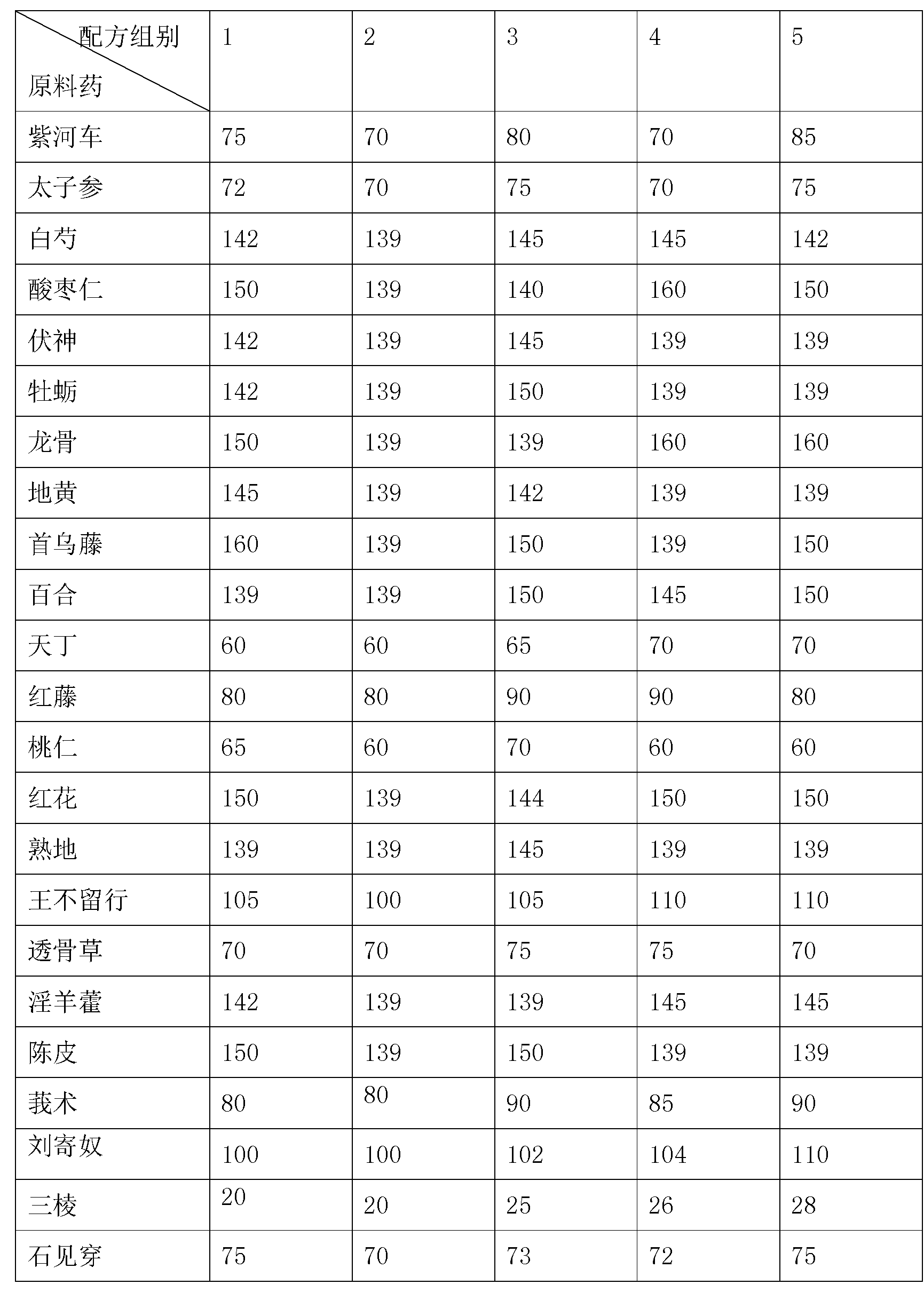
Figure 1
Abstract
Description
technical field
[0001] The invention relates to a traditional Chinese medicine, in particular to a traditional Chinese medicinal capsule for treating perimenopausal syndrome. Background technique
[0002] Perimenopausal syndrome is called women's syndromes before and after menopause in traditional Chinese medicine. Symptoms such as soreness in the waist and back, swollen face and swollen limbs, ants in the skin, restless emotions, etc., are also called syndromes before and after menstruation. Epidemiological surveys show that the incidence rate of perimenopausal syndrome among middle-aged and elderly women is as high as 80%, among which 10% to 30% of women are forced to seek medical treatment due to severe symptoms.
[0003] In recent years, Western medicine has applied hormone replacement (HRT) and other therapies to prevent and treat perimenopausal syndrome. Estrogen has been widely used to treat cardiovascular diseases in menopausal women due to its ability to regulate ...
Examples
Embodiment Construction
[0042] In specific implementation, the traditional Chinese medicine for the treatment of perimenopausal syndrome can be formulated according to the following list:
[0043]
[0044] The present embodiment carries out drug compatibility according to the value of the second group in the table:
[0045] 70 parts of purple river car, 70 parts of heterophylla, 139 parts of white peony (fried), 139 parts of jujube seed (fried), 139 parts of Fushen, 139 parts of oyster (calcined), 139 parts of keel (calcined), 139 parts of rehmannia , 139 parts of Shouwu vine, 139 parts of lily, 60 parts of Tianding, 80 parts of red vine, 60 parts of peach kernel, 139 parts of safflower, 139 parts of Rehmannia glutinosa, 100 parts of Wang Buliu xing, 70 parts of Sperantoides, Epimedium 139 parts, 139 parts of tangerine peel, 80 parts of curcuma, 100 parts of Liu Jinu, 20 parts of Sanleng, and 70 parts of Shi Jianchuan.
[0046] The preparation process of the drug is:
[0047] 1. Dry Ziheche belo...