
Method and device for processing received signals
A technology for receiving signals and processing methods, which is applied to the shaping network in the transmitter/receiver, baseband system components, multi-frequency code systems, etc. Problems such as large number of problems, to reduce the processing complexity
Patent Information
- Authority / Receiving Office
- CN · China
- Patent Type
- Patents(China)
- Current Assignee / Owner
- Publication Date
- 2016-07-06
Smart Images
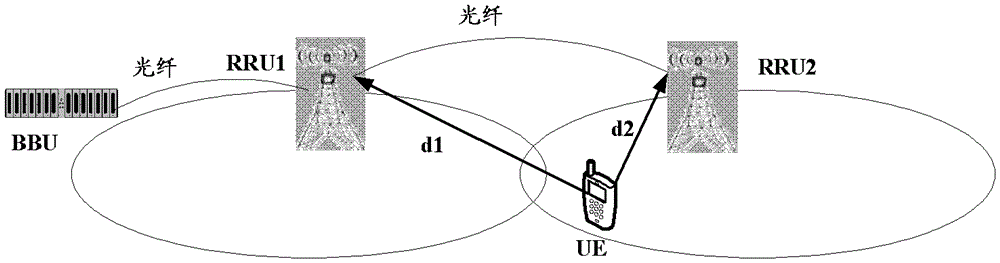
Figure 1 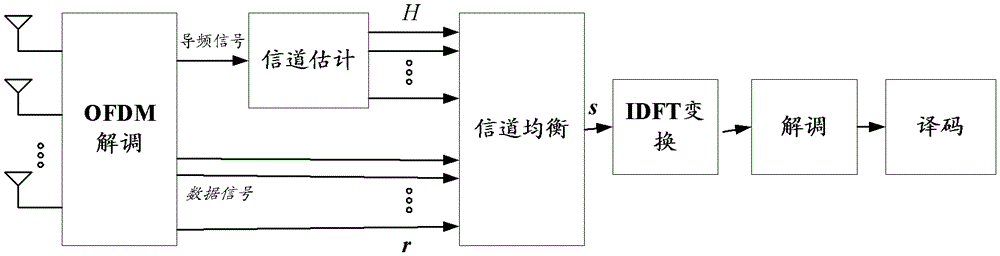
Figure 2 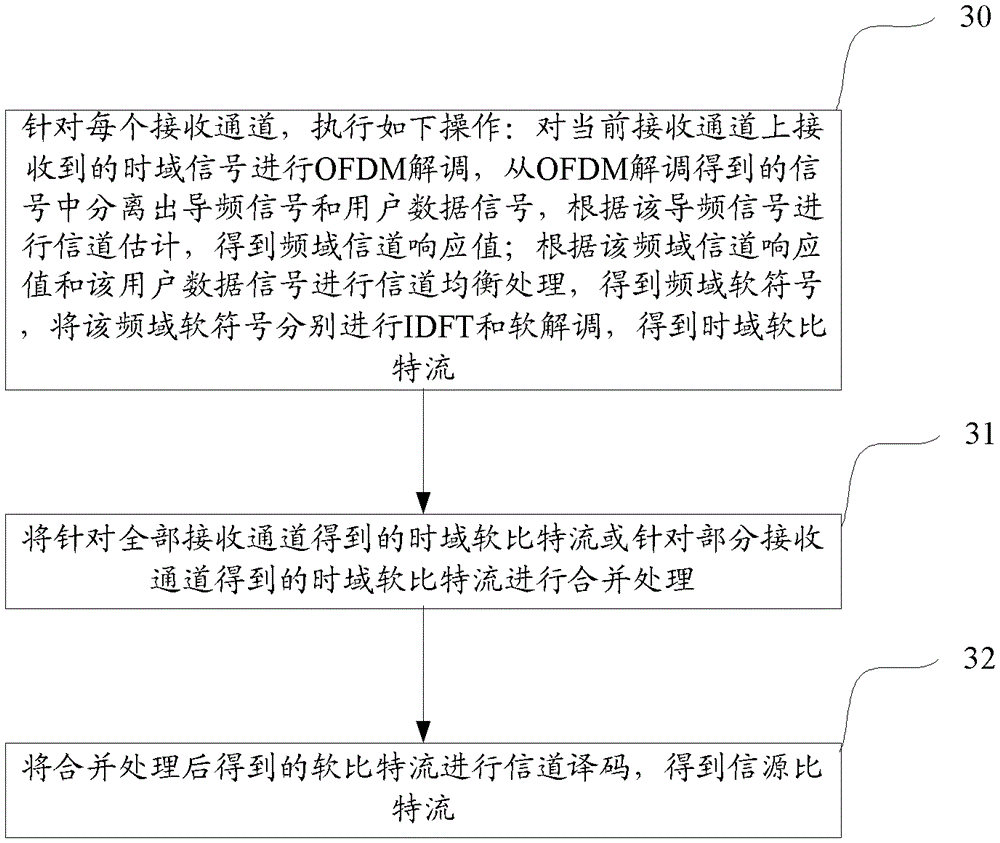
Figure 3
Abstract
Description
technical field
[0001] The present invention relates to the field of wireless communication, in particular to a method and device for processing received signals. Background technique
[0002] There are some specific scenarios in the cellular wireless mobile communication network, such as: indoor and outdoor boundary areas; indoor coverage of different floors and areas; highways, railways, subways, blind spots under towers, etc. In these scenarios, when the terminal is moving rapidly, the signal fading changes quickly, and the reselection and handover bands are not easy to set. If the setting is not reasonable, it will easily lead to more signaling interactions, causing call drops and affecting customer perception. For the switching problem of these scenarios, the traditional implementation or optimization methods have certain defects.
[0003] In view of the problems in the above traditional solutions, it is recommended to adopt distributed antenna technology (that is, cel...
Examples
Embodiment 1
[0089]Step 1, start numbering from 0 for all receiving channels, record the total number of channels as N, and initialize the channel index n=0;
[0090] Step 2. On the receiving channel numbered n, perform the operations from step 2.1 to step 2.5 respectively:
[0091] Step 2.1, first perform operations such as removing cyclic prefix (CyclicPrefix, CP), OFDM demodulation, and removing 7.5KHz frequency offset on the received time domain signal;
[0092] Step 2.2, separate the pilot signal and user data signal from the signal obtained in step 2.1, use the pilot signal to perform channel estimation, and interpolate to obtain the user data signal r on the kth subcarrier n (k) Corresponding frequency domain channel response value H n (k);
[0093] Step 2.3, perform channel equalization processing according to the obtained frequency domain channel response value and user data signal, and obtain the frequency domain soft symbol s after channel equalization on the kth subcarrier n...
Embodiment 2
[0100] Such as Figure 3B As shown, without loss of generality, this embodiment assumes that the number of uplink transmit antennas of the UE is 1, that is, M=1; each RRU has only one receive antenna, which corresponds to one receive channel, and a BBU is connected to two antennas in total. RRU, that is, N=2.
[0101] Step 1, start numbering from 0 for all channels, record the total number of channels as N, and initialize the channel index n=0;
[0102] Step 2. On the receiving channel numbered n, perform the operations from step 2.1 to step 2.5 respectively:
[0103] Step 2.1, first perform operations such as de-CP, OFDM demodulation, and 7.5KHz frequency offset removal on the received time-domain signal;
[0104] Step 2.2, separate the pilot signal and user data signal from the signal obtained in step 2.1, use the pilot signal to perform channel estimation, and interpolate to obtain the user data signal r on the kth subcarrier n (k) Corresponding frequency domain channel ...
Embodiment 3
[0142] Step 1, start numbering from 0 for all receiving channels, record the total number of channels as N, and initialize the channel index n=0;
[0143] Step 2. On the receiving channel numbered n, perform the operations from step 2.1 to step 2.5 respectively:
[0144] Step 2.1, first perform operations such as removing the cyclic prefix (CP), OFDM demodulation, and removing the 7.5KHz frequency offset on the received time domain signal;
[0145] Step 2.2, separate the pilot signal and user data signal from the signal obtained in step 2.1, use the pilot signal to perform channel estimation, and interpolate to obtain the user data signal r on the kth subcarrier n (k) Corresponding frequency domain channel response value H n (k);
[0146] Step 2.3, perform channel equalization processing according to the obtained frequency domain channel response value and user data signal, and obtain the frequency domain soft symbol s after channel equalization on the kth subcarrier n ;
...