
A kind of preparation method and application of organic solar cell material
A technology for solar cells and electron donor materials, applied in organic chemistry, circuits, photovoltaic power generation, etc., can solve the problems of poor repeatability of devices, difficulty in controlling purity, etc., achieve large open circuit voltage, improve amorphous performance, and inhibit crystallinity Effect
Patent Information
- Authority / Receiving Office
- CN · China
- Patent Type
- Patents(China)
- Current Assignee / Owner
- Publication Date
- 2016-06-08
Smart Images
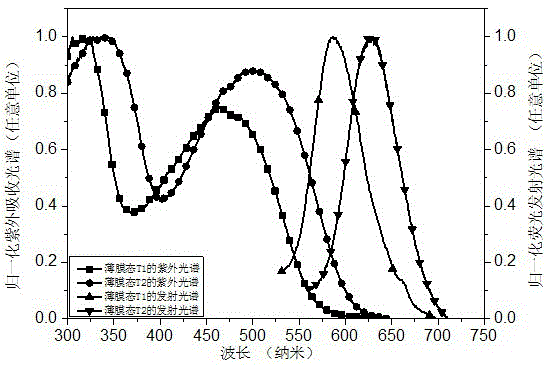
Figure 1 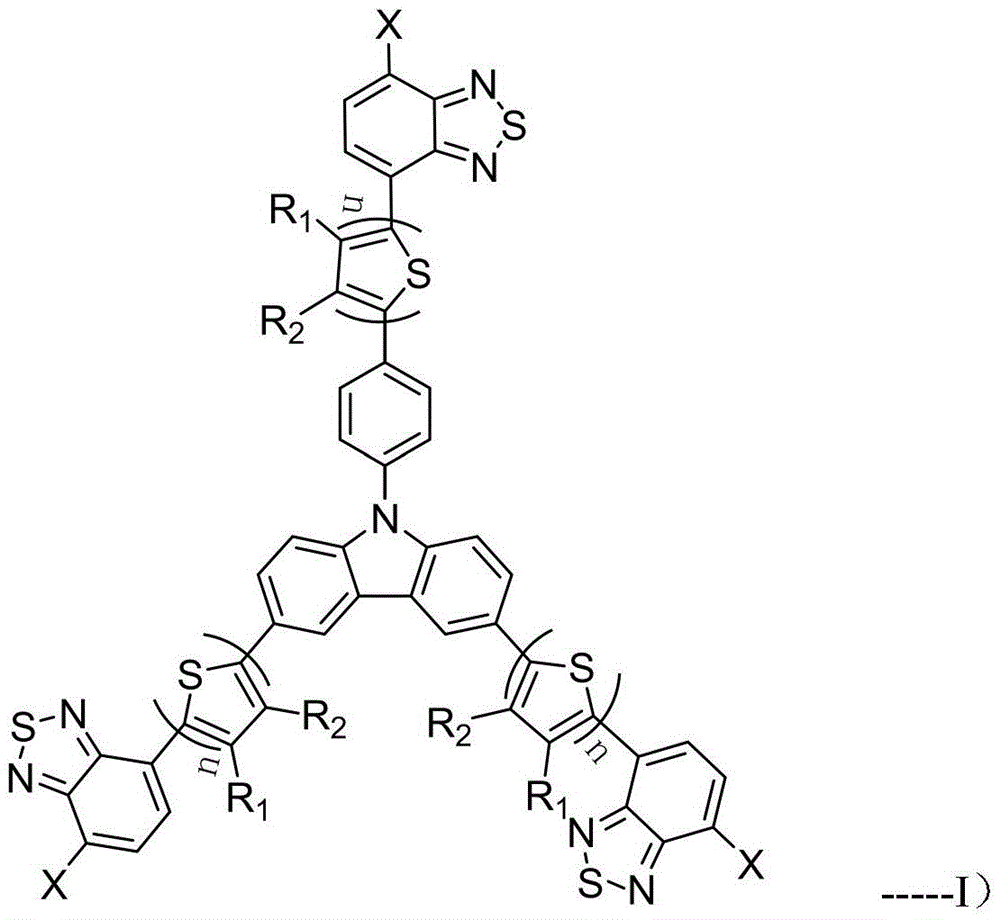
Figure 2 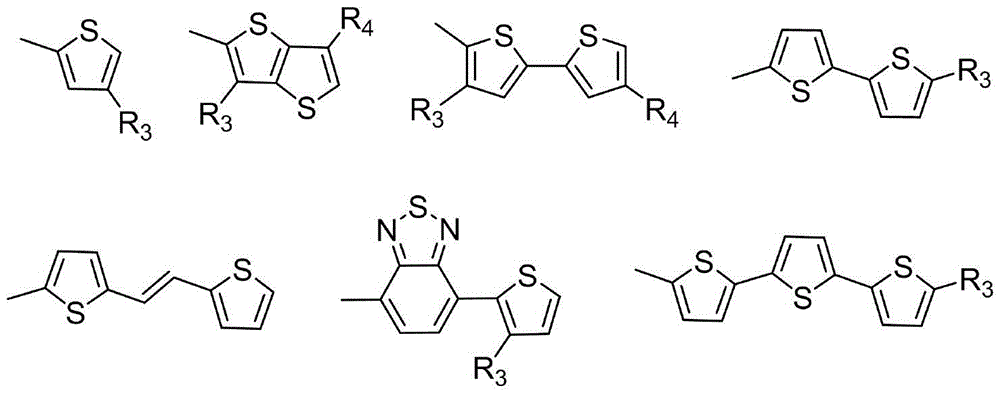
Figure 3
Abstract
Description
technical field
[0001] The invention belongs to the field of photovoltaic technology, and specifically relates to an organic solar cell material, more specifically to a star-shaped multi-arm structure material and its application; The azole derivative is a branched star-shaped multi-substitution compound, and the material can be used as an organic solar cell active layer, light harvesting or electron donor material for organic solar cell devices. Background technique
[0002] Solar energy is a long-awaited renewable clean energy. Although inorganic solar cell materials and diverse device structures have been greatly developed, their high cost and severe photocorrosion lead to their low energy share, which limits the development of inorganic solar cells. Therefore, it is particularly urgent to develop new materials to make the utilization of solar energy go on the road of sustainable development. Organic solar cells based on organic / polymer semiconductor materials have beco...
Examples
Embodiment 1
[0033]
[0034] 【Reaction Roadmap】
[0035]
[0036] According to the reaction scheme, 2-(4-hexylthiophene-2-yl)-4,4,5,5-tetramethyl-1,3,2-dioxaborane, 2-(3-hexylthiophene-2 -yl)-4,4,5,5-tetramethyl-1,3,2-dioxaborane and 4-(4-hexylthiophen-2-yl)-7-(5-bromo-4- Hexylthiophen-2-yl)benzothiadiazole undergoes Suzuki coupling reaction under the condition of tetrakistriphenylphosphopalladium as catalyst to prepare compound T1.
Embodiment 2
[0038]