
Preparation method for wear-resisting metal ceramic composite material
A technology of composite materials and cermets, which is applied in the field of ceramic particle reinforced iron-based wear-resistant composite materials and its preparation, can solve the problems of strip-shaped fast unfavorable preparation of large and medium-sized wear-resistant parts, strip-shaped blocks are difficult to realize, and there are hidden dangers in use. , to achieve the effect of wide application range, high density and convenient demoulding
Patent Information
- Authority / Receiving Office
- CN · China
- Patent Type
- Applications(China)
- Current Assignee / Owner
- Publication Date
- 2014-11-12
- Estimated Expiration
- Not applicable · inactive patent
Smart Images
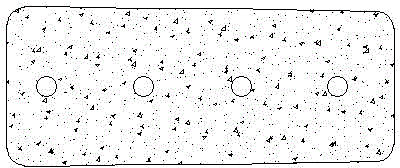
Figure 1 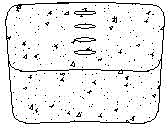
Figure 2 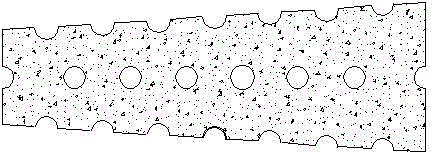
Figure 3
Abstract
Description
technical field
[0001] The invention relates to a wear-resistant metal-based composite material, in particular to a ceramic particle-reinforced iron-based wear-resistant composite material and a preparation method thereof. Background technique
[0002] With the development of science and technology and modern industry, the requirements for wear resistance of materials are getting higher and higher. The wearing parts of equipment in industries such as electric power, cement, mining, metallurgy, and coal are subject to various materials such as coal mines, sandstone, and soil. The wear of the grinding body consumes a large amount of metal every year. According to incomplete statistics, 1 / 3~1 / 2 of energy consumption is related to friction and wear. For materials, about 80% of component failures are caused by friction, of which about 50% are caused by abrasive wear. The wear-resistant parts used in abrasive wear conditions in my country consume more than 2 million tons per...
Examples
Embodiment 1
[0031] like figure 1 and figure 2 A kind of HP type grinding roller is shown a cermet wear-resistant composite material, and its preparation method comprises the following steps:
[0032] (1) Mix alumina ceramics with a particle size of 6-50 mesh or surface-pretreated alumina ceramics and iron-based alloy powder with polyvinyl alcohol to obtain a mixture, wherein alumina ceramics or surface-pretreated alumina The volume ratio of ceramics and iron-based alloy powder is 1:1, and the amount of polyvinyl alcohol added is 2% of the mass of ceramics;
[0033] (2) Fill the above mixture into the cavity of the press mold, place a 2~10mm ordinary steel gasket in advance at the bottom of the cavity, and the pressure of the press on the mixture is 50MPa. After molding and demoulding, put the blank together with the gasket Dry in a drying oven at 150°C for 2 hours;
[0034] (3) Put the dried biscuit together with the gasket into a vacuum furnace for sintering at a maximum temperat...
Embodiment 2
[0037] like image 3 and Figure 4 Another HP type grinding disc shown is a cermet wear-resistant composite material, and its preparation method includes the following steps:
[0038] (1) Mix tungsten carbide ceramics with a particle size of 6~50 mesh or tungsten carbide ceramics with surface pretreatment and nickel-based alloy powder with polyvinyl alcohol to obtain a mixture. Among them, tungsten carbide ceramics or tungsten carbide with surface pretreatment The volume ratio of ceramics and nickel-based alloy powder is 1:19, and the amount of polyvinyl alcohol added is 3% of the mass of ceramics;
[0039] (2) Fill the above mixture into the cavity of the press mold, place a 2~10mm ordinary steel gasket in advance at the bottom of the cavity, and the pressure of the press on the mixture is 70MPa. After molding and demoulding, put the blank together with the gasket Dry in a drying oven at 150°C for 2 hours;
[0040] (3) Put the dried biscuit together with the gasket int...
Embodiment 3
[0043] like Figure 5 and Image 6 A kind of preparation method of the metal-ceramic wear-resistant composite material of shown a kind of MPS type grinding roller, comprises the following steps:
[0044] (1) Mix zirconia ceramics with a particle size of 6-50 mesh or zirconia ceramics with surface pretreatment and iron-based alloy powder with polyvinyl alcohol to obtain a mixture. Among them, zirconia ceramics or zirconia ceramics with surface pretreatment The volume ratio of ceramics and iron-based alloy powder is 1:10, and the amount of polyvinyl alcohol added is 1% of the mass of ceramics;
[0045] (2) Fill the above mixture into the cavity of the press mold, place a 2~10mm ordinary steel gasket in advance at the bottom of the cavity, and the pressure of the press on the mixture is 60MPa. After molding and demoulding, put the blank together with the gasket Dry in a drying oven at 150°C for 2 hours;
[0046] (3) Put the dried biscuit together with the gasket into a vac...